ART FAIRS: Art Basel Paris 2025
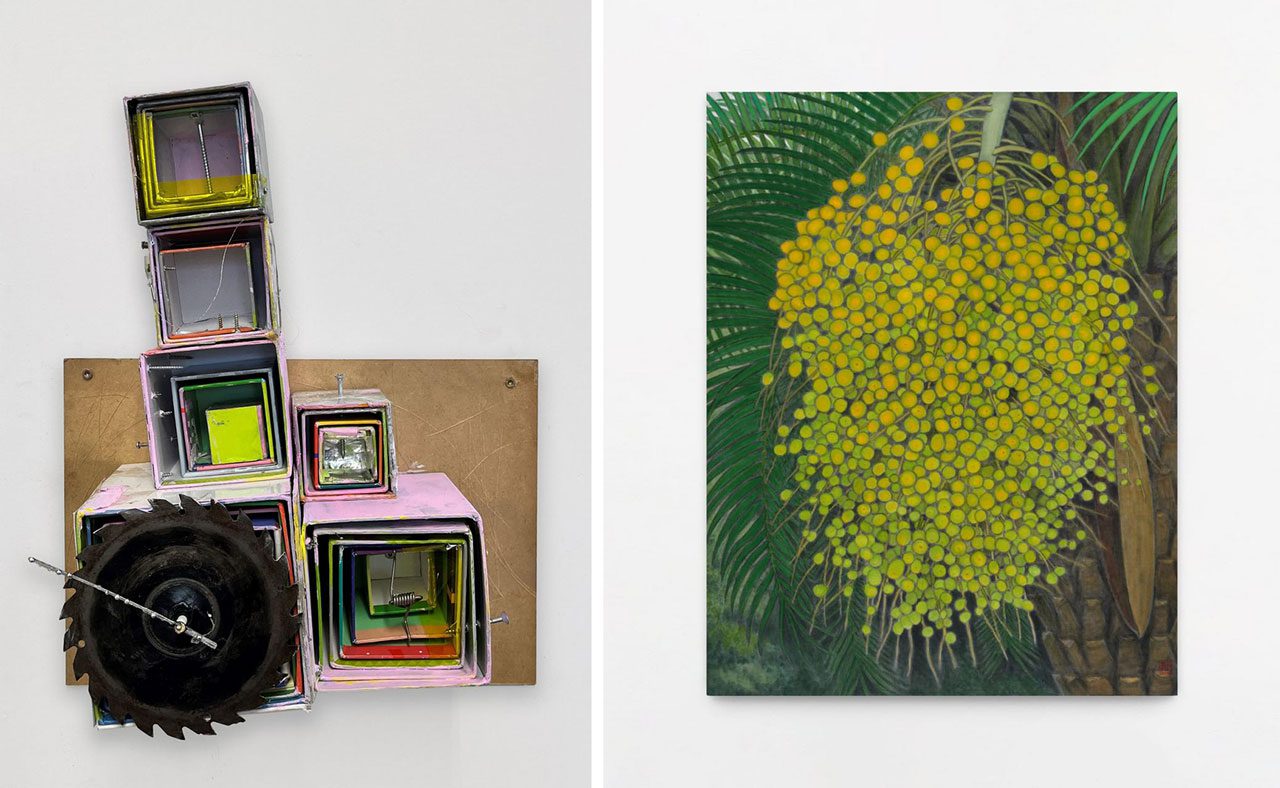
Art fair Art Basel returns to Paris, spotlighting global creatives and galleries across three days. 206 leading international galleries to present the highest quality artworks across all media – from painting and sculpture to photography and digital works – by artists ranging from early 20th-century Modern pioneers to cutting-edge contemporary practitioners. A strong line-up of galleries from across Europe IAjoined by new and returning exhibitors from around the world, including Africa, Asia, North and South America, and the Middle East.
By Dimitris Lempesis
Photo: Art Basel Archive
After last year’s landmark move to its historic venue, the 2025 edition of Art Basel Paris takes a decisive step further, strengthening its dialogue with the city itself. Bringing together 206 leading international galleries—including 180 within the main Galeries sector—and 65 exhibitors with spaces in France, this year’s fair reaffirms Paris’s growing centrality on the global art map. During the week, Art Basel Paris once again becomes the beating heart of France’s dynamic art market—the fourth largest worldwide—accounting for 7% of global art sales and more than half of the European Union’s total value. As with every Art Basel fair, the relationship between the show and its host city lies at its core. In Paris, this bond feels particularly vivid beneath the glass canopy of one of the city’s most iconic architectural landmarks—a site steeped in defining moments of Modern and contemporary art. This ever-evolving connection extends far beyond the venue, animated by this year’s expanded Public Program across nine emblematic Parisian sites. Art Basel Paris also continues to intertwine with the city’s broader creative ecosystem. Its re-hanging initiative “Oh La La!”—art-directed by filmmaker and fashion documentarian Loïc Prigent—celebrates the spirit of reinvention. The Conversations Program, guest-curated for a day by acclaimed fashion editor Edward Enninful, further underscores the fair’s cross-disciplinary outlook, while partner-led projects bring fresh artistic collaborations to life across the capital.
At the core of the fair, the Galeries sector unites 206 exhibitors from 41 countries and territories, offering a panorama that stretches from early 20th-century pioneers and Postwar icons to blue-chip masters and ultra-contemporary voices. This year, a shared focus on the avant-garde highlights Paris’s enduring role as a crucible of experimentation and exchange. Through rediscoveries and radical new propositions, galleries collectively trace a lineage that connects the city’s modernist heritage with today’s global conversations. Several Parisian and international galleries revisit the city’s early avant-garde legacy. Galerie Le Minotaure explores Dimensionism—the 1930s movement inspired by Einstein’s theories of space-time—with works by Fernand Léger, László Moholy-Nagy, and others, capturing the restless spirit of interwar innovation. Galerie 1900–2000 presents rare works by Dada and Surrealist figures alongside emblematic artists of the Parisian interwar scene, including a study for Marcel Duchamp’s “9 moules malic*” (1913–14). Textiles by Mimi Parent and a painting by Félix Labisse extend the Surrealist thread into the postwar decades.
Tornabuoni Art brings together Giorgio Morandi and Lucio Fontana, whose respective meditations on space and perception find resonance in works by Alighiero Boetti. Vedovi Gallery presents Gerhard Richter’s “Abstraktes Bild” (1992), a testament to the continued evolution of abstraction, while Van de Weghe spotlights Jean-Michel Basquiat’s “Untitled” (1983) alongside works by Picasso and Warhol, situating his raw visual language within a broader 20th-century dialogue. Cross-generational encounters further animate this year’s presentations. Xavier Hufkens unites Louise Bourgeois, Tracey Emin, Charline von Heyl, Mark Manders, and Cecilia Vicuña—artists whose works traverse intimacy, form, and materiality. Bourgeois’s late bronze (2005), Emin’s new painting “Hunter” (2025), and von Heyl’s “Menelaos” (2024) resonate with Paris’s intertwined legacies of figuration and abstraction.
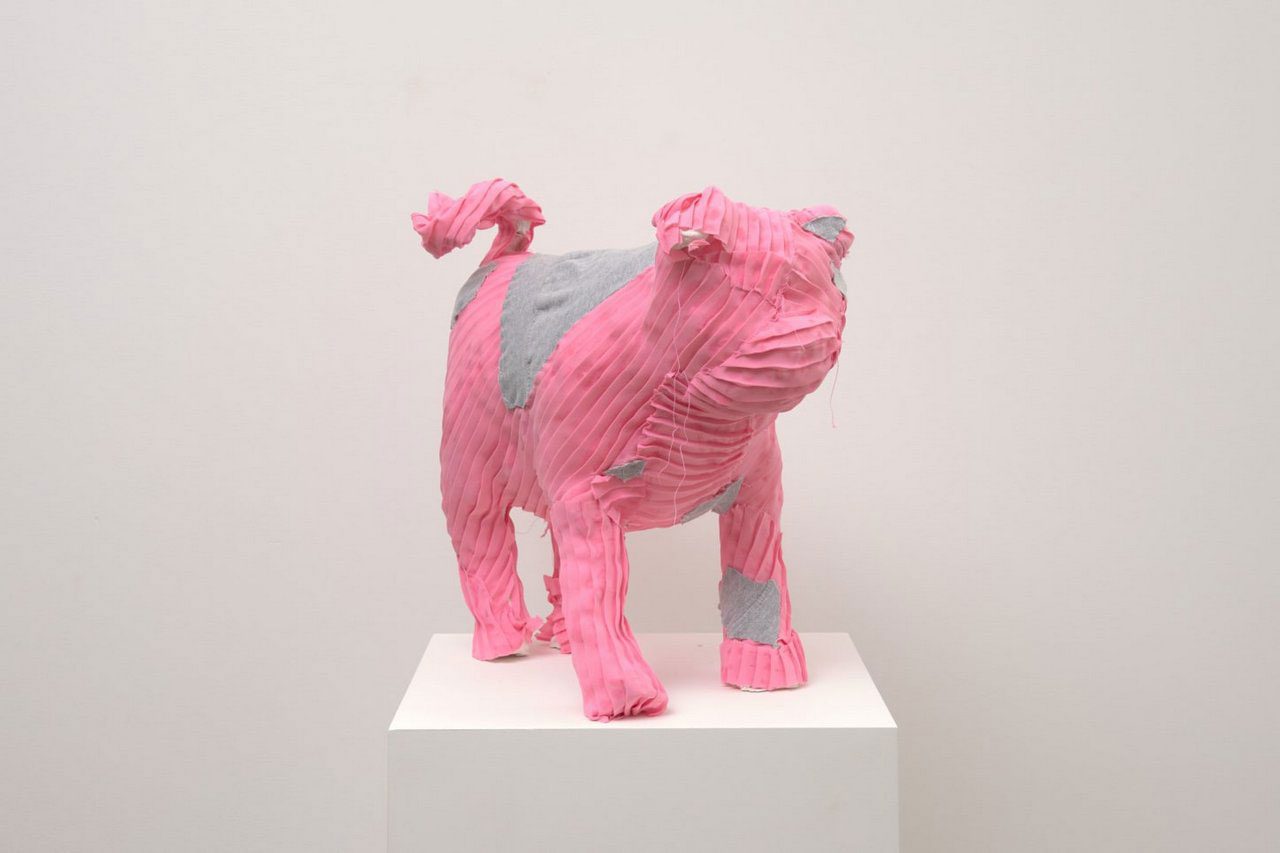
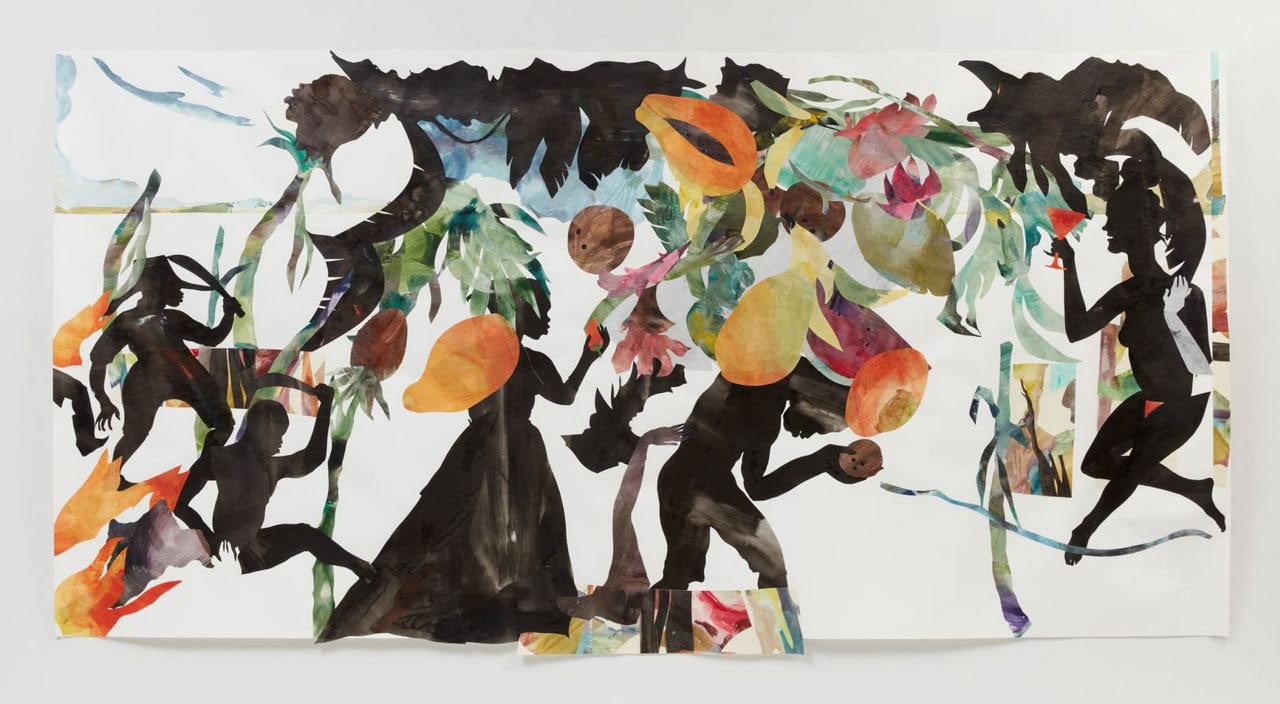
Embracing a spirit of collaboration, a record 20 exhibitors will present 10 joint booths at Art Basel Paris 2025 – nine in the main sector and one in Premise. Highlights include: Chapter NY (and Soft Opening, both first time participants at Art Basel Paris – join forces for a group presentation, featuring Olivia Erlanger, represented by Soft Opening, Stuart Middleton, represented by Chapter NY, and Gina Fischli, represented by both galleries. Among the highlights, Fischli debuts a series of animal sculptures arranged along a custom-built runway. In dialogue, Erlanger introduces a constellation of stainless-steel arrows mapping the Paris night sky in 1880, while Middleton contributes dissected clocks and industrial drawing. Nicoletti and seventeen graduate from the fair’s Emergence sector to Galeries with a shared presentation of new works by Josèfa Ntjam, Abbas Zahedi, Patrick Goddard, and Justin Fitzpatrick. Conceived as an interconnected exhibition, the project explores exchanges between human consciousness, ecological systems, and socio-political structures, with works that employ flux, contamination, and mutation to reflect on questions of class, identity, and environment.
Unfolding across the balconies of the Grand Palais’ Nave, Emergence features 16 solo presentations by some of today’s most promising artists. With eight galleries joining Art Basel Paris for the first time, the sector reflects the city’s enduring role as a place where new voices are discovered and avant-garde ideas continue to take shape, complementing the broader program of the fair. This year’s highlights include: Gauli Zitter present “dissociation variations,| a solo project by Ethan Assouline. Conceived as a whole exhibition within the booth, the project continues from Assouline’s recent solo show in Brussels. His sculptural compositions of found objects, sometimes painted or accompanied by his own poems, will revolve around the motif of the clock – a device that structures urban life while hinting at the political narratives embedded in the city’s landscape. Bank presents an immersive installation by Duyi Han. Comprising a series of ‘neuroaesthetic prescriptions,’ the work aims to transform rooms and objects into manifestations of mental states, interweaving folkloric and religious references with contemporary mental health practices. Cibrián, one of the sector’s first-time exhibitors, presents “New Energy”, a film installation combined with concept drawings with customized frames by Siyi Li. Centered on two women whose shifting roles and relationships unfold as they drive through Shanghai, the work explores creativity as a fluid and ever-changing force while drawing on the visual language of fashion editorials. The Pill presents a solo project by Nefeli Papadimouli, who lives and works between Paris and Athens. Her modular and elastic structures invite collective movement and create temporary architectures of assembly, exploring how bodies negotiate space and identity.
Dedicated to curated, thematic presentations that may include work predating 1900, the second iteration of the Premise sector will feature nine booths and eight first-time participants. Together, these exhibitions highlight singular narratives that resonate with Paris’ legacy as a historic nexus of radicality. Kadel Willborn presents a dialogue between Lucia Moholy, the Bauhaus photographer whose luminous abstractions shaped modern design, and Liz Deschenes, a leading voice in post-conceptual photography. Together, their works span a century of experimentation, showing photography as a medium that transcends documentation to become material, spatial, and immersive. Martine Aboucaya stages a rare presentation of Robert Barry’s immaterial works from 1969. Exploring telepathy, magnetism, and intangible phenomena, these conceptual landmarks shift perception from seeing to sensing, affirming Barry’s pioneering role in expanding the very definition of art. The Gallery of Everything makes a return with a revisit of the visionary paintings of Haitian artist and Vodou priest Hector Hyppolite (1894-1948). Celebrated by André Breton and featured in “Le Surréalisme en 1947”, Hyppolite’s vibrant works merge ritual, history, and spirituality, affirming his singular place in modern art.
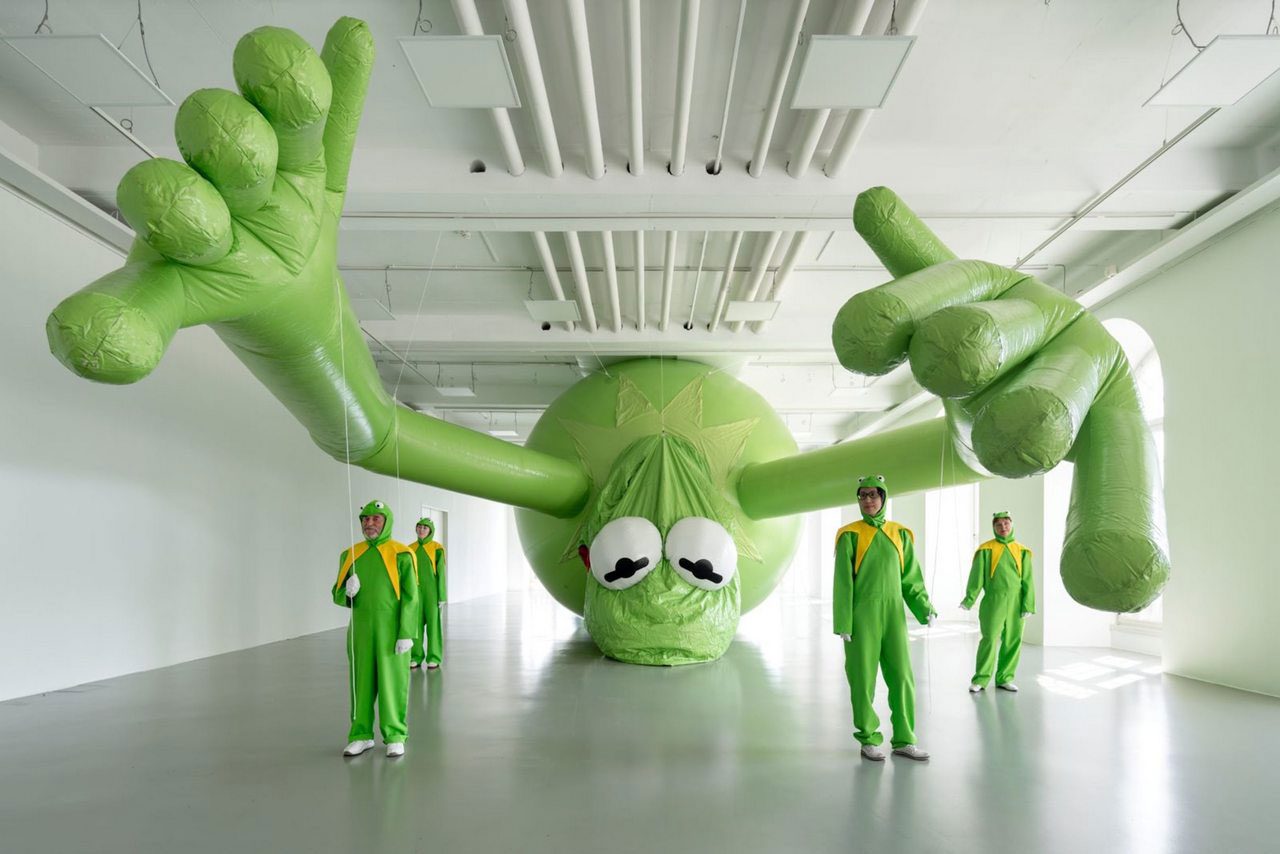
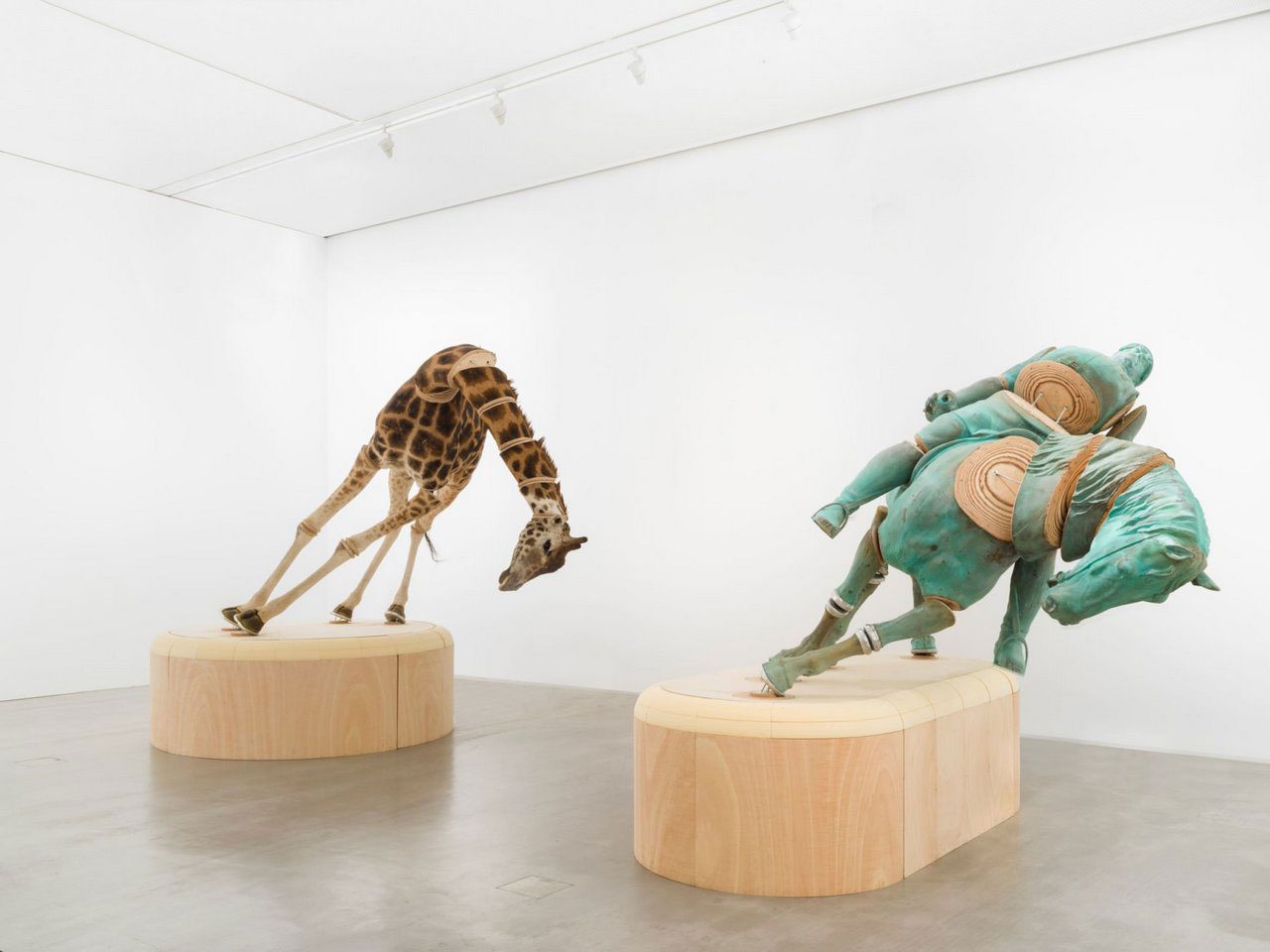
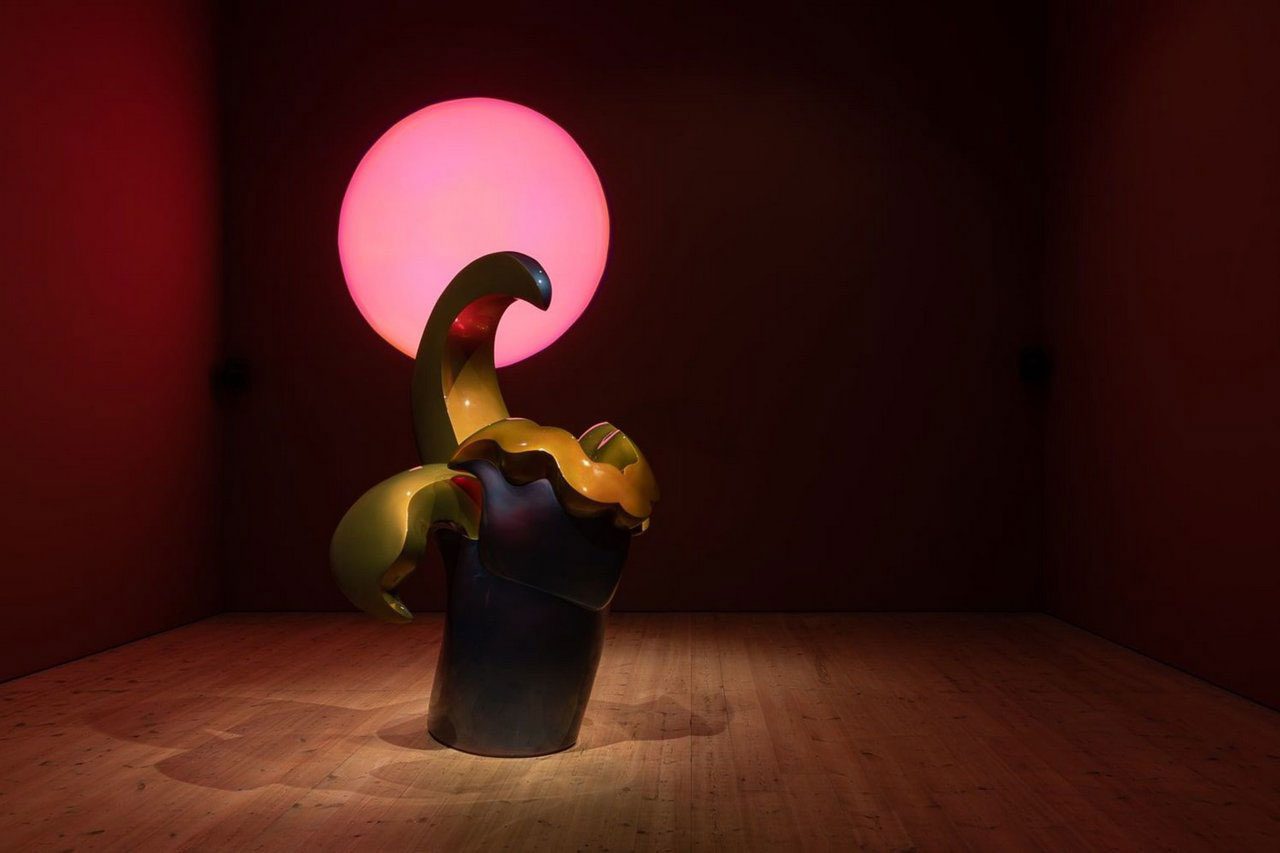
As part of the 2025 Public Program, Miu Miu presents “30 Blizzards”. by British artist Helen Marten at the Palais d’Iéna. Known for her cross-disciplinary practice, Marten here stages her first major performance work, created in collaboration with theatre director Fabio Cherstich and composer Beatrice Dillon. The project brings together five sculptures and five new videos, paired with monologues and libretto performed by a cast of thirty characters. Each performer is linked to a symbolic object and is choreographed through the space with song and speech, weaving themes of childhood, sexuality, community, interiority, and loss into a multi-voiced narrative. The title refers both to these thirty characters and to the idea of ‘blizzards’ as a metaphor for the turbulence of human temperament. At Place Vendôme, Alex Da Corte presents an inflatable sculpture based on the collapse of a Kermit balloon during New York’s 1991 Thanksgiving Day Parade. Half-deflated yet still afloat, the figure hovers in a state of suspended vulnerability. Its sagging body transforms an icon of childhood joy into a monument of fragility and delusion. By isolating and monumentalizing this fleeting accident, Da Corte turns a symbol of optimism and childhood into an image of exhaustion and fragility. The piece continues his exploration of American pop culture as a site of both collective fantasy and buried unease – where cartoons, consumer icons and suburban ideals reveal their cracks. For Art Basel Paris 2025, Harry Nuriev presents “Objets Trouvés” (2025), a participatory installation transforming the Chapelle des Petits-Augustins into a space of circulation and exchange. Supermarket boxes, neatly arranged in rows, are filled with objects brought by visitors. Each person leaves behind something they no longer need and takes an item left by others. Every contribution is certified as an artwork, and at the end of the exhibition, all exchanges will be compiled into a Yellow Pages–style book, turning a fleeting process into a permanent archive. Harry Nuriev describes his practice as Transformism – the reimagining of everyday materials to propose new functions and meanings. With Objets Trouvés, he extends this philosophy into a collective dimension, where the simple act of exchange becomes both social interaction and artistic creation. At the Petit Palais, Julius von Bismarck presents “The Elephant in the Room” (2023-2024) a pair of monumental kinetic sculptures that continually collapse and reassemble. A life-sized taxidermy giraffe stands beside a reduced replica of an equestrian statue of Otto von Bismarck. Both seem stable yet repeatedly fall apart, their segmented bodies controlled by hidden mechanisms. By pairing the exoticized animal with a monument to the German Empire’s first chancellor, von Bismarck highlights the intertwined histories of colonial exploitation and political power. Their endless cycle of collapse and recovery becomes an allegory for the fragility of monuments and the contested narratives they uphold.
This year’s edition of Oh La La! – Art Basel Paris’ special initiative inviting galleries to present new works at their booths on Friday and Saturday of the fair – will be art-directed by fashion expert and journalist Loïc Prigent. The theme of this year’s edition is ‘À la mode’. Fashion and art have always been deeply entwined, shaping and mirroring each other over time. Likewise, the concept of ‘trends’ has long sparked debate among critics and creators, leaving a lasting imprint on both fields. With ‘À la mode,’ visitors are invited to explore these intersections, tracing a conceptual thread across the Art Basel Paris 2025 show floor. Exhibitors are encouraged to present works that engage with these ideas, whether overtly or through subtle references. Style, the political and social meaning of garments, elegance, timelessness, dress as an expression of culture or identity, textile design, the role of avant-gardes in both art and fashion, and the elusive quality of chic are all potential areas of inspiration.
Photo: Courtesy Art Basel
Info: Art Basel Paris 2025, Grand Palais, Avenue Winston Churchill, Paris, France, Duration: 22-26/10/2025, Days & Hours: VIP days: Wed (22/10) 10:00-20:00, Thu (23/10) 11:00-14:00, Opening: Thu (23/10) 14:00-29:00, Public days: Fri-Sun (24-26/10) 11:00-19:00, Admission: Day Ticket: €45, Reduced Ticket: €30 (students, visitors under the age of 26, and Louvre Jeunes, Louvre Professionnels or Louvre Famille card holders), Permanent Ticket: €120, Guided Tours: €36, www.artbasel.com/