ART CITIES: Los Angeles-MONUMENTS
The exhibition “MONUMENTS” juxtaposes decommissioned monuments, many of which are Confederate, with newly commissioned and borrowed works by contemporary artists, and explores how these contested objects are perceived today and poses fundamental questions about the historical and contemporary functions of memorials, as well as the nature of memorialization and commemoration itself.
By Efi Michalarou
Photo: MOCA Archive
The exhibition “MONUMENTS” focuses on a period of national transformation as Confederate monuments and related symbols were removed from public spaces over the last ten years. These removals sparked a national debate that continues to this day. The exhibition offers a space for reflection, dialogue with contemporary art, and critical engagement with some of the most urgent issues of our time. Between the decommissioned monuments and the turn of events that resulted in their being taken down, this exhibition’s themes encompass the whole of United States history, from 1619 to yesterday,MOCA and The Brick have borrowed ten monuments for the exhibition. The oldest monument in the exhibition, unveiled in 1887, depicts Supreme Court Justice Roger B. Taney (1777-1864), who wrote the Dred Scott decision (1857). The most recent, depicting newspaper editor and diplomat Josephus Daniels (1862-1948), was commissioned by his family in 1985. (In the summer of 2020, the descendants of Daniels opted to remove the statue from public display.) Monument building in the United States peaked between the 1890s and 1920s—long after the Civil War —while removals began in 2017, following the racially motivated mass shooting at Mother Emanuel African Methodist Episcopal (AME) Church in Charleston, South Carolina in 2015. These removals were often highly publicized and hotly contested. Included in the exhibition are two monuments to Robert E. Lee and Thomas “Stonewall” Jackson, which were once at the center of the 2017 “Unite the Right” rally and counter-protest in Charlottesville, Virginia. The exhibition features new commissioned artworks. These works engage with the monuments and legacies of slavery. In some instances, artists chose to respond directly to individual monuments, while others created works that took up contemporary issues raised by the historical contexts represented by the statues.
For “Love is dangerous” (2024-25), artist Bethany Collins carved rose petals from granite taken from the base of the dismantled monument to “Stonewall” Jackson in Charlottesville. The work reflects on the origins of Memorial Day—long attributed to women’s groups who decorated the graves of Civil War dead, but first organized in 1865 by formerly enslaved Black people in Charleston, SC— and questions what and who we choose to honor. Karon Davis’s “Descendant” (2025) is a monumental portrait of the artist’s son, Moses, depicted standing on a pedestal and holding in his outstretched hands a miniature bronze replica of a statue of John Hunt Morgan, a Kentucky plantation owner and US-Mexican War veteran who became a celebrated Confederate general. Abigail DeVille’s new immersive installation, named after the Confederate motto, “Deo Vindice (Orion’s Cabinet)”, arranges charred and blistered colonial-style curio cabinets. DeVille’s work recalls photographs of the Confederate capital, Richmond, which was set ablaze by the retreating Confederate army in the final days of the Civil War. For his contribution, Stan Douglas reimagines a pivotal scene from D. W. Griffith’s landmark 1915 film “The Birth of a Nation”. Douglas expands upon this portion of Griffith’s film for a five-channel installation that introduces new sequences and characters (played by Black actors) to reveal the character of the original narrative. Kevin Jerome Everson’s 2024 film “Practice, Practice, Practice” draws a link between Black activism past and present by offering a portrait of activist Richard Bradley. Bradley scaled a 40-foot pole dressed as a Union soldier to tear down a Confederate flag outside San Francisco’s Civic Center in 1984. Kahlil Robert Irving’s “New Nation (States) Battle of Manassas” – 2014 utilizes thousands of images of St. Louis County, modeled with high-fidelity scanning and photogrammetry software, to create three bronze tabletop sculptures. These forms collapse geography and history to commemorate spaces where Black people have faced violence and led protests, with the title referencing Michael Brown’s 2014 killing in Ferguson, Missouri, and the calls for systemic change that followed.
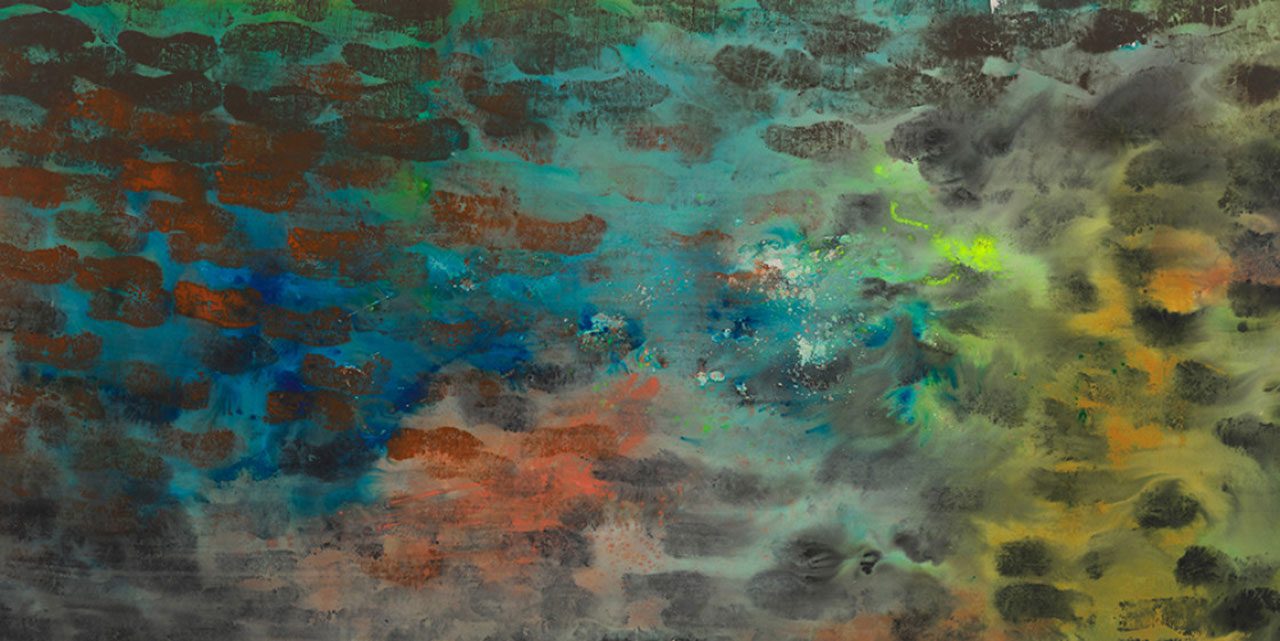
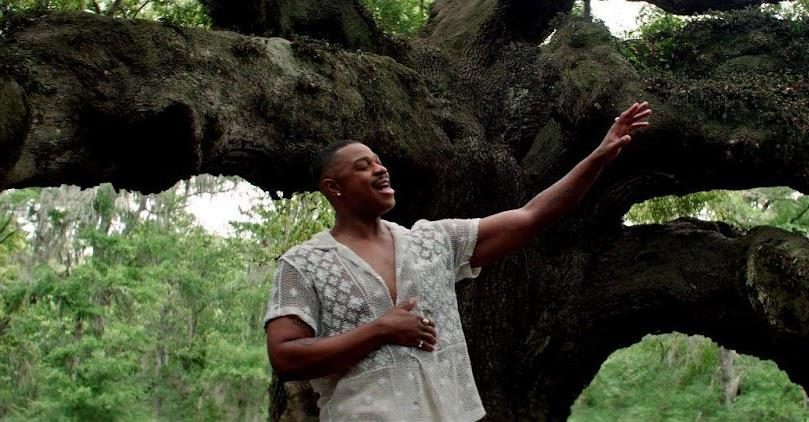
“An American Reflection”( 2025) revisits Monument Lab’s 2021 “National Monument Audit”—the first comprehensive study of 48,178 monuments across the United States—which revealed striking patterns, such as the fact that there are more monuments to Confederate leaders like Robert E. Lee and Jefferson Davis than to Union figures like Ulysses S. Grant or abolitionists like Frederick Douglass. Using data cloud visualization, Monument Lab’s work reimagines these monuments as an interconnected constellation of public cultural assets, prompting reflection on the nation’s commemorative landscape. Walter Price’s cycle of richly colored abstract canvases—made by marching in his paint-laden sneakers across their surface—responds to a statue of Matthew Fontaine Maury, Commander in the Confederate Navy from 1861 to 1865, which was removed by the city of Richmond in 2020.Cauleen Smith’s “The Warden” (2025) incorporates a statue of the Vindicatrix, an allegorical figure that stood atop the Jefferson Davis monument in Richmond until 2020. A CCTV surveillance camera is aimed at the Vindicatrix’s eternally pointing finger, and several monitors placed around the exhibition floor at MOCA Geffen display a live feed of the footage. Bass-baritone Davóne Tines collaborated with filmmaker Julie Dash to create “HOMEGOING” (2025). Dash captures Tines and his band THE TRUTH performing “LET IT SHINE,” Tine’s rendition of “This Little Light of Mine,” an anthem of the Civil Rights Movement, sung by activists Fannie Lou Hamer, Paul Robeson, and Zilphia Horton, among others. HOMEGOING is set in Charleston’s Mother Emanuel AME Church and the Angel Tree, a 500-year-old live oak on Johns Island, South Carolina, near Charleston. In 2021, The Brick (then known as LAXART) acquired a decommissioned equestrian monument of “Stonewall” Jackson from the city of Charlottesville, Virginia. The monument was given to Kara Walker to create the new work “Unmanned Drone”( 2023). The original bronze statue portrayed Jackson spurring his steed into the heat of battle. Walker dissected the statue and reshuffled the parts in a Hieronymous Bosch-like fashion. The result is still horse and rider, but instead of charging into battle, Walker’s horseman wanders in Civil War purgatory, dragging its sword over a ruined battlefield.
The exhibition also features: works by contemporary artists, as well as a presentation of late-nineteenth- and early-twentieth-century photographs by Hugh Mangum. Not a contemporary artist, Mangum was a traveling photographer in North Carolina and Virginia at the turn of the 20th century who offered inexpensive portraits from itinerant studios. He was largely forgotten until a cache of glass-plate negatives was discovered in a family barn in the late 1970s. His images—often layered through reused plates—show Black and white sitters alike, serving as a counter-narrative to the segregated South where Confederate monuments were rising and Jim Crow laws shaped daily life. “Drew’s Number 363” (2023), a monumental sculpture made of nearly 900 pounds of compressed cotton, recalls the crop’s central role in American slavery while merging material history with minimalist form. Torkwase Dyson’s “Rate of Transformation, Distance” (2018/2025) features three black trapezoidal sculptures that cantilever outward like ships or icebergs and evoke the history of slavery and freedom through abstraction. In the “White Shoes” series (2012-24), Nona Faustine photographed herself at historic New York sites of slavery, reclaiming the Black female body and exposing the city’s role in the transatlantic trade. Selections from Jon Henry’s series “Stranger Fruit” (2014-21) portray Black mothers holding their sons in the pose of the pietà, linking contemporary loss to sacred imagery and underscoring resilience in the face of violence. Martin Puryear’s “Tabernacle” (2019) reimagines the Civil War soldier’s brimmed cap, worn by both Union and Confederate soldiers. Andres Serrano’s “The Klan” (1990) presents portraits of hooded members of the Ku Klux Klan, highlighting the symbolic power of their regalia and its lasting imprint on American memory. Hank Willis Thomas’s “A Suspension of Hostilities” (2019), a vertical replica of the “General Lee” car from The Dukes of Hazzard, confronts the normalization of Confederate symbols in popular entertainment. Together, these works broaden the field of what a monument can be, offering urgent reflections on history, memory, and cultural iconography.
Works by: Bethany Collins, Abigail DeVille, Karon Davis, Stan Douglas, Kahlil Robert Irving, Cauleen Smith, Kevin Jerome Everson, Walter Price, Monument Lab, Davóne Tines and Julie Dash, Kara Waler, Leonardo Drew, Torkwase Dyson, Nona Faustine, Jon Henry, Martin Puryear, Andres Serrano, Hank Willis Thomas and Hugh Mangum.
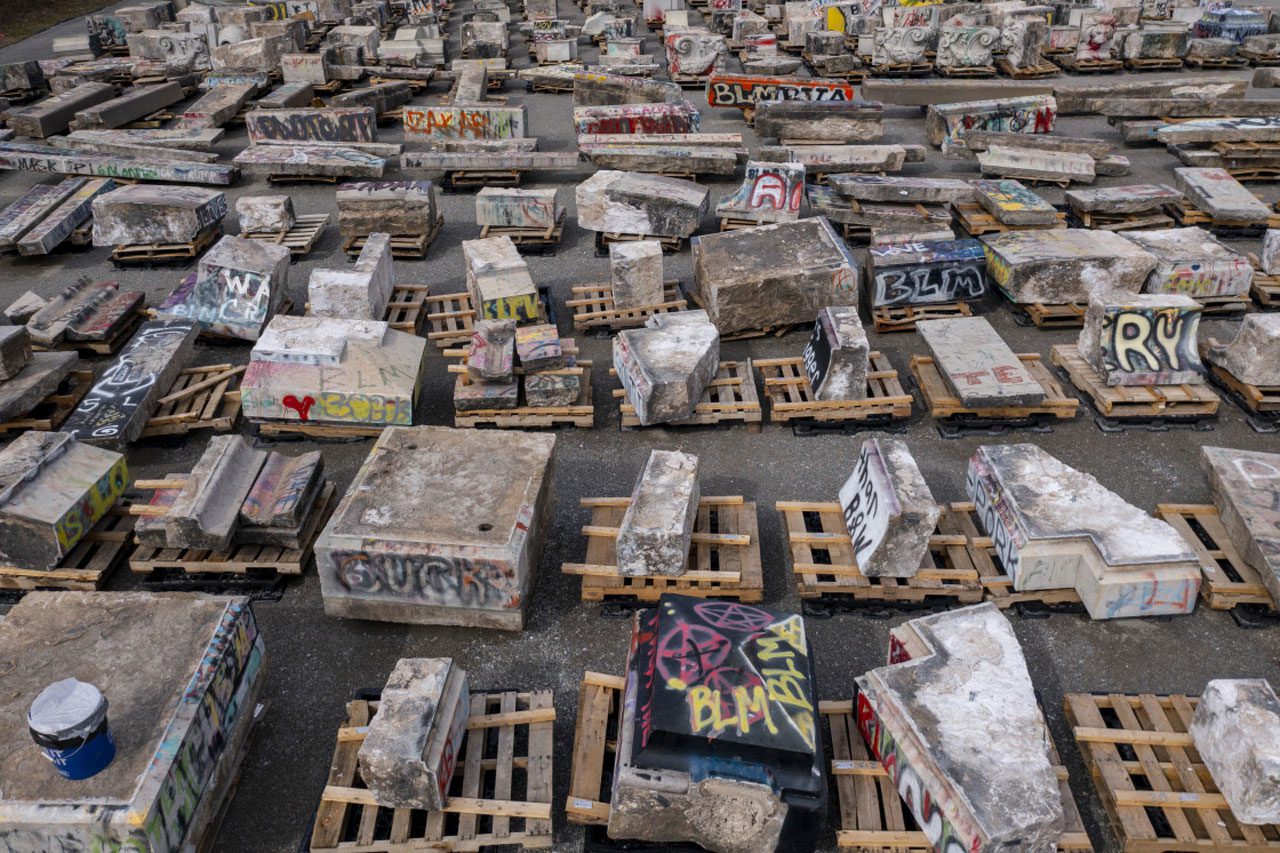
Photo: As seen from above, hundreds of pieces of what was the pedestal for the statue of Robert E. Lee in Richmond, 2022. Photo by and copyright Sanjay Suchak
Info: Curators: Hamza Walker, Bennett Simpson and Kara Walker, Assistant Curators: Hannah Bursteinand Paula Kroll, MOCA, The Geffen Contemporary, 250 South Grand Avenue Los Angeles, CA, USA, Duration: 23/10/2025-3/5/2026, Days & Hours: Thu-Fri 11:00-17:00, Sat-Sun 22:00-28:00, www.moca.org/ & The Brick, 518 N. Western Ave. Los Angeles CA, USA, Duration: 23/10/2025-3/5/2026, Days & Hours: Wed-Sun 11:00-18:00, https://the-brick.org/
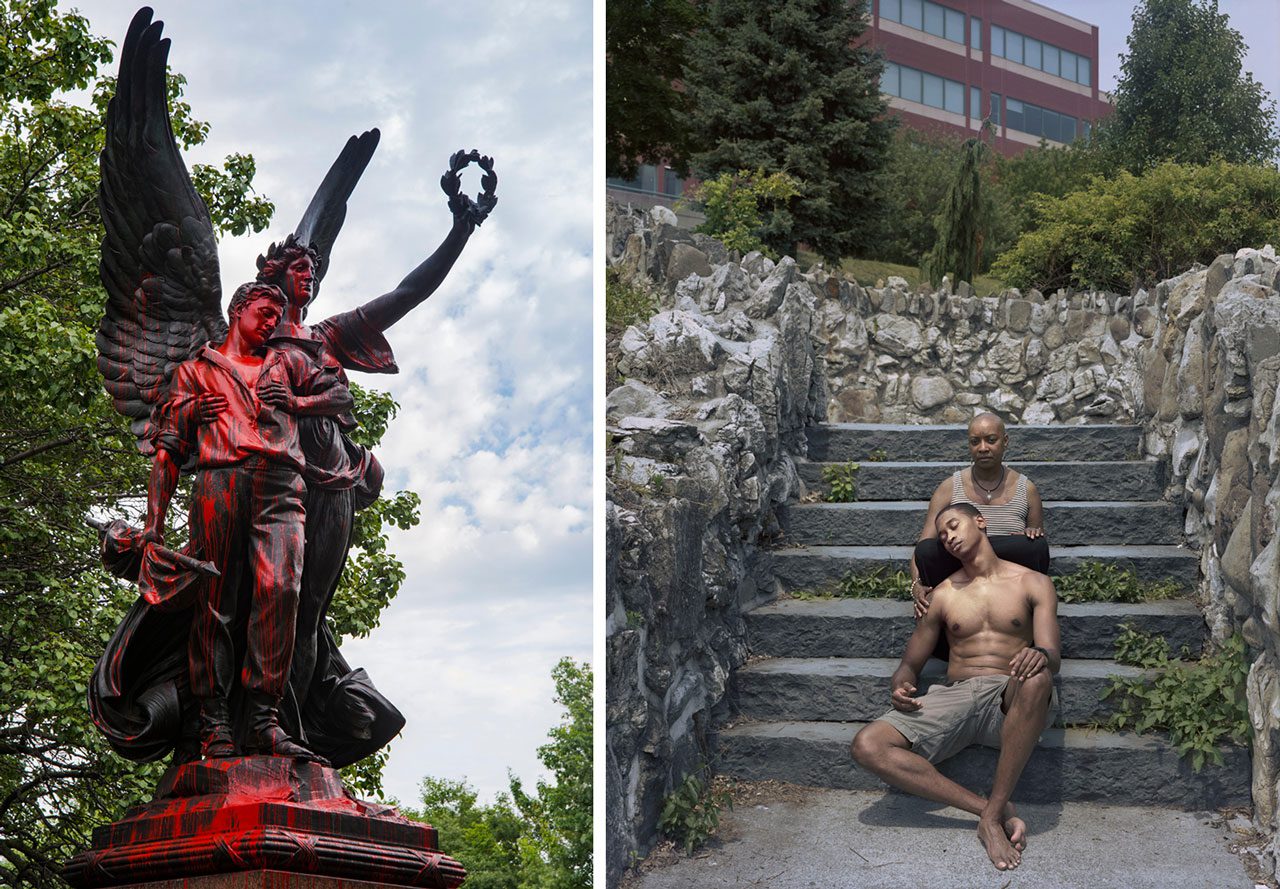
Right: Jon Henry, Untitled #9, Newburgh, NY, 2015. Digital archival print on matte paper. Courtesy of the artist