PREVIEW: Chiharu Shiota-The Soul Trembles
Berlin-based artist Shiota Chiharu is known for performances and installations that express the intangible: memories, anxiety, dreams, silence and more. Often arising out of personal experience, her works have enthralled people all over the world and from all walks of life by questioning universal concepts such as identity, boundaries, and existence. Particularly well-known is her series of powerful installations consisting of threads primarily in red and black strung across entire spaces.
By Dimitris Lempesis
Photo: MAO Turin Archive
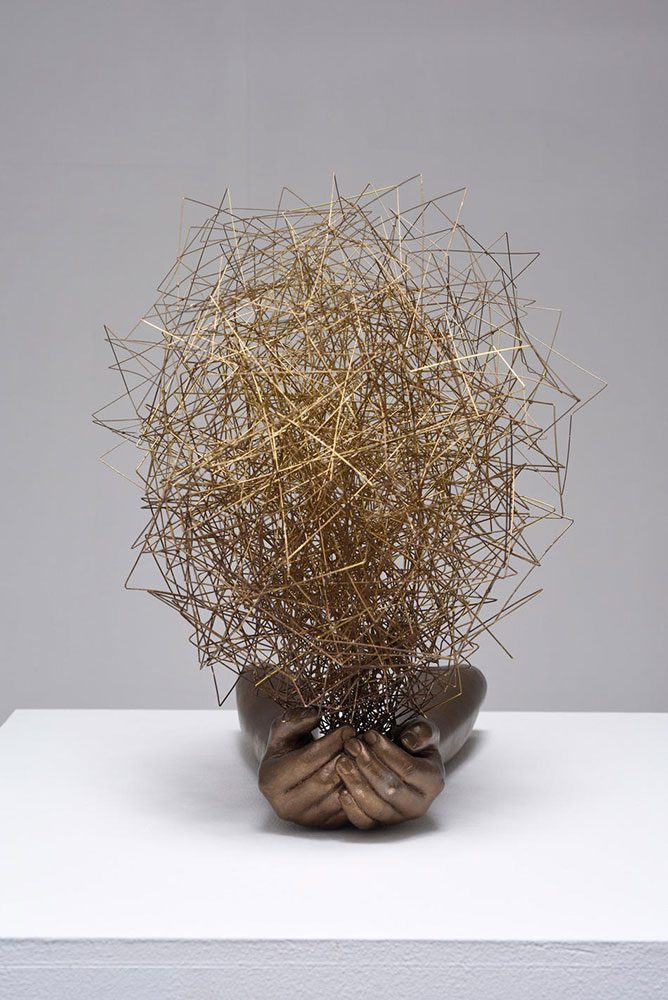
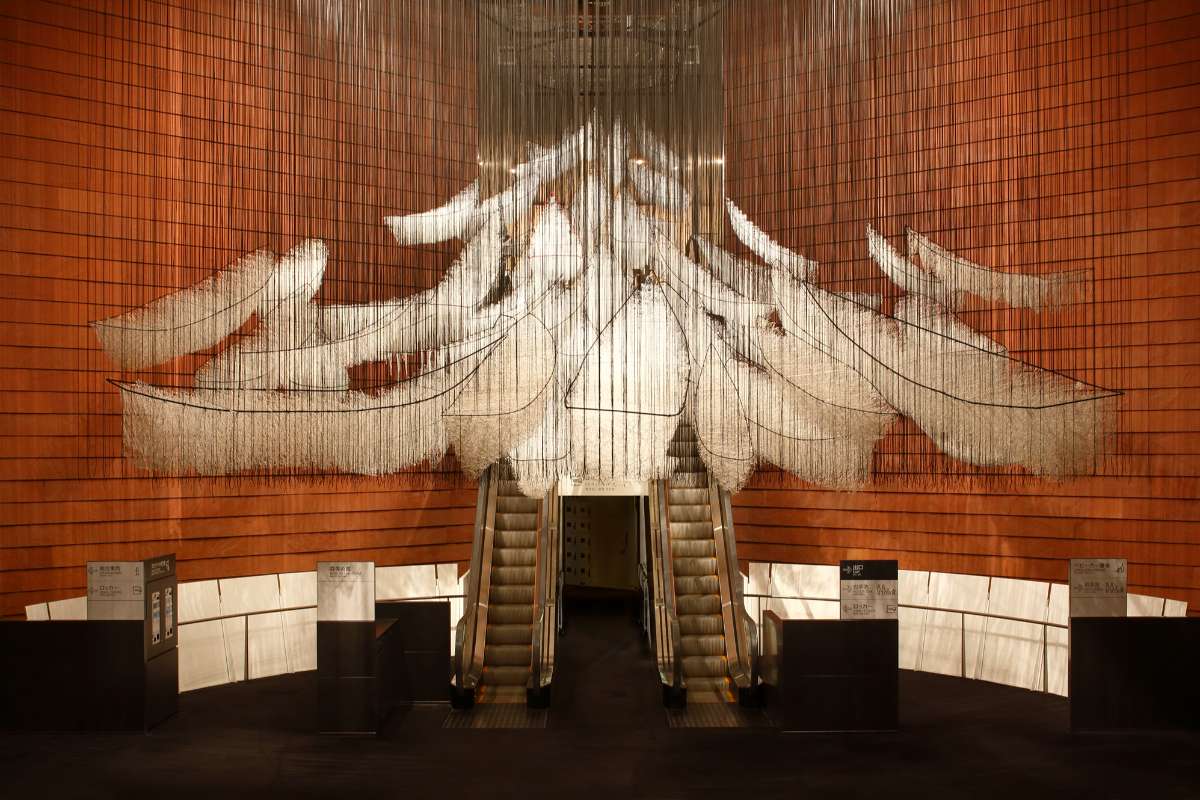
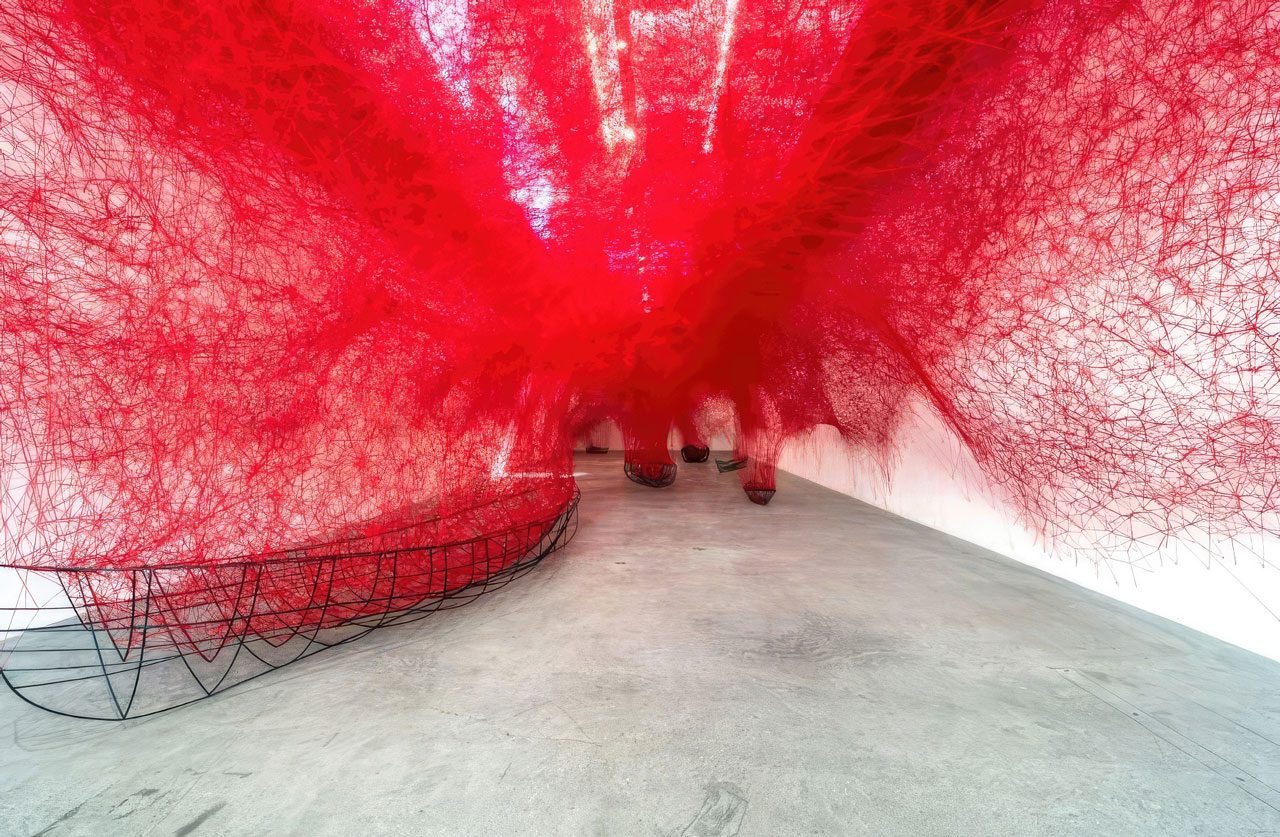
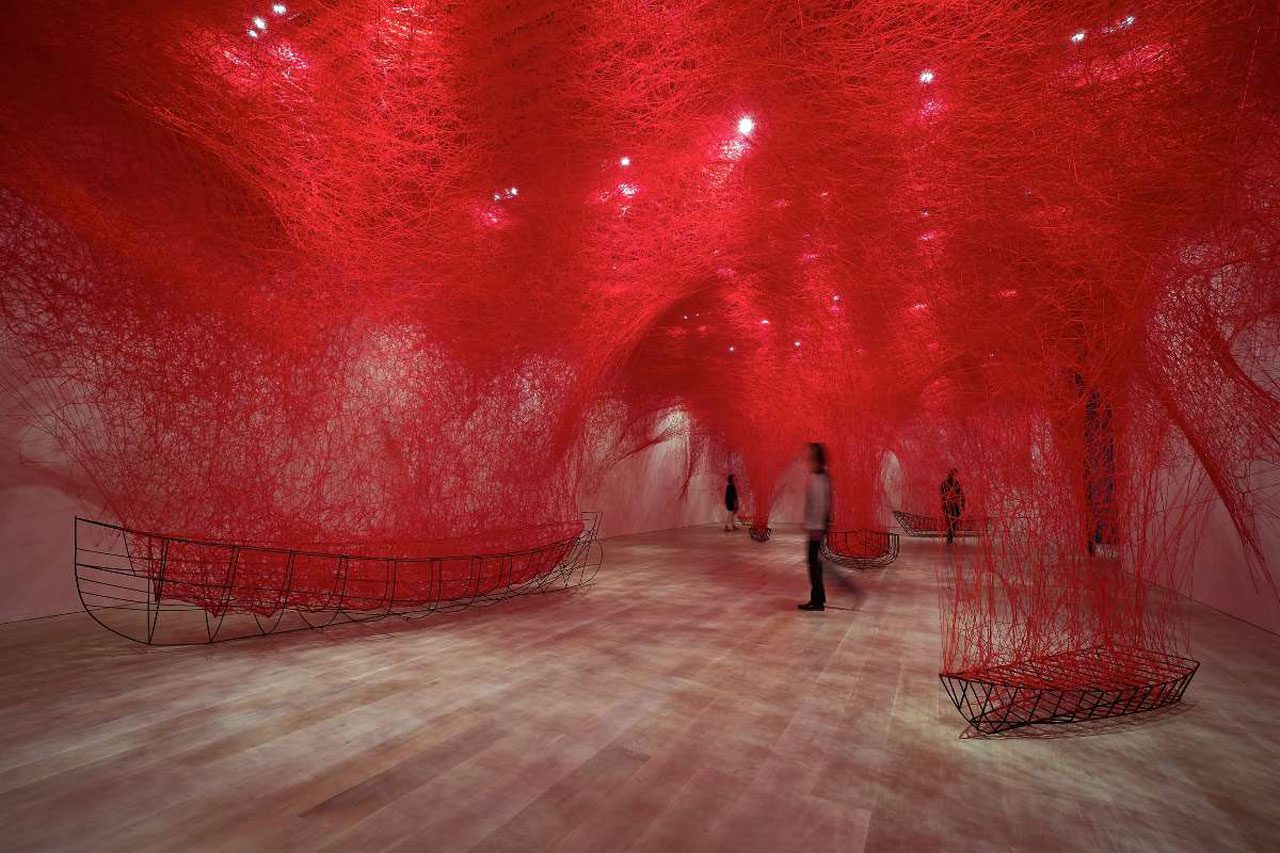
Often inspired by personal experiences, Chiharu Shiota’s works explore the intangible – memories, emotions, dream-like images and visions, offering silent spaces for contemplation – and raise questions about universal and existential concepts like identity, the relationship with the Other and life and death. Crossing temporal and spatial boundaries, her works deal with the most intimate, vulnerable part of the human being. The exhibition “The Soul Trembles” makes its Italian debut. The title “The Soul Trembles” references the artist’s earnest hope to deliver to others soul-trembling experiences derived from nameless emotions. This will be the first opportunity to experience in detail Shiota’s oeuvre; primarily in large installations, plus sculptural works, video footage of performances, photographs, drawings, performing arts-related material, etc. Through this exhibition epitomizing the “presence in absence” that Shiota has explored throughout her career, visitors will doubtless gain a sense for themselves of the meaning of living and journey of life, and the inner workings of the soul. In a practice spanning 31 years, Shiota Chiharu’s output is typified most obviously by her immersive installations, in which an entire space is strung with thread, usually red or black. Spectators walking through these spaces strung with thread are made aware, experientially and visually, of the intangible: invisible connections, memories, unease, dreams, and silence. Regarding the color of the thread, Shiota has said that the black can be interpreted as the night sky or cosmos, and the red as blood, or alternatively, the “red thread of fate” that in East Asian belief binds people together. This exhibition features large-scale immersive installations, combining objects such as boats and suitcases evocative of movement and travel, and a burned piano, suggesting silence. Among the works are: “Where Are We Going?”, the motif of the boat features frequently in Shiota Chiharu’s works, conjuring up visions of uncertain lives and futures akin to tiny boats bobbing in vast oceans. These 65 boats suspended from an 11-meter-high ceiling greet visitors as they enter the museum, inviting them to embark on the journey of the exhibition. “In the Hand”, an evanescent, fragile-looking object is protected in the palms of a child’s hands. Through her thread installations covering entire galleries, Shiota renders visible the invisible presences concealed within spaces, but this abstract motif, captured neatly between the palms, seems to represent the inherent life of her body, or spirit. It also calls to mind the “trembling soul,” the exhibition’s subtitle. The first installation encountered upon entering the galleries, “Uncertain Journey“ consists of the bare frames of boats arranged in a space covered in bright red threads. In her work for the Japanese Pavilion at the 2015 Venice Biennale, Shiota hung a mass of keys from the top of an old traditional Venetian boat, but in Uncertain Journey, the boats are more abstract, and the space filled with red thread seems to suggest the many encounters awaiting at the end of this uncertain journey.
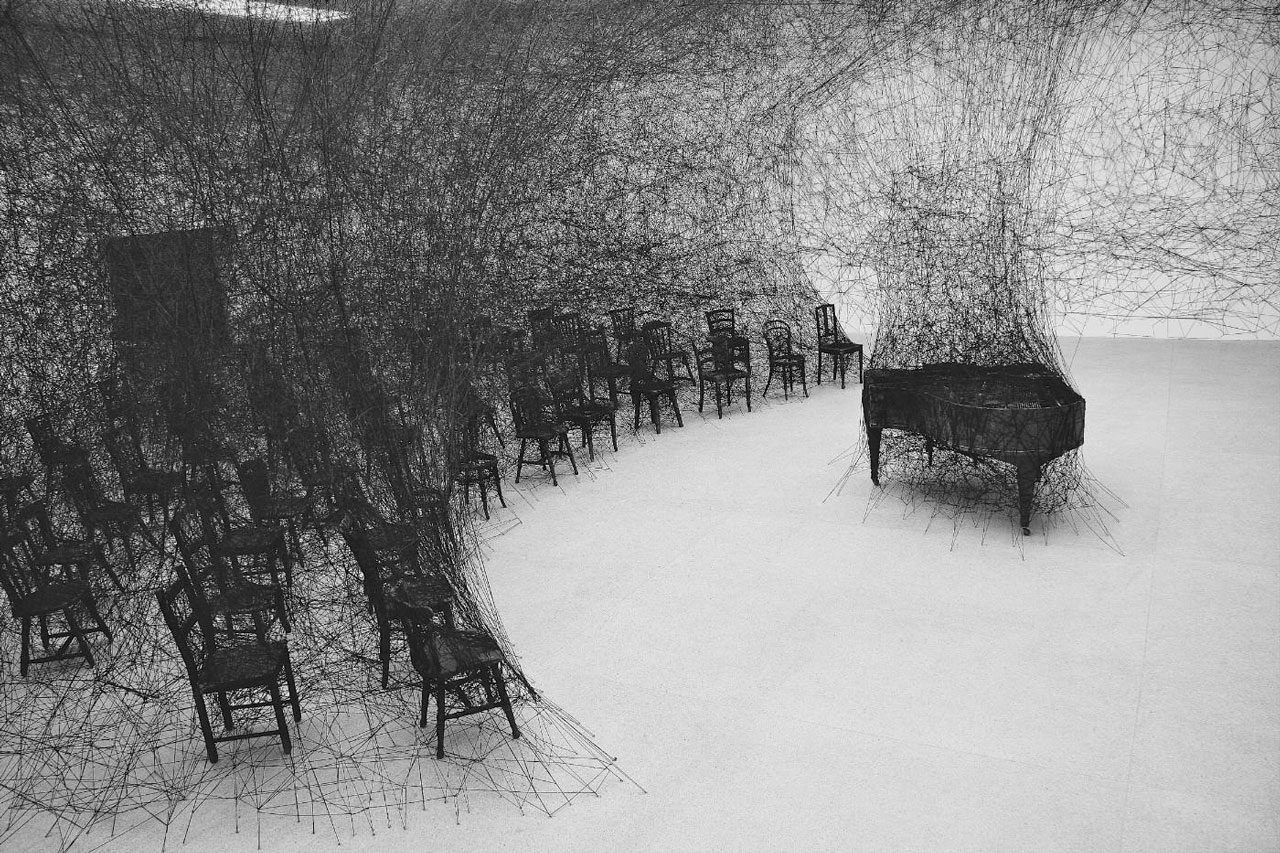
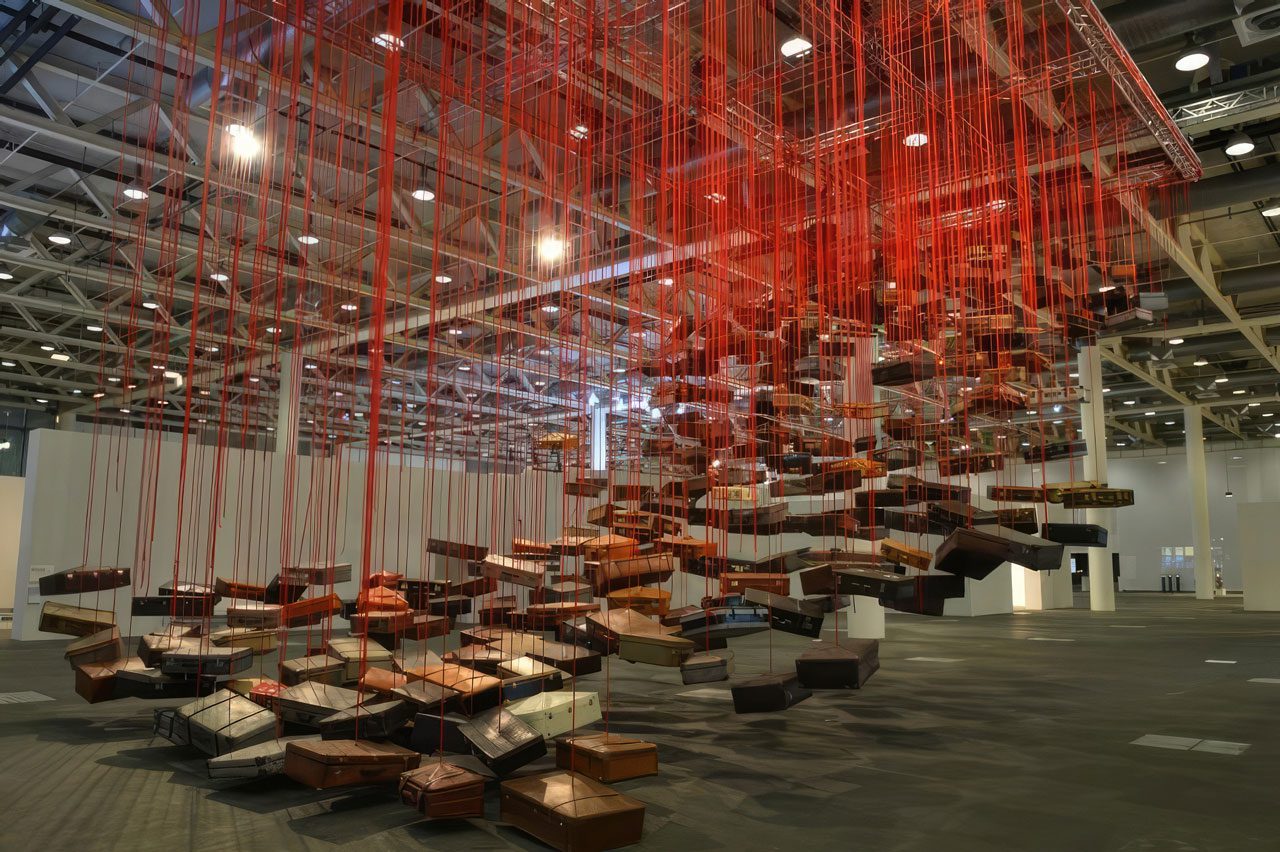
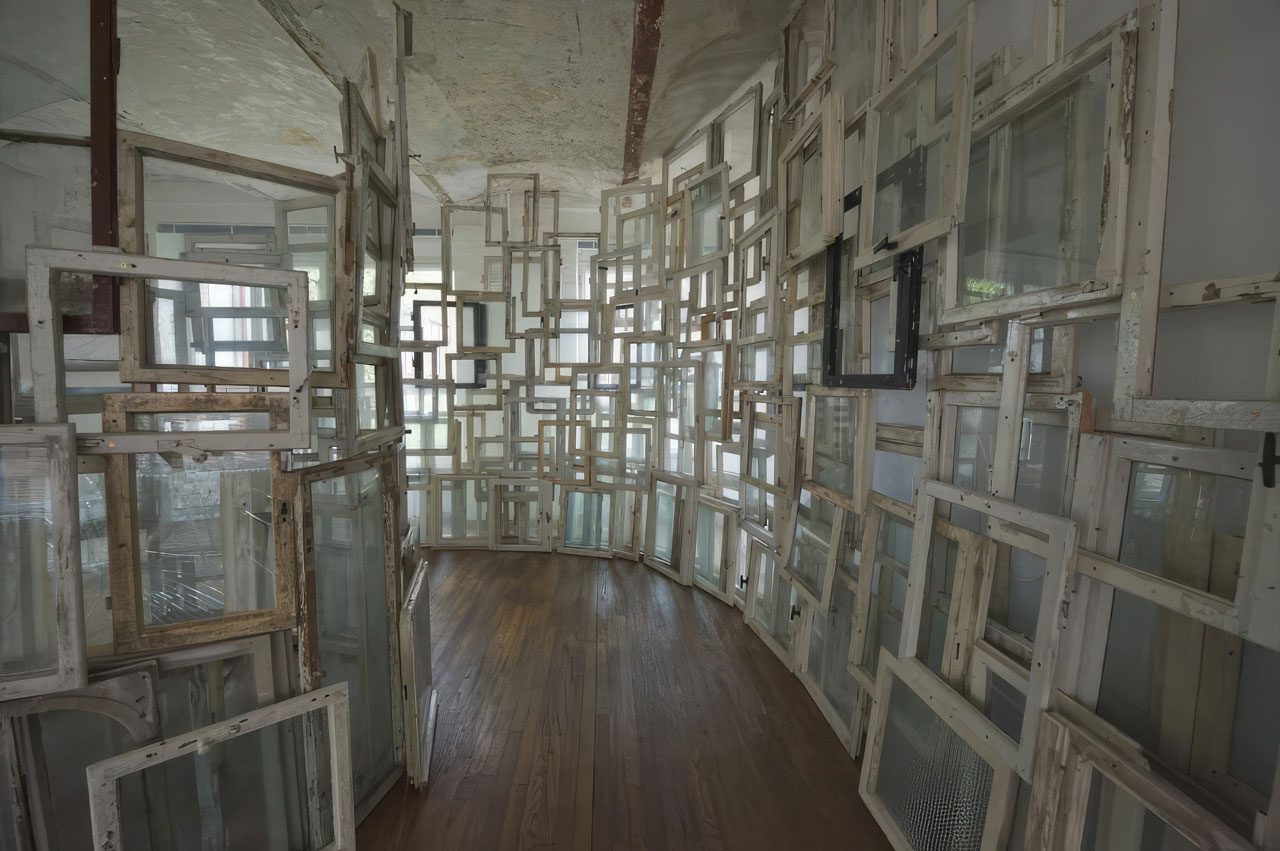
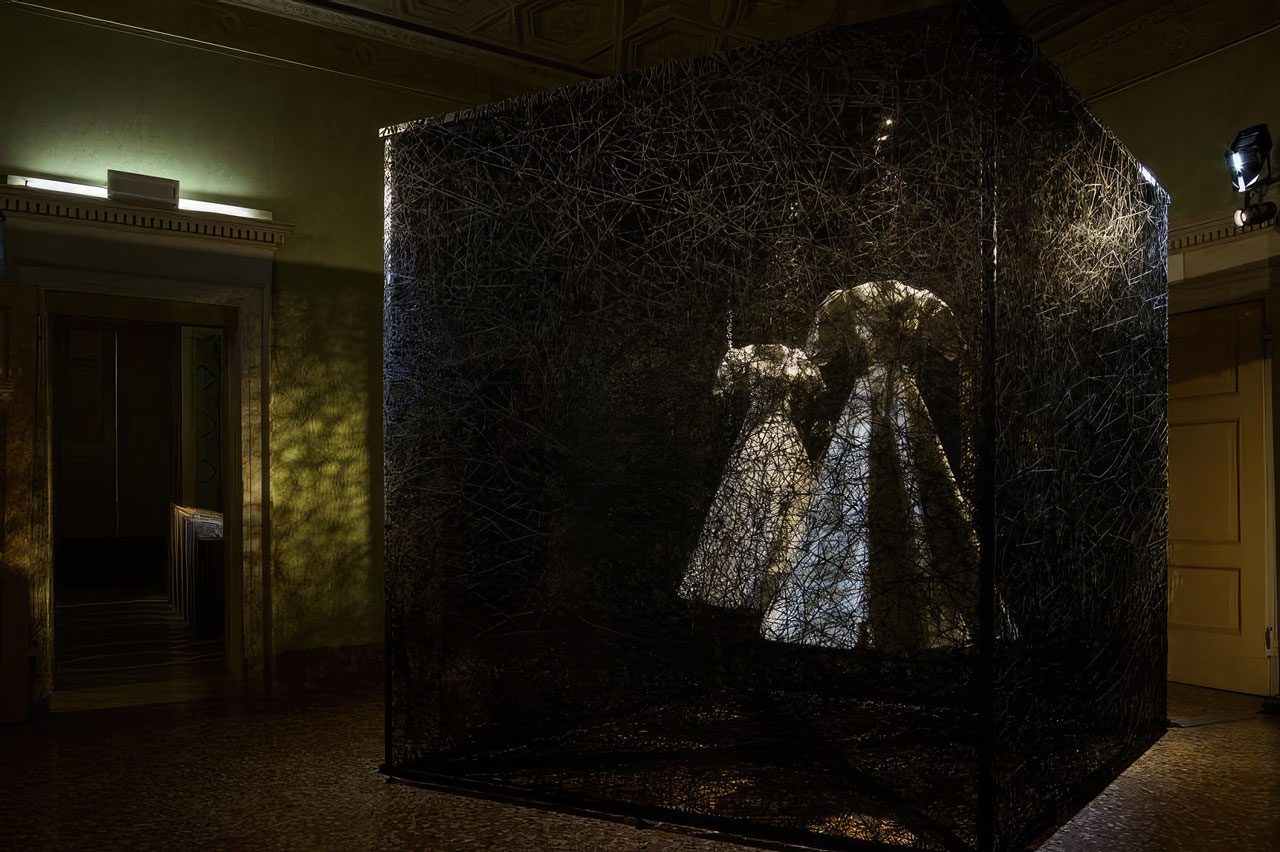
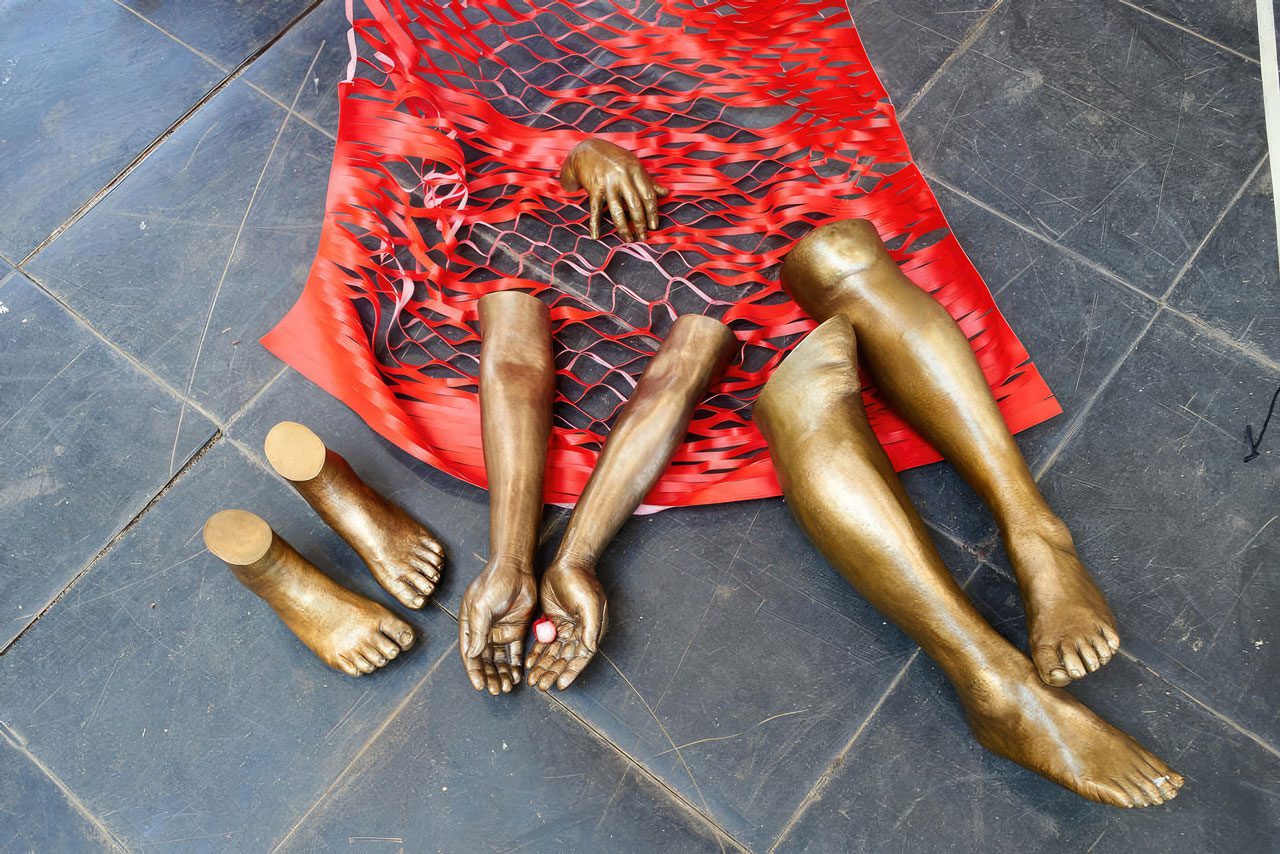
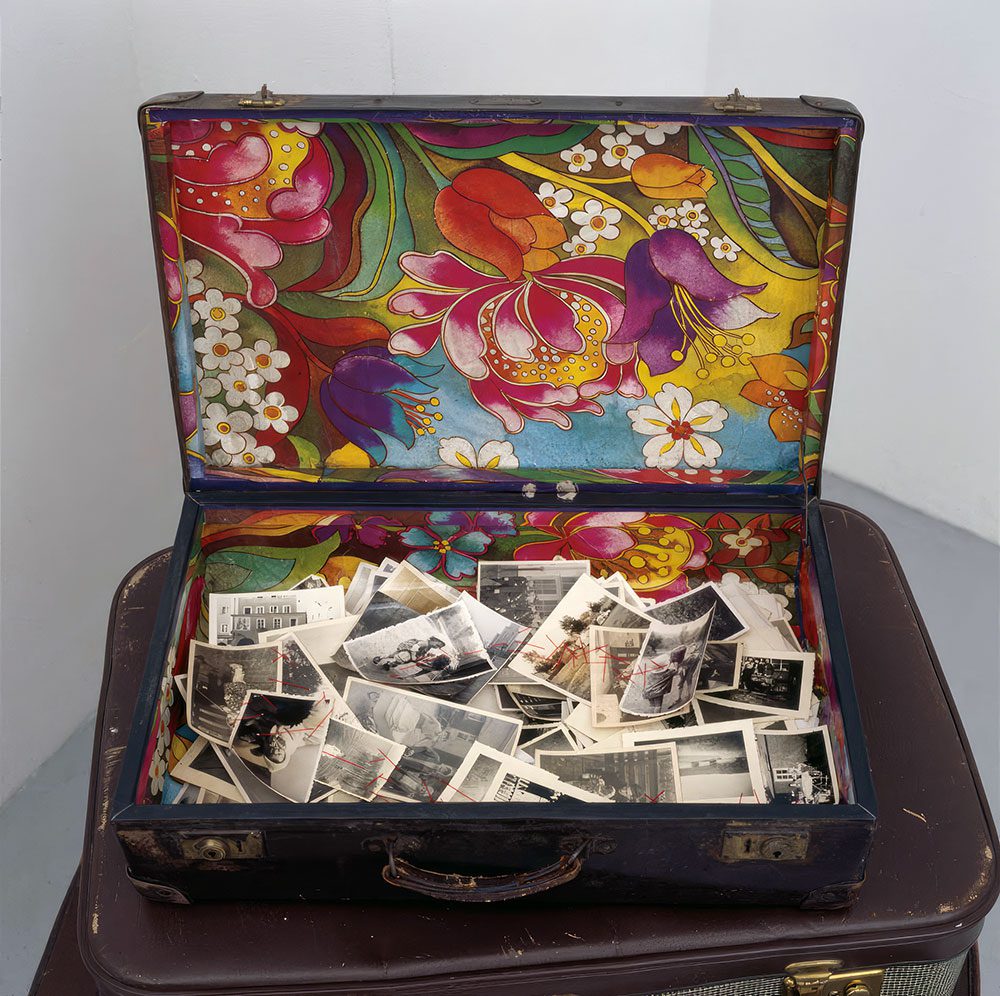
“In Silence” was born out of a memory of the next-door house burning down in the middle of the night when Shiota was a child. A burned piano and audience seating are covered, with the entire space, in black thread. While symbolizing silence, the soundless piano plays visual music. Like skin covering the body, dresses symbolize the boundary between one’s personal interior and exterior. Suspending such a dress in a space filled with black thread imparts a sensation of presence in absence. By hanging dresses on either side of a mirror dividing a space enclosed by a steel frame, “Reflection of Space and Time” blends in the mind of the viewer the illusory dress in the mirror, and the actual dress in the space opposite. Around 2004, fifteen years after the fall of the Berlin Wall, Shiota Chiharu who moved to Germany in 1996 and is currently based in Berlin started making works using windows. At the time, Berlin was undergoing extensive redevelopment that included demolition of many buildings, and Shiota went around gathering up discarded windows. Windows exist as a boundary between the inside and outside of private spaces, but also call to mind the wall that separated East and West Germany. The work “Inside – Outsid” was first made in 2008, and there are several versions. The installation “Accumulation – Searching for the Destination” is made up of around 430 oscillating suitcases. Shiota was inspired to create the installation by the discovery of old newspapers in a suitcase she found in Berlin. All things have their own, innate memories, and in this case, the suitcases seem to suggest the memories, movement and migration of strangers; or the refugee’s journey in search of a fixed abode; that is, the very journeys of people’s lives. “Where to Go, What to Exist” consists of personal photos, newspaper cuttings, rubble from buildings and other ephemera all gathered from somewhere – objects that suggest a lost past – are packed into old suitcases. Carrying someone’s memories in the form of keepsakes and souvenirs into a future where nothing is guaranteed, the cases seem to embody the thoughts of people living in an uncertain world, who yet seek the certainty of existence. “Out of My Body”, body parts began to appear in Shiota’s works following the 2017 return of her cancer and battle with the disease. Behind this was the experience of feeling that as she found herself on the treatment conveyor belt – having parts of her body removed, and undergoing chemotherapy – her soul was being left behind. For Shiota, who has always sensed the presence of life’s workings in absence, using her body as a work of art may involve imagining that absence.
Photo: Shiota Chiharu, Uncertain Journey 2016/2019 Metal frame, red wool Dimensions variable Installation view: Shiota Chiharu: The Soul Trembles, Mori Art Museum, Tokyo, 2019 Photo: Sunhi Mang Photo courtesy: Mori
Info: Curators: Mami Kataoka and Davide Quadrio, Assistant Curators: Anna Musini and Francesca Filisetti, MAO Museo d’Arte Orientale, via San Domenico 11, Torino, Italy, Duration: 22/10/2025-28/6/2026, Days & Hours: Tue-Sun 10:00-18:00, www.maotorino.it/