VIDEO: David Claerbout-Five Hours, Fifty Days, Fifty Years
David Claerbout is a Belgian artist known for large-scale video installations that explore and manipulate time, memory, and perception. His work blurs the lines between photography, film, and digital art, often creating a sense of suspended or elongated duration. A central theme in Claerbout’s art is the concept of duration, which he distinguishes from time, describing his process as “sculpting in duration”. He creates moments that stretch or compress, inviting viewers to experience time in a new way.
By Dimitris Lempesis
Photo: Konschthal Esch
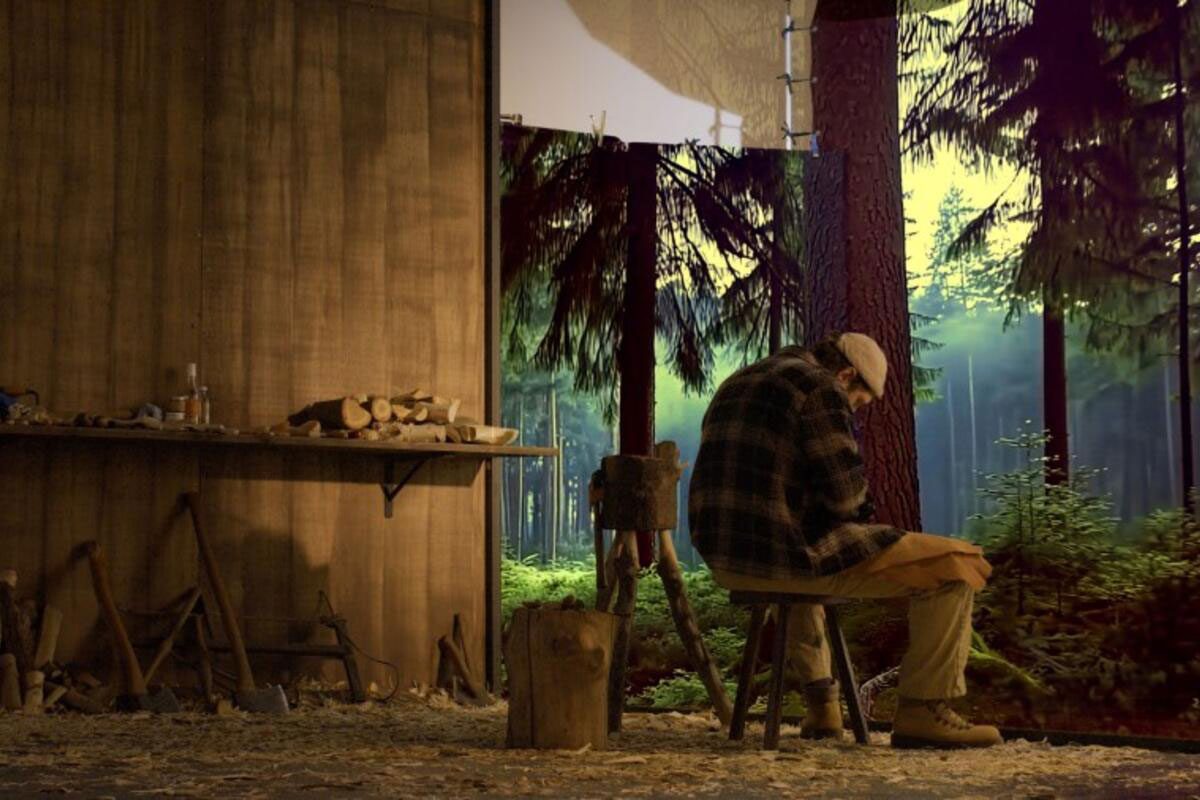
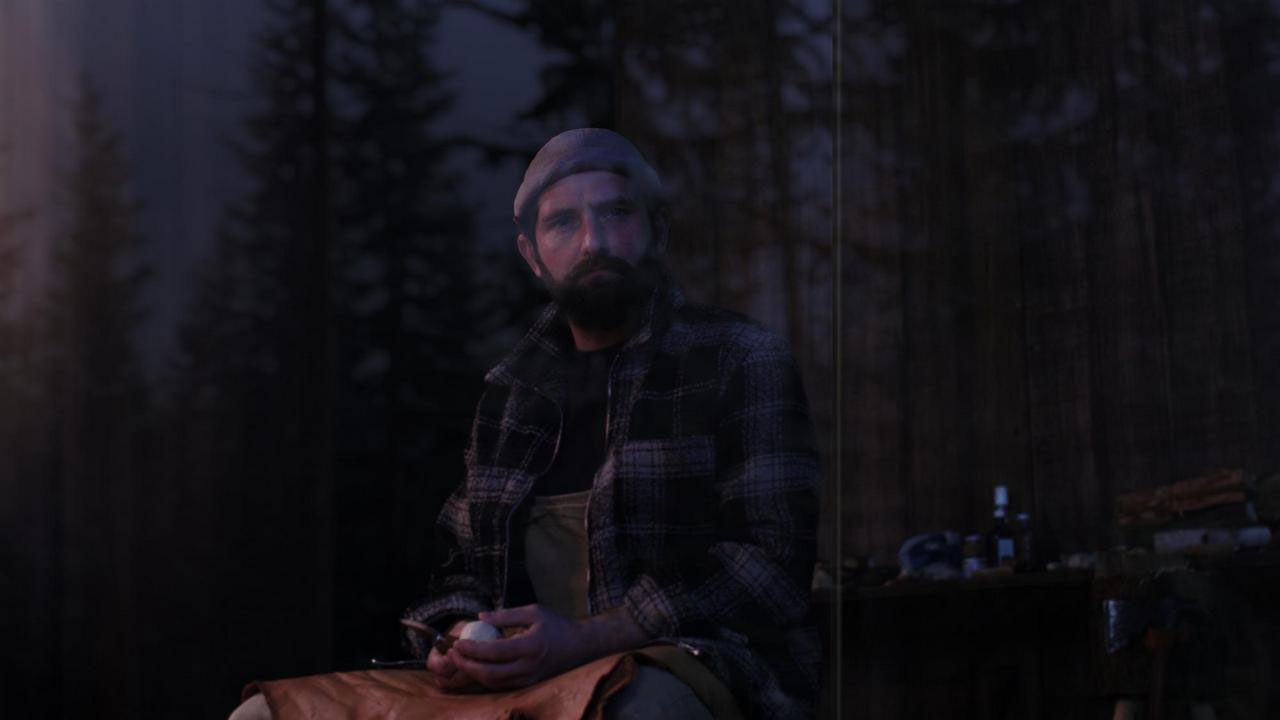
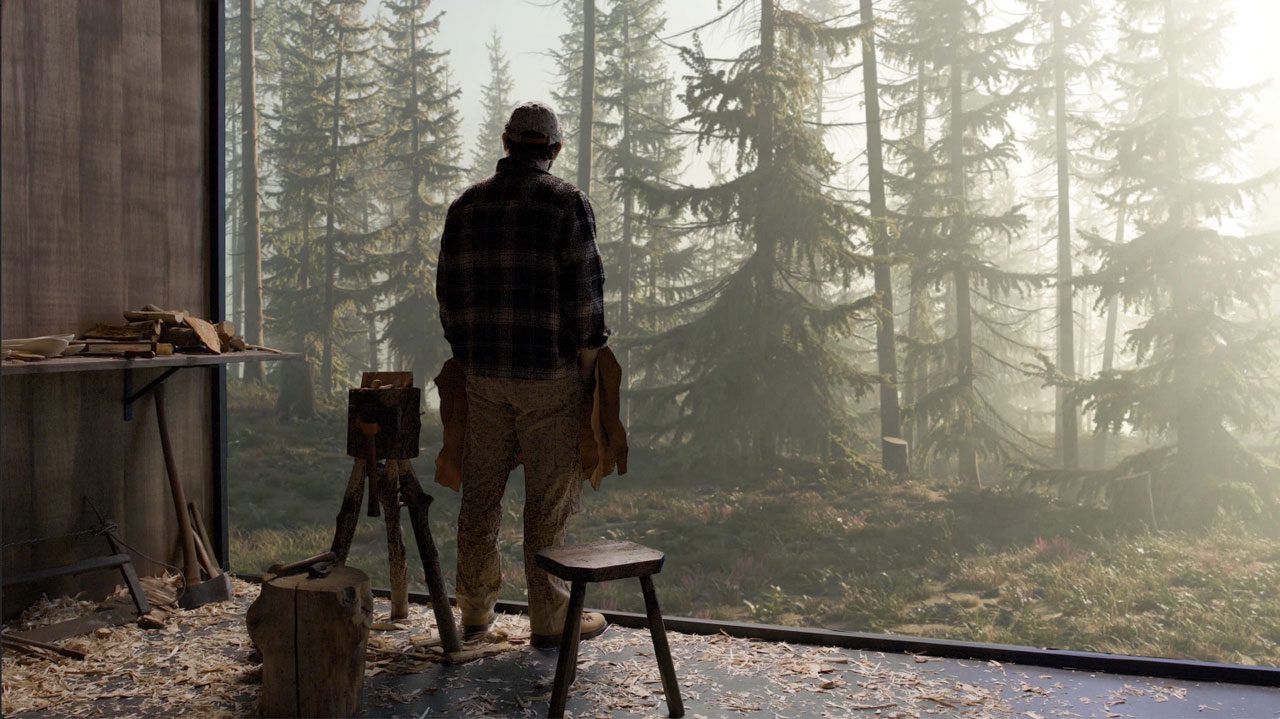
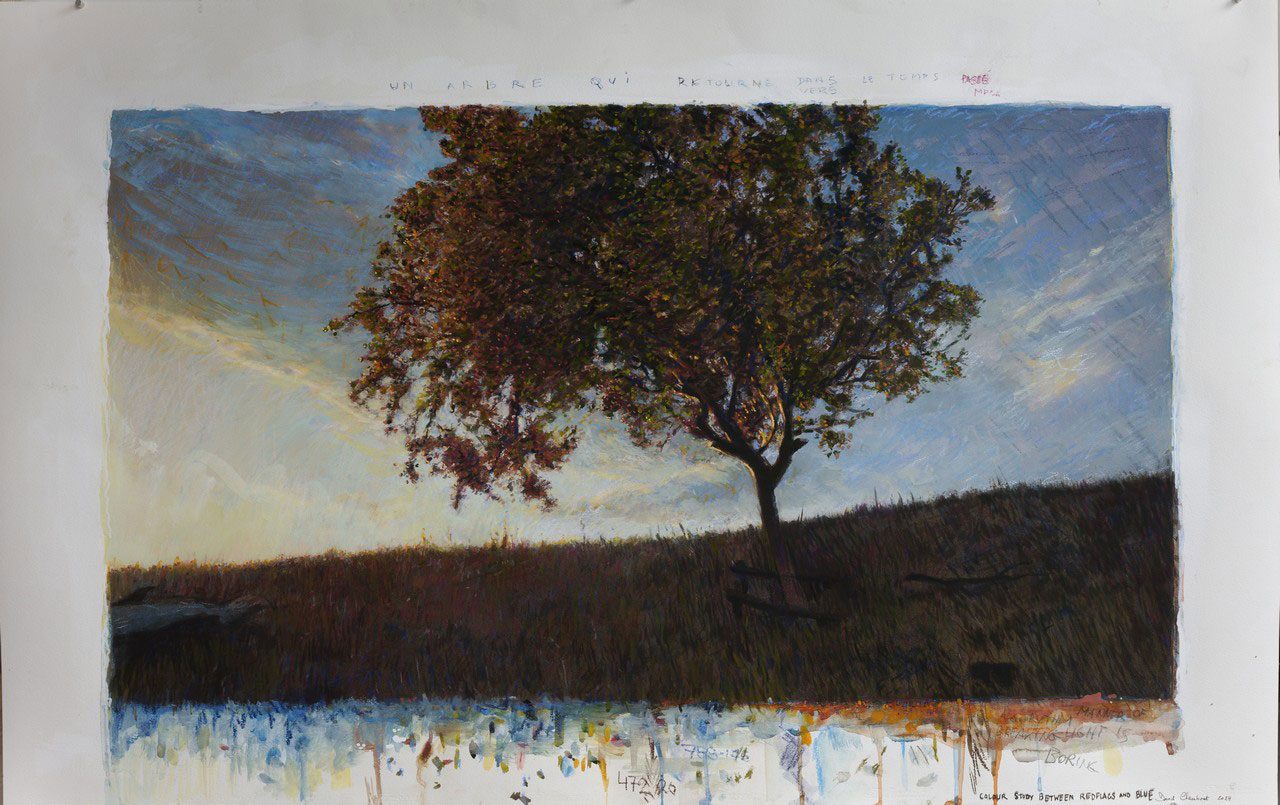
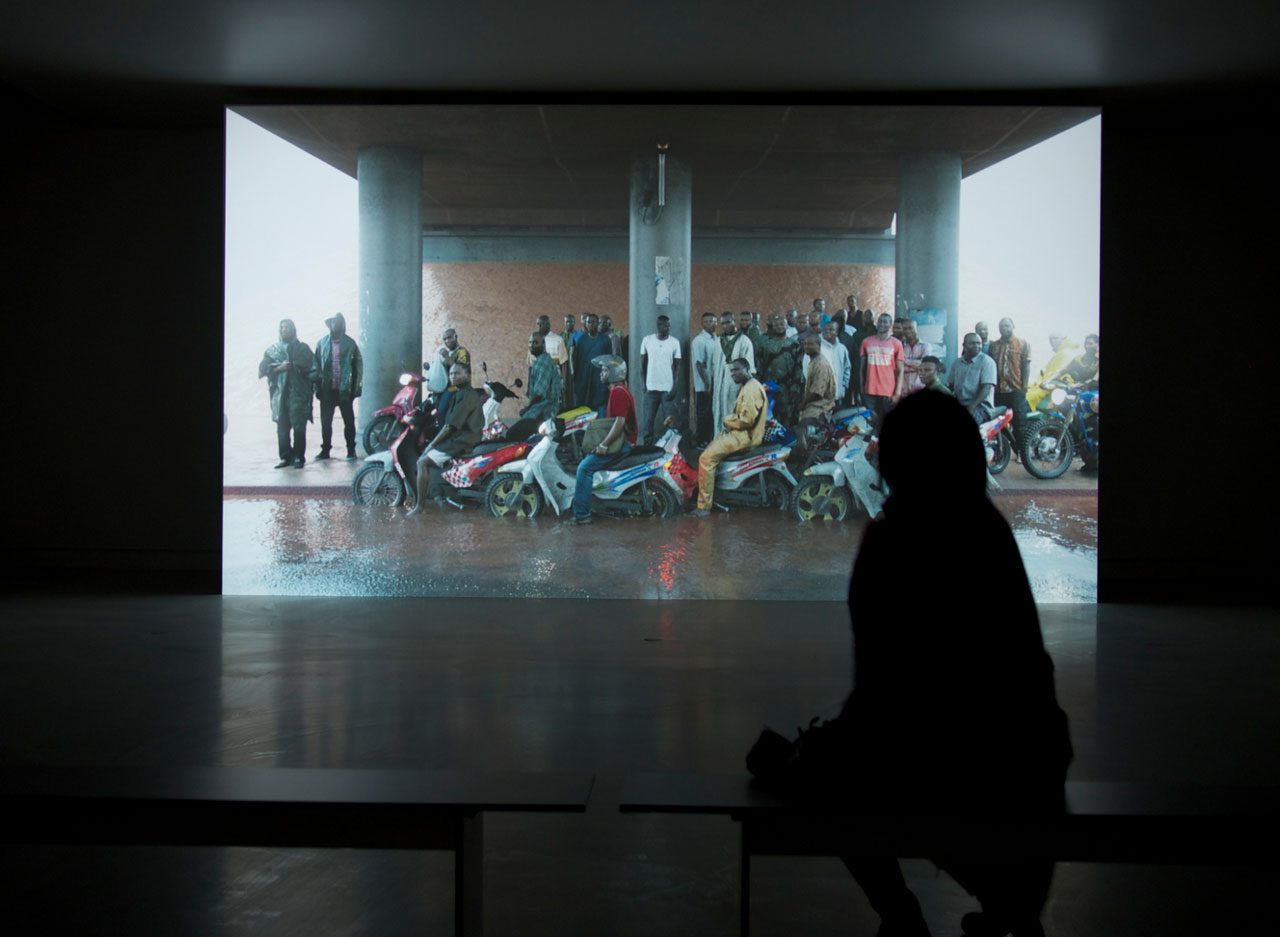
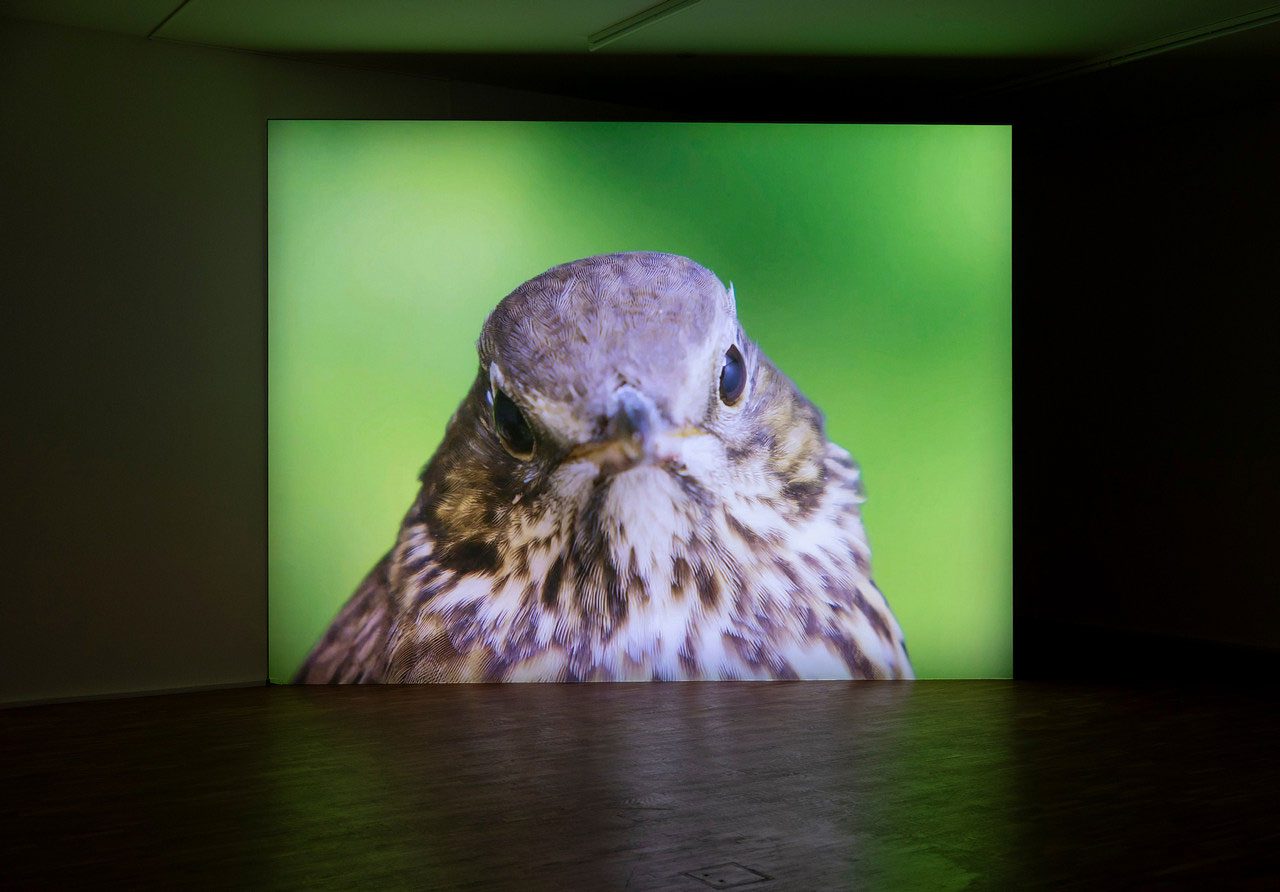
David Claerbout’s solo exhibition “Five Hours, Fifty Days, Fifty Years” serves as an encapsulated overview and include both earlier and recent works from Claerbout’s complex oeuvre, as well as his new work “The woodcarver and the forest”, described by the artist as less to be seen and more to live with. It is a performative film installation operating like a ruthless deforestation machine disguised as a mindful and pleasant meditative scene programmed to last for several years during which a forest surrounding the woodcarver’s modernist villa will be depleted as its trees will be used to make wooden objects. The title of the film “The woodcarver and the forest” hints at the craft of woodcarving that has gained in popularity in recent years as a way to relieve screen fatigue and connect to nature while living indoors. Especially among young adults, woodcarving has become a popular way to regain focus, become mindful and improve fine motor skills. Indeed: watching a log transform into a spoon can be categorised among the ASMR effects (Autonomous Sensory Meridian Response), with gentle cutting and scraping sounds and movements having a calming effect on the observer. For David Claerbout, who seemed particularly sensitive to ASMR stimuli, the process of creating this film became a paradoxical experience: a sensation of feeling deeply relaxed while working towards the stressful realization of this film – a practical conundrum. Whether this relaxation also occurs in the disarmed observer of the artwork, remains to be seen, but it’s clear that the deliberate use of ASMR suggests a certain irony towards the supposed engaging and transformative powers of contemporary art, an attitude that can be traced back to Claerbout’s earlier works, where he rather provocatively used relaxation music. Despite the use of this kind of popular low-culture motifs Claerbout’s work has been described as minimalist film art. He suggests we should seek art ‘over time’ rather than art as an image, hence art-to-live-with. “Backwards Growing Tree” is a digital rendering of a solitary tree in the countryside near Salsomaggiore Terme in the Italian province of Parma. Meticulously crafted by hand, the tree is observed over a period of 5 years. In an endeavor to defy the unidirectional flow of time, Backwards Growing Tree acts as a mirror. Much like the reflection in a looking glass, the natural processes in “Backwards Growing Tree” are reversed. Yet, remarkably, the fundamental laws of nature remain impervious to this temporal inversion: whether the wind is blowing in reverse or forward, whether rain falls up or down, and whether clouds progress backward or forward, our perception remains unaltered, demanding a deeper, more contemplative engagement with the artwork. It is only by observing Backwards Growing Tree over time that we can truly grasp an intimate understanding of it, resonating with the rhythmic cadence of our own breathing bodies. In “Birdcage”, an explosion shatters the tranquillity of a picturesque garden, conveying a sense of emergency in what could be a serene setting. The silent blast is captured with a long, muted shot, putting the viewer in a conflicted position to visually appreciate this scene of destruction. Not without a hint to René Magritte’s “Empire des lumières” (The Empire of Lights), Birdcage explores how our perception actively composes the world we inhabit. Continuing the interests of earlier works, in which Claerbout shifted the principal role from foreground to background, “Birdcage” shifts the attention from the center to the periphery, from a sun-drenched, (f)estive explosion of nature, to a state of tension. In line with his ideas about anti-anthropocentrism, the glossy starling and singing thrush are given a central role, highlighting the change in aura they undergo, from an index of lightness to an expressionist portrait of fear.
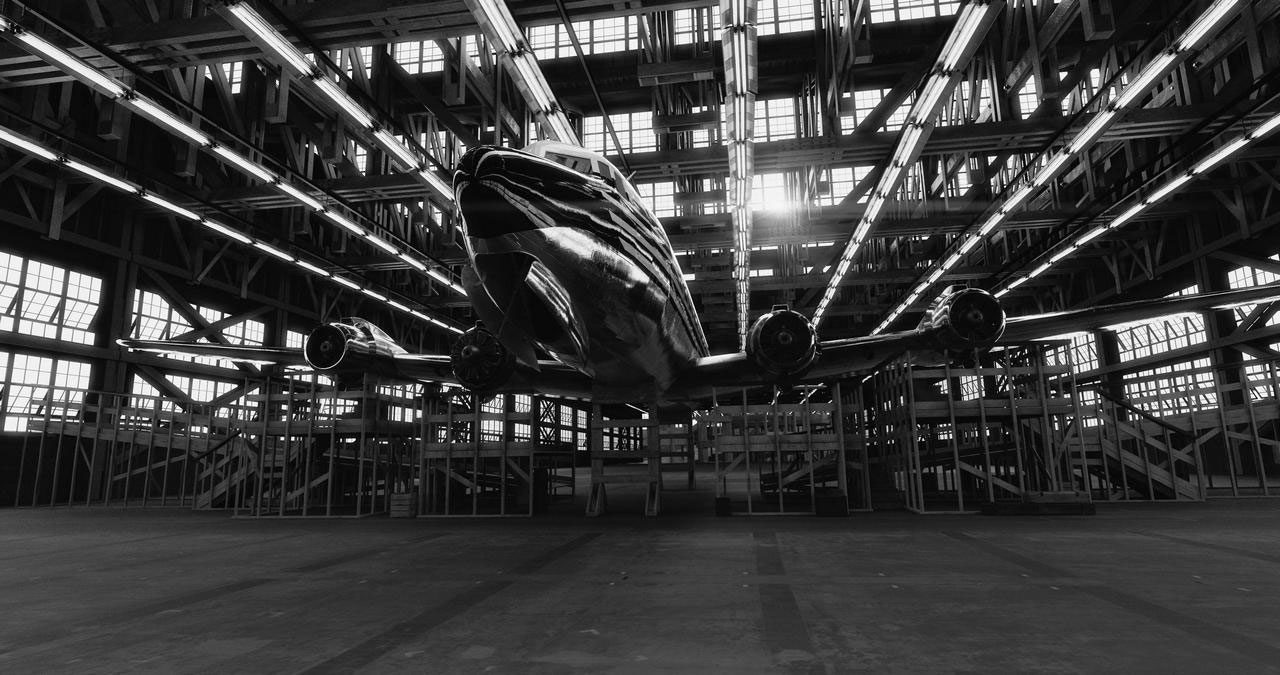
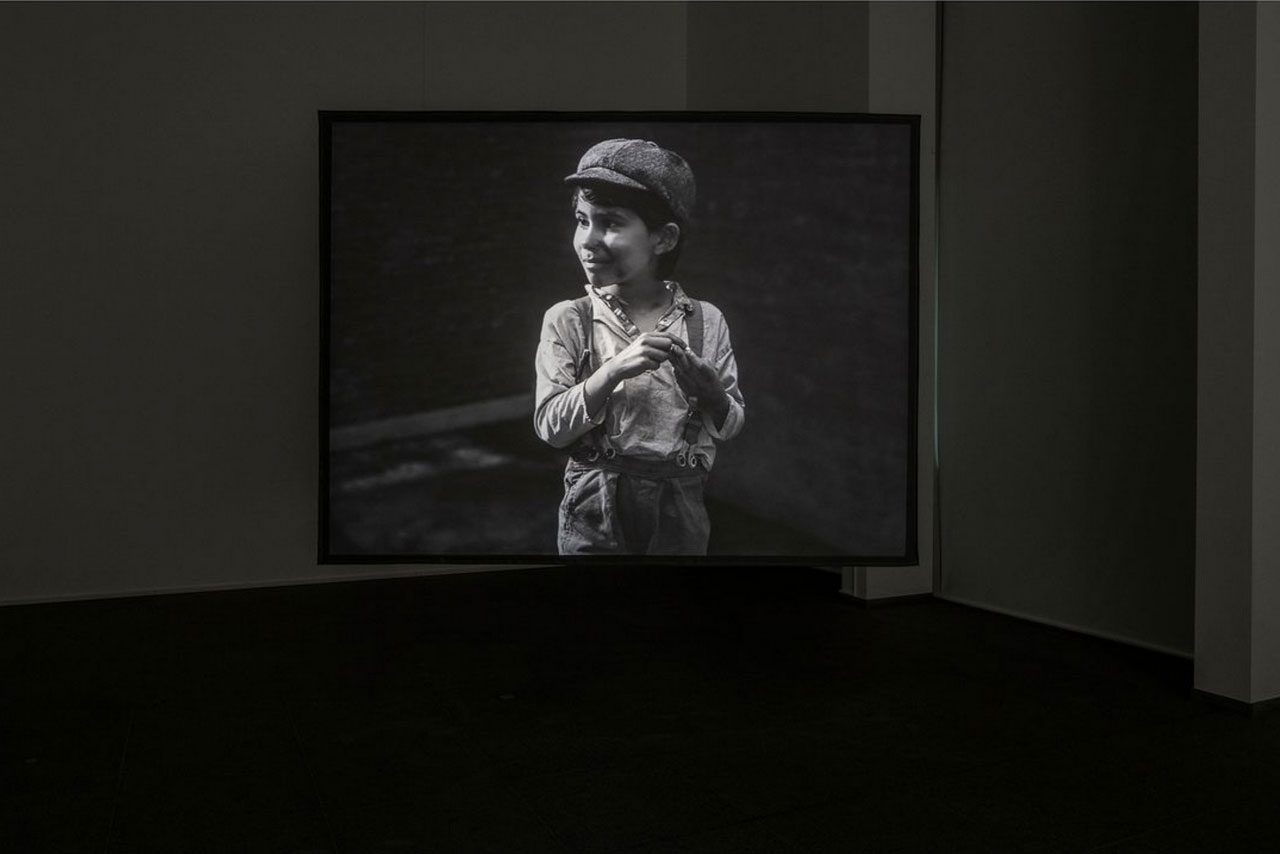
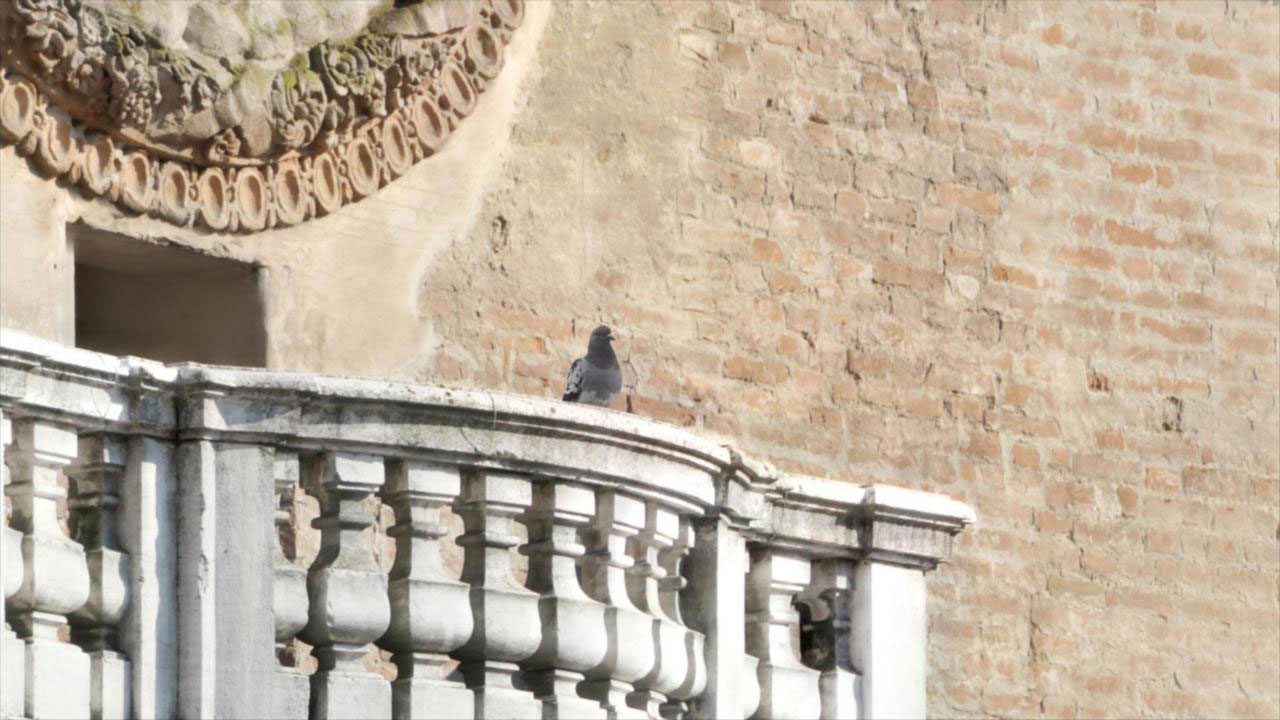
“The Close” is conceived as a journey traversing the past and future of the camera. It brings together a reconstruction of amateur film, circa 1920, and a digital 3D rendering of that footage. Reminiscent of so-called city symphonies during the early days of film, which marked the proliferation of the movie camera into daily life, the film opens with a street scene whose occupants are muted twice – socially and again, technically. Claerbout poetically attempts to restore their voices at the end of the film with a recording of 24 spatially distinct singers performing Arvo Pärt’s 2004 vocal composition Da Pacem Domine, thus surrounding an isolated child, who has become the focus of the film, with an architecture of voices. In the video work “Mantova Pigeon” a traveling shot in a constant zoom-in zoom-out movement is focused on the figure of a pigeon resting upon the balcony’s balustrade of the façade of the Torre dell’Orologio on the Piazza delle Erbe in Mantova, Northern Italy. Alluding to imagery of fascist Italy, where balcony speeches were pivotal in fascist propaganda and served as a central element in the cult of personality around its leader, the film investigates the sense of power and theatricality conveyed by this architectural motif. “Aircraft (F.A.L.)” was recorded with a camera in an empty factory hall. The scene was created and added with the aid of an elaborate 3D model. A hybrid representation that skilfully creates the illusion of a photographic reality. The ‘assembly line’ in Aircraft (F.A.L.) is not arbitrary. “Working with synthetic images is operating in an extremely fragmented world where masses of details pretend to be a totality”, explains Claerbout referring to the work of neuropsychologist Iain McGilchrist and his theory about divided attention. “The synthetic image does indeed have something pathological about it, similar to the fragmented sensorial world of the schizophrenic patient.” The airplane in “Aircraft (F.A.L.) “with its airgrade aluminium carcass, which like all airplanes is designed to overcome gravity, is caught in the Cartesian coordinate system consisting of millions of polygons. Seeking to disrupt the linearity of our experience of time by introducing intersecting layers, “Aircraft (F.A.L.)” features an object that appears simultaneously unfinished and redundant, as if it were a newly discovered sarcophagus. Likewise, the factory hall – where the future is being produced – is confounded with the museum – where the past is being made. “The confetti piece” captures a singular moment extracted from what appears to be a local election in the United States. Thousands of confetti descend from the sky, as guests start applauding. Set against the backdrop of a neo-classical building, the falling confetti draws all eyes upwards. The particles, descending delicately like transparent flower petals, appear as an index of lightness. Through this material, Claerbout, in a quest for remnants of tactility within the digital realm, unites seemingly irreconcilable aspects in the physical world: weightlessness and heaviness. At the heart of the work lies a detail within the scene: the panic reflex of a young boy. Like a gravitational force, his muted scream counteracts the upward movement and pulls the objects in the picture back down. Both the qualities of lightness and weight co-exist in their enduring opposition, producing a new, third dimension that truly reveals itself over time (as minutes unfold). For Claerbout digital materiality won’t be confined to virtual reality alone; instead, it aspires to permeate numerous aspects of life, altering both optical and material habits. Consequently, lens-based images are already a part of the past, making way to be replaced by dark optics.
Photo: David Claerbout, Mantova Pigeon (still), 2021, single channel video, color, stereo audio, 5 min 10 sec loop, © David Claerbout, Courtesy the artist and Konschthal Esch
Info: Guest curator: Ory Dessau, Curator: Christian Mosar, Assistant Curator: Charlotte Masse, Konschthal Esch, 29 Bd Prince Henri, Esch-sur-Alzette, Luxemburg, Duration: 18/10/2025-22/2/2026, Days & Hours: wed-Thu & Sat-Sun 11:00-18:00, Fri 11:00-20:00, www.konschthal.lu/