PHOTO: Marc De Blieck-Point de voir
At the heart of Marc De Blieck’s practice is a radical questioning of photographic “obviousness.” His work exposes the tension between the camera’s function as a registering device and the artist’s hand in artificial construction. Through a combination of new and existing pieces, the exhibition “Point de voir” reveals how he critically dissects the cultural and technological processes that make image-making possible, using a deceptively simple visual grammar to unpack complex ideas.
By Dimitris Lempesis
Photo: SMAK Archive
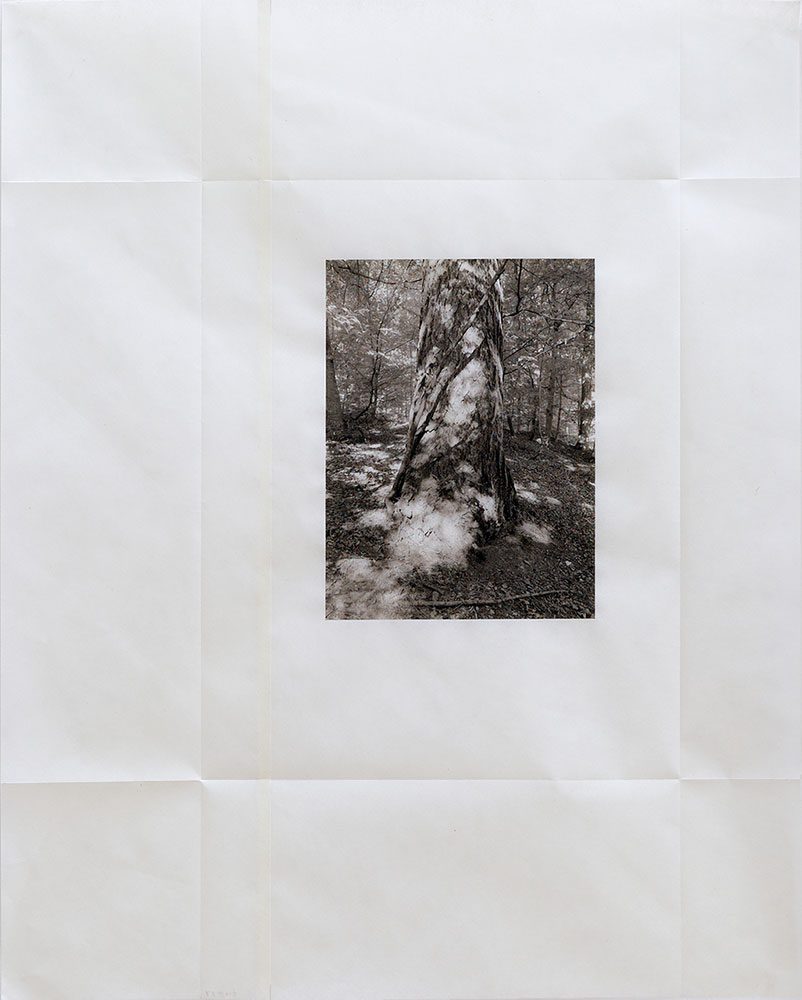
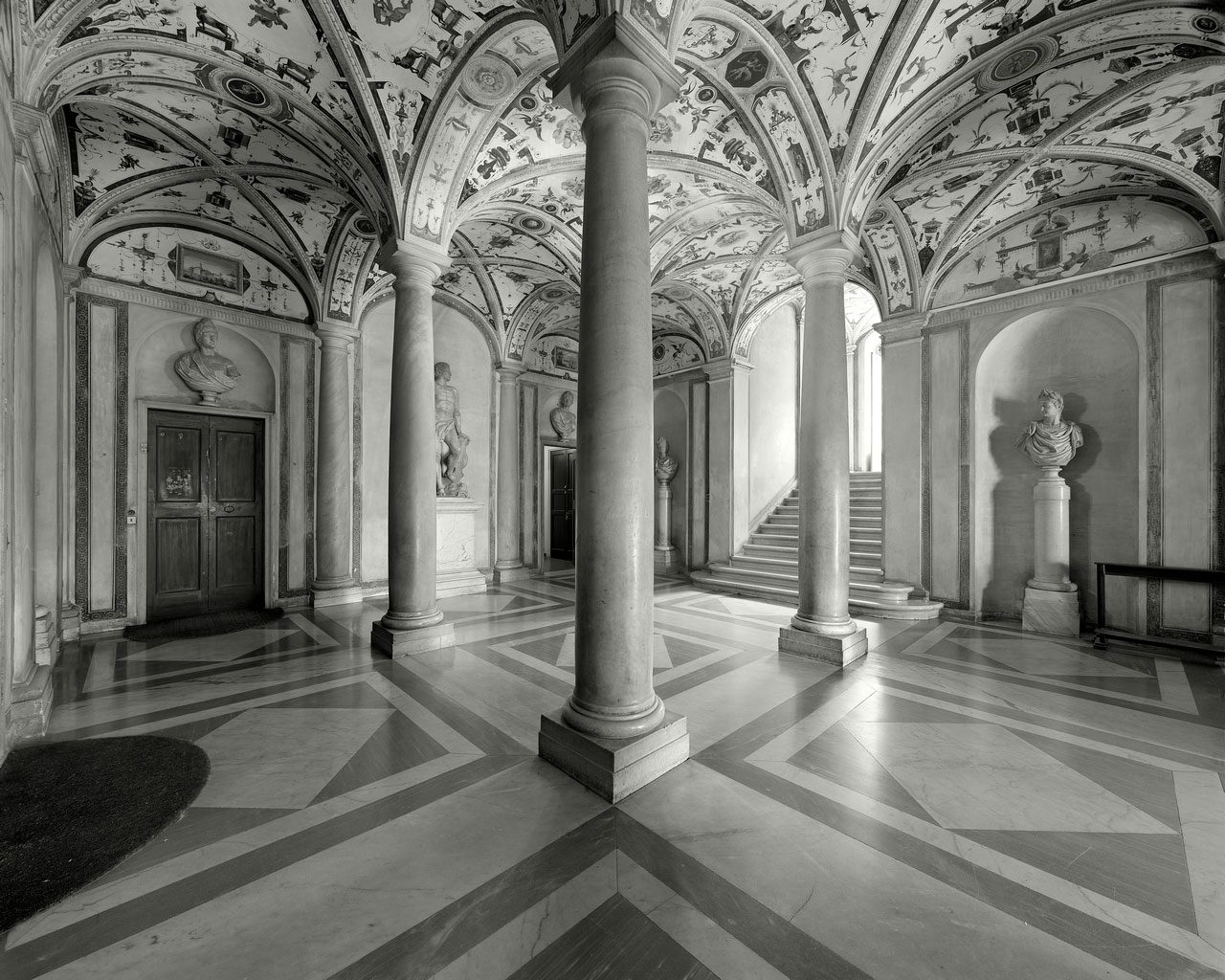
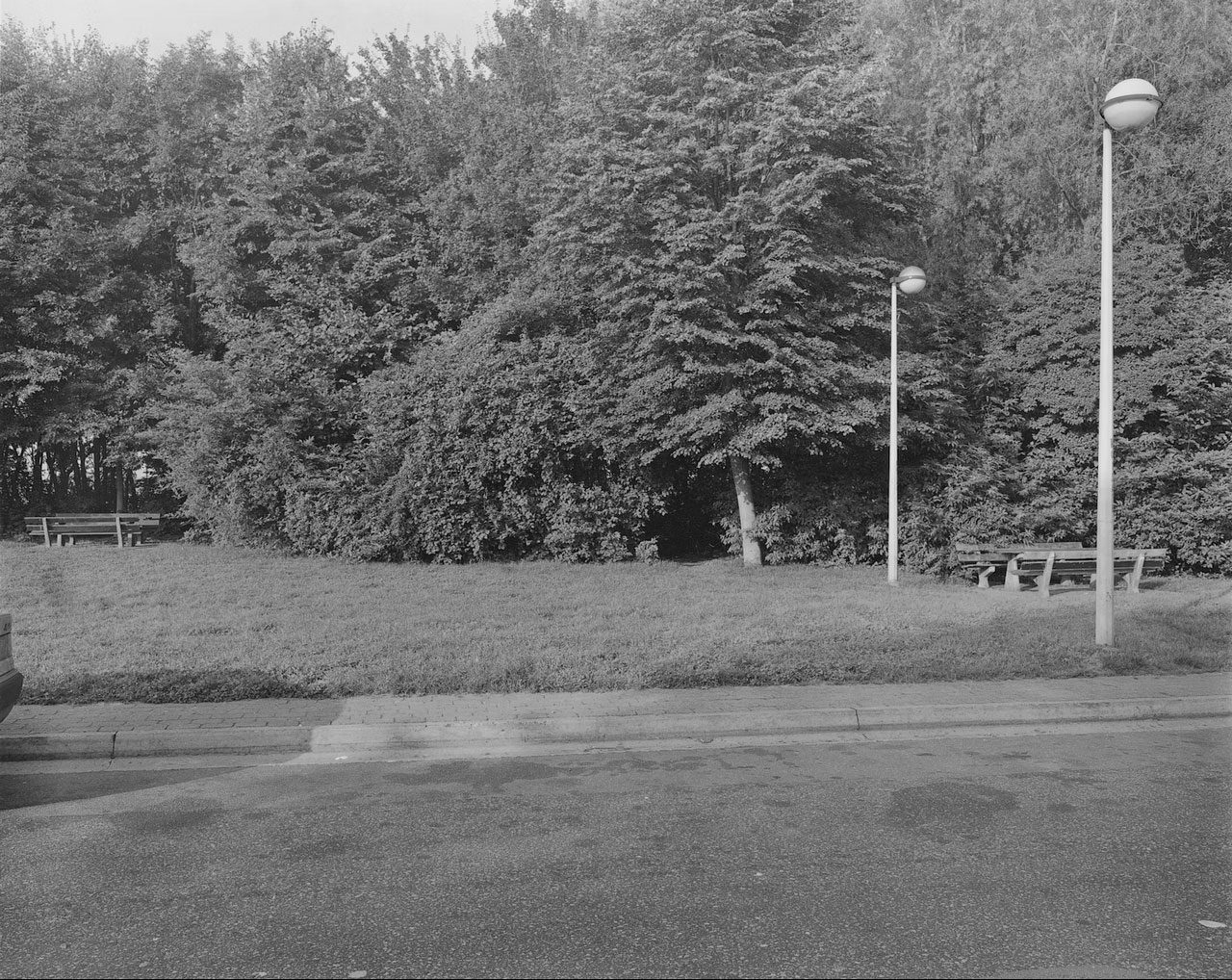
In an era saturated with images desperate to communicate, persuade, or tell a story, the work of Marc De Blieck arrives as a quiet, radical disruption. His exhibition, “Point de voir” takes its title from a concept by French polymath Fernand Deligny, distinguishing it from the familiar “point de vue” (viewpoint). A “point of seeing” is not a position to be occupied; it is an imaginary, pre-linguistic act of perception, detached from opinion or decision. This is the conceptual terrain De Blieck masterfully explores: a photography that rigorously evacuates the author’s standpoint to question the very nature of seeing itself. De Blieck challenges the foundational expectation that a photographer must convey a specific insight. He deliberately severs the link between the camera’s physical position and a subjective viewpoint. Yet, his images are neither vague nor indecipherable. Instead, they pivot to what photography does uniquely: they possess an almost overwhelming sharpness and a profound capacity for detail. They invite us not to understand, but to look—closely. And while there is much to see, a stubborn resistance to immediate clarity remains. De Blieck breaks our habitual vision through a wide field of view that exceeds the human eye and a meticulous play with colour, format, and printing techniques. The exhibition, composed of seven series, is a journey through this sustained inquiry. B-sites (2000): Around the turn of the millennium, architect Wim Cuyvers visited multiple car parks along Belgian motorways. He noted the parameters of how these sites, once limited to petrol stations or stops for a picnic or toilet break, had developed into meeting places for quick and anonymous sex. They became a model for the place beside the stream, a place to be filled in. Every user seeks its own position there, according to their needs. Each use leaves specific traces behind. At Cuyvers’ invitation, Marc De Blieck joined this project. When determining the position from which the photographs for this series were taken, he was guided by the ‘needs’ of the camera, and the traces of this are contained in the resulting images. The photographs were made with an 8 × 10” technical camera on a tripod. These are contact prints on gelatin silver baryta paper, produced from the negatives. Pixels (2002 onwards): These paintings are interpretations of a score based on the Fibonacci sequence, supplemented by opaque yet strict rules. The way the paintings were created, is comparable to the workings of a photographic device: a combination of operational algorithms and inscrutable dark chambers, through which pixels are arranged on a flat plane. The paintings depict neither visible reality nor algorithms. They do not offer a path to their origin. With the exception of one printed image, the works are executed either in oil on canvas or ink on paper.
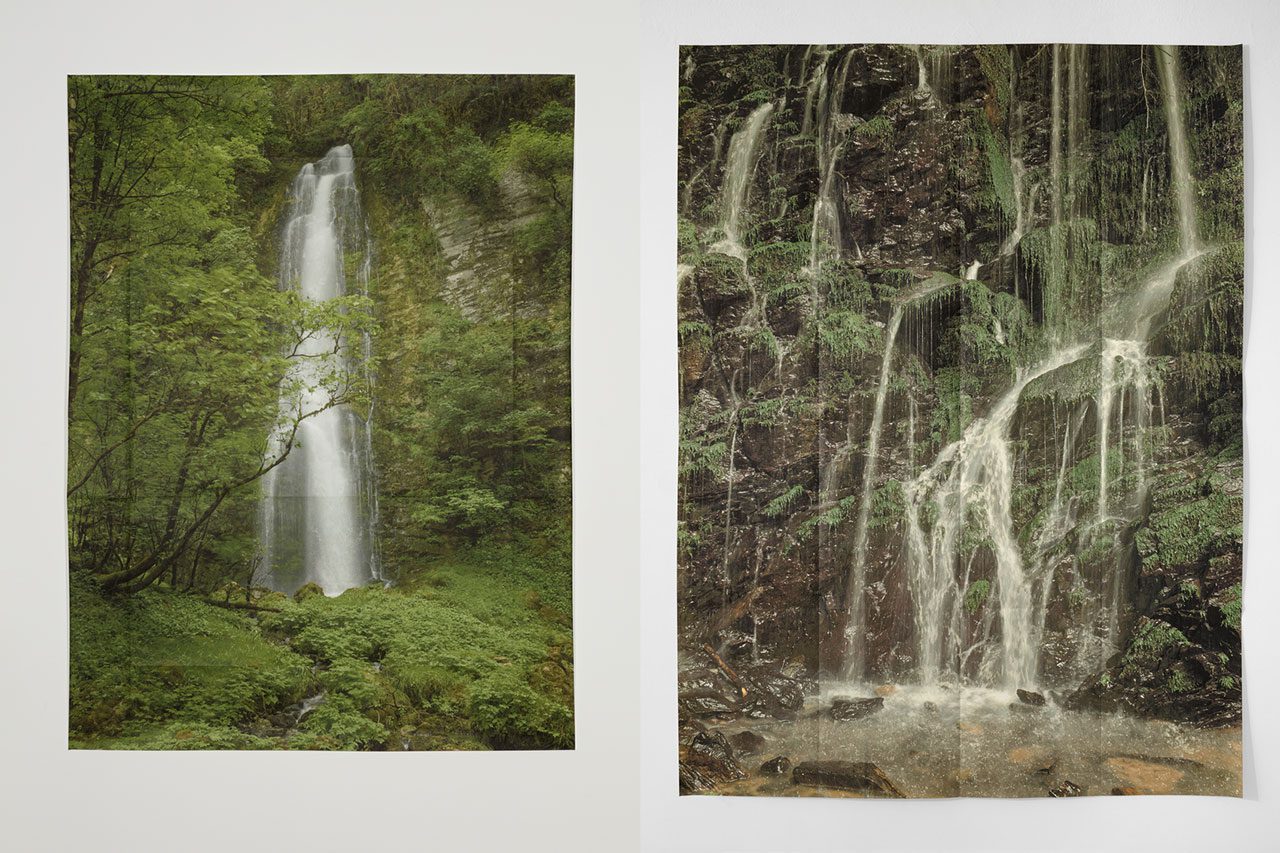
Save as Image (2007 – 2018): A series of photographs taken in museums and at UNESCO World Heritage sites. With the exhibits at such sites as a subject, the camera focuses on objects that have been certified as ‘very valuable’ or ‘universally valuable’ by committees or specialists. Here, the camera is not an explorer of unknown territory. It depicts things that have long been depicted, many times over. Save as Image is an exercise in questioning who or what is “speaking” in the photographs, and a reflection on the legitimacy of that speech. The photographs were taken with a monochrome technical camera on a tripod as well as with small digital cameras, and printed with monochrome ink on various media. Kassel Kontrapunkt (2015 – 2021): In the margins of “Save as Image”, a series of works evolved in and around Bergpark Wilhelmshöhe, a domain in the ‘Documenta city’ of Kassel. Bergpark’s landscaped grounds have been a UNESCO World Heritage Site since 2013. The photographs are made with the sun in the back, using small digital cameras with a fixed focal length, and printed with carbon ink on washi paper. The placement of the images in the page layout varies according to a predetermined rule, as do the lines along which the paper is folded. Traces (2020 – 2022): A camera cannot read. The traces it leaves behind do not form text. “Traces” is a small group of images that laid the foundation for the series “Affirmations”. The photographs were taken with a modified digital camera on a tripod and printed with monochrome ink on washi paper, then cut, glued, and folded. Affirmations (2022 onwards): Affirmations might refer to a set of divination cards, to affirmative philosophy, or to the fact that photographs cannot express negation. This collection of recent images does not adhere to a consciously chosen programme. The photographs are not underpinned by a predetermined strategy, but neither are they snapshots: taken with a digital camera on a tripod, they underwent typical image processing before being printed with pigment ink on sheets of washi paper. They were then glued together and folded. Point de voir (2022 onwards): In the lead-up to this exhibition, Tanja Boon, one of the curators at S.M.A.K., compiled a list of the people who, each in their own way, support the museum. Individual conversations were then woven into a polyphonic narrative. Guided by this, waterfalls were recorded, using a digital camera, a 35mm lens, and a tripod. These photographs are composites made from multiple exposures, some short and some long. The result is an image in which water appears both as a flowing stream and as individual drops. The shots were printed onto washi paper, folded to a convenient size. These images were initially created in response to the conversations, which is the source of their meaning. The final image is not an illustration of those conversations. The very fact that there was a recipient (and thus a question) was enough to trigger the process of image-making. In this exhibition, they have been freed from the intimate exchanges out of which they arose. They are vacant.
Photo left: Marc de Blieck, Point de Voir #11, 2024. Courtesy the artist and Annie Gentils Gallery © We Document Art. Photo right: Marc De Blieck, Point de Voir #3, 2024, Courtesy the artist and Annie Gentils Gallery, © mdb
Info: S.M.A.K., Jan Hoetplein 1, Gent, Belgium, Duration: 18/10/2025-8/3/2026, Days & Hours: Tue-Fri 9:30-17:30, Sat-Sun 10:00-18:00, https://smak.be/
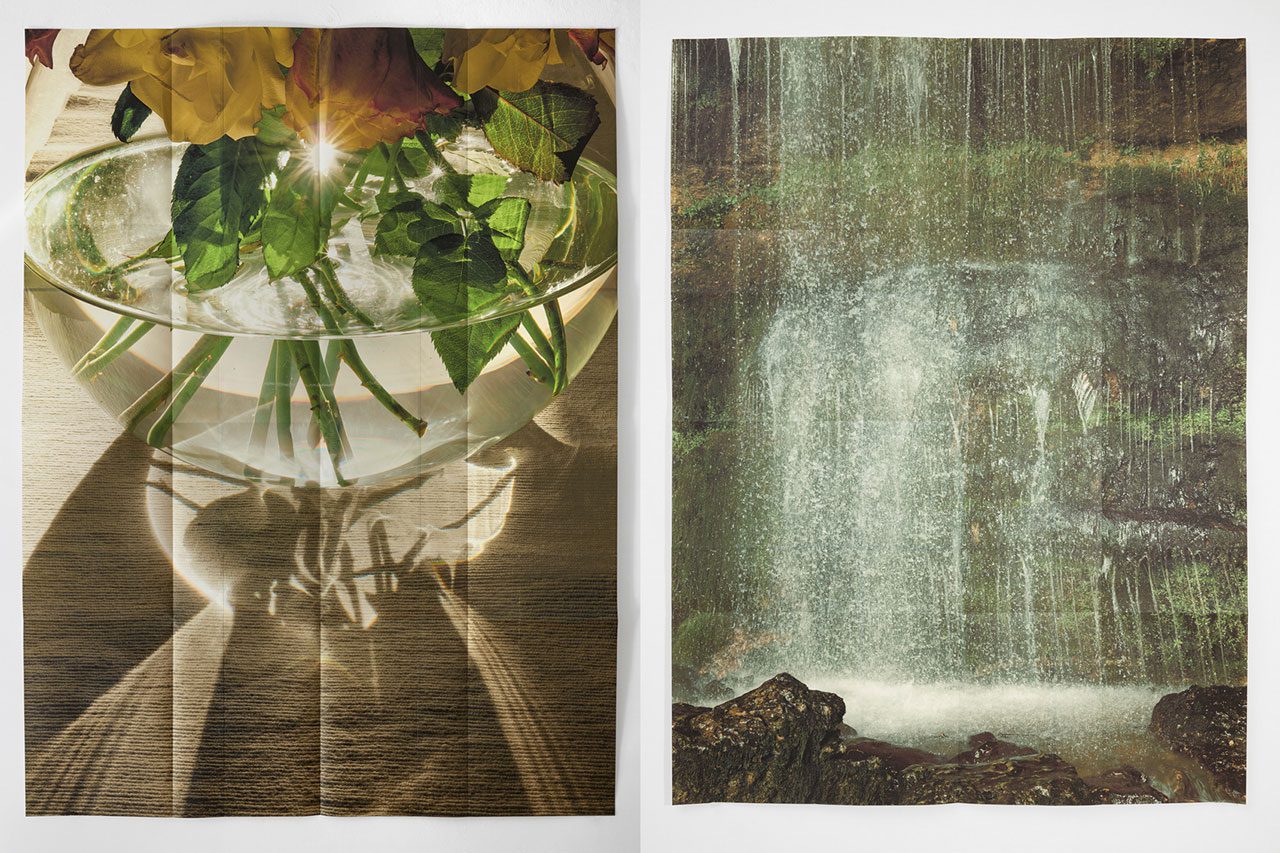
Right: Marc De Blieck, Affirmation #32, 2025, Courtesy the artist and Annie Gentils Gallery, © mdb