ART CITIES: Paris-Christopher Le Brun
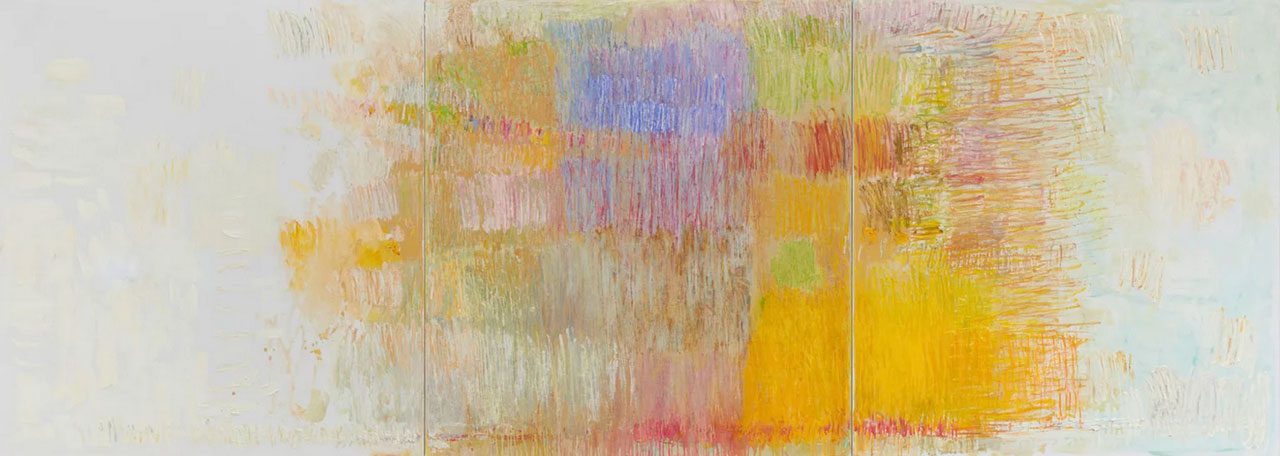
Christopher Le Brun employs a mastery of touch and color alongside a profound understanding of art history and a wide range of visual, musical and literary sources. He has remained consistent in adhering to what he feels to be the essential poetry and pleasure of painting for its own sake, led by intuition and visual imagination and resistant to external justification.
By Efi Michalarou
Photo: Almine Rech Gallery Archive
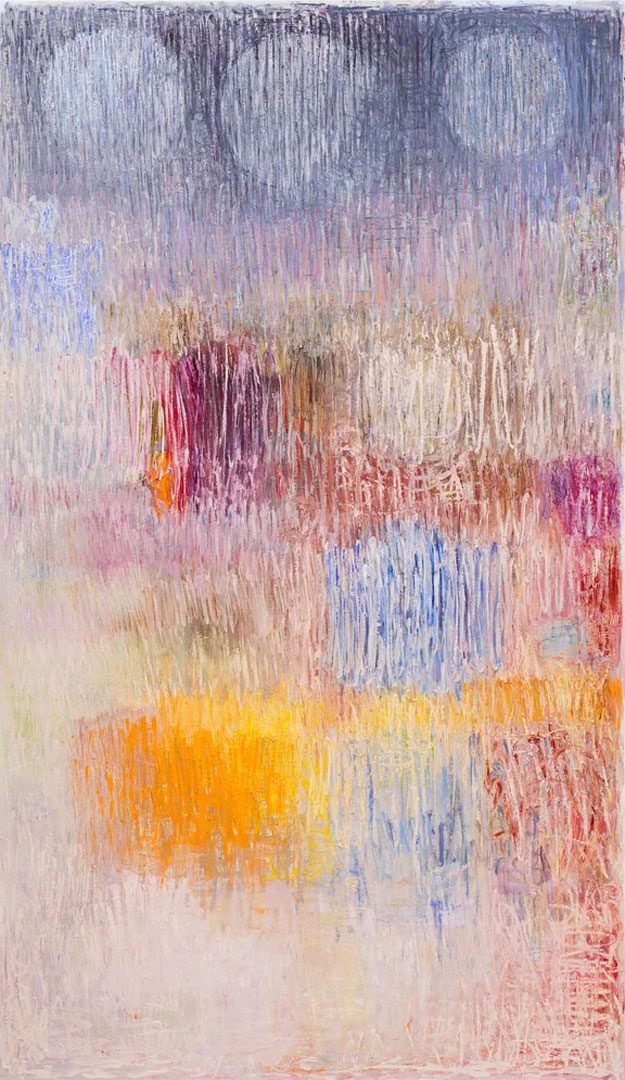
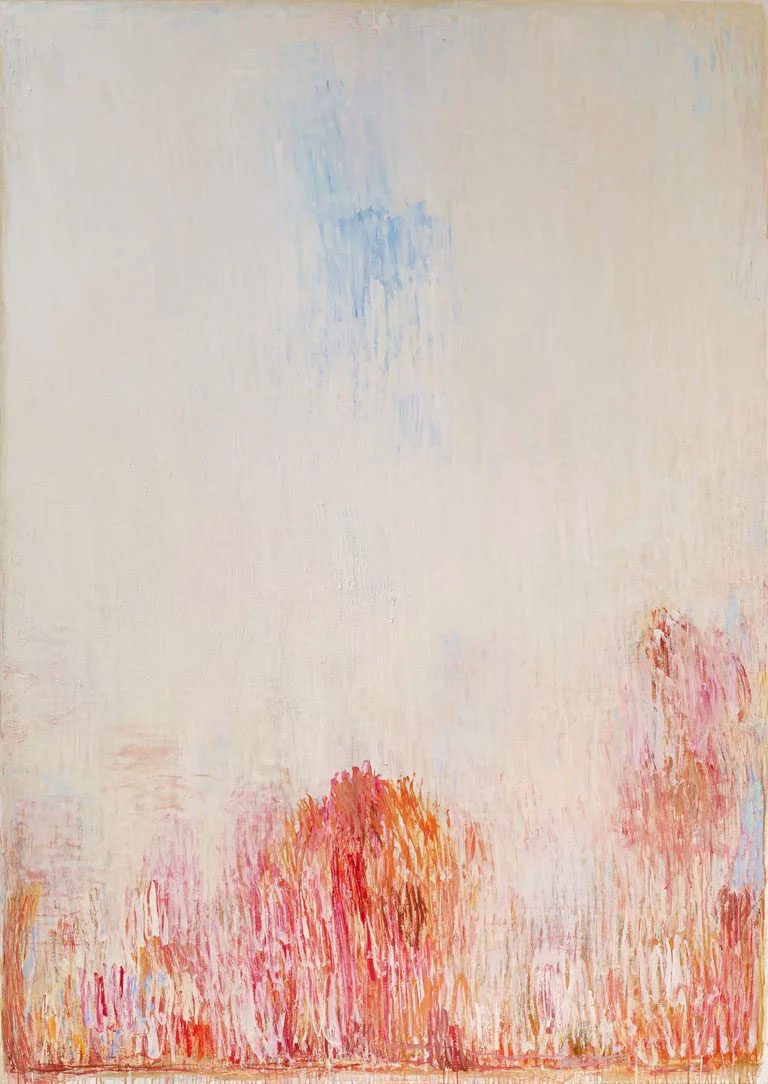
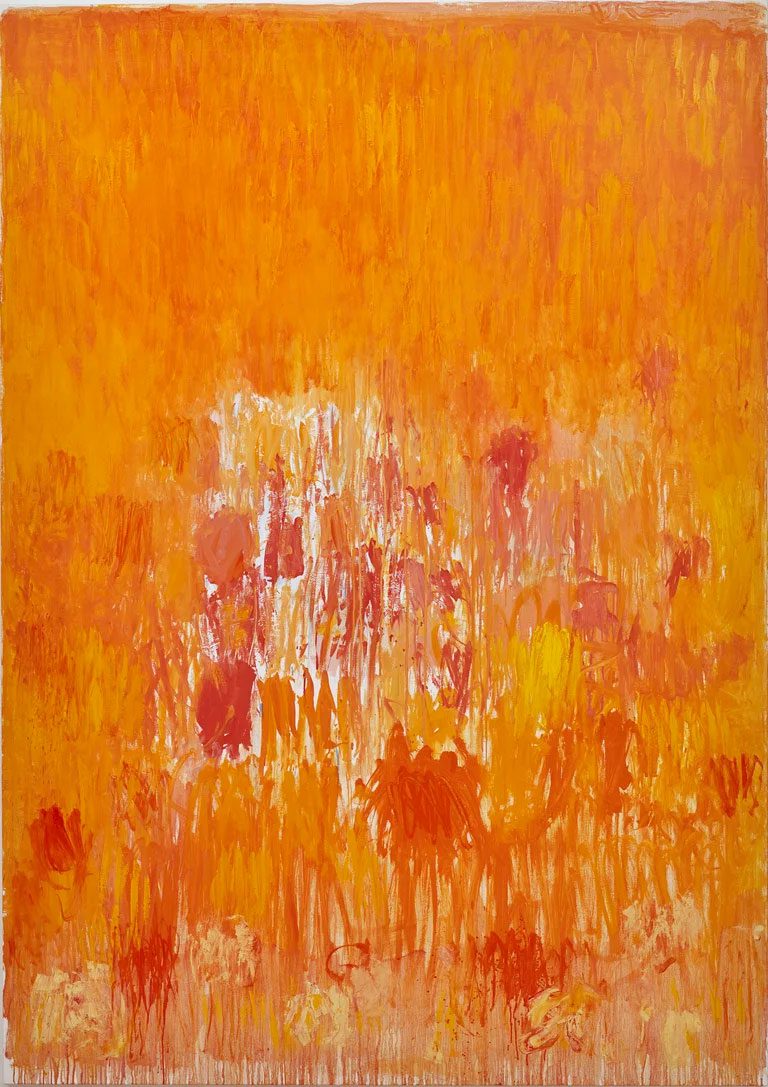
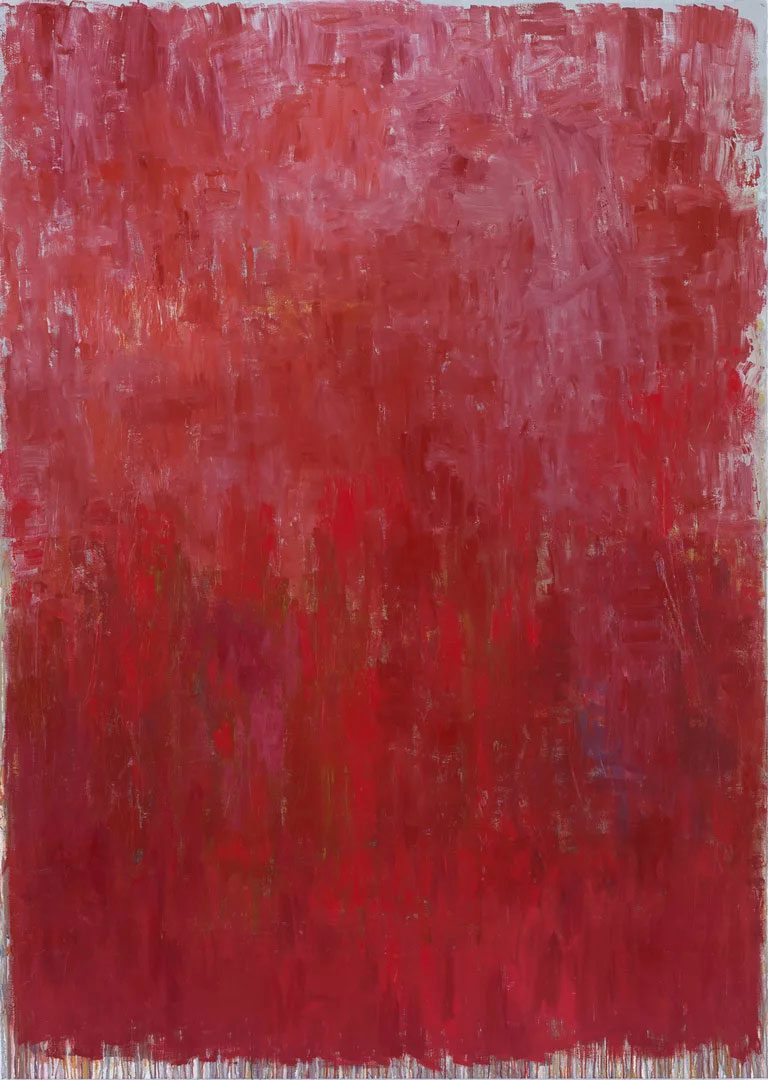
“Moon Rising in Daylight”, is Christopher Le Brun’s first solo exhibition with Amine Rech gallery. The British painter, long recognized for his lyrical abstraction and deep engagement with the materiality of paint, continues here his exploration of light, time, and perception. At first glance, Le Brun’s paintings appear to be pure surface—fields of color, motion, and texture. But to describe them simply as layered paint is to miss the point. For Le Brun, the act of painting is both physical and meditative: a dialogue between body, gesture, and time. Each brushstroke carries the memory of movement, each layer of pigment builds slowly over months or years, accumulating like sediment. By the time a work leaves the studio, it has already lived through many transformations. Rather than inviting the viewer to look through the surface, Le Brun asks us to look across it—to roam over its terrain, following ridges of pigment and subtle shifts in tone. The painting becomes a landscape in itself, an expanse shaped by rhythm and repetition. Through this approach, Le Brun transforms the canvas into what he calls its “hinterland”: the invisible ground from which the painting rises—psychological, cultural, and even metaphysical. This sense of depth without illusion recalls the poet Yves Bonnefoy’s reflections on Italian painting, where he found “a gentle irradiation,” a form of understanding that felt less visual than spiritual. In Le Brun’s work, light operates in much the same way. It isn’t something depicted, but something that seems to emerge from within the painting, as though the surface itself were quietly glowing.
The exhibition title, “Moon Rising in Daylight”, captures the dualities that run through Le Brun’s practice—day and night, presence and absence, clarity and mystery. His paintings hold these opposites in delicate balance. In works like “Tracks in High Summer”, we sense that paradox: autumn light carrying the warmth of summer, or the moon visible beneath the midday sun. Painting, for Le Brun, becomes a way to suspend time, to let different moments coexist on the same plane. Music has always been an important touchstone for the artist, and it’s easy to hear echoes of rhythm and resonance in his approach. Like a musical composition, these paintings unfold through repetition and variation, through the interplay of tone and silence. They suggest that abstraction need not be distant or cerebral—it can be deeply sensory, even emotional. Time is one of Le Brun’s quiet subjects. His paintings are not snapshots but continuums: they reflect the slow rhythms of seasons, tides, and celestial movement. Time is visible only in its effects—the way color shifts, or the way light lingers. The moon, after all, is always present, even when unseen. In this balance between the meteorological and the metaphysical, Le Brun’s work finds its strength. Le Brun, too, paints light not as a symbol but as an experience. His surfaces radiate with quiet energy, inviting viewers into that same sense of wonder: the timeless moment when the moon rises, unexpectedly, in daylight.
Photo: Christopher Le Brun White Triptych, 2021, Oil on canvas, 140 x 391 cm, 55 x 154 in, Collection of the Wadsworth Atheneum Museum of Art, Hartford, CT, US, © Christopher Le Brun, Courtesy the artist and Amine Rech Gallery
Info: Amine Rech Gallery, 64 rue de Turenne, Paris, France, Duration: 18/10-20/12/2025, Days & Hours: Tue-Sat 11:00-19:00, www.alminerech.com/