INTERVIEW: Eva Geraki
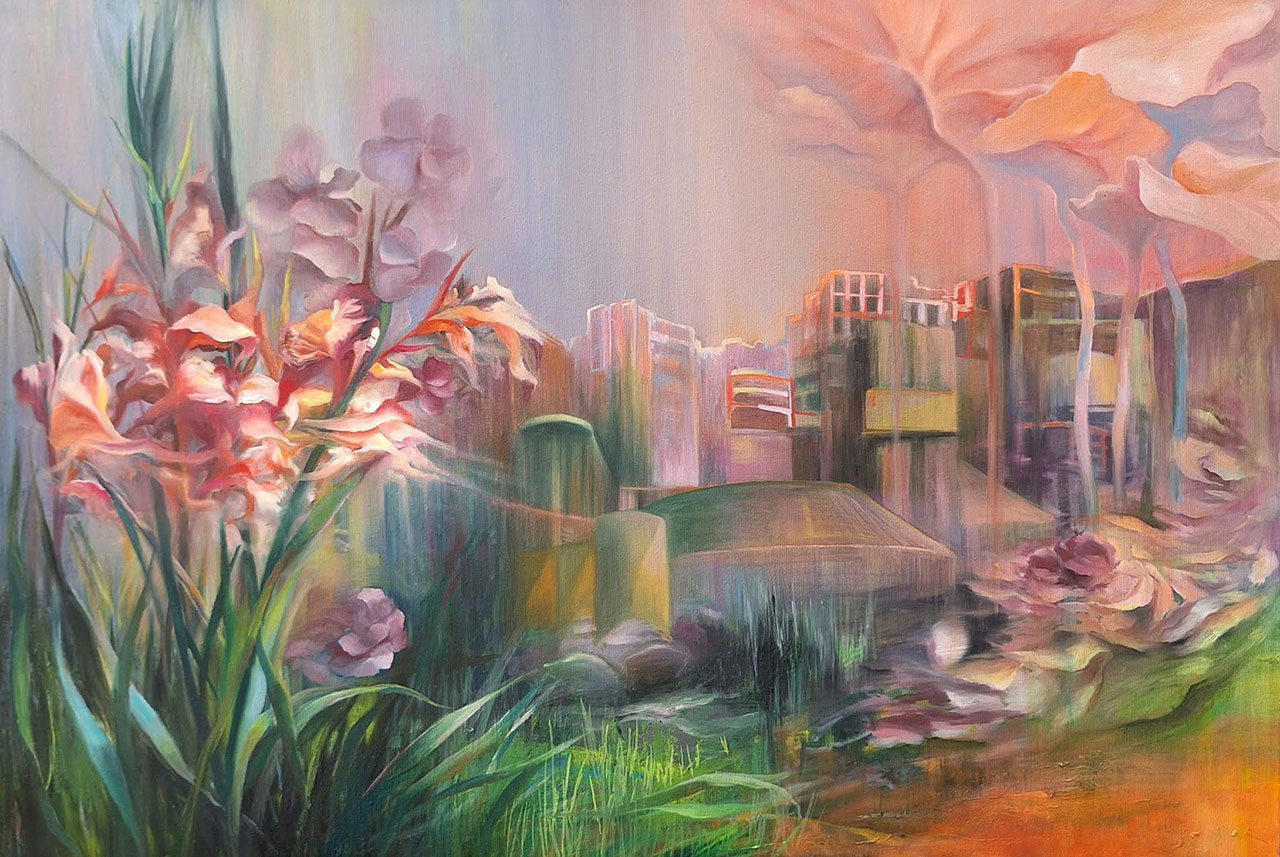
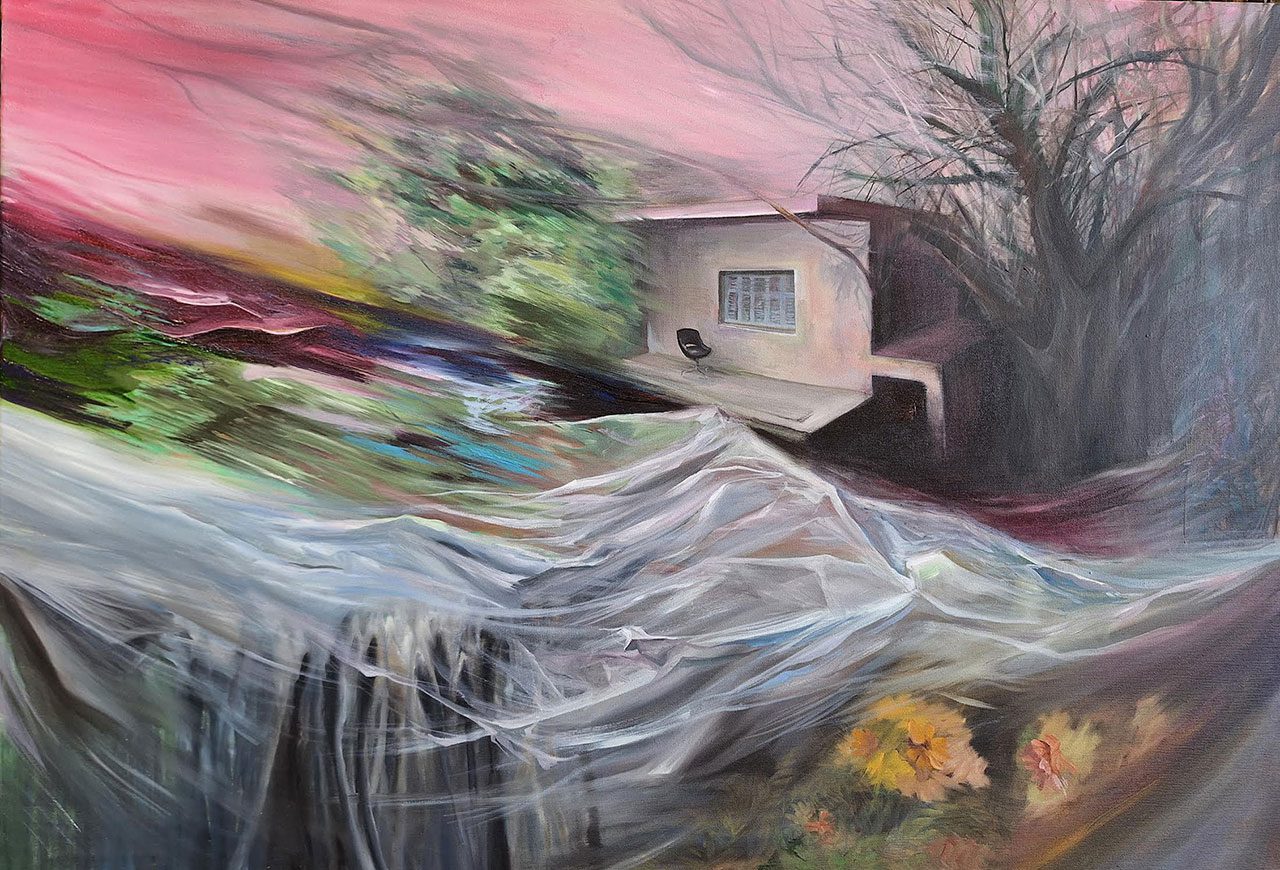
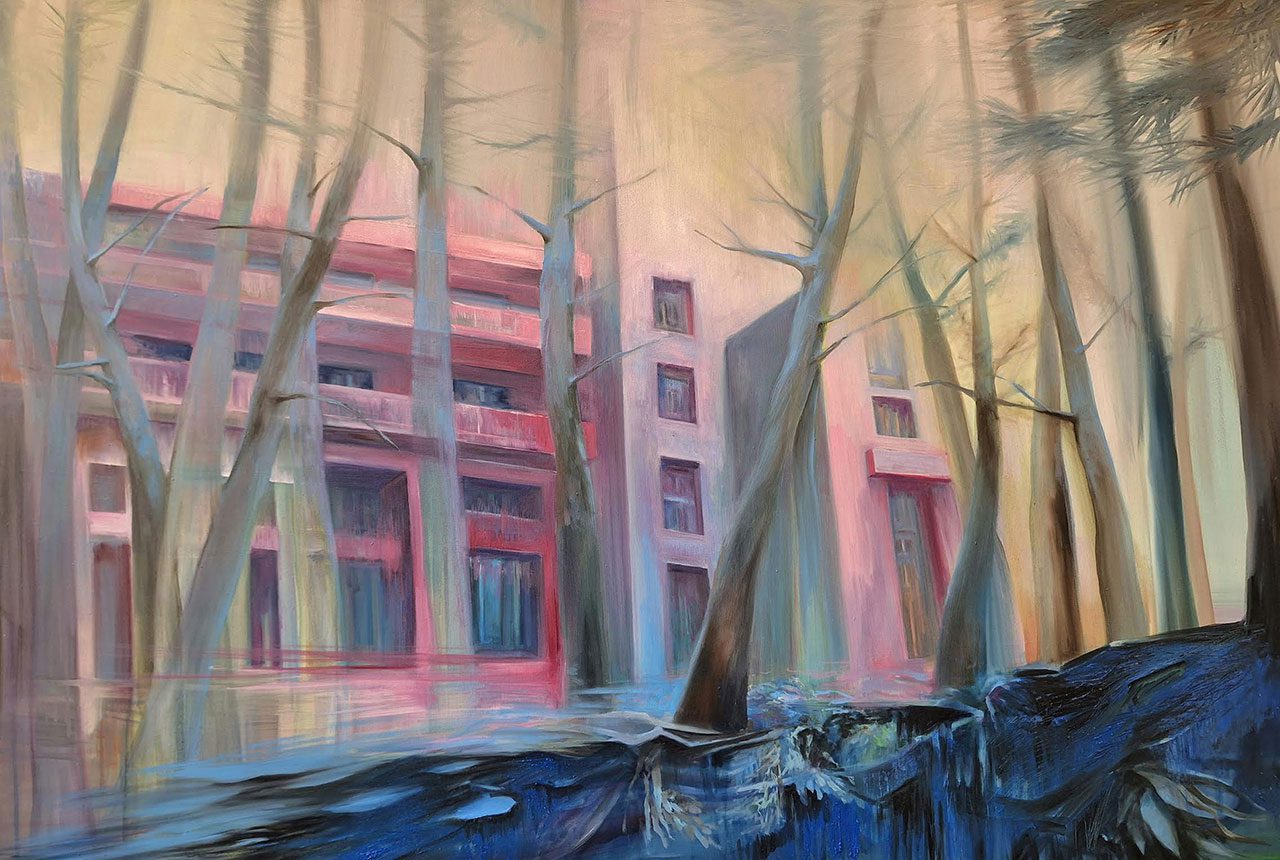
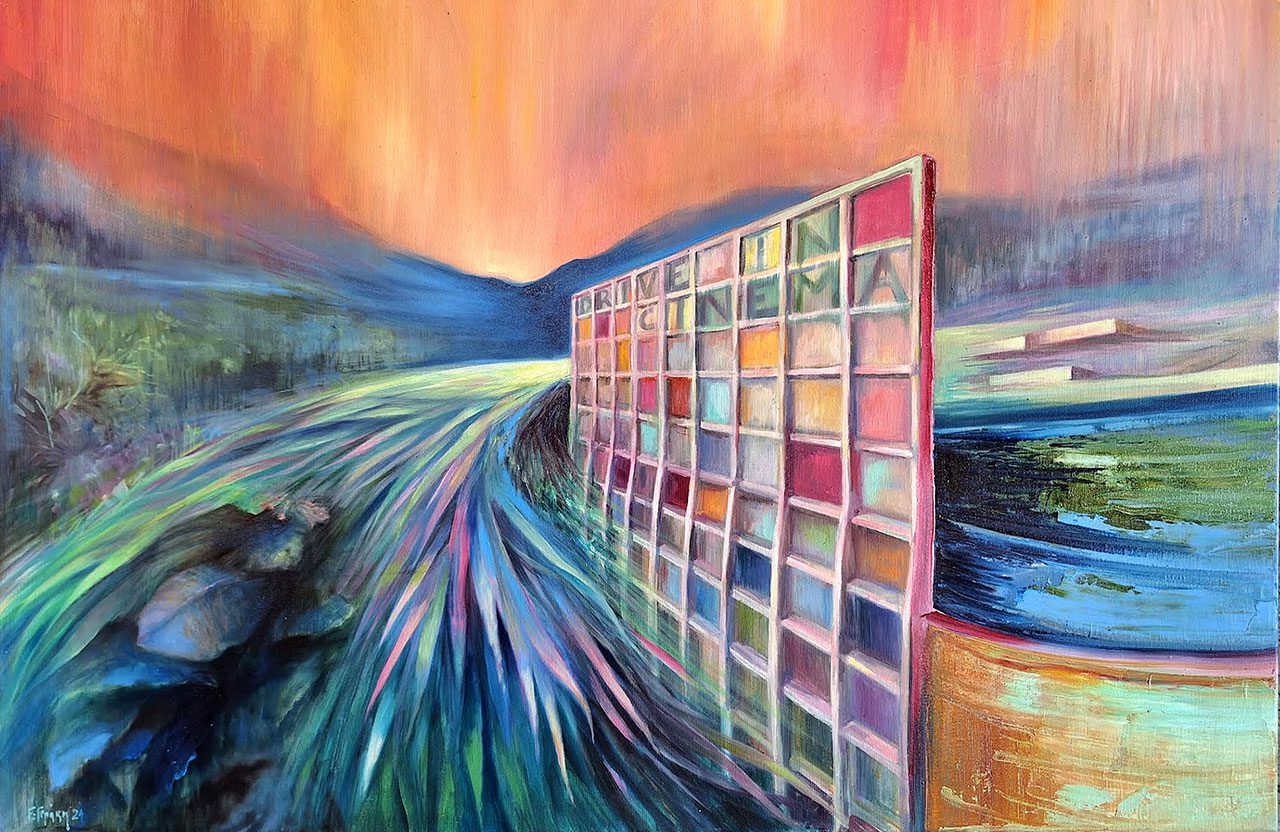
 In her first solo exhibition in Piraeus, titled “Promemory -Promnimi”, at Prisma Gallery, Eva Geraki explores the space “before memory,” where the past, present and future coexist in a delicate balance of light and sensitivity. Influenced by the aesthetics of pop art and by memories of summer days from her childhood, Geraki does not seek utopia but rather the poetic transformation of reality: through her works, urban space and nature rediscover their lost equilibrium, while human presence is subtly implied—as a trace or imprint within the landscape—beyond conventional representations. On the occasion of her new exhibition “Promemory -Promnimi”, she reflects on the relationship between city and nature, memory, the role of art today and the balance between teaching, creation and life.
By Valia Katsimpa
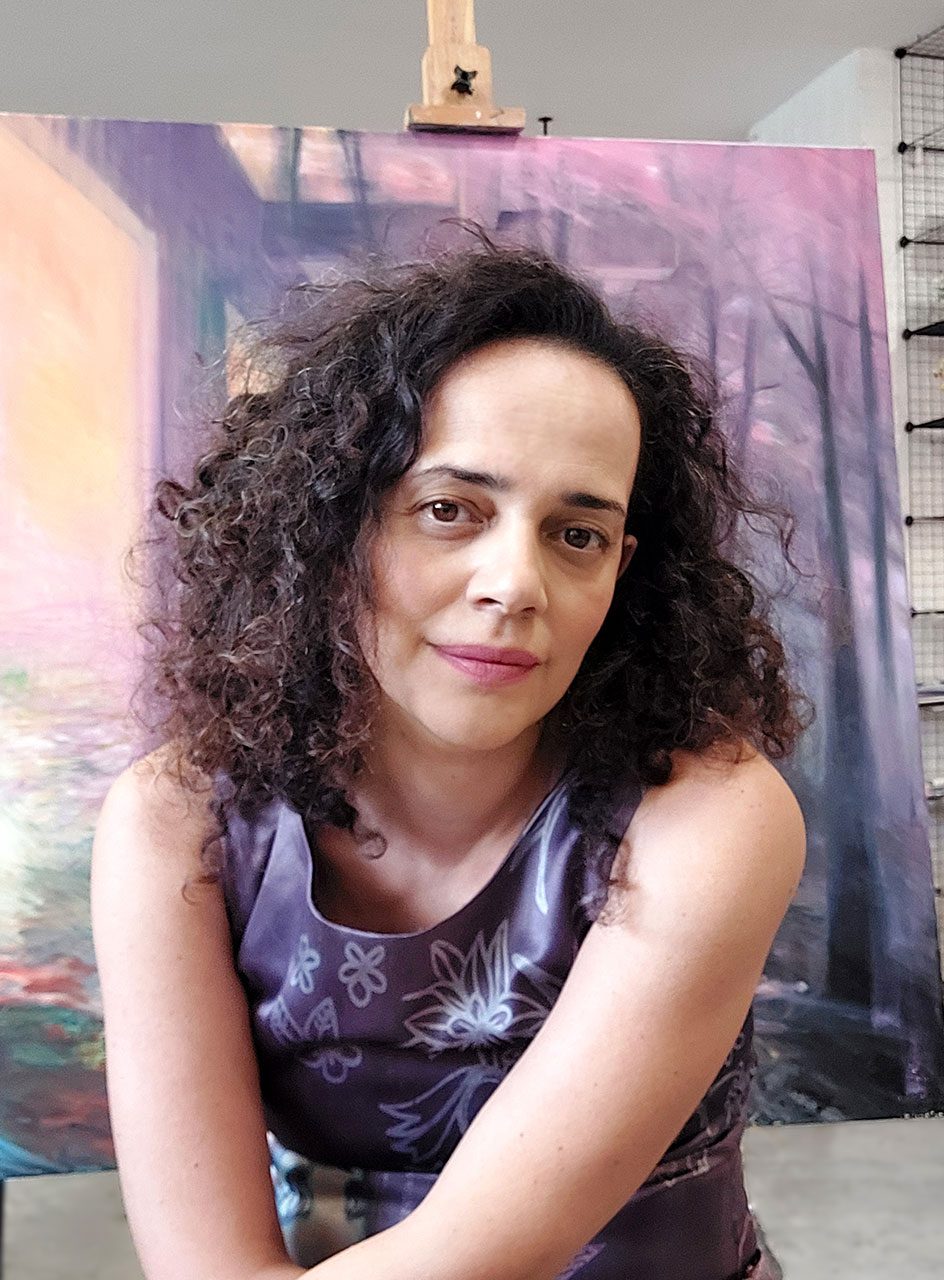
Photo: Courtesy of Eva Geraki
The title of your solo exhibition is “Promemory -Promnimi”. Would you tell us a few words about this choice?
The title “Promemory” was born from the idea of naming an intermediate state – a space before memory, before recall—as the feeling of remembering the future. It is the moment when something becomes apparent within us before it has yet been expressed. In this painting period, I wanted to record that intangible field—the fine line between past, present, and future – essentially trying to make the passage of time visible.
Your latest body of work, presented at Prisma Gallery, is titled Physsis. How important is nature to you on a personal level? Do you consider a harmonious coexistence between nature and the urban environment possible, a relationship that has consistently preoccupied your artistic practice?
Nature for me is not just a subject or a source of inspiration—I try to approach it not as a lost paradise but as an inseparable part of our lives, even amid the complexity of the city. Through Physsis, I attempt to reconnect with this primal energy of life, with the essential element that often gets lost within the urban landscape.
The harmonious coexistence of nature and city is not merely possible—it is necessary. Yet it requires a shift in perspective: to see the landscape not as something external to us but as an extension of our inner world. Art can serve as a reminder of this unity.
Your landscapes allude to personal paradises, where, however, the human figure is absent. What is the purpose behind this contradiction?
The absence of the human figure is, in fact, a presence in another form. The human exists through the viewer’s gaze, through the traces left behind in the landscape, through the memory of place. I prefer to imply human presence through the urban culture of human-made structures, which inevitably outlive our own existence.
In your work, despite its luminous and optimistic side, there is an underlying melancholy – a subtle threat not immediately apparent. Could you tell us more about this aspect?
Is our world truly poetic, painted in imaginary colors? How can we create space for nature to exist freely, without suppressing it and without it, in turn, pressing against us? Often nature continues to restore balance, indifferent to human intervention. Yet it does not always “win.” Our actions frequently cause it irreparable damage. I try to reveal this transformation through an ethereal veil that offers a different version of natural reality. My painting is not idealization—it is an attempt to reconcile with the fragile and the ephemeral.
How easy is it for an artist to balance multiple roles, such as teacher, painter and parent? Does your relationship with your students nourish your artistic work or does it significantly limit your creative time?
Balance is an ongoing negotiation, a rhythm that constantly changes. Teaching, though demanding, connects me to the original joy of creation – that innocence of the first gaze when a child learns to step outside the box of reality and encounter the possibilities of art. My students, with their authentic energy, continually remind me why I began to paint.
Shaping my time through persistent and organized effort came from managing responsibilities and recognizing that the artistic self must have time and space. My family life always takes priority, but I know how important it is that my children understand the need for expression and the determination not to abandon one’s goals.
In your opinion, what is the place of art today in a world overwhelmed by images? How do you see the future of visual art evolving through the sensitive perspective of your students?
Art today holds a difficult yet essential role: to bring our gaze back to its natural rhythm. We live within a visually oversaturated environment, yet we rarely truly see. Art requires idea, intellectual grounding, and theoretical thought. It also creates a fertile field for discovering solutions—and the young creators I meet through teaching are notably sensitive and aware; they are not afraid to experiment, yet they also search for meaning, connection, and essence. I believe the visual art of the future will be defined by this pursuit of truth and personal voice.
You describe the exhibition as a “travel guide of the future” on canvas, where the harsh or abandoned urban landscape transforms into a personal myth full of light and color. Do you think our society is ready for each of us to be inspired by the dream and take meaningful action toward transformation and evolution, both individually and collectively?
Dreaming is the first step in every transformation. Our society may not yet be ready, but the fact that this question arises already shows that something is changing.
Art can function as a compass – not by providing answers but by proposing an alternative vision: more humane, more luminous. In other eras, art sought to idealize and beautify reality. If we manage to see the world again not as a given but as a possibility, then change-both personal and collective- becomes achievable.
Download Greek version here.
First publication: 17/10/2025
www.dreamideamachine.com
© Interview by Valia Katsimpa
Info: Curator: Efi Michalarou, Prisma Gallery, Kountouriotou 187, Piraeus, Duration: 17/10–15/11/2025, Opening hours: Tue–Thu–Fri 10:30–15:00 & 18:00–21:00, https://galleryartprisma.gr
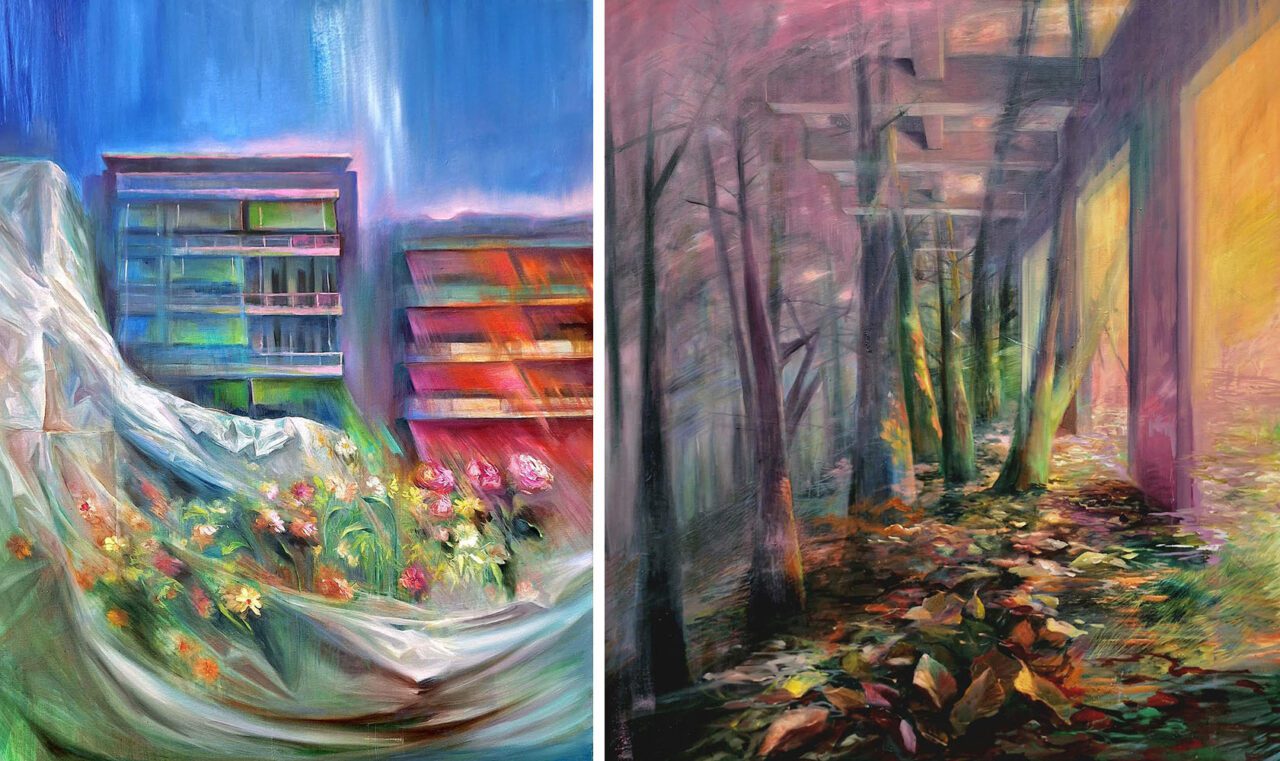
Right: Eva Geraki, Loft in the Forest, 2024, oil on canvas, 100 x120 cm, © Eva Geraki, Courtesy the artist and Prisma Gallery