
PRESENTATION: Wayne Thiebaud-American Still Life

Wayne Thiebaud became famous for his colorful paintings of American confections and buffets. He was also a self-described art “thief,” who openly drew ideas from and reinterpreted old and new European and American artworks. An influential teacher at Sacramento Junior College and the University of California, Davis, Thiebaud never stopped learning. He believed that art history is a continuum that connects artists of the past, present, and future.
By Efi Michalarou
Photo: The Courtauld Gallery Archive
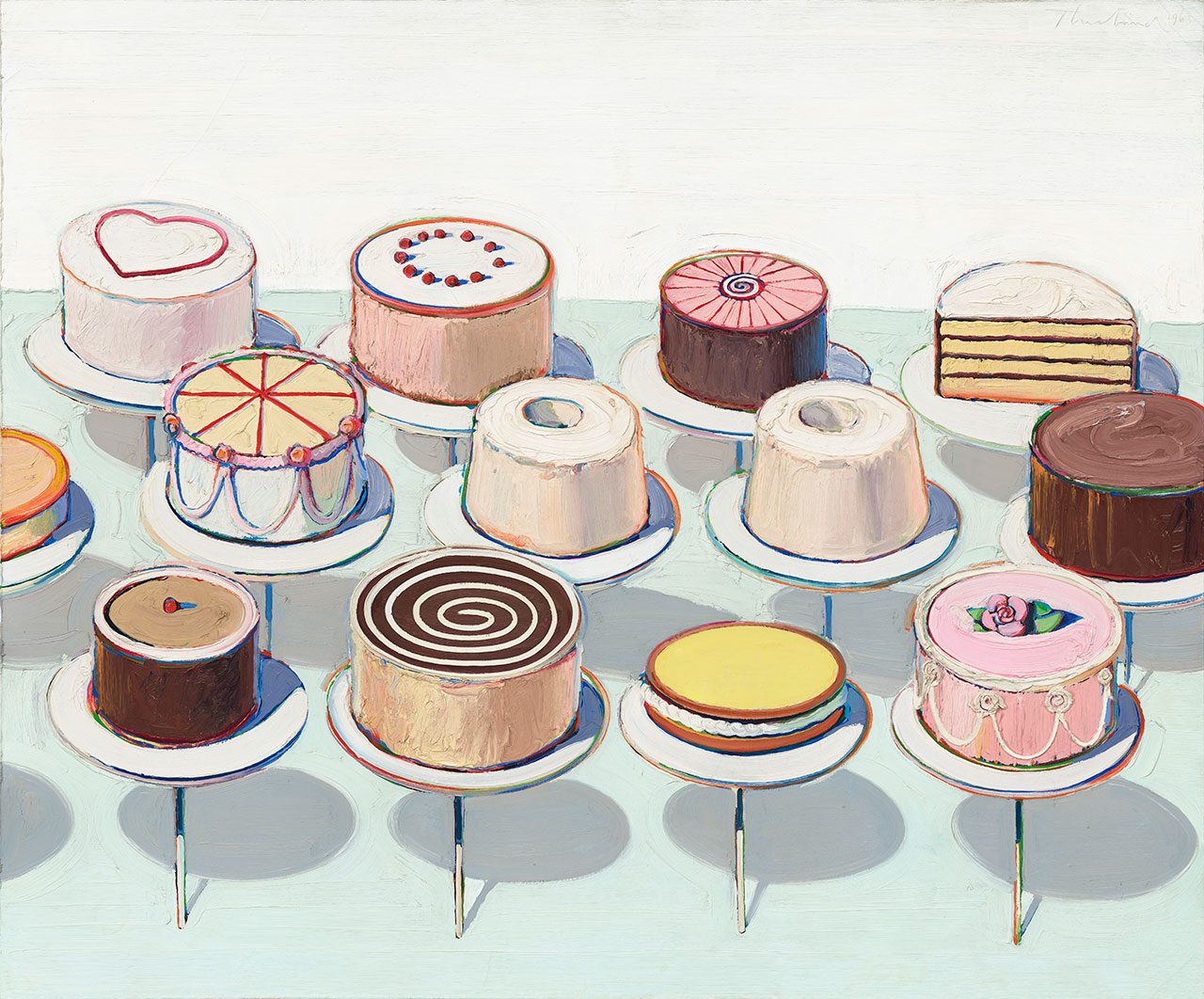
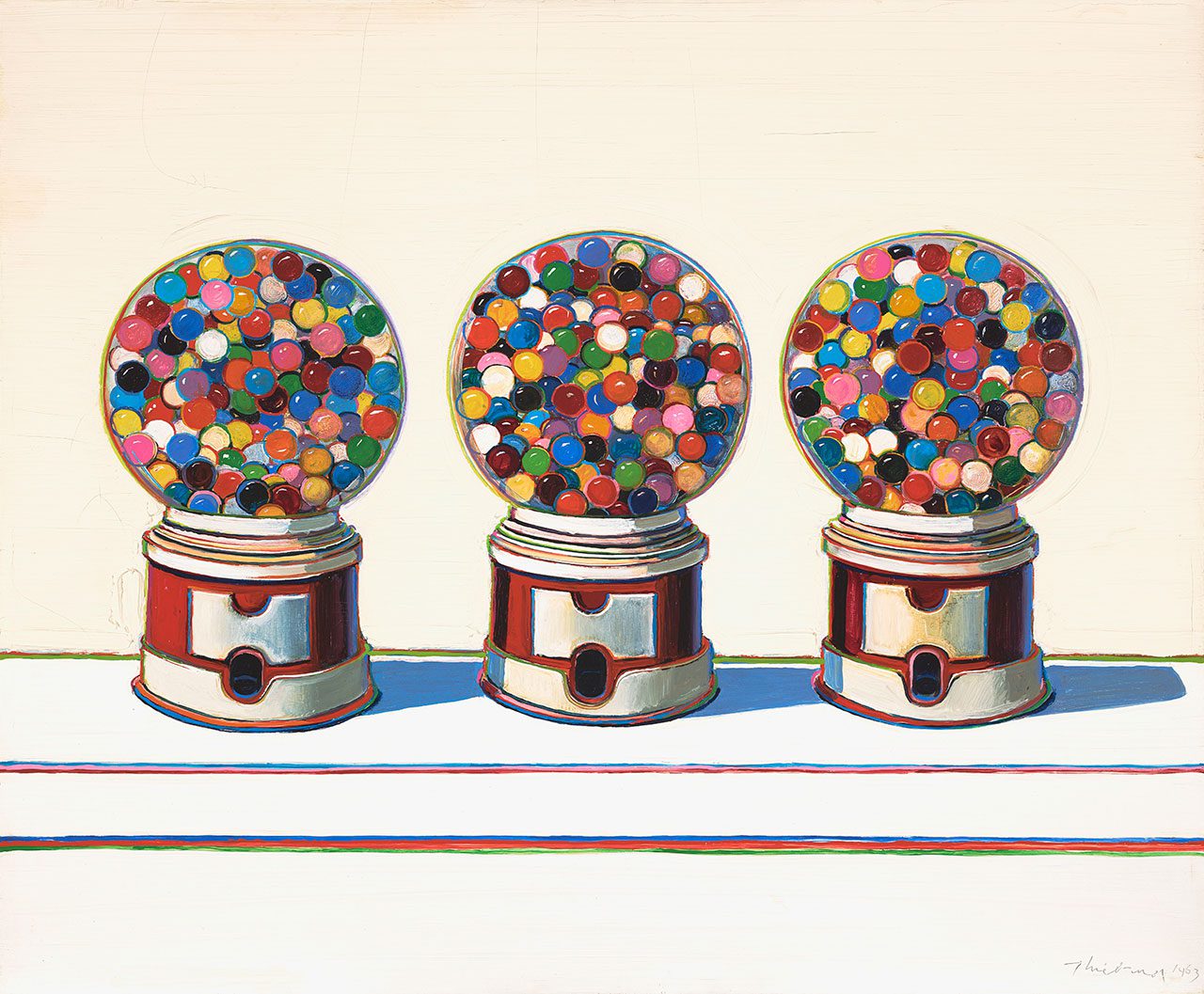
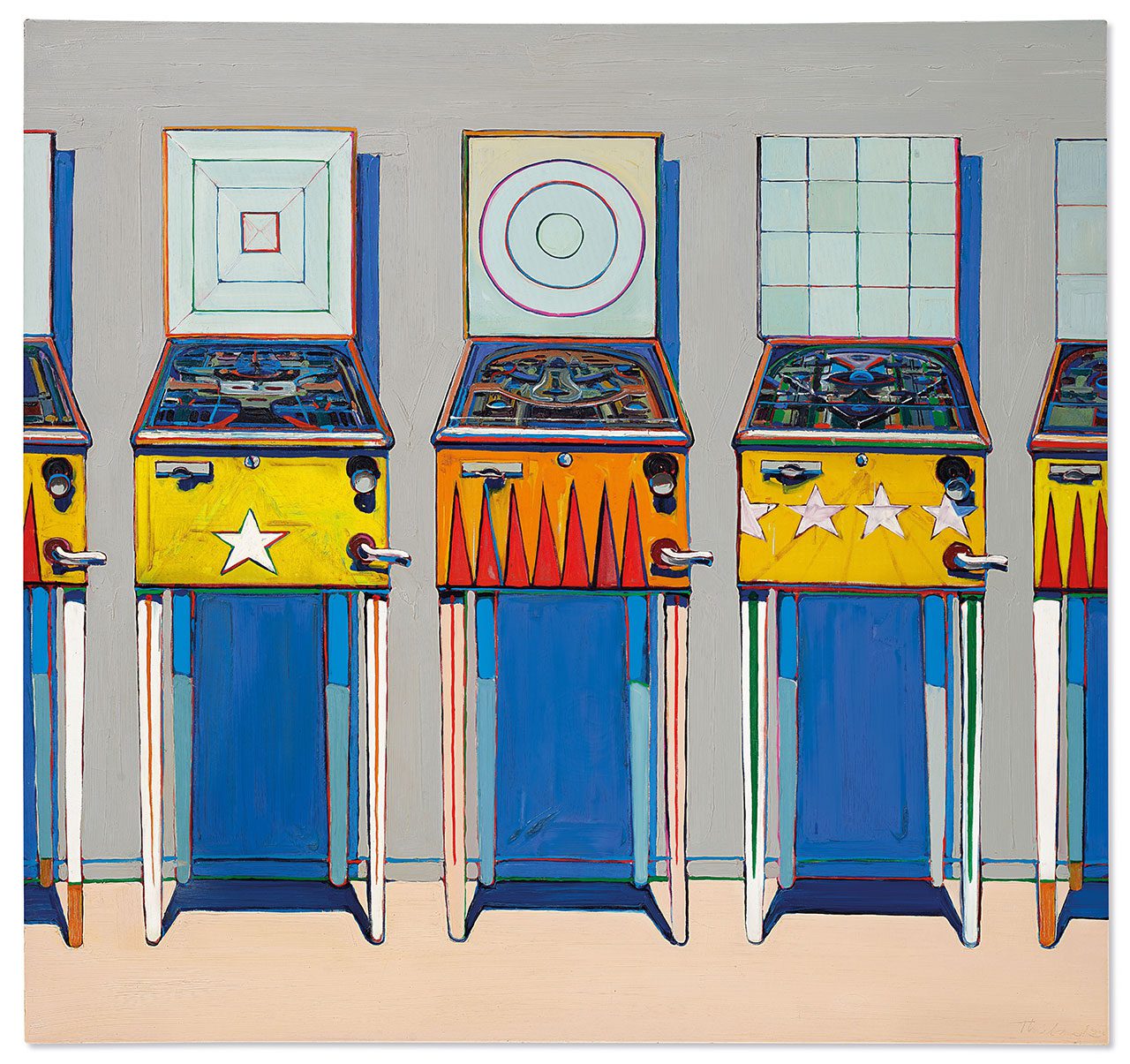
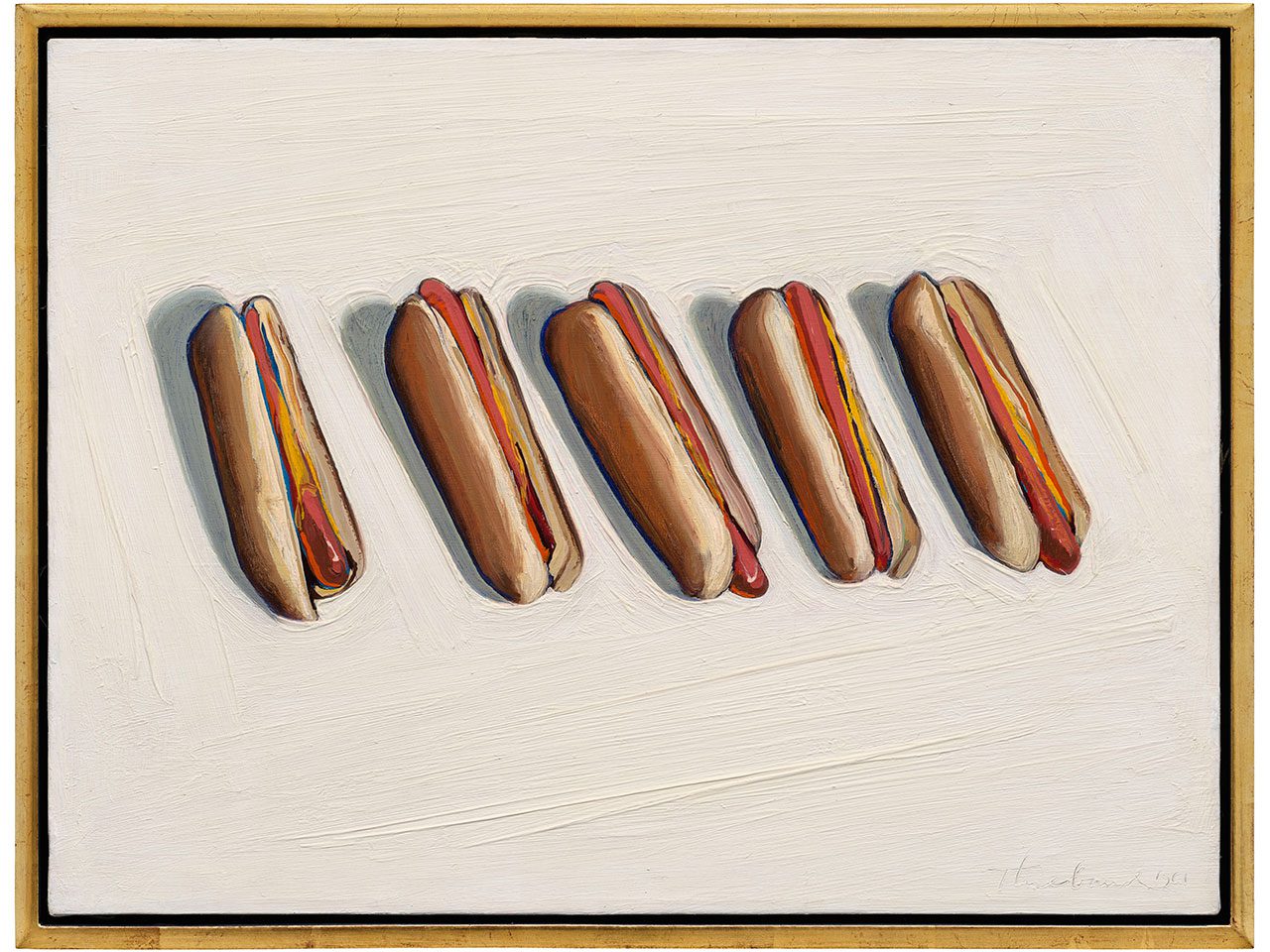
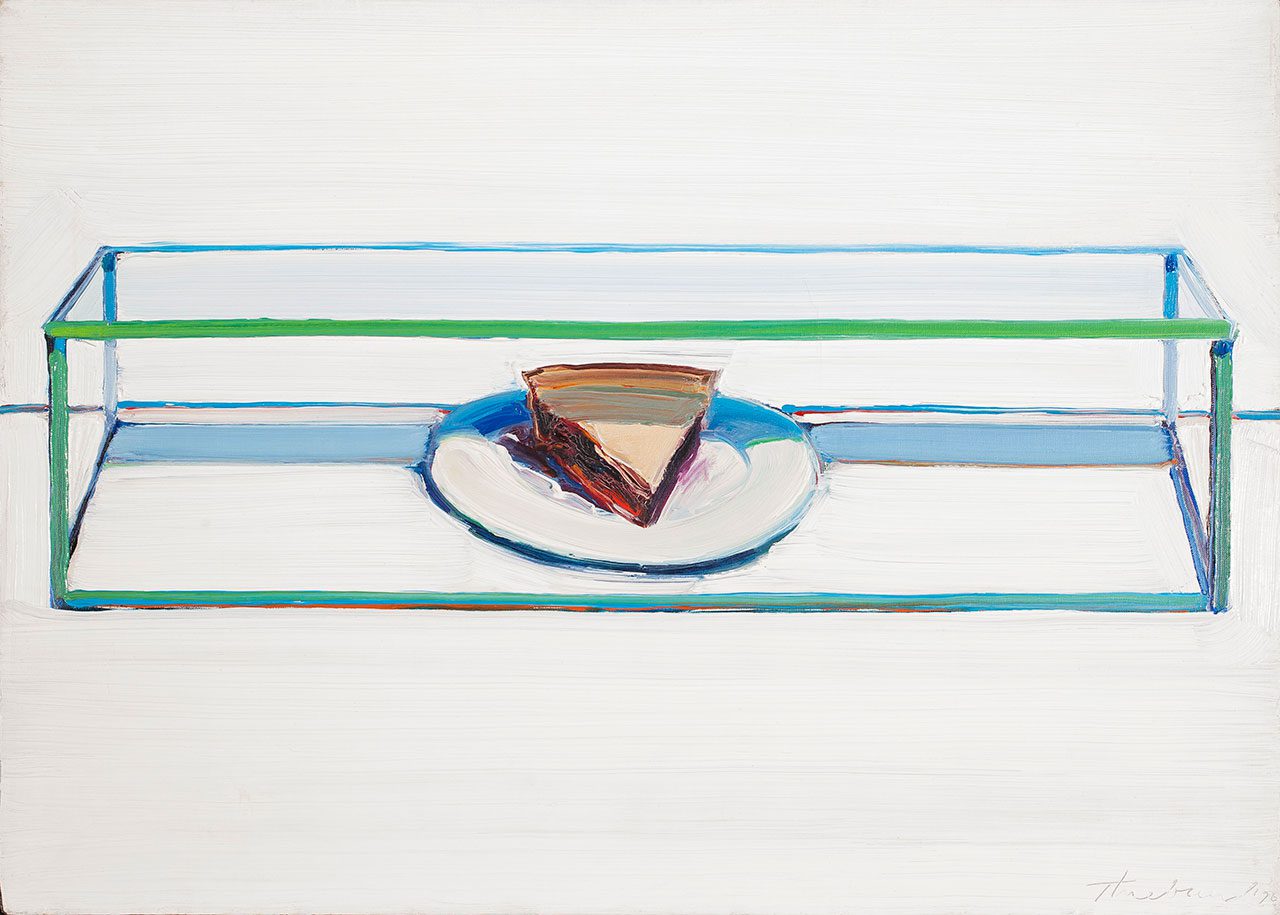
The exhibition “The Griffin Catalyst Exhibition: Wayne Thiebaud. American Still Life” celebrates the artist’s breakthrough works of the 1960s—paintings that cemented his reputation and redefined the still-life genre for the modern age. It gathers together some of Thiebaud’s most iconic and visually arresting compositions: lush depictions of quintessentially American subjects—cherry pies, hot dogs, gumball machines, and pinball tables—rendered with a richness of texture and color that turns the familiar into the sublime. Through these works, Thiebaud revitalized still life, transforming the everyday symbols of American consumer culture into meditations on beauty, abundance, and desire. The exhibition features rarely lent works from major American institutions and private collections. Highlights include the monumental “Cakes” (1963), loaned for the first time outside the United States by the National Gallery of Art, Washington, D.C., and “Four Pinball Machines” (1962), one of the artist’s most ambitious canvases, on loan from a private collection. Additional masterpieces have been generously lent by the Whitney Museum of American Art, the Smithsonian American Art Museum, and the Fine Arts Museums of San Francisco, among others. “Four Pinball Machines” (1962) marks a turning point in Thiebaud’s artistic evolution. The painting’s electric palette and tactile brushwork elevate the gleaming surfaces of arcade machines into a study of light, space, and color. Without formal art-school training, Thiebaud developed a highly personal realism—simultaneously representational and abstract. His fascination with paint’s materiality transforms these mechanical forms into vibrant compositions pulsing with energy and rhythm, revealing the painter’s deep engagement with the challenges of perception. In “Cakes” (1963), an orderly procession of pastries sits atop slender stands, echoing the geometry of a bakery display. The cakes’ shadows and outlines form a tightly structured grid, evoking both harmony and tension: the stands seem too delicate to support their opulent burdens. The nearly monochrome background flattens space, merging tabletop and wall, while Thiebaud’s pastel hues—creams, pinks, and yellows—lend the composition a dreamlike unity. The result is at once celebratory and contemplative, suggesting the seductive repetition of consumer life. The thick impasto and luminous highlights distinguish Thiebaud’s painterly approach from the flat, detached surfaces of Pop Art, reaffirming his commitment to the expressive possibilities of paint. Similarly, “Three Machines” (1963) exemplifies Thiebaud’s fascination with the beauty of the commonplace. Three vividly colored gumball dispensers, rendered in frontal alignment, dominate the canvas. Their saturated reds, greens, and blues vibrate with life, while the precise interplay of light and shadow lends them a sculptural presence. Despite their mechanical nature, the machines appear monumental, even anthropomorphic. Through Thiebaud’s brush, the ordinary becomes extraordinary—a quiet testament to the artist’s ability to find poetry in the most familiar corners of modern existence. Ultimately, Wayne Thiebaud’s art captures the contradictions of American life in the 20th century—its sweetness and isolation, its simplicity and complexity, its beauty and banality. The Exhibition invites viewers to rediscover Thiebaud not merely as a painter of cakes and confections, but as one of the great humanists of modern art, whose still lifes continue to reflect the spirit, longing, and vitality of his era.
In 1962, Thiebaud famously remarked, “Each era produces its own still life.” Deeply grounded in the history of painting, he saw himself as an heir to the legacy of Jean-Siméon Chardin, Paul Cézanne, and Édouard Manet—artists who found profundity in the ordinary. For Thiebaud, the “ordinary” of his time consisted of diner counters, display cases, and store shelves—images that captured mid-century America’s optimism and consumerist delight. His vibrant compositions of lemon meringue pies, pastel cakes, and glistening candies elevate the banal into the realm of the painterly, inviting viewers to contemplate both the surface pleasures and the deeper undercurrents of modern life. Beneath their apparent simplicity, Thiebaud’s paintings often suggest a complex emotional range. Created during a time of American affluence and cultural upheaval, his still lifes juxtapose cheerfulness and melancholy. Within a single work, the seductive abundance of desserts or machines can convey both joy and loneliness—a quiet reflection on the paradoxes of desire and consumption in postwar America. Thiebaud spent most of his life in Sacramento, California, where he also served for decades as a professor at the University of California, Davis. Before turning to painting in earnest, he worked as a commercial artist, illustrator, and cartoonist during the 1940s and 1950s. His early experience—including a formative summer at Walt Disney Studios and a stint designing for the U.S. Army during World War II—sharpened his eye for line, form, and color, and instilled in him a lifelong fascination with the visual language of popular culture. In 1956, Thiebaud traveled to New York to engage with the city’s avant-garde. A meeting with Willem de Kooning proved pivotal: the abstract expressionist encouraged Thiebaud to seek authenticity through his own experience rather than imitation of prevailing styles. Returning to California, Thiebaud began painting from memory the objects that defined everyday American life—pies, cakes, counters, and machines—rendering them with a tactile intensity and isolating them against luminous, spare backgrounds. By 1961, he brought this new body of work to New York in search of representation. After numerous rejections, a chance visit to the young dealer Allan Stone changed everything. Stone immediately recognized Thiebaud’s originality and offered him a solo exhibition the following year. That 1962 debut was an instant sensation: the show sold out, collectors and museums—including the Museum of Modern Art—acquired major works, and Thiebaud emerged as one of the defining painters of his generation. That same year, Thiebaud’s paintings appeared alongside those of Andy Warhol and Roy Lichtenstein in landmark exhibitions that ushered in the Pop Art movement. Yet Thiebaud resisted the Pop label. While his subject matter overlapped with Pop’s fascination with consumer imagery, his method was entirely different. Rather than employing the mechanical look of advertising and mass production, Thiebaud embraced the physicality of paint—the lush brushwork, luminous color, and sculptural impasto that give his surfaces a sensuous, almost edible quality. His art was not about detachment or irony, but about painterly devotion to form and perception.
Photo: Wayne Thiebaud, Pie Rows, 1961, Oil on canvas, 46 x 66 cm, Collection of the Wayne Thiebaud Foundation. © Wayne Thiebaud/VAGA at ARS, NY and DACS, London 2025. Image: Wayne Thiebaud Foundation
Info: Curator: Dr Karen Serres and Dr Barnaby Wright, The Courtauld Gallery, Somerset House, Strand, London United Kingdom, Duration: 10/10/2025-18/1/2026, Days & Hours: Daily 10:00-18:00, https://courtauld.ac.uk/


Right: Wayne Thiebaud, Candy Counter, 1969, 120.7 x 91.8 cm, Private Collection © Wayne Thiebaud/VAGA at ARS, NY and DACS, London 2025