
ART NEWS: Oct.01
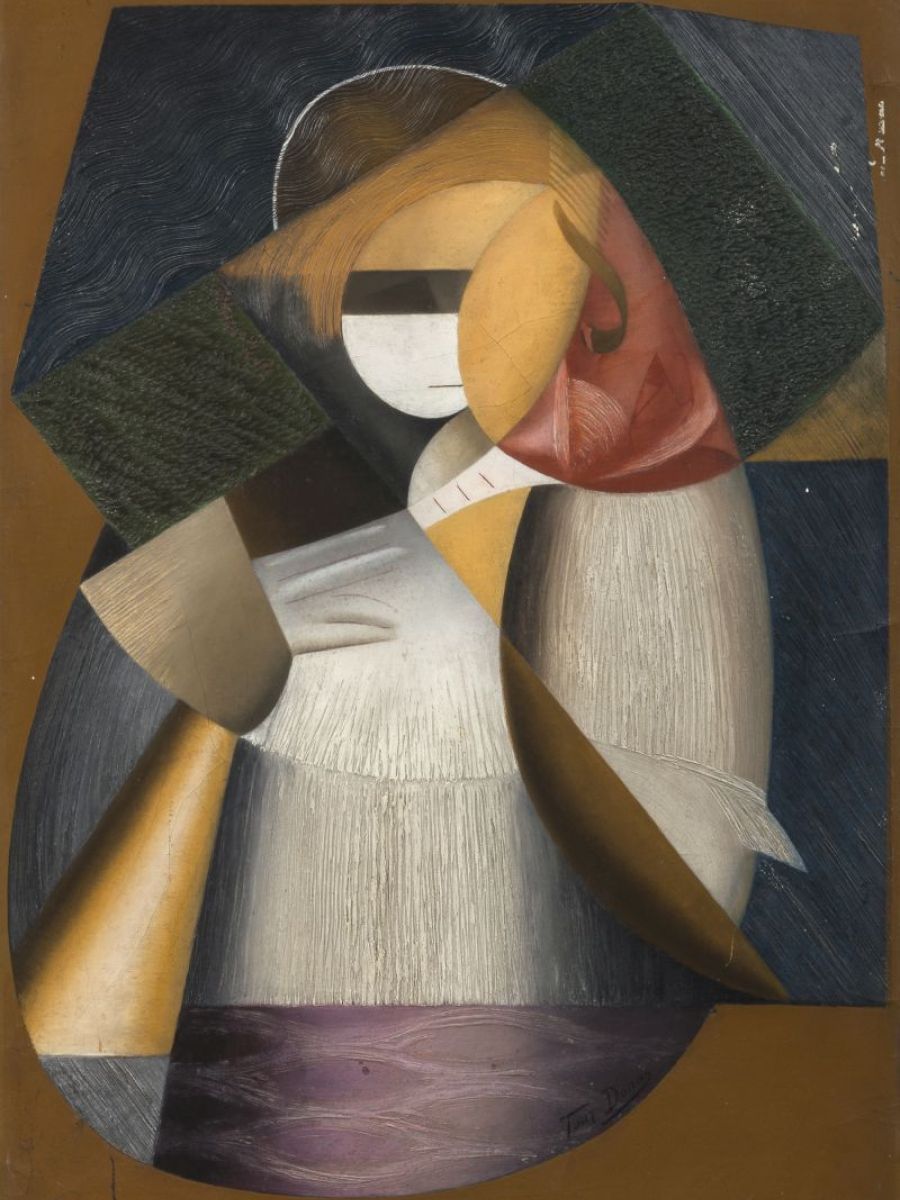 A century ago, Belgian artist Marthe Donas carved out a niche for herself at the heart of the diverse and colorful European avant-garde. Today, her pioneering work is being shown in concert with that of Alexander Archipenko and other influential modernists in “Donas, Archipenko & La Section d’Or. Enchanting Modernism”. Marthe Donas grew up in an upper middle-class environment where there was little room for artistic ambitions. Nevertheless, she broke free, and emerged as the first internationally acclaimed Belgian female avant-garde artist. Shortly after the First World War, her authentic view of Cubism and her innovative compositions quickly earned her a key role in the international avant-garde. In mid-1917, a lack of funds brings Donas to Nice, where she meets the already well-known sculptor Alexander Archipenko. In their search for artistic renewal, a connection sparks. Together they experiment with innovative ideas: Archipenko in sculptures and ‘sculpto- paintings’, Donas with shaped paintings. A unique cross-pollination between painting and sculpture. Jointly, Donas and Archipenko take the lead in re-establishing La Section d’Or, an influential Cubist group that also includes major names such as Albert Gleizes, Fernand Léger, Natalia Goncharova and Marie Vassilieff. These artists advocated a more inclusive and diverse Cubism. More geometrically abstract variants found a place alongside colourful and more decorative Cubist styles. Info: The Royal Museum of Fine Arts Antwerp (KMSKA), Leopold de Waelplaats 1, Antwerpen, Belgium, Duration: 4/10/2025-11/1/2026, Days & Hours: Mon-Thu & Fri 10:00-17:00, Thu 10:00-22:00, Sat-Sun 10:00-18:00, www.kmska.be/en
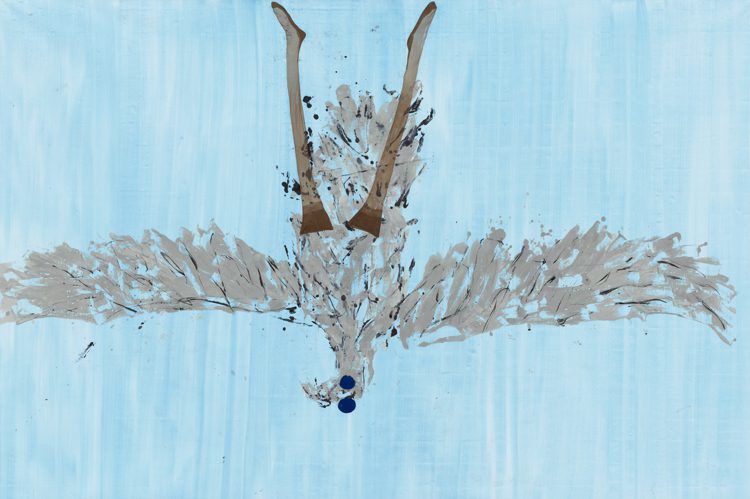 The exhibition “Paintings 2014-2025. Something Everywhere” presents around fifty paintings by Georg Baselitz, created in the past decade, chosen by the British historian Norman Rosenthal. Most of them come from an array of private collections. The impressive works address Baselitz’s thematic obsessions in extraordinary images imbued with the persistence of bodily awareness, autobiography and art history. Figures, heads, hands, legs, nylon stockings and eagles embody a new expressiveness and the brilliant lucidity of the German artist’s most recent output. The show also examines the idea that creative power can overcome the physical limitations of old age. Baselitz thus becomes part of an artistic genealogy which includes other painters who lived long lives, like Michelangelo, Titian, Goya and Picasso. The forty-nine works assembled for this exhibition are the outcome of an entire life devoted art and are like the quintessence of the creative interests that Baselitz has refined over the past decade. Baselitz’s work also recognises and includes countless artistic references not only from contemporary art, but also from Italian or German Renaissance artists, German Romanticism and what is known as African primitive art. He shares with them the thematic orientation of his works and his use of traditional techniques, like oil or tempera paint on canvas, watercolours and ink on paper, engraving and—in the 1980s—wooden sculpture. One 2024 painting shows a monumental (300 x 450 cm) representation of an eagle, a symbol of life force found in German heraldry which he had used back in the 1970s. Upside-down with stockings over a light blue background, it is ironically entitled “Ich kann kein Sex” [I Can’t Do Sex]. Yet again, Baselitz revisits old ground to reaffirm himself in life, now stripped of any drama. Info: Museo de Bellas Artes de Bilbao, Museo Plaza, 2, Abando, Bilbao, Bizkaia, Spain, Duration: 8/10/2025-1/3/2026, Days & Hours: Mon & Wed-Sat 10:00-20:00, Sun 10:00-15:00, https://bilbaomuseoa.eus/
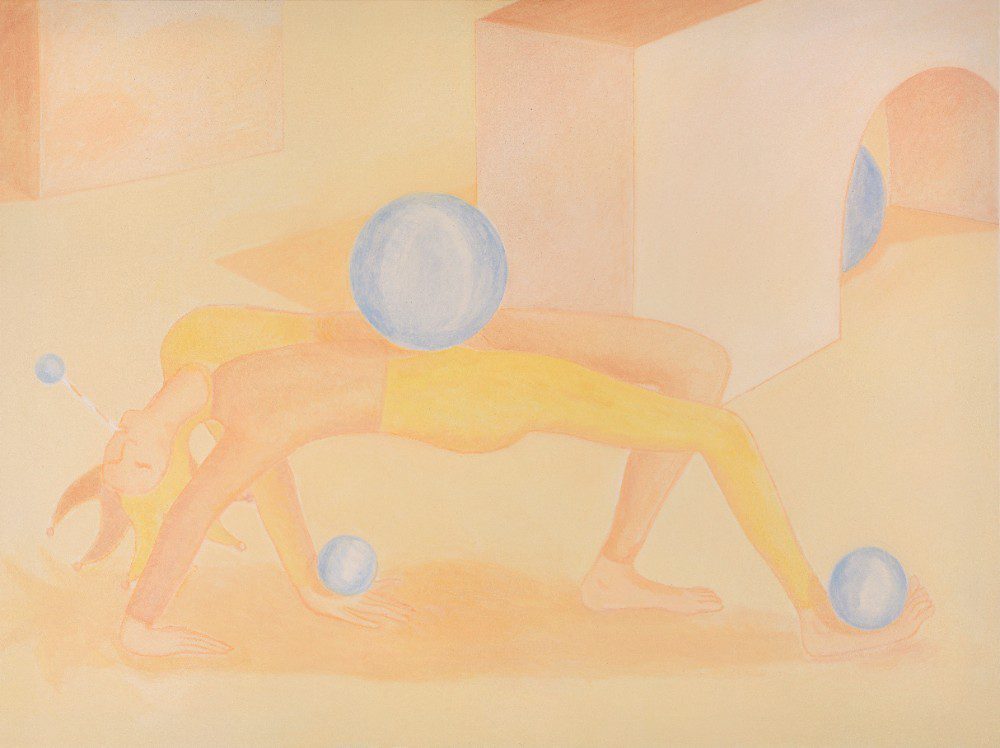 Bianca Argimón presents her solo exhibition “Fake it until you lose it”. Behind smooth surfaces and deceptive sweetness, Argimón’s works inhabit that delicate threshold where beauty falters and quietly exposes the madness of our times. With a visual language that is both free and precise — drawing, painting, sculpture, installation — she orchestrates a miniature theatre in which the grotesque constantly flirts with grace. The artist explores a blurred sense of time, somewhere between an ancient fresco and tempera painting. There is something timeless in her little scenes, a biting sweetness reminiscent of Bosch or Brueghel. For over a decade, she has wielded sharp irony to dissect our contemporary dramas, weaving them into disenchanted compositions that are both humorous and unsettling. In this universe, symbols collide: cold machines with fixed smiles, absurd anthropomorphic figures, offbeat animals observing the world with almost philosophical indifference, a blindfolded Pinocchio guided only by the weight of his nose… Humor is everywhere, yet it never masks the underlying unease. On the contrary—it quietly reveals it. Info : Gallery Les filles du calvaire, 17 rue des Filles-du-Calvaire, Paris, France, Duration: 9/10-1/11/2025, Days & Hours: Tue 14:00-18:30, Wed-Sat 11:00-18:30, www.fillesducalvaire.com/
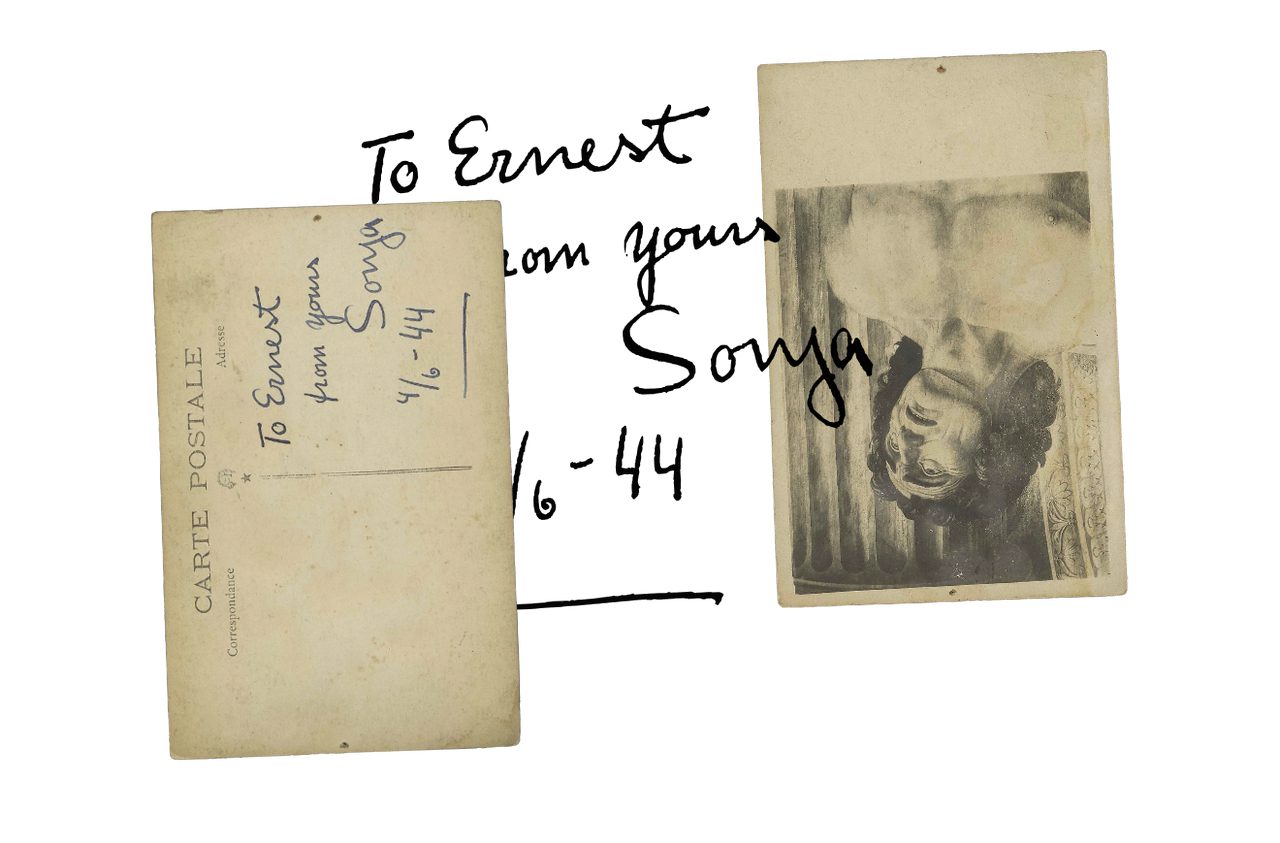 The exhibition “au revoir”convenes the legacies of Sonja Ferlov, Ernest, and Wonga Mancoba with twelve recipients of the Ferlov Mancoba Grant. It does so not to establish lineage but to stage resonance. The exhibition resists inheritance as a closed system. Instead, it approaches art as a practice of relation – porous, unfinished, and collective. For the Mancobas, form was inseparable from spirituality and communal life. Against this ground, the participating artists unfold metamorphic constructions across different media. They articulate gestures that mark continuity as something fragmented, embodied, and precarious. What emerges is continuity understood as a fragile labour, a provisional architecture of relation. Here, art insists on keeping bonds – spiritual, ecological, social – alive even amid rupture, exile, or erosion. Each work stands as guardians, asking how memory can be protected, while still opening onto futures not yet imagined. Info: Curator: Rune Finseth, Galerie Mikael Andersen, Bredgade 63, Copenhagen, Denmark, Duration: 9/10/2025- , Days & Hours: Tue-Fri 12:00-18:00, Sat 11:00-15:00, https://mikaelandersen.com/
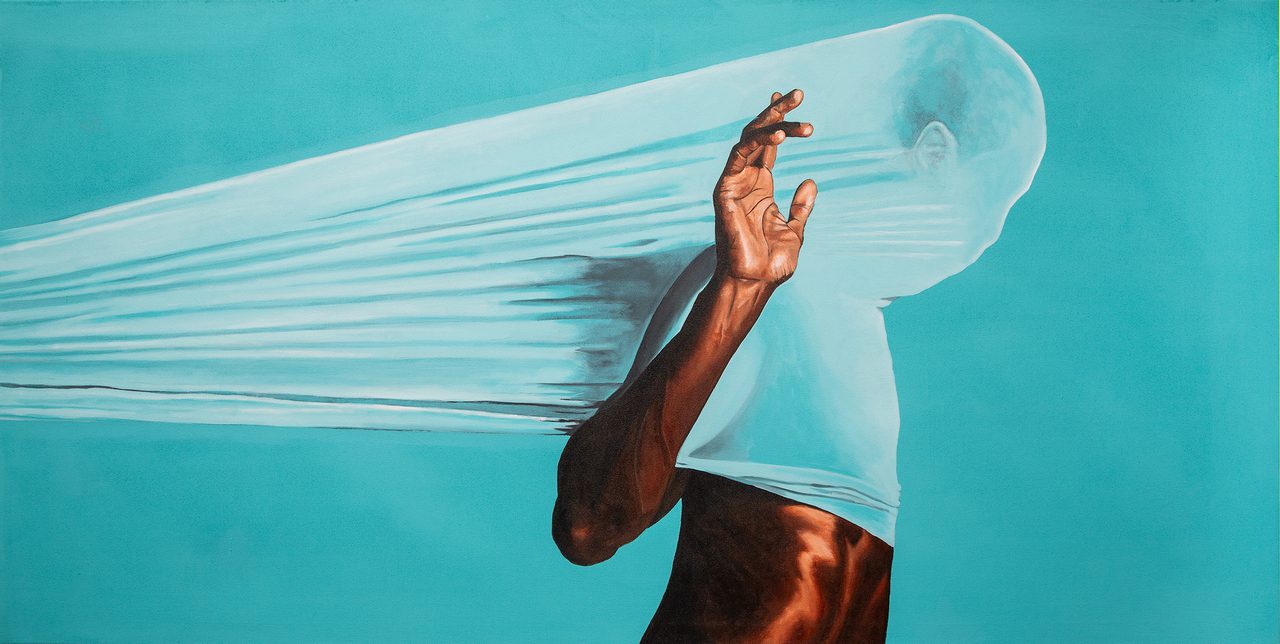 “This Face Behind This Mask Behind This Skin” presents the work of artist and scholar Dr. Fahamu Pecou. The exhibition’s title reads like a mantra—an embodiment of being and becoming. Dr. Pecou’s work explores contemporary representations of Black masculinity and identity through painting, mixed-media sculpture, and critical theory. This exhibition brings together his recent series “End of Safety”, “Real Negus Don’t Die”, and “We Didn’t Realize We Were Seeds” debut a multichannel video installation featuring his short Afro-Surrealist film “The Store. “End of Safety” examines how cultural hegemony has shaped Black American identity, suggesting it is often imposed rather than self-defined. Pecou explores the tension between the imposition of Blackness and the comfort that arises from it. “Real Negus Don’t Die”, begun in 2013, is an evolving tribute to iconic African American figures whose lives and legacies shape the rhythm and resonance of Black cultural identity. At the heart of this series lies the word “negus”, an Ethiopian word meaning “king,” offered here as a gender neutral term underscoring royalty. “We Didn’t Realize We Were Seeds” explores Black identity across time and cultures, encompassing art, fashion, politics, and spirituality. Pecou employs “Afrotropes”—recurring visual forms that have emerged within, and become central to, the formation of African diasporic visual culture. “The Store” is a short film composed of four vignettes, each centered at a corner store that doubles as a hood botanica, where patrons unlock portals into surreal, liberating visions. The Store reclaims symbols of survival and reframes them as gateways to Black sovereignty, memory, and futures. Info: The Frist Art Museum, 919 Broadway, Nashville, TN, USA, Duration: 10/10/2025-4/1/2026, Days & Hours: Mon & Fri-Sat 10:00-17:30,Thu 10:00-20:00, Sun 13:00-17:30, https://fristartmuseum.org/
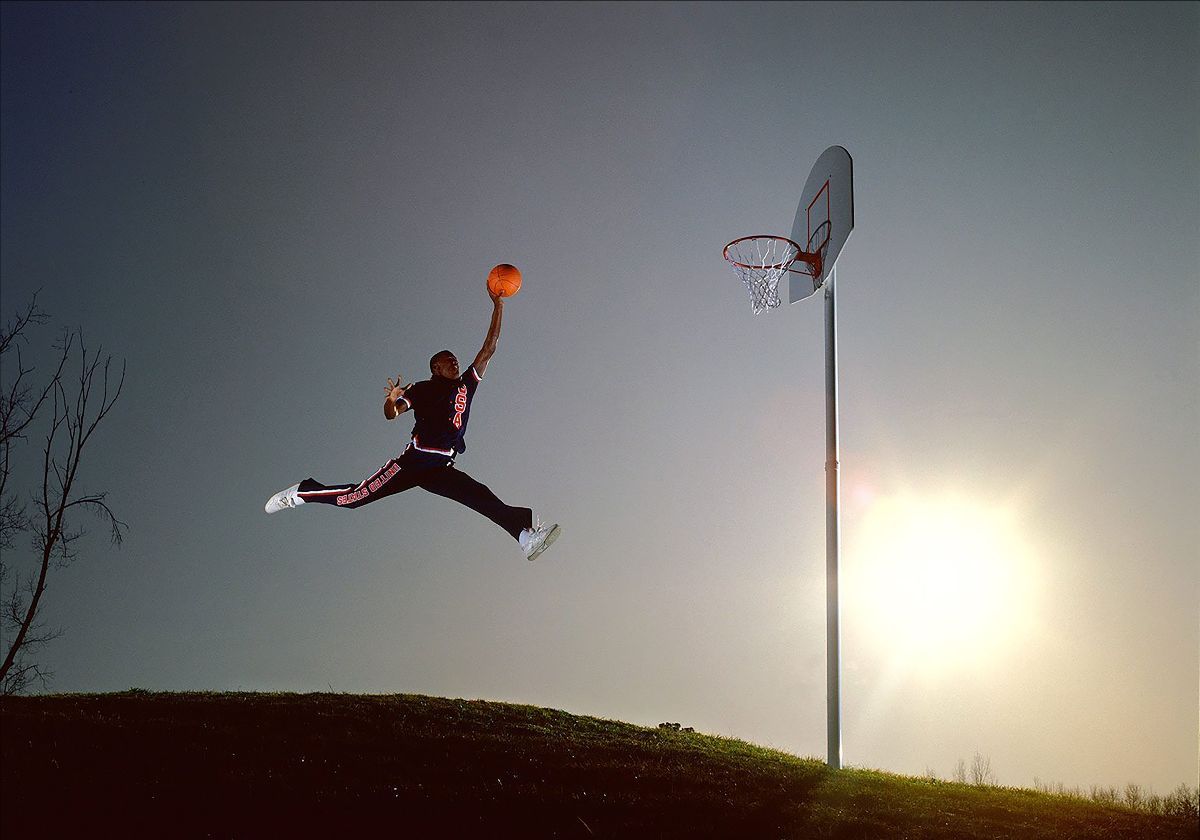 “Witnessing Life” is the first major retrospective of the Dutch-American photographer Co Rentmeester. A pioneer in a wide range of photographic genres, Rentmeester helped shape the visual culture of the 20th century. His images span from battlefields during the Vietnam War to iconic advertising campaigns, wildlife and sport images. Amongst them is the world-famous Jumpman-image of Michael Jordan from 1984, later copied by Nike for their famous Jumpman logo, and named one of Time Magazine’s 100 most influential photographs of all time. His diverse body of work includes war reportage, documentary photography, wildlife, sports, and commercial imagery, “Witnessing Life” showcases Rentmeester’s extraordinary ability to move seamlessly across genres. The exhibition includes his early images from the Watts riots in 1965 and Vietnam, as well as his award-winning photographs of Olympic swimmer Mark Spitz and his iconic images for a major tobacco company. Rentmeester was a staff photographer for LIFE from 1966 to 1972 and produced twenty-two covers for LIFE, earning recognition for his precision, visual clarity, and human storytelling. He remains the only Dutch photographer to have won a World Press Photo award, not once but twice. He received his first in 1967 for a striking image from the Vietnam War, notably the first colour photograph ever to win, and earned the second in 1973 for his portrait of Olympic swimmer Mark Spitz. Info: Foam, Keizersgracht 609, Amsterdam, Netherlands, Duration: 10/10/2025-11/2/2026, Days & Hours: Mon-Wed & Sat-Sun 10:00-18:00, Thu-Fri 10:00-21:00, https://www.foam.org/
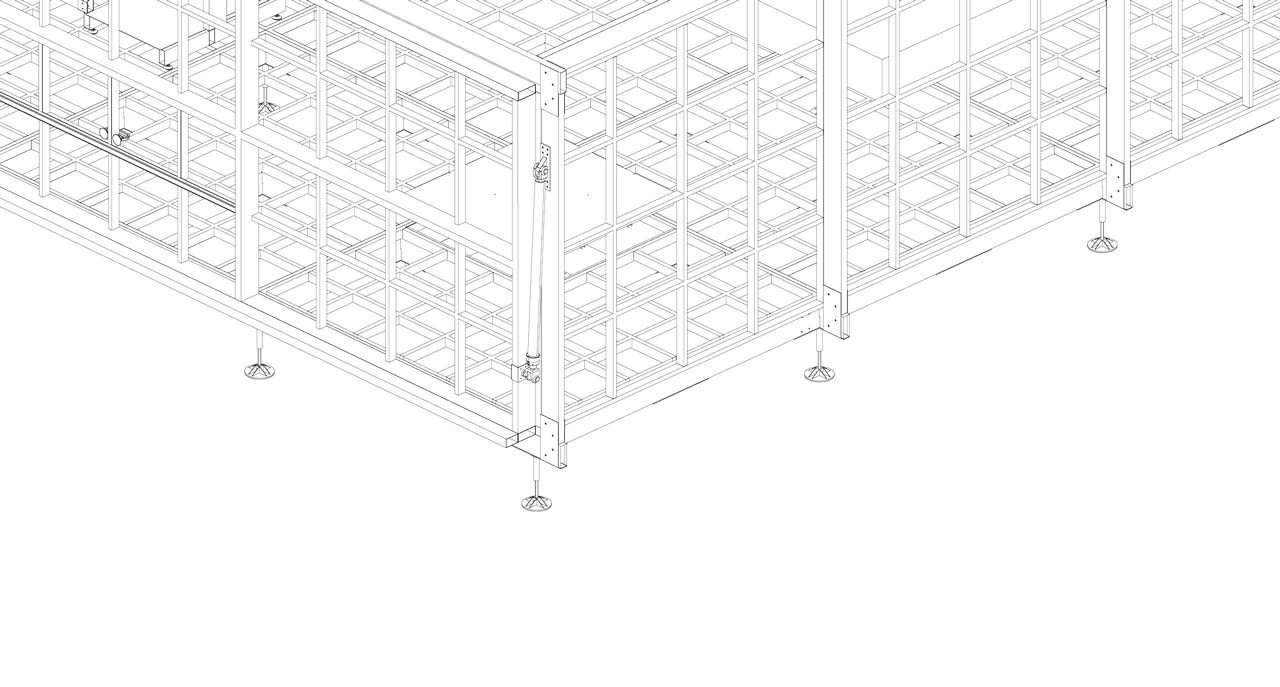 Upon being invited to present the exhibition “On Refusal, Infiltration, and the Gift”, at Kunsthaus Bregenz in autumn 2025, the artist decided to withdraw their identity. Not as a retreat but as a method: an intentional refusal of the economies of authorship, legacy, and visibility. While anonymity can be used as a tool for the dissemination of ideas without censorship or repercussions on a position of “dissent”; anonymity here questions the motivations of authorship and its subsequent economies. If there is no distinguishable entity or person(s) for the work to be ascribed to, then the impetus for creating the work must revise the mode of production, aesthetic sensibilities, and lines of inquiry related to previous work. What remains is an anti-capitalist proposition that infiltrates the infrastructure that identity offers in an art-historical and cultural landscape. Visitors to the exhibition are invited to inhabit the space—to sit, lie down, make coffee, use the bathroom. After the exhibition, it will continue to exist as a movable artists’ residence: a living, working structure built to be disassembled, moved, and reassembled elsewhere. It offers itself as a tool—unfinished by design—that is preserved through utility. Info: Kunsthaus Bregenz, Karl-Tizian-Platz, Bregenz, Austria, Duration: 11/10/2025-18/1/2026, Days & Hours: Tue-Wed & Fri-Sun 10:00-18:00, Thu 10:00-20:00, www.kunsthaus-bregenz.at/
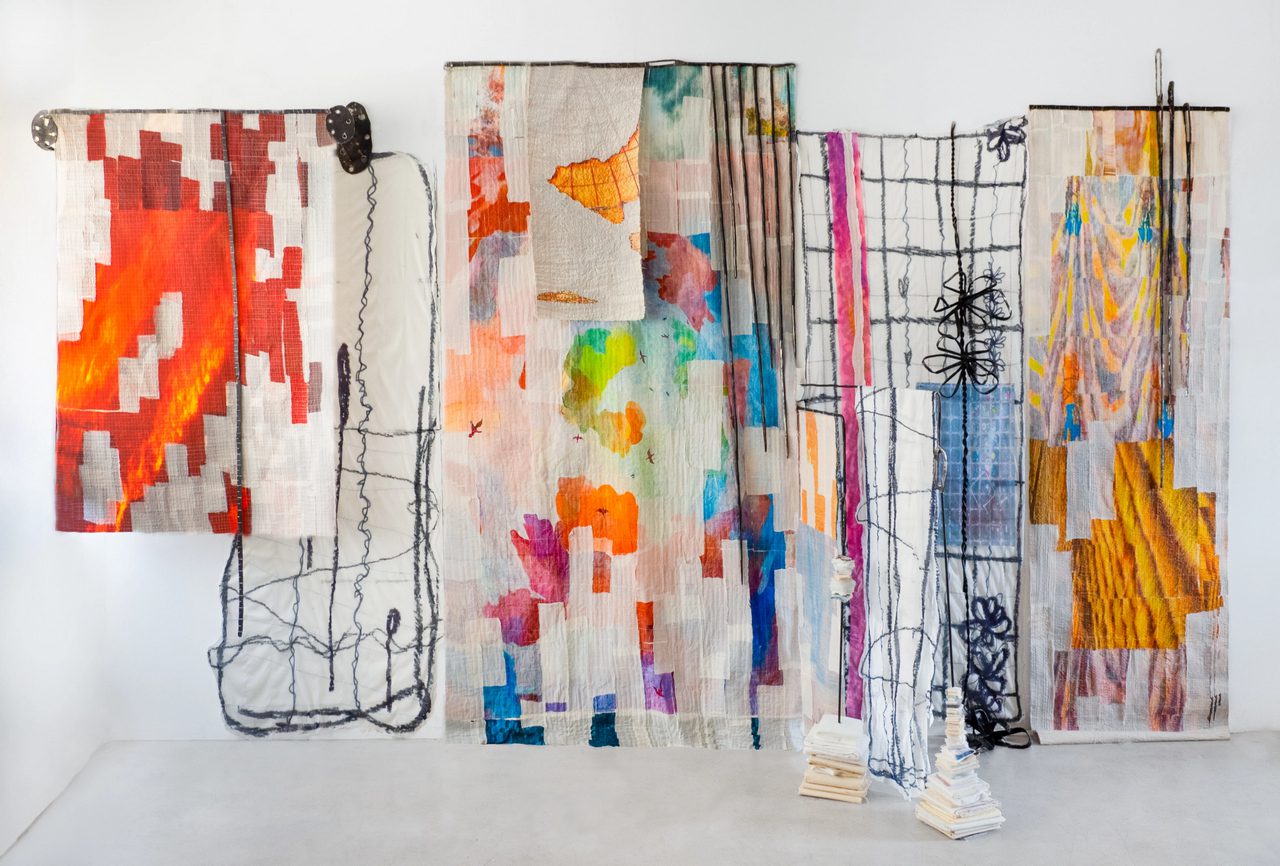 For the solo exhibition “Studio Everywhere”, Pauline-Rose Dumas—who works with textiles, drawing, and forged metal in a constant back-and-forth—questions the place of tools (traditionally associated with the feminine space: needles, scissors, tape measures) , images and media in wall sculptures and immersive installations that display a unique style. The exhibition is an opportunity to discover new works and bring together the artist’s iconic series, such as “Objets au mètre”, through which the artist reinvents the relationship between steel and textiles. By zooming in on her photographs of wallpaper, frescoes, classical paintings and natural surfaces, the artist reinvents the thread of the image’s composition through the pixelated aspect of photography to create her own colour palette drawn from reality. From there, she begins the work of weaving to create a poetic patchwork underpinned by metal-forged structures. “Les Outils” (The Tools) are part of a body of work in the form of exaggeratedly sized scissors, tape measures and needles. These works, whose serial nature is reminiscent of Valentine Schlegel’s knife collections, transport the workshop space into the exhibition space in a game of calligraphy where the lines of the tools, patinated with charcoal, recall charcoal strokes and seem to draw a new poetic vocabulary. Info: Galerie Anne-Laure Buffard, 6 rue Chapon, Paris, France, Duration: 11/10-22/11/2025, Days & Hours: Tue-Sat 11:00-19:00, https://annelaurebuffard.com/
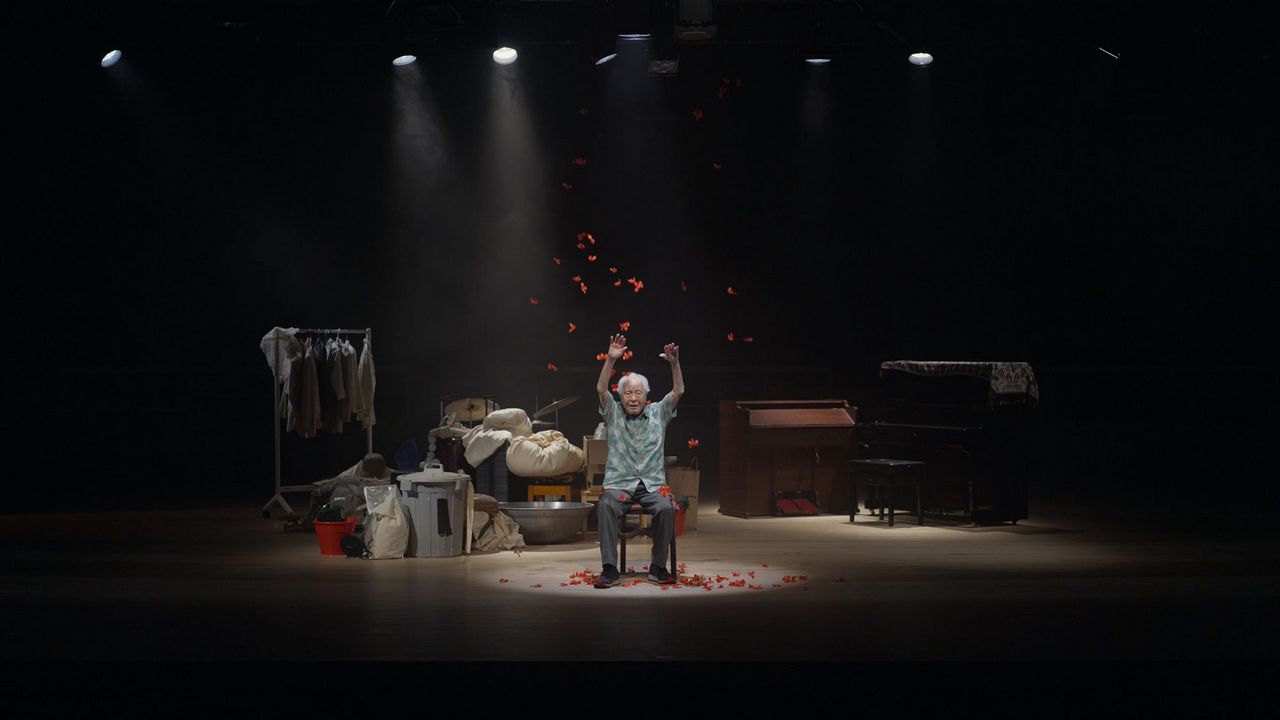 The Artizon Museum’s “Jam Session” series fosters new expression by pairing contemporary artists with works from the Ishibashi Foundation Collection. This sixth installment of the series features Yamashiro Chikako and Shiga Lieko whose works, though rooted in vastly different geographic regions – Okinawa for Yamashiro and Tohoku for Shiga – engage themes of history and memory. In recent years, localized social change and natural disasters have amplified differences in regional and cultural experience, prompting once shared memories to fade. In Japan, what was an almost imperceptible divide between center and periphery has widened with diminished memory over time of World War II and the Battle of Okinawa, for example, or of natural disasters and earthquakes such as the Great East Japan Earthquake of 2011. This situation provides the context for the examination and re-evaluation of the themes of “center and periphery” and “place and memory” in the In the midst of exhibition. In our “post-truth” era of blurred facts and information overload, how can the past be understood? Yamashiro and Shiga confront history and memory directly and viscerally in their art. Their works are powerful appeals to action that rouse viewers to re-examine their own views and accepted perspectives and narratives. Yamashiro and Shiga’s new works created in dialog with the Ishibashi Foundation Collection offer an opportunity to reconsider our own views on complex and difficult realities as we contemplate the power of art. Info: Artizon Museum, Chuo Citym 1 Chome-7-2 Kyobashi, Tokyo, Japan, Duration: 11/10/2025-12/1/2026, Days & Hours: Tue-Sun 10:00-18:00, hwww.artizon.museum/
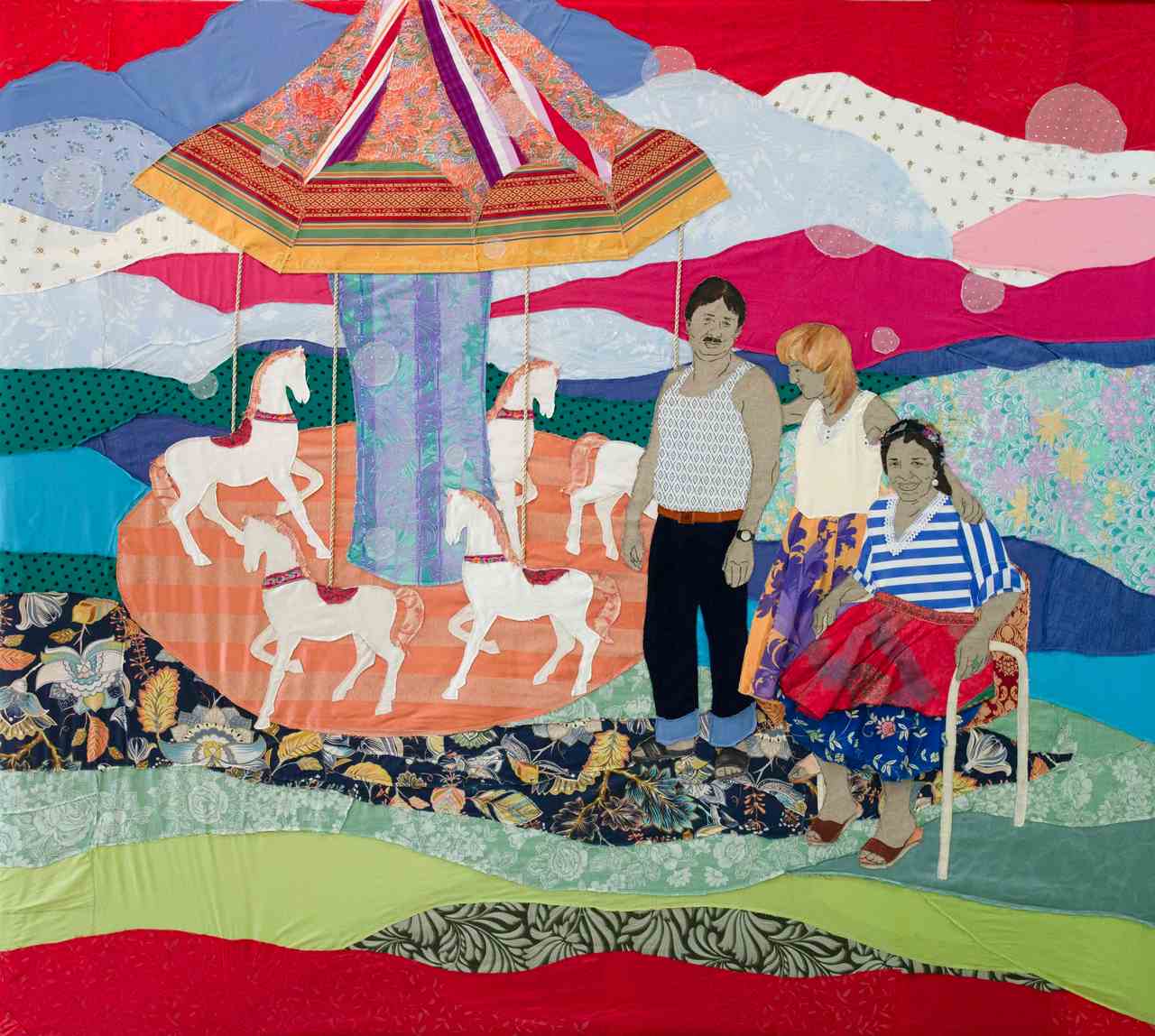 The idea for the exhibition “The Big Dipper Will Foretell the Future of the Roma” sprang from the community’s deep ties to travelling entertainment and the management of funfair rides, a trade handed down from generation to generation that the artist identified as a specific characteristic of Romani culture in Italy. Drawing inspiration from the world of fairs, her new exhibition feels full of exuberant vitality. At the same time, it is inevitably imbued with a sense of impermanence and the memory of the persecution and forced displacement of theRoma and Sinti, who throughout history have often been denied the chance to settle in one place. Mirga-Tas has focused in particular on the image of the chair swing ride, whose circular structure and constant movement round and round takes on a powerful symbolism: the passage of time, the way life seems to return with each new season, the wheeling of planets in cosmic space, the idea of perpetual travel. The ride is covered in different kinds of fabric onto which a vivid, multicoloured patchwork has been sewn. It depicts figures and scenes from the everyday life of Sinti and Roma communities in Emilia — family relationships, shared activities, moments of rest and leisure — with a particular focus on the role of women. Info: Collezione Maramotti, Via Fratelli Cervi 66, Reggio Emilia, Italy, Duration: 12/10/2025-8/2/2026, Days & Hours: Thu-Fri 14:30-18:30, Sat-Sun 10:30-18:30, www.collezionemaramotti.org/
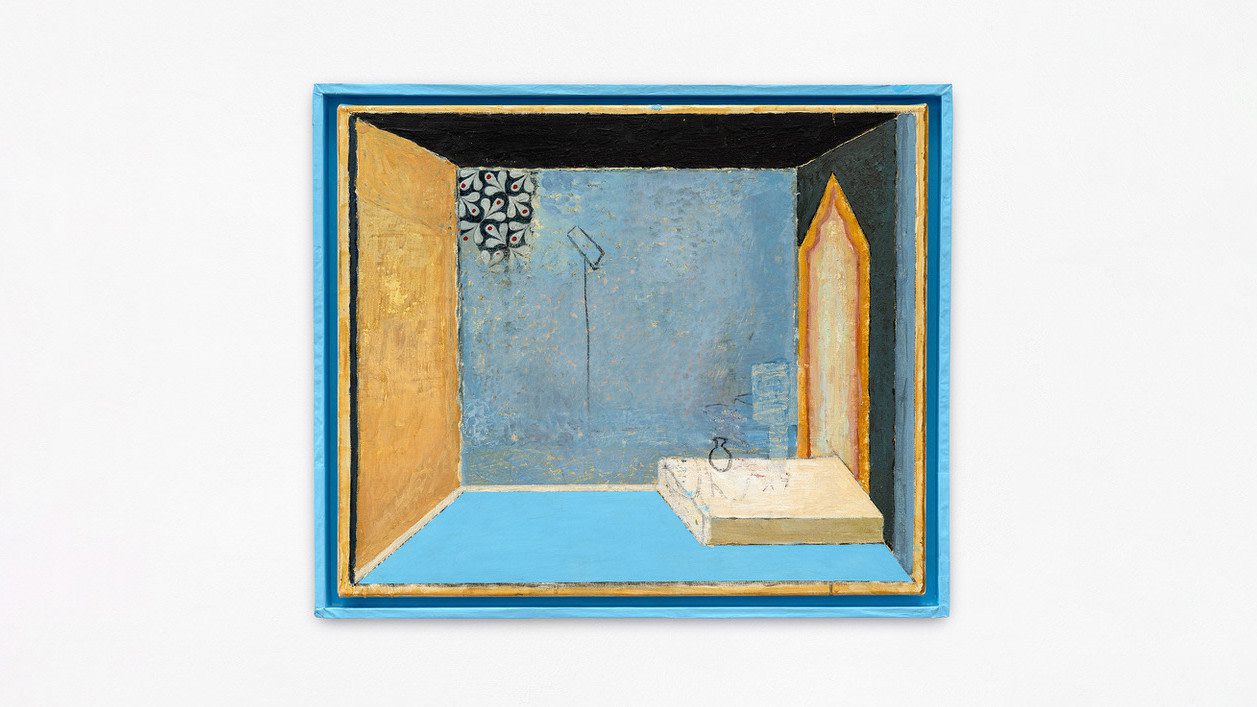 Matthias Weischer’s solo exhibition is his first solo show in London in over 20 years. Matthias Weischer’s paintings depict interior scenes that challenge the viewer’s perception of space. One of the foremost painters of his generation, Weischer has refined his technique by repeatedly crafting and restaging compositions, often drawing from his own studio as a point of departure. In these new works, Weischer’s enigmatic interiors suggest a fleeting human presence. Each room captures a moment suspended in time; the sparse furniture and signs of disrepair evoke a sense of vacuity and abandonment. A keen interest in the interior depictions of both the Italian Renaissance and the Dutch masters of the 17th century informs these environments. In one painting, a male figure perches on the edge of a low stool, seen to be writing or studying from a book in his lap. Encroaching from behind, from the edge of the canvas, are the meandering variegated leaves of a tall plant, and on the wall hang other pictures, objects that reoccur variously in his work. Sometimes they are snatches of geometric patterns or illustrations, other times reproductions of Renaissance or Byzantine scenes. Weischer is known for his use of many layers of oil paint, built up over time to create a thick, rich surface texture. More recently he has begun to also use egg tempera, its flatness and lightness offering a resemblance to the plaster surface of fresco, coupled with a palette of warm, pastel tones, again evocative of the history of Italian painting. Info: Grimm Gallery, 43a Duke Street, St. James’s, London, United Kingdom, Duration: 14/10-19/11/2025, Days & Hours: Tue-Sat 11:00-18:00, https://grimmgallery.com/