TRIBUTE: Mona Hatoum-Behind the Seen
Born into a refugee Palestinian family in Beirut, Lebanon, Mona Hatoum has lived in London since 1975, after the outbreak of the Lebanese Civil War prevented her from returning home. Her poetic and political oeuvre is realised in a diverse and often unconventional range of media, including performance, video, photography, sculpture, installation and works on paper. Her work deals with issues of displacement, marginalisation, exclusion and systems of social and political control.
By Dimitris Lempesis
Photo: Foundation and Museo Nivola Archive
Mona Hatoum’s solo exhibition “Behind the Seen” is the culmination of a residency in Orani, Sardinia, where the artist immersed herself in the island’s geography, culture, and artisanal traditions. The project unfolds as both a dialogue with local craftsmanship and a continuation of Hatoum’s lifelong investigation into displacement, vulnerability, and the hidden structures of power that regulate human existence. The exhibition brings together iconic earlier works and newly realized pieces, many produced in collaboration with Sardinian artisans, resulting in a body of work that is at once formally rigorous, politically charged, and profoundly poetic. At its core, “Behind the Seen” meditates on the relationship between body, matter, and land, as well as the tension between what is visible and what remains concealed. The exhibition title itself hinges on a pun: “seen” and “scene.” This double register is key to Hatoum’s practice, which consistently moves between the visible spectacle of the artwork and the unseen dimensions of experience—memory, trauma, exile, and the operations of power that remain hidden in everyday life. The exhibition invites the viewer not merely to look but to probe, to search beneath appearances, and to enter into the unstable terrain between perception and reality. Hatoum’s visual language is deceptively simple. Drawing from minimalism’s economy of form and clarity of line, she often employs grids, geometric structures, and industrial materials. Yet unlike classical minimalism, which sought neutrality and autonomy, Hatoum’s works are never neutral. They are charged with political and emotional resonance, haunted by histories of violence and displacement. Her objects and installations exist as double agents: at once seductively refined and subtly threatening. This doubleness generates what might be called an “aesthetics of suspension.” Viewers find themselves caught between attraction and repulsion, between beauty and menace, between the familiar comfort of domestic forms and their unsettling transformation into instruments of confinement or aggression. This oscillation forces a continual renegotiation of perception. In Hatoum’s work, to look is never passive; it is always an act of positioning, of questioning, of being implicated. The body has been central to Hatoum’s practice from the beginning. Her performances of the 1980s directly staged the female body in urban space, exposing it to the dynamics of surveillance, control, and vulnerability. As her practice evolved, the body gradually disappeared as an explicit presence, leaving instead its traces, imprints, or substitutes. Beds, cages, hospital screens, chairs, and utensils became metaphors for the absent body, objects that resonate with confinement and exposure.
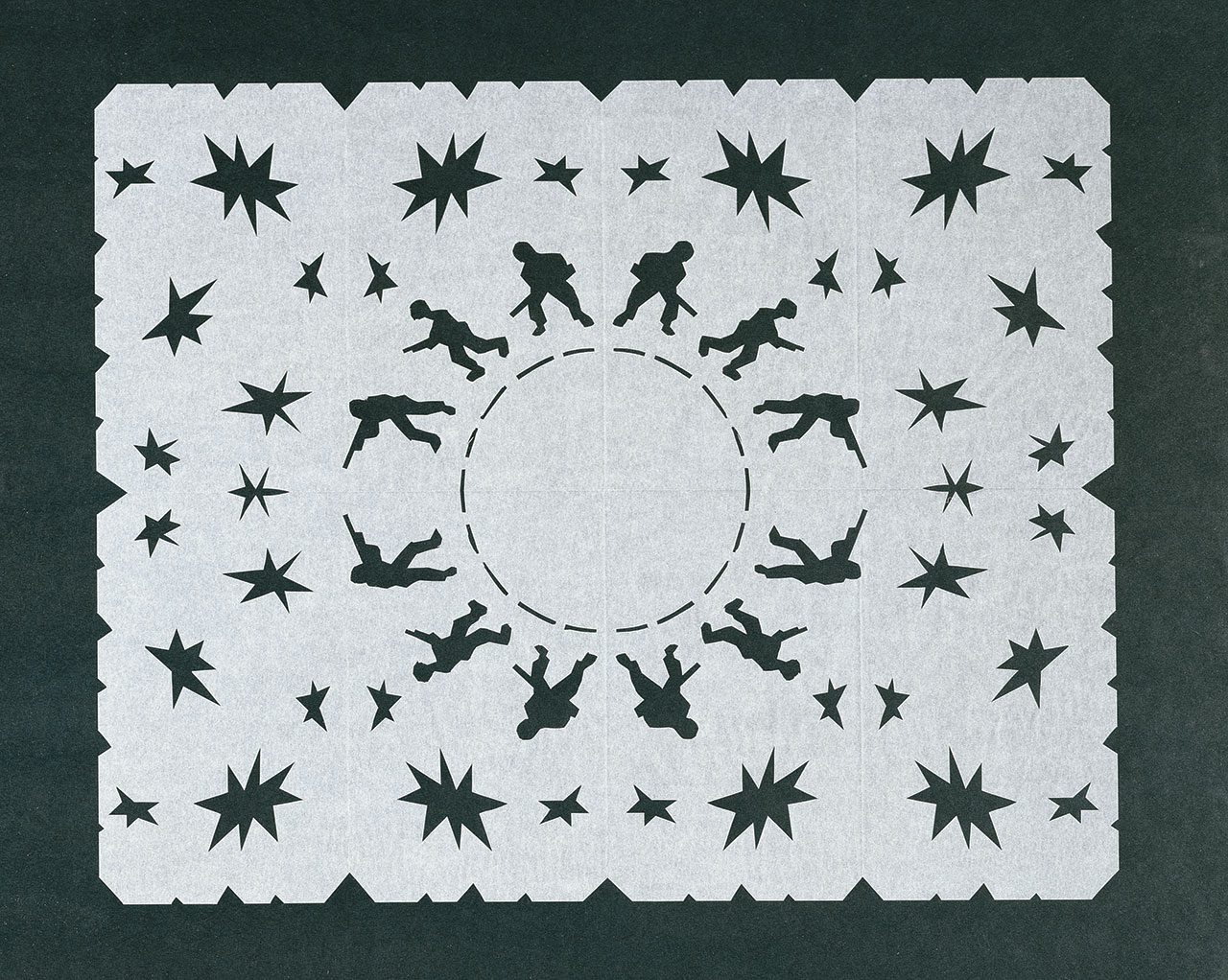
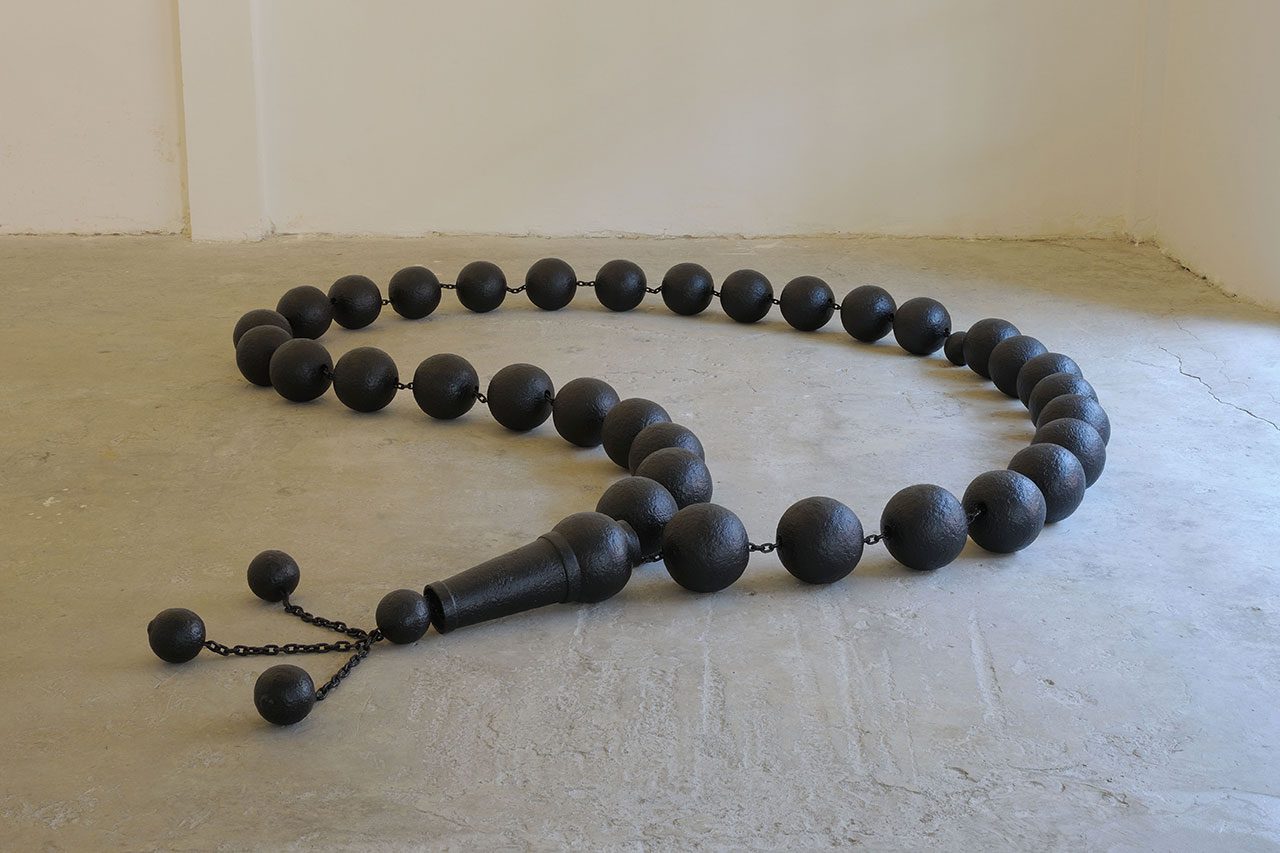
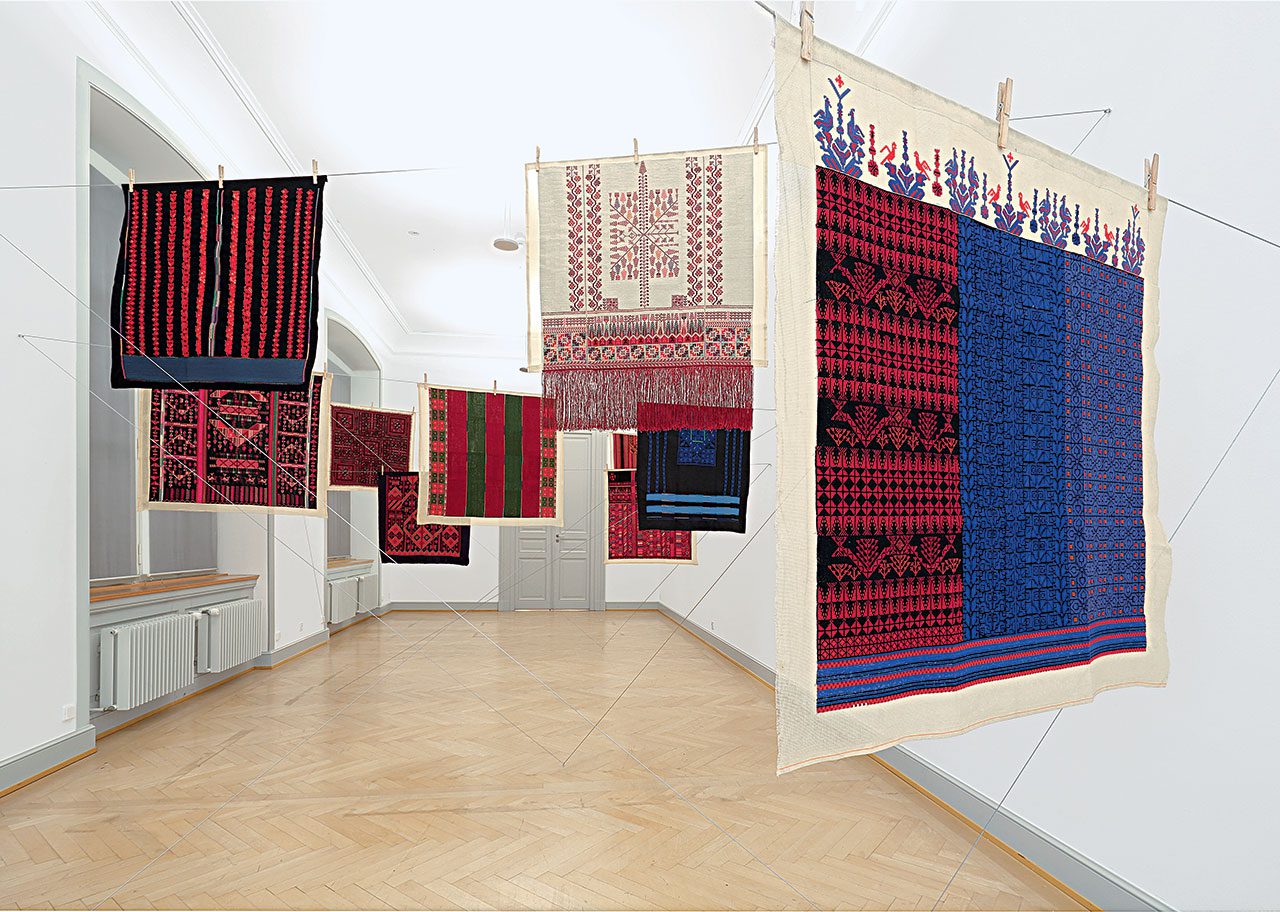
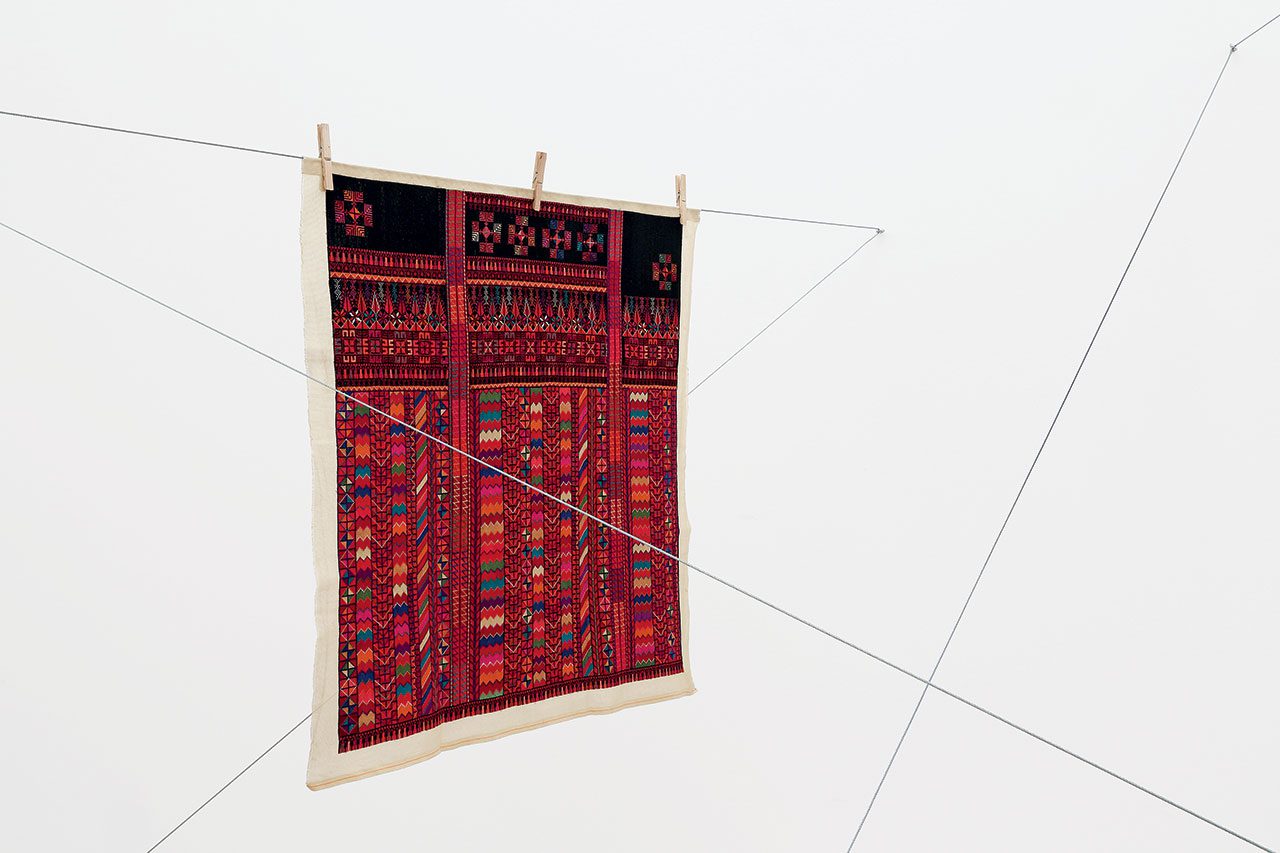
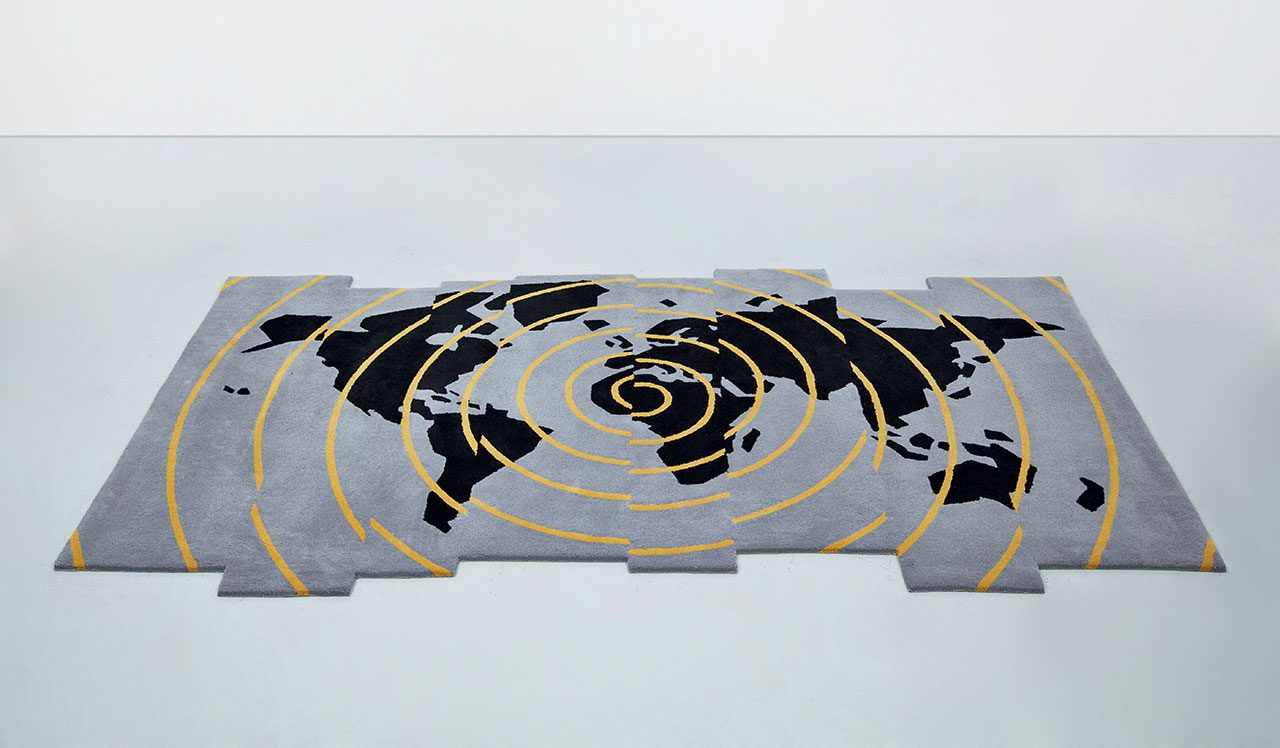
A hospital screen in “Divide” (2025), now menacingly strung with barbed wire, becomes a physical barricade rather than a protective veil. A Mirror (2025) constructed as a grid refuses to return the viewer’s reflection, offering instead the opacity of restriction. In “Untitled (red velvet)” (1996), a visceral motif resembling intestines or neural pathways is inscribed on a lush fabric, collapsing the distance between interior corporeality and surface decoration. These works foreground the fragility of the human subject and the uneasy boundary between intimacy and violence. Hatoum persistently destabilizes the sphere of the domestic. Objects that ordinarily signify safety, comfort, or belonging—beds, chairs, carpets, kitchen utensils—are reconfigured into instruments of threat. A bed becomes a site of exposure; a colander bristles with spikes like an improvised explosive; a chair collapses into precarious instability. This unsettled domesticity reveals how power operates not only in prisons, borders, or institutions but also within the spaces of everyday life. The domestic sphere, often idealized as private and safe, is shown to be permeable to coercion and violence. Here Hatoum resonates with Michel Foucault’s notion of “biopolitics”—the ways in which power infiltrates and regulates bodies, homes, and habits. What appears private is already inscribed by broader structures of surveillance and discipline. Similarly, Giorgio Agamben’s reflection on “bare life” seems to echo in Hatoum’s empty beds and vulnerable screens: the reduction of the subject to its most exposed, unprotected state. Hatoum’s own biography—born in Beirut to a Palestinian family, later unable to return home due to the outbreak of war—undergirds her practice with a persistent poetics of exile and displacement. Yet her work resists simplistic narratives of identity or autobiography. Instead, displacement is translated into spatial and perceptual terms: fragmented geographies, obstructed paths, impossible maps. “Twelve Windows” (2012–2013) is emblematic. Twelve panels of traditional Palestinian embroidery, created with the women of Inaash*, are suspended in space on taut red washing lines. The work creates an environment that is simultaneously delicate and obstructive, evoking the lived reality of diaspora: beauty interwoven with fragility, cultural survival entangled with separation. This theme of unstable topography is echoed in “Untitled (bed springs) I” (2018), a lithograph produced by pressing industrial bed springs into lithographic stone. The resulting image resembles both a biomorphic organism and a collapsed architectural plan, a map that deforms under pressure. It is as though territory itself becomes unstable, shifting, and precarious. The new works produced during Hatoum’s residency at the Museo Nivola extend her investigations while grounding them in local artisanal traditions. Ceramic birdcages, created with Terra Pintada, revisit her recurring motif of the grid as containment. Yet here, the grid’s rigidity collides with the fragility of ceramic, a medium tied to decorative and domestic use. Fragile beauty becomes a vehicle for reflecting on confinement, producing a symbolic tension between tradition and trauma. In “Gathering”, compressed ceramic forms embedded with rusted nails evoke desolate landscapes dotted with spectral communities. The clustered nails recall human figures—fragile, scarred, yet stubbornly gathered together. Their attenuated forms bring to mind the existential sculptures of Giacometti, with whom Hatoum is in dialogue in a parallel exhibition at London’s Barbican. “Shooting Star I” and “Shooting Star II”, realized with blacksmith Emanuele Ziranu, suspend spiky geometries from the ceiling. The works hover between celestial beauty and explosive violence, radiating both wonder and menace. They embody instability itself, hanging precariously as if on the verge of detonation. In collaboration with Sardinian weaver Mariantonia Urru, Hatoum produced “Eye Spy” a wool carpet translating a pixelated drone image of a crowd into a tactile surface. Wool, typically associated with warmth and comfort, becomes a medium for cold surveillance imagery. The result is a disturbing hybrid: a domestic textile that embodies the militarized gaze of drones, collapsing intimacy and violence into one surface.
The titular installation, “Behind the Seen”, gathers ordinary objects into an environment of uncanny estrangement: a spiked colander, a bed, a skinned soccer ball, an overturned stuffed toy, a chair that teeters toward collapse. Arranged with apparent casualness, these fragments form a mise-en-scène of disruption. They seem to narrate an interrupted moment, a household caught in crisis, yet refuse closure or resolution. The installation functions as what Gaston Bachelard might call a “poetics of space”—but one inverted, where the home becomes a fractured unconscious, haunted by trauma and latent violence. The title insists on the necessity of looking beyond appearances, interrogating what remains hidden in the corners of domestic life, memory, and history. Through the constellation of works in “Behind the Seen”, Hatoum advances her long-standing inquiry into the politics of perception and the fragility of human existence. Her art insists that every surface—whether a map, a bed, or a decorative fabric—contains fissures through which histories of displacement, coercion, and resistance seep. She transforms ordinary objects into critical devices that expose hidden power structures and force viewers into a space of unease, reflection, and re-positioning. Hatoum’s practice reveals that to “see” is never simple. Vision itself is political, shaped by what is allowed to be visible and what is kept hidden. “Behind the Seen” reminds us that art’s task is not only to display but to unsettle, to excavate the unseen strata of human experience. It is here—in the fragile, unstable zone between attraction and repulsion, intimacy and threat—that Hatoum situates her work, demanding that we, too, dwell in the tension between what is given to us and what remains hidden behind the scene.
* Founded in 1969 by the artist Huguette Caland, whose father, Bechara El Khoury, was the first president of the newly independent Lebanon, Inaash enables Palestinian women living in refugee camps to develop marketable skills and earn money to help support themselves and their families. The employment opportunities for Palestinians living in Lebanese refugee camps were very limited but they were particularly scarce for women, who, then as now, faced cultural opposition to working outside the camps. Inaash focused on fostering a transferable skill to which those women still had access: embroidering using techniques and styles that had been nurtured in Palestine for centuries.
Photo: Mona Hatoum (with the women of Inaash), Twelve Windows, 2012–2013, Twelve Palestinian embroideries on fabric, wooden clothespins, and steel cable, Each 100 × 100 cm, overall installation dimensions variable, Installation view at Kunstmuseum St. Gallen, 2013, © Mona Hatoum. Courtesy of Kunstmuseum St. Gallen (photo: Stefan Rohner)
Info: Curators: Giuliana Altea, Antonella Camarda and Luca Cheri, Museo Nivola, Via Gonare 2, 08026 Orani, NU, Italy, Duration: 4/10/2025-2/3/2026, Days & Hours: Mon-Tue & Thu-Sun 10:30-19:30, https://museonivola.it/
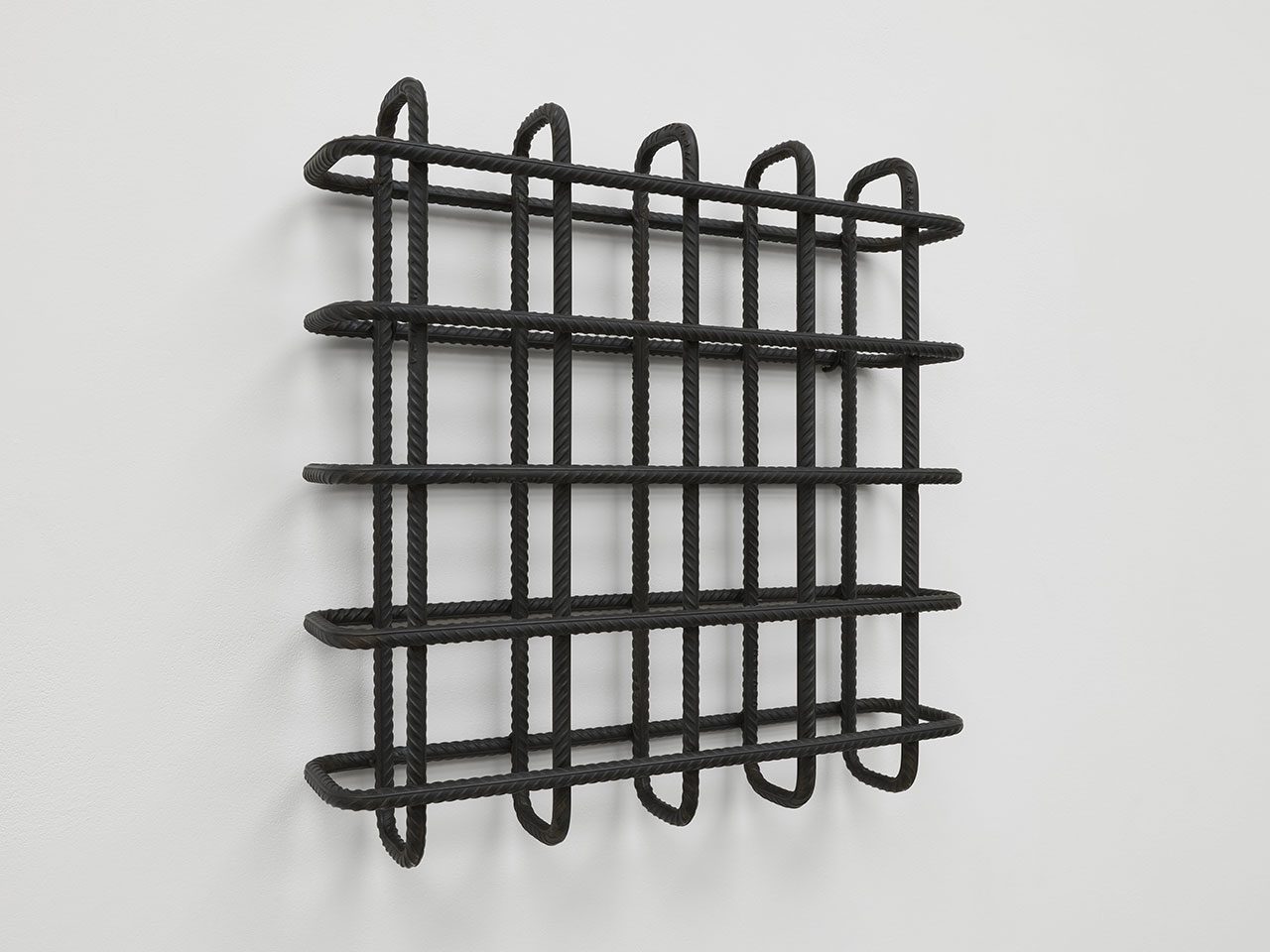
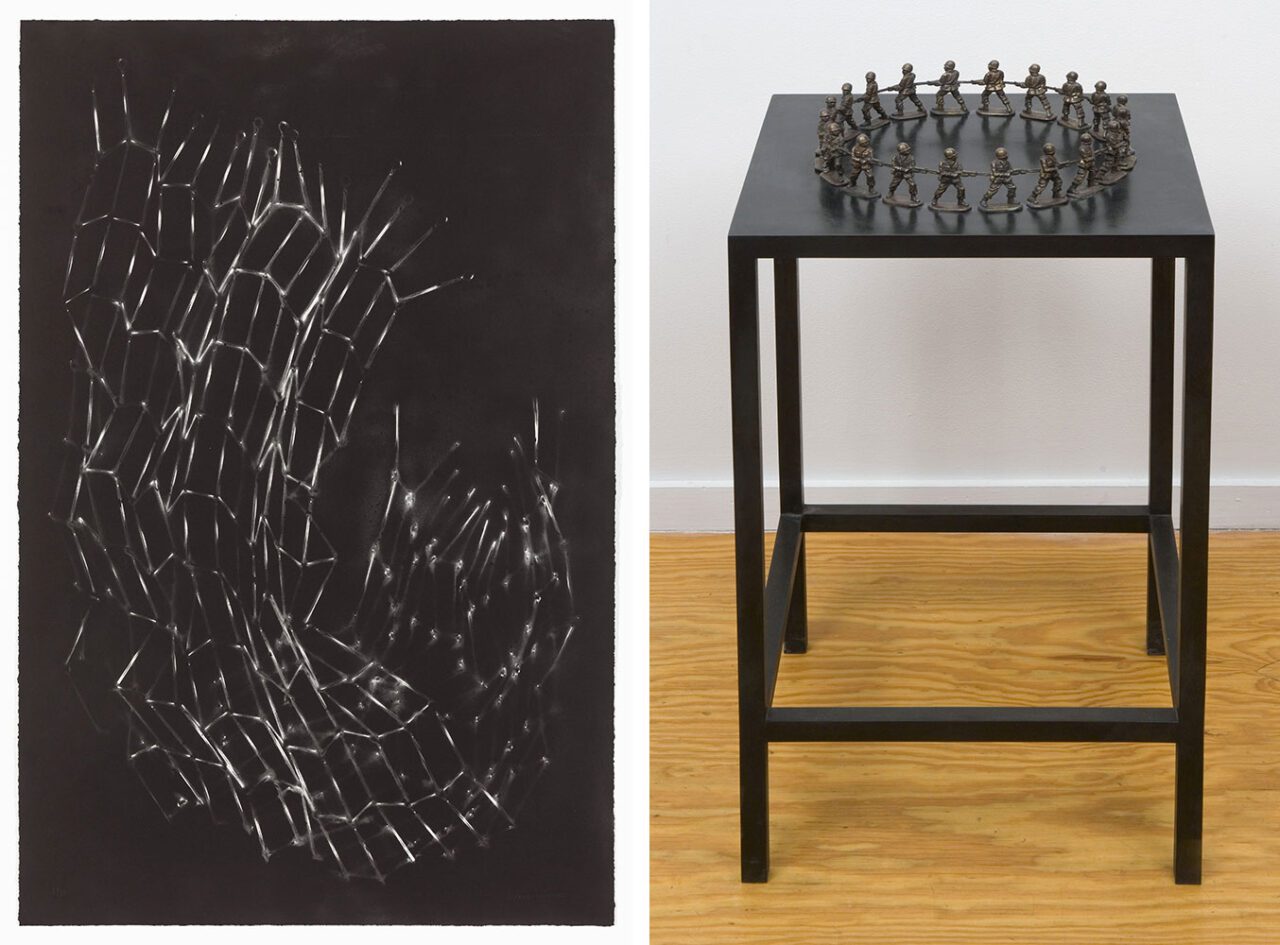
Right: Mona Hatoum, Round and round, 2007, Bronze, 61 × 33 × 33 cm, © Mona Hatoum. Courtesy of Alexander and Bonin, New York (photo: Bill Orcutt)