
ARCHITECTURE: Kengo Kuma-Onomatopoeia
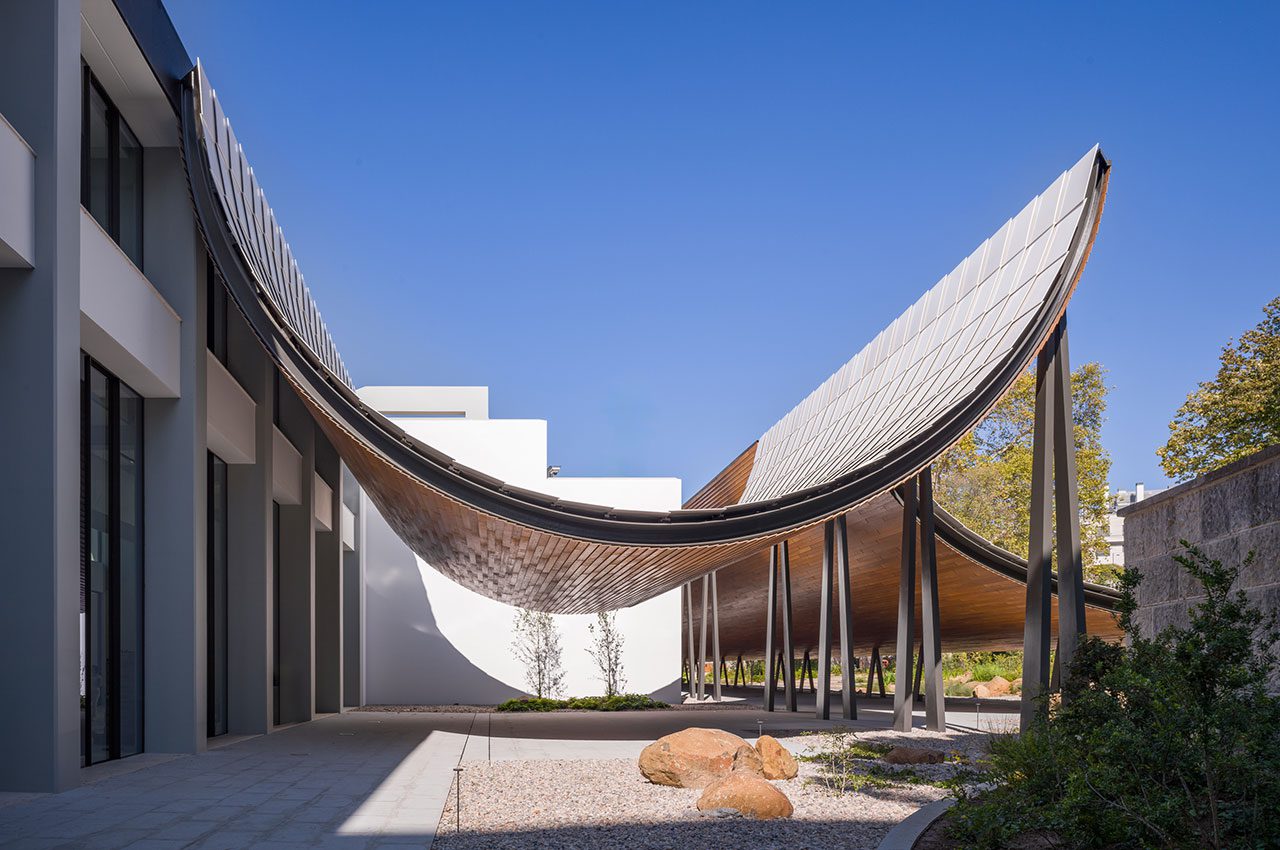
Kengo Kuma’s approach to materials is a fundamental element of his originality. Born in Yokohama in 1954, Kuma perceives the world as material and studies space thoroughly before beginning any design. He seeks to fully understand the site and to create architecture that is open to the environment and rooted in its history. He believes that materials are inseparably connected with place: “Through material we can learn about the site and come closer to its uniqueness,” he notes.
By Efi Michalarou
Photo: Casa da Arquitectura Archive
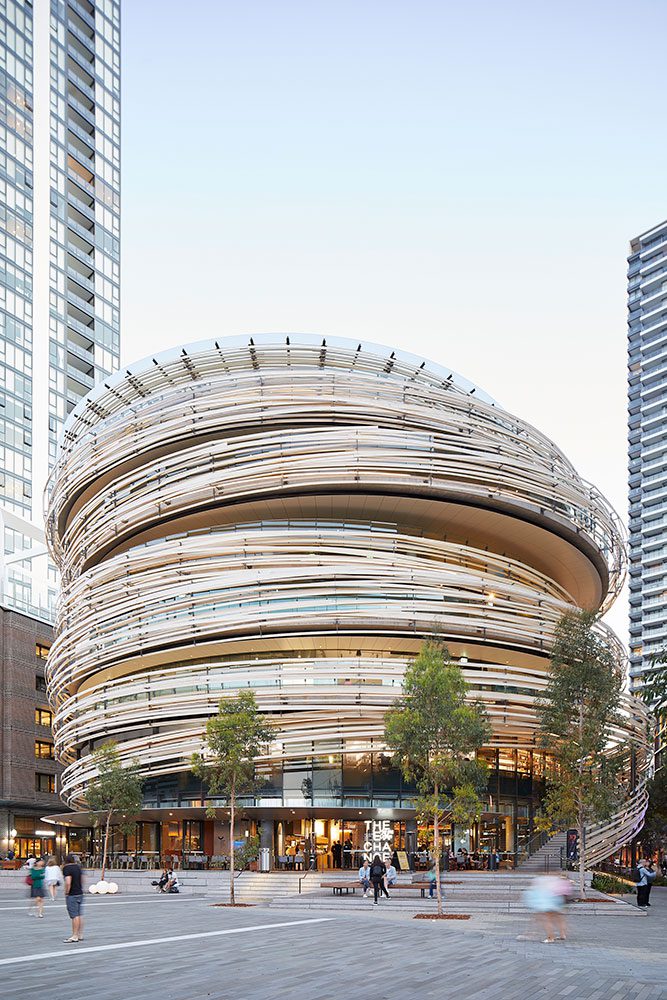
The exhibition “Kengo Kuma: Onomatopoeia” celebrates one of the most influential and visionary figures in contemporary architecture. Widely recognized as a master of materiality and an innovator in sustainable design, Kengo Kuma has redefined the relationship between people, place, and the built environment. This exhibition, which has already been presented in prestigious cultural hubs such as Venice, Bonn, and Athens, now arrives in Portugal with a distinctive character. The Portuguese edition incorporates projects conceived and developed within the country, highlighting Kuma’s global reach while grounding the narrative in local architectural discourse. Uniquely, the scenography and overall exhibition design have been entrusted to Kuma’s own practice, Kengo Kuma & Associates (KKAA). In a gesture that reflects both his design philosophy and ethical commitments, the studio has adapted the material to the Casa da Arquitectura Exhibition Hall by reusing existing supports and reinterpretating them in a fresh, inventive manner. This approach not only aligns with sustainable principles but also establishes a dialogue with the architecture of the hosting space, turning the exhibition itself into an act of creative integration. Visitors encounter a rich collection of works that illuminate the breadth of Kuma’s practice: 22 meticulously crafted models, 67 photographs documenting 19 key projects, and 13 original drawings accompanied by texts dedicated to the theme of “onomatopoeia” specifically selected for the Portuguese edition. The exhibition is further enriched by seven large-scale installations that embody Kuma’s exploration of material and form, as well as 21 publications available for consultation, offering a comprehensive and immersive journey into his oeuvre. The title of the exhibition, Onomatopoeia, carries a resonance that extends beyond linguistics. While the term denotes the formation of words that imitate natural sounds, Kuma reinterprets it as an architectural metaphor—an attempt to capture the rhythm, tactility, and atmosphere of spaces through material expression. The word itself, with deep roots in the Greek language, reinforces the exhibition’s European dimension while connecting to Kuma’s lifelong pursuit of building that resonates like music with its surroundings At the core of Kuma’s philosophy is a profound respect for materials and their capacity to embody cultural memory. Born in Yokohama in 1954, he has long advocated for an architecture that restores the intimate bond between humans and nature. His projects draw on traditional Japanese craftsmanship and materials such as wood, paper, stone, and metal, yet he deploys them in ways that feel strikingly contemporary. This duality—honoring tradition while innovating for the future—runs through his entire body of work.
Kuma often describes himself as a “materialist” in the truest sense. For him, materials are not merely functional components of construction but storytellers of place. He insists on studying the site in depth before initiating any project, believing that architecture should not impose itself but rather emerge organically from its environment. “Through materials, we can learn about a location and connect with its uniqueness,” he explains. His designs, therefore, do not dominate landscapes but converse with them—light, porous, and fluid structures that seem to float, often defying the heaviness historically associated with concrete architecture. Rejecting the postwar architectural obsession with concrete and monumental forms, Kuma instead pursues lightness, permeability, and tactility. His architecture suggests motion and rhythm, often evoking natural phenomena or musical cadences. This sensibility can be traced back to the 1980s when, while studying at Columbia University in New York, Kuma was struck by how foreigners admired Japanese traditions such as the tea ceremony and the elegance of handcrafted spaces. That realization reignited his appreciation for heritage and compelled him to integrate traditional techniques into his designs, giving them new relevance in the globalized age. Kuma’s architectural practice has since expanded across continents, encompassing projects in Japan, China, the United States, France, Italy, Australia, and beyond. Each work reflects a seamless dialogue between local culture and universal values, proving that architecture can be simultaneously site-specific and globally resonant. His projects often become cultural landmarks that celebrate not only contemporary design but also the identity of the communities they serve. In Greece, KKAA is currently engaged in The Ellinikon, one of Europe’s most ambitious urban regeneration projects. In collaboration with the Greek architectural firm Betaplan, Kuma has designed the Riviera Galleria, a new destination at the Marina of Agios Kosmas that fuses luxury retail, gastronomy, and leisure into a cohesive architectural experience. In parallel, the firm is also designing the Marina Residences, in partnership with Orilina Properties, a project poised to reshape the Athenian coastline and contribute to the city’s evolving skyline. Both works exemplify Kuma’s ability to harmonize cutting-edge design with cultural and environmental sensitivity. The Portuguese edition of “Onomatopoeia” thus offers not only a retrospective but also a living portrait of an architect who continues to challenge conventions and envision new futures. By weaving together heritage and innovation, craftsmanship and technology, local context and global relevance, Kengo Kuma demonstrates that architecture can transcend its physical form to become an experience, a rhythm, and a dialogue. His buildings are not static monuments but dynamic presences that breathe, resonate, and endure—shaping the future of architecture one carefully crafted detail at a time.
Photo: From the exhibition “Kengo Kuma Onomatopoeia”, Photo: © Pedro Cardigo, Courtesy Casa da Arquitectura – Portuguese Centre for Architecture
Info: Casa da Arquitectura – Portuguese Centre for Architecture, Avenida Menéres, 456, Matosinhos, Portugal, Duration: 4/10/2025-8/3/2026, Days & Hours: Tue-Fri 10;00-18:00, Sat-Sun 10:00-19:00, https://casadaarquitectura.pt/

