
PRESENTATION: Lee Bul-From 1998 to Now, Part II

Since her sensational debut in the late 1980s with experimental works that responded to Korea’s turbulent sociopolitical context, Lee Bul has, over the past four decades, established herself as a central voice in the global art scene through a multifaceted practice spanning performance, sculpture, installation, and two-dimensional works. Lee’s work broadly investigates the shifting relationships between body and society, humanity and technology, nature and civilization, as well as the mechanisms of power that shape them (Part I).
By Dimitris Lempesis
Photo: Leeum Museum of Art Archive
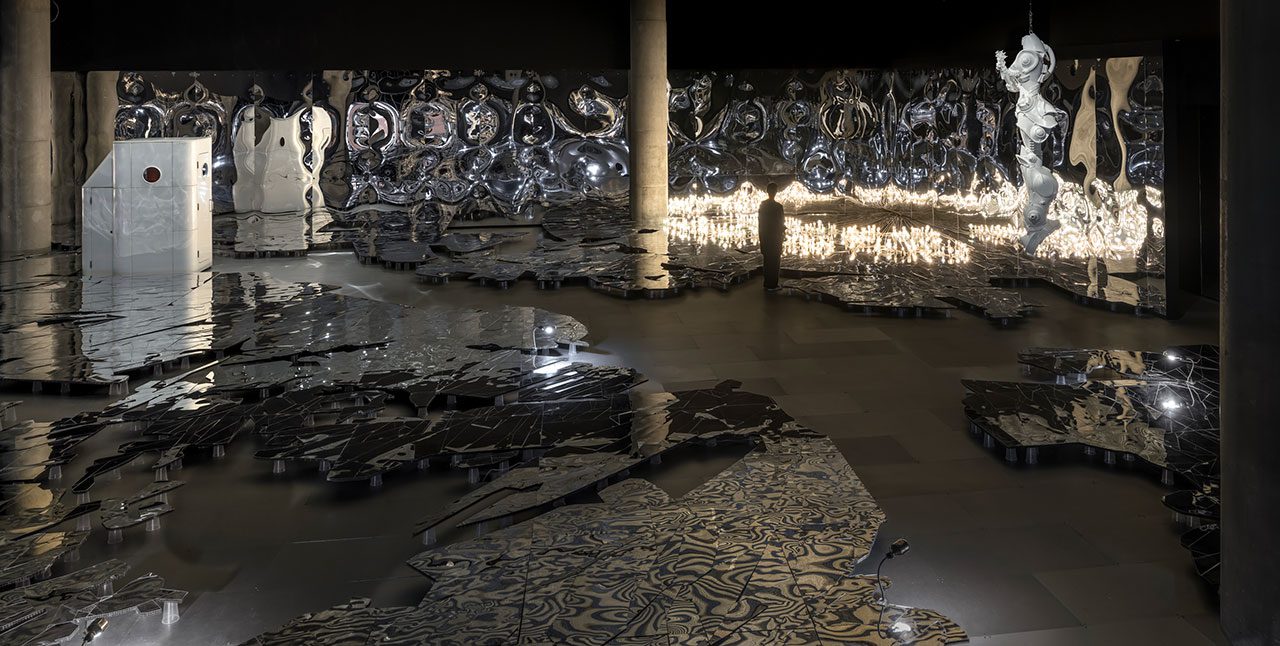
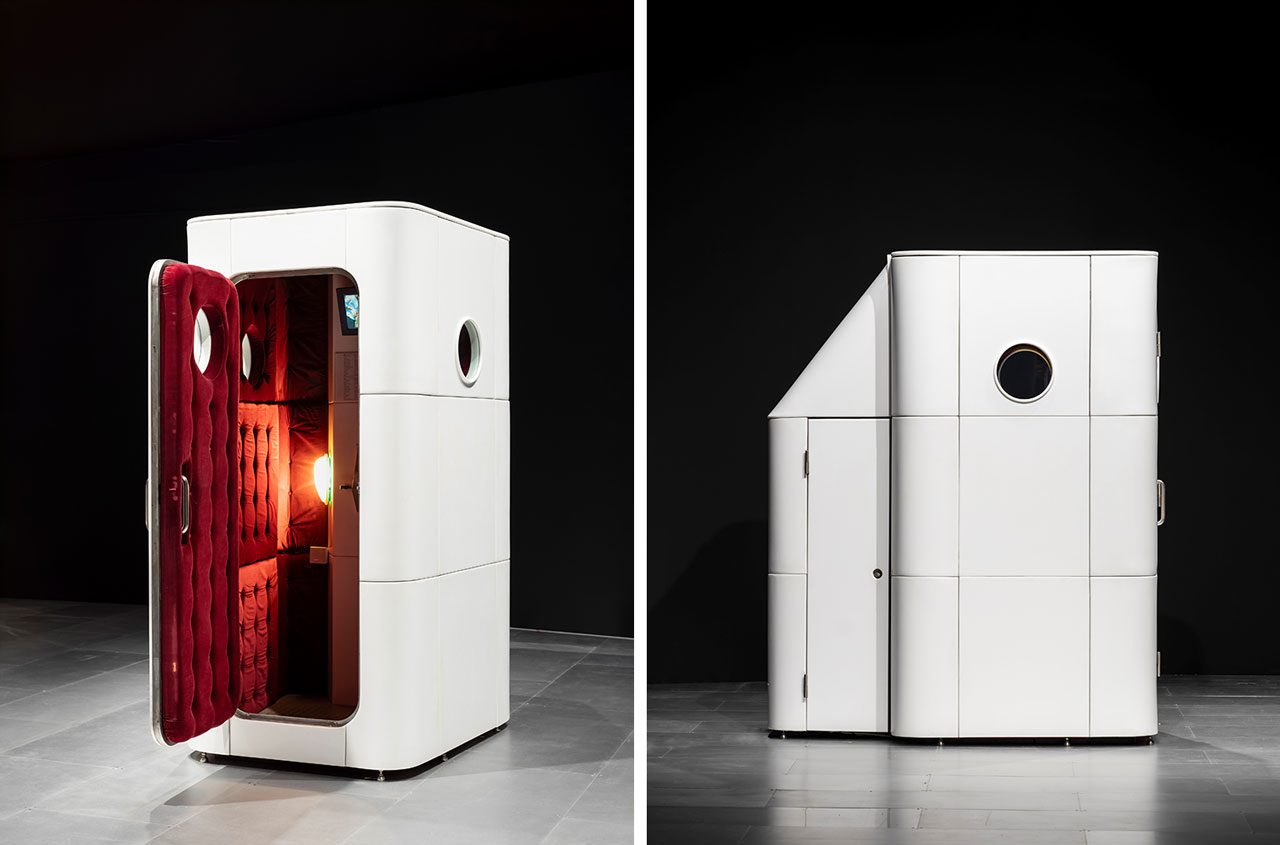
Few contemporary artists have grappled with the promises and failures of modernity as powerfully as Lee Bul. The South Korean artist’s major exhibition “From 1998 to Now” gathers more than 150 works spanning nearly three decades, creating not so much a retrospective as a topographical map of utopias dreamt and abandoned, bodies imagined and reconfigured, and architectures that teeter between grandeur and collapse. Walking into the exhibition is to enter a landscape that is at once dazzling and melancholic, an environment where mirrors fracture reality, zeppelins hover with fragile menace, and architectural fragments echo both historical ambition and future ruin. It is a world that insists we confront our own complicity in the dream of progress—even as it dissolves before our eyes. Lee first captured international attention in the late 1990s with her “Cyborg” series: fragmented, gleaming sculptures that hover between body and machine. Their smooth white resin surfaces evoke the timeless purity of classical statuary, but their amputated limbs, exposed joints, and unfinished forms betray a disturbing vulnerability. These cyborgs are not the triumphant, invincible figures of science fiction but rather wounded beings, caught in the tension between desire and dismemberment. At the time, discussions of posthumanism were emerging across art, philosophy, and technology. Lee’s “Cyborgs” captured the ambivalence of this moment—seductive yet unsettling, full of potential yet irreparably broken. They also carried a feminist charge: the female body both idealized and technologized, celebrated and fragmented. Parallel to the “Cyborgs”, Lee developed the “Anagram” series (1999–2001), immersive installations that invited viewers to step inside biomorphic structures resembling internal organs. These fleshy environments destabilized the boundaries between inside and outside, artwork and audience, body and architecture. In doing so, Lee extended her inquiry into the instability of identity and the porousness of the self in a technologized world. Her karaoke installation “Live Forever” (1997–2001) pushed this further by folding spectatorship and participation into the work. Visitors entered futuristic pod-like chambers to sing karaoke—an act of intimacy made public, vulnerability refracted through amplification. In these early works, Lee choreographed encounters with the body—our own and others’—in spaces that blurred comfort and estrangement. At the threshold of the exhibition stands “Civitas Solis II” (2014), a mirrored labyrinth that multiplies the visitor into infinity. Borrowing its title from Tommaso Campanella’s utopian text “The City of the Sun”, the installation dazzles with radiant reflections yet quickly unsettles. The viewer’s image recedes endlessly, producing disorientation, vertigo, even claustrophobia. Here, utopia is both promised and betrayed. The mirrors conjure an illusion of infinite possibility but simultaneously dissolve individuality into endless repetition. As a prologue, the work encapsulates Lee’s central theme: the dream of a perfect society undone by its own dazzling illusion.
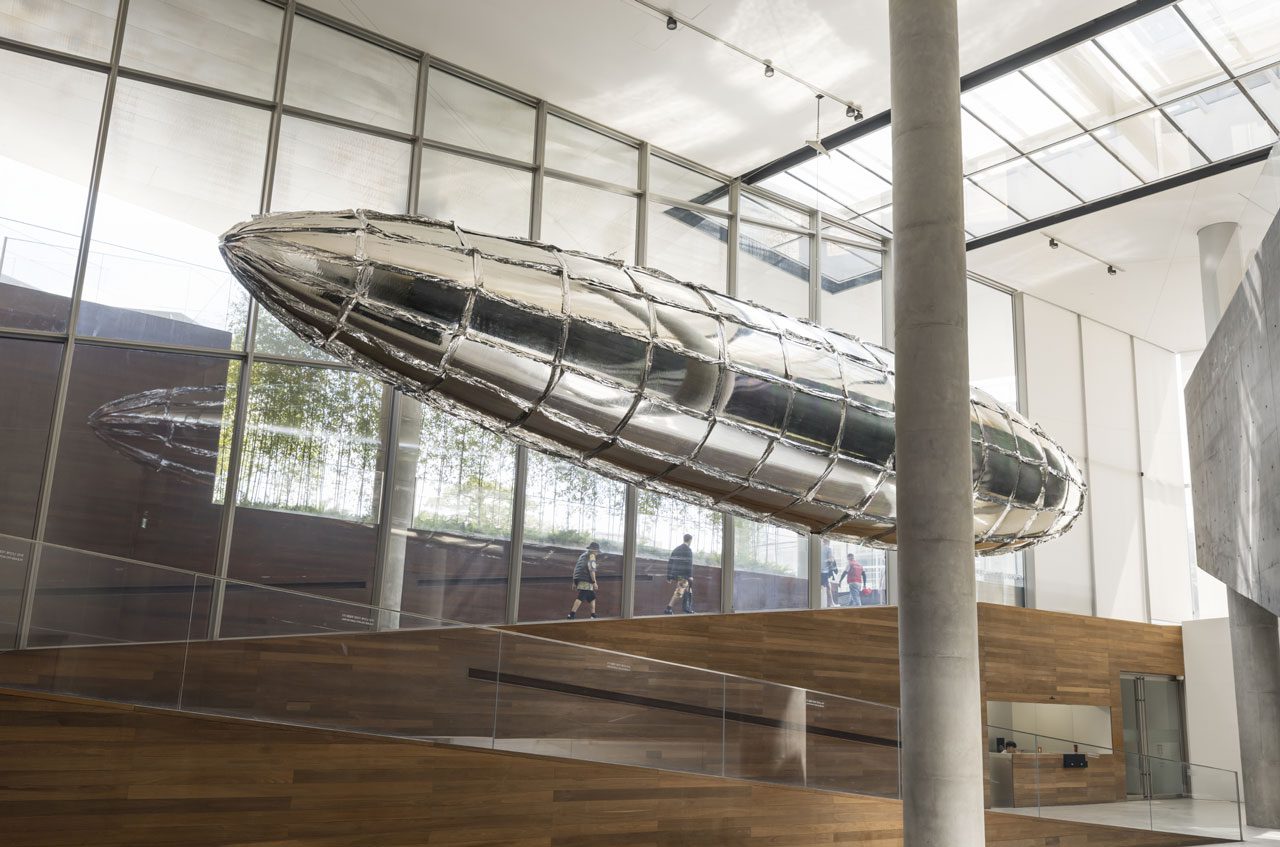
The exhibition’s beating heart is Lee’s ongoing series “Mon grand récit” (2005–present), monumental installations that reimagine the ruins of modernity. These works draw on the legacies of Russian Constructivism, Expressionist architecture, and the unfulfilled dreams of early 20th-century visionaries like Bruno Taut. In “Mon grand récit: Because everything…” (2007), precarious staircases, towers, and fragments of infrastructure extend into space like the remnants of a collapsed city. The work appears caught between construction and ruin, hope and futility. Other installations echo the skeletal remains of Tatlin’s “Monument to the Third Internationa”l, one of the most enduring emblems of utopian ambition, here rendered fragile and incomplete. By weaving in autobiographical memories and references to Korea’s tumultuous modern history, Lee situates these works within both global and local narratives of modernization. The “grand narratives” of progress, whether socialist, capitalist, or nationalist, are here exposed as myths—haunting yet irreparably fractured. What makes “Mon grand récit” extraordinary is its refusal to settle into either celebration or critique. Instead, the works oscillate between wonder and collapse, inviting viewers to linger in the paradox: the persistence of utopian desire despite its inevitable disillusionment. In the 2010s, Lee turned to new forms of monumental fragility. “Willing To Be Vulnerable” (2015–2019) introduced her now-iconic zeppelins: shimmering, inflated sculptures that hover in midair. The zeppelin, symbol of modernity’s daring and hubris, recalls both triumph and disaster—the optimism of flight shadowed by the catastrophic image of the Hindenburg explosion. These airships embody the paradox of vulnerability and grandeur. They dazzle with metallic sheen yet are made of fragile film, sustained only by air. Their presence is monumental but precarious, evoking the simultaneous allure and futility of utopian ambition. The “Perdu series” (2016–ongoing) explores vulnerability at a more intimate scale. Using materials such as mother-of-pearl, resin, and reflective fragments, these sculptures shimmer with delicate luminosity. Their fractured surfaces appear both wounded and precious, embodying what Lee has called the “aesthetics of failure.” They suggest that fragility itself—rather than power or perfection—might be a condition worth embracing. Rather than unfolding chronologically, “From 1998 to Now” immerses the viewer in a nonlinear landscape of echoes, fractures, and resonances. Visitors traverse mirrored labyrinths, suspended ruins, fragile airships, and glowing fragments. The journey is physical, but also psychological and speculative—a meditation on the dreams we inherit and the ruins we inhabit. Lee’s work resonates beyond art history, speaking to global concerns about technology, ecology, and politics. In Korea, her practice is often read against the backdrop of rapid modernization, authoritarian legacies, and the nation’s complex relationship with both utopian aspiration and traumatic memory. Globally, her work engages with feminist debates, posthuman discourse, and the ongoing reckoning with modernity’s ruins. Ultimately, the exhibition is less about charting an artist’s career than about staging a confrontation with our collective condition. Lee Bul compels us to see that utopia is never simply lost or abandoned—it lingers as ruin, as hope, as fragile possibility. Her art asks us to inhabit that paradox, to live among the ruins with both melancholy and wonder.
Photo: Lee Bul, Mon grand récit: Weep into stones…, 2005, Polyurethane, Foamex, synthetic clay, stainless-steel and aluminum rods, acrylic panels, wood sheets, acrylic paint, varnish, electrical wiring, lighting, 280 x 440 x 300 cm, Installation view of Lee Bul: From Me, Belongs to You Only, Mori Art Museum, Tokyo, 2012, Collection of HITEJINRO Co., Ltd, © Lee Bul. Photo: Watanabe Osamu Courtesy of Mori Art Museum, Tokyo
Info: Curators: June Young Kwak, Doryun Chong, Heyeon Kim and Sunny Cheung, Leeum Museum of Art, 60-16, Itaewon-ro 55-gil, Yongsan-gu, Seoul, Korea, Duration: 4/9/20254/1/2026, Days & Hours: Tue-Sun 10:00-18:00, ww.leeumhoam.org/
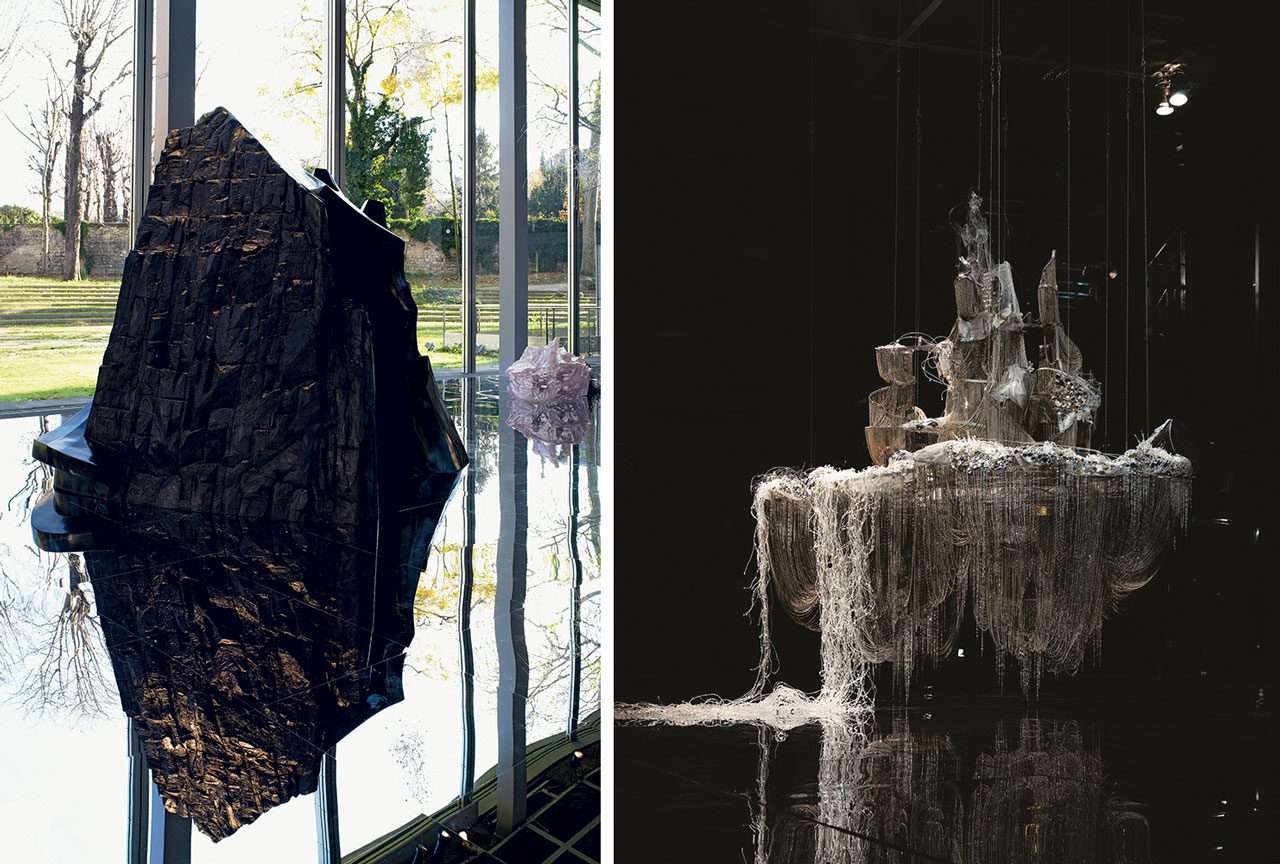
Right: Lee Bul, After Bruno Taut (Beware the sweetness of things), 2007, Crystal, glass and acrylic beads on stainless-steel armature, aluminum and copper mesh, PVC, steel and aluminum chains, mirrored film, artificial hair, stainless-steel, aluminum and acrylic pipe, 258 x 200 x 250 cm, Installation view of On Every New Shadow, Fondation Cartier pour l’art contemporain, Paris, 2007–2008, Courtesy of Galerie Thaddaeus Ropac, London • Paris • Salzburg • Milan• Seoul, © Lee Bul. Photo: Patrick Gries Courtesy of the artist and Fondation Cartier pour l’art contemporain
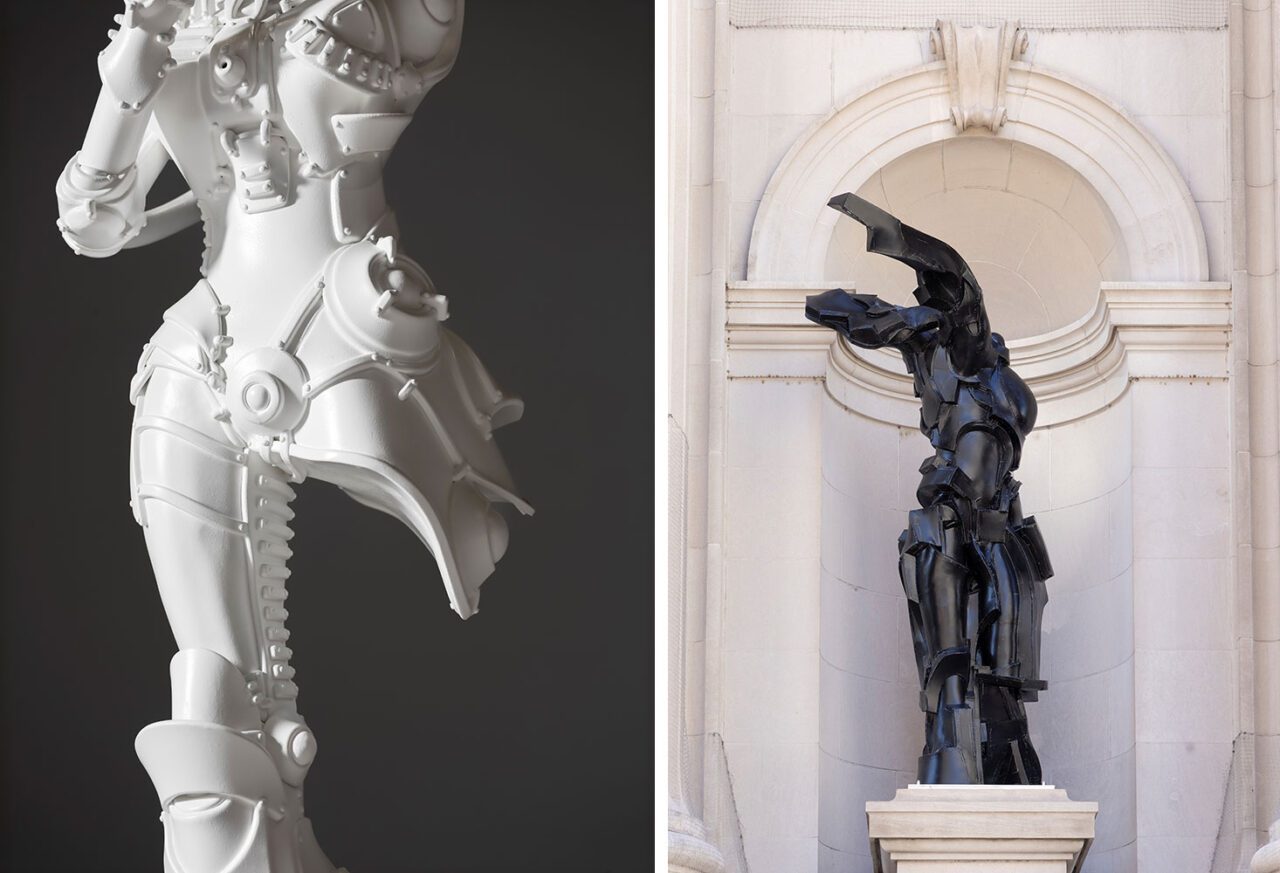
Right: Lee Bul, Long Tail Halo: CTCS #1, 2024, Stainless steel, ethylene-vinyl acetate, carbon fiber, paint, polyurethane, 275 x 127 x 162 cm , Installation view of The Genesis Facade Commission: Lee Bul, Long Tail Halo, , The Metropolitan Museum of Art, , New York, 2024-2025, Long Tail Halo: CTCS #1 was originally commissioned by The Metropolitan Museum of Art in 2024 for The Genesis Facade Commission, © Lee Bul, Image © The Metropolitan Museum of Art / Photo: Eugenia Burnett Tinsley
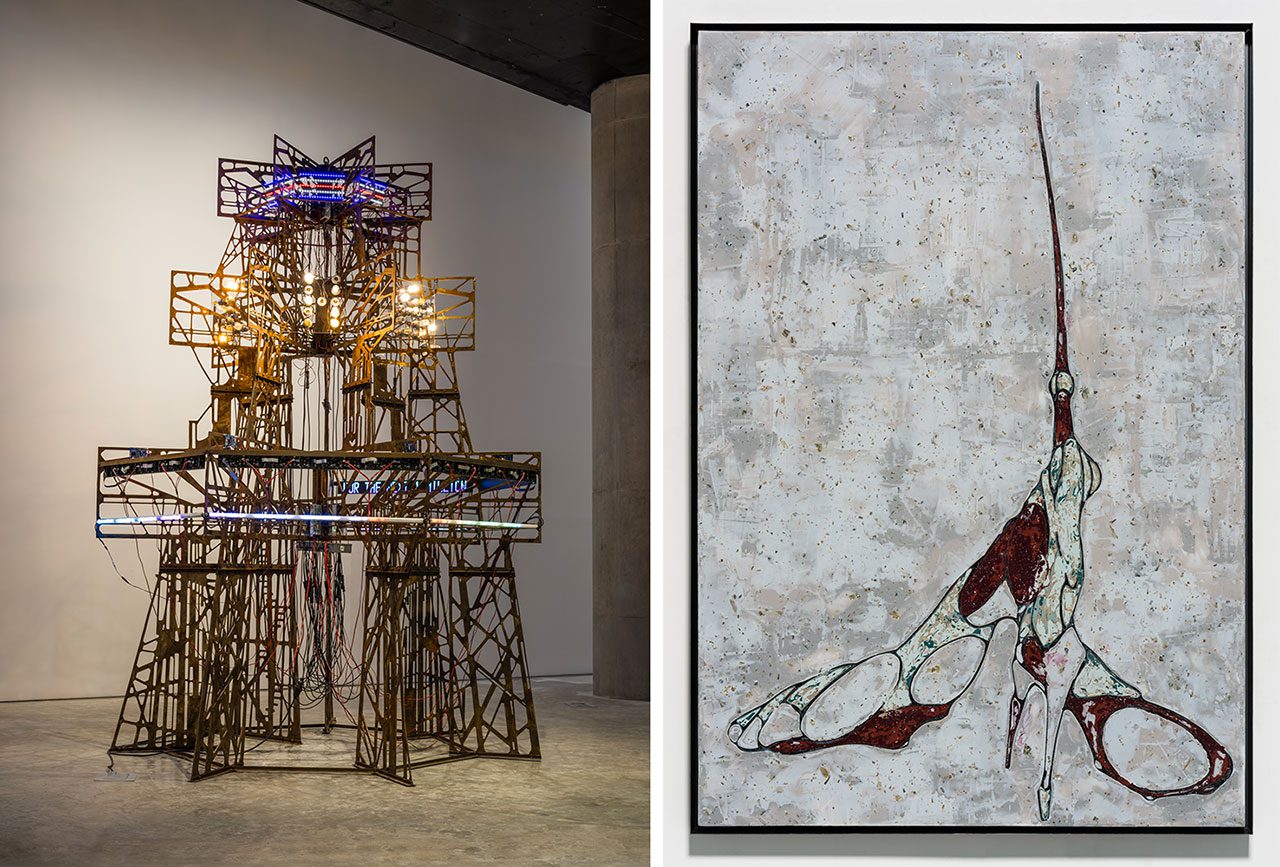
Right: Lee Bul, Perdu XVII, 2019, Mother-of-pearl, acrylic paint on wooden base panel, steel frame, 163.4 x 113.4 x 6.6 cm (framed), Collection of the artist, © Lee Bul. Photo: Jeon Byung-cheol Courtesy of the artist