
ART NEWS: Sept.03
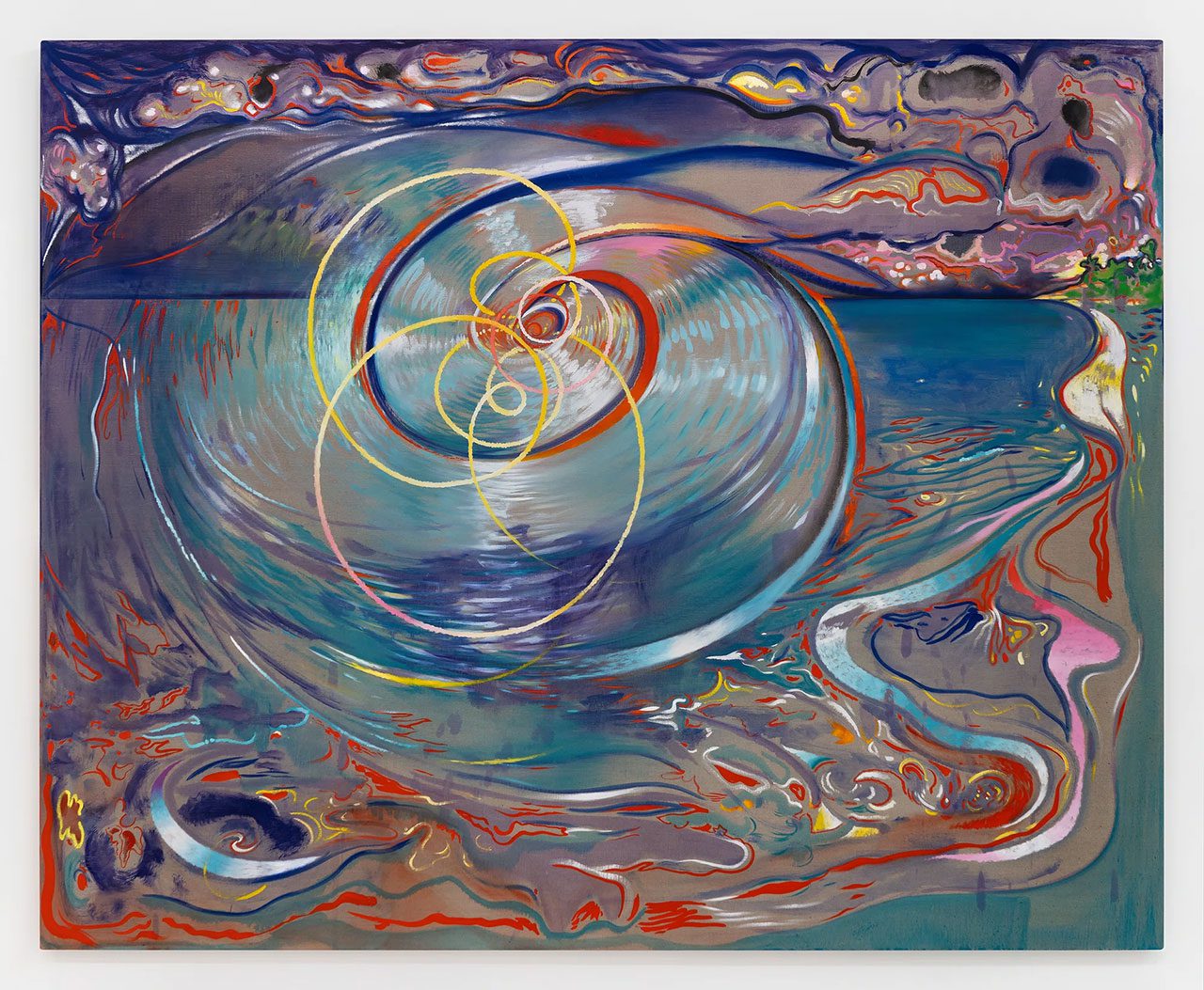 Titled “Solo Quiero Soñar”, is Alejandro Piñeiro Bello’s solo exhibition first ever solo exhibition in Hong Kong and brings 10 new, never-before-exhibited nightscapes—”Night Paintings,” as he calls them—of various sizes, all produced in 2025. Though he has been creating nightscapes throughout his career, this exhibition is the first presentation dedicated solely to these compositions exploring the unreality—the surreal, lyrical, and mysterious dimensions—of nighttime. Lush and fantastical, Piñeiro Bello’s new paintings are odes to the magic and wonder of the night, and they reflect his deep and enduring interest in the beauty, chaos, and uncanniness of the natural world. Piñeiro Bello’s use of fragmented forms, strong brushstrokes, and intense color has been influenced by the work of artists Wifredo Lam, Víctor Manuel García Valdés, Mariano Rodríguez, Pablo Picasso, and Hokusai. He also draws inspiration from the writings of various poets and philosophers from Cuba, including José Lezama Lima, José Martí, and Virgilio Piñera. Info: Page Gallery, 2/F, H Queen’s, 80 Queen’s Road Central, Hong Kong, Duration: 18/9-18/10/2025, Days & Hours: Tue-Sat 11:00-19:00, www.pacegallery.com/
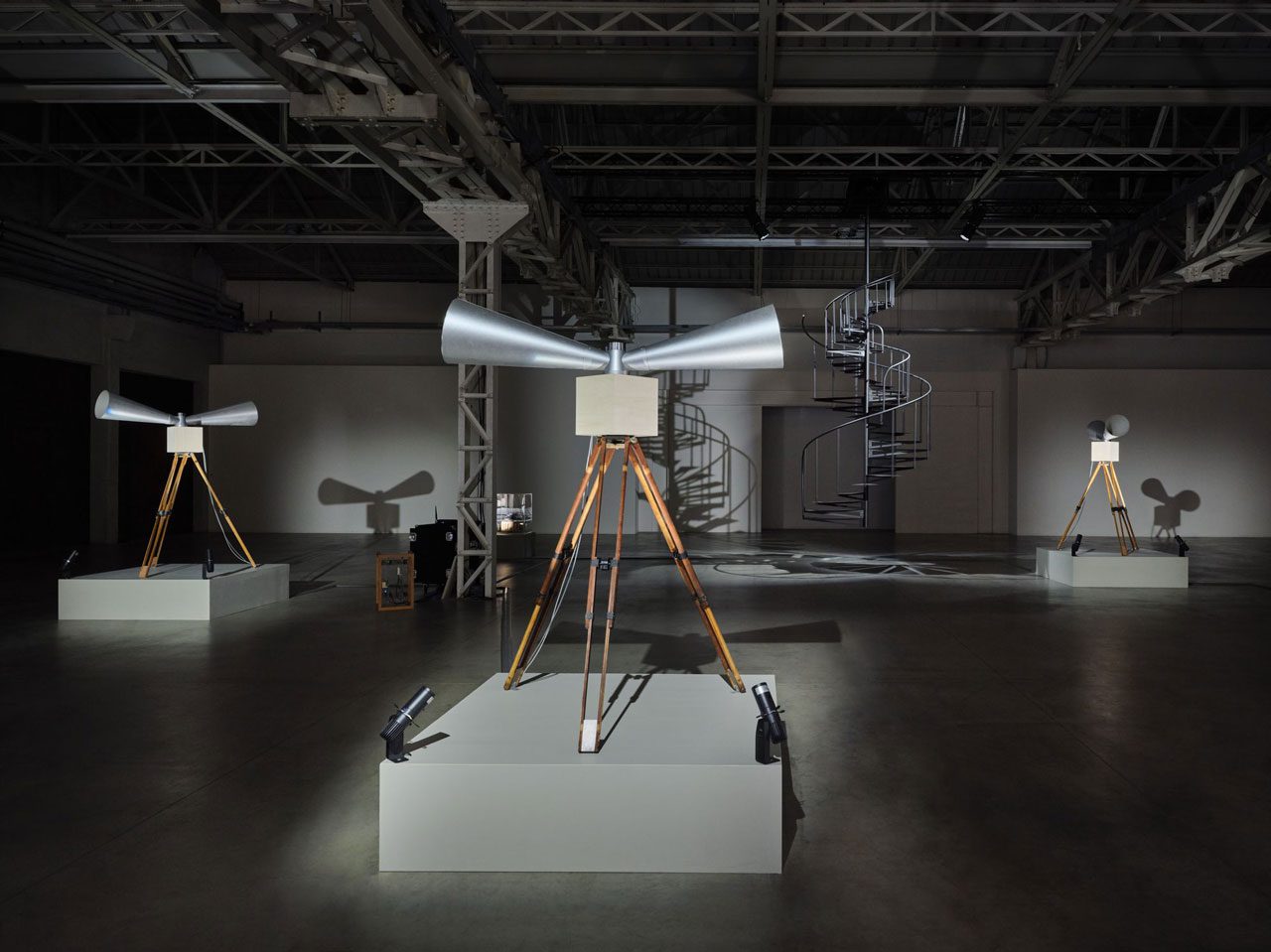 “Entanglements”, a solo exhibition by Yuko Mohri, “Entanglements” is the most comprehensive solo exhibition by Yuko Mohri to date, centers on the idea of interconnectedness between objects, energies, sounds, and people. Her whose work explores the transformative potential of everyday objects and natural elements and their ability to generate visual and sonic shifts. Through ephemeral assemblages and interconnected systems, she draws the public’s attention to fundamental environmental and social issues, Through the works’ real-time responses to physical phenomena, the exhibition explores the invisible forces that shape our world. The result is an ever-evolving scenario: a layered, immersive space where nothing is isolated, and every entity is part of an inextricable network of relationships in constant transformation. The title evokes imperceptible connections and alludes to the delicate interplay between natural and artificial structures that influence our environment. The exhibition brings together seven of Mohri’s most iconic kinetic sculptures and sound installations, drawn from different bodies of work created throughout her artistic journey. Each piece contains its own internal circuitry, set in motion by induced movement and often responding unpredictably to natural forces such as gravity, magnetism, or shifts in the atmosphere. Together, these self-contained systems interact with one another and the surrounding space to form a larger loop—an evolving landscape of signals, feedback and resonance. Info: Curators: Fiammetta Griccioli and Vicente Todolí, Pirelli HangarBicocca, Via Chiese, 2, Milan, Italy, Duration: 18/9/2025-11/1/2026, Days & Hours: Thu-sun 10:30-20:30, https://pirellihangarbicocca.org/
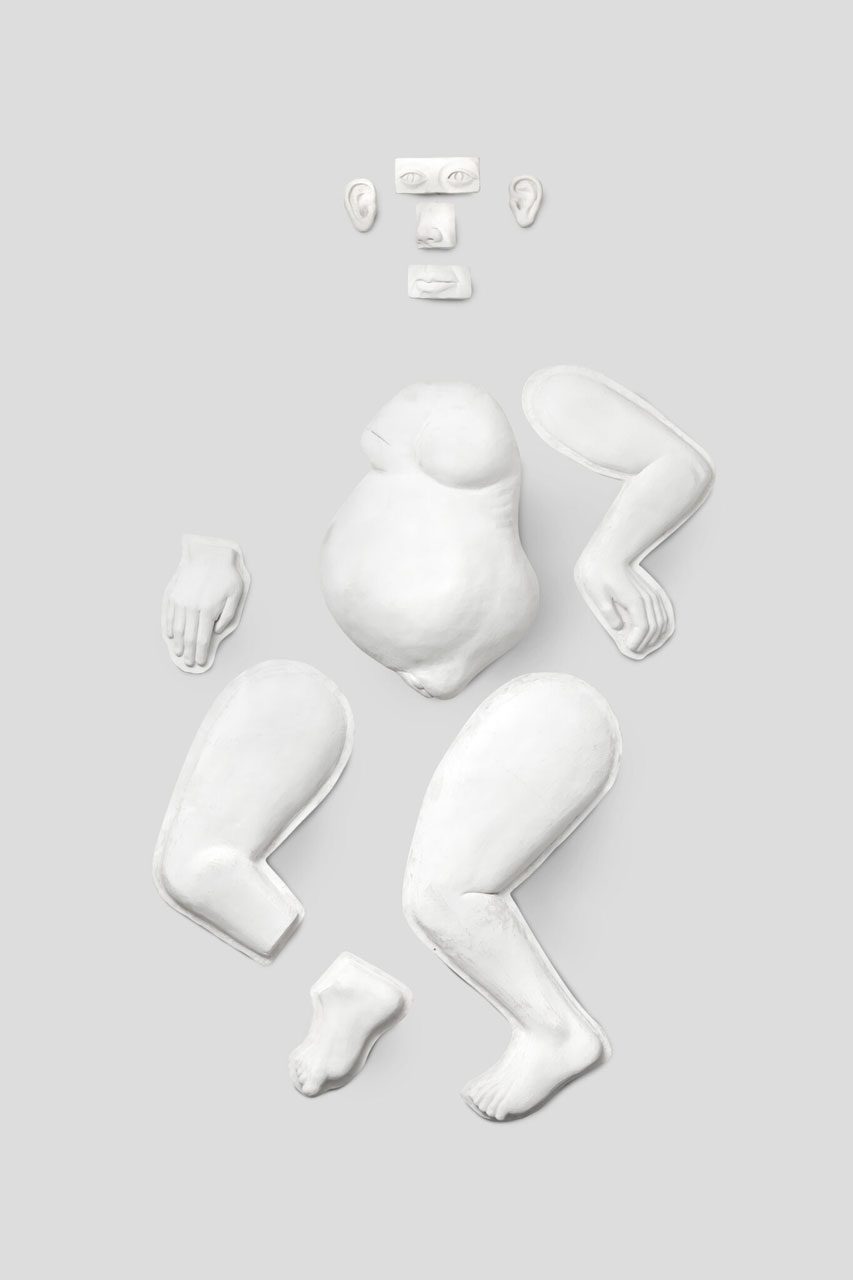 For his new project, Prune Nourry presents a profoundly sensitive exhibition in which each work is meant to be experienced through touch. Born from a personal upheaval and a sensory quest, the exhibition “Empreintes” extends the artist’s intimate and artistic journey. In 2016, upon being diagnosed with breast cancer, the sculptor became acutely aware of the vital importance of touch—threatened by the side effects of chemotherapy. From this foundational experience emerged a series of works exploring the body, healing, and ritual. The exhibition is designed as a three-part journey where everything is meant to be touched. It begins in a clinical, immersive whiteness. Sculptures are displayed in succession, reflecting the artist’s extensive research into illness, catharsis, care, and also motherhood, all approached as experiences of otherness. Whiteness then gives way to total, absolute blackness. In the dark, the artist presents the “Phenix Project”, created blindfolded, where she sculpted the busts of eight visually impaired individuals using the ancestral japanese Raku technique. Finally, the exhibition concludes with a deeply personal piece: the “Ligne de vie” postage stamp project, which once again brings us back to the question of gesture and the tangible. Info: Bullukian Foundation, 26 place Bellecour, Lyon, France, Duration: 20/9-27/12/2025, Days & Hours: Tue-Fri 14:00-18:00, Sat 10:00-12:00 & 14:00-18:00, www.bullukian.com/
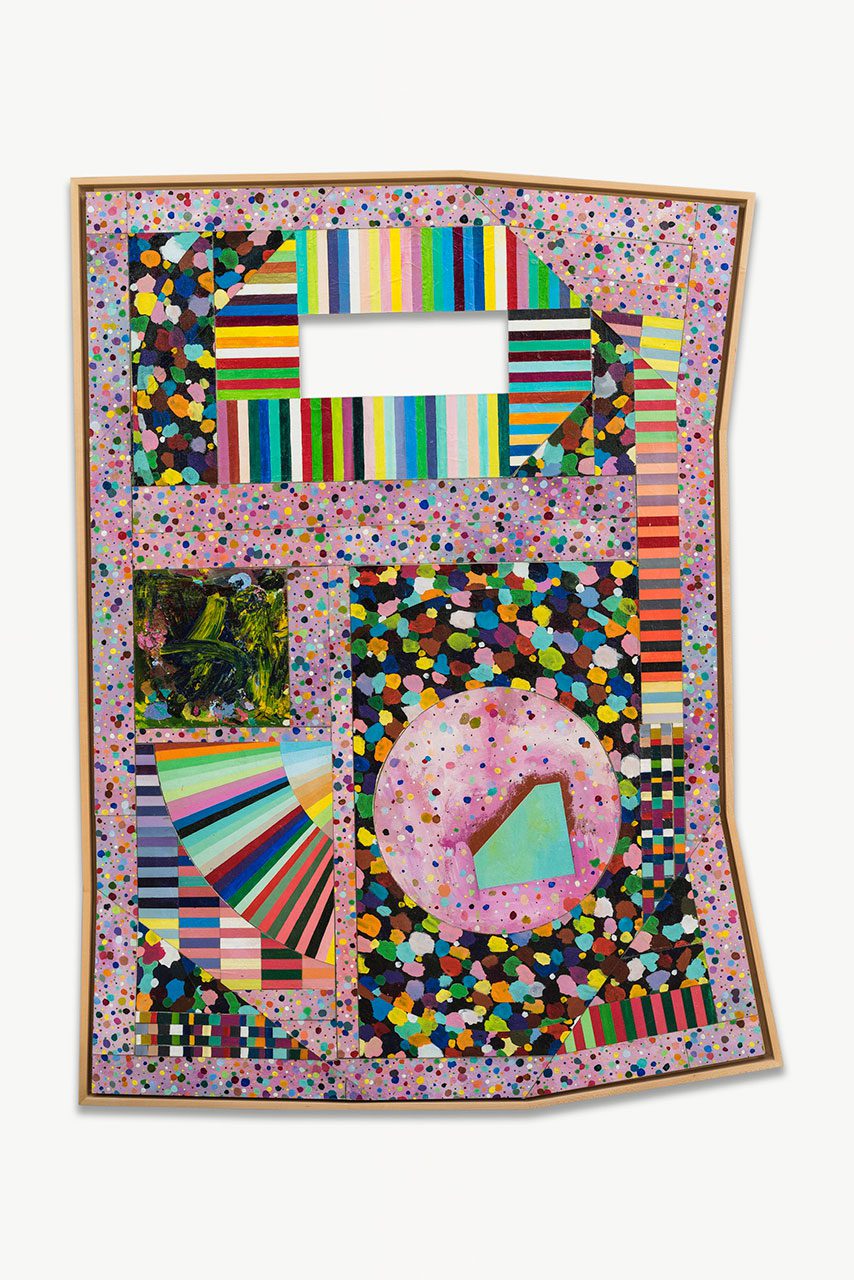 The exhibition “Master of the Uncanny” is the first solo presentation of Lukas Samaras’s work in his birthplace since his retrospective at National Gallery – Alexandros Soutsos Museum in Athens twenty years ago and brings together works spanning his expansive practice. The exhibition features works made between the 1960s and the 2010s, including rarely exhibited sculptural jewelry. Examples of Samaras’s manipulated photographs from the late 1960s and early 1970s are on view, alongside a selection of chromatically dense “Mosaic” Paintings, fabric Reconstructions, and pastel works on paper. A suite of sculptures, including examples from the artist’s “Box” series and other “transformed” utilitarian objects, are also on view. These works, often containing ephemera and photographs, functioned as three-dimensional spaces into which the artist could project himself. His early boxes carried an aggressive edge, evocative of Surrealist objects with blades or pins piercing their surfaces. Over time, however, Samaras shifted from sharp and hostile materials toward softer ones. Info: The Intermission, Polidefkous 37 A, Piraeus, Greece, Duration: 25/9-2010/2025, Wed-Sun 12:00-20:00, www.theintermission.art/
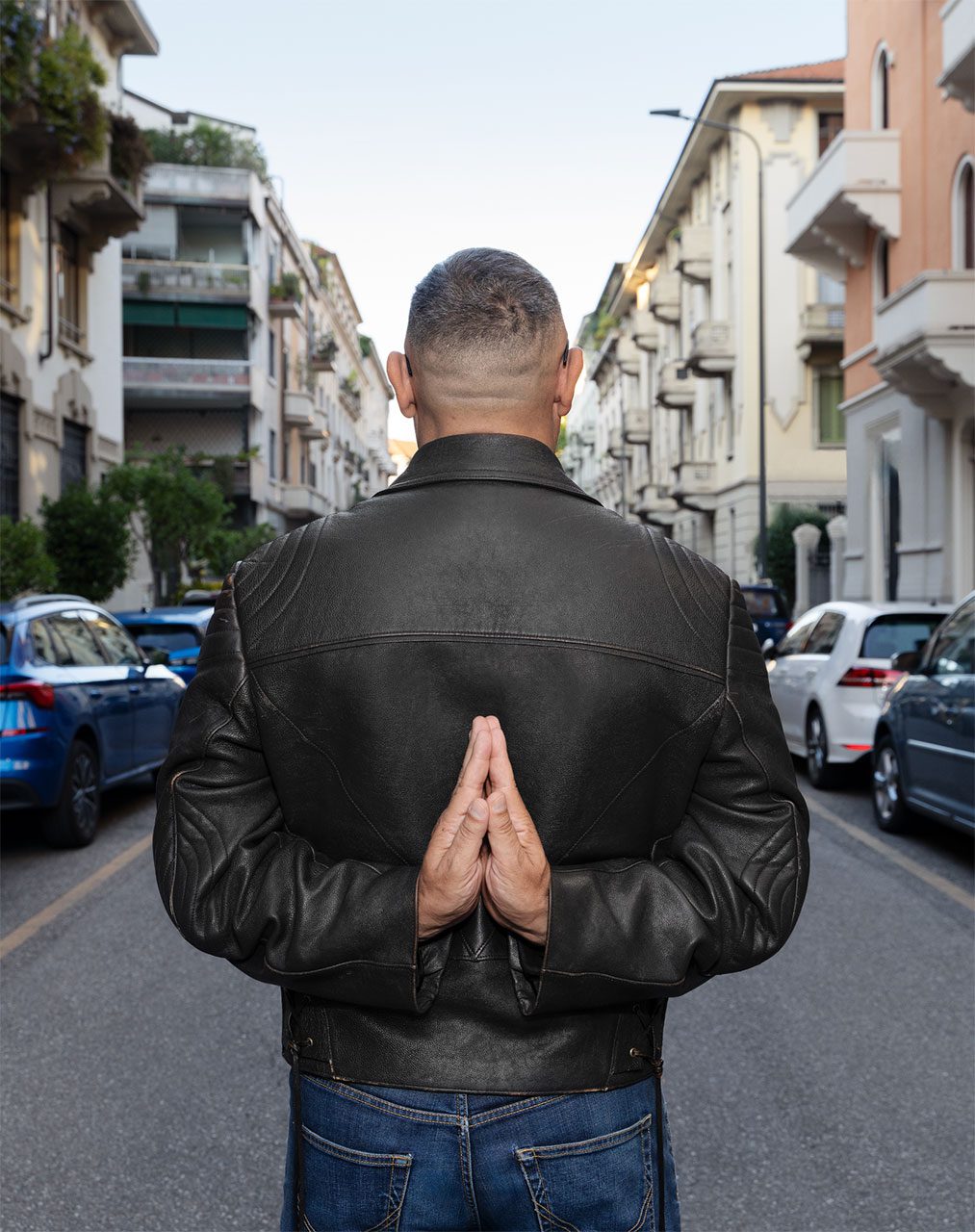 Marcello Maloberti’s solo exhibition “INCIPIT”, is conceived for the Raffaella Cortese gallery’s three exhibition spaces on Via Stradella and its venue in Albisola, the exhibition marks the threshold of a new phase in the artist’s practice – a moment of stripping away and returning to the essential. The show in Via Stradella provides an encounter with emptiness. It rejects linear narrative in favor of a logic of dispersal and subtraction. As art increasingly tends toward forms of direct communication, Maloberti shifts course, introducing a silence that opens up a field of attentive listening, echo, and resonance. As with “La conversione di San Paolo” in Albisola, this work revolves around the themes of fall and renewal, exploring divine light as both a moment of trauma and revelation. The reference to Caravaggio doesn’t appear as a straightforward iconographic citation, but operates on a deeper, structural level: the scene is emptied, letting the sacred emerge through its active tension. “INCIPIT” offers a space to inhabit: emptiness as a critical stance, repetition as a form of resistance, and rarefaction as a way to deepen experience. Maloberti doesn’t offer images to interpret or messages to absorb; instead, he shines a light on absence and void through a work that balances the weight of things with the possibility of their disappearance. Info: Curator: ,Giulio Dalvit, Galleria Raffaella Cortese, via stradella 7 – 1 – 4, Milan, Italy, Duration: 25/9-23/12/2025, Days & Hours: Tue-Sat 10:00-13:00 & 14:30-19:00 & Galleria Raffaella Cortese-Albisola, Via C. Colombo 54, Albisola Superiore (SV), Italy, Duration: 20/9-23/12/2025, Days & Hours: Tue-Sat 10:00-13:00 & 14:30-19:00, https://raffaellacortese.com/
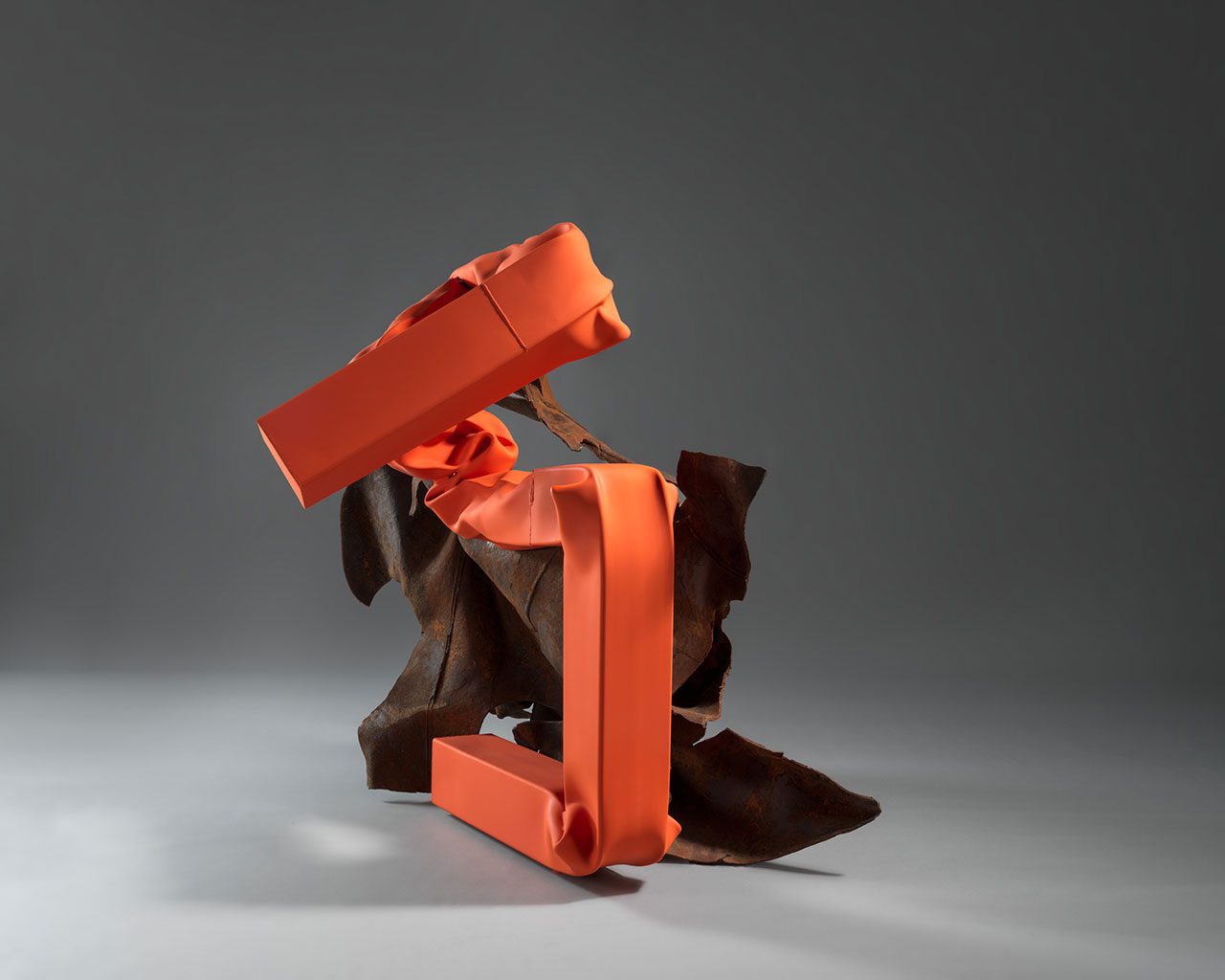 In “Nights of Cabiria”, Carol Bove reflects on the industrial heritage of Los Angeles as a Cold War–era center for precision aerospace and weapons manufacturing, along with subcultural expressions of that focus such as surfboard production, with its devotion to perfect surface finish. The exhibition design responds to the unique architectural features of the Beverly Hills gallery and makes use of reclaimed structural scaffolding components called “soldier beams.” This scaffolding, intended for applications in civil engineering, provides the components for an architectural folly that supports two of the sculptures and partially reconfigures the gallery space. Also dividing the gallery’s interior are a fence-like suspended metal lattice and two fabric scrims. One of these, made from diaphanous chiffon, has been screenprinted with an image of the lattice at the same scale. The other is made from the silkier material known as charmeuse, and is printed with a still from Italian silent film “Cabiria” (1914). Directed by Giovanni Pastrone, shot in Turin, and set during the Second Punic War of 218 to 202 BCE, the classical epic is credited with various innovations including the first extensive use of a moving camera. Info: Gagosian, 456 North Camden Drive, Beverly Hills, CA, USA, Duration: 25/9-1/11/2025, Days & Hours: Tue-Sat 10:00-18:00, https://gagosian.com/
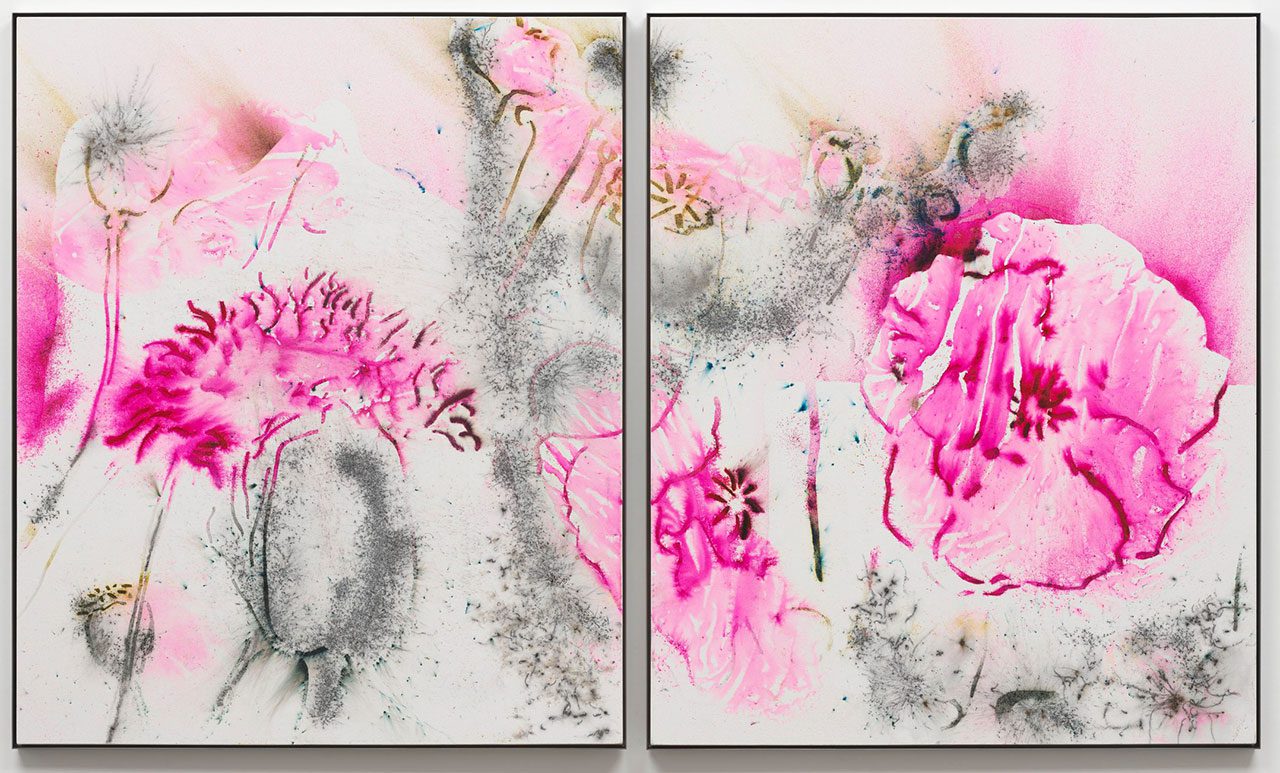 Cai Guo-Qiang’s exhibition “Gunpowder and Abstraction 2015–2025” marks the artist’s first project in London in over 20 years, following his iconic explosion event at Tate Modern in 2003. Featuring a selection of Cai’s signature gunpowder paintings created over the past decade, the show highlights the artist’s radical exploration of the material, in which he ignites explosives directly onto various substrates such as paper, canvas, glass and mirror. In 2015, after nearly three decades of working primarily with black gunpowder for his two-dimensional works, Cai began incorporating more coloured gunpowder into his practice, turning his attention towards painterly concerns. With subtle references to flora and fauna, the vibrant works on view in the exhibition highlight the artist’s long-standing engagement with the Western art canon, including the work of the Old Masters, whilst exploring the nature of painting and abstraction. Info: White Cube Bermondsey, 144–152 Bermondsey Street, London, United Kingdom, Duration: 26/9-9/11/2025, Days & Hours: Tue-Sat 10:00-18:00, Sun 12:00-18:00, www.whitecube.com/
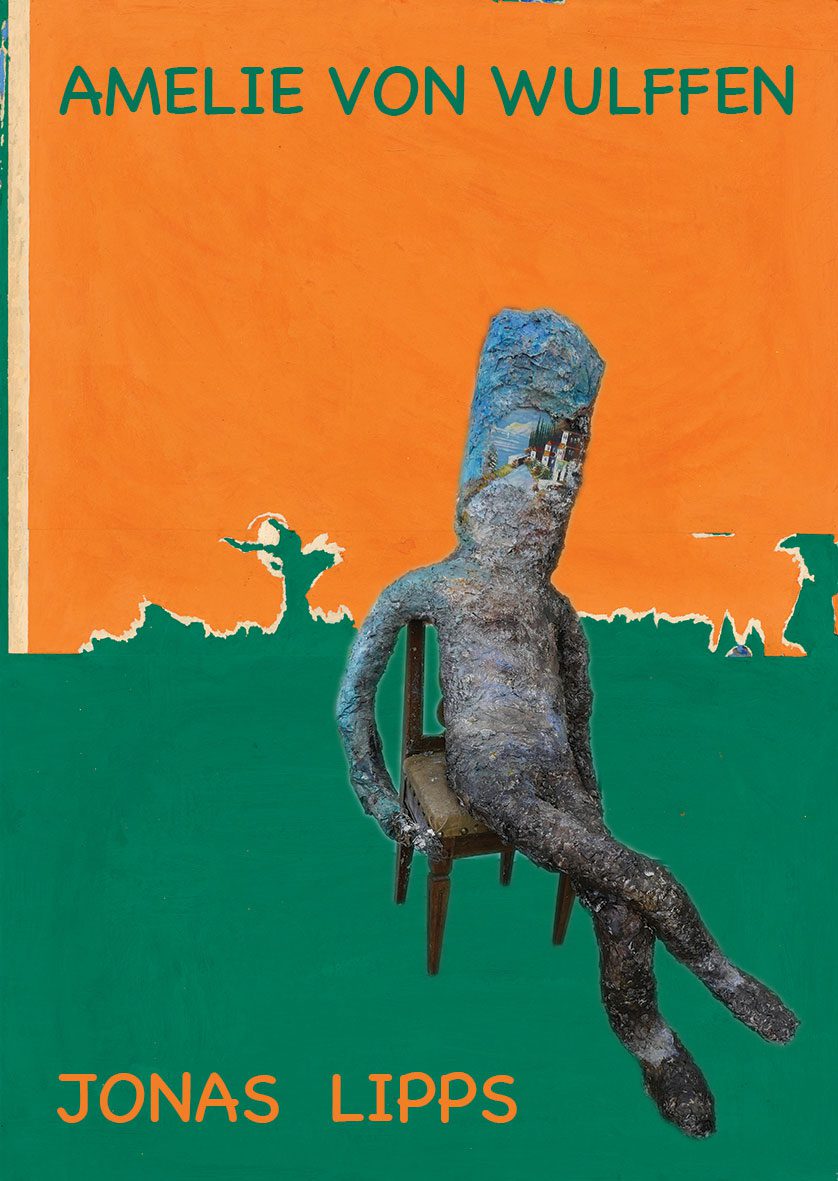 Amelie von Wulffen presents the solo exhibition “Jonas Lipps”. It is now two years since Amelie von Wulffen wrote her text “Under the Poodle’s Skin”, in which she examined her most recent paintings in the context both of depressing turns in world events, and the ‘dynamics of her dysfunctional family’. She described how she was being increasingly drawn towards realism, and raised the question of whether the New Objectivity movement of the 1930s, driven by an urge to paint everyday objects such as glasses of water, arose from the same sense of anxiety and unease that we are currently experiencing. Today, although everything still seems intact and in place, a pervasive sense of dread persists. With the exception of the self-portrait, which lies curled up on the floor, all these creatures are faceless. Their skin bears the paintings of past centuries, whose surfaces show beautiful landscapes. Are these fantasies of escape in the form of idealised still lifes and pastoral scenes? More precisely, what we see here is the continuation of painting by other means. The canvas, the traditional support for paintings, has been reduced to a deformed homunculus. Damaged beings, whose skin is covered with images? The illusionistic, occasionally impressionist, paintings hide unwieldly bodies; after all, doesn’t colour take precedence over form? One of the fundamental themes of painting is here driven to extremes. Info: Koelnischer Kunstverein, Hahnenstraße 6, Cologne, Germany, Duration: 26/9-9/12/2025, Days & Hours: Tue-Sun 11:00-18:00, https://koelnischerkunstverein.de/
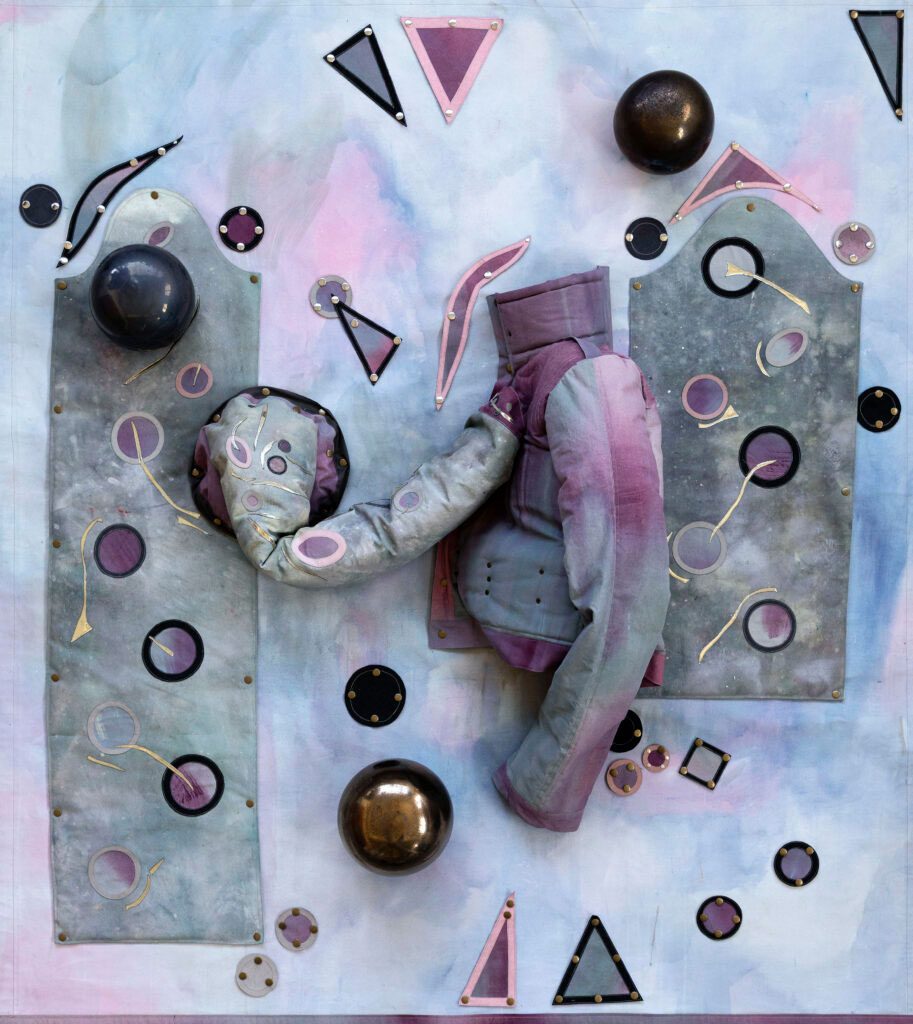 Mathilde Denize presents “Camera Ballet”, her first solo exhibition at an institution in the Paris region. Denize’s artistic practice combines painting and sculpture — which she considers inseparable — with installation, video and performance. She has developed a unique body of work in which forms are born of assembly, transformation and recycling. Her paintings, which often resemble garments or costumes, are both pictorial surfaces and portable objects, existing on the border between painting, volume, and scenography. She cuts up her old canvases and attaches fragments of found materials and discarded objects to them. Her cutting and editing techniques are reminiscent of filmmaking. This personal archaeology results in hybrid works: costumes without bodies that are somewhere between armour and camouflage; floating silhouettes; and suspended figures. Paradoxically, the absence of the suggested bodies reinforces their presence. The elusive figures blend into the surrounding colour like a halo, creating a special aura around them. Info: Curator: Céline Poulin, Frac Île-de-France, Le Plateau, 22 rue des Alouettes, Paris, France, Duration: 26/9-14/12/2025, Days & Hours: Wed-Sun 14:00-19:00, www.fraciledefrance.com/
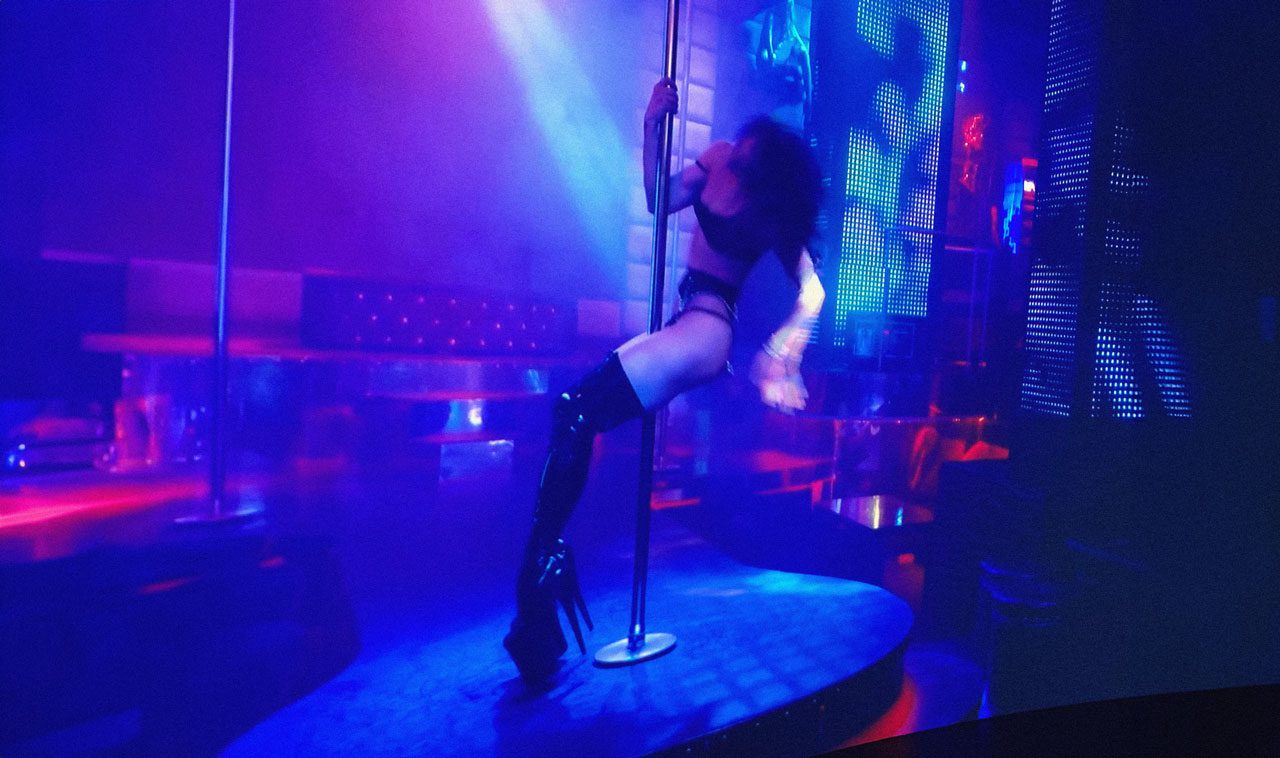 Polina Kanis’s solo exhibition, “Politics of Rotation” aims to analyze the connection between sexualized bodies and state power, raising meaningful discussions on body politics. The project originated as a durational performance, which took place in 2022 in Moscow—Kanis worked for three months as a pole dancer in a Moscow strip club. Following Russia’s invasion of Ukraine, Kanis’ artistic practice—as a Russian artist based in the Netherlands—was deeply disrupted. Firmly opposed to the violence committed by the Russian state in her name, Kanis sought a personal and artistic response. Kanis’s work has long been driven by the aim to detect, deconstruct, and imagine less hierarchical, less violent realities. In recent years, her focus has turned to the politics of sex work and the role of imagination within it. Based in the Netherlands—often dubbed Europe’s sex capital—Kanis opens up dialogue around sex labour, its conditions, and broader issues of bodily autonomy in the Netherlands. By setting upparallels between the Russian context and rising far-right politics across Europe, she invites audiences to consider similarities of power tools for shaping and restricting vulnerable bodies. The exhibition features a video work, photographs taken during the period Kanis worked as a strip club dancer, and a speculative code of conduct titled “Club’s Rules of Conduct for Strippers,” inspired by the venue where Kanis conducted her research. In addition to the exhibition, the project will invite visitors to participate in the discussion panel and performance as a part of the public program aimed at getting together and openly reflecting on issues and ideas expressed through artists’ work and their connection to the Dutch context. Info: Curator: Katia Krupennikova, PAKT Foundation, Zeeburgerpad 53, Amsterdam, Netherlands, Duration: 27/9-26/10/2025, Days & Hours: Thu-Sun 14:00-18:00, www.pakt.nu/