
PRESENTATION: Klara Kristalova-Habitat
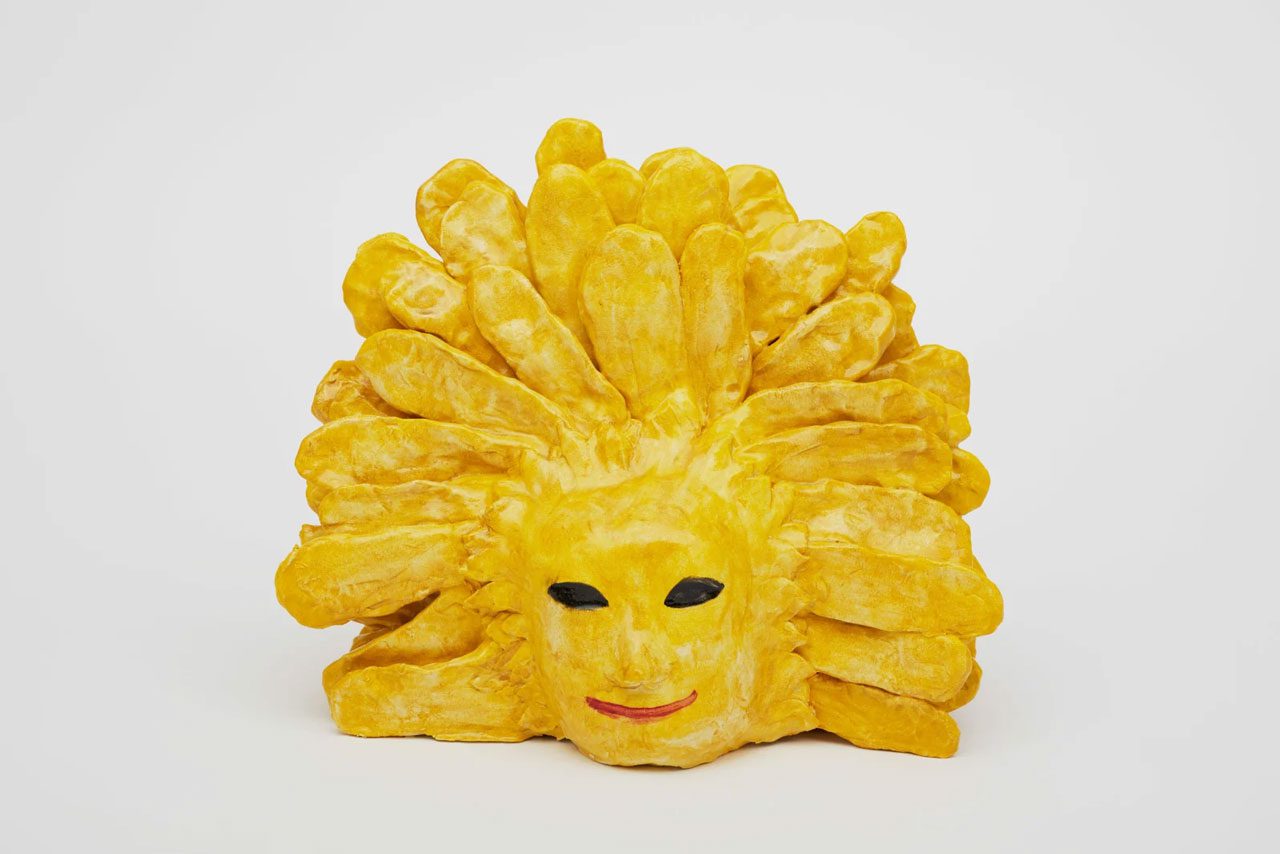
Klara Kristalova creates figurative ceramic sculptures that take on hybrid forms. Many of Kristalova’s works incorporate both aspects of the human body and elements of nature, such as animals, insects, flowers, and trees. Infused with uncanny details and observations from her daily life and surroundings, Kristalova’s figures constitute a juxtaposition of scale where minute details reflect the monumental impact of constant change.
By Dimitris Lempesis
Photo: Skellefteå Konsthall Archive
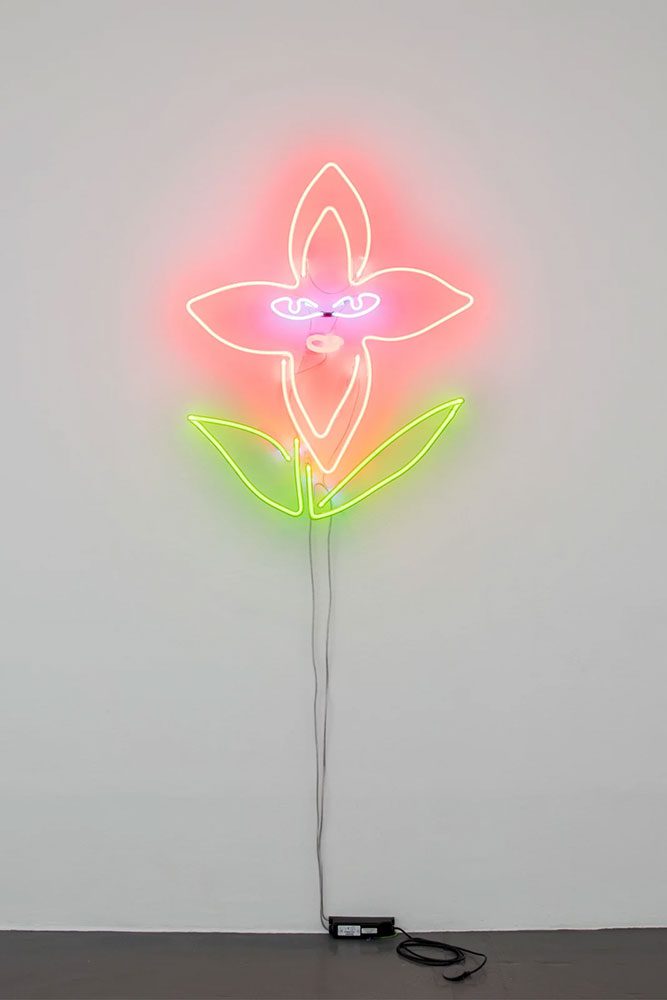
This season, Skellefteå Konsthall unveils “Habitat“, a sweeping solo exhibition by acclaimed Swedish artist Klara Kristalova, who has recently been selected to represent Sweden in the Nordic Pavilion at the 2026 Venice Biennale. Gathering works from across three decades alongside new commissions, the show unfolds as a living landscape of watercolor, ink, and chalk drawings, monumental stoneware figures, and delicate small-scale sculptures. Installed on islands of moss, rock, and driftwood harvested from Västerbotten and Roslagen, the presentation blurs the line between gallery and forest. Visitors step into an environment that feels at once primeval and freshly imagined. Kristalova’s practice defies easy categorization. Moving with ease from ceramics to paper, she fuses Nordic folklore, personal memory, and contemporary anxieties into visual narratives that are at once tender, humorous, and unsettling. Human, animal, and plant life interlace until their distinctions dissolve. Faces emerge from petals, limbs harden into roots, and creatures halfway between species confront the viewer with quiet intensity. These figures are not simply metaphors; they are emissaries from a realm where transformation is constant and identity perpetually in flux. At the heart of “Habitat“ lies Kristalova’s fascination with thresholds—between species, between childhood and adulthood, between life and death. Her sculptures capture moments of becoming, those precarious instants when one state tips into another. Log, for instance, presents a young girl encased in a tree trunk, poised between shelter and captivity, echoing the enigmatic “Log Lady” of David Lynch’s universe. “All My Thoughts Stand Apart? Larger than Life” balances a smiling child on impossibly tall stilt-like legs, a carnival apparition that is both benevolent and faintly ominous. Elsewhere, a bird in high heels reclines with a sly wink, while a band of rabbits jeers at a surly wolf from the canopy above. Each scene is like a fragment of a forgotten fable—arrested mid-sentence, inviting the imagination to supply its own ending. Kristalova’s hybrids confront our unease with bodies that refuse classification. Are they beautiful or monstrous? Innocent or threatening? Her mouse-headed youth, shy yet faintly menacing, reflects the ambiguity of human nature itself—the capacity to nurture and to devastate, to comfort and to harm. By refusing simple answers, Kristalova compels us to examine our own assumptions about difference and the fragile constructs of normality. The hybrid world challenges the definition of the human, and raises the question of the definition of the body, its limits and its integrity. The transformations undergone by these imaginary bodies are sometimes tinged with a muted violence. The tree branches and roots that sprout from the bodies are as much factors of power, bulwarks against human excess, as they are potential prisons: such is the case of the astonishing “Log,” a young girl trapped in a trunk that is reminiscent of the piece of wood cradled by the enigmatic “Log Lady” in David Lynch’s universe. When difference calls existence into question. The exhibition’s staging amplifies these questions. The natural materials—stone, moss, driftwood—are not mere decoration but a reminder of the ecological interconnectedness that underpins all life. Even when the wilderness is invisible, its presence reverberates. In a time of escalating climate crisis and political polarisation, Kristalova’s world reads as both warning and consolation. Her beings are resilient yet vulnerable, their metamorphoses a meditation on survival, fragility, and the inevitability of change. “My art is about language, communication,” the artist has said. Yet the language of Habitat is nonverbal, a dialogue of intuition and emotion. Visitors bring their own histories and moods to these encounters, finding in the sculptures reflections of private fears or unexpected solace. What emerges is less an exhibition than an immersive rite of passage—a place where the human, the animal, and the vegetal meet, and where the borders we cling to dissolve into a fertile, unsettling elsewhere. In “Habitat”, Klara Kristalova does more than present a body of work; she invites us to inhabit a world where transformation is the only constant and where the wild, both external and internal, quietly claims its due.
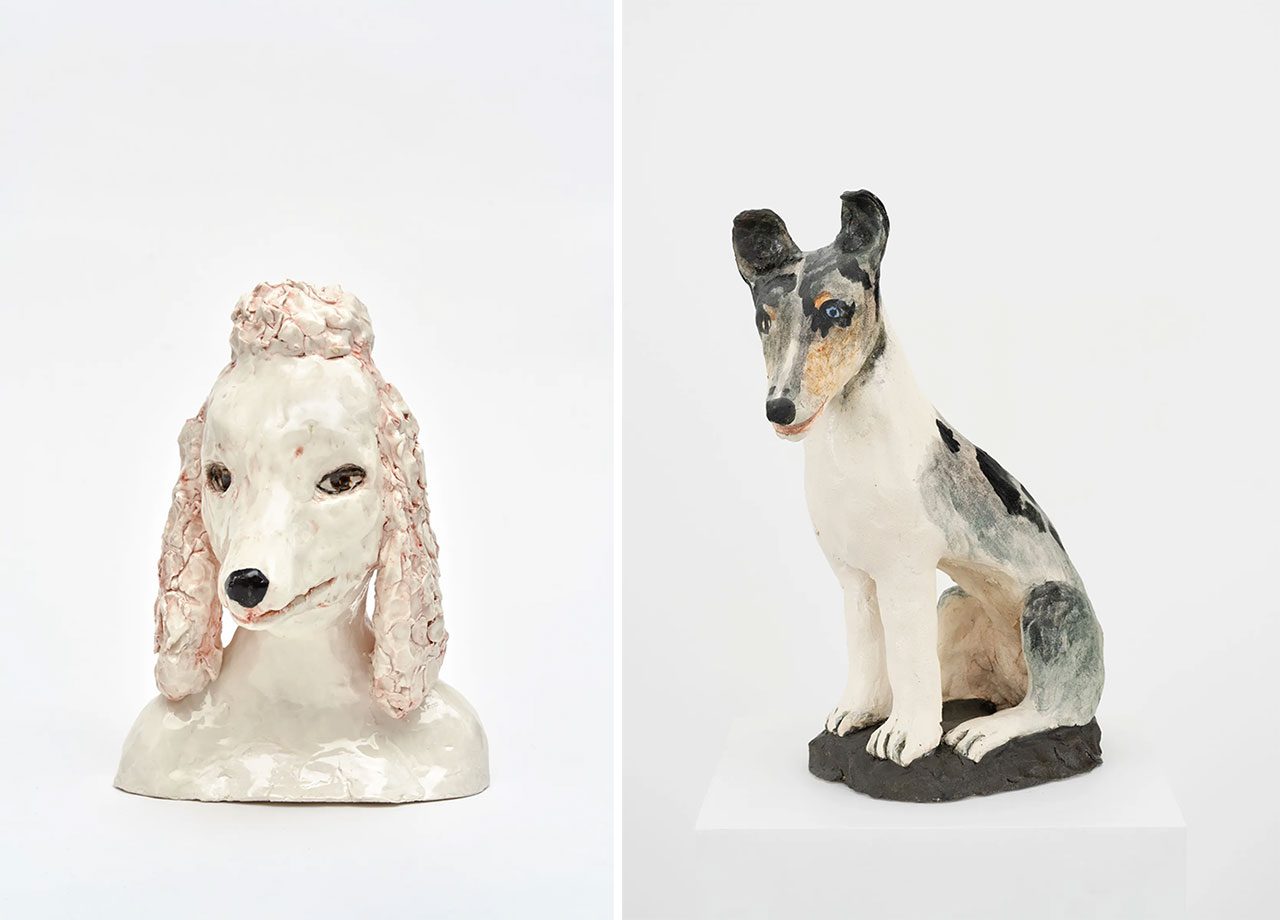
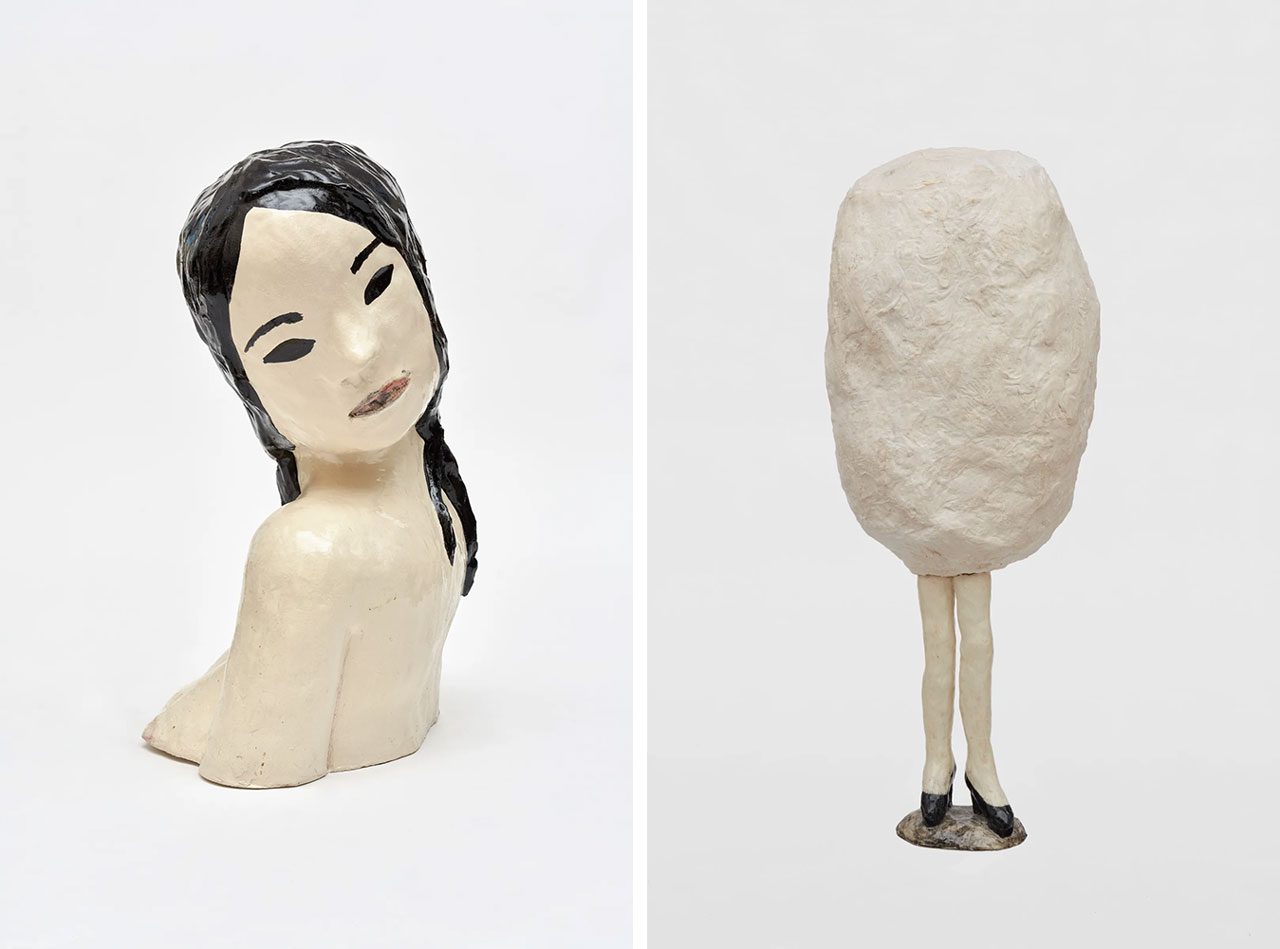
Photo left: Klara Kristalova, Pastel Pink, 2023 Painted and glazed porcelain, 34 x 24 x 25 cm, © Klara Kristalova, Courtesy the artist and Lehmann Maupin. Photo right: Klara Kristalova, Zenga as a young girl, 2024 Glazed stoneware, 46 x 18 x 34 cm, 18 1/8 x 7 1/8 x 13 1/2 inches, © Klara Kristalova, Courtesy the artist and Perrotin
Info: Skellefteå Konsthall, Västerbottensteatern, Kanalgatan, Skellefteå, Sweeden, Duration: 19/9/2025-4/1/2026, Days & Hours: Mon-Fri 10:00-18:00, Sat-Sun 10:00-16:00, https://skelleftea.se/
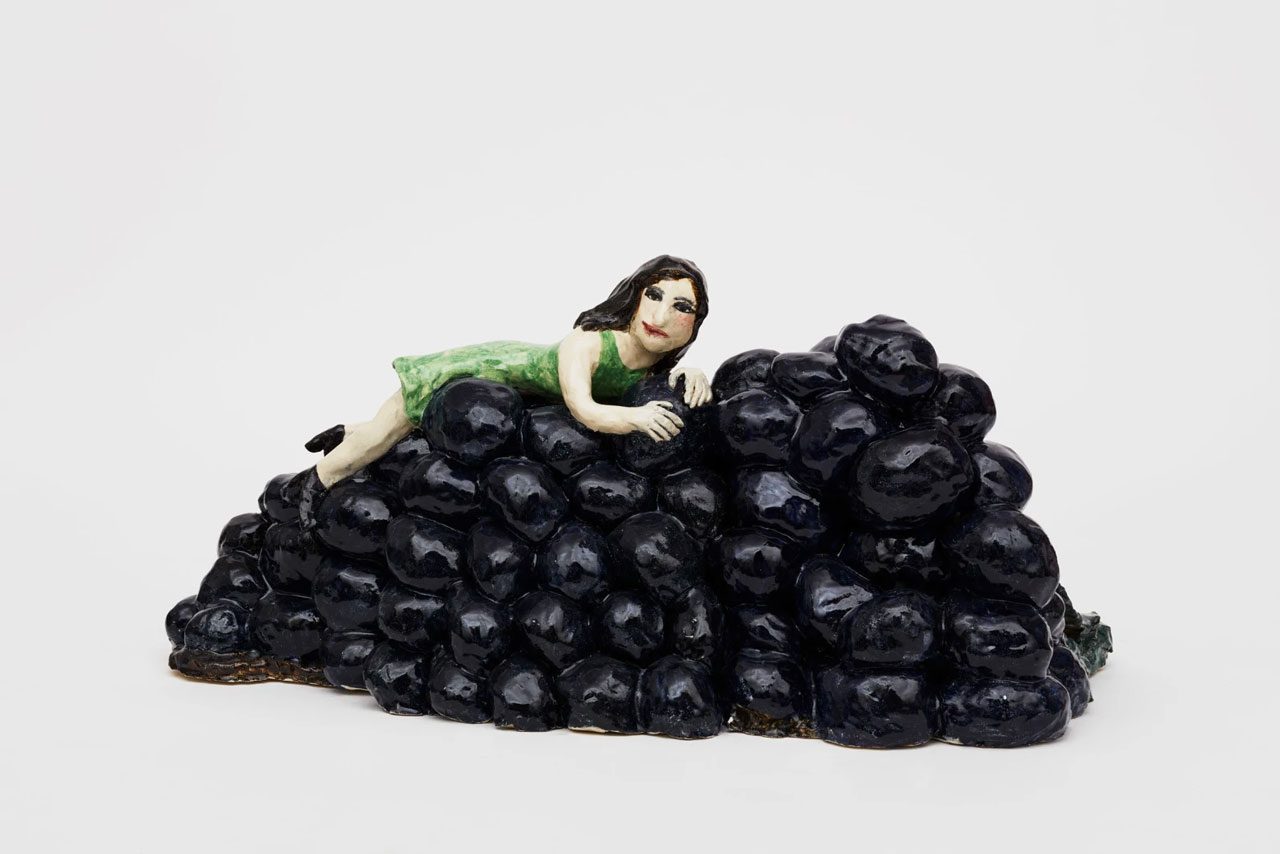
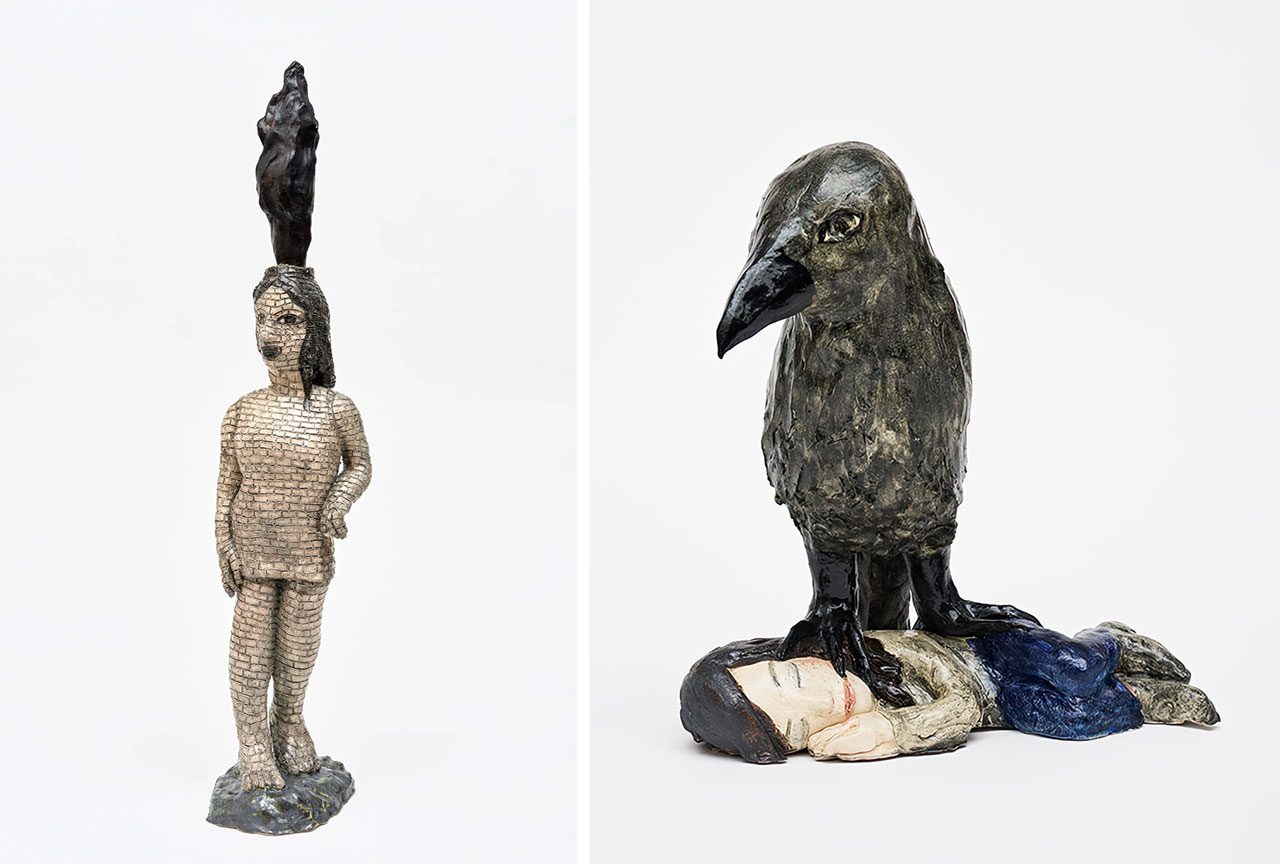
Right: Klara Kristalova, The Weight of a Bird, 2025, Glazed stoneware, 51 x 42 x 33 cm. Photo: Carl Henrik Tillberg, © Klara Kristalova, Courtesy the artist and Galleri Magnus Karlsson
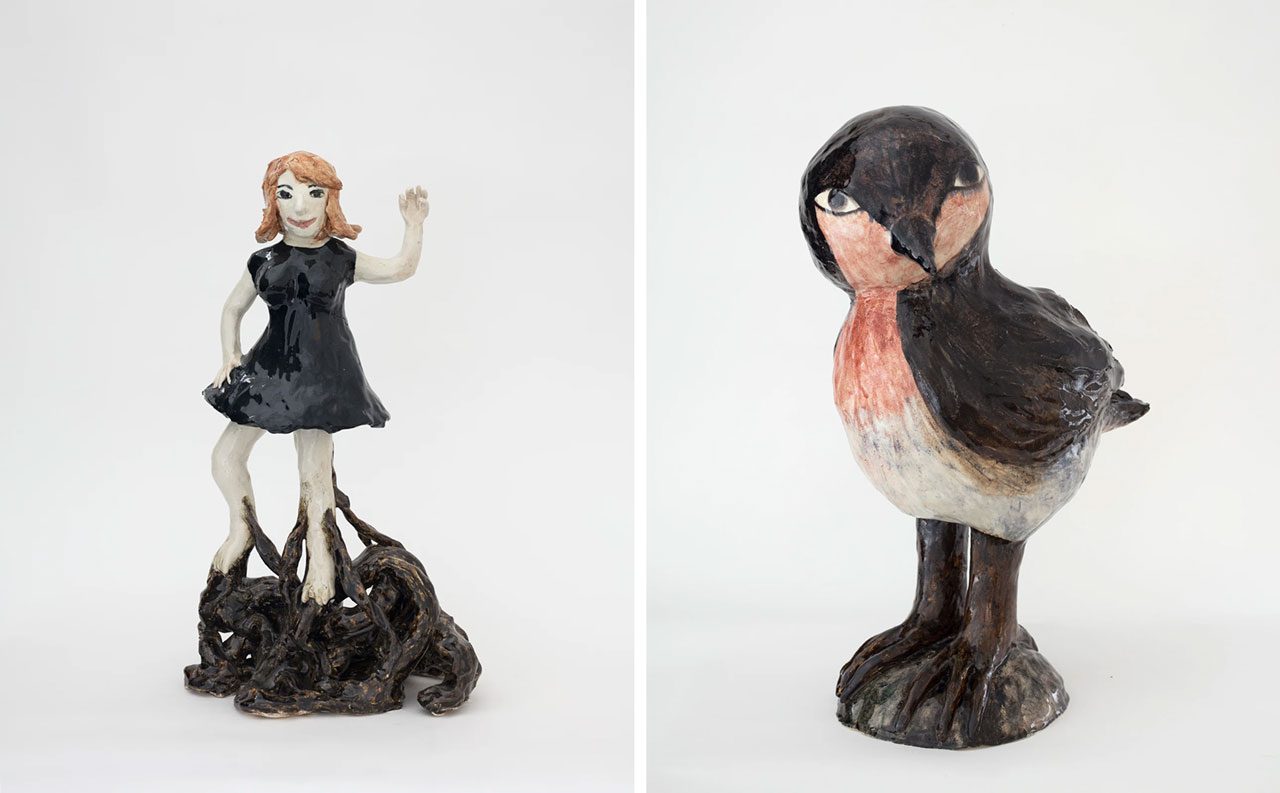
Right: Klara Kristalova, One We Have Not Seen Before, 2023, Glazed stoneware, 70 x 45 x 29 cm, © Klara Kristalova, Courtesy the artist and Galleri Magnus Karlsson
Right: Klara Kristalova, The Cloud, 2020, Glazed stoneware, iron and jesmonite, 186 x 70 x 57 cm, © Klara Kristalova, Courtesy the artist and Galleri Magnus Karlsson
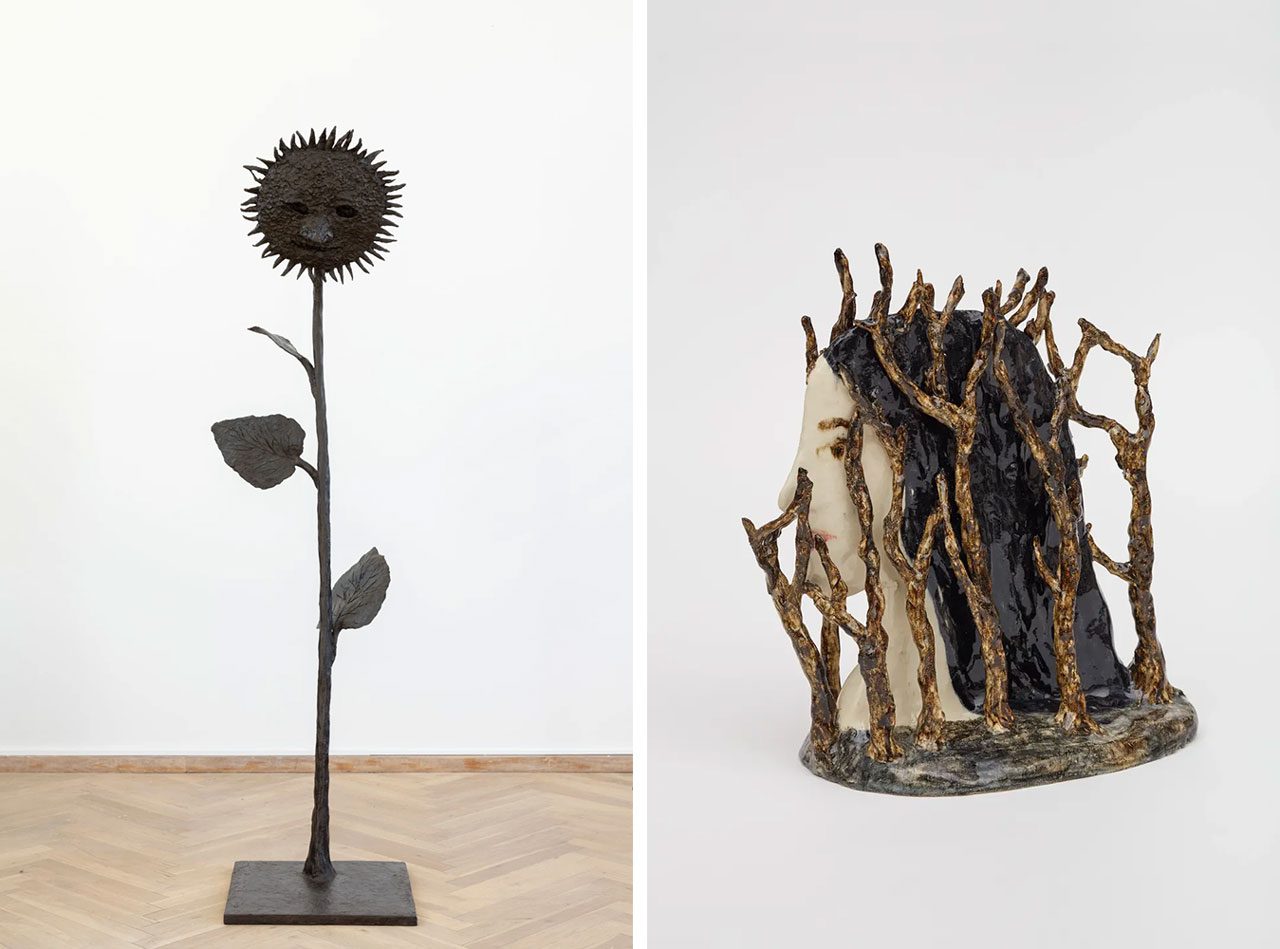
Right: Klara Kristalova, Cage, 2017, Glazed stoneware, 54 x 15 x 34 cm, Unique, © Klara Kristalova, Courtesy the artist and Perrotin