PRESENTATION: Andra Ursuţa-Retina Turner
Andra Ursuţa’s seductive and unsettling sculptures – often made from casts of her own body – are radical hybrid beings. Recalling both American science fiction action horror films including “Predator” and the “Alien” franchise, and visionary artworks of women from previous generations including the Polish and Estonian sculptors Alina Szapocznikow and Anu Põder, Ursuţa’s work emphasises the vulnerability of the human form and the complexity of desire.
By Dimitris Lempesis
Photo: David Zwirner Gallery Archive
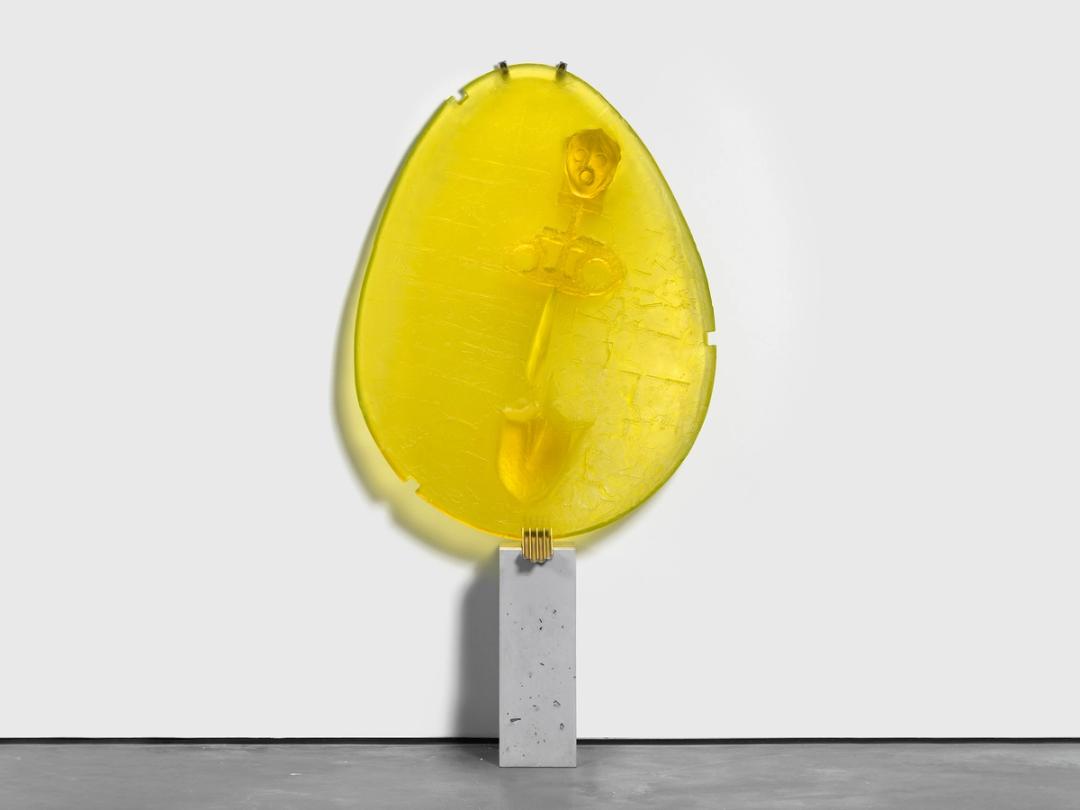
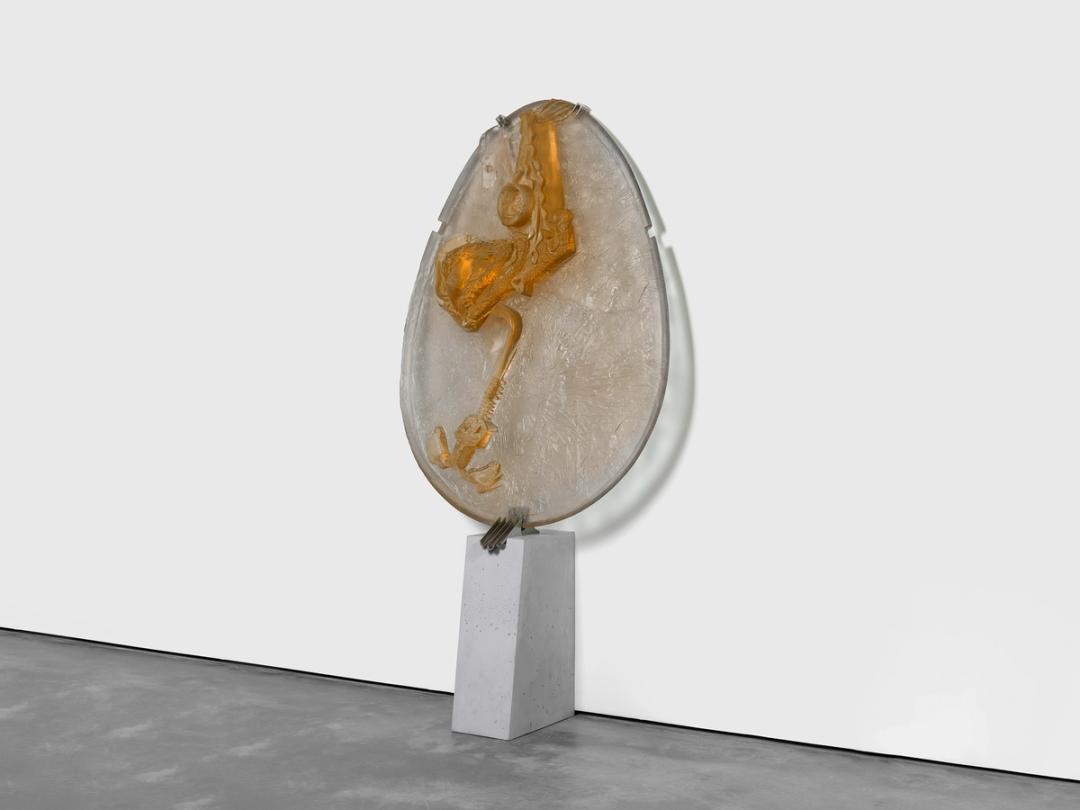
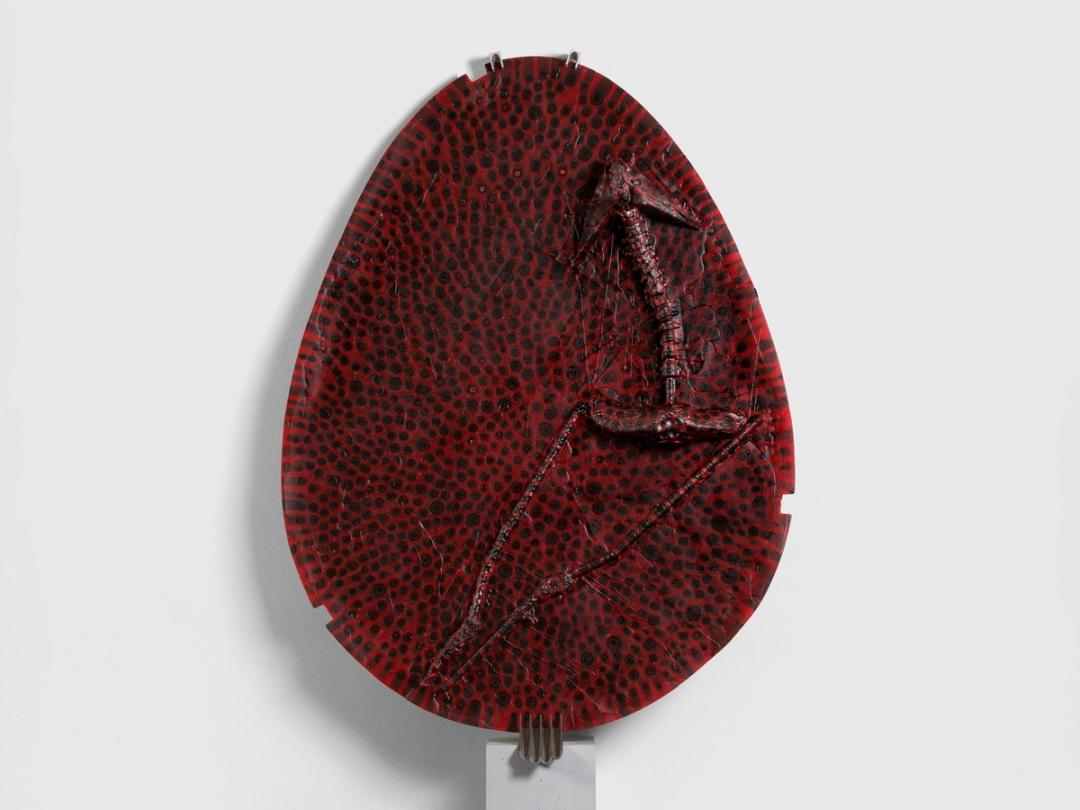
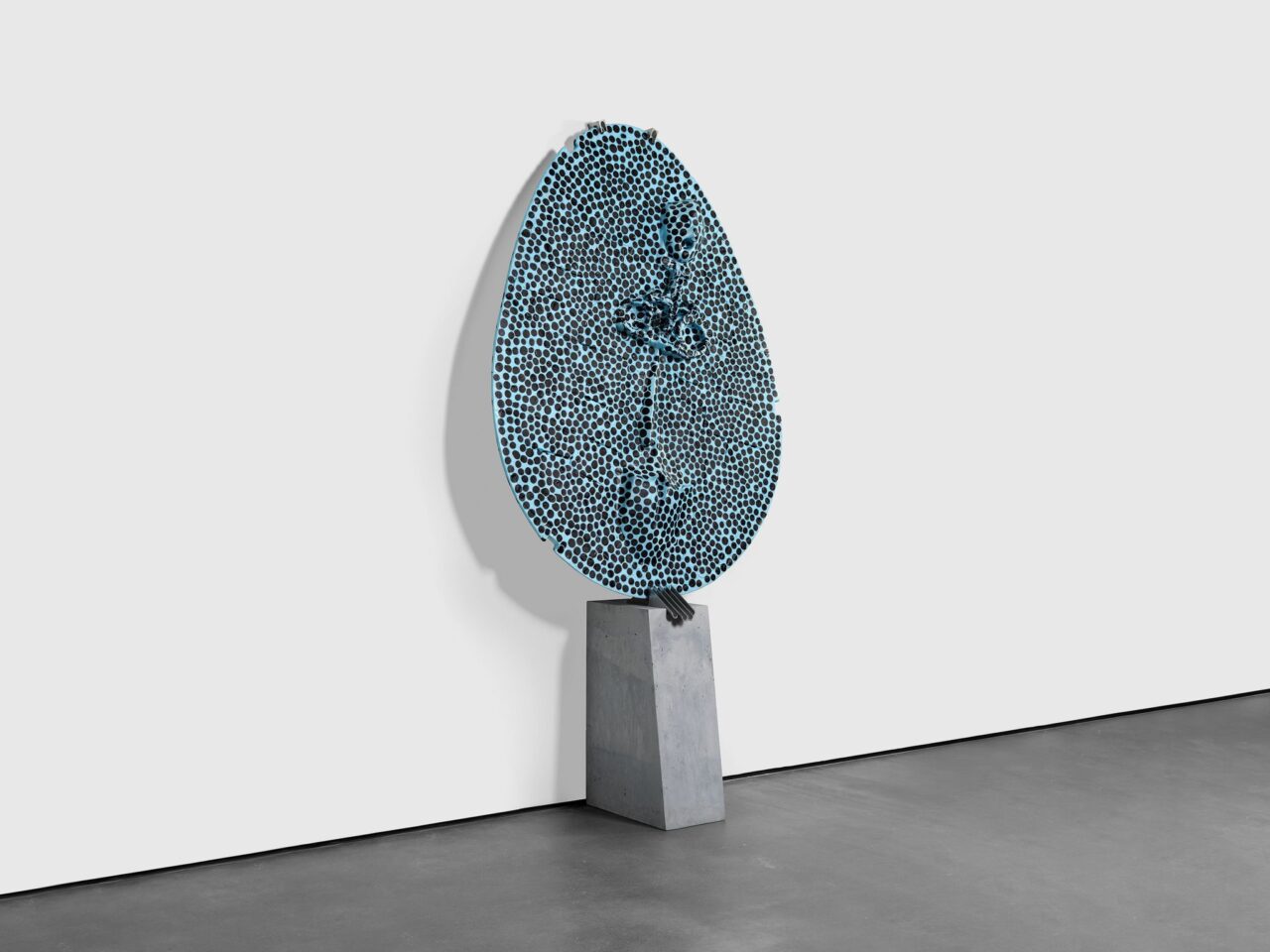
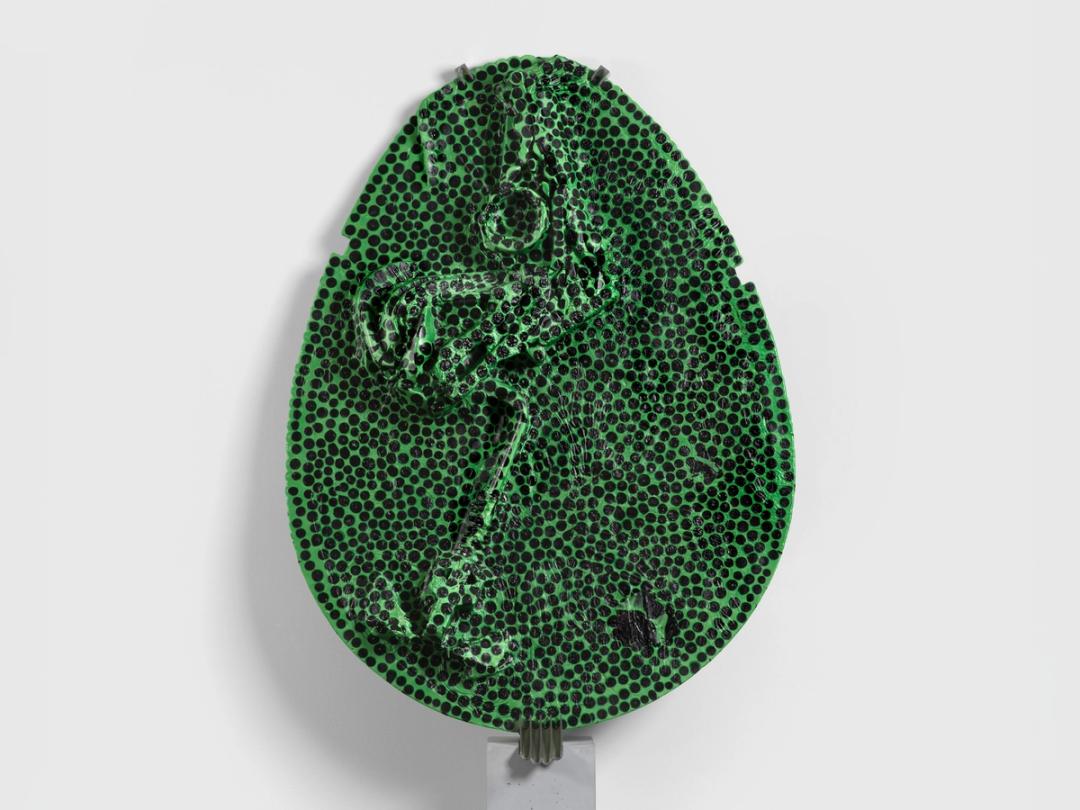
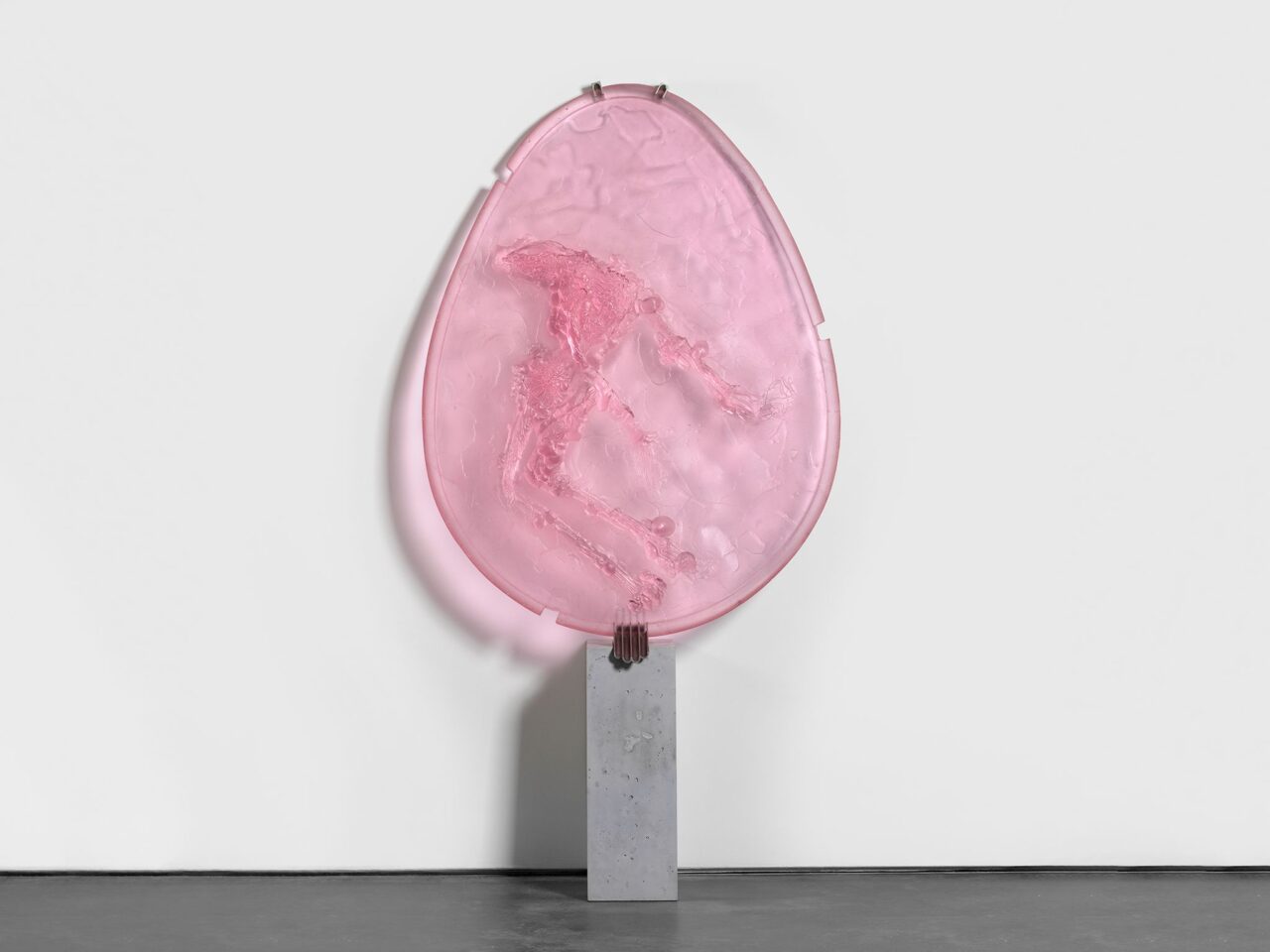
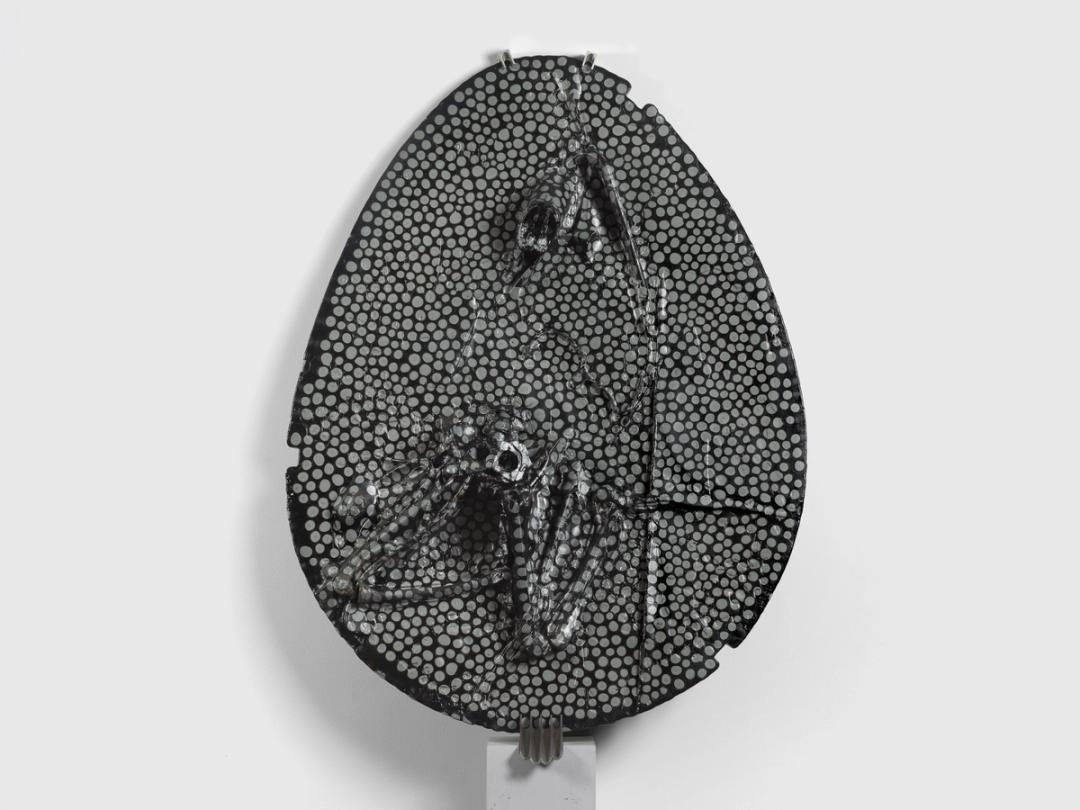
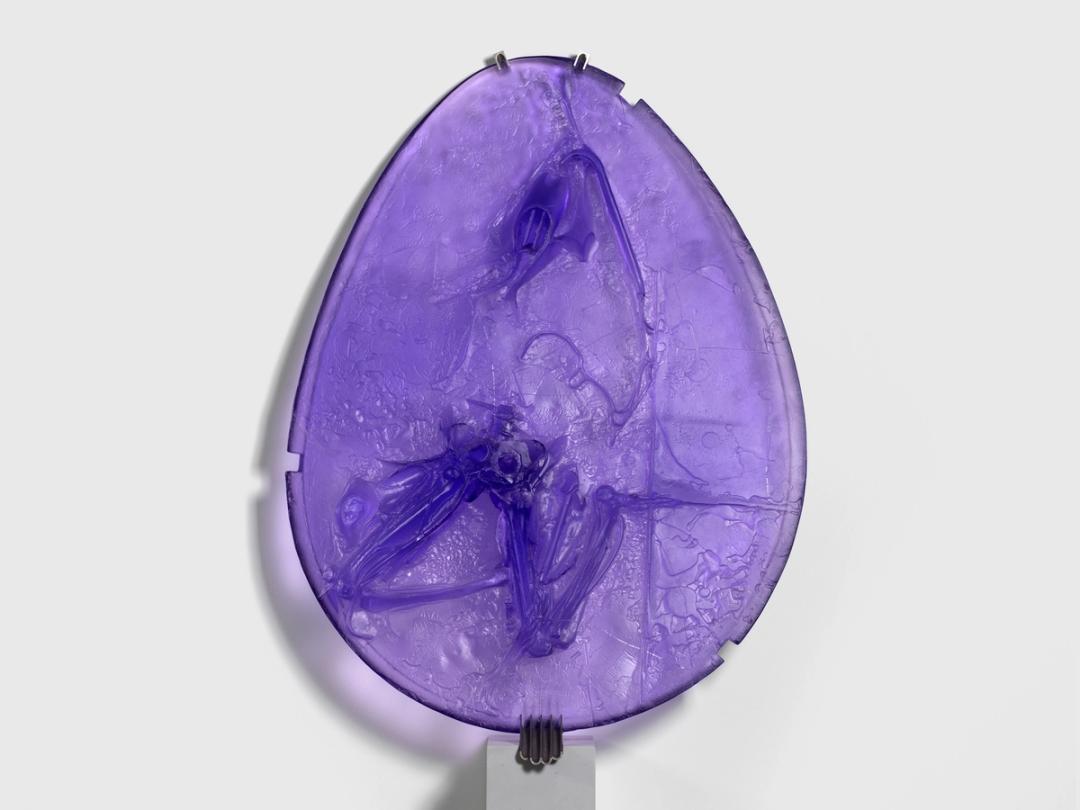
In recent years, Andra Ursuţa has fused direct casts of her own body with salvaged objects, discarded materials, and improvised props, weaving together the ancient technique of lost-wax casting with contemporary tools such as 3-D scanning and printing. Encased in vivid crystal shells, her sculptures swirl with layered textures and luminous patterns, exposing an almost alchemical collision between the organic and the manufactured. Her solo exhibition “Retina Turner” pushes this dialogue to the threshold of perception. Sixteen monumental, egg-shaped slabs of cast glass stand like enigmatic sentinels, each harboring spectral figures—Private Dancers—human–machine hybrids that glide, twitch, and dissolve beneath translucent skins. Hypnotic and elusive, these apparitions perform the very instability of vision in an era when seeing has become a fatigued reflex, a form of retinal apathy. Never before has humanity produced and circulated so many images, or made the world visible with such speed and ease. Yet this abundance has not clarified our view. Instead, vision is scattered and overexposed, a relentless glut of pictures that blinds rather than reveals. Ursuţa’s “Private Dancers” inhabit this paradoxical space: the gap between infinite image production and the eye’s own weary drift. The slabs themselves evoke astigmatic eyes warped by pathology. Some are cast in dense lead crystal, their depths catching fossil-like inclusions. Others employ murrine glass, an ancient Venetian technique of fusing colored rods and slicing them to reveal intricate cross-sections. In Ursuţa’s hands, the murrine forms dense, cellular fields, echoing the sudden dots and flashes that accompany a retinal tear. Each figure hovers between translucence and opacity, as if sight were forever oscillating between clarity and shadow. These phantoms are embodied floaters and phosphenes—entoptic phenomena belonging to the eye itself rather than the external world—assembled from studio fragments, anthropomorphic scraps, and drifting visual snow. What they offer is not an outward spectacle but the murmuring noise of vision turned inward. This introspective turn reaches back to the origins of image-making. Prehistoric cave walls, with their animal outlines interlaced with spirals and lattices, recorded not only the external world but the hallucinato-ry patterns of the darkened human eye. Ursuţa revives that ancient fusion of representation and internal dream for a culture oversaturated with visibility. Her Private Dancers are at once figures and phantoms, projections of an eye that contemplates itself. The series also reads as a coda to Lucio Fontana’s 1960s “La Fine di Dio” paintings. Fontana pierced egg-shaped canvases to open painting toward infinity, an optimistic gesture in the age of space exploration. Ursuţa retains the cosmic oval but reverses its charge: where Fontana reached outward, she implodes inward. Her sealed glass worlds pulse with vitreous black humor, less cosmic expansion than the static of an image-clogged culture. Anchored on concrete plinths reminiscent of Antonio Sant’Elia’s Futurist architecture and braced with hardware that nods to Walter Pichler’s machine forms, these precarious relics mourn vision itself—a culture that endlessly displays but scarcely sees. Ultimately, “Retina Turner” asks what it means to look when everything has already been made visible, when seeing has become compulsion rather than revelation. Ursuţa’s dancers do not promise clarity; they flicker at the edge of legibility, half-formed and half-erased. Their very opacity suggests a sobering truth: in an age flooded with dazzling but empty images, the last remaining visions may be those that surface only as sight begins to fail.
Photo: Andra Ursuţa, Private Dancer (Purple), 2025, Lead crystal, aluminum, and concrete, 94 x 49 1/2 x 18 inches (238.8 x 124.5 x 45.7 cm), © Andra Ursuţa, Courtesy the artist and David Zwirner Gallery
Info: David Zwirner Gallery, 537 West 20th Street, New York, NY, USA, Duration: 10/9-18/10/2025, Days & Hours: Tue-Sat 10:00-18:00, www.davidzwirner.com/