ART CITIES:Vienna- June Crespo
Spanish sculptor June Crespo has steadily carved out a practice in which the industrial and the bodily are never far apart. Her sculptures appear to breathe, even when they are composed of the most unyielding materials—fiberglass, resin, ceramic, bronze, rebar, and the debris of construction sites. She cuts, saws, fragments, and recombines these elements with a restless intuition, allowing them to coalesce into forms that hover between the recognizable and the enigmatic
By Efi Michalarou
Photo: Secession Archive
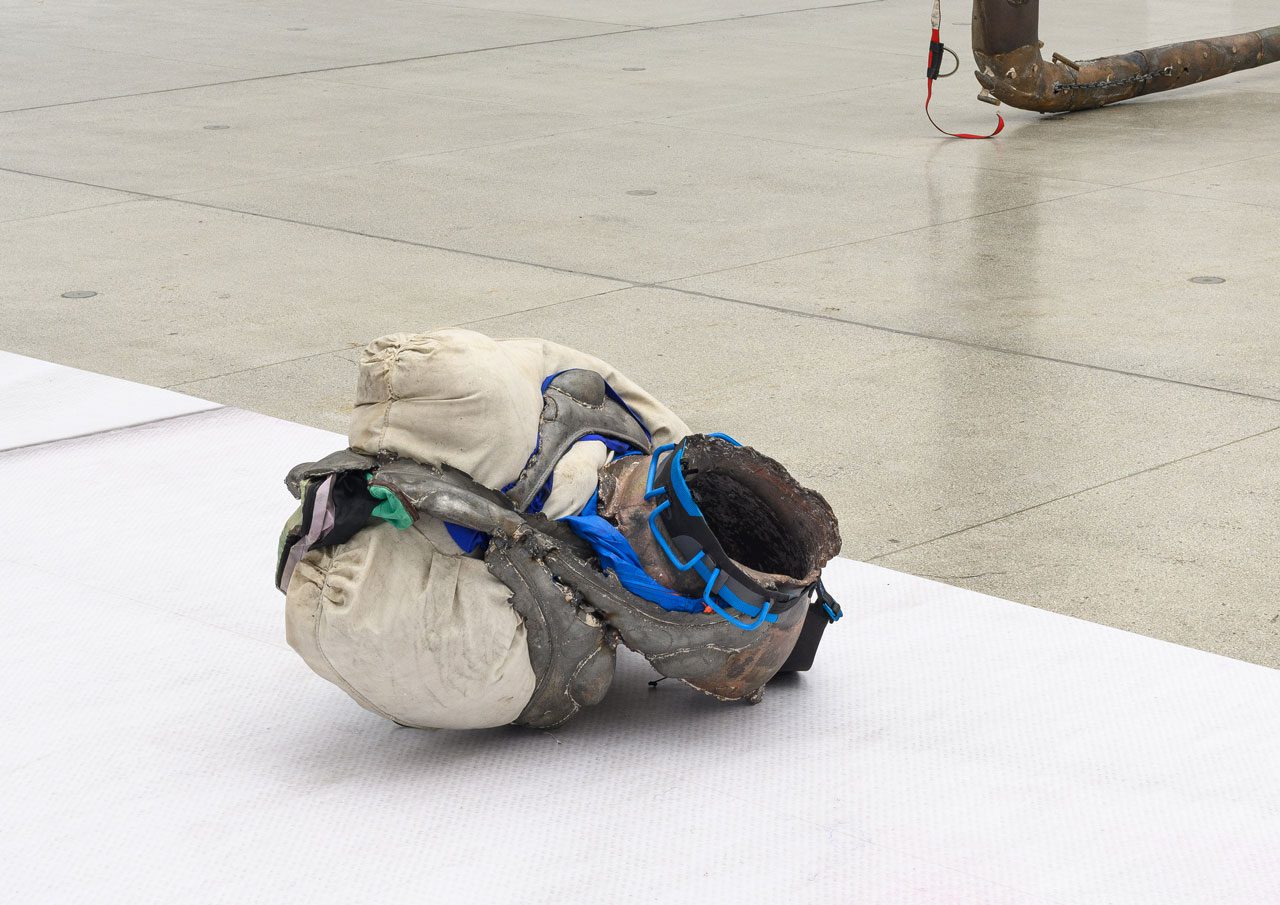
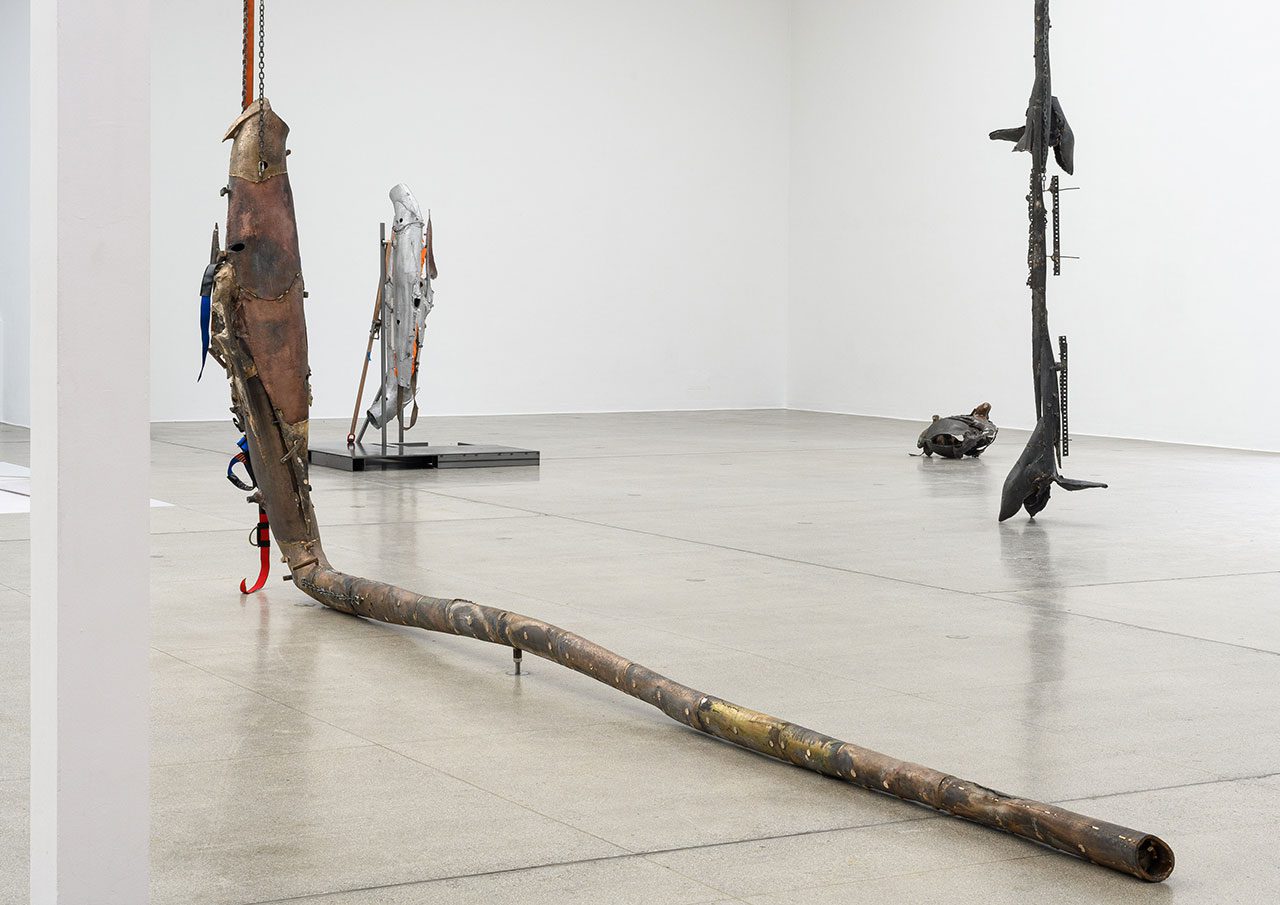
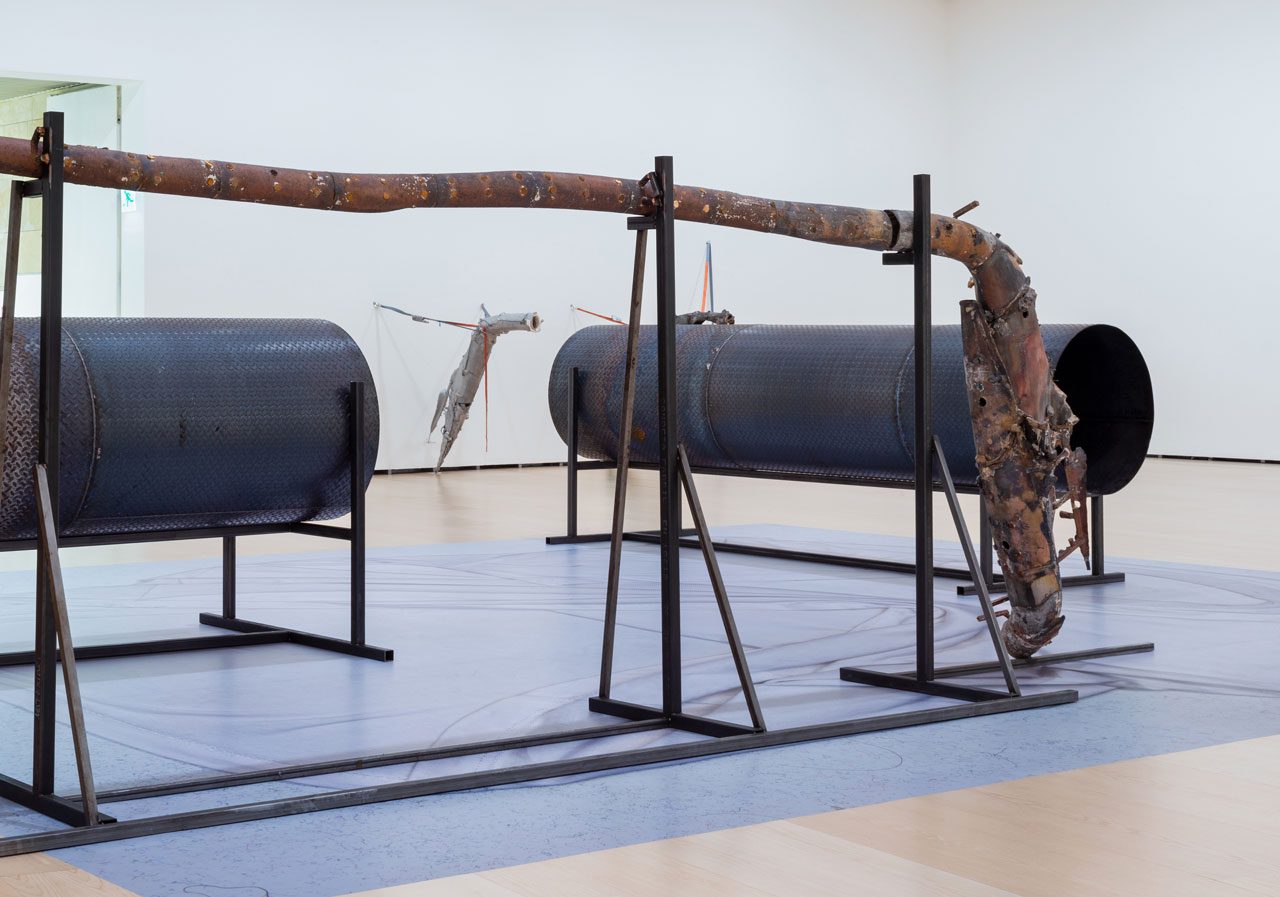
June Crespo’s art persistently suggests a body folded into architecture. She embeds garments—some drawn from her own wardrobe, others collected from friends—inside hardened industrial shells, quietly memorializing the domestic sphere. These hybrid objects speak to the paradox of the built environment: it shelters even as it constrains, offering protection while simultaneously pressing against our physical and psychological edges. In this way her installations evoke not only a speculative, dystopian urban future but also the uncanny present in which humans already exist as hybrid beings, part flesh, part machine. Her recent exhibition “Danzante” at the Secession in Vienna underscores this dynamic. The show borrows its formal cues from two plants, the iris and the bird of paradise, not as botanical subjects but as conceptual sparks. Crespo does not reproduce flowers; instead, she mines their structural vitality, using their rhythms and shapes as launch points for a deeper investigation of matter. Surface and texture—not likeness—are the true protagonists. Concrete, bronze, and steel become collaborators rather than passive mediums. Crespo often calls herself an “assistant” to her materials, a position of humility that allows the sculptures to assert their own agency. This attitude yields an intensely physical encounter for viewers, who feel the works pressing back, awakening a heightened awareness of their own bodies in space. Movement through the gallery is central to the experience. Crespo choreographs her installations so that meaning unfolds only as visitors circle and approach from multiple vantage points. Some sculptures stretch vertically toward the Secession’s glass ceiling, echoing the upright human spine and our own instinct for ascension. Others crouch close to the floor, emphasizing gravity and grounding. Certain pieces adhere to the human scale, creating an immediate bodily rapport, while others rise above, expanding the viewer’s sense of proportion and testing the limits of perception. Crespo’s methods originate in the realm of sensation. She speaks of translating intimate physical impressions—how the tongue presses against the palate, how an eyelid drags softly over the eye—into a sculptural language of tension and release. Organic elements such as flowers are cast in bronze, steel, or concrete using 3-D scanning, a high-tech process that detaches them from any natural order and highlights their structural essence. Surfaces emerge raw, crusted, abject, sometimes pitted with traces of corrosion. Into these casts she folds found textiles, fragments of industrial infrastructure, and garments worn close to the skin, establishing a subtle conversation between private corporeality and the “outer skins” of ventilation ducts, concrete walls, and building facades.
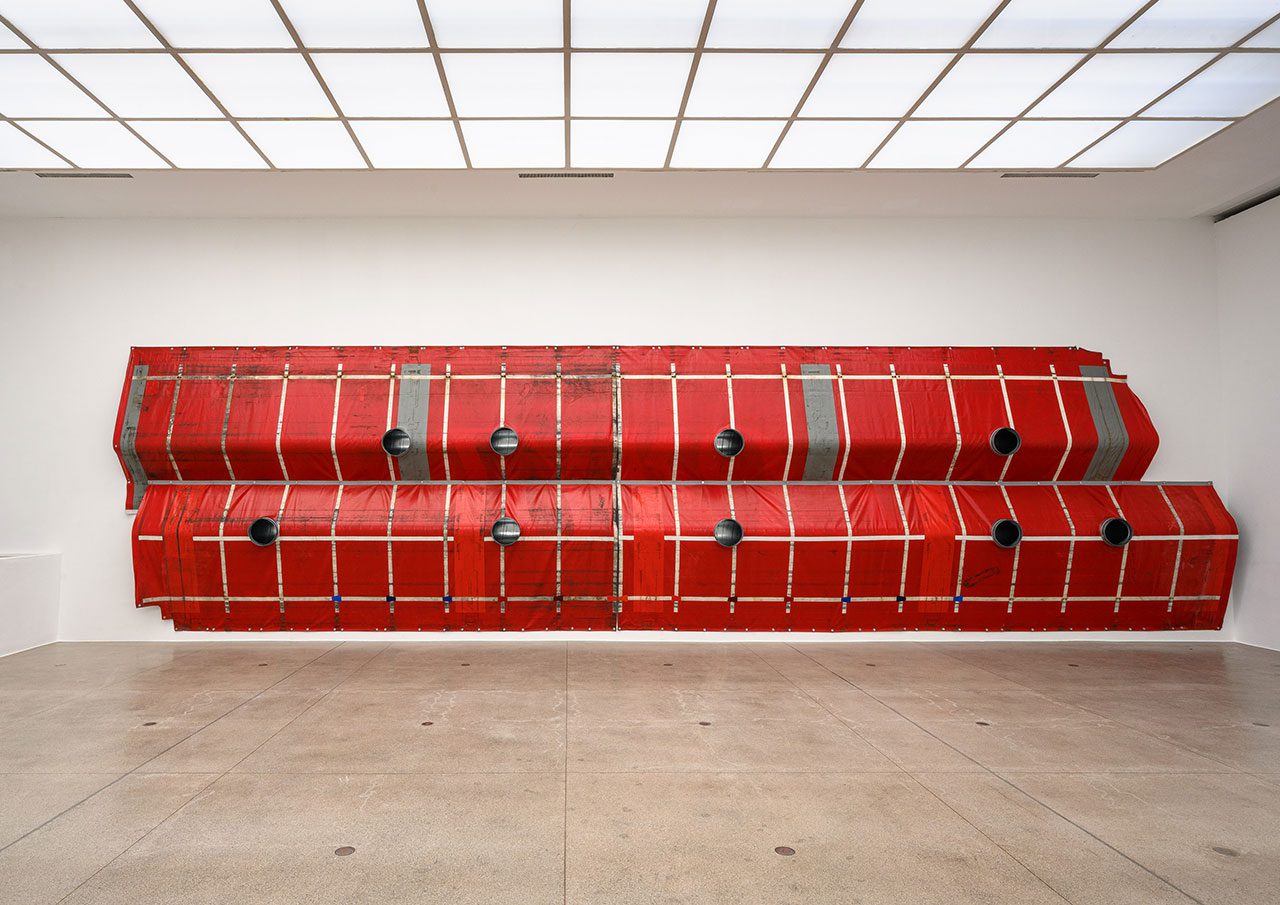
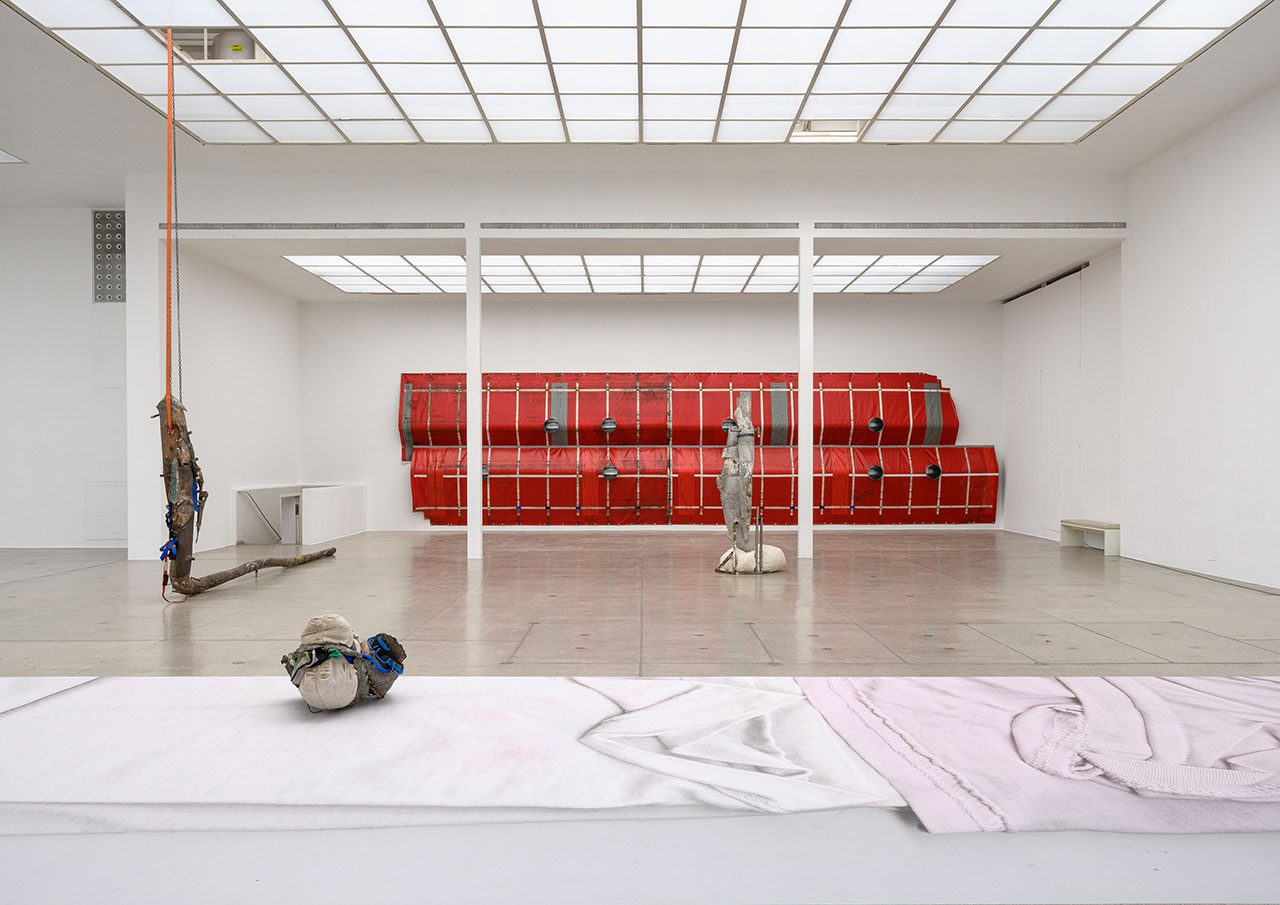
This collision of organic and mechanical does more than critique the violence of post-industrial production; it also attempts a form of repair. Crespo’s sculptures rejoin materials that might otherwise remain estranged, performing what she calls an “alternative practice of joining.” Flesh and stone, fabric and steel, the handmade and the mass-produced—these elements are fused without hierarchy into dreamlike assemblages where time seems to ripple and different registers coexist. The works occupy a liminal space where distinctions blur and new ecologies can take root. Several recent pieces exemplify this ethos. “Molar” (2024) twists bronze, steel, and fabric into a dense form that reads as both constrictive and embracing, a knot of tension and release. “The Dancing Column II” (2025) pairs two concrete strelitzias, their monumental presence softened by a voluminous cushion that makes them seem almost tender. The wall piece “TW, TG 2025 III” (2025) transforms reclaimed lorry tarpaulins into a geometric grid punctuated by pipe-bored apertures, the industrial logic of its construction offset by a subtle, almost breathing rhythm. Each work reveals Crespo’s fascination with repetition: forms recur and mutate, testing the boundaries between softness and rigidity, organic and synthetic. Her process is deliberately slow and recursive. She often revisits earlier pieces, fragmenting them, enlarging certain components, or recombining casts in unexpected ways. Through this continual reworking she creates a vocabulary of shapes and textures that is never static. These “object-bodies,” as she calls them, refuse fixed identity or singular meaning. They remain in flux, always on the cusp of becoming something else. “I don’t want to cement an image,” Crespo explains. “I want to propose an encounter—an in-between—where relationships stay free.” It is precisely this openness that makes Crespo’s work resonate so powerfully in the current cultural moment. In an era defined by environmental anxiety and technological entanglement, her sculptures offer a vision of coexistence rather than collapse. They show that steel and fabric, concrete and flower, body and building are not opposites but interdependent states. To stand among Crespo’s installations is to enter a site of negotiation: between hardness and softness, weight and lightness, the natural and the industrial. The sculptures do not merely occupy space; they activate it, inviting viewers to consider their own bodily presence within an environment that is itself alive with possibility. In these architectures of flesh and steel, the boundaries we take for granted—between object and organism, technology and nature, self and world—begin to dissolve, leaving in their place a charged and liberating ambiguity.
Photo: June Crespo, TW, TG, 2025, Truck canvas, ventilation pipes approx. 1236 × 327 × 40 cm, © June Crespo, Courtesy of the artist, GalerÌa CarrerasMugica, Bilbao; GalerÌa Ehrhardt FlÛrez, Madrid; P420, Bologna
Info: Curator: Bettina Spörr, The Association of Visual Artists Vienna Secession, Friedrichstraße 12, Vienna, Austria, Duration: 12/9-16/11/2025, Days & Hours: Tue-Sun 10:00-18:00, https://secession.at/
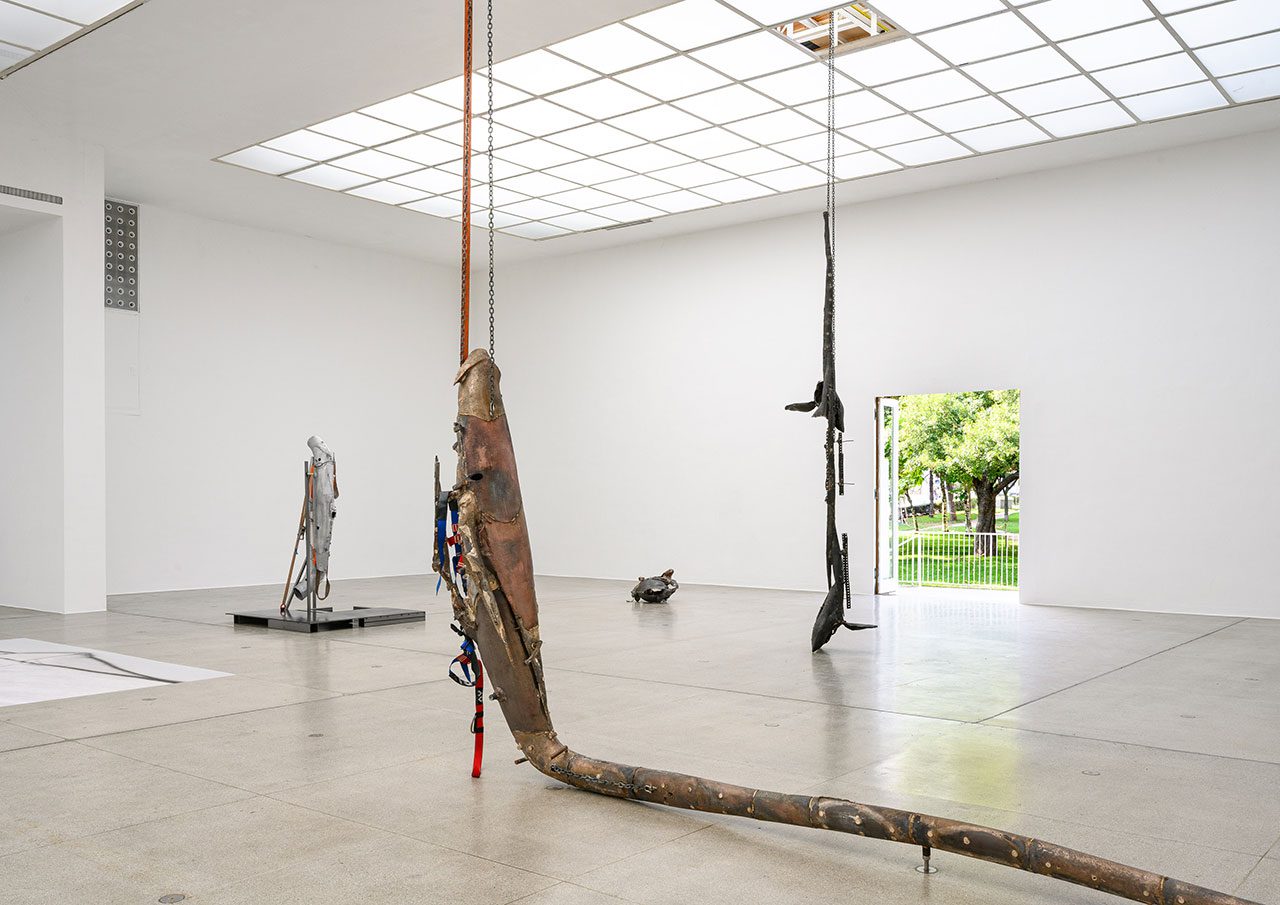
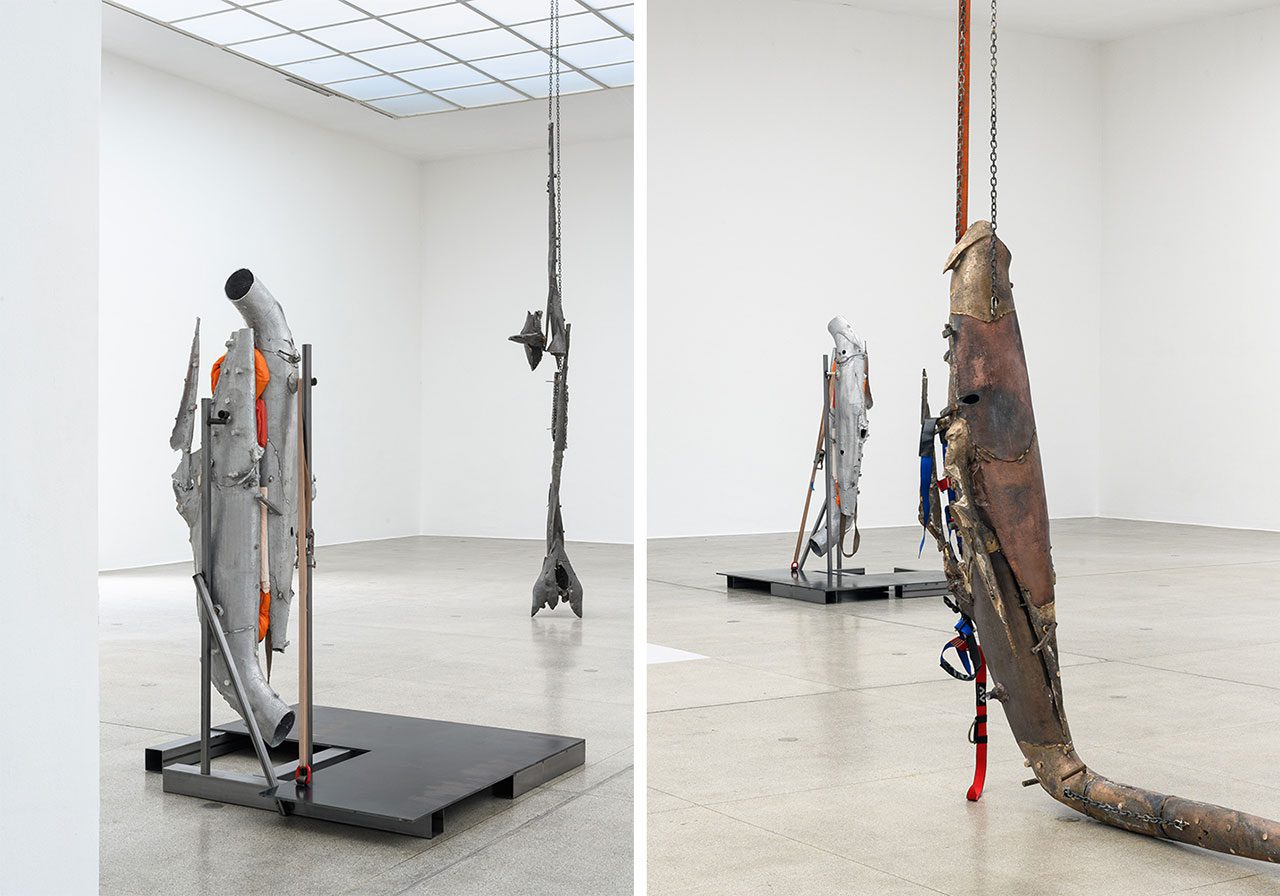
Right: June Crespo, Vascular X (dIetail), 2025 Bronze, steel chain approx. 235 645 × 55 cm, © June Crespo, Courtesy of the artist, GalerÌa CarrerasMugica, Bilbao; GalerÌa Ehrhardt FlÛrez, Madrid; P420, Bologna