
PREVIEW: Hans Peter Feldmann
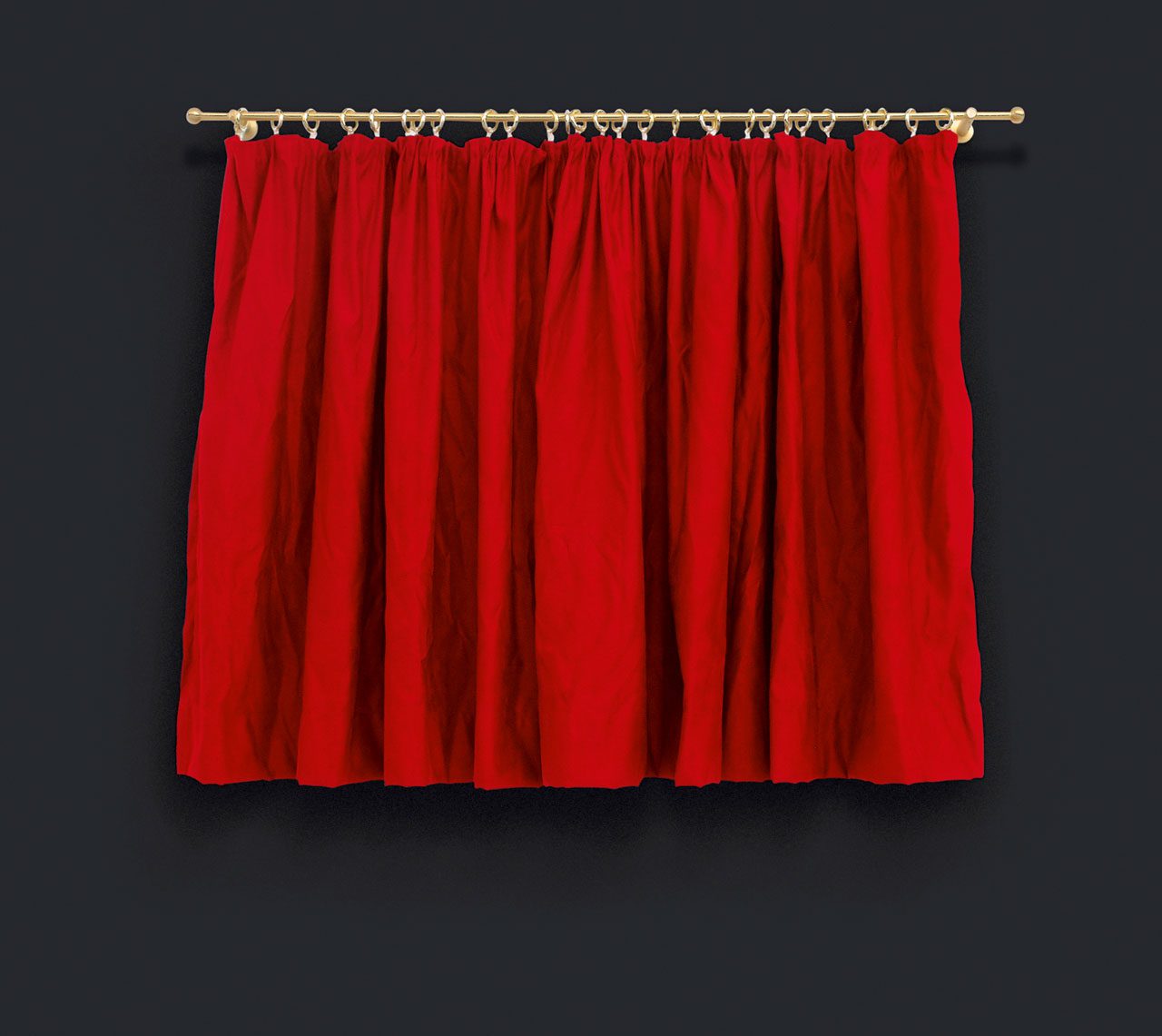
Born in Düsseldorf, Hans-Peter Feldmann was an influential German conceptual artist, who began his career in the late 1960s. Influenced by Pop art, he sourced his material from everyday life and popular culture. Throughout his life, Feldmann collected images of all kinds – newspaper and magazine clippings, as well as his own photographs – compiling them into a large archive that became the foundation of his artistic practice.
By Efi Michalarou
Photo: Kunstpalast Archive
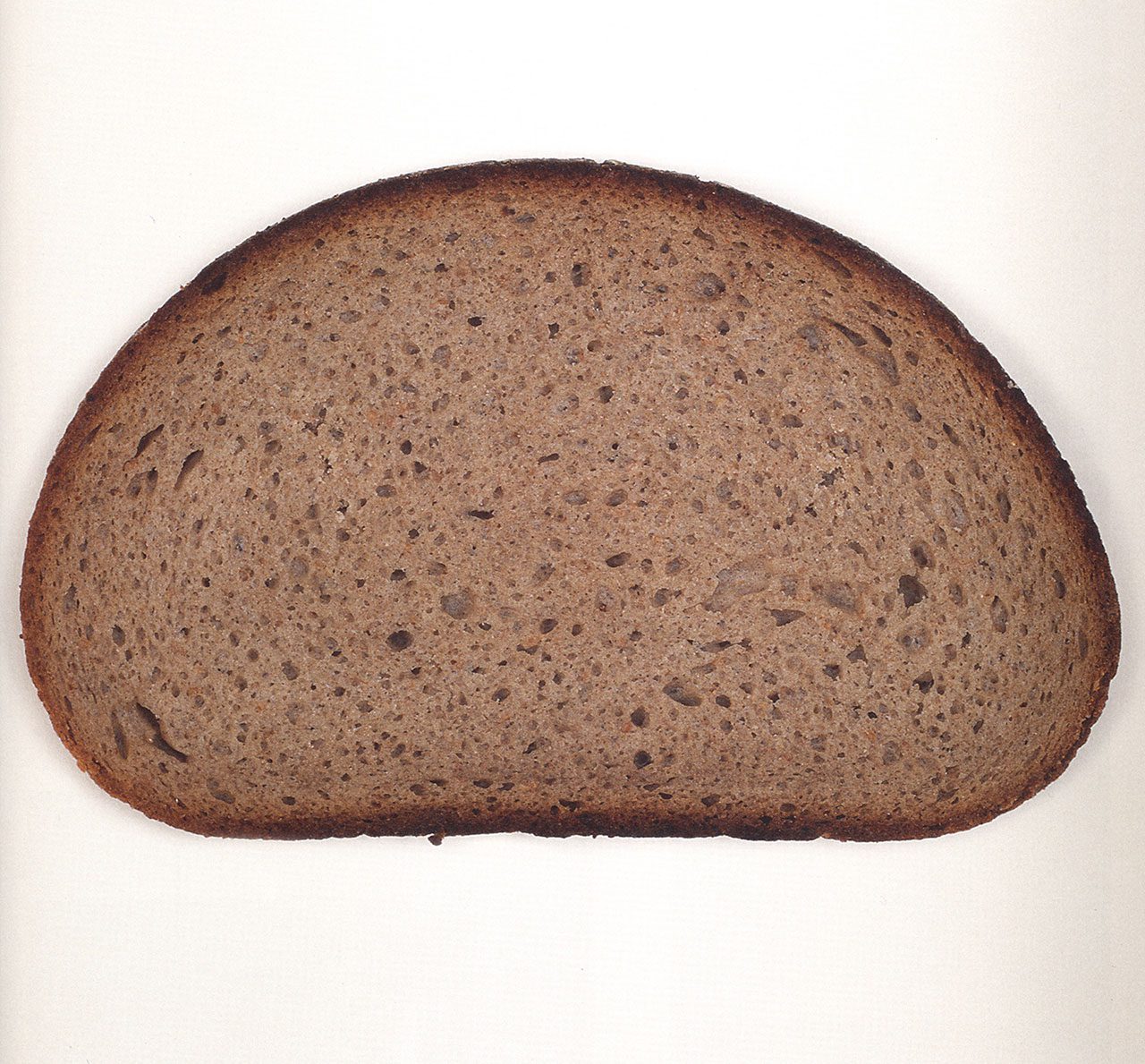
What is art? Where does it begin and end? Who decides what art is? What makes an artist? These fundamental questions are at the heart of the work of Hans-Peter Feldmann, who is the subject of an extensive exhibition at the Kunstpalast. The artist’s central themes were already evident in his early works and appear throughout his oeuvre: everyday life, social clichés, voyeurism, private and public spheres, the formation of taste, humour and satire, dreams and projections. From the very beginning of his career, Feldmann also systematically employed strategies of artistic appropriation, alienation and recontextualisation. Born in Düsseldorf, Germany, in 1941, Feldmann grew up in postwar Germany—a context that would deeply shape his artistic outlook. He studied painting at the University of Arts and Industrial Design Linz in Austria but abandoned the medium in 1968, turning instead to photography, found images, and the practice of collecting. Feldmann was a figure in the conceptual art movement and a practitioner in artist book and multiple formats. He rose to prominence in the early 1970s, earning worldwide acclaim for his expansive photographic series that often took the form of books, posters, postcards, and installations. These works reflected his lifelong fascination with the act of collecting and reorganizing elements of everyday visual culture. Some of Feldmann’s earliest notable works were his “Bilders” (“Pictures”), produced between 1968 and 1976. These small booklets contained appropriated, seemingly banal photographs, offered freely to the public. In “11 Bilder”, for example, Feldmann presented fewer than a dozen images of women’s knees—divorced from their original contexts, they acquired new, strange meanings. Such works foreshadowed later appropriation strategies of the 1980s, and today, critics recognize Feldmann as an important, if under-acknowledged, forerunner of that movement. Throughout his career, Feldmann created works that critics might have dismissed as stunts if attempted by lesser artists. In 1999, he had master craftsmen produce a plaster replica of a Neoclassical sculpture, which he then painted bright pink. In 2011, after becoming the oldest artist to win the Guggenheim Museum’s $100,000 Hugo Boss Prize, Feldmann pinned the entire award—100,000 one-dollar bills—to the museum’s walls. Yet these gestures were never mere pranks. His projects, composed of pictures and objects collected over decades, offered trenchant reflections on art, value, and culture. Feldmann’s works grew increasingly expansive over time. His books Voyeur (1994, 1997) presented images ranging from plane crashes to nudes, reflecting the breadth of his archive. In “100 Years” (2001), shown at P.S.1 Contemporary Art Center in 2004, Feldmann exhibited 101 photographs of people ranging in age from 8 months to 100 years old. By reorganizing personal and found imagery into unconventional categories, Feldmann exposed the hidden strangeness of everyday life. Despite his success, Feldmann stepped away from art in 1980, following a museum survey in Ghent, Belgium. For nearly a decade he devoted himself to other pursuits, including running a thimble shop, selling tin toys, and operating a mail-order service. He returned to art in 1989 at the urging of his friend, curator Kasper König, who later organized a show of Feldmann’s work at Portikus in Frankfurt. From the 1990s onward, Feldmann’s exhibitions often resembled curiosity cabinets or junk shops. A 1992 show at New York’s 303 Gallery displayed postcards of the Eiffel Tower, kitschy frames with celebrity portraits, and photocopies of washing machines. His idiosyncratic habit of collecting reached a climax with “9/12 Front Page” (2001), a monumental installation featuring the front pages of 117 newspapers from September 11, 2001. Feldmann participated in two editions of Documenta in Kassel, two editions of the Venice Biennale, the Bienal de São Paulo, and the Gwangju Biennale. Major retrospectives of his work were staged at Museum Ludwig in Cologne (2003) and the Guggenheim Museum in New York (2011). In 2007, he contributed to Skulptur Projekte Münster by redesigning a public bathroom with fresh paint and elegant ceramic finishes—an emblematic project for an artist who declared, “I am not interested in the high points of life. Only five minutes of every day are interesting.” Hans-Peter Feldmann’s art, rooted in the detritus of modern life, redefined what could be considered worthy of attention. Through humor, irreverence, and an obsessive devotion to collecting, he produced a body of work that continues to influence contemporary art and remains a touchstone for artists exploring appropriation, archives, and the aesthetics of the everyday.
Photo: Hans-Peter Feldmann, Curtain, red, before 2007, curtain rod, fabric, 107 x 160 cm, Ursula Feldmann – Hans-Peter-Feldmann Estate, © VG Bild-Kunst, Bonn 2025
Info: Curator: Felicity Korn, Kunstpalast, Ehrenhof 4-5, Düsseldorf, Germany, Duration: 18/9/202511/1/2026, Days & Hours: Tue-Wed & Fri-Sun 11:00-18:00, Thu 11:00-21:00, www.kunstpalast.de/
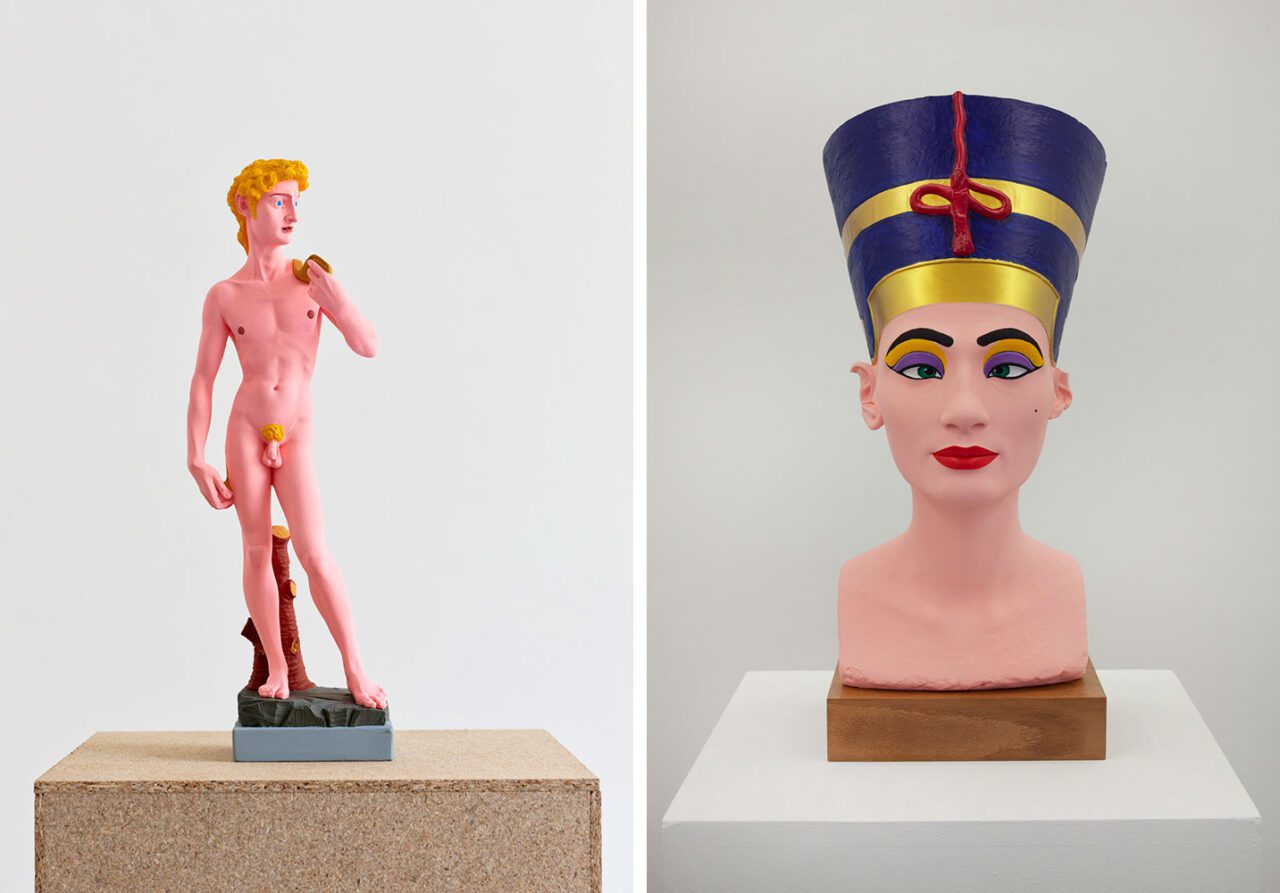
Right: Hans-Peter Feldmann, The Bust of Nefertiti, 2012, plaster, painted, 45 x 25 x 25 cm, private collection, photo: Ludger Paffrath, © VG Bild-Kunst, Bonn 2025
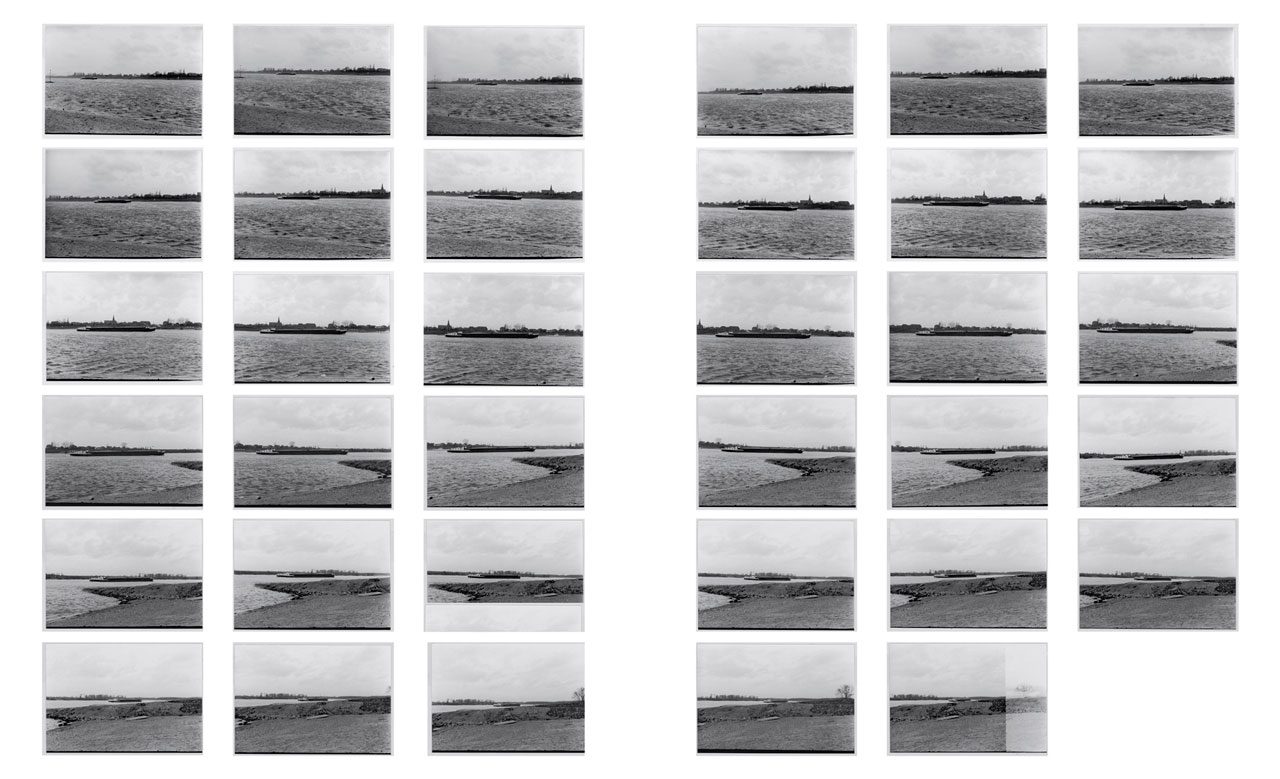
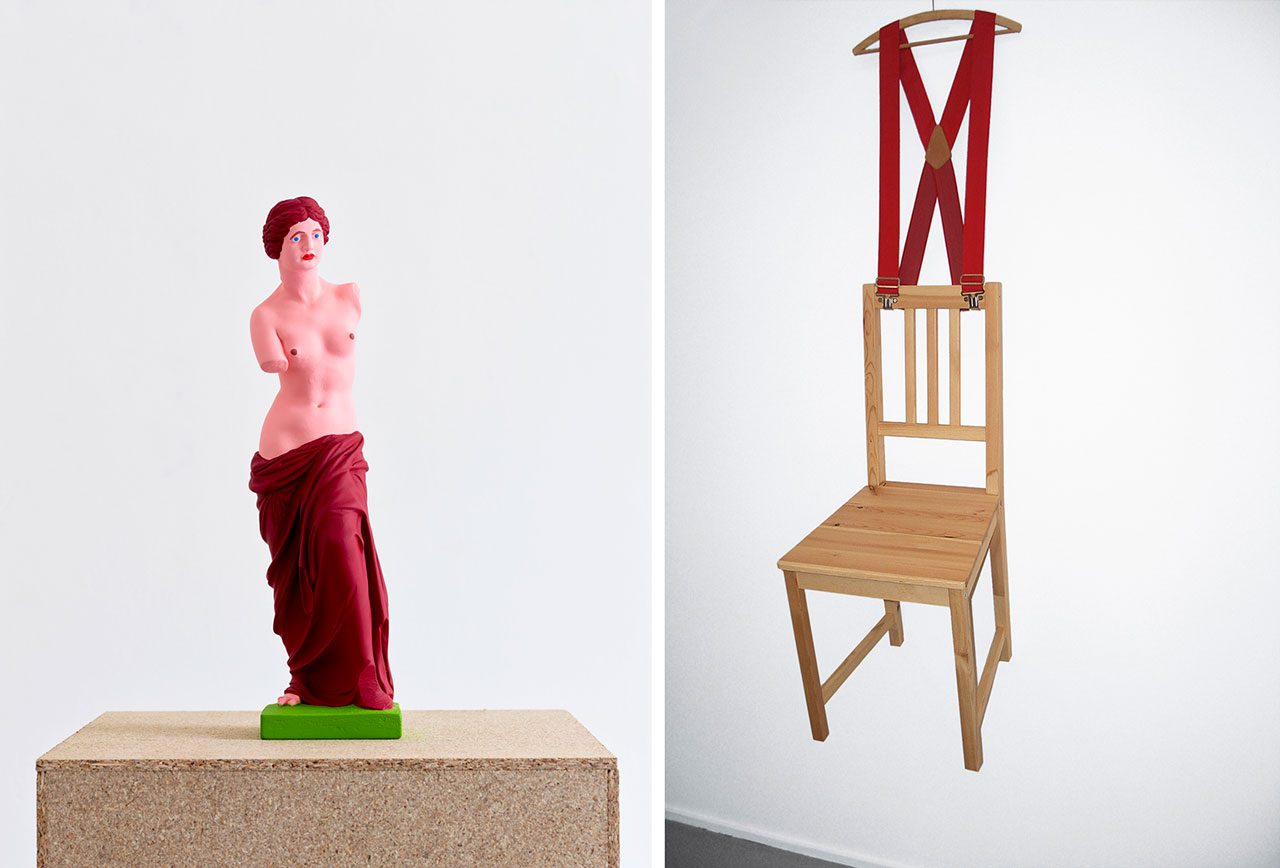
Right: Hans-Peter Feldmann, Untitled (Chair with suspenders), before 2010, Chair, suspenders, coat hanger, 90 x 45 cm, Ursula Feldmann – Hans-Peter-Feldmann Estate, © VG Bild-Kunst, Bonn 2025
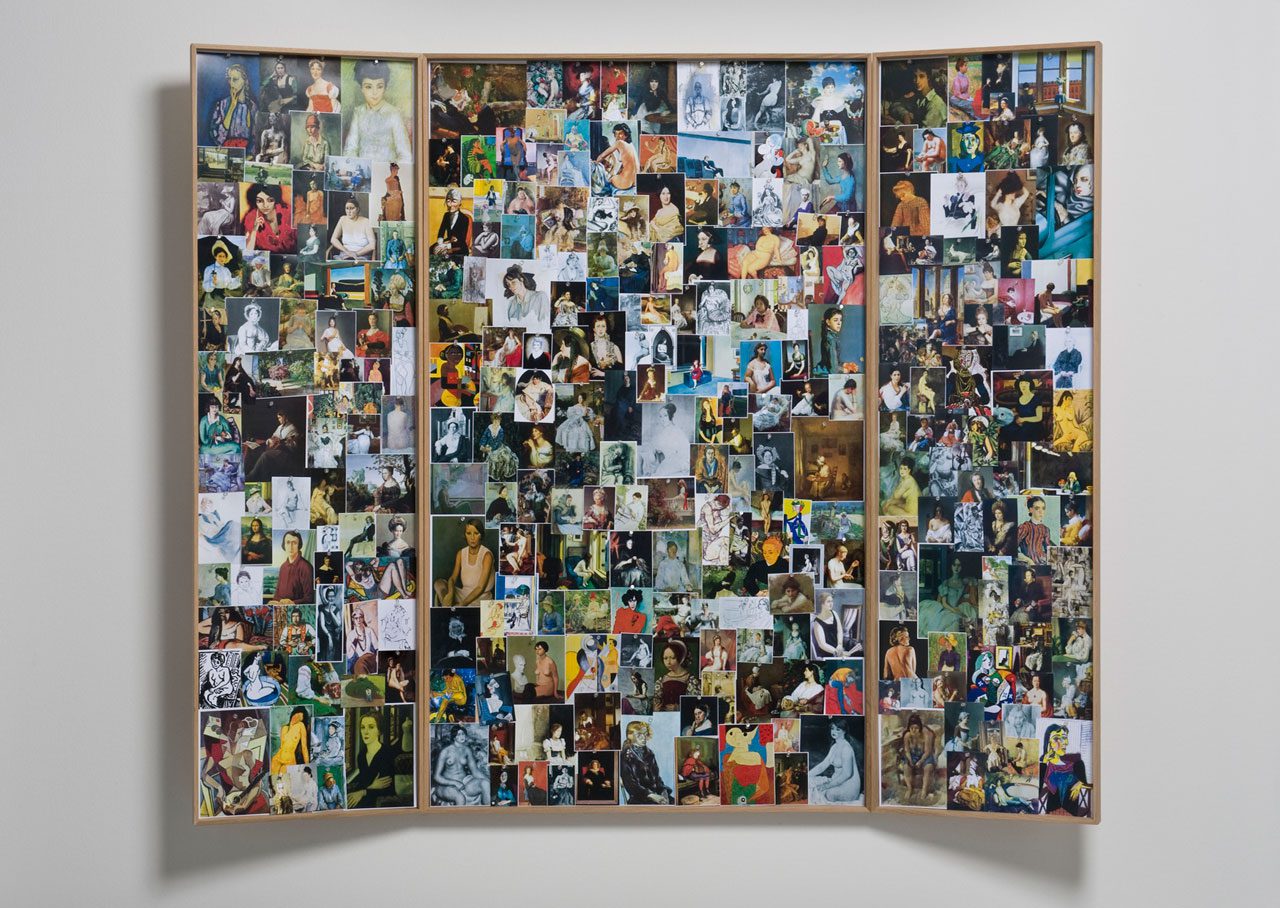
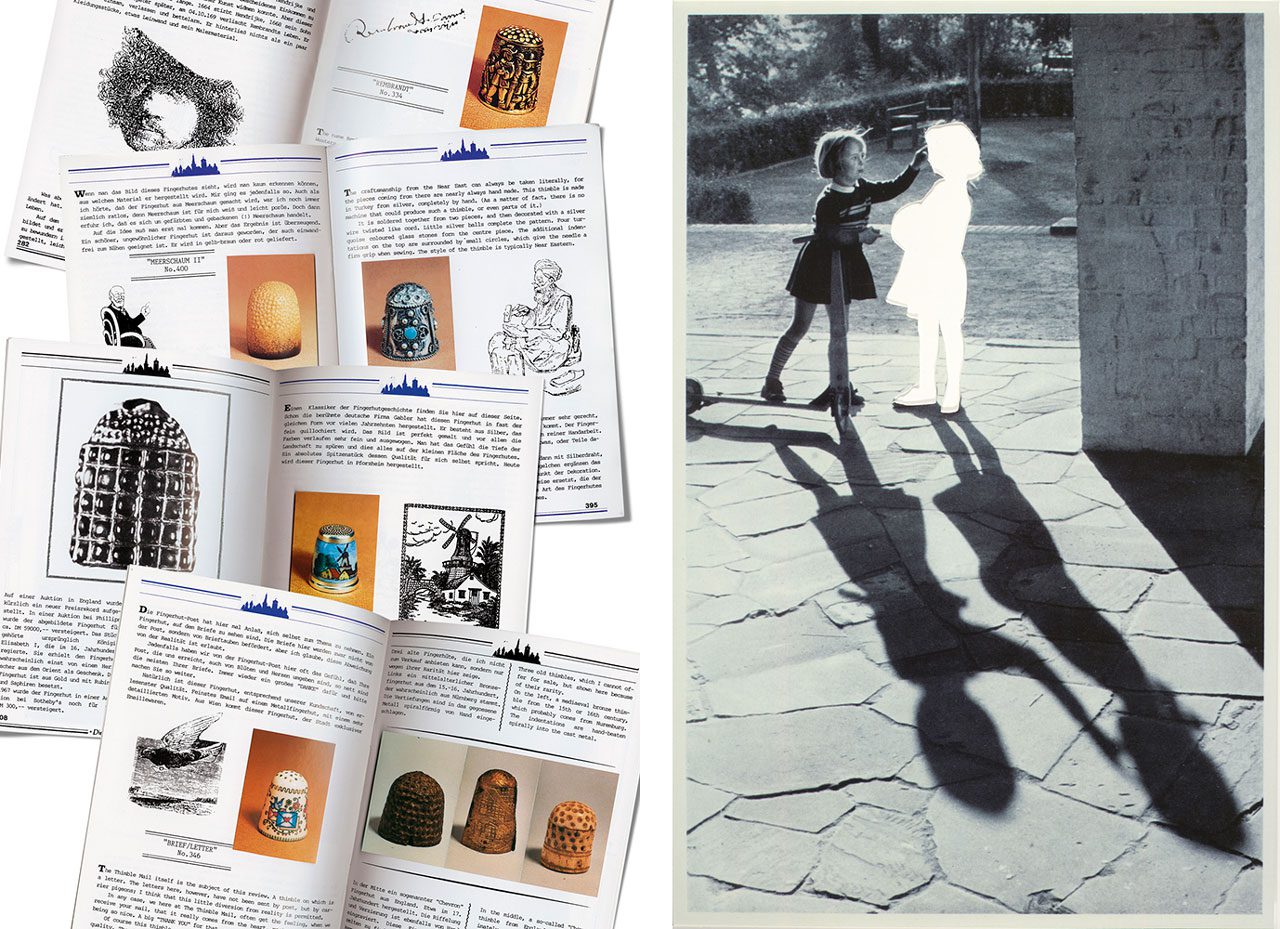
Right: Hans-Peter Feldmann, Two Girls, 1999, digital print partially cut out, 41 x 27 cm, Kunstpalast, Düsseldorf, Photo: Kunstpalast, Düsseldorf – LVR-ZMB – Annette Hiller, © VG Bild-Kunst, Bonn 2025