PRESENTATION: Willie Birch-Up on the Roof
Born in New Orleans and now based in Brooklyn, Willie Birch has devoted his career to illuminating the richness and complexity of Black urban life. His work blends storytelling with visual artistry, weaving together sophisticated portraits and allegorical fables that speak to both personal memory and collective history. Through vibrant figurative paintings and dynamic papier-mâché sculptures, Birch channels the spirit of folk traditions and the rhythm of funk, creating a body of work that is at once deeply rooted in cultural heritage and boldly expressive in contemporary form.
By Dimitris Lempesis
Photo: Fort Gansevoort Archive
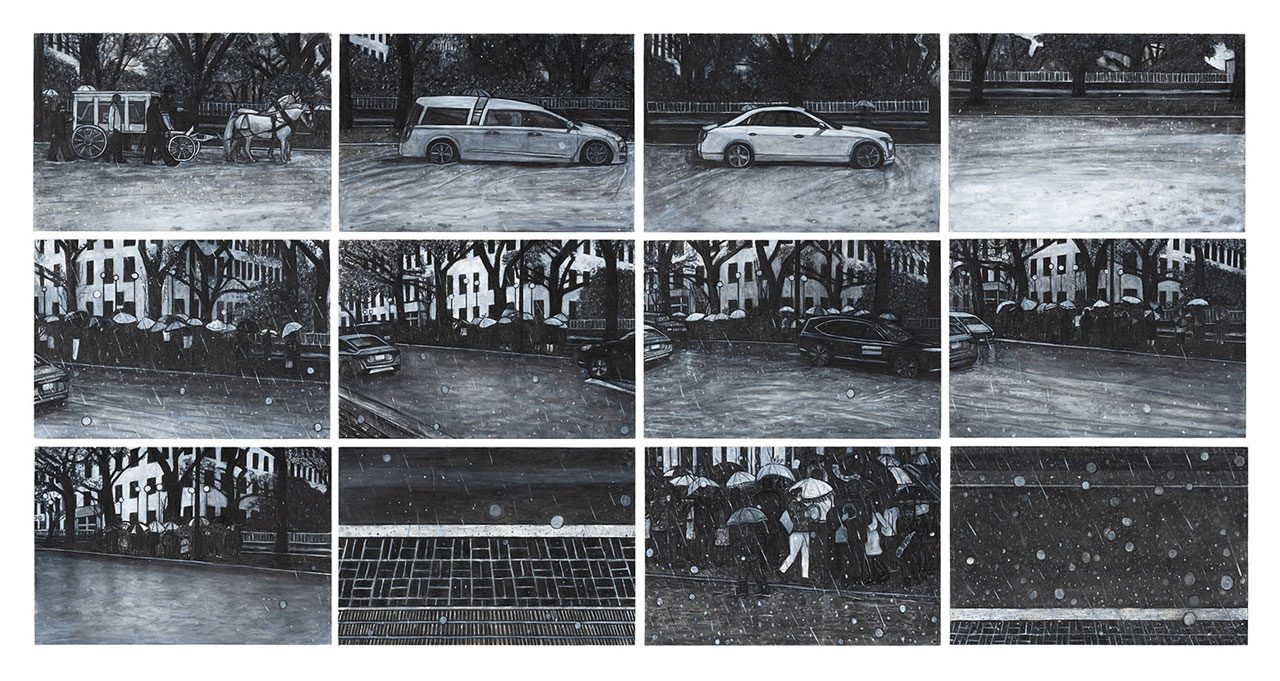
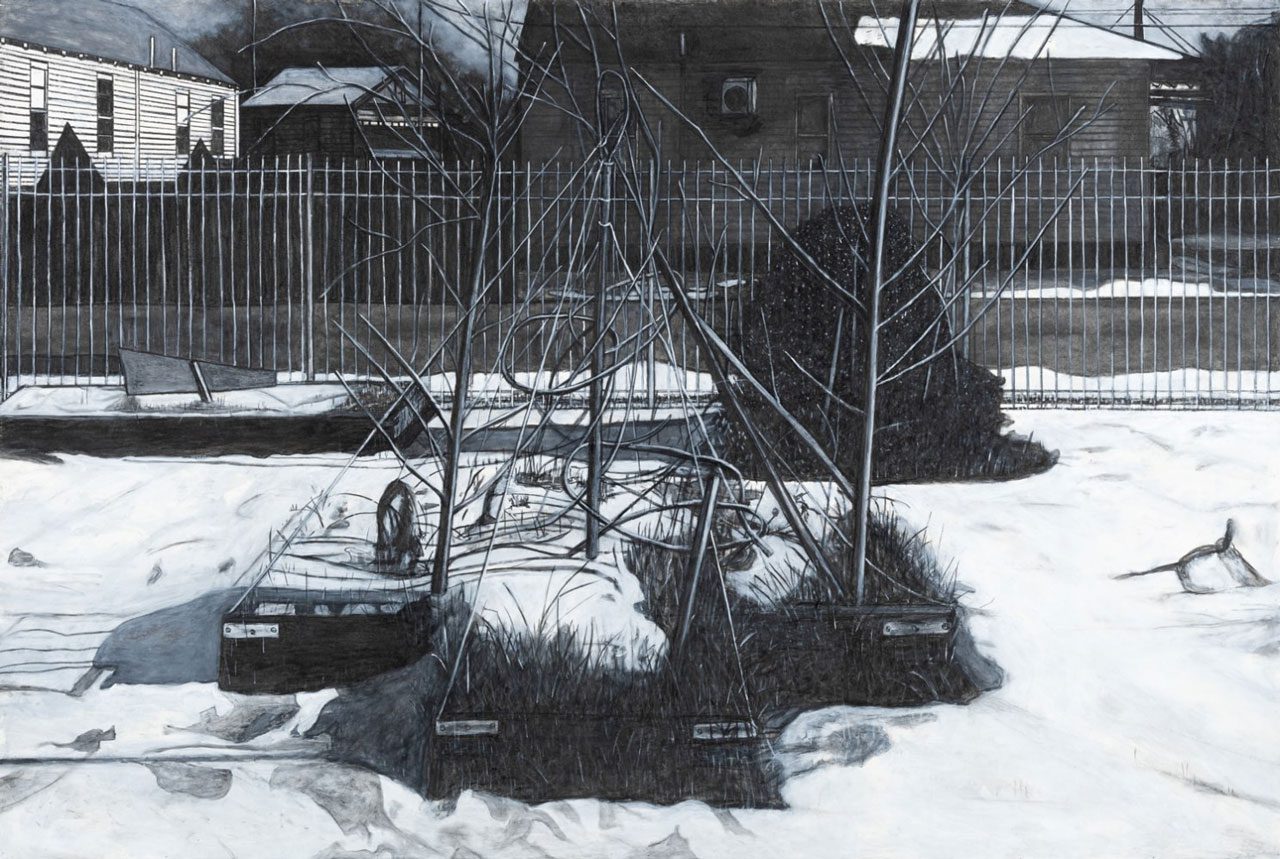
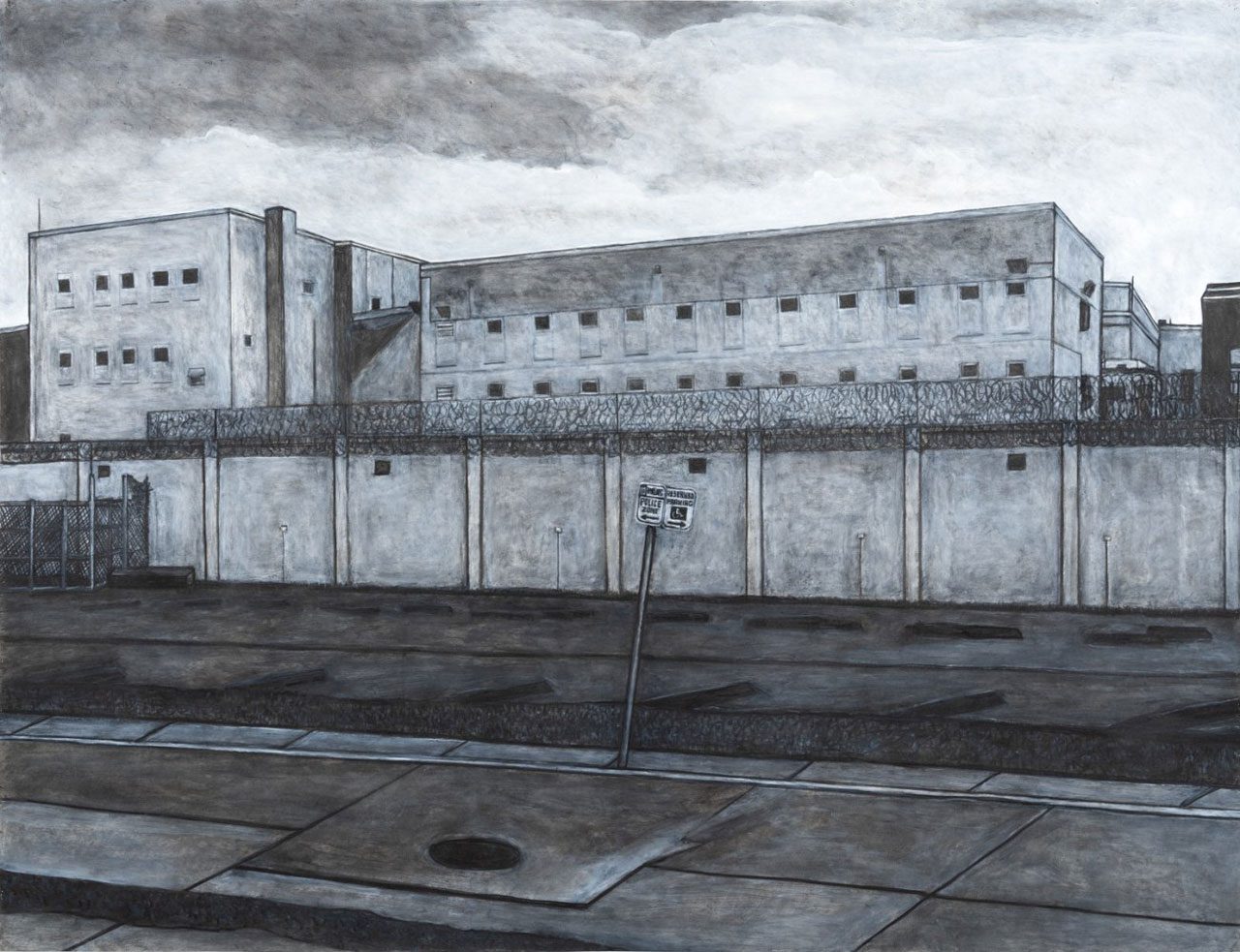
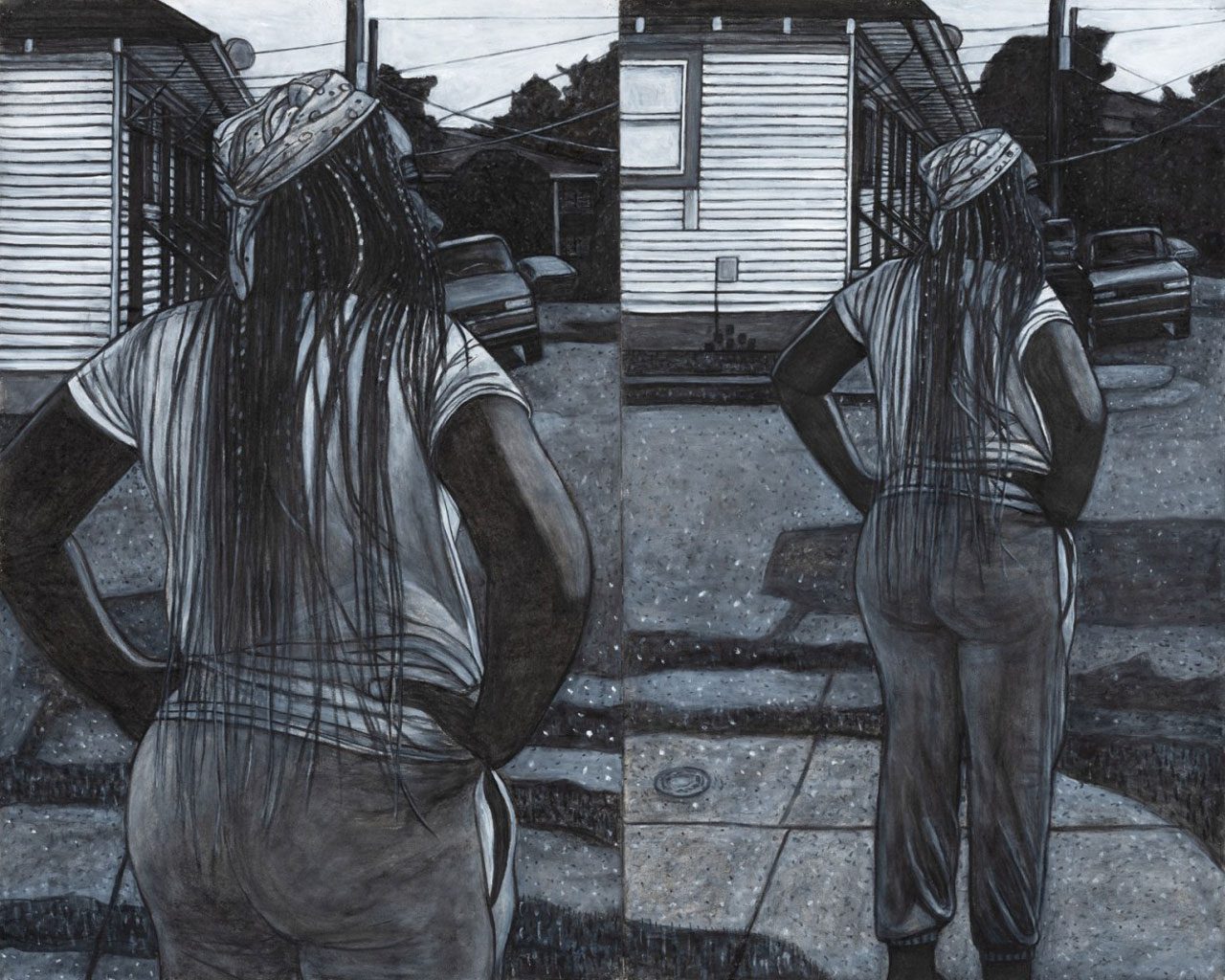
The twelve large-scale paintings that comprise Willie Birch’s solo exhibition “Up on the Roof” mark a new milestone in the artist’s decades-long commitment to visualizing the stories of his community. Shown together for the first time, these works chronicle the people, landscapes, and architectural structures that define Birch’s New Orleans neighborhood, rendered with an intimacy born of deep observation and lived experience. While Birch’s early practice was celebrated for its exuberant palette and bold figurative narratives, the turn of the new millennium brought a profound shift. Around the year 2000, he abandoned color entirely, embracing instead a rigorously restrained strategy of charcoal, graphite, and white acrylic on paper. This monochrome approach—layered, smudged, rubbed, and marked—has since become his signature. In the absence of color, Birch achieves a striking immediacy, one that compels viewers to slow down and attune themselves to texture, light, and form. The results are powerful works that weave together the grand sweep of history and politics with the quiet rhythms of daily life. His pictures are at once documents and allegories, bearing witness to the complexity of the human condition in its sorrow, resilience, and joy. Objects in Birch’s world are never mere objects. A garden gate, a ladder, a trellis, or the siding of a house transforms under his hand into a visual metaphor charged with symbolic resonance. His compositions are dense with references—to the African diaspora and global art history, to the legacies of American politics, and to the cultural vitality of New Orleans. At the same time, they remain profoundly personal: tender testaments to a place and its people, refracted through Birch’s own life experience, and, in turn, rising to embody collective truths. One of the most striking examples of this symbolic layering appears in “Melting Snow #3” (2025), a rare image of New Orleans blanketed by a historic snowstorm on January 21, 2025. In a city more accustomed to subtropical heat than icy weather, the snowfall was both magical and uncanny, a fleeting rupture in the ordinary. Birch captures this moment in his own backyard: blades of grass pierce through melting frost, a triangular trellis hovers above a cross-shaped flower box, and elongated shadows fall across clapboard siding. Yet beneath the quiet beauty lies a somber meditation. The snow gestures toward climate volatility, reminding us of the mounting threats of global warming. The trellis and triangular shadows, meanwhile, allude to the pyramids of Ancient Egypt and, by extension, to the diasporic legacies that shape New Orleans. The cross-shaped planter suggests the crossroads, a place of decision, of endings and beginnings. Snow melts into water, signaling both impermanence and renewal. With its ominous dark sky and fragile glimmers of rebirth, Birch’s composition becomes not only a portrait of a storm, but also a meditation on resilience, transformation, and survival. If “Melting Snow #3” foregrounds the interplay between nature and human resilience, Birch’s monumental twelve-part installation, “Procession for “Kidd” Jordan: A Fitting Farewell” (2023–2024), turns toward cultural memory and collective ritual. Occupying the entire second floor of the gallery, the work serves as an elegiac tribute to the late saxophonist Kidd Jordan, a revered musician and close friend of the artist. In it, Birch captures the singular New Orleans tradition of the jazz funeral, in which mourning and celebration entwine: a brass band leads the “first line” of family and musicians, while the “second line” swells with dancers, revelers, and neighbors. Birch unfolds this procession in a sequence of panels that read from right to left—against the current of Western visual convention, against the flow of traffic, and in tune with the syncopated rhythms of jazz itself. The repetition of figures, rendered in high-contrast black and white, evokes the cadence of drums and the ebb and flow of collective movement. A heavy downpour drenches the crowd, but does not break its spirit; the mourners-turned-celebrants march on, their umbrellas raised in both grief and defiance. The hazy atmosphere and stark tonal contrasts convey Birch’s heightened emotional state, translating sound into vision, rhythm into form. At once intimate and communal, the piece is a love letter to a friend, a city, and a tradition that binds them together. Everyday life, too, finds a place in Birch’s oeuvre. “Two Roofers and a Ladder” (2022) turns its attention to the unsung laborers who build and sustain the city. Two workers, paused in a moment of rest, perch atop a house beneath the searing Southern sun. Their wide-brimmed hats recall 19th-century French realism, while the rhythmic repetition of horizontal lines in the ladder and siding suggests both the cadence of manual work and the pulse of New Orleans jazz. In their crouched poses and stoic endurance, the roofers echo the peasant figures of Gustave Courbet’s “The Stone Breakers” (1849), grounding Birch’s vision in a lineage of art that dignifies labor and exposes its conditions. Yet unlike Courbet’s anonymous figures, Birch’s roofers are imbued with a heightened perspective, literal and metaphorical. Elevated above the city, they see more than others can. In their presence, Birch suggests, lies the wisdom of experience and the quiet heroism of survival. Taken together, the works in “Up on the Roof” reaffirm Willie Birch’s singular voice in American art. His monochrome worlds are not stripped of color but saturated with meaning. They hold within them the pulse of jazz and the scars of history, the intimacy of neighborhood life and the sweep of global change. Rooted deeply in New Orleans, yet resonant far beyond it, Birch’s art reminds us that the ordinary is never merely ordinary, and that in every roof, ladder, garden, and procession lies the possibility of beauty, resilience, and truth.
Photo: Willie Birch, Melting Snow #3, 2025, Acrylic and charcoal on paper, 60 x 90 in, © Willie Birch, Courtesy the artist and Fort Gansevoort
Info: Fort Gansevoort, 5 Ninth Avenue, New York, NY, USA, Duration: 11/9-8/11/2025, Days & Hours: Tue-Sat 10:00-18:00, www.fortgansevoort.com/
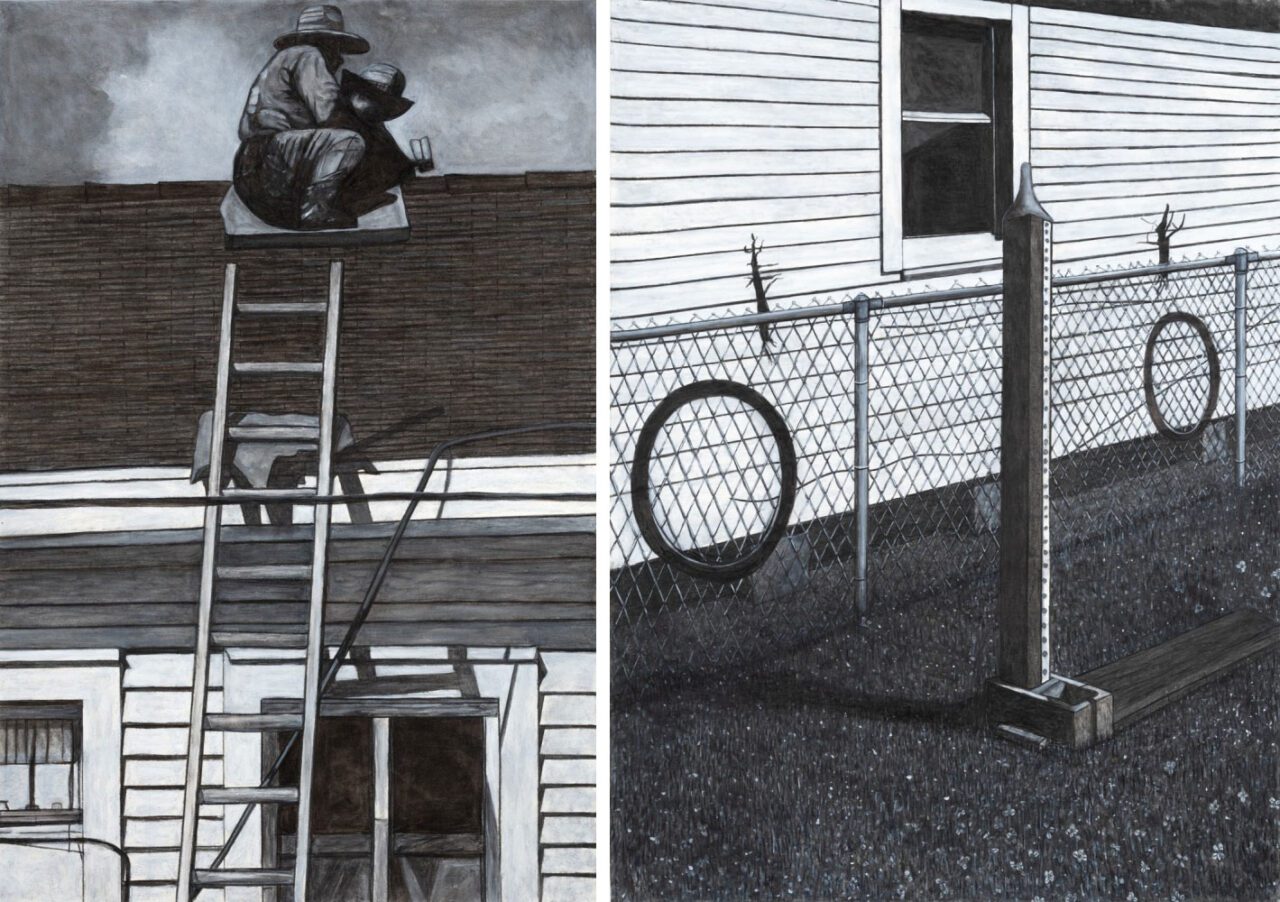
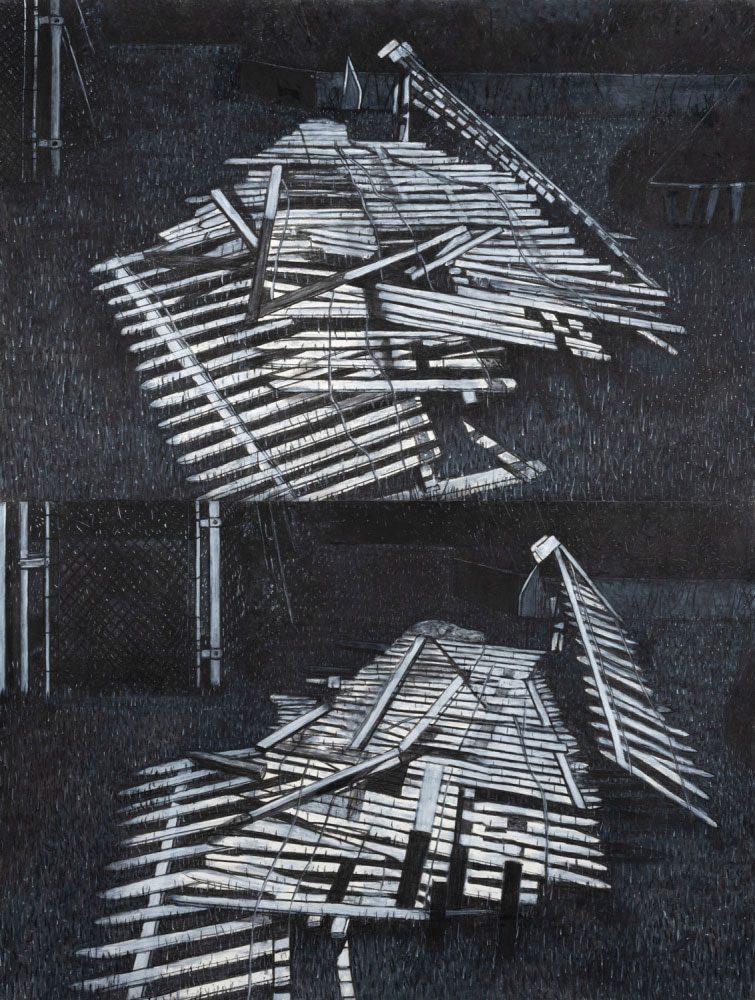
Right: Willie Birch, Remembering Egypt: For Marina, 2024, Acrylic and charcoal on paper, 81 x 60 in, © Willie Birch, Courtesy the artist and Fort Gansevoort

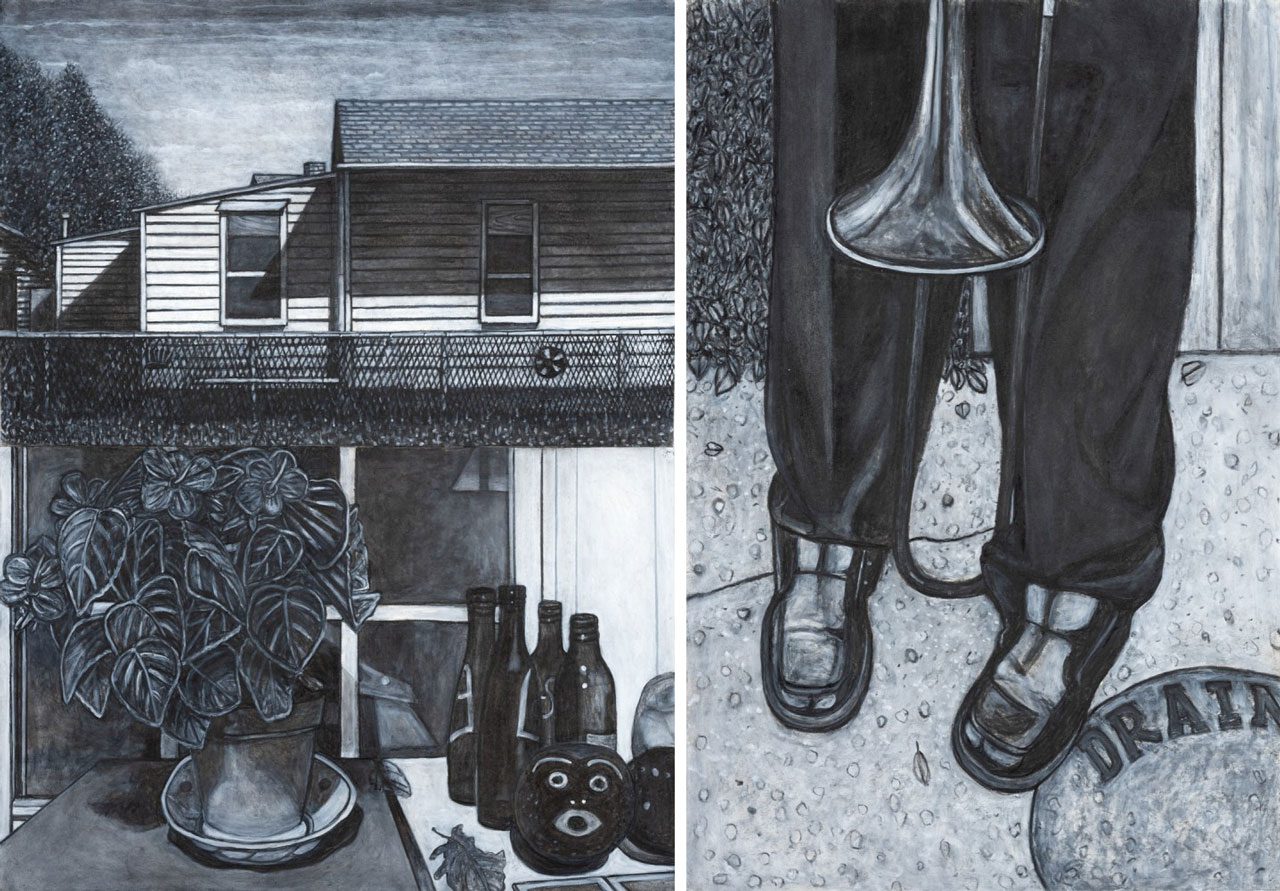
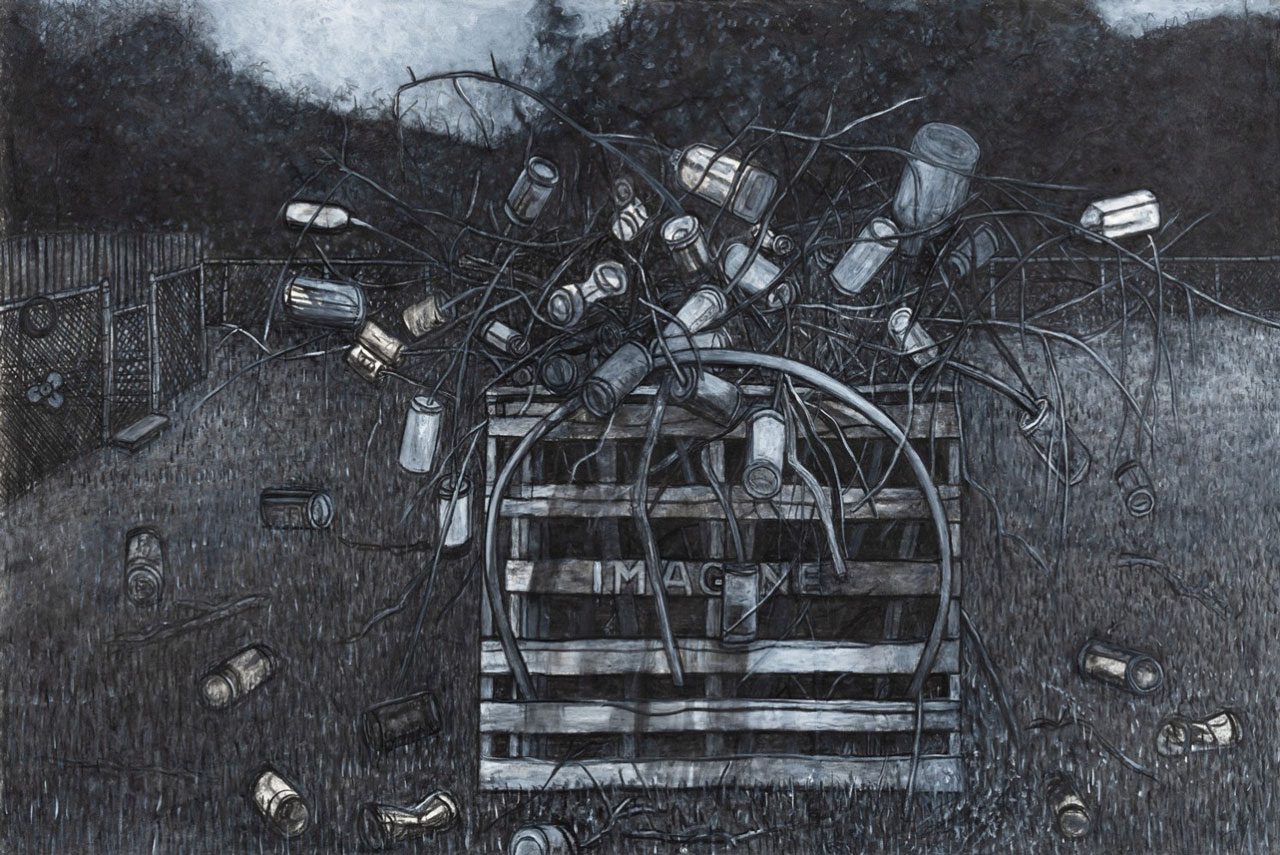
Right: Willie Birch, In the Tradition, 2015, Acrylic and charcoal on paper, 36 x 24 in, © Willie Birch, Courtesy the artist and Fort Gansevoort