
PRESENTATION: Lee Kang So-Dwelling in Mist and Glow
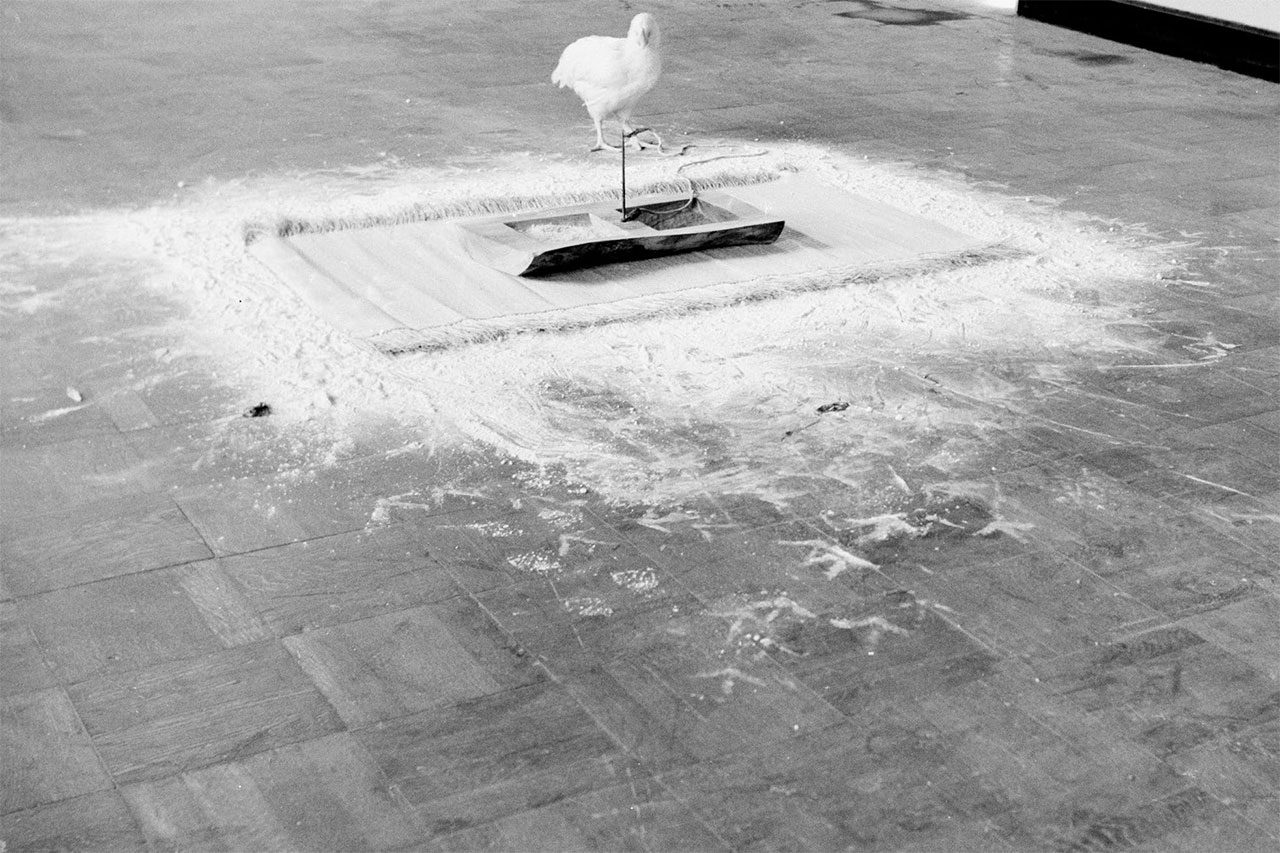
Lee Kang So is one of Korea’s foremost contemporary artists. Since the 1970s he has worked across photography, painting, printmaking, sculpture, installation and performance to develop a highly experimental practice that has profoundly shaped the evolution of Korean contemporary art. He began his career staging avant-garde performances and installations, and his international reputation was cemented at the 9th Paris Biennale in 1975 when he tethered a live chicken to a wooden feeder surrounded by powdered chalk. The traces of its white dusty footprints were conceived as a form of mark-making that transcended the autonomy of the artist to express the transience of our human presence in an ever-changing world.
By Efi Michalarou
Photo: Thaddaeus Ropac Gallery Archive
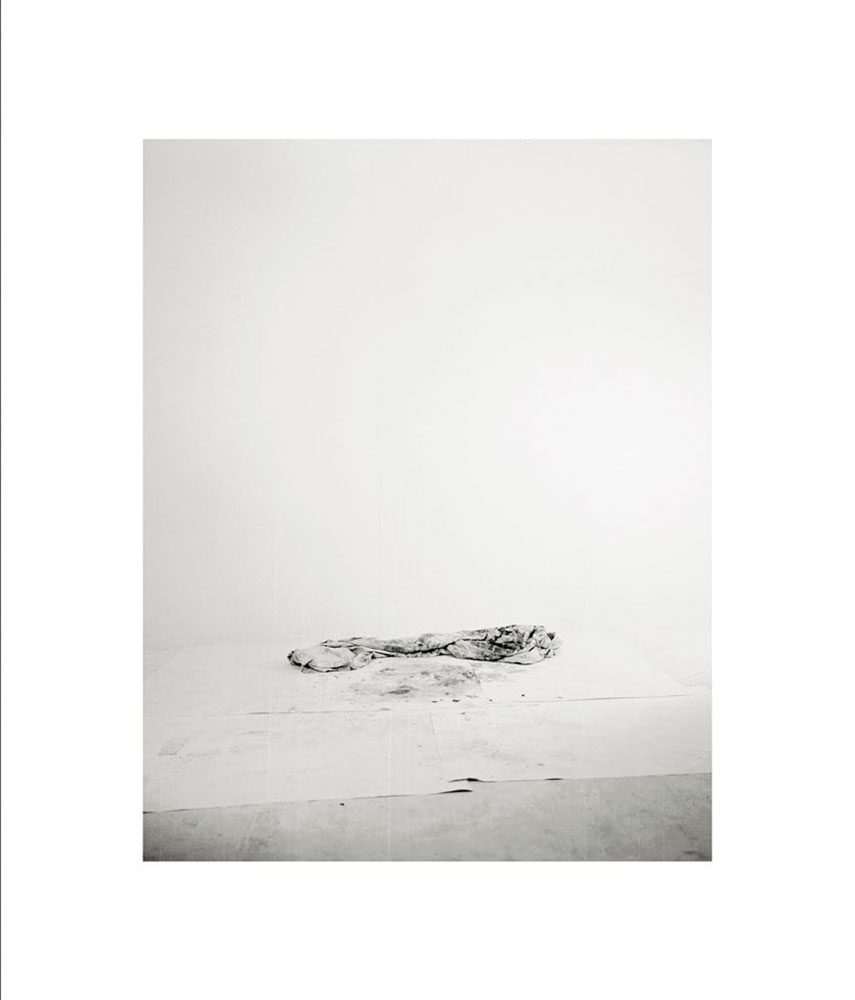
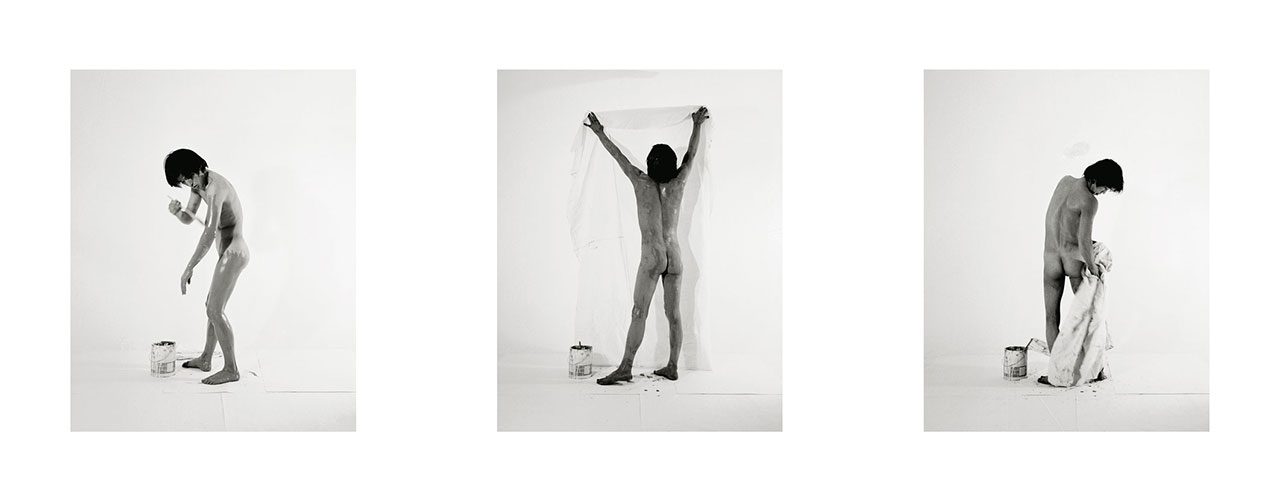
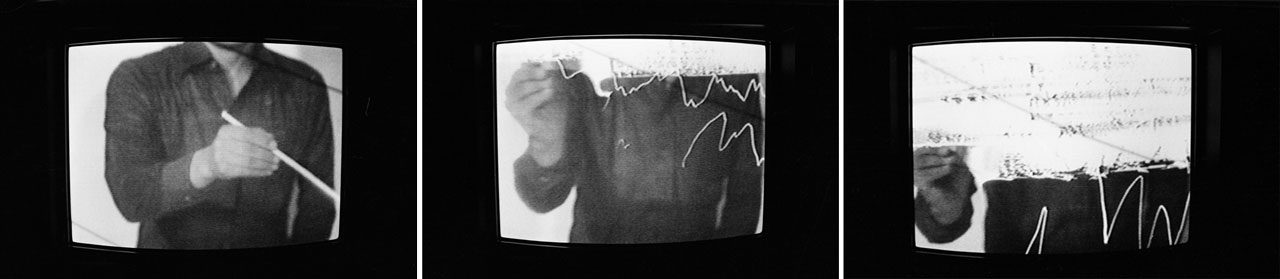
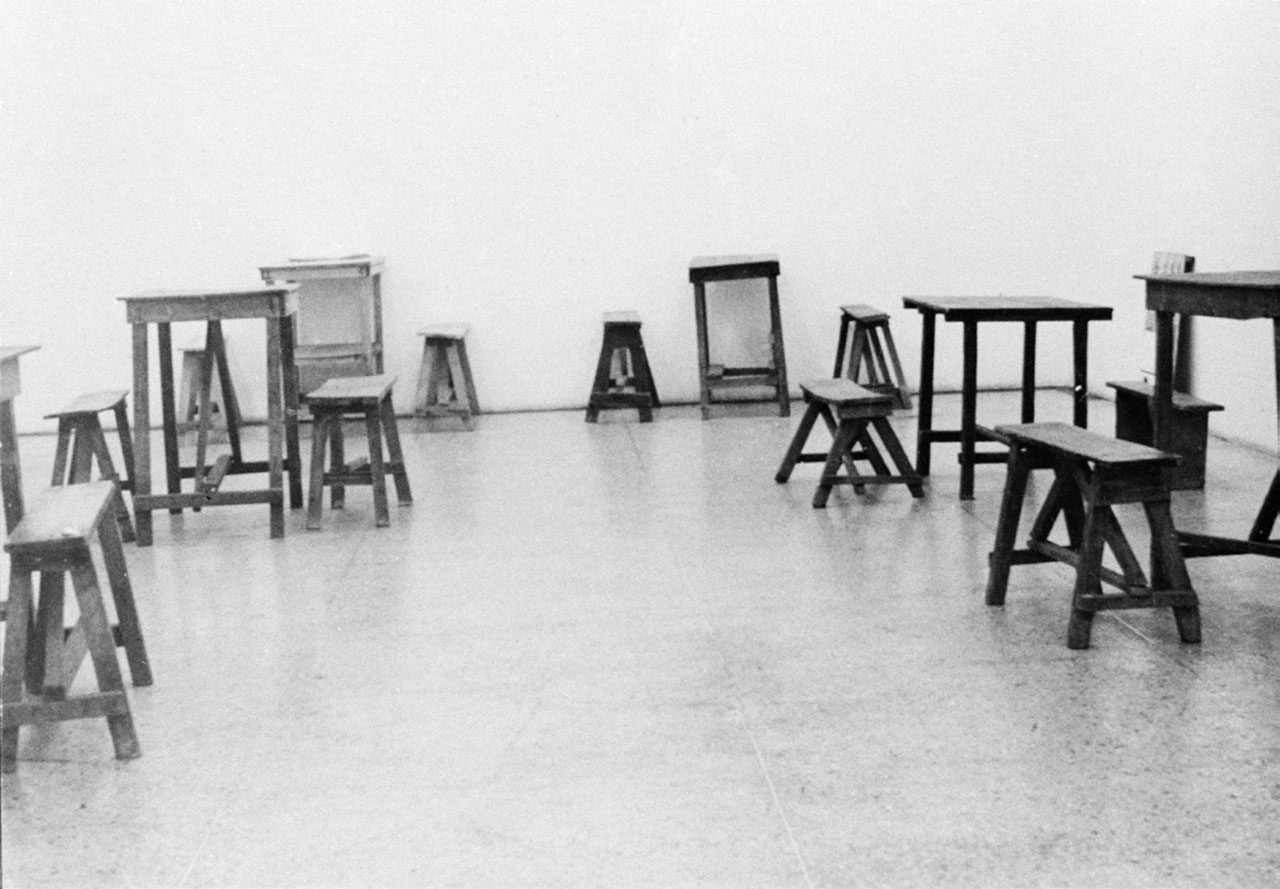
On the fiftieth anniversary of the performance that propelled him to international prominence at the 9th Paris Biennale in 1975, Korean artist Lee Kang So returns to the city that first embraced his radical vision. His new exhibition, “Dwelling in Mist and Glow” at Thaddaeus Ropac Paris Marais, revisits this decisive moment while unfolding the breadth of an artistic practice that has continually interrogated absence, transience, and the fragile poetics of existence. At the heart of the exhibition is the legendary performance “Untitled-75031”, in which Lee handed authorship to an unlikely collaborator: a live chicken. Tethered to a wooden feeder encircled with powdered chalk, the animal’s hesitant wanderings inscribed delicate, concentric traces across the gallery floor. What began as a simple gesture—granting agency to a non-human presence—unfurled into a meditation on freedom and limitation, the ephemeral and the enduring. At the Biennale in 1975, it stunned audiences with its audacity; fifty years later, on 12 September 2025, the work will be performed once more in Paris. Yet, as always, the chicken departs, leaving only dusty footprints, spectral evidence of what was. Lee’s practice has long hovered between presence and disappearance, event and residue. A leading figure of Korea’s 1970s avant-garde and closely aligned with Process Art, he dismantled the sanctity of the artist’s hand to reveal instead the quiet, immaterial rhythms shaping human and non-human existence. The inclusion of historic photographs documenting Untitled-75031 underscores this concern: the traces of the past not only recall what was lost but also invite viewers to reimagine the work anew. “I think that’s what the world is like,” Lee reflects, “shaped more by what is absent than what is visible.” This dynamic between event and afterlife pervades the exhibition. Black-and-white photographs from “Painting (Event 77-2)” capture Lee painting his own nude body before wiping himself down with a canvas cloth. The cloth, transformed into a static sculptural relic, functions as what the artist calls a “tactile portrait”—a material memory of ephemeral gestures. The piece resonates with Yves Klein’s Anthropometries yet remains distinctly Lee’s, balancing intimacy with estrangement, ritual with vulnerability. His experiments extended into new media. In “Painting 78-1” (1977), his first video work, Lee positioned a pane of glass before a camera, filming himself as he painted upon it. The viewer witnesses not the finished canvas but the act itself, the artist gradually disappearing behind accumulating strokes. This inversion transforms painting into an allegory of concealment and erasure. Elsewhere, in his 1973 installation “Disappearance””, Lee transplanted the entirety of a local tavern—furniture, stains, and all—into a Seoul gallery. Visitors were invited to inhabit this dislocated space, its surfaces bearing the scars of past conviviality. Here, the artist asked: where does meaning reside—in objects themselves, or in the invisible histories they carry? Lee’s questioning of painting was equally material. Two works in hemp from 1975, created during his time in Paris, embody his engagement with the French Supports/Surfaces movement. By pulling apart the threads of the hemp—a traditional Korean support—he destabilized the very fabric of painting, opening cavities and tensions within its weave. These works anticipate his later painterly explorations while situating his practice within both Korean traditions and global avant-garde dialogues. From the 1980s onward, Lee returned to the brush, but in ways deeply marked by his conceptual investigations. His canvases depict deer, boats, and landscapes in spare, gestural strokes that hover between representation and abstraction. Over time, these motifs dissolved further, echoing the restrained calligraphy of East Asian literati painting and reflecting an ever-deepening sensitivity to the ineffable forces of nature. The exhibition’s title, Dwelling in Mist and Glow”, borrows from a 16th-century poem by Confucian scholar Yi Hwang: “Dwelling in mist and glow / Befriending wind and moon.” Much like Yi’s retreat to the Andong mountains, Lee’s art articulates a form of attunement—a merging with the natural world rather than a mastery over it. Taken together, the works on view suggest what curator Lóránd Hegyi has described as Lee Kang So’s engagement with “the essential, basic questions of the human orientation in the universe.” In relinquishing artistic authority—whether to a chicken, to the stains of a tavern, or to the dissolving gestures of brush and ink—Lee destabilizes conventional notions of authorship and permanence. His works open onto what he once described at the Paris Biennale as “an open structure that reveals the normally invisible order and relationships within the universe.”Half a century on, Lee Kang So’s return to Paris feels not simply commemorative but profoundly resonant. His practice remains a reminder that art is less about the assertion of presence than about making visible the unseen, the fleeting, the nearly forgotten. In the chalky footprints of a chicken, in the stains of hemp threads, in the dissolving brushstrokes of a deer—Lee Kang So invites us to dwell in mist and glow, to inhabit the fragile beauty of transience itself.
Photo: Lee Kang So, Untitled-75031, 1975 (printed in 2016), Digital chromogenic print. 40 × 60 cm (15.75 × 23.62 in), © Lee Kang So, Courtesy the artist and Thaddaeus Ropac Gallery
Info: Thaddaeus Ropac Gallery, 7 rue Debelleyme, Paris, France, Duration: 12/9-11/10/2025, Days & Hours: Tue-Sat 10:00-19:00, https://ropac.net/
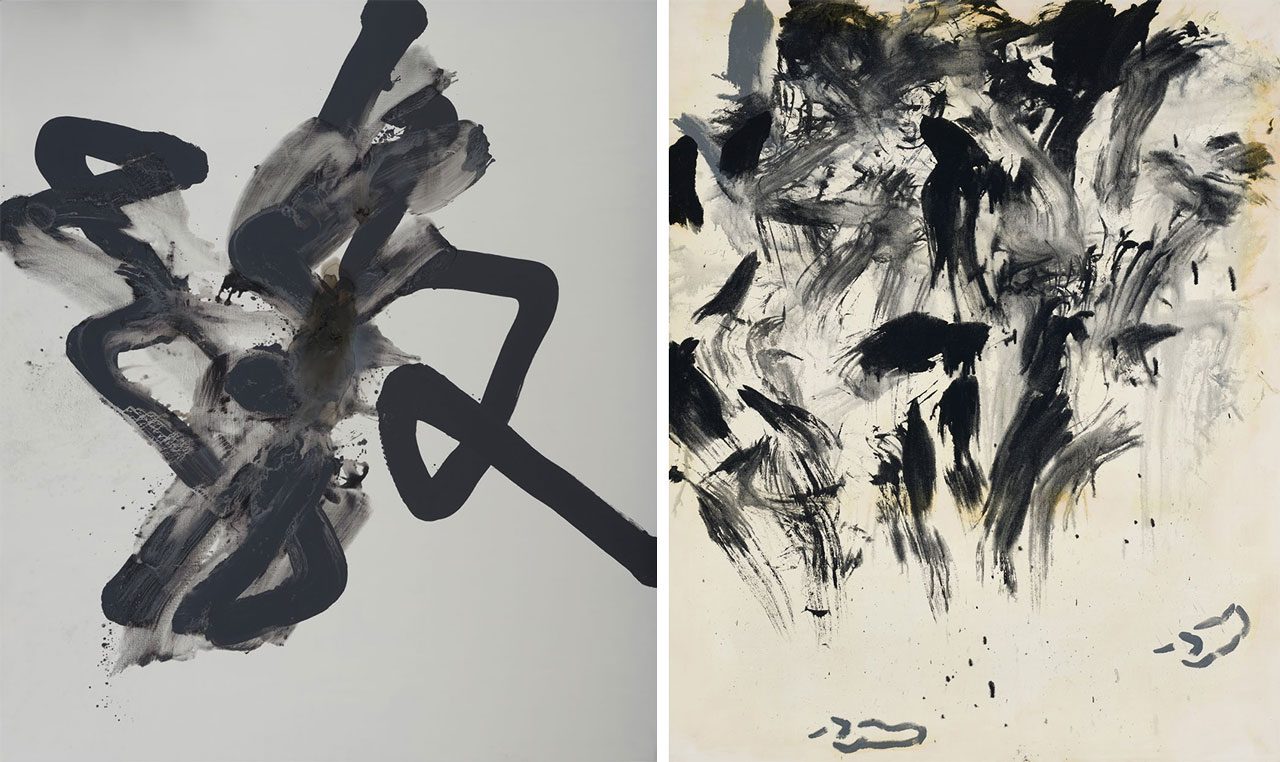
Right: Lee Kang So, Island-99165, 1999, Acrylic on canvas. 162 × 130.3 cm (63.78 × 51.3 in), © Lee Kang So, Courtesy the artist and Thaddaeus Ropac Gallery