ART CITIES: N.York-Robert Longo
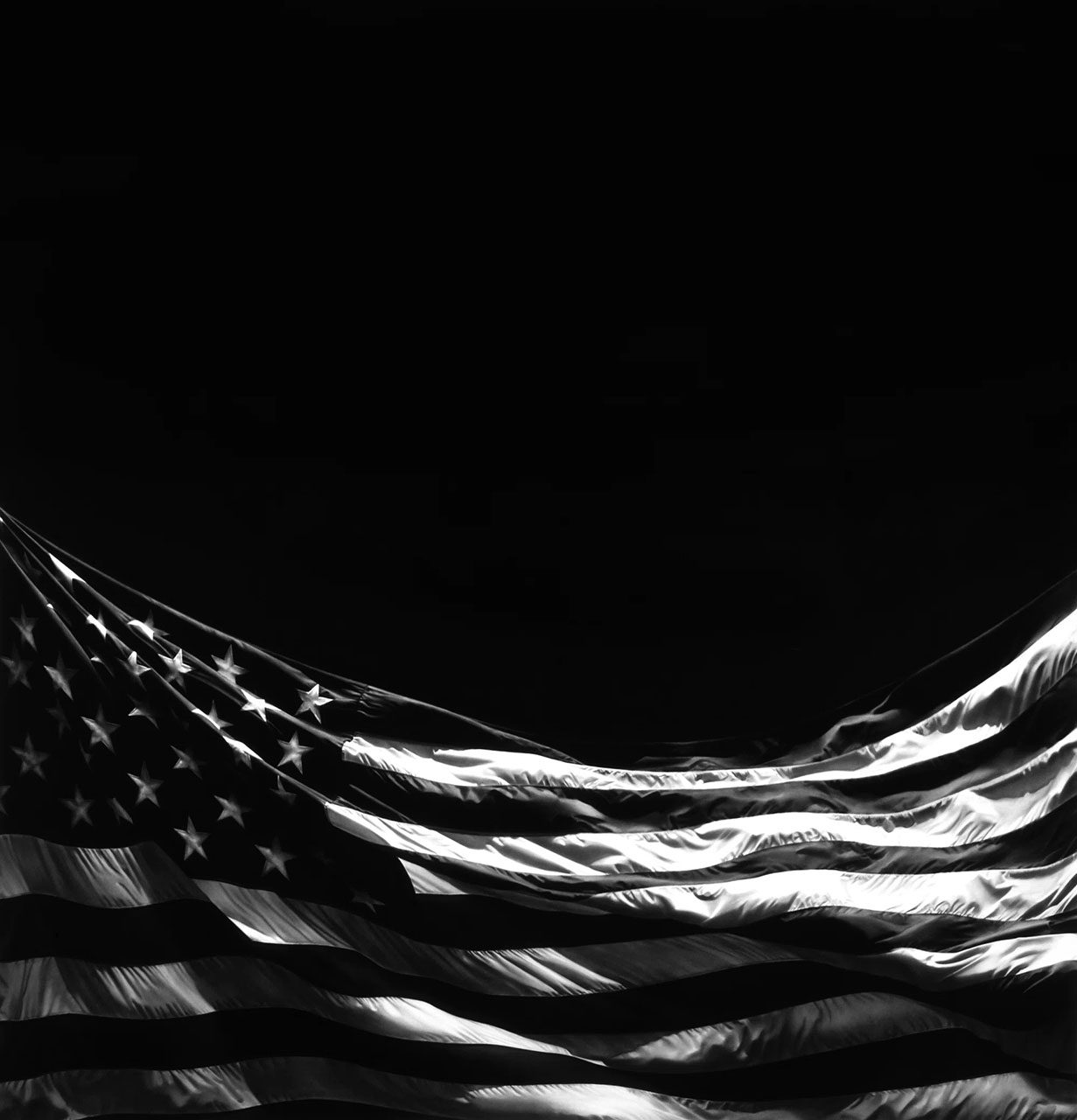
Robert Longo, who rose to prominence in the 1980s with his iconic “Men in the Cities” series, has built his career on transforming familiar images into striking large-scale works. His preferred medium—charcoal—allows him to turn news photographs and cultural touchstones into meticulously rendered drawings that resemble black-and-white film stills. By slowing down the fleeting nature of contemporary imagery, Longo invites viewers to dwell on events that often pass too quickly through the endless churn of the media cycle.
By Dimitris Lempesis
Photo: Pace Gallery Archive
Robert Longo’s monumental solo exhibition “The Weight of Hope” opens across four floors of Pace Gallery’s Chelsea flagship, filling the vast space with a body of work that spans more than a decade. It is not merely a display of drawings, films, and sculptures—it is a meditation on history, image-making, and the uneasy space between despair and resilience. With 26 monumental charcoal drawings, three films, three sculptures, and 33 studies, Longo has crafted a sweeping, multi-sensory environment that demands both intellectual engagement and emotional reckoning. The “Weight of Hope” emerges as a conceptual sequel to Longo’s recent exhibition “The Acceleration of History” at the Milwaukee Art Museum. Where the earlier show grappled with the disorienting velocity of information and the vertigo of global upheaval, “The Weight of Hope” slows the tempo. It invites viewers to dwell in stillness, to sit with images that are familiar yet transformed. The focus shifts from acceleration to endurance, from chaos to the tenuous possibility of light breaking through darkness. For Longo, the artist is not a passive observer but an active chronicler of the times. He has often described artists as “reporters,” insisting that their moral imperative is to preserve images of our fractured present—not simply as documents of despair, but as seeds for future change. This sense of responsibility underpins every work in the exhibition. Longo’s subjects are drawn from both global crises and intimate human experiences. His vast charcoal drawings present images of civil unrest, natural disasters, environmental devastation, and political violence. Some of the most haunting works reference the January 6 attack on the U.S. Capitol, the Black Lives Matter protests, and scenes of collective mourning. These are images many have seen in headlines, television broadcasts, and social media feeds—often consumed in seconds and just as quickly discarded. But in Longo’s hands, they are reborn. Using charcoal—a medium historically associated with sketching and impermanence—he creates astonishingly detailed, photorealistic works that feel monumental and timeless. Each piece is a process of slowing down: for the artist, who spends countless hours layering light and shadow; and for the viewer, who is invited to linger in silence, to look with depth rather than glance with speed. Light and darkness are Longo’s twin instruments. A single candle can glow like a beacon against a void; the turbulence of a wave can become both terrifying and sublime. His mastery lies not only in technical precision but also in his ability to charge images with emotional weight. Each drawing reads like an elegy, transforming fleeting media snapshots into meditations on collective memory and human fragility. Though his charcoal works are the anchor of the exhibition, “The Weight of Hope” extends into multiple mediums. Longo’s sculptures, forged from heavy, often dark materials, embody the weight of history itself—objects that seem to carry both permanence and burden. His films add yet another dimension, interrogating the mechanics of vision: how images are made, consumed, and embedded into consciousness.
Together, the drawings, films, and sculptures form a dialogue about perception and responsibility. They raise urgent questions: What does it mean to look? What is the role of the image in an age of saturation? How can art counter the numbing effects of repetition and the erosion of empathy? Longo does not offer simple answers; instead, he stages an environment where such questions are unavoidable. The installation itself underscores the gravity of the work. Spanning the first, second, third, and seventh floors of Pace’s building—as well as exterior spaces—the exhibition unfolds as a journey through layered emotional registers. Visitors encounter moments of confrontation, reflection, and quiet resilience. Each floor becomes a chapter in a larger narrative, guiding viewers from the turbulence of global crisis toward the fragile possibility of renewal. Scale, for Longo, is never a matter of spectacle alone. His monumental drawings are not meant to overwhelm but to arrest. Their size insists on presence: you cannot glance away; you must stand before them, breathe with them, and allow them to speak. In this way, the architecture of the gallery becomes part of the artwork, shaping how viewers move, pause, and absorb. What sets Longo apart is the fusion of technical mastery with profound emotional resonance. At first glance, his charcoal drawings may be mistaken for photographs, yet upon closer inspection, the texture of the medium reveals itself—layers of dust, smudges of shadow, painstaking crosshatching of light. This tension between precision and touch is what animates the work. A crashing wave rendered in charcoal becomes a metaphor for both destruction and renewal. A cathedral illuminated in darkness becomes a testament to faith and fragility. A sea of protestors, frozen in graphite tones, becomes a monument to collective courage. Longo captures the paradoxes of the human condition with clarity and compassion. By resisting the ephemerality of digital culture, Longo restores gravity to images that risk being lost in the relentless flow of screens. His works remind us that looking is not passive but active—that to witness is to carry responsibility. Ultimately, “The Weight of Hope” is more than an exhibition of art objects; it is a meditation on our shared moment in history. The title itself captures the paradox at the heart of the show: that hope, far from being a light and effortless sentiment, often feels heavy, burdened with responsibility and endurance. Yet it remains essential, the very thing that allows survival in times of despair. Longo’s works do not deny crisis or gloss over pain. They confront violence, fragility, and injustice with unflinching clarity. Yet they also refuse surrender to despair. In their scale, detail, and insistence on presence, they create a space where grief can be processed, injustice reckoned with, and resilience imagined. Through charcoal, film, and sculpture, Longo positions art as both witness and beacon. His works hold up a mirror to our turbulent world while offering the possibility—however tenuous—of light within the shadows. The Weight of Hope asks us to endure, to remember, and above all, to envision.
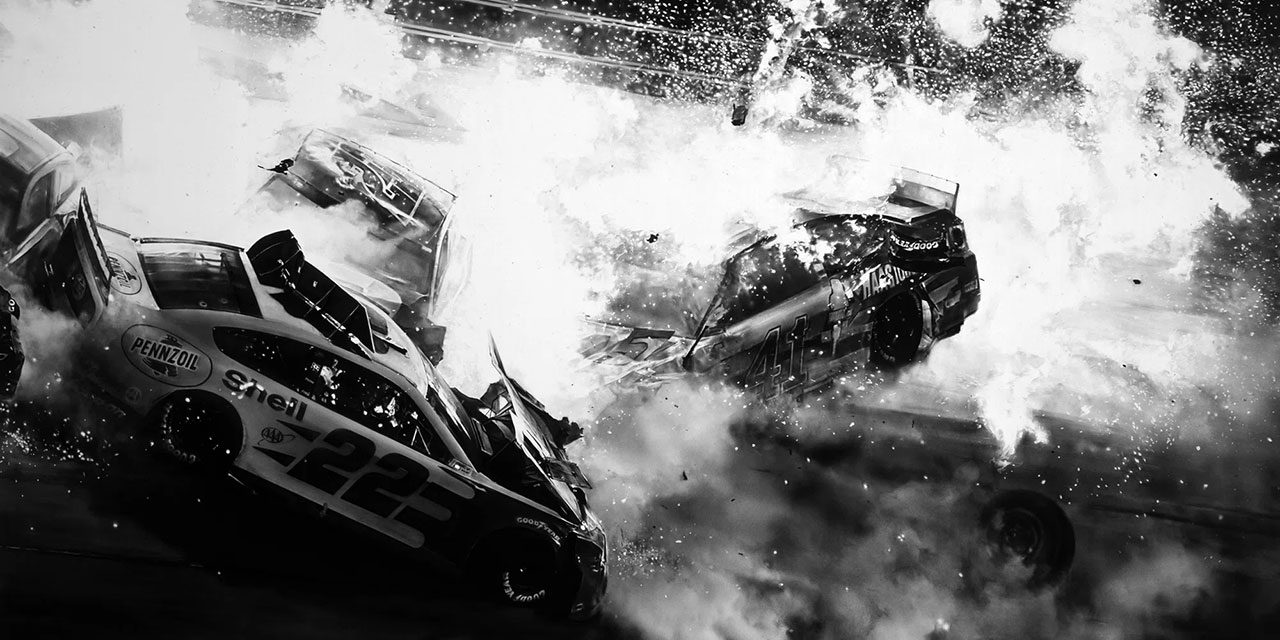
Photo: Robert Longo, Untitled (Daytona Crash), 2025 © Robert Longo / Artists Rights Society (ARS), New York, Courtesy the artist and Pace Gallery
Info: Pace Gallery, 540 West 25th Street, New York, NY, USA, Duration: 11/9-25/10/2025, Days & Hours: Tue-Sat 10:00-18:00, www.pacegallery.com/