PRESENTATION: Steven Parrino
Steven Parrino is best known for his signature “misshaped” monochromes with slashed, torn, or twisted canvases. He was one of the most influential artists of the New York art scene since the late 1980s.A pioneer in performance and video art, he approached all of his work with a radicalism born out of a deep understanding of the history of painting and the avant-garde.
By Efi Michalarou
Photo: Gagosian Archive
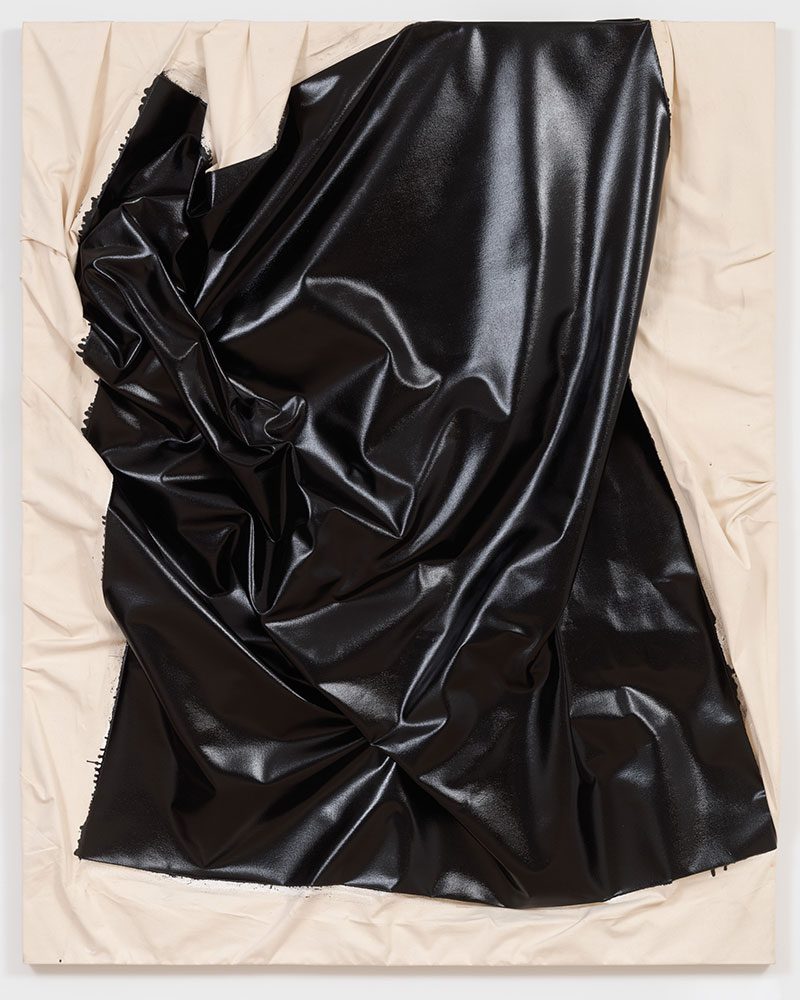
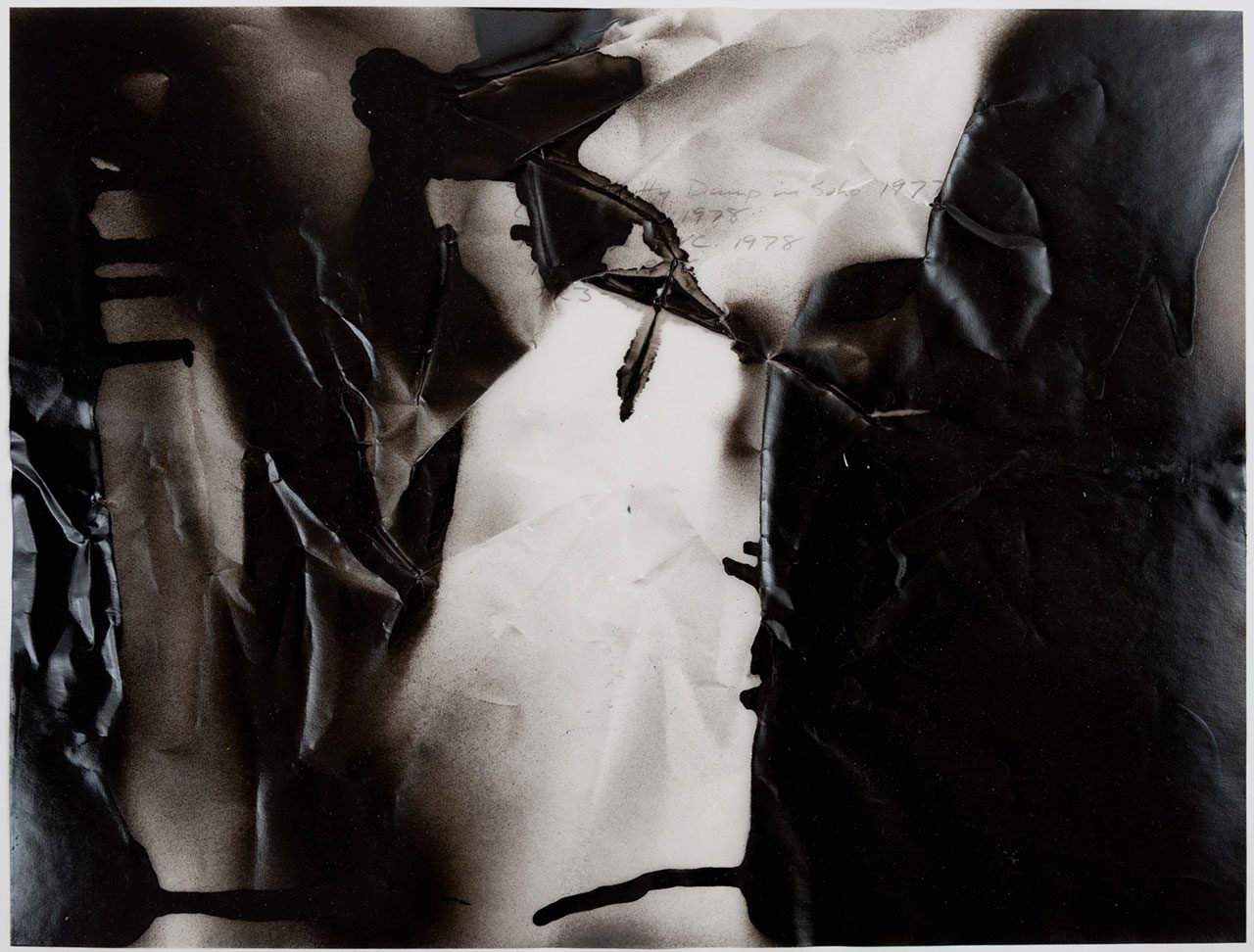
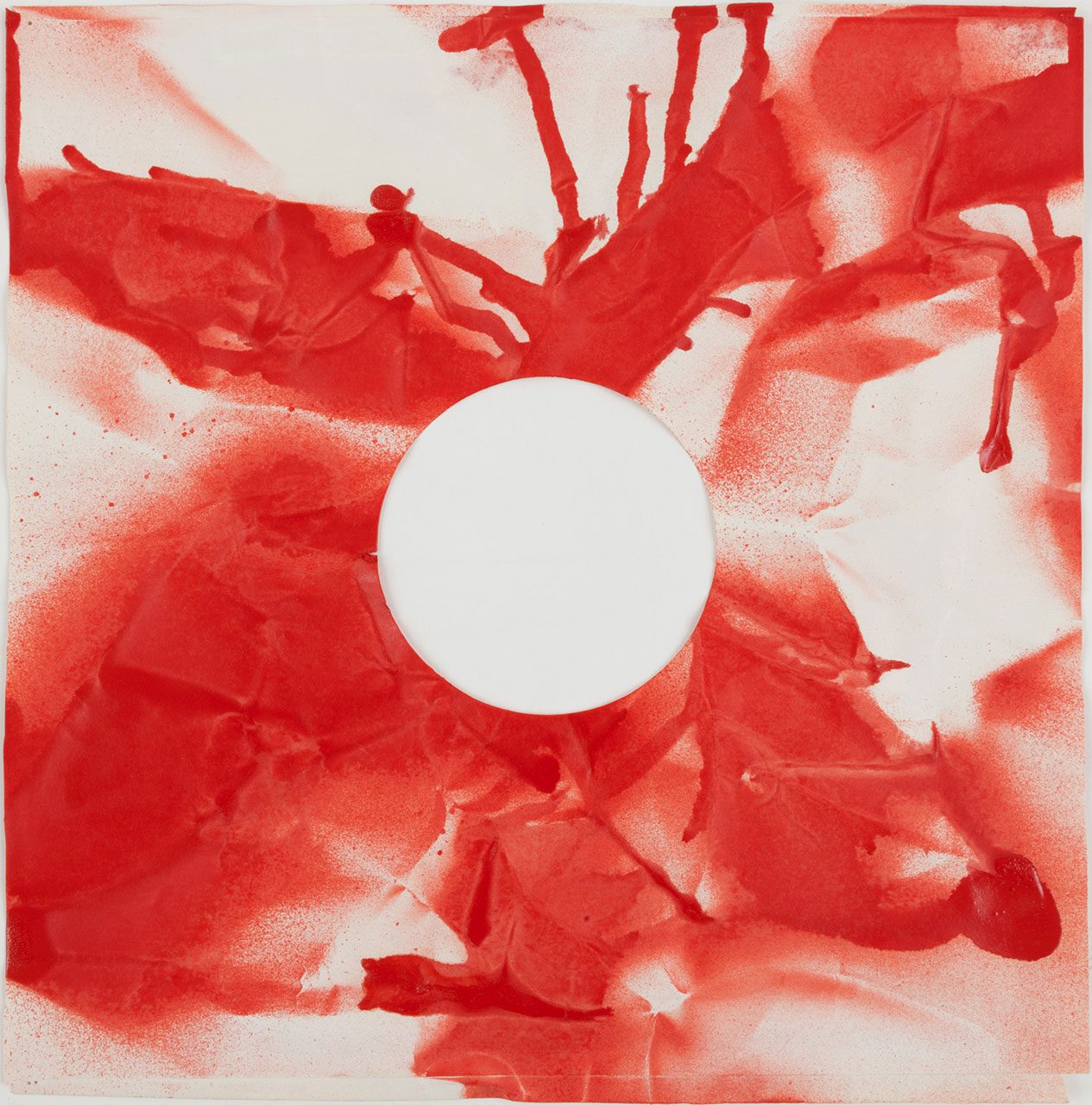
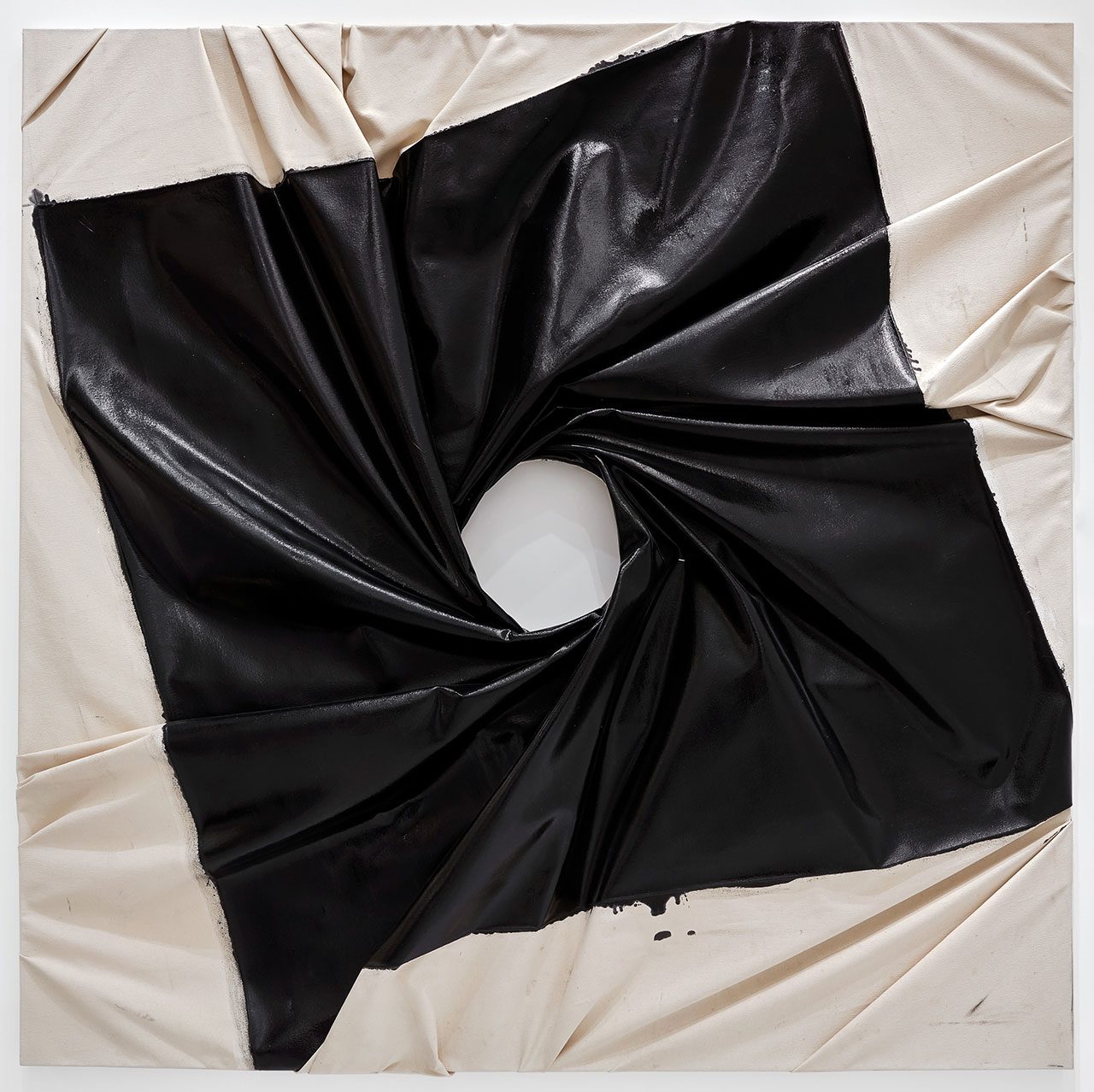
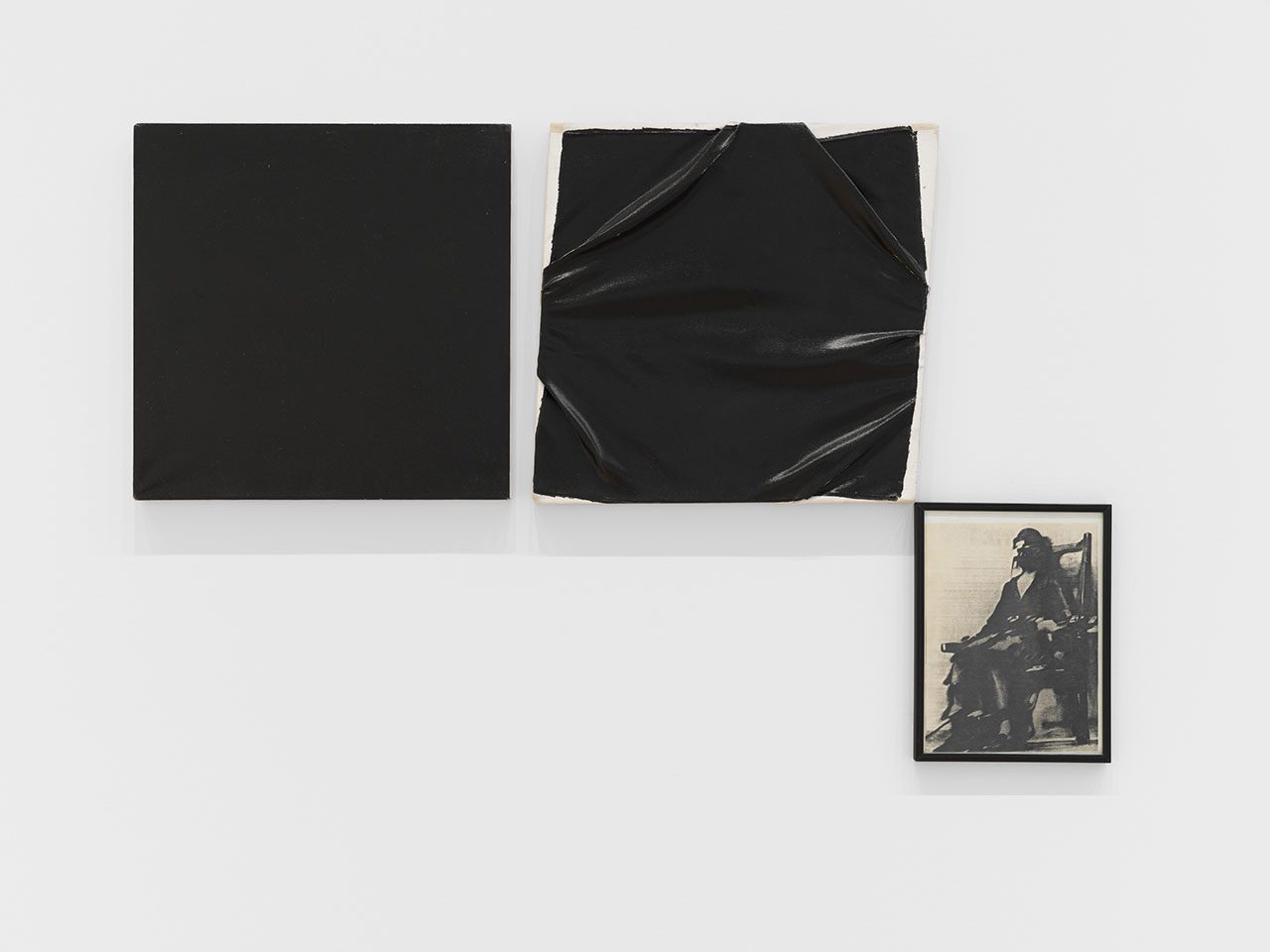
An exhibition with works by Steven Parrino is on show in New York. Predominantly a painter, in his oeuvre Steven Parrino developed a unique visual idiom that, on the one hand, draws on various subcultural movements and, on the other, displays clear references to the history of visual art of the twentieth century and beyond. Parrino’s work is defined by an unconditional will to be free that stems from American biker culture and is also influenced by punk rock existentialism. Steven Parrino (1958–2005) was one of the most uncompromising and enigmatic figures of the late twentieth-century art scene, an artist who transformed the act of painting into a violent and theatrical confrontation with its own history. His work—at once sculptural, musical, and performative—embodied a radical defiance of artistic conventions while remaining deeply rooted in the traditions of modernist abstraction. Through his torn, twisted, and distorted monochromes, Parrino not only acknowledged the oft-declared “death of painting” but also transformed that very notion into fertile ground for new creation. Born in New York City in 1958 to a Sicilian-Arbëreshë family and raised on Long Island, Parrino’s formative years were shaped by both suburban disaffection and the raw cultural energy of nearby Manhattan. He studied first at the State University of New York at Farmingdale, earning an Associate in Applied Science degree in 1979, and later completed his Bachelor of Fine Arts at Parsons School of Design in 1982. At Parsons, he absorbed both the rigorous formalism of modernist predecessors and the rising spirit of punk resistance that saturated New York’s cultural underground. This duality—between formal structure and anarchic rebellion—would define his practice for the rest of his life. By the early 1980s, Parrino had already begun experimenting with canvases in ways that challenged their sanctity as pristine surfaces for pictorial composition. His signature works, which he would later call “misshaped paintings,” consisted of bold monochromes—most often in black, silver, red, or fluorescent orange—that he would stretch onto frames and then violently slash, rip, or wrench from their supports. These canvases, once flat and orderly, became sculptural reliefs, crumpled into corners or cascading folds that suggested both destruction and transformation. The gesture was radical, yet it was not nihilistic for its own sake. Parrino embraced the paradox that painting, even at its supposed point of extinction, could be reinvigorated by acts of aggression against it. The art historical lineage of these gestures was deliberate. Parrino drew from the geometric rigor of Frank Stella, the spatial ruptures of Lucio Fontana, and the severe materiality of Donald Judd, yet he filtered these influences through a lens of punk rock, noise music, and post-minimalist irreverence. If minimalism was about purity, Parrino was about contamination. If abstraction had once claimed transcendence, he brought it crashing back to earth with brute physicality. His canvases often looked like wounded bodies or wreckage, and in this way they expressed the darker, more violent undertones of modern life. Parrino’s practice was not limited to canvas. He created environments, wall-based installations, and works that incorporated mass-media imagery. One of his most striking examples was “13 Shattered Panels for Joey Ramone” (2001), a memorial to the punk icon consisting of black-painted plaster walls smashed with violent energy. Elsewhere, he integrated images of cultural rebels—ranging from outlaw bikers to countercultural figures—into drawings and collages that underscored his fascination with outsiders and antiheroes.
His artistic life also extended into sound: Parrino was an accomplished noise musician, playing electric guitar in bands like Electrophilia*, where distorted feedback and abrasive soundscapes echoed the violent deformations of his visual art. For him, sound and image were inseparable, each an act of visceral confrontation. Parrino’s career developed during a pivotal moment in New York’s downtown art scene. He first exhibited publicly in 1984 at Gallery Nature Morte in the East Village, where he quickly became associated with the Neo-Geo and post-conceptual circles exploring irony, media critique, and appropriation. Yet while some of his contemporaries gravitated toward pop-cultural gloss or cynical detachment, Parrino remained committed to the existential stakes of painting itself. His work was included in the influential 1985 group show Infotainment, situating him among artists questioning mass media and spectacle. But unlike others, his method always revolved around the body, gesture, and the material life of paint and canvas. Recognition of Parrino’s work came slowly in the United States, where his aggressive treatment of painting was often received with ambivalence. Europe, however, proved more receptive. His works were exhibited widely in France, Germany, and Switzerland, and he participated in shows at institutions such as Museum Ludwig in Cologne, Kunstmuseum St. Gallen, and Palais de Tokyo in Paris. Posthumously, his reputation grew significantly: in 2007, Palais de Tokyo dedicated a major retrospective to him under the title La Marque Noire, and in recent years galleries such as Gagosian, Skarstedt, and Loevenbruck have mounted important surveys of his work. In 2006, his inclusion in the Whitney Biennial finally gave him a broader American audience, albeit after his untimely death. What distinguished Parrino’s art was his refusal to romanticize painting’s supposed obsolescence. He once remarked: “I came to painting at the time of its death, not to breathe its last breath, but to caress its lifelessness.” This provocative statement captures his unique position: not as a revivalist seeking to restore painting to past glory, but as an artist unafraid to acknowledge its corpse and yet still find beauty, sensuality, and power in its remains. His canvases often shimmered with metallic paint or fluorescent hues, as if beauty itself could be wrestled from destruction. Critics have described his approach as “destroying painting in order to save it,” and indeed his legacy has proven that his interventions opened new ways of thinking about the medium in the twenty-first century. Tragically, Steven Parrino’s life was cut short when he died in a motorcycle accident in Greenpoint, Brooklyn, on January 1, 2005, at the age of forty-six. His sudden death shocked the art community, but it also solidified his mythic image as a figure who lived and created on the edge—both personally and artistically. Today, his estate is represented by Gagosian Gallery, and his works continue to command attention on the international stage. Collectors, curators, and fellow artists regard him as a singular voice who bridged the cool detachment of minimalism with the raw urgency of punk culture. In looking back at Parrino’s career, what emerges is not simply a story of painting’s destruction but one of its reinvention. His misshaped canvases, shattered walls, and feedback-drenched performances all share a commitment to pushing form beyond convention. They remind us that art need not be polite or orderly; it can be bruised, scarred, and loud, yet still profoundly moving. In the folds of his torn canvases and the echoes of his distorted guitar, Steven Parrino left behind a body of work that continues to challenge and inspire. More than a decade after his death, his art remains as confrontational, unsettling, and alive as ever.
*In 1979 Steven Parrino first performed “guitar grind” which consisted of two guitars grinding into each other screaming feedback and sonic bliss. In 1997 Parrino conceptualized what was to be his new musical focus, a sound electric and brutal, and after a few small obscure shows, ELECTROPHILIA was born. A hard to find 10 inch lp, cd single and 7 inch single were released between then and 2002 when Jutta Koether, long time noise & performance artist in her own right, joined the band. With Koether and Parrrino mashing ideas and sounds ELECTROPHILIA has expanded and made its presence felt in shows around NYC. These shows have been documented, and four have been collected and turned into this double lp release: ELECTROPHILIA Black Noise Practitioner.
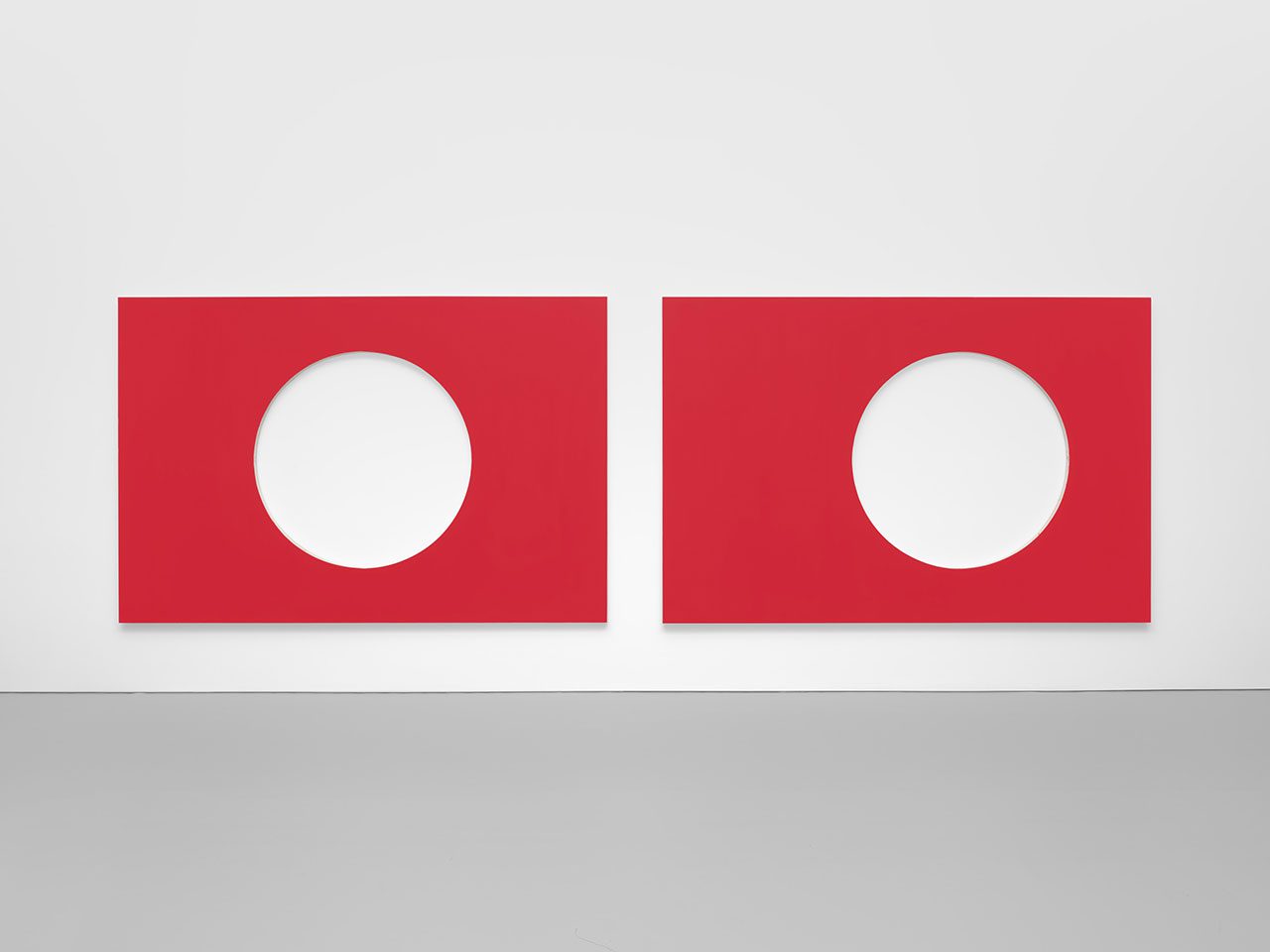
Photo: Steven Parrino, Absence/Shift, 1990, Enamel on canvas, in 2 parts, Each: 71 3/4 x 108 3/8 inches (182.2 x 275.3 cm), © Steven Parrino, courtesy the Parrino Family Estate, Photo: Jackie Furtado, Courtesy Gagosian
Info: Gagosian, 555 West 24th Street, New York, NY, USA, Duration: 10/9-18/10/2025, Days & Hours: Tue-Sat 10:00-18:00, https://gagosian.com/