PRESENTATION: Hugh Hayden-American Vernacular

Hugh Hayden is a pathbreaking contemporary sculptor whose visceral artworks reveal the complex markers of identity and aspiration within American culture. His darkly humorous objects probe conversations about the ways in which we find belonging and a sense of self through education, sports, fashion, food, and beyond. Hayden transforms familiar objects through a process of selection, carving and juxtaposing to challenge our perceptions of ourselves, others and the environment.
By Efi Michalarou
Photo: Frye Art Museum Archive
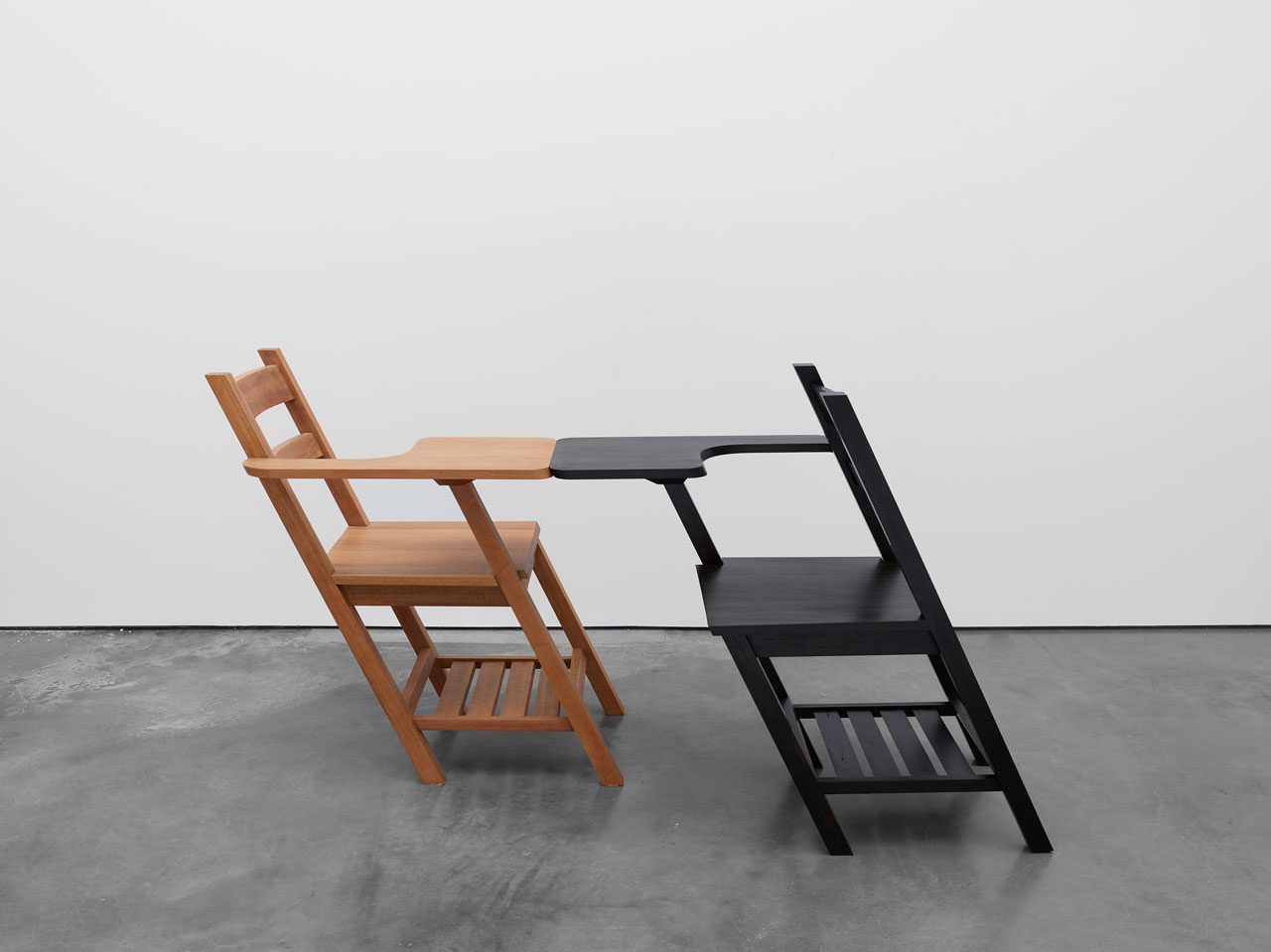
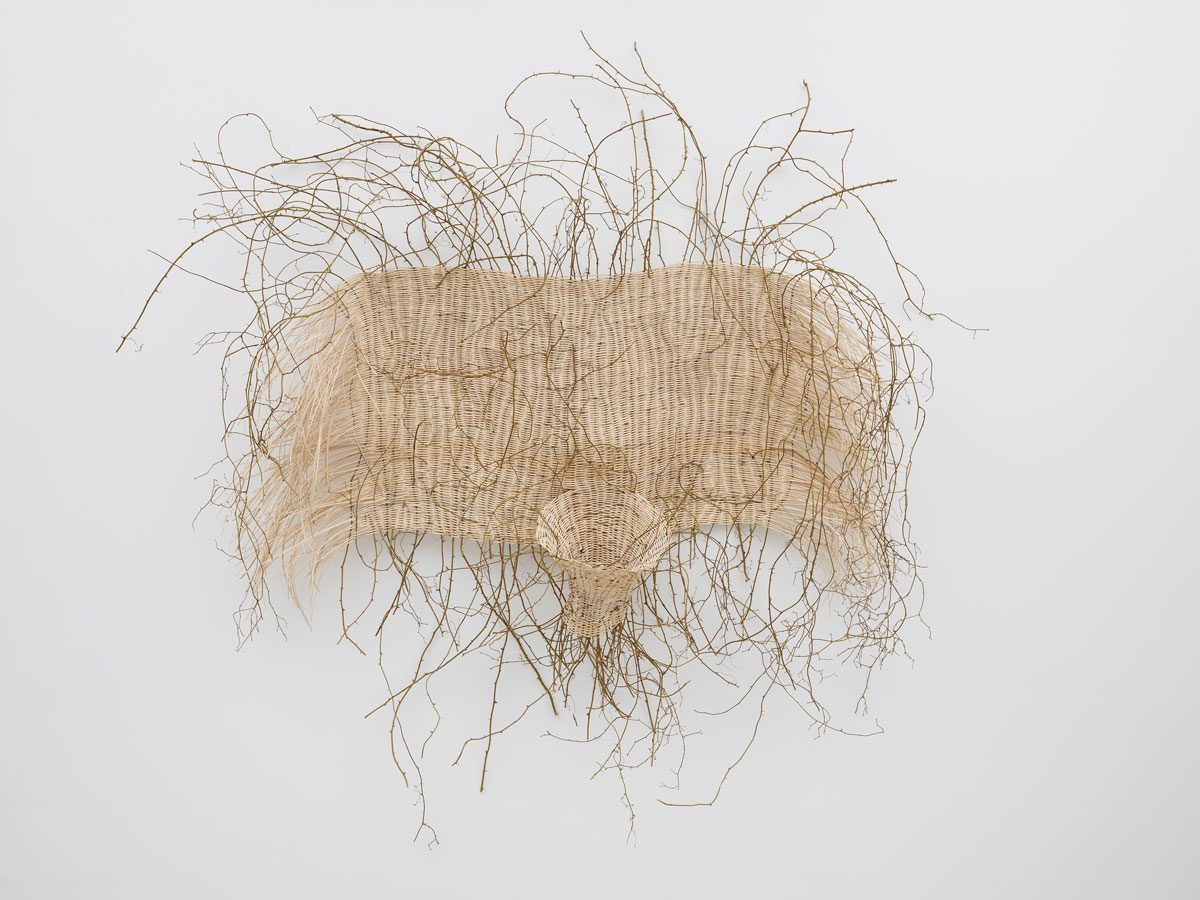
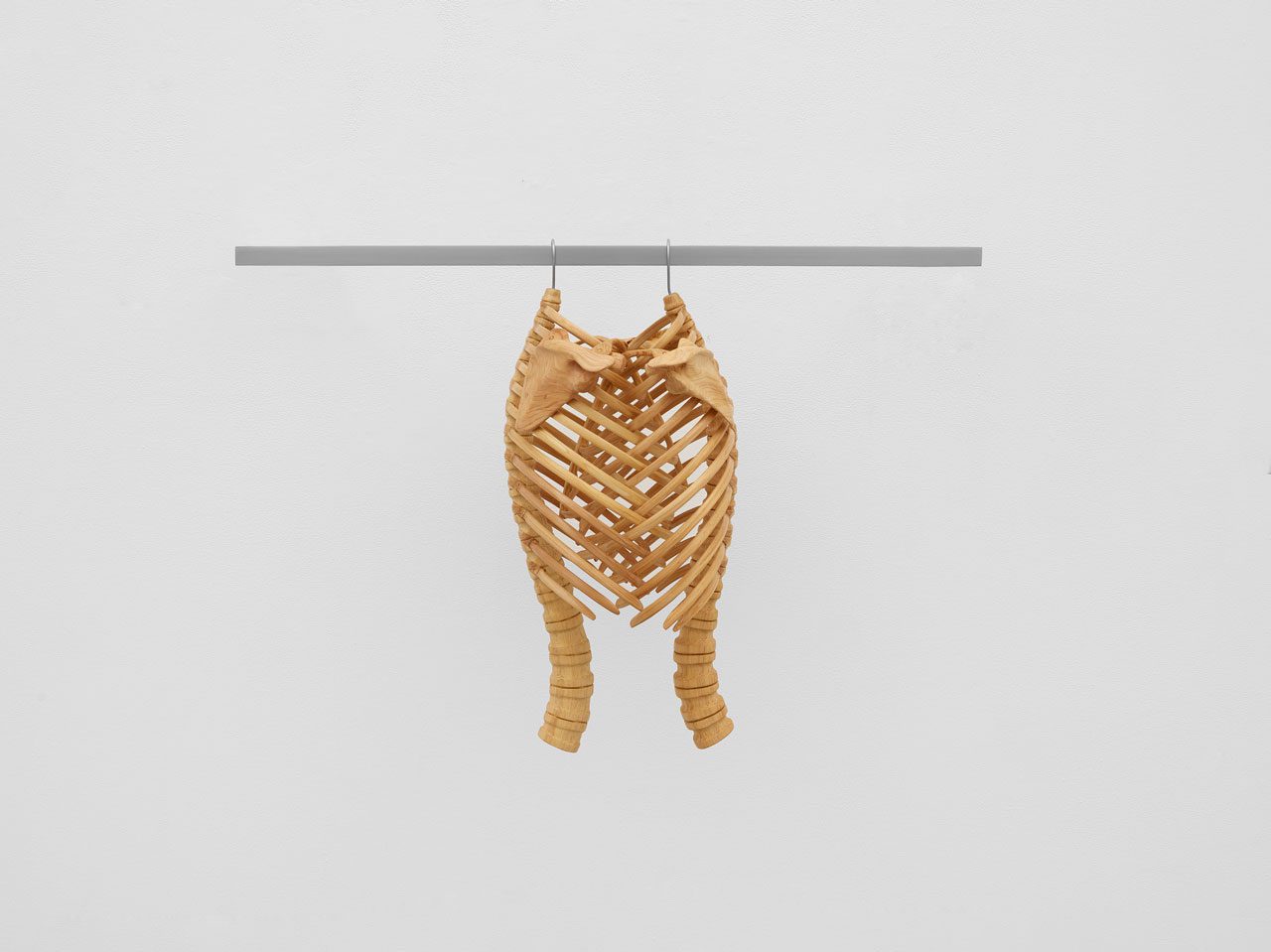
Raised in Texas and trained as an architect, Hugh Hayden has emerged as one of the most compelling sculptors of his generation, crafting works that straddle the line between beauty and menace, intimacy and estrangement. His practice arises from a deep connection to nature, rooted in the organic material of wood, which he employs as both medium and metaphor. For Hayden, wood is never neutral; it carries histories within its fibers—histories of geography, culture, memory, and commerce. He works with a wide spectrum of sources, from discarded Christmas trees and rare indigenous timbers to souvenir African carvings, sawing, sanding, and fusing them into new composite forms that embody the layered narratives of their origins. Hayden’s sculptures function as metaphors for human existence and the social dynamics that shape it. They expose the fragility of identity and belonging, while asking viewers to examine their own place within a shifting cultural and ecological ecosystem. His West Coast debut, “American Vernacular”, surveys the past decade of his practice and underscores the complexity of his vision. The exhibition unfolds across intricately carved wood sculptures and multimedia installations that merge dark humor with exacting craft. Tree-bark designer shoes, basketball hoops braided with synthetic hair, and furniture riddled with spikes transform familiar objects into provocations, revealing how even the most ordinary designs embody the values and tensions of American society. The term “vernacular” becomes central to Hayden’s project. In architecture, vernacular refers to structures of everyday life rather than monumental civic landmarks; Hayden applies this notion to the cultural forms that shape domestic and communal experience. His artworks—rooted in athletics, food, fashion, and childhood—draw from the ordinary spaces of American life, reframing them as carriers of collective memory and contested identity. Whether transforming a picnic table or a skillet into something uncanny, Hayden compels us to reconsider how the vernacular both unites and divides us. Several recent works delve into the fairytale of Pinocchio, recast through the lens of materiality and race. “Ebanocchio” (2024) and “Nocecchio” (2024), carved respectively from ebony and walnut, underscore how wood itself embodies cultural and historical significance. Their predecessor, “Geppetto” (2023), pays homage to the puppet’s creator, situating Hayden’s inquiry in the archetypal struggle between maker, material, and identity. The Pinocchio cycle, like much of Hayden’s oeuvre, transforms the fantastical into an allegory for the human condition: to be shaped, constrained, and defined by forces beyond one’s control.
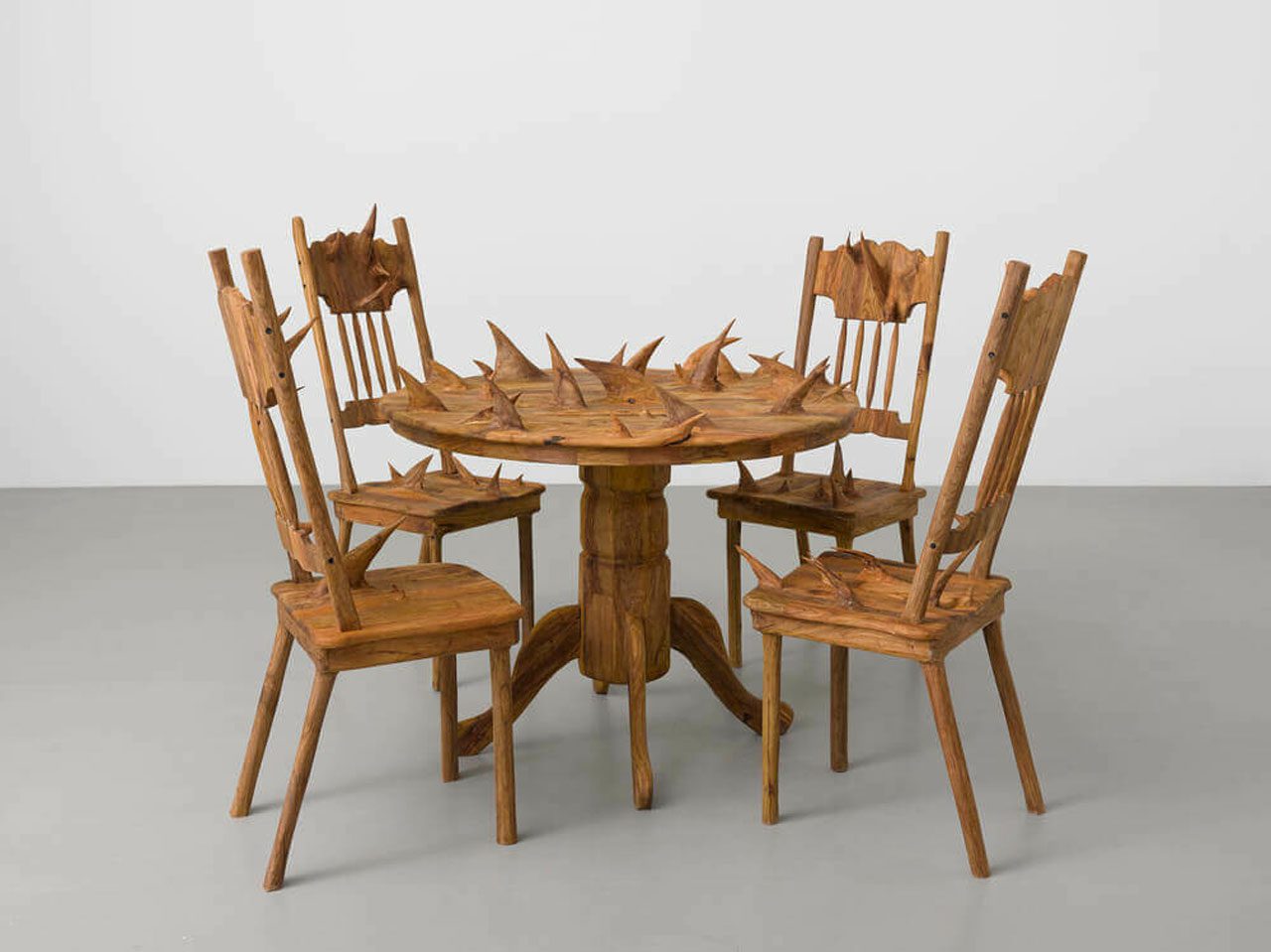
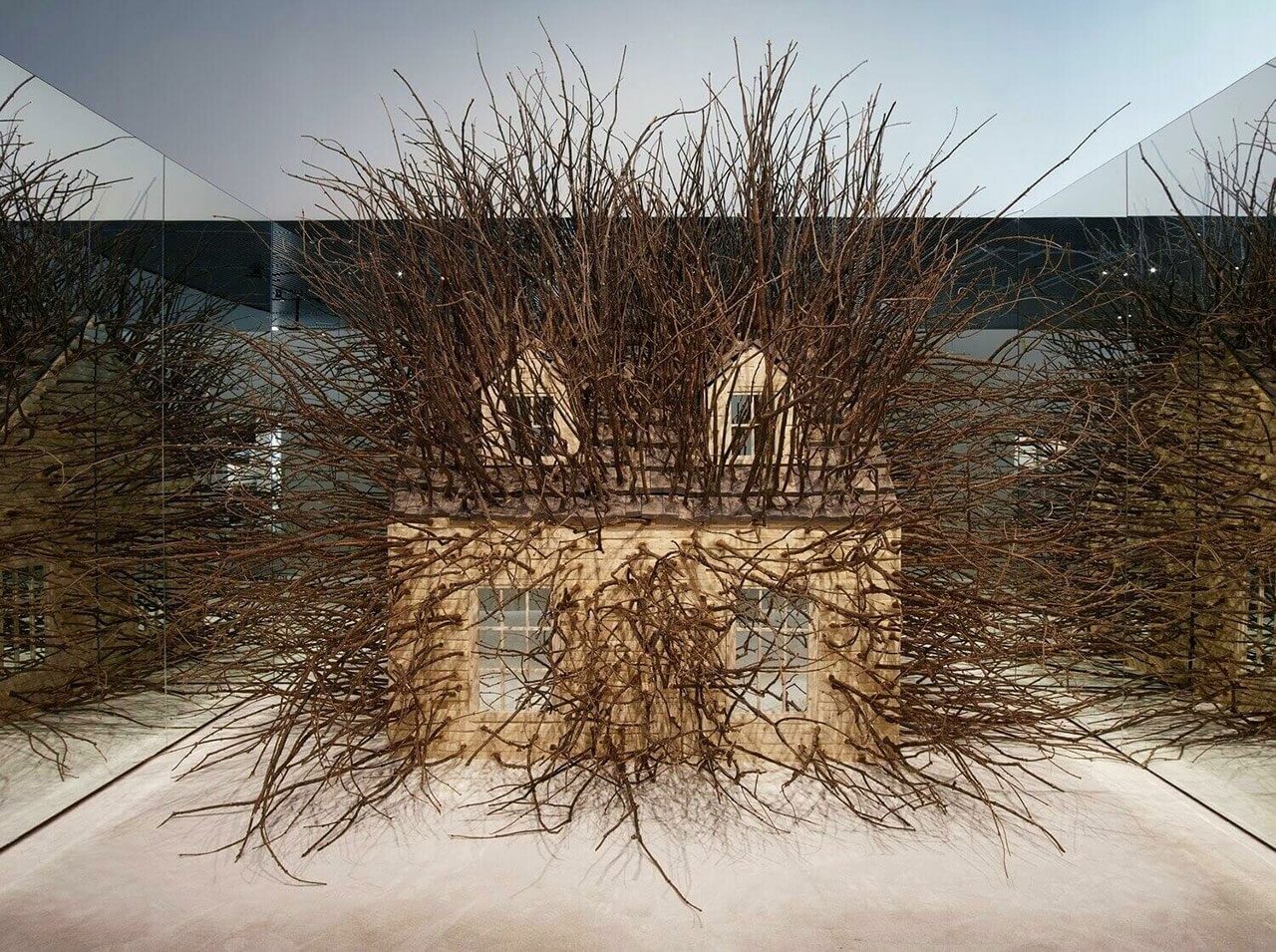
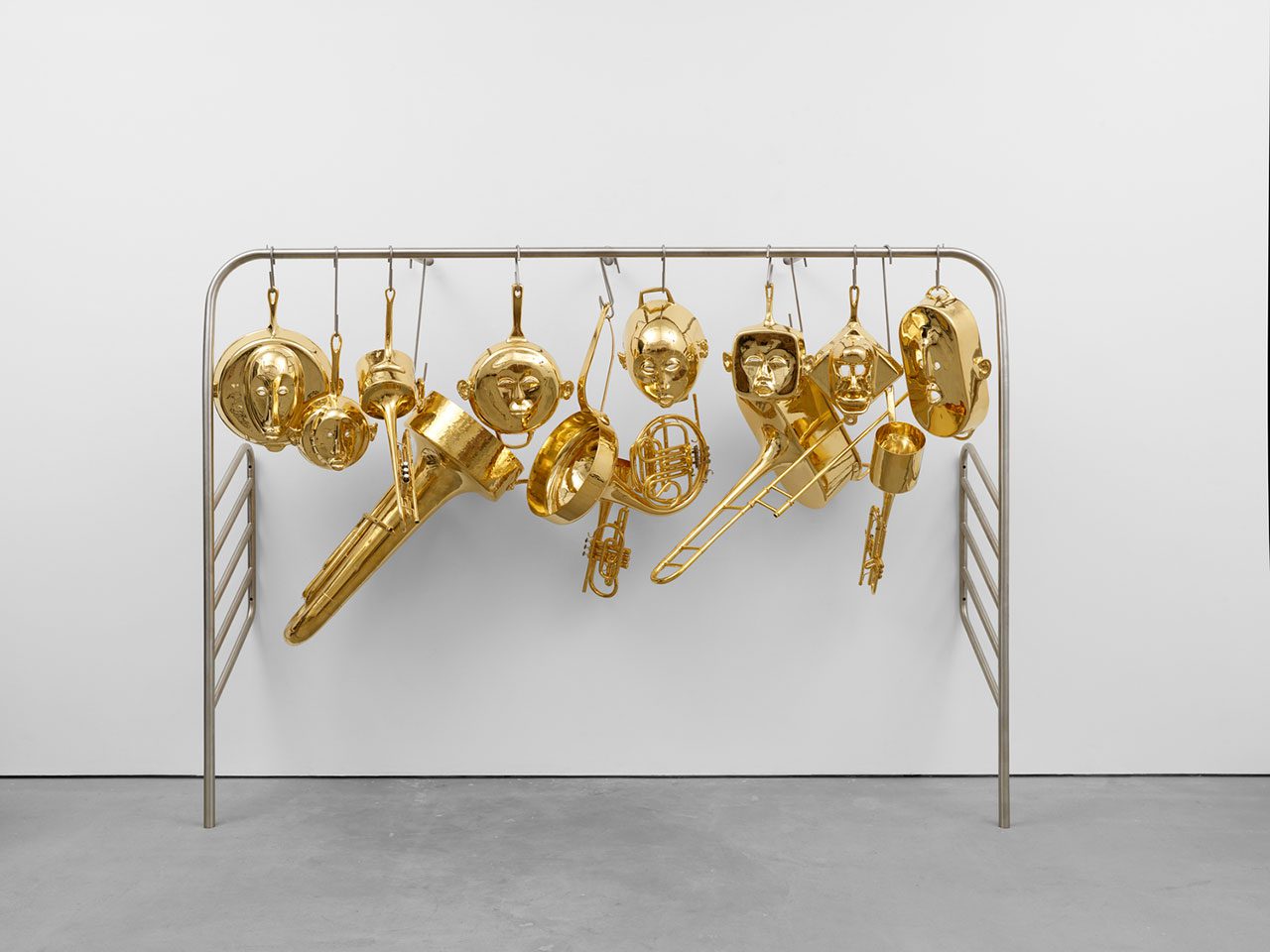
Elsewhere, Hayden mines food and cultural ritual as points of departure. A wall of skillets doubles as West African-style masks, cast through traditional sand techniques into vessels that speak to the African roots of Southern cuisine. Each mask bears a new persona, collapsing the distance between ancestral heritage and contemporary identity. Picnic tables—meticulously carved from hornbeam and chestnut, their branches jutting upward like both playful offshoots and threatening spikes—further demonstrate Hayden’s capacity to render the familiar unsettling. Furniture, the most domestic of objects, becomes a terrain of ambivalence: simultaneously inviting and forbidding, a stage for both gathering and exclusion. This tension between civilization and wilderness reaches its apex in “Hedges”, a sculptural environment fashioned from salvaged Christmas trees once displayed on Manhattan’s Park Avenue. Here, Hayden stages a dialogue between aspiration and camouflage, the manicured hedge as symbol of suburban belonging and social conformity. Mirrors placed among the trees force viewers to confront their own reflections within this fantasy of the “American dream,” implicating them in its contradictions. “It’s the idea of home ownership and being part of the American dream—of blending into a landscape that is also a social landscape,” Hayden explains. Perhaps the clearest articulation of Hayden’s practice comes in “America” (2018), a table surrounded by four chairs modeled after the one from his childhood kitchen. At first, it reads as a familiar emblem of family life and domestic dialogue. But the comfort dissolves quickly: its surface is bristling with thorn-like growths, jagged forms that transform the table into a hostile terrain. The work embodies Hayden’s larger paradox—objects that seduce with the precision of their craftsmanship yet menace with their form. The wavy wood grain invites admiration, even as the piece resists touch. Across his practice, Hayden insists on a tension between attraction and danger, between mass production and artisanal craft. His sculptures never allow us to settle into comfort, reminding us that beneath the veneer of the everyday lies a knot of histories—cultural, ecological, political—that remain unfinished. In Hayden’s hands, wood is not just a medium but a living archive, one that continues to sprout thorns in the grain of American life.
Photo: Hugh Hayden. Harlem (detail), 2024. 24 karat gold, cast iron, copper pots, brass instruments, stainless steel. 72 x 98 x 30 in. © Hugh Hayden. Courtesy of Lisson Gallery
Info: Curator: Sarah Montross, Frye Art Museum, 704 Terry Avenue, Seattle, WA, USA, Duration: 26/6-28/9/2025, Days & Hours: Wed & Fri-Sun 11:00-17:00, Thu 11:00-20:00, https://fryemuseum.org/
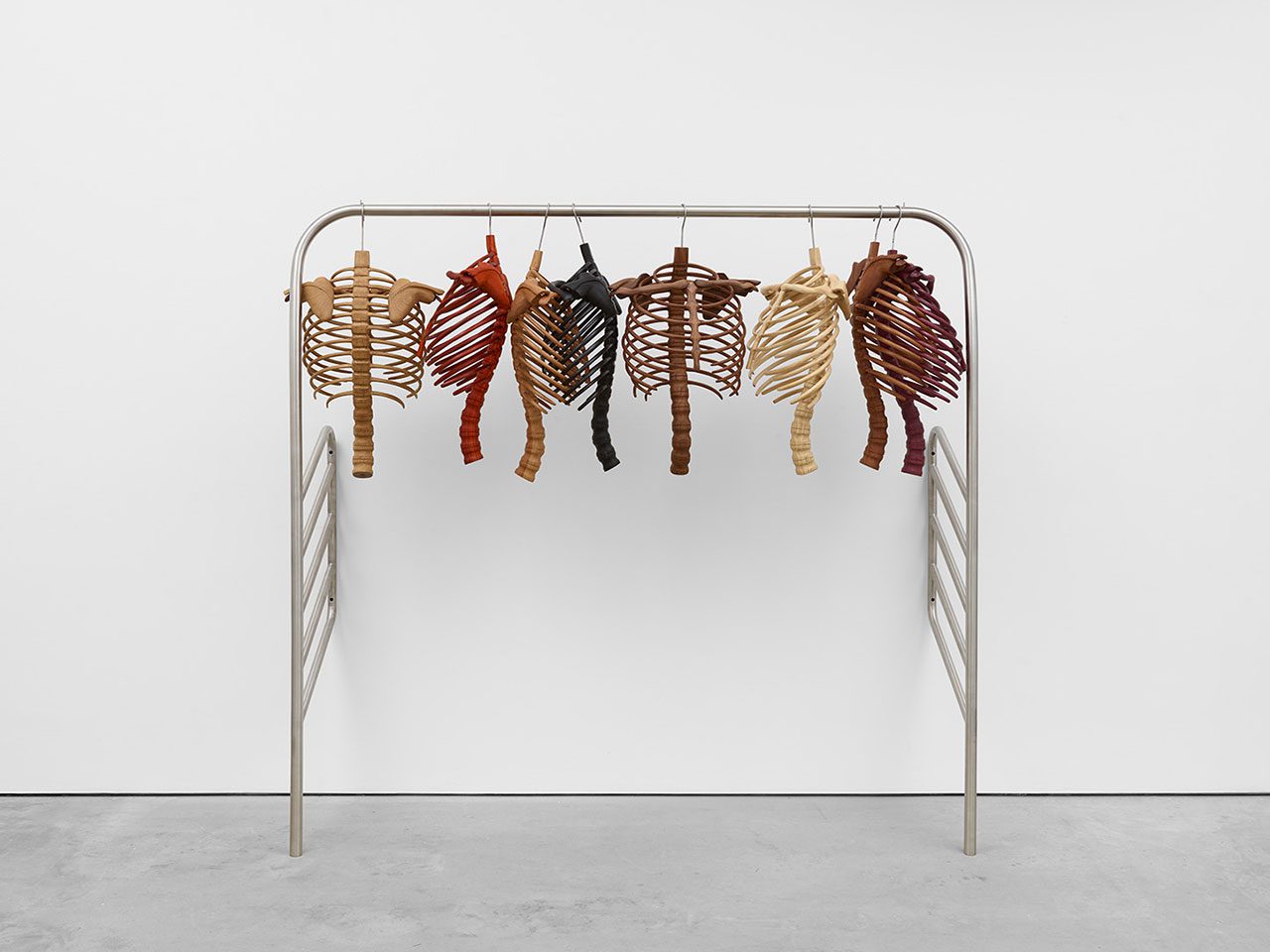
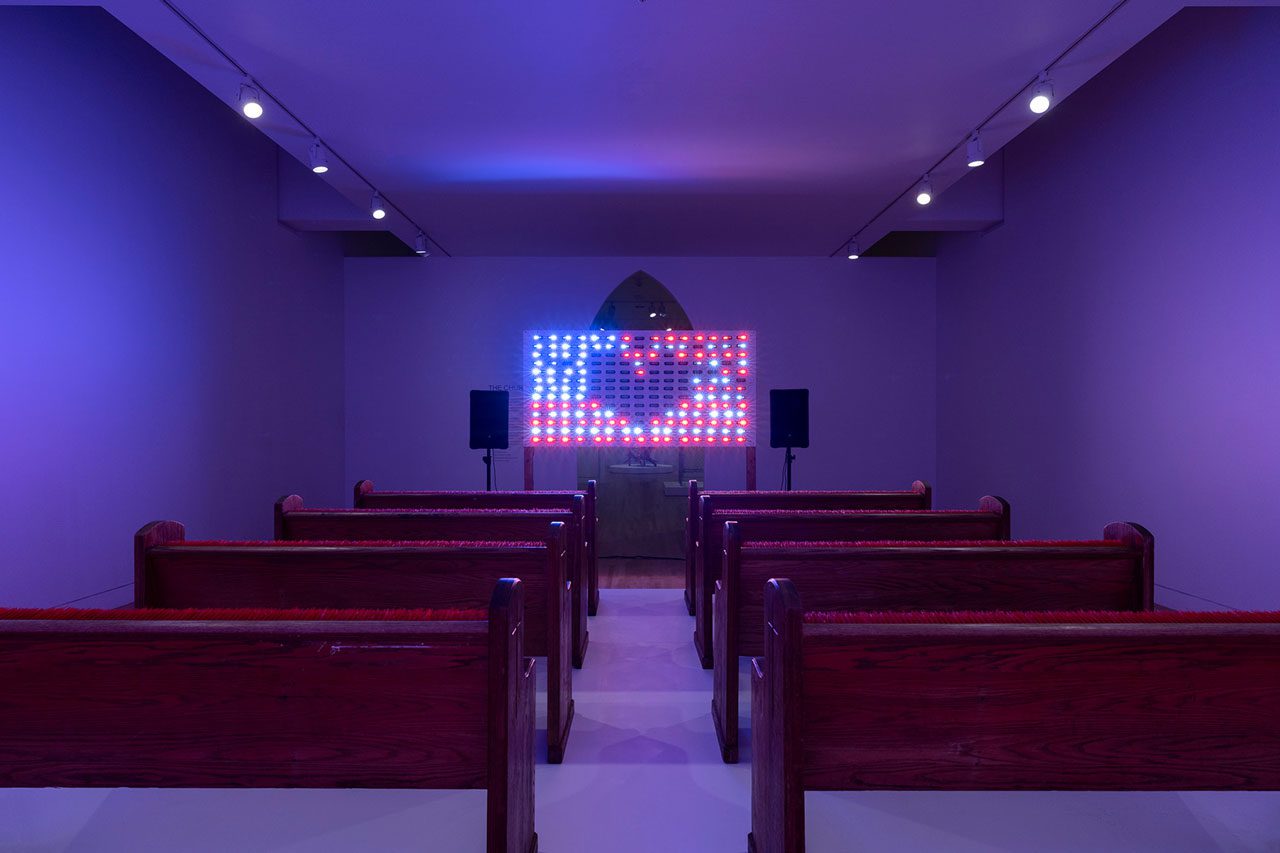

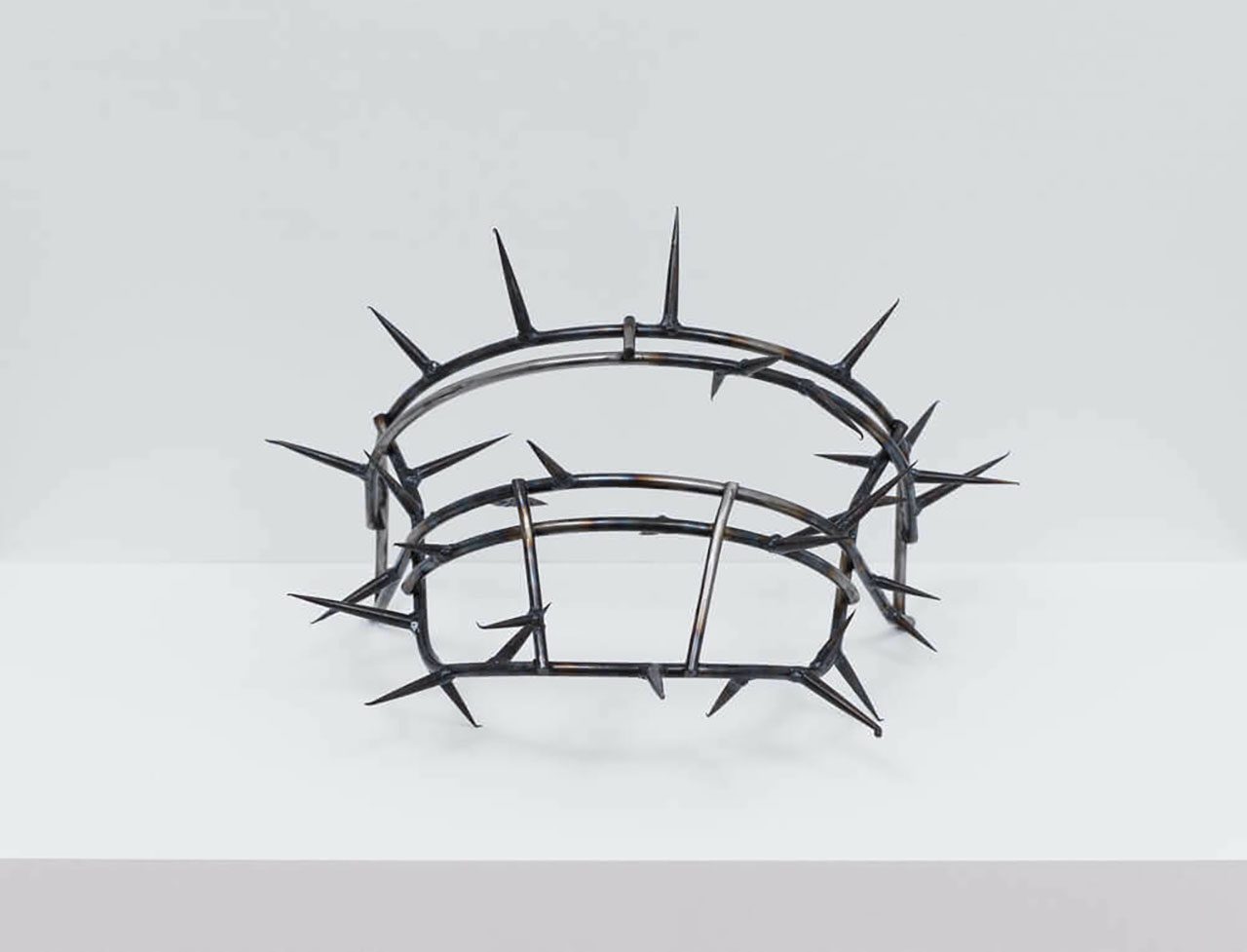
Right: Hugh Hayden. What’s going on? 2022 Copper coated cast iron Installed: 69.2 x 67 x 22.9 cm Installed: 27 1/4 x 26 3/8 x 9 in. © Hugh Hayden. Courtesy of Lisson Gallery