BIENNALS: 1st Bukhara Biennial-Recipes for Broken Hearts
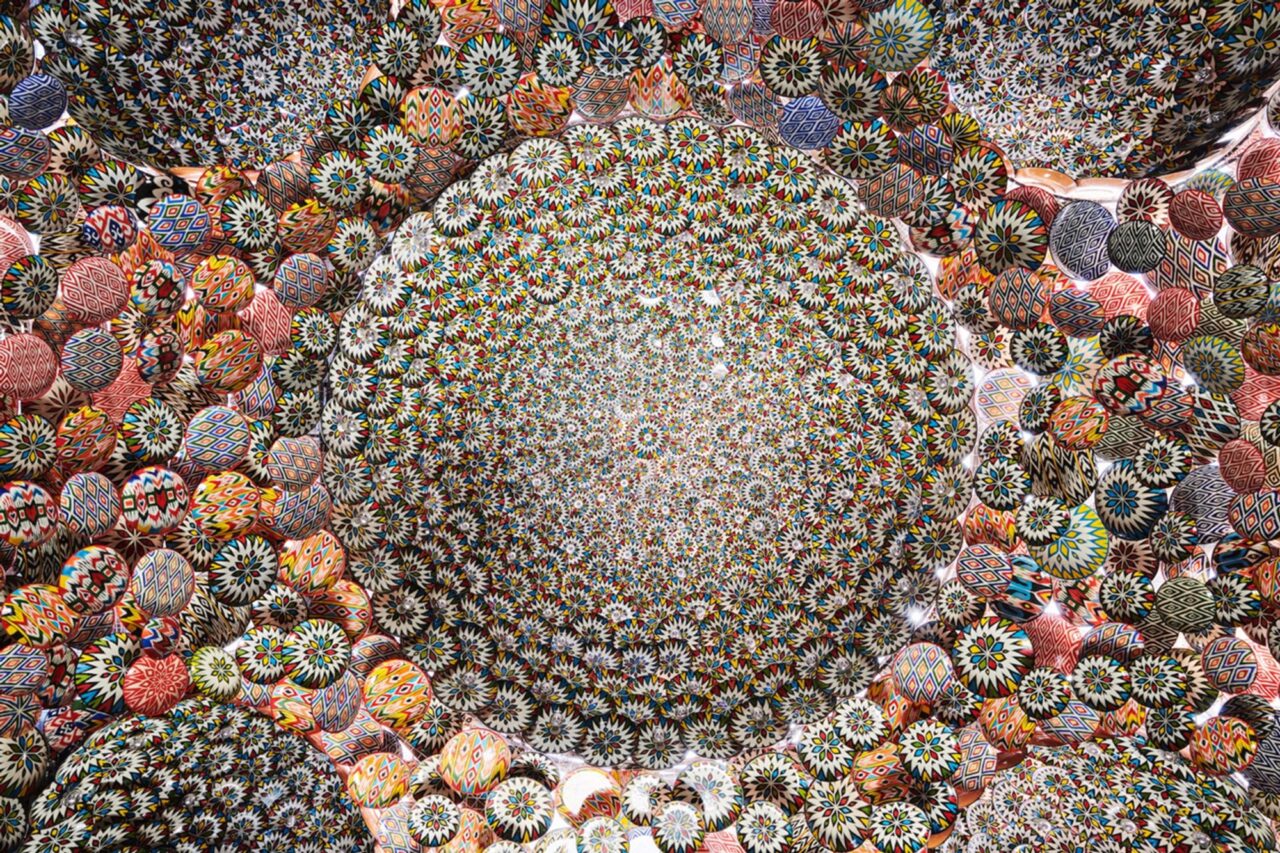
The inaugural edition of the Bukhara Biennial, “Recipes for Broken Hearts”, opened its doors to the public on September 5, with over seventy site-specific commissions by more than 200 participants from 39 countries and six continents. The debut edition unveils works, performances and installations born through collaborations between artists and artisans.
By Efi Mchalarou
Photo: Bukhara Biennial Archive
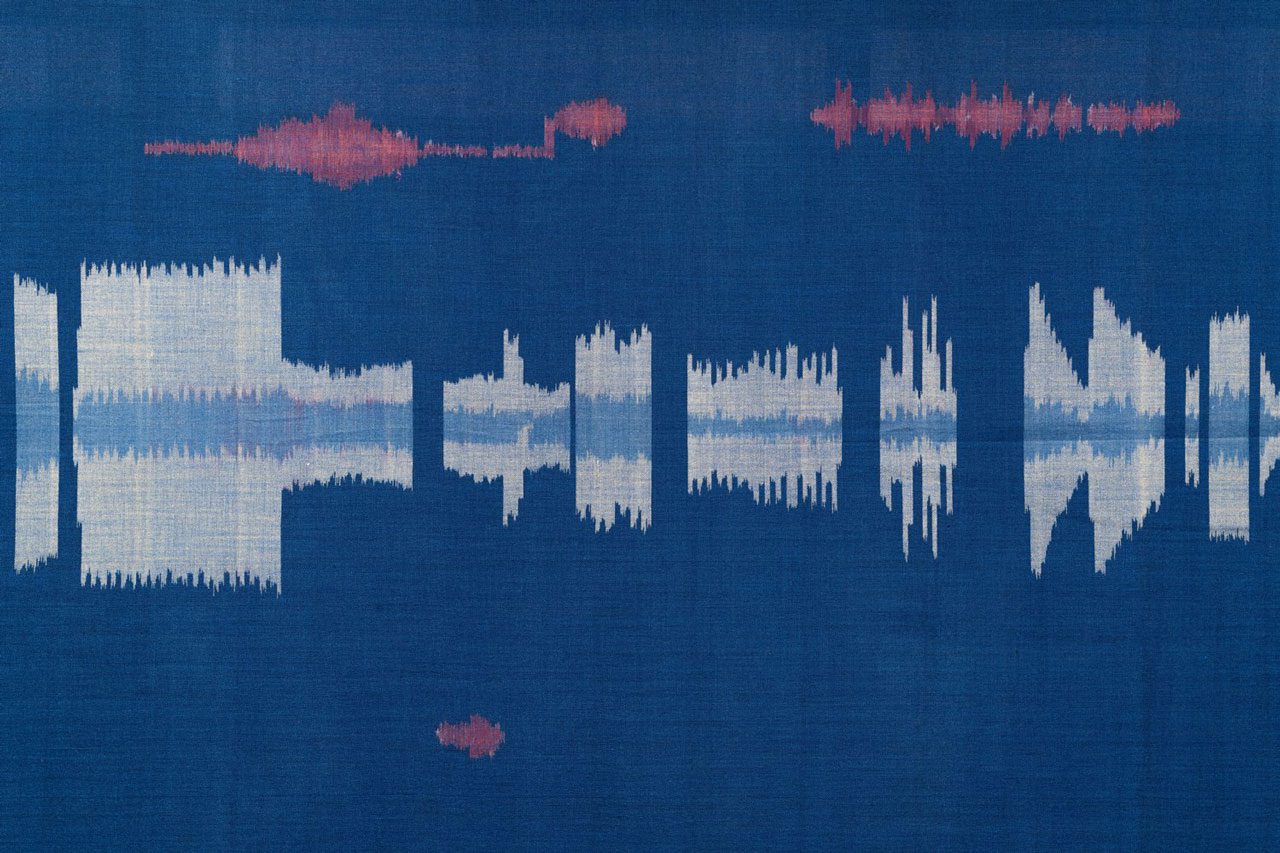
Under the leadership of Commissioner Gayane Umerova, the inaugural Bukhara Biennial signals the beginning of the Uzbekistan Art and Culture Development Foundation’s (ACDF) long-term commitment to reawakening Bukhara’s historic role as a crossroads of creativity, intellectual inquiry, and cultural exchange. Following the course of the ancient Shakhrud Canal, which once brought water to the city from the Zarafshon River through a sophisticated system of pools, few of them remain in use, and a magnificent one is located in front of the Khoja Gavkushon complex, the best-preserved example of a sixteenth-century public space of this kind in Central Asia. the biennial unfolds as a constellation of site-specific commissions that reanimate the city’s architectural heritage. Across a 500-metre stretch of Bukhara’s Old City—soon to be reborn as a Cultural District—newly restored caravanserais and landmarks are transformed into immersive art spaces. Among them, the caravanserais of Fathullajon, Ayozjon, Ahmadjon, and Mirzo Ulugbek Tamakifurush become anchors in a vast installation imagined by Marina Perez Simão and mosaic master Bakhtiyar Babamuradov, while walls across six sites are inscribed with mosaic human organs by Oyjon Khayrullaeva, working with artisans Raxmon Toirov and Rauf Taxirov. Threading through the biennial like a pulse is a kilometre-long ikat tapestry by Hylozoic/Desires (Himali Singh Soin and David Soin Tappeser), woven under the guidance of master Rasuljon Mirzaahmedov—an “artery” tracing the vanishing of the Aral Sea. Its rhythms are amplified by karnay performances at each full moon, a ritual binding time, music, and memory. Composer Tarek Atoui deepens this dialogue by collaborating with Uzbek musicians and instrument-maker Sharif Ostanov to create a sculptural instrument of nine horns, brought to life through performances and workshops in September. The Khoja Kalon Mosque becomes a stage for works that awe and unsettle. Antony Gormley, with Bukharian restorer Temur Jumaev and his team, constructs a labyrinth of monumental bodies using a thousand-year-old mud architecture technique still practiced in Bukhara. Nearby, Delcy Morelos threads columns into a fragrant, turmeric-stained web, prepared with the spices of a local merchant family—a sensorial bridge between architecture and ritual. At the Rashid Madrasa, projects by Igshaan Adams (working with Bukharian and South African weavers) and Munisa Kholkhujaeva with Anton Nozhenko turn the space into a site of mourning, memory, and collective repair. The Gavkushon Madrasa becomes the beating intellectual heart of the biennial: the House of Softness, a platform for workshops, symposia, and conversations. Highlights range from a panel on Women of Central Asia (September 6), to Behind the Commissions artist talks (September 22), to The Craft of Mending (October 6–8), a major history symposium curated by Aziza Izamova with thirty international scholars. A performative poetry programme (November 16–20), led by Katya García-Antón, and the BBBB Curatorial School—developed with the Delfina Foundation—extend the biennial’s reach beyond its immediate geography, culminating in a major international exhibition in 2026. The biennial also expands into archival and architectural dialogues. The Bukhara Archive, curated by ACDF with architect Wael Al Awar, opens within the twelfth-century Magoki Attori Mosque, while the AlMusalla Prize launches as an international architecture competition for the design of a new prayer and contemplation space. Meanwhile, the Nationwide Children’s Library pop-up finds its home in the nineteenth-century Pochakul Khoja Mosque, weaving future generations into the fabric of the biennial.
At the core of the biennial lies “Recipes for Broken Hearts”, a programme exploring art’s capacity to heal through food, ritual, and togetherness. Inspired by the legend of Ibn Sina, who is said to have invented palov to mend a prince’s broken heart, the programme reimagines the act of eating as a form of collective repair. Over ten weeks, the biennial’s Café Oshqozon—named after the Uzbek word for both “stomach” and “vessel for cooking”—becomes a living kitchen of art and healing. Each weekend, chefs from Uzbekistan and across the globe reinterpret traditions through menus of remembrance, resilience, and conviviality. Local chefs Bahriddin Chustiy and Pavel Georganov, with Coen Dieleman and Carsten Höller of Brutalisten, present a shifting seasonal menu titled Brutalist Bukhara. Mexican chef Elena Reygadas traces the migration of tomatoes and chilies from the Americas to Central Asia (September 23–24). Sierra Leonean chef Fatmata Binta honours sorghum—a drought-resistant grain shared by African and Karakalpak communities—through itinerant dishes launching October 10–11. Korean Buddhist monk Jeong Kwan engages the sixteenth-century Khoja Kalon Mosque as both kitchen and temple, fermenting kimchi with the Koryo-saram community while hosting meditation sessions on the site’s remains. In the biennial’s final week, Jeong Kwan joins Subodh Gupta to weave Korean temple cuisine with Bihari vegetarian traditions, presenting fermented kimchi and doenjang in a closing act of culinary symbiosis (November 18–20). The biennial culminates with the Rice Cultures Festival (November 16–20), co-curated by Diana Campbell and Marie Hélène Pereira. A grand feast of paella, jollof, pulao, and palov celebrates rice as a shared heritage of sustenance and ritual—a fitting finale to a biennial conceived as a living body, nourished by art, food, and collective memory.
Download List of Participating Artists Here
Photo: Subodh Gupta, with Baxtiyor Nazirov, Salt Carried by the Wind, 2024–2025. Photo: Adrien Dirand. Courtesy of Uzbekistan Art and Culture Development Foundation
Info: Artistic Director: Diana Campbell, Assistant Curator: Timur Zolotoev, Assistant Project Manager: Adam Ondak, 1st Bukhara Biennial, Venues: Toqi Sarrafon, Caravanserai, Gavkushon Madrasa, Khoja Kalon Mosque, Rashid Madrasa, AlMusalla, Pochakul Khoja Mosque, Café Oshqozon, Bukhara, Uzbekistan, Duration: 5/9-23/11/2025, Days & Hours: Tue-Sun 10:00-22:00 (September) or 10:00-20:00 (October and November), www.bukharabiennial.uz/