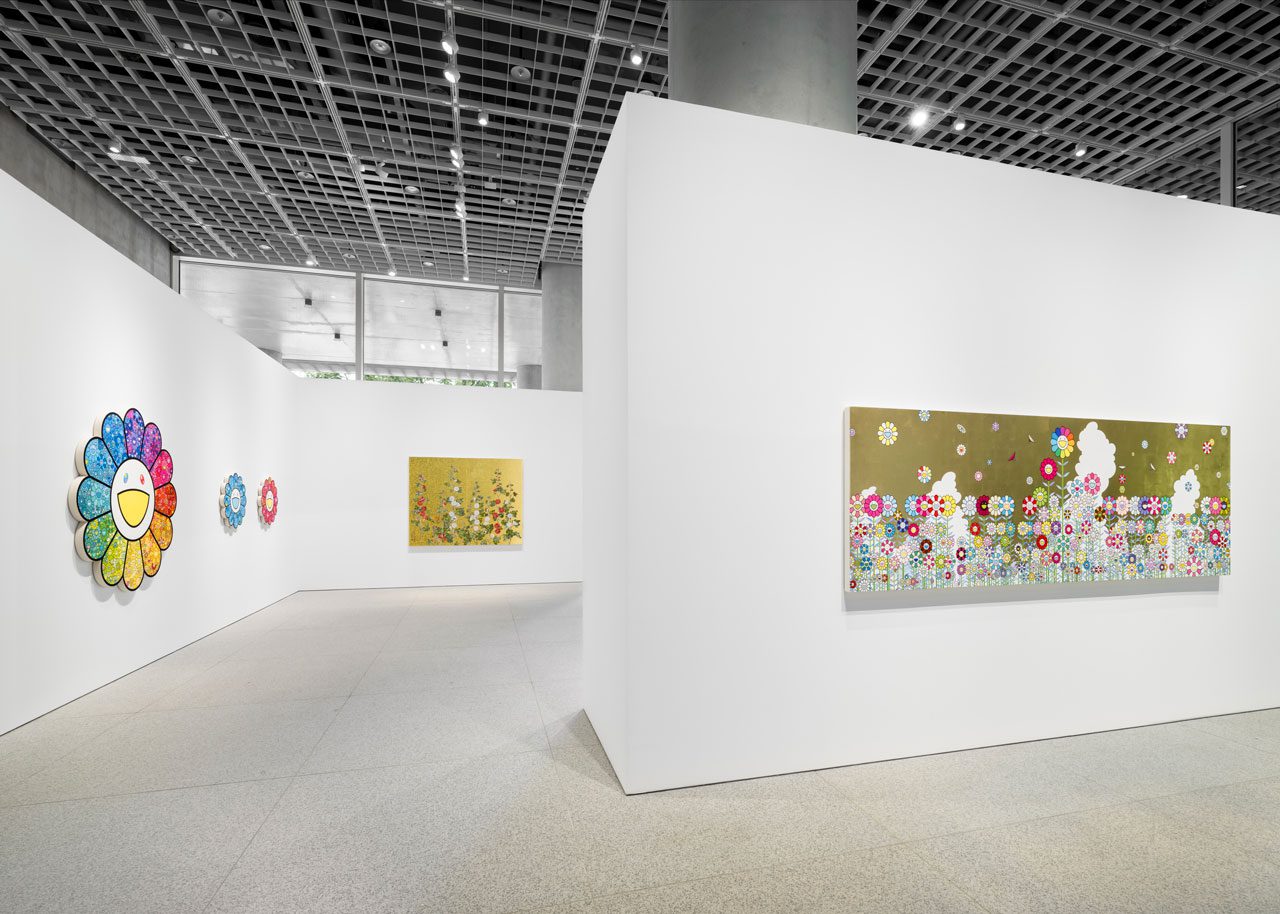
ART CITIES: Seoul-Takashi Murakami
Blending influences from Japanese painting, sci-fi, and anime with the reach of the global art market, Takashi Murakami creates vibrant paintings, sculptures, and films that feature recurring motifs and ever-changing characters of his own design. Many of these figures spill over into commercial products, reflecting his interest in both fine art and popular culture. For Murakami, the role of the artist is to notice the boundaries between different worlds—and to make the effort to cross and understand them.
By Efi Michalarou
Photo: Gagosian Archive
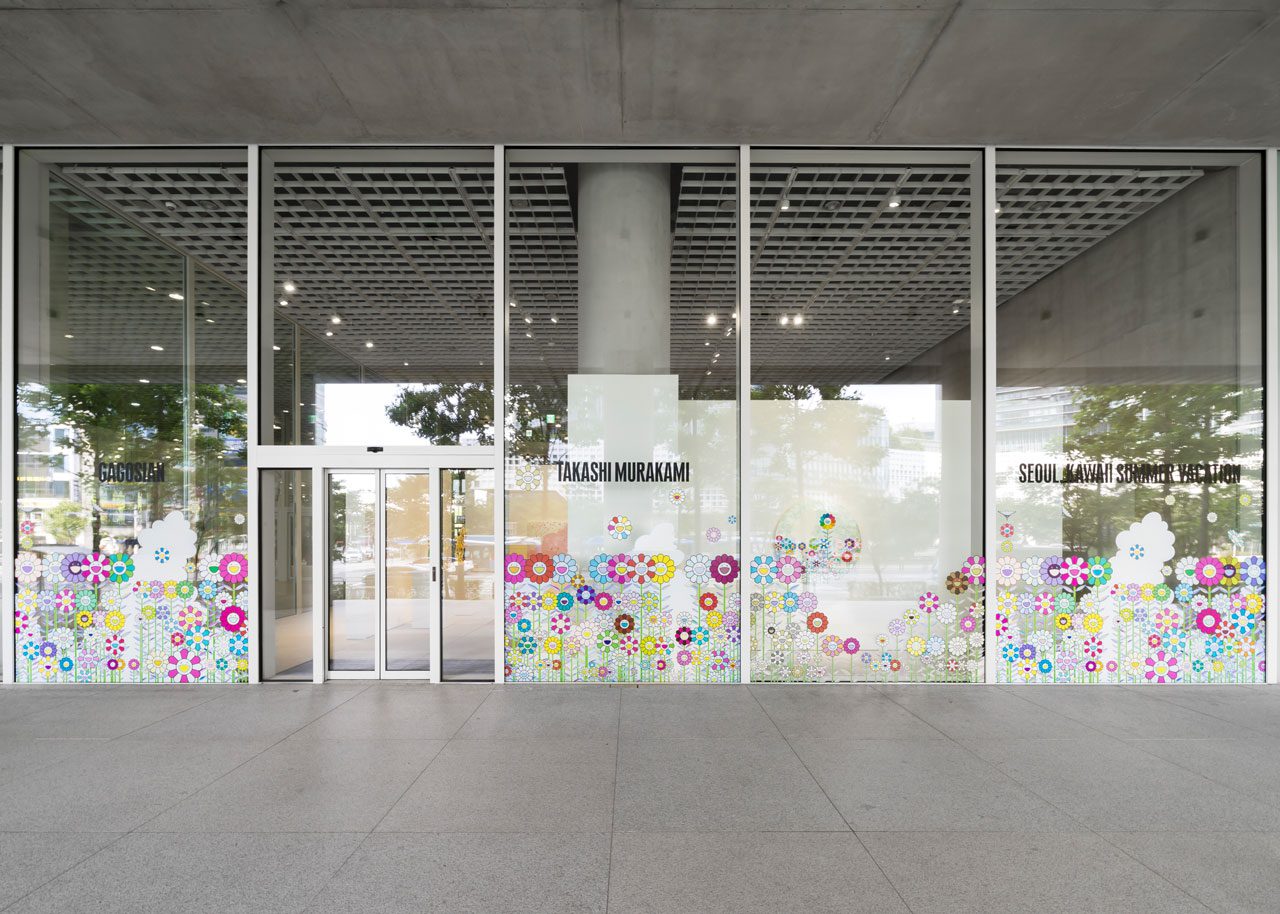
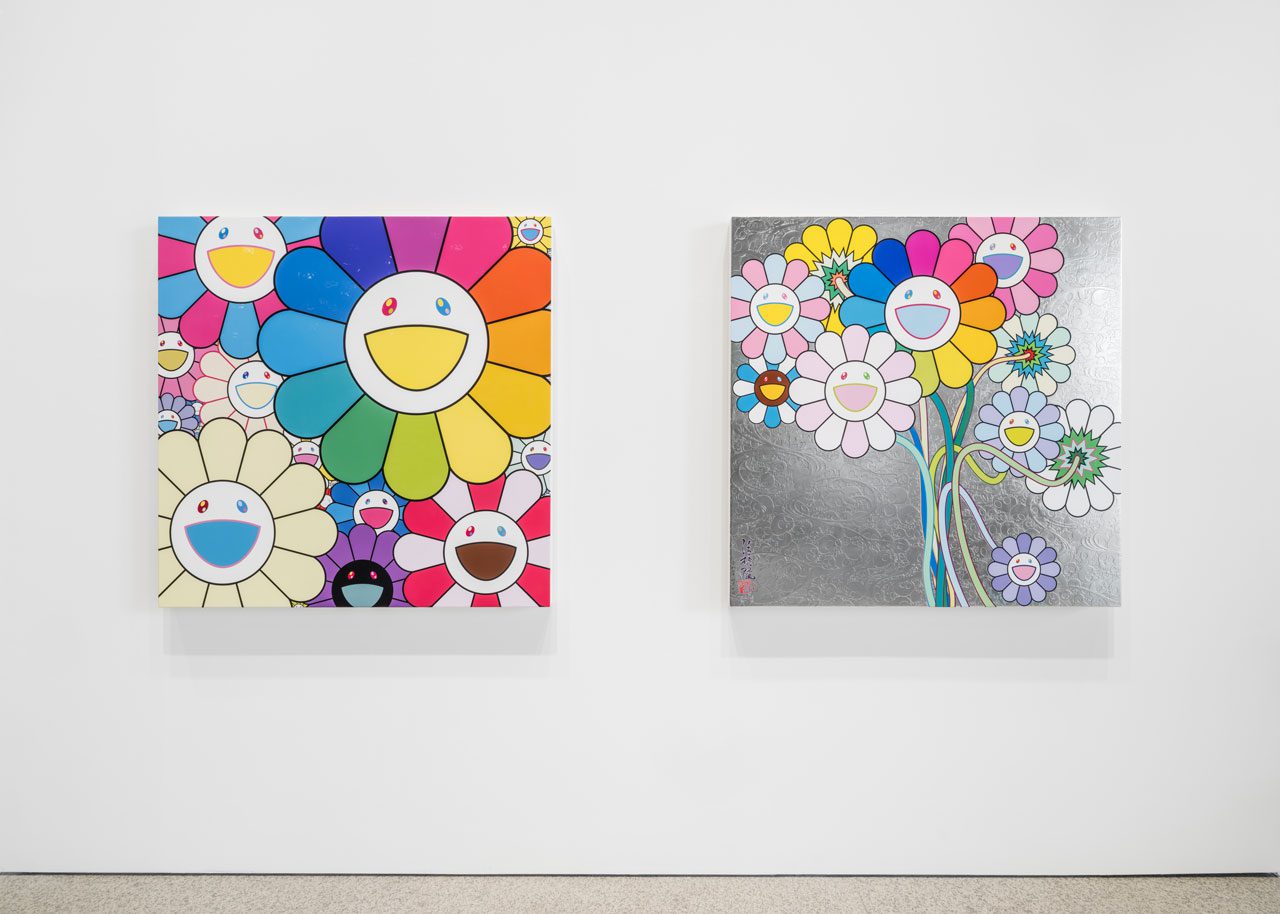
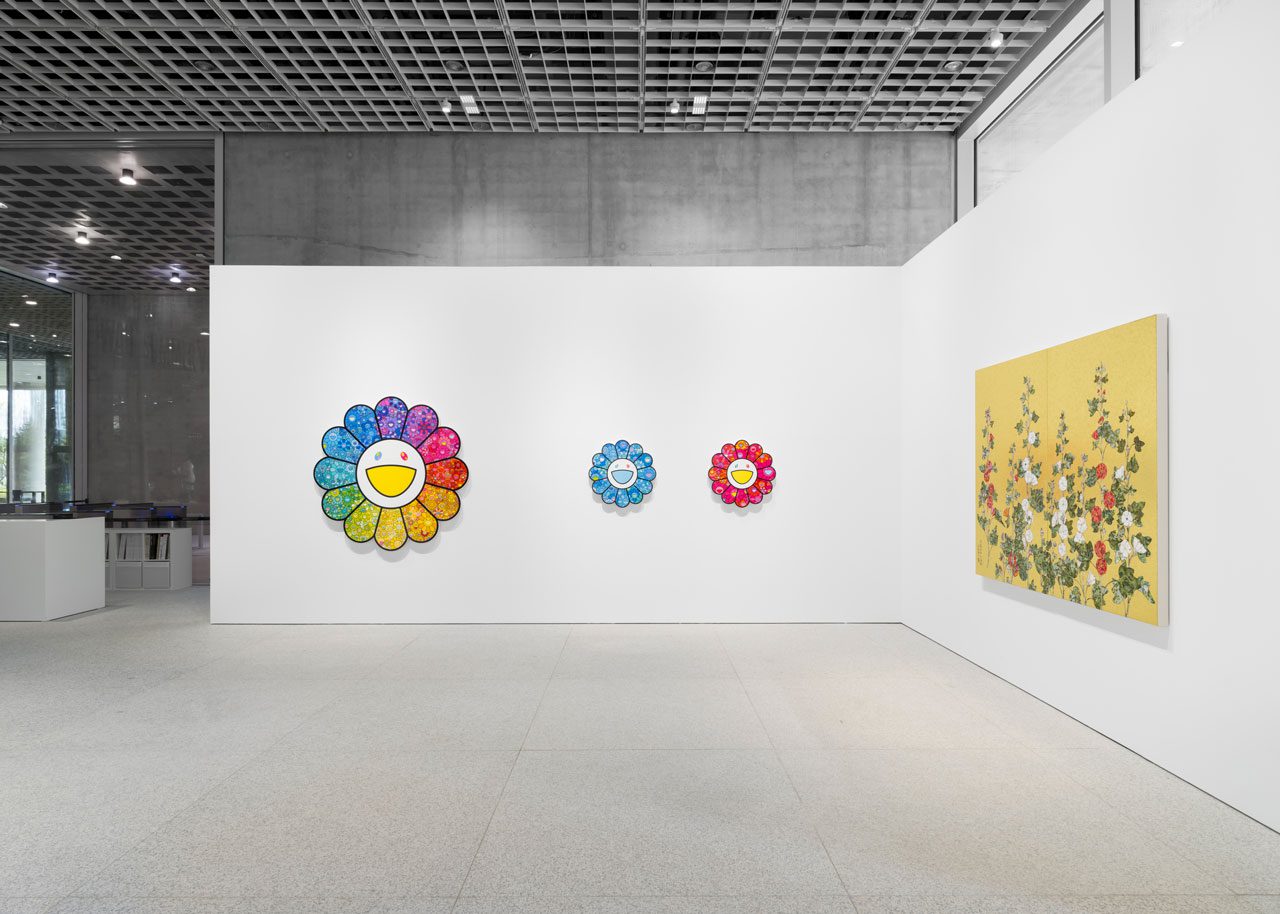
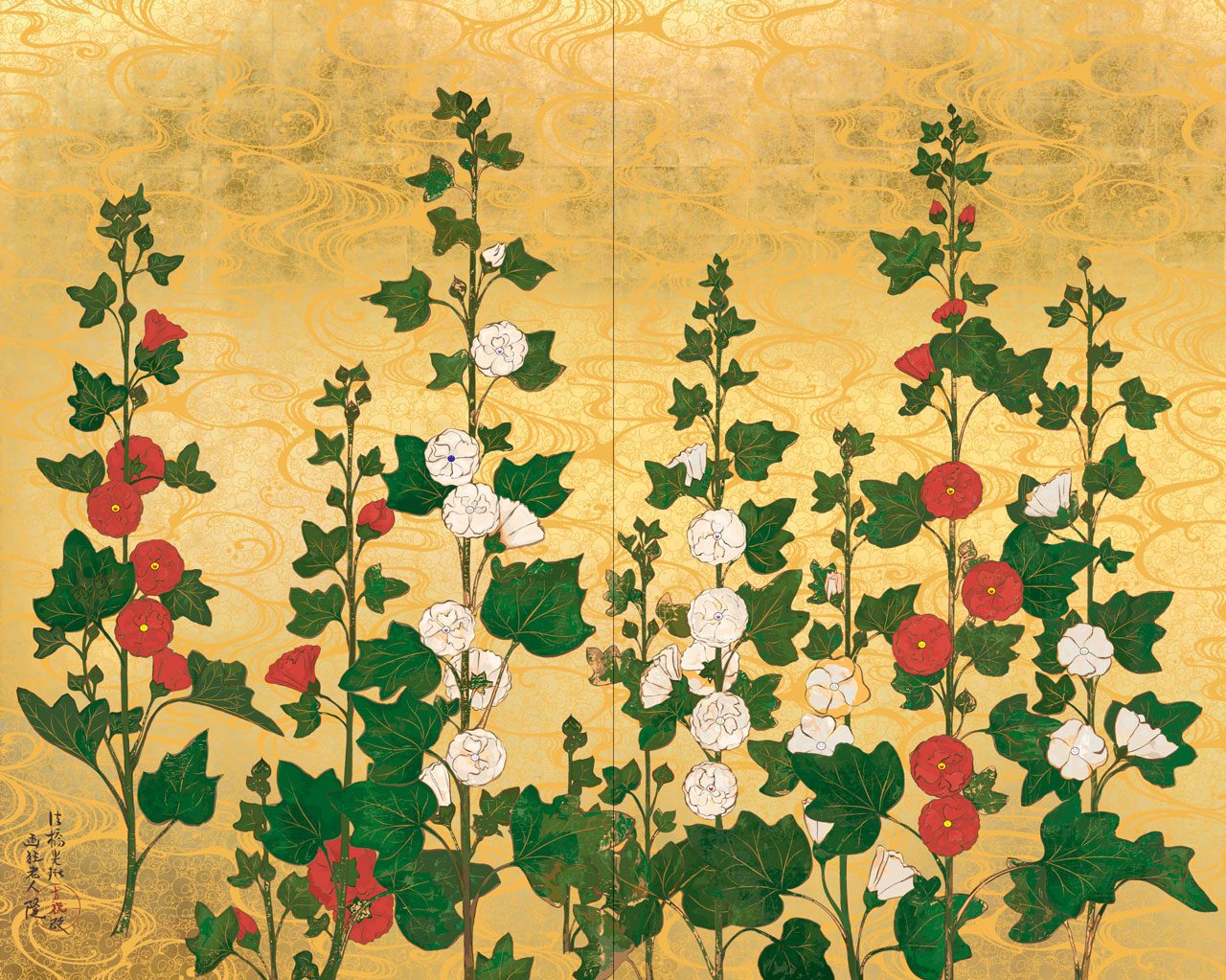
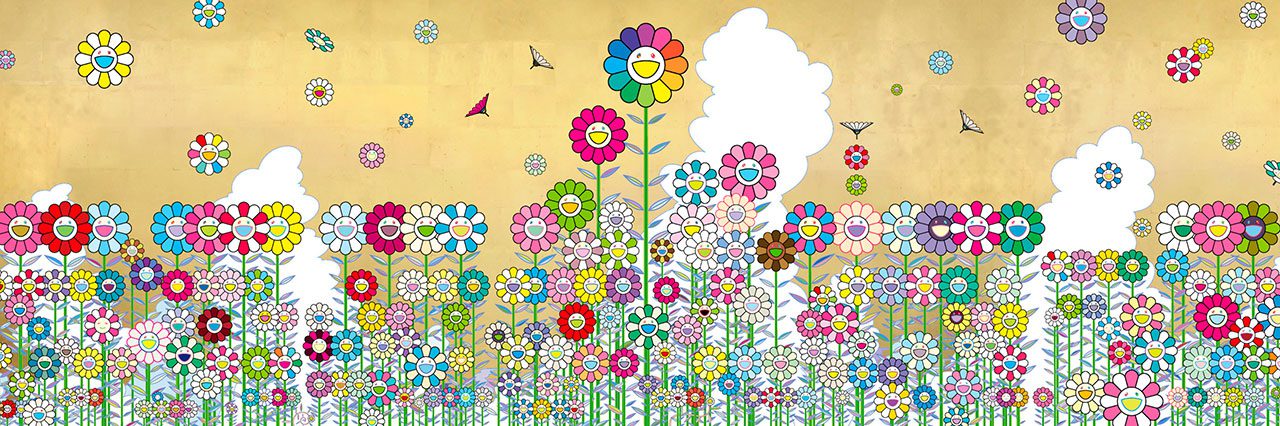
Takashi Murakami’s exhibition “Seoul, Kawaii Summer Vacation”, presented at the headquarters of Amorepacific in the heart of Seoul, stages a vivid exploration of one of the artist’s most enduring motifs: the flower. Installed in the APMA Cabinet, a project space housed within David Chipperfield’s refined architectural landmark, the show brings together new paintings and sculptures that exemplify Murakami’s unique ability to traverse the boundaries of tradition and contemporaneity, local culture and global spectacle. The exhibition also marks Murakami’s return to Korea following his expansive retrospective MurakamiZombie at the Busan Museum of Art in 2023, reframing his practice in a more focused, intimate key. At the core of “Seoul, Kawaii Summer Vacation” lies Murakami’s smiling flower—an emblem that has, over three decades, become synonymous with his artistic brand. Emerging in 1995, the flower was originally rooted in the lyrical naturalism of nihonga, the Japanese painting tradition in which Murakami was formally trained. Yet in his hands, this delicate form became a vehicle for cultural synthesis, inflected by the flat pictorial strategies of anime and manga, the obsessive devotion of otaku culture, and the ubiquitous kawaii aesthetic that permeates Japanese consumer life. Within Murakami’s framework of “Superflat”—a theory as much as an aesthetic—classical techniques and popular culture collapse onto the same plane, leaving no hierarchy between so-called high art and mass-market imagery. The flower thus operates in multiple registers at once: as an homage to traditional Japanese visual culture, as a pop-cultural icon designed for instant recognition, and as a commodity circulating within the global art market. While its cheerful expression resonates with innocence and optimism, the repetition of the motif across paintings, sculptures, merchandise, and digital media underscores Murakami’s sustained interrogation of consumer desire and the commodification of cultural symbols. In this sense, his flowers are not merely decorative embellishments but incisive commentaries on the mechanisms of taste and value in late capitalism. This duality—between joyous affirmation and critical edge—is vividly articulated in the exhibition’s centerpiece, “Summer Vacation Flowers under the Golden Sky” (2025). Here, a radiant expanse of blossoms unfolds across a partially gold-leafed surface embossed with skulls, staging a confrontation between vitality and mortality, beauty and impermanence. The interplay recalls Buddhist notions of transience while simultaneously evoking the glittering surfaces of luxury commodities, situating the work between metaphysical reflection and consumer critique. Murakami extends this dialogue with history in “Tachiaoi-zu” (2025), a contemporary meditation on Rinpa master Ogata Kōrin’s “Kiku-zu” screen (1658–1716). By revisiting this canonical Edo-period composition of hollyhocks rendered against a gold-leaf ground, Murakami not only pays homage to a revered lineage of Japanese decorative painting but also reactivates it for the present, reframing Rinpa aesthetics through his contemporary Superflat lens. In doing so, he collapses the temporal distance between 17th-century Kyoto and 21st-century Seoul, demonstrating how historical forms can be mobilized within today’s global circulation of images.
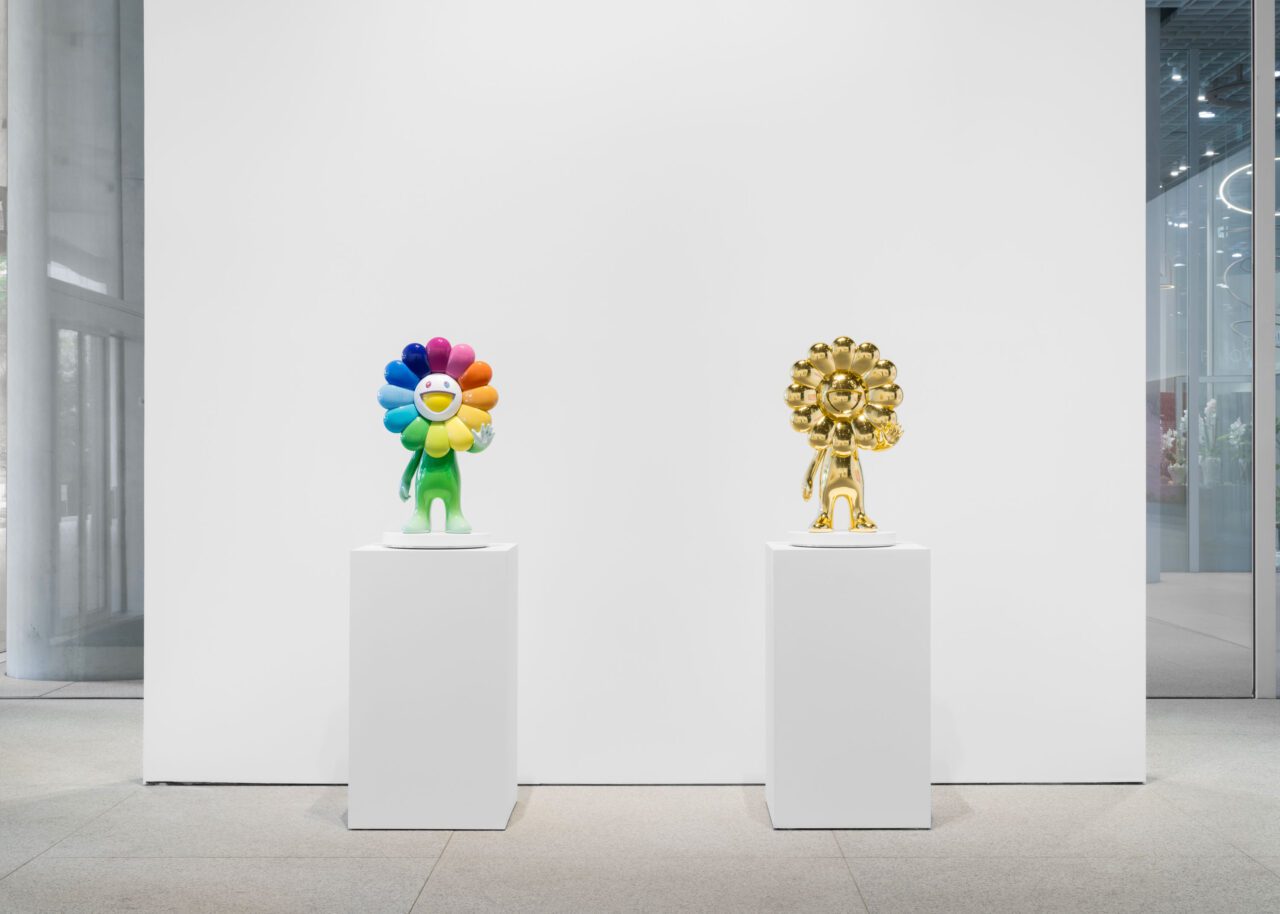
The sculptures “Hello Flowerian” (2024), presented in both bright polychrome and reflective gold leaf, exemplify the same oscillation between accessibility and complexity. On one level, the small flower-headed figures radiate childlike charm, aligning with Murakami’s pop sensibility and broad appeal. Yet beneath this playful façade lies a darker undercurrent—an acknowledgment of postwar Japan’s economic volatility, social dislocation, and psychic uncertainty. As such, these works encapsulate Murakami’s broader project: producing objects that are immediately legible and culturally seductive, while simultaneously embedding within them a critique of the very systems that make them desirable. With “Seoul, Kawaii Summer Vacation”, Murakami once again demonstrates his mastery of the in-between: between East and West, tradition and innovation, surface delight and critical depth. His flowers, endlessly reproduced yet endlessly shifting, serve not only as emblems of joy but also as mirrors of the anxieties and contradictions of contemporary life. This resonance is amplified in Seoul, a city that has rapidly emerged as a global cultural hub. In recent years, South Korea’s contemporary art scene—anchored by institutions like the Amorepacific Museum of Art, the Leeum Museum of Art, and the Busan Museum of Art—has increasingly positioned itself at the forefront of international discourse. Seoul’s art fairs, commercial galleries, and collaborations with global brands parallel Murakami’s own negotiation between tradition, mass culture, and market dynamics. His exhibition here thus operates on multiple levels: as a dialogue between Japanese and Korean visual cultures, as a reflection on the role of beauty and design in East Asia, and as a case study in how contemporary art circulates through global economies of attention and consumption. By situating his smiling flowers within this context, Murakami not only reaffirms their status as universal icons but also sharpens their critical edge, asking what it means for art to be simultaneously joyful, marketable, and profoundly aware of its own complicity in systems of desire. In Seoul—where the boundaries between art, commerce, and lifestyle are increasingly porous—his Kawaii Summer Vacation becomes a site of reflection on how cultural symbols are created, consumed, and reinvented in the 21st century.
Photo: Takashi Murakami, Tachiaoi-zu, 2025, Acrylic and gold leaf on canvas mounted on aluminum frame, 59 7/8 x 74 7/8 inches (152 x 190 cm), ©2025 Takashi Murakami/Kaikai Kiki Co., Ltd. All Rights Reserved, Courtesy the artist and Gagosian
Info: APMA Cabinet, Seoul, 1/F Amorepacific Headquarters, 100 Hangang-daero, Yongsan-gu, Seoul, Korea, Duration: 2/9-11/10/2025, Days & Hours: Tue-Sat 10:00-18:00, https://gagosian.com/
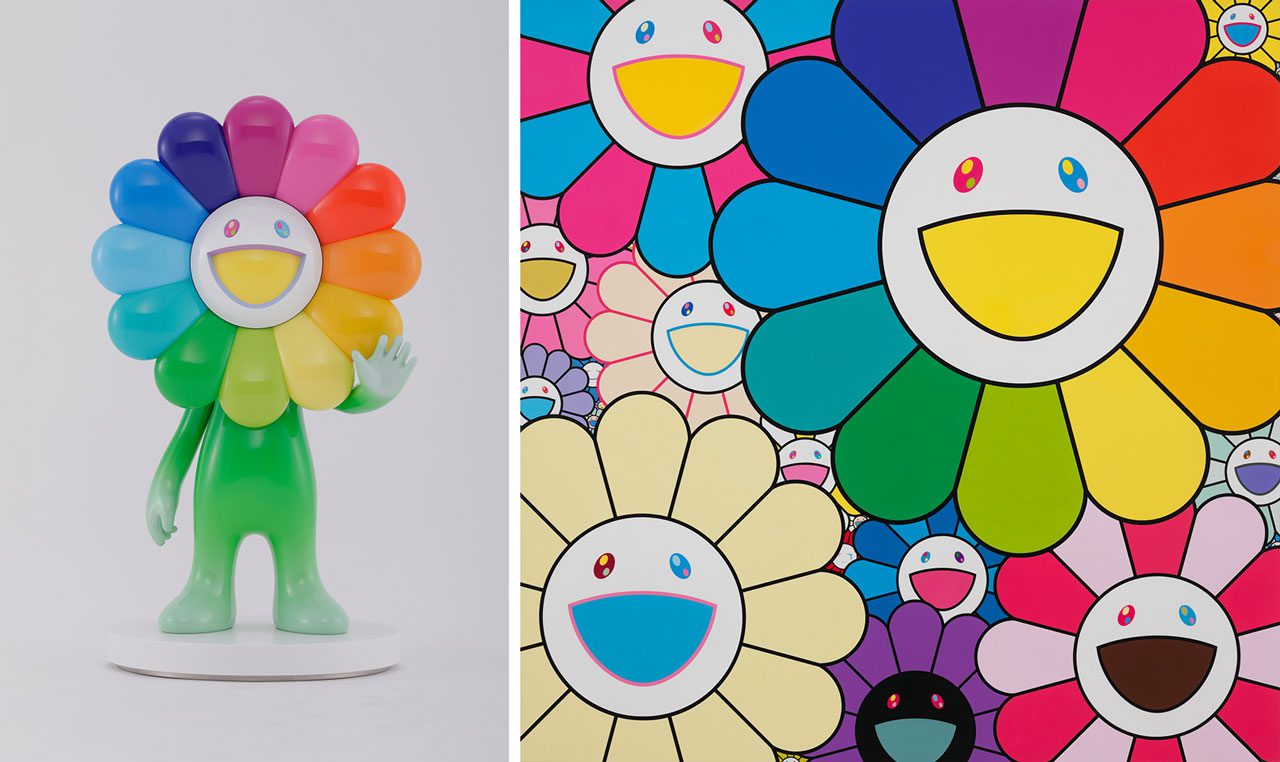
Right: Takashi Murakami, Superflat Shangri-La Square, 2025, Acrylic on canvas mounted on aluminum frame, 47 1/4 x 47 1/4 inches (120 x 120 cm), © 2025 Takashi Murakami/Kaikai Kiki Co., Ltd. All Rights Reserved, Photo: Kei Okano, Courtesy the artist and Gagosian