PRESENTATION: Haegue Yang, Quasi-Heartland
Haegue Yang is one of the most influential voices in visual culture and I have long admired her deft skill at creating emotional, weighty, and referential sculptures that bring heightened sensitivity to the nuances of our surroundings. “Her work resonates internationally for its sensory power and conceptual depth, and we’re honored to present her captivating works for audiences here in St. Louis for the first time.
By Efi Michalarou
Photo: CAM Archive
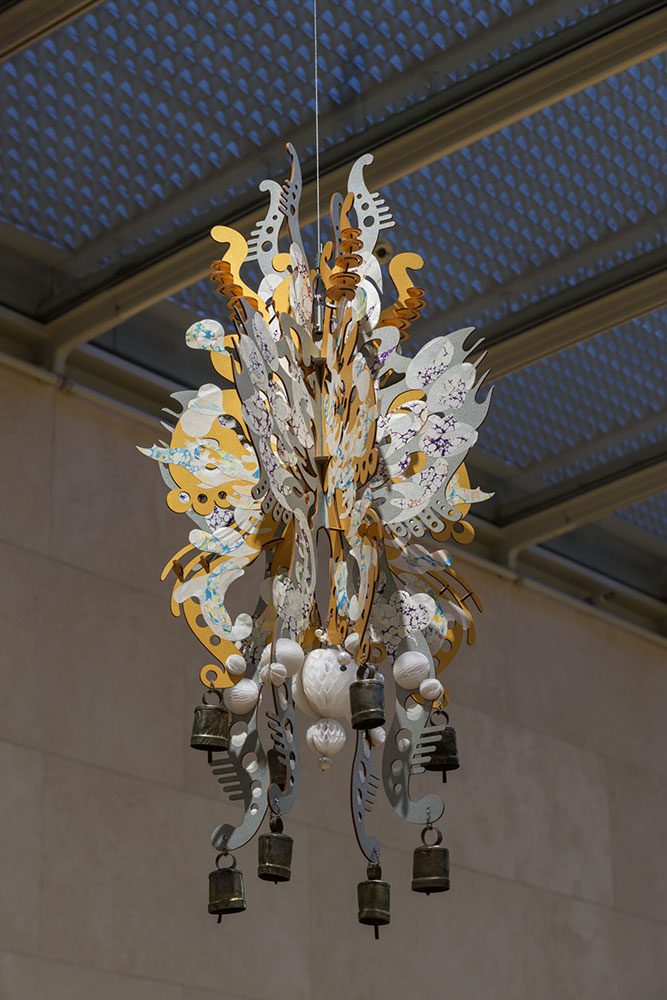
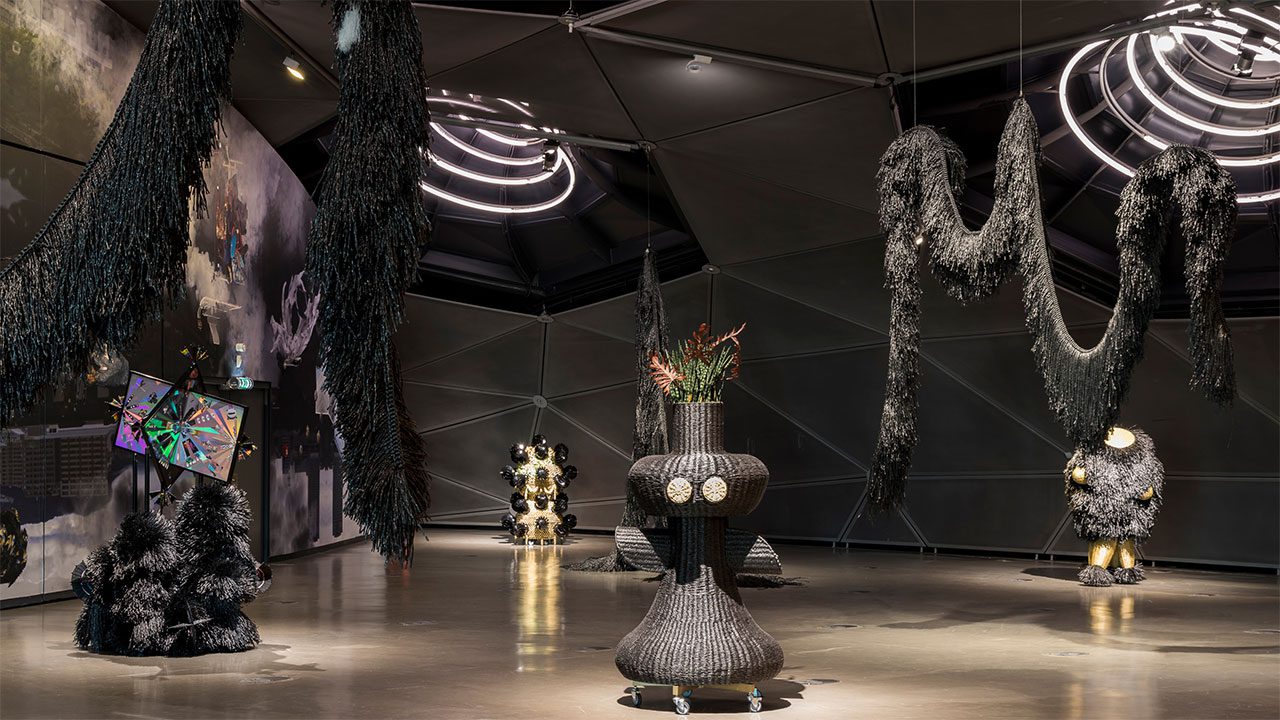
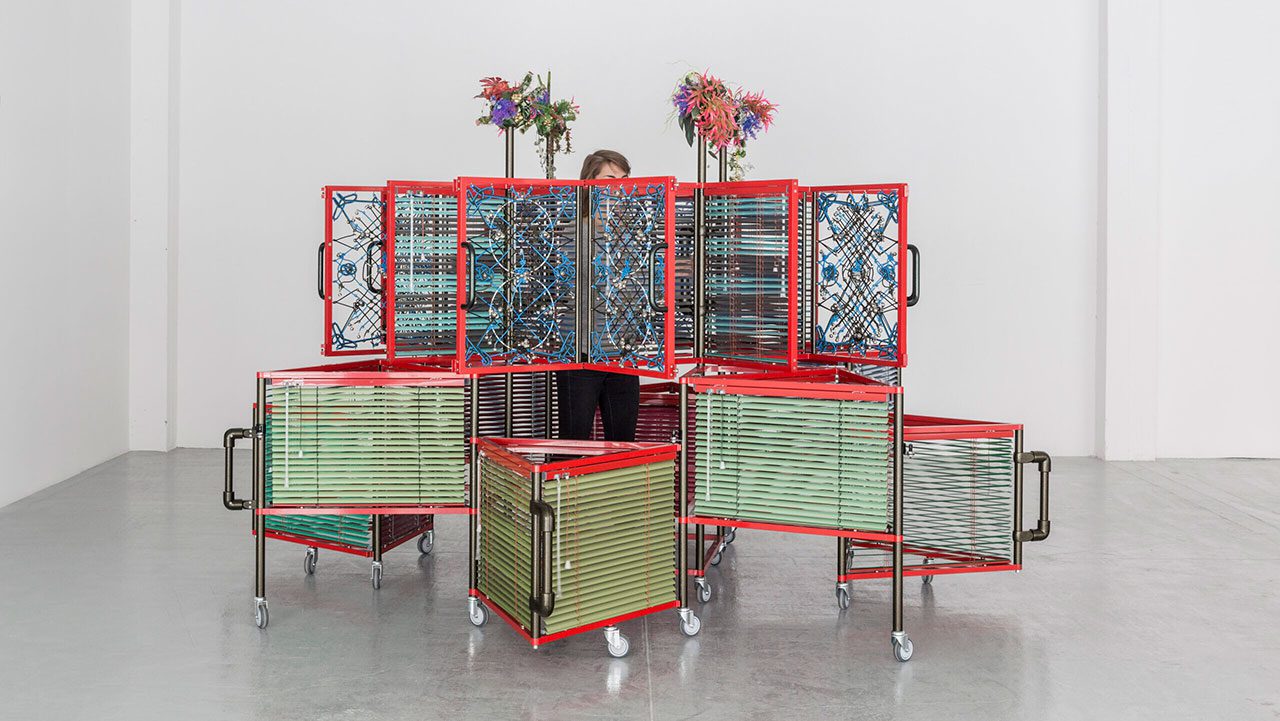
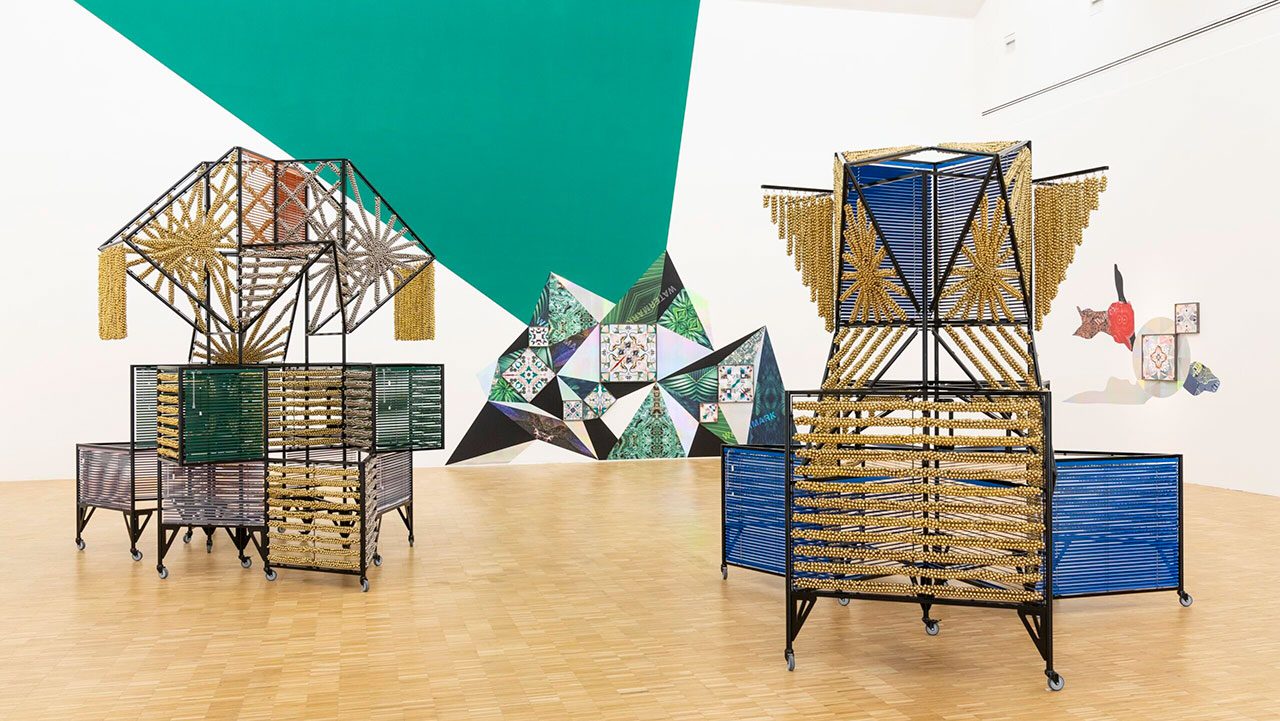
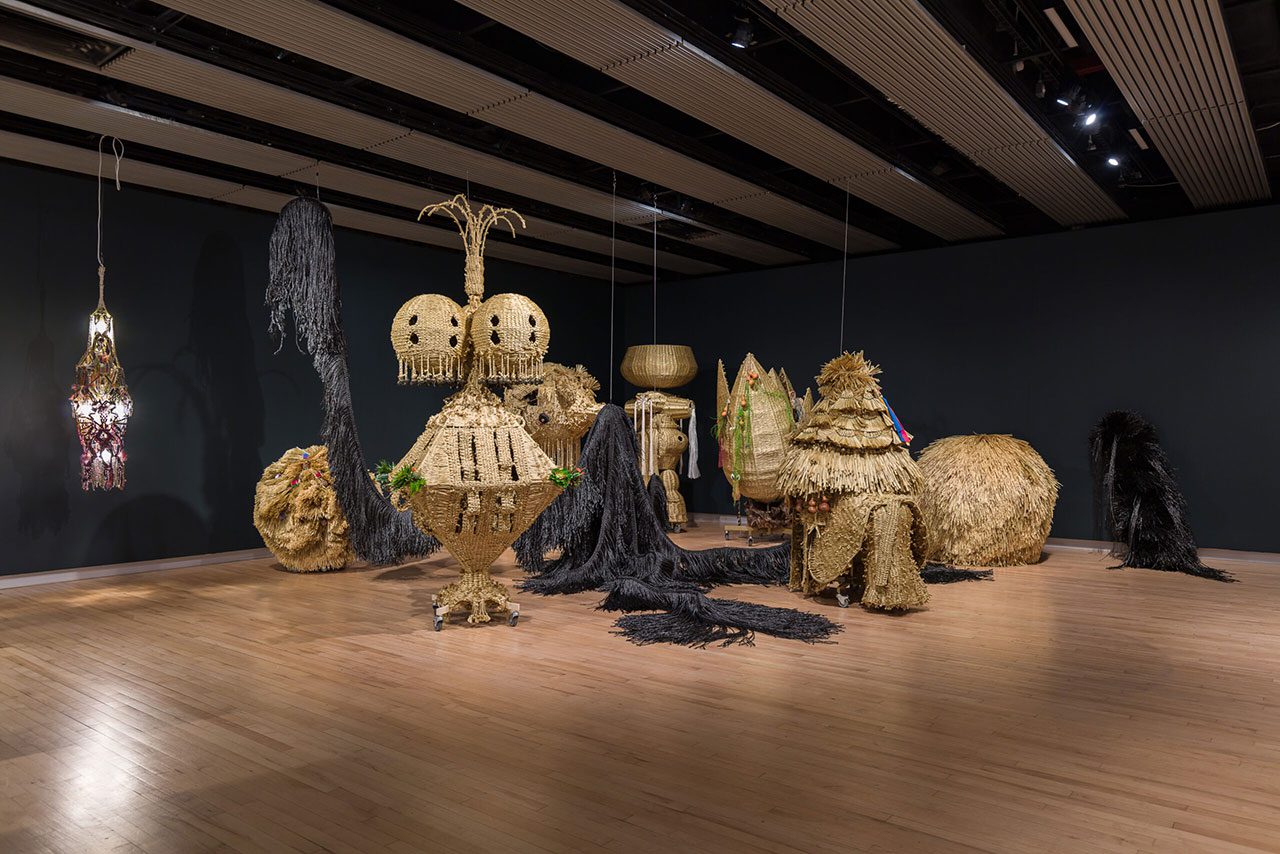
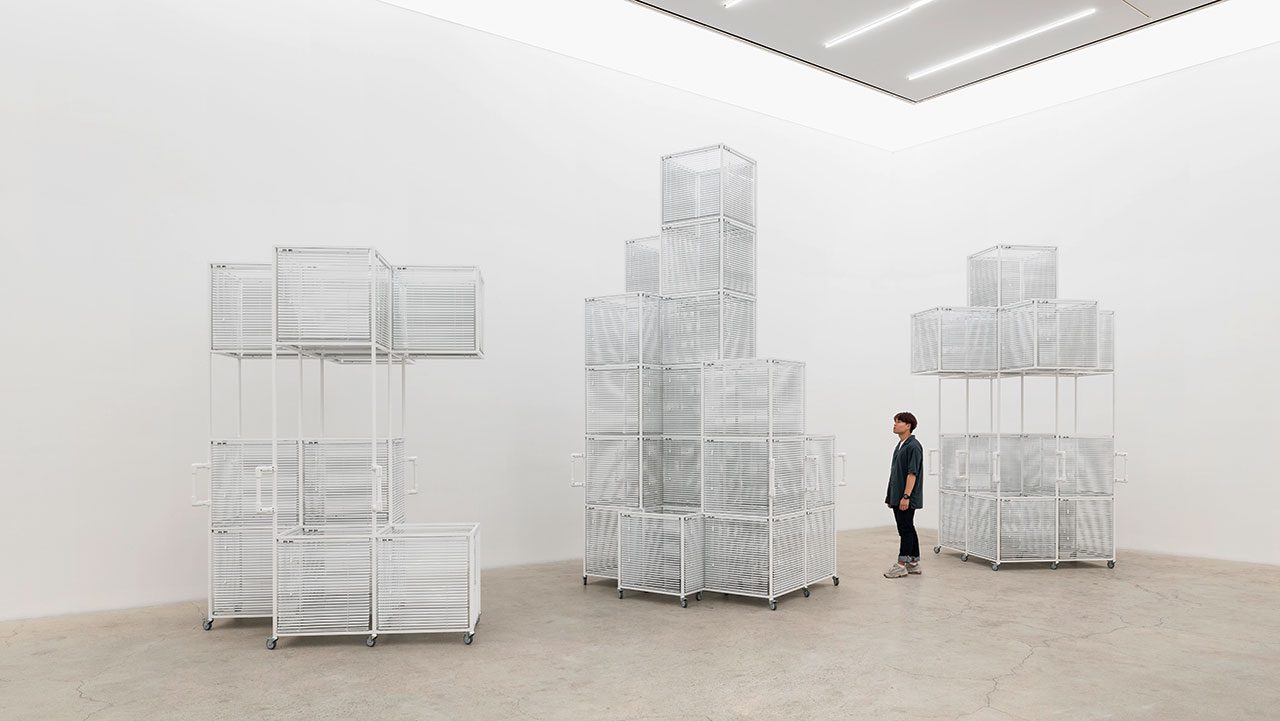
Based between Seoul and Berlin, Haegue Yang has established herself as one of the most singular voices in contemporary art, known for her expansive practice that spans large-scale installations, performative sculptures, paper collages, and staged performances. Her work deftly weaves together the tactile and the ephemeral, often incorporating sound, scent, light, and movement. Everyday materials—Venetian blinds, artificial straw, bells, or plastic twine—are unmoored from their familiar roles and reassembled into multi-layered sculptures and environments that oscillate between the sensorial and the conceptual. Yang’s latest solo exhibition, “Quasi-Heartland”, brings this multifaceted approach into sharp relief. Organized by the Contemporary Art Museum St. Louis (CAM), the exhibition includes a major new commission alongside key works from the past twenty-five years. Yang mobilizes art history, political biography, and folk culture to probe themes of displacement and belonging—artistic exile, postcolonial diasporas, and the liminal space between figuration and abstraction—always with a sensitivity to how materials and gestures carry cultural memory. At the heart of the exhibition is “Mound Vehicles” (2025), a four-part Venetian blind sculpture commissioned by CAM. Installed within the museum’s bay of windows, the work is visible both inside and out, a porous threshold between institutional space and public realm. Its tiered form recalls the monumental earthen mounds of Cahokia—an Indigenous settlement near the confluence of the Mississippi and Missouri Rivers that flourished in the 9th century. Yang translates these ancient architectures into a contemporary sculptural idiom: green blinds evoke grassy earth, blue blinds reference riverine waters, while branch-like handlebars and casters animate the work with the potential for movement. Like her celebrated “Dress Vehicles” (2011–present), the piece is designed to be activated by facilitators, its maneuverability linking it to a lineage of kinetic sculptures that require collective effort to set in motion. Movement, transformation, and hybridity are also at the core of Yang’s “Umbra Creatures by Rockhole” (2017–18), an ensemble of seven large-scale sculptures suspended or placed on casters. With their tentacled forms, bushy surfaces, and woven exteriors, these quasi-animals summon mythic shadow creatures from folklore, while simultaneously gesturing toward Yang’s long-standing interest in weaving traditions and ritual sound. The series synthesizes two of her major bodies of work—”Sonic Sculptures” (2013–present), based on the ritualistic use of metal rattles, and “The Intermediates” (2015–present), a meditation on weaving as a universal folk technique. By employing black synthetic cord with a subtle sheen, Yang strips the material of its folkloric weight, transforming it into something enigmatic, even alien. The installation of “Umbra Creatures “at CAM gains added resonance through juxtaposition. A thread work from one of Yang’s early series stretches taut red cotton strands across a gallery threshold, punctuated by faint chalk lines extending across the wall. This minimalist structure both bars entry and frames the “Creatures” within, like a cage. The pairing highlights Yang’s dual impulses—toward the delicacy of precision lines and the unruly vitality of anthropomorphic form—staging a dialogue between restraint and exuberance. Suspended above “Mound Vehicles”, the newly created “Airborne Paper Creatures” (2025) extend Yang’s investigations into lightness and immateriality. Crafted from Korean hanji paper and birch plywood, ornamented with beads, marbled papers, and goat bells sourced from Lahore, these small-scale sculptures recall the aerodynamic grace of traditional kites. Their subtle movements are animated by shifting air currents and the presence of viewers below, transforming the gallery into a sonic-kinetic environment. In contrast to the monumentality of the mound, these creatures embrace fragility and buoyancy, offering a meditation on the ephemeral. Taken together, the works in “Quasi-Heartland| chart Yang’s restless engagement with material culture, ritual, and the politics of place. Whether invoking ancient mounds, mythic creatures, or airborne forms, she persistently asks how objects migrate across time and geography—and how they might be reactivated in new contexts. In St. Louis, these questions resonate with particular urgency: a city marked by its layered histories of settlement, movement, and transformation. Yang’s art thrives in this in-between space—between heaviness and flight, folk craft and conceptual rigor, the quotidian and the mythic. “Quasi-Heartland” is not only an exhibitionof her practice but also a testament to her ability to reimagine the familiar into the extraordinary, drawing audiences into a heightened awareness of the worlds both around and within them.
Photo: Haegue Yang, Dress Vehicle – Yin Yang, 2012. Aluminum venetian blinds, powder-coated aluminum frame, powder-coated handles, casters, magnets, knitting yarn, bells, elastic cord. 221 x 310 x 310 cm. Collection of M+, Hong Kong. Installation view of Haegue Yang: Ajar, La Douane, Galerie Chantal Crousel, Paris, France, 2012. Photo: Florian Kleinefenn
Info: Curator: Misa Jeffereis, The Contemporary Art Museum St. Louis (CAM), 3750 Washington Blvd, St. Louis, MO, USA, Duration: 5/9/2025-8/2/2026, Days & Hours: Wed & Sat-Sun 10:00-17:00, Thu-Fri 10:00-20:00, https://camstl.org/
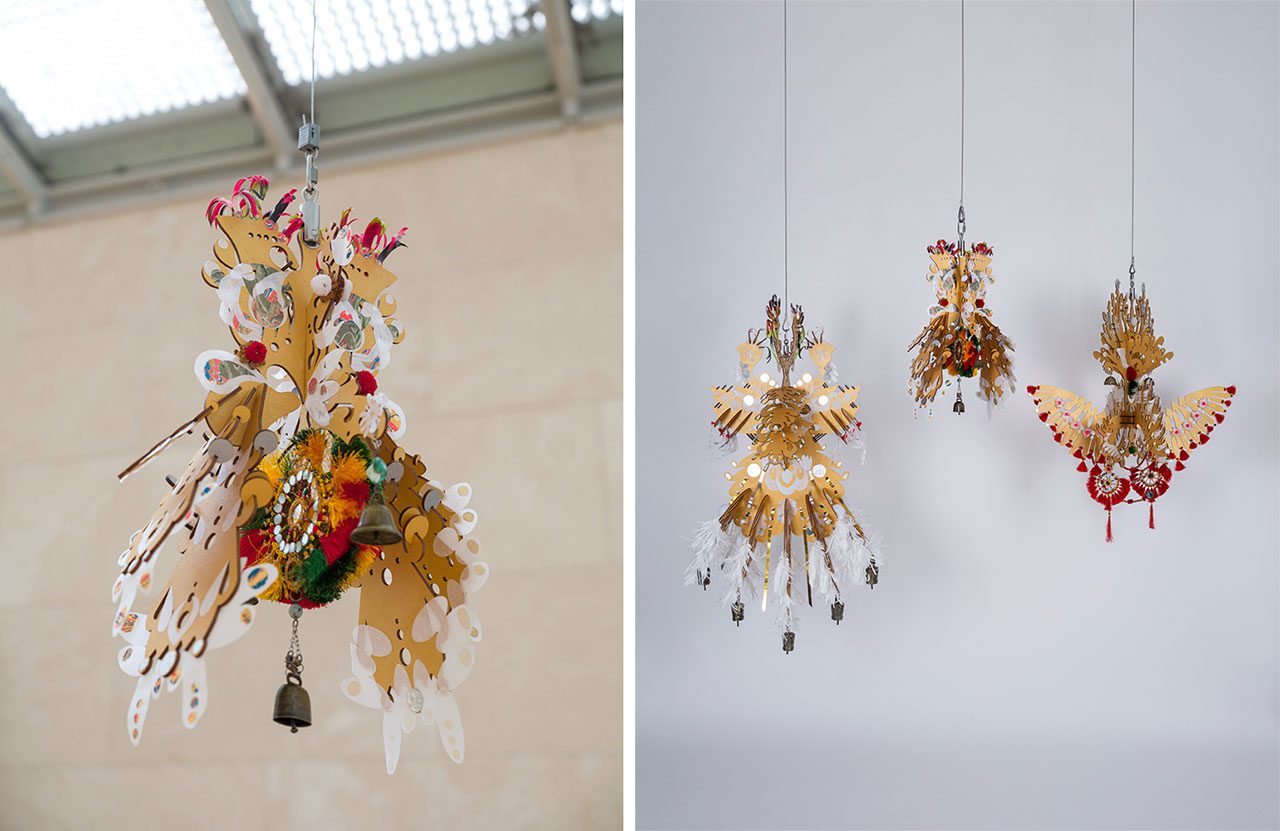
Right: Haegue Yang, Airborne Paper Creatures – Swimmers (detail), 2025. Birch plywood, wood stain, stainless steel components, hanji, marbled paper, honeycomb paper balls, pearls, metal bells, Punjabi earrings and ornaments, stainless steel chains, split rings, steel wire ropes, swivels. 3 parts; 114 x 54 x 54 cm, 89 x 28 x 43 cm, 101 x 49 x 56 cm. Courtesy Kukje Gallery. Installation view of “Haegue Yang: Lost Lands and Sunken Fields”, Nasher Sculpture Center, Dallas. Photo: Kevin Todora