
PRESENTATION: Emily Kam Kngwarray
A senior Anmatyerr woman from the Sandover region of the Northern Territory, Emily Kam Kngwarray (c. 1910–1996) transformed the deep ceremonial and spiritual ties she held to her ancestral Country, Alhalker, into a visual language that forever altered the landscape of contemporary art. From early batik textiles to monumental acrylic canvases, her work distilled an ancient cultural inheritance into forms that resonated far beyond Australia. Remarkably, Kngwarray began painting only in her seventies, devoting the last years of her life to creating a body of work that continues to inspire audiences worldwide, three decades after her passing.
By Dimitris Lempesis
Photo: Tate Archive
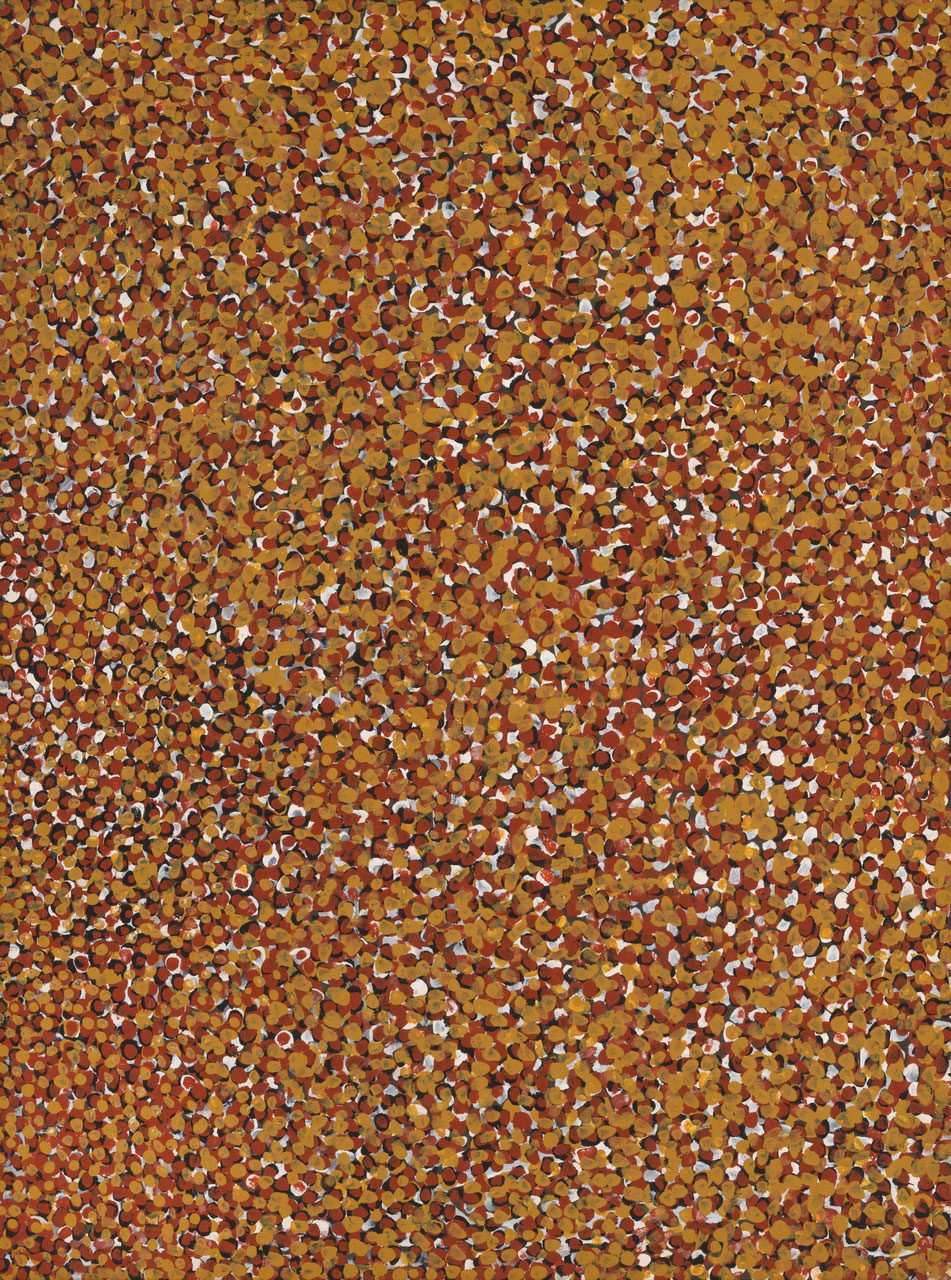
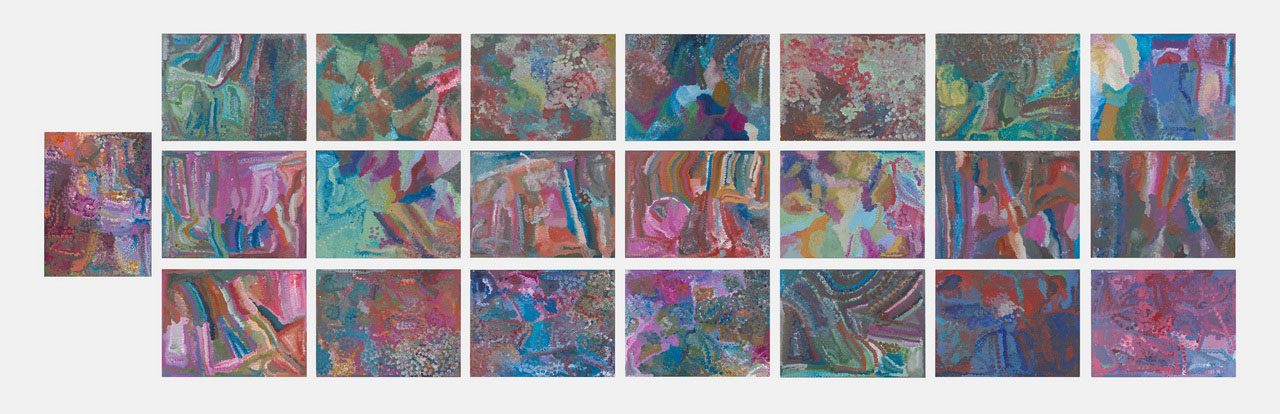
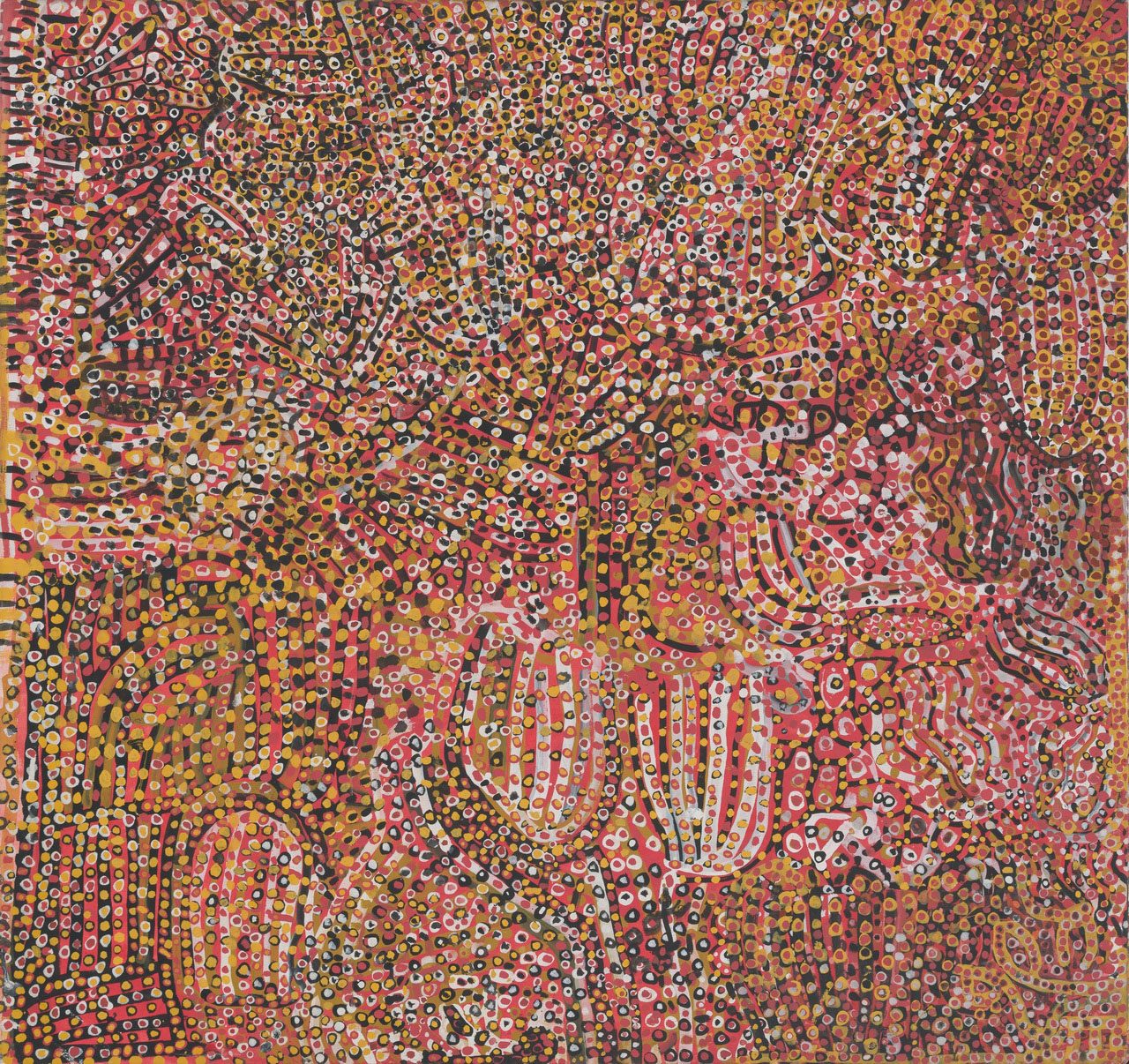
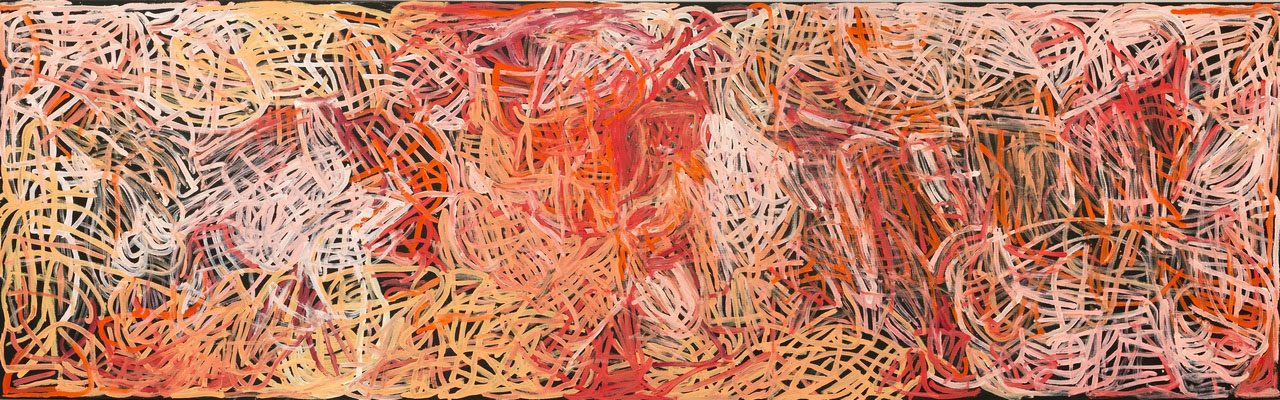
Emily Kam Kngwarray’s legacy is not only that of a painter but of a cultural custodian, a matriarch, and a pioneer whose practice opened new pathways for Aboriginal and Torres Strait Islander artists, for women, and for Australian art as a whole. The extensive survey “Emily Kam Kngwarray” at Tate Modern assembles more than 70 works spanning her short but prolific career. Many will be seen outside Australia for the first time, offering European audiences a rare and revelatory encounter with the artist’s powerful vision. Kngwarray’s artistic journey began at Utopia Station in the 1970s, where she first experimented with batik techniques. By the late 1980s, she transitioned to acrylic painting on canvas, a medium that allowed her to expand her visual and spiritual lexicon. Her practice was inseparable from her role in women’s ceremonial traditions of awely—a complex interweaving of song, dance, body painting, and storytelling. She painted as she lived: seated on the ground, much as she would to prepare food, dig for yams, or draw stories in the sand. This embodied way of working rooted her art in everyday ritual and communal practice, far removed from European and North American artistic trends of her time. The exhibition presents her art not as an abstracted modernist experiment, but as an extension of her lived world—revealing Kngwarray as matriarch, storyteller, singer, friend, and custodian of Country.Her imagery, drawn from the ecology of Alhalker, encompasses plants, animals, and ancestral narratives. Among her recurring motifs are the emu (ankerrl), a creature of great cultural significance, and the pencil yam (anwerlarr) with its underground seedpods (kam), from which she takes her name. The exhibition opens with one of her earliest batiks on cotton (1977), paired with “Emu Woman” (1988), her first canvas work which propelled her to national recognition. From here, the display traces the evolution of her visual language—immersive textiles, earthy-hued canvases, and monumental works that capture the shifting textures and seasonal rhythms of desert life. Highlights include “Ntang Dreaming” (1989), mapping the edible seeds of woollybutt grass (alyatywerengl), and “Ankerr (Emu)” (1989), a striking topography of emu tracks between waterholes. These early canvases hang alongside vast batiks on silk and cotton, creating an enveloping environment that mirrors the expansiveness of desert Country. Kngwarray’s practice rapidly expanded in scale and ambition. Works such as “Kam” (1991) reveal her turn to brighter colours and monumental canvases, while “Untitled (Alhalker”) (1989) and “Ntang” (1990)—acquired for Tate’s collection in 2019—demonstrate her ability to condense complex ecological and spiritual systems into painterly form. At the centre of the exhibition lies her magnum opus, “The Alhalker Suite” (1993). Spanning 22 canvases, this immersive cycle offers a radiant portrait of her homeland. Pastel pinks and blues evoke wildflower blooms after rain, while clusters of dots suggest rock formations, grasslands, and the pulse of ancestral presence. Importantly, Kngwarray did not dictate a fixed configuration for these canvases; their shifting arrangement each time they are shown underscores the living, evolving nature of the stories they embody.In the final years of her life, Kngwarray’s style underwent a dramatic transformation. She moved toward bold, pared-back compositions—parallel monochrome lines in red, yellow, and black, painted onto stark white grounds. Works such as “Untitled (Awely)” (1994)—originally the centrepiece of the Australian Pavilion at the 1997 Venice Biennale—demonstrate a tactile intimacy, echoing the gestures of painting bodies for ceremony. Her last canvases bristle with vitality: fluid brushstrokes, entwined lines, and bursts of colour that evoke the entanglement of yams, grasses, roots, and ancestral tracks. The exhibition closes with “Yam Awely” (1995), a luminous testament to her enduring connection to Country, where every mark reaffirms the timeless interdependence of land, people, and spirit. Emily Kam Kngwarray’s career lasted barely a decade, yet its impact is immeasurable. She redefined the possibilities of Aboriginal art on the international stage, while never departing from the cultural traditions and landscapes that sustained her. For visitors to Tate Modern, this exhibition offers more than a survey of an extraordinary artist; it is an invitation to witness a world in which art, ceremony, and Country are inseparably bound.
Photo: Emily Kam Kngwarray, The Alhalker suite 1993. National Gallery of Australia, Canberra © Emily Kam Kngwarray/Copyright Agency. Licensed by DACS 2025
Info: Tate Modern, Bankside, London, United Kingdom, Duration: 10/7/2025-11/1/2026, Days & Hours: Daily 10:00-18:00, www.tate.org.uk/
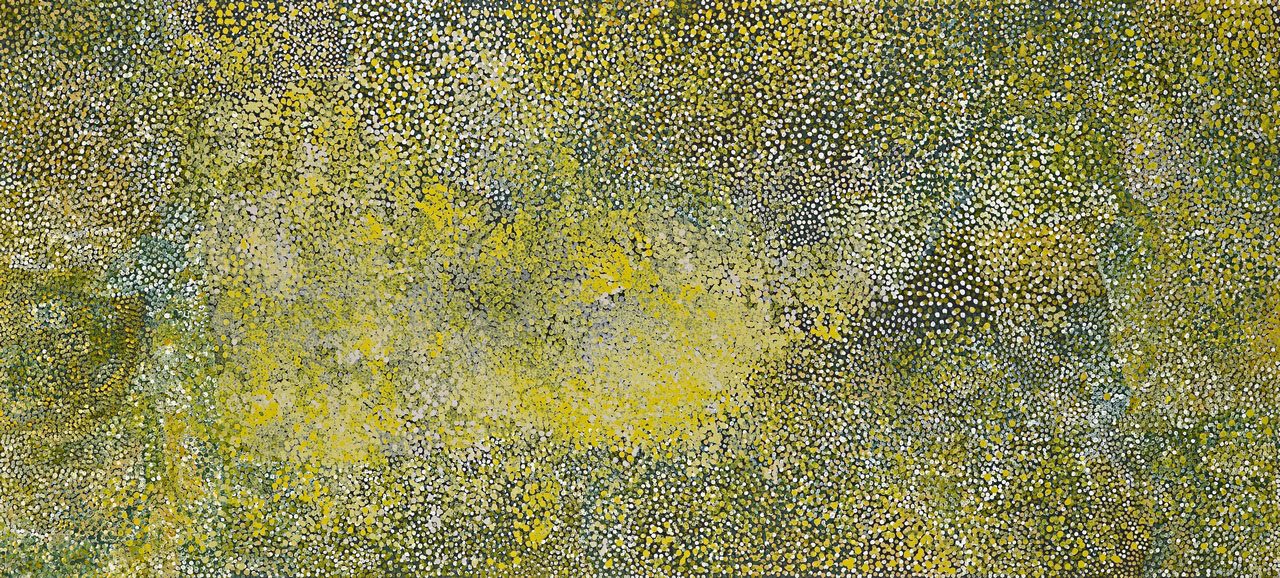
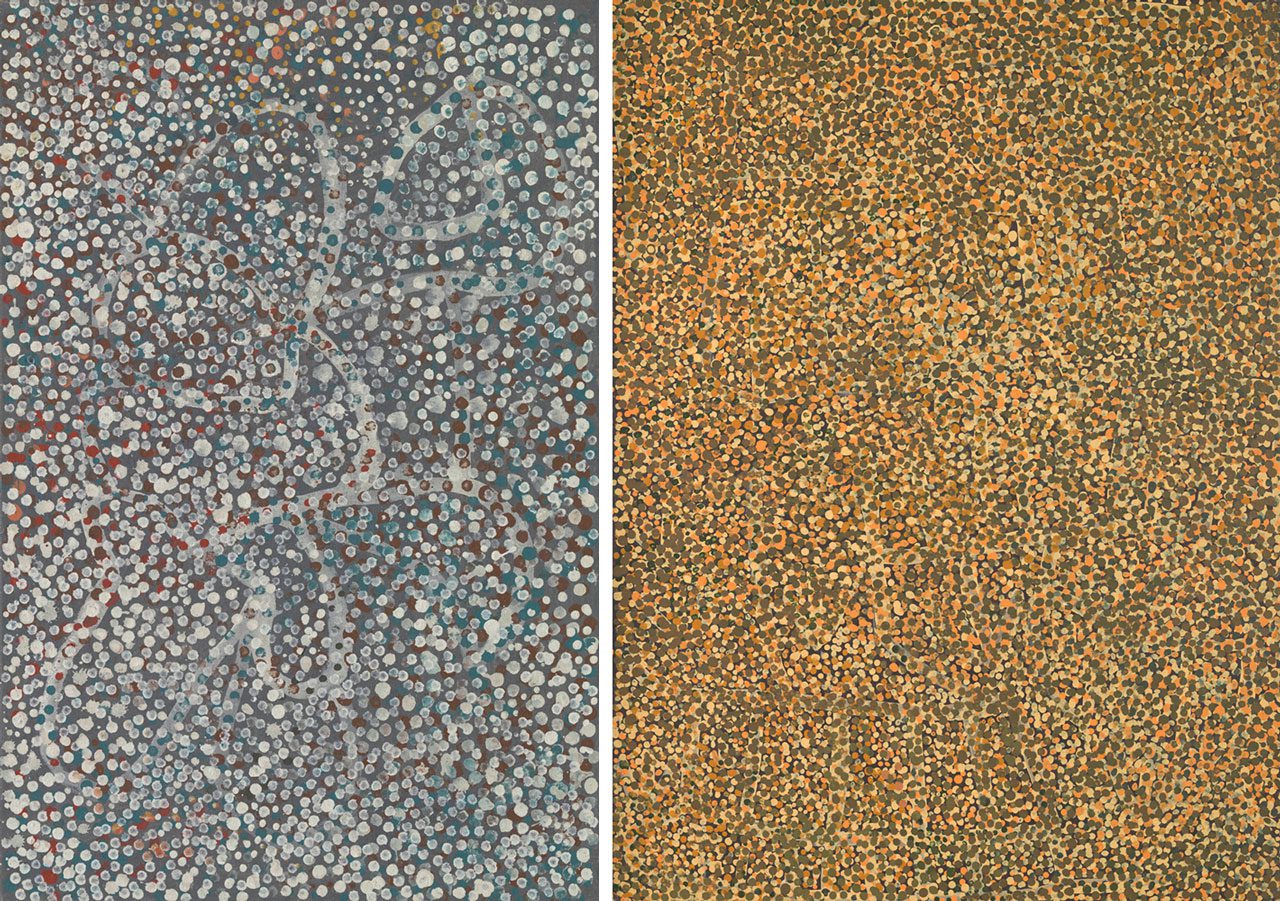
Right: Emily Kam Kngwarray, Untitled (Alhalker) 1989. Tate © Emily Kam Kngwarray/Copyright Agency. Licensed by DACS 2025
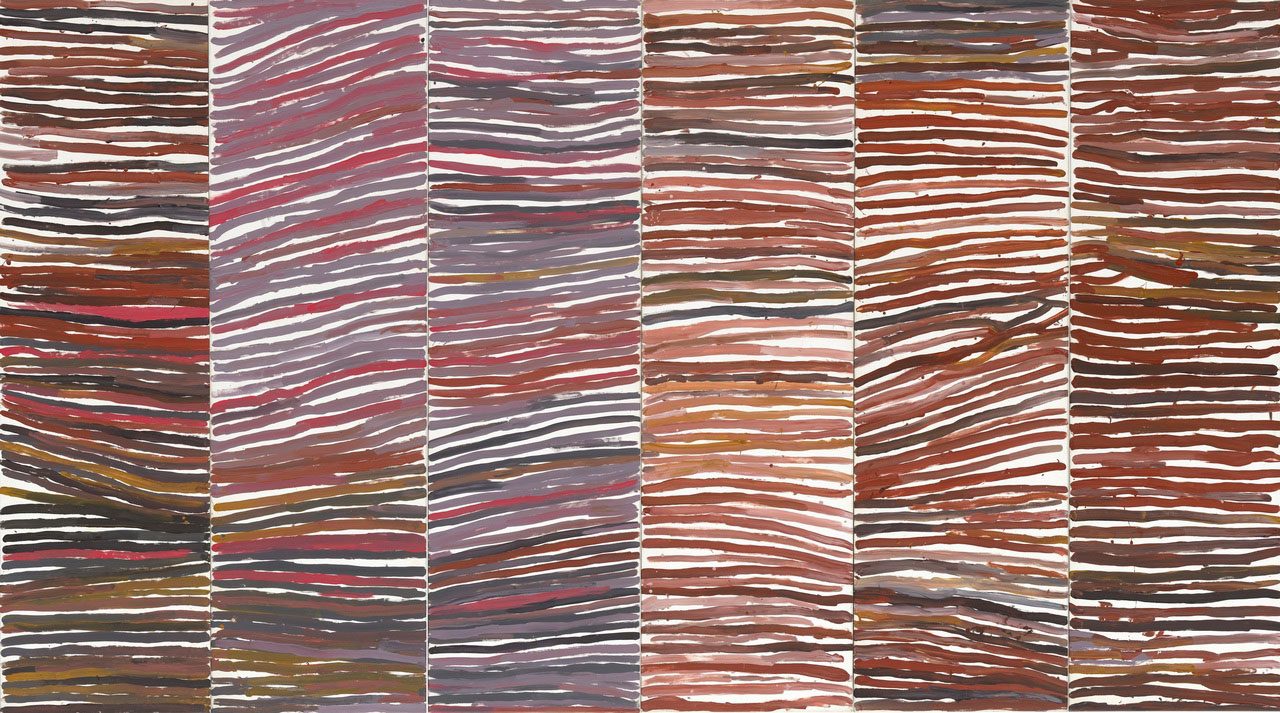
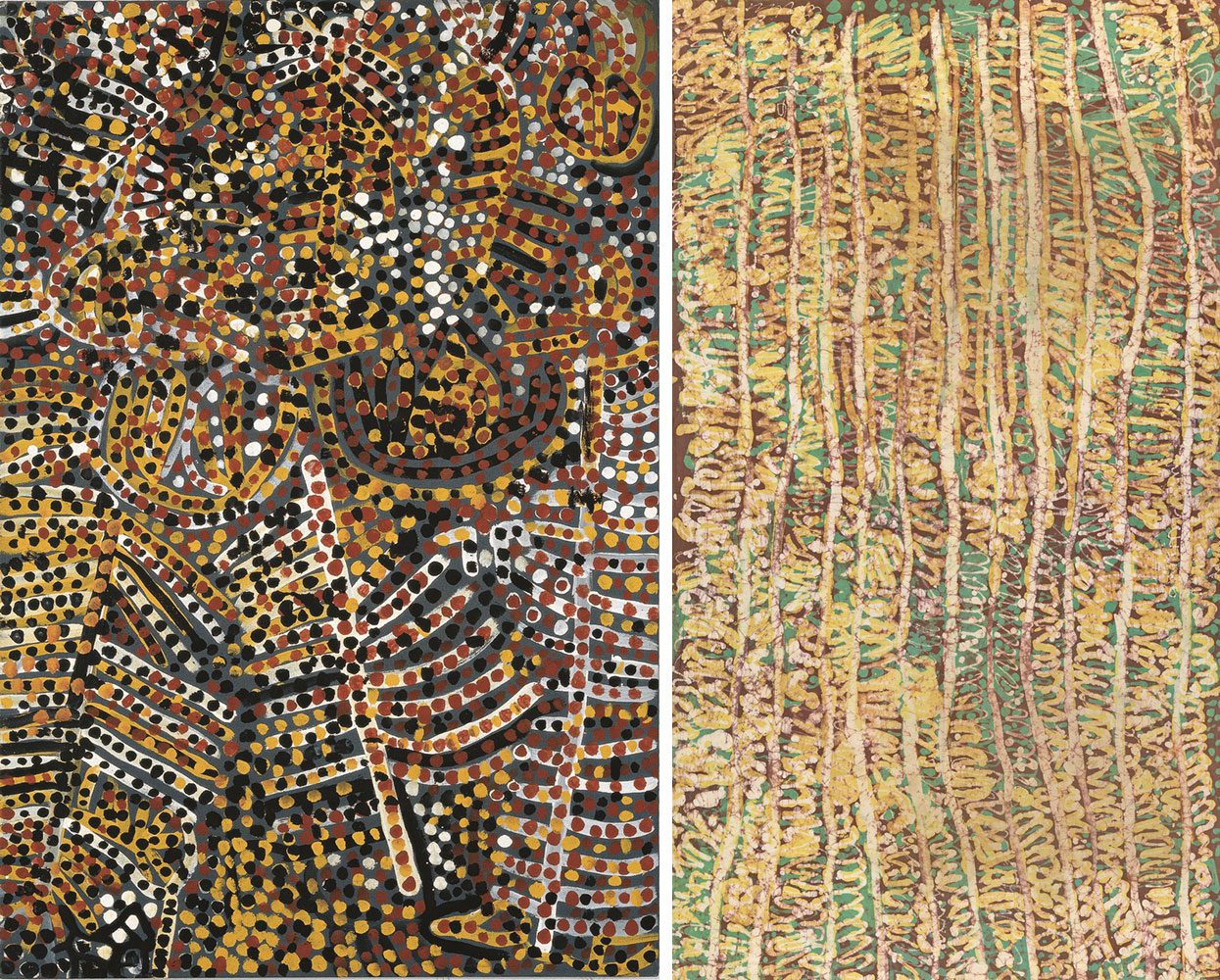
Right: Emily Kam Kngwarray, Untitled 1977. Juila Murray, Founder Utopia Women’s Batik Group, Utopia Women’s Batik Group. © Emily Kam Kngwarray/Copyright Agency. Licensed by DACS 2025