PRESENTATION: John M Armleder-Quicksand IV
Few artists embody the paradoxes of postwar art as elegantly—or as mischievously—as John M Armleder. A central figure in Swiss contemporary art since the late 1960s, Armleder’s practice is both rigorously conceptual and defiantly anarchic, playful yet philosophically charged. For more than fifty years, he has moved fluidly across painting, sculpture, performance, design, installation, and publishing, forging a body of work that resists neat categorization. Instead, his career reads as a sustained meditation on art’s instability: its refusal to hold still, to be pinned down, to remain one thing rather than many.
By Efi Michalarou
Photo: Country SALTS Archive
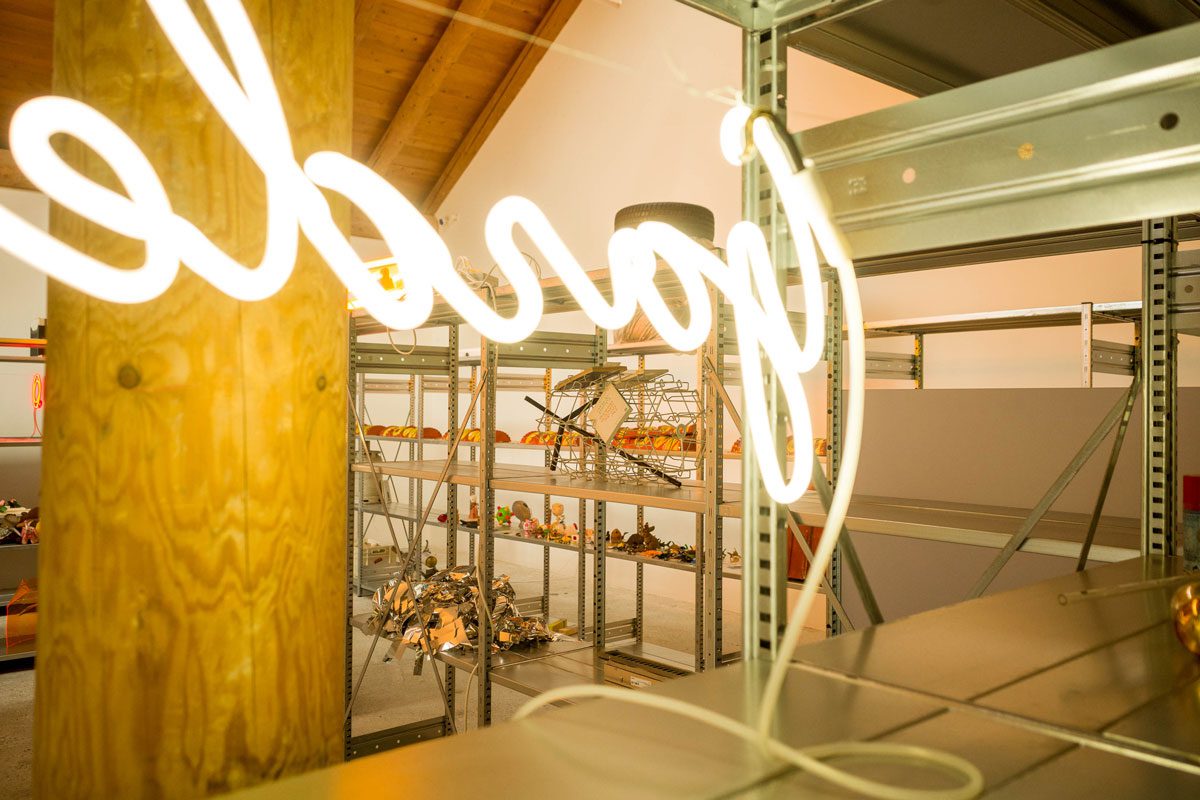
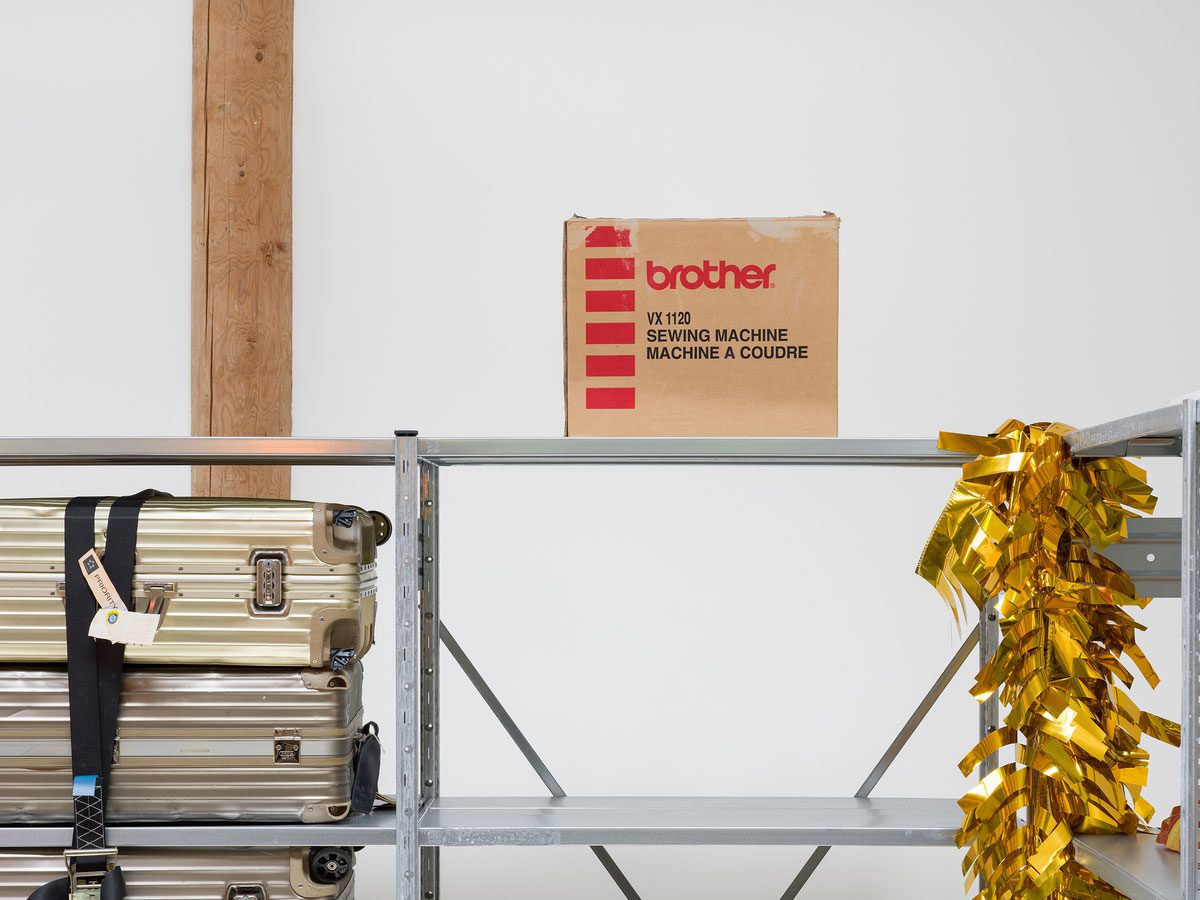
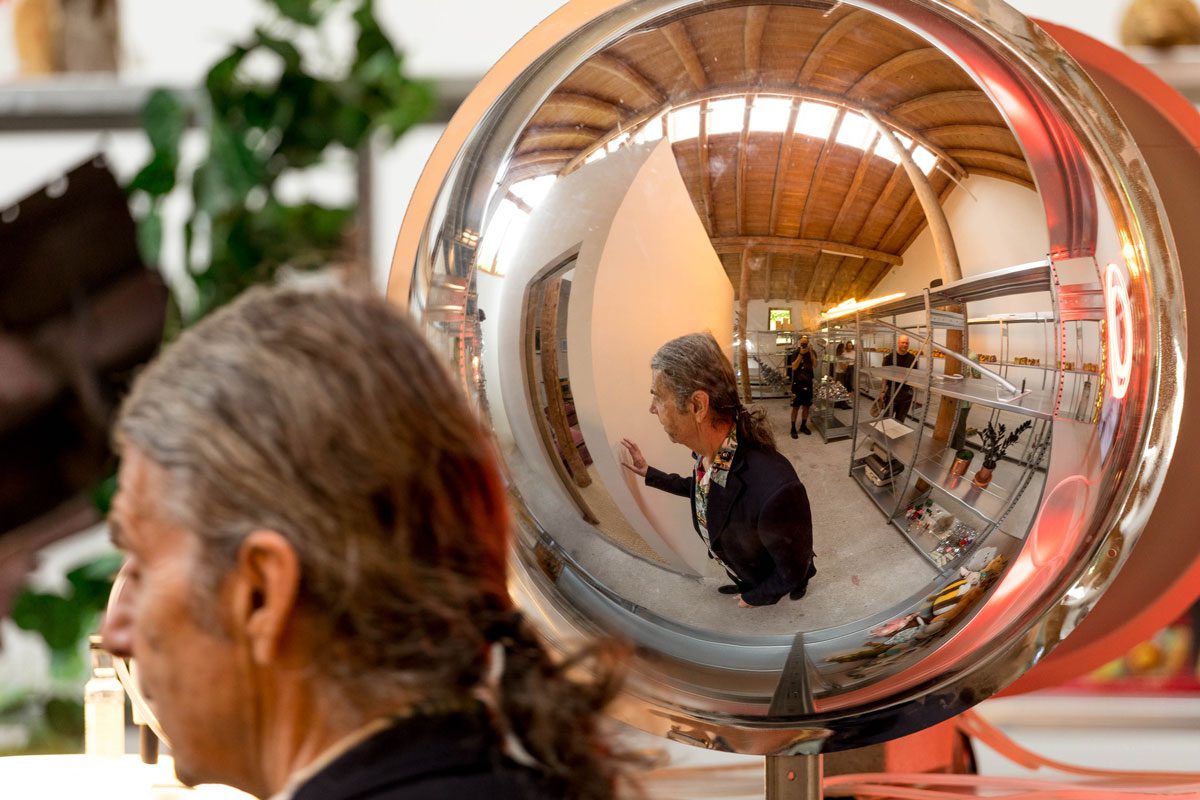
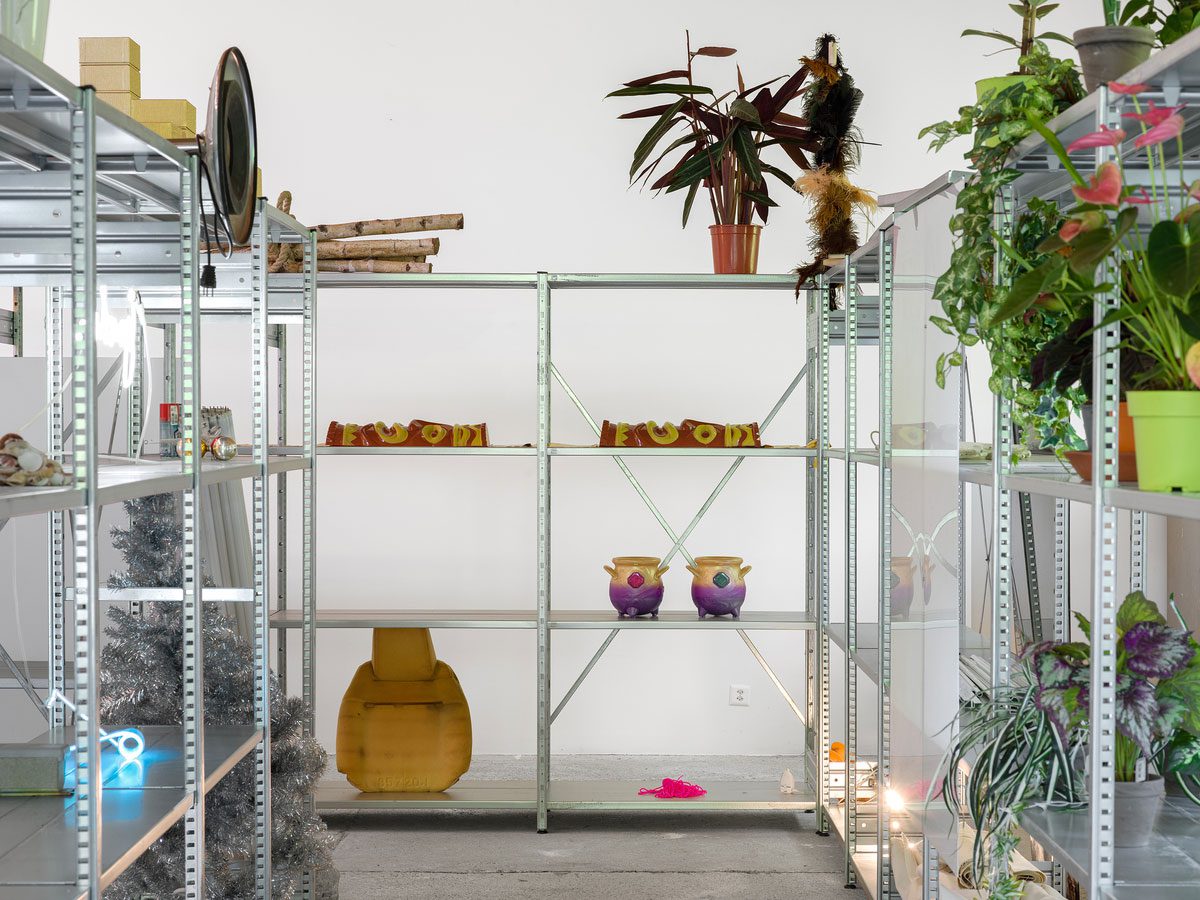
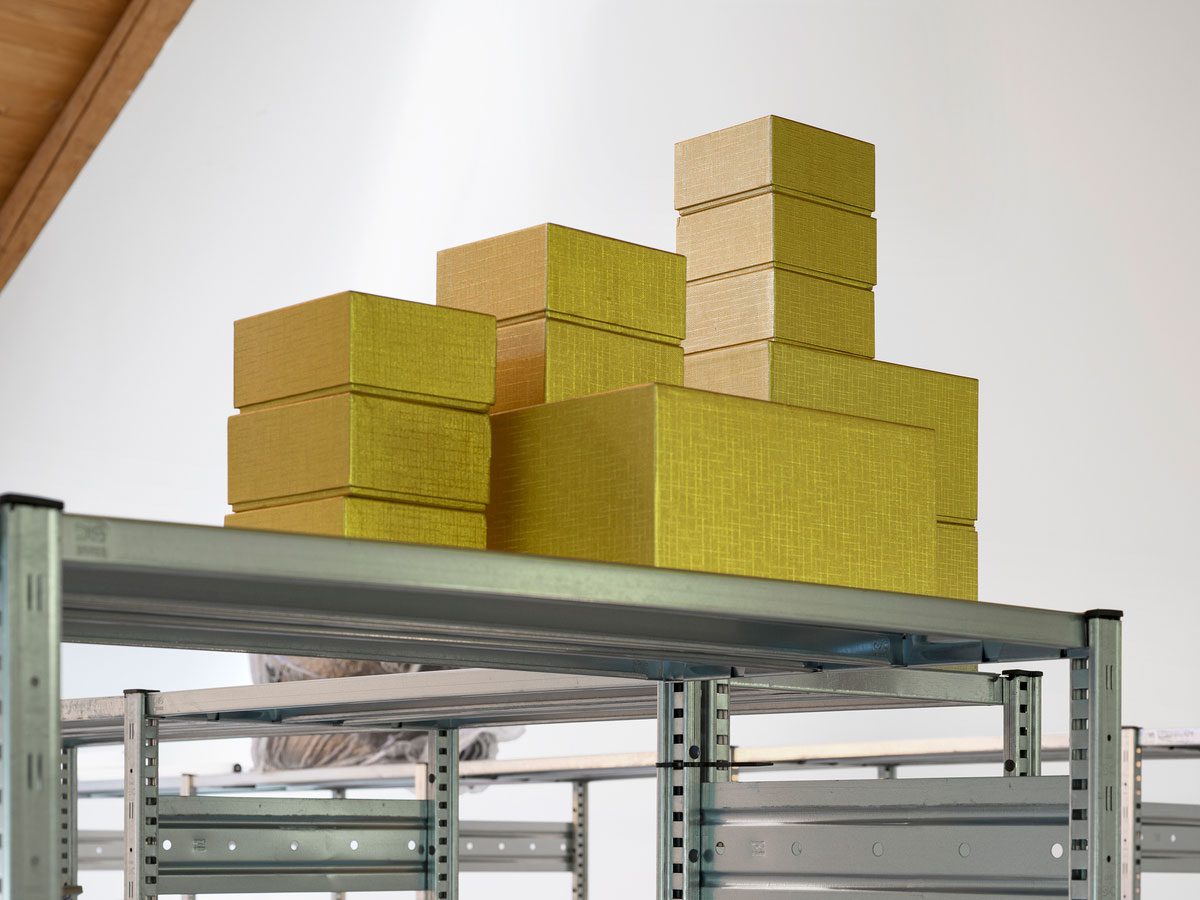
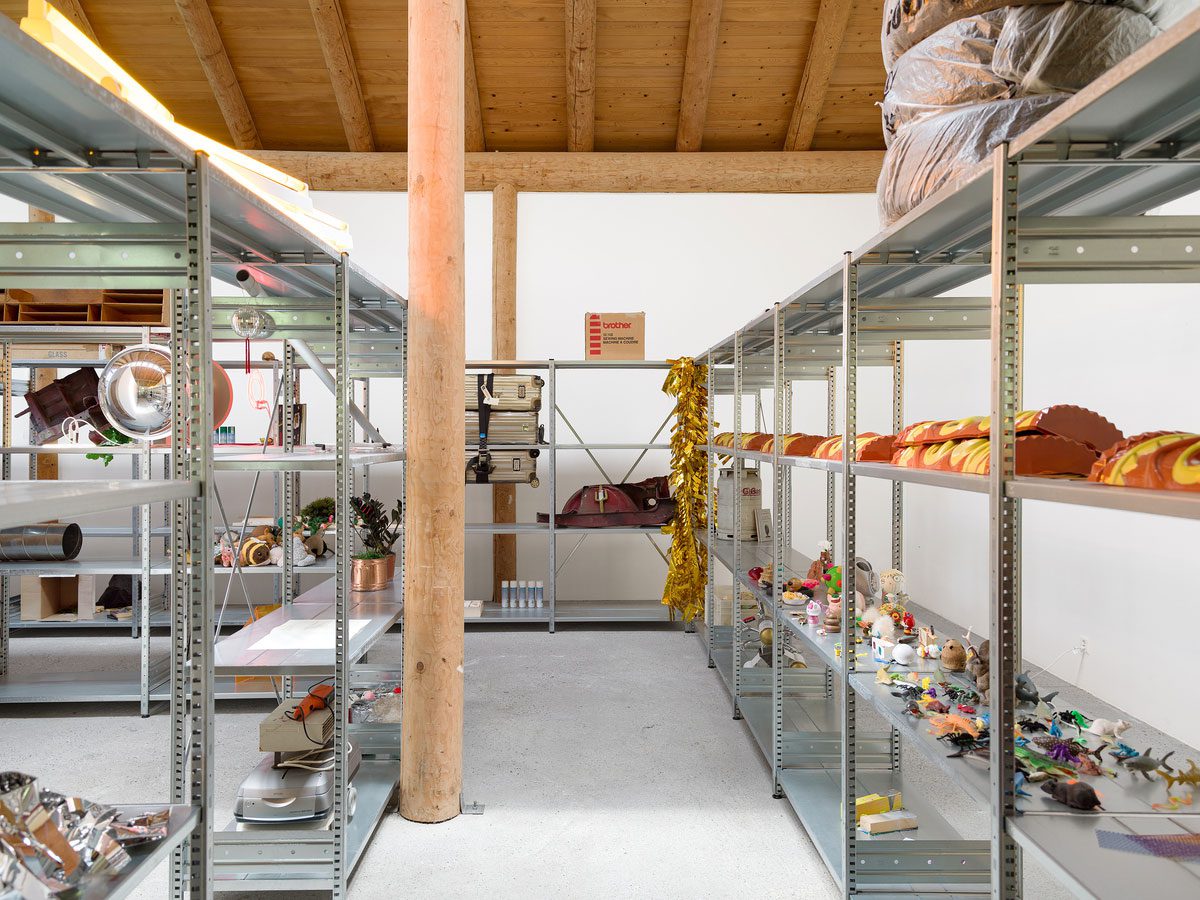
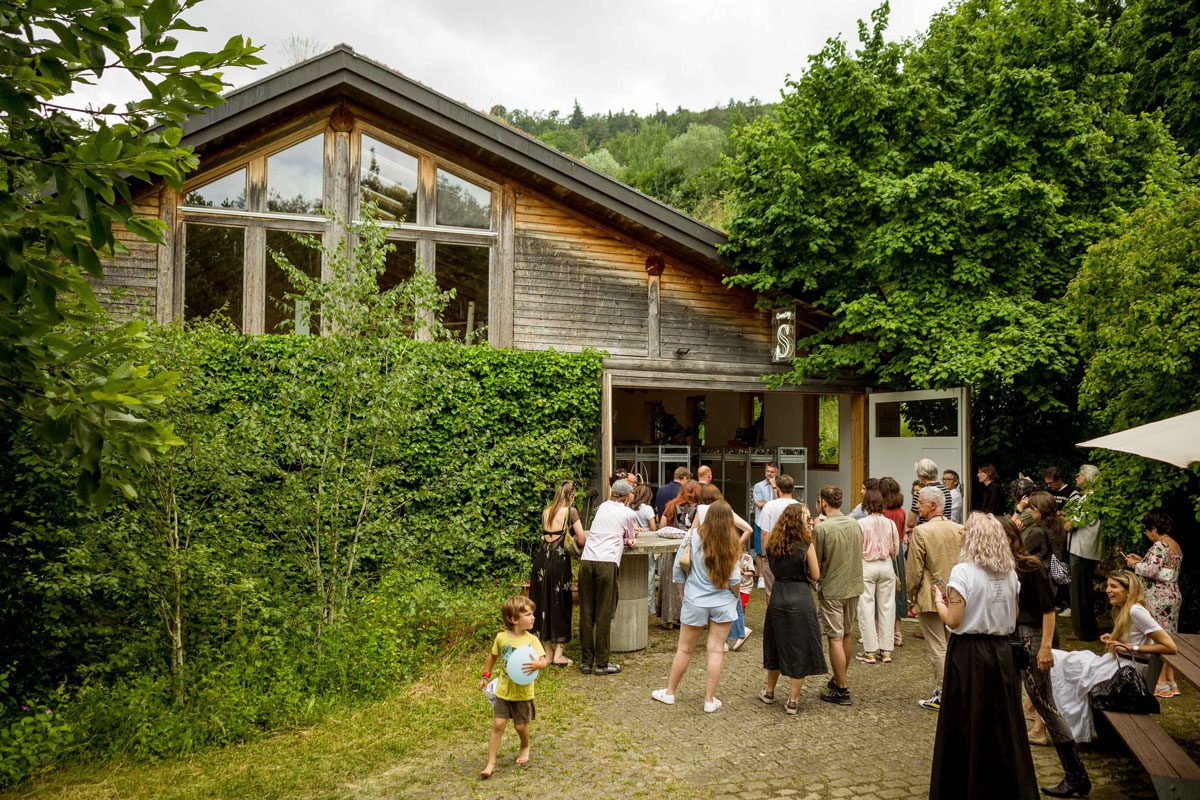
From his earliest performances with Groupe Ecart—a collective he co-founded in Geneva in 1969 that combined exhibition-making, a bookshop, and publishing activities— John M Armleder absorbed the irreverent, anti-establishment spirit of Fluxus. Like his peers in that international network, he saw art less as an object than as an action, an attitude, a way of engaging the world. This ethos remains deeply present in his work today, whether in the form of a monochrome canvas, an installation of found furniture, or a sprawling, immersive environment. Armleder’s art is an ongoing experiment with systems of order and disorder, irony and sincerity, chance and control. It is within this continuum that “Quicksand IV” (2025) emerges: the latest installment in a series of installations that Armleder has been developing for over a decade. Commissioned specifically for Country SALTS, a converted barn in the rural village of Bennwil, Switzerland, the work takes the form of a monumental shelving structure laden with a dizzying accumulation of objects. Seen from a distance, it resembles a storage unit, a studio in flux, or a material archive; up close, it unfolds as a constellation of associations, a theatre of objects in conversation with one another. At first encounter, the sheer volume of things overwhelms: shelves groaning under the weight of books, toys, plexiglass sheets, car parts, artificial plants, decorative trinkets, lights, industrial detritus, fragments of earlier works, and objects of uncertain status. The display may appear random, yet it is in fact organized according to an invisible score devised by the artist. This tension—between apparent chaos and underlying order—has long animated Armleder’s practice. Like John Cage’s use of chance operations in music, Armleder develops systems that resist mastery: structures that generate pattern without dictating meaning. In “Quicksand IV”, the objects themselves are neither simply artworks nor mere debris. They exist in a liminal state, oscillating between potential and residue, between archive and invention. Some are relics of past projects; others are surplus materials from the studio; still others are found items collected for reasons that may be opaque even to the artist. Each carries a fragment of narrative, a shard of memory, or a clue to an unrealized idea. Taken together, they form an open-ended portrait of the artist—not through a single iconic gesture, but through accumulation, contradiction, and excess. To situate “Quicksand IV” within Armleder’s career is to see it as both a culmination and a continuation. In the 1980s, Armleder became known for his “Furniture Sculptures,” uncanny juxtapositions of paintings with chairs, lamps, and other household items that collapsed distinctions between art object and everyday life. These works anticipated what critics later described as “commodity sculpture,” a tendency to explore the circulation of objects in consumer society. Yet unlike more austere practitioners of institutional critique, Armleder’s approach always carried a note of humor, absurdity, and generosity. The “Quicksand” series extends this trajectory by embracing the format of the exhibition itself as a sculptural medium. Each iteration—whether in London, Geneva, Brussels, or now Bennwil—responds to its site, while remaining in dialogue with its predecessors. The result is less a fixed work than a living process, a structure perpetually recomposed. As Armleder has said: “Although a system, some form of order, is created, the idea that one can seal a definitive story remains impossible.”
One of the most striking aspects of “Quicksand IV” is its refusal of hierarchy. Car parts sit beside plastic figurines; records lean against plexiglass sheets; potted plants—both real and artificial—sprout among stacks of books. High and low, precious and banal, art and non-art are all placed on an equal footing within the grid of metal shelving. The effect is both comic and profound: a democratization of matter that undermines systems of classification while reveling in their absurdity. In this respect, the work echoes the historical cabinet of curiosities—a Wunderkammer in which natural specimens, exotic artifacts, and artistic treasures were assembled side by side. Yet unlike those proto-museums, which often sought to impose a vision of universal knowledge, Armleder’s cabinet resists closure. It revels in incompleteness, in the restless reconfiguration of things. The “quicksand” of the title is telling: a shifting ground, a surface that never quite solidifies, a metaphor for instability itself. Armleder’s openness extends beyond the arrangement of objects to the participation of viewers. In earlier versions of “Quicksand”, visitors were invited to contribute items, blurring the line between artist and audience, author and collaborator. In this sense, the work is never finished; it is always provisional, subject to alteration, and enriched by the contributions of others. What results is not only a portrait of the artist, but also of a community, a collective arrangement shaped by chance encounters and shared matter. This generosity reflects Armleder’s enduring suspicion of the museum as a fixed, authoritative institution. “In my imagination, the museum doesn’t exist. Or rather: the museum is everywhere, all the time,” he once observed. Quicksand IV gives form to this idea, suggesting that any space—be it a barn in Bennwil, a London art center, or a Brussels industrial site—can become a stage for the interplay of objects and ideas. What ultimately makes “Quicksand IV” so compelling is its embrace of instability as both form and philosophy. In a cultural moment saturated by systems of categorization, algorithms of control, and demands for legibility, Armleder’s work insists on ambiguity, excess, and the refusal of closure. It suggests that meaning is not something delivered, but something produced in the encounter—between objects, between viewers, between histories. The installation’s restless accumulation mirrors the condition of contemporary life: our homes, devices, and minds overflowing with data, images, commodities, and memories. Yet rather than moralize this excess, Armleder treats it playfully, even tenderly. He shows us that disorder can be generative, that the absurd can be illuminating, that the surplus of things around us can be a source of connection and imagination. With “Quicksand IV”, John M Armleder once again demonstrates why he remains one of the most vital figures of his generation. By transforming a rural barn into a theatre of objects, he offers not just an exhibition but an experience: a meditation on matter, memory, and the impossibility of final order. It is a work that destabilizes, delights, and ultimately reminds us that the world—like art—is always in motion, always provisional, always slipping through our grasp like sand.
Photo: John M Armleder, Quicksand IV, Installation view, Country SALTS-Bennwil, 2025, Courtesy the artist and Country SALTS
Info: Curators: Samuel Leuenberger and Yann Chateigné Tytelman, Country SALTS, Hof Strickmatt, Bennwil, Switzerland, Duration: 15/6/2025-15/3/2026, Days & Hours: Thu & Fri 12:00-17:00 and by appointment, www.salts.ch/