BOOK: Hermann Nitsch-Life and Work, Pace Publishing
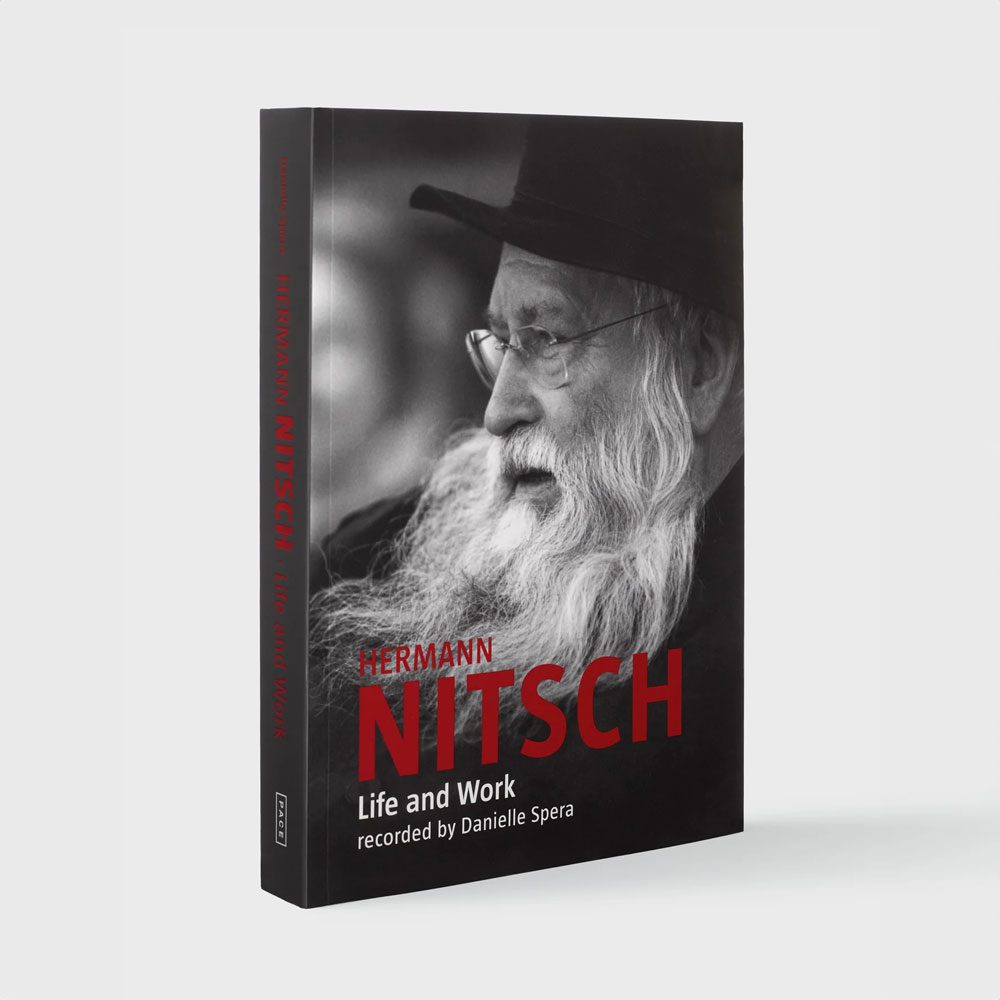
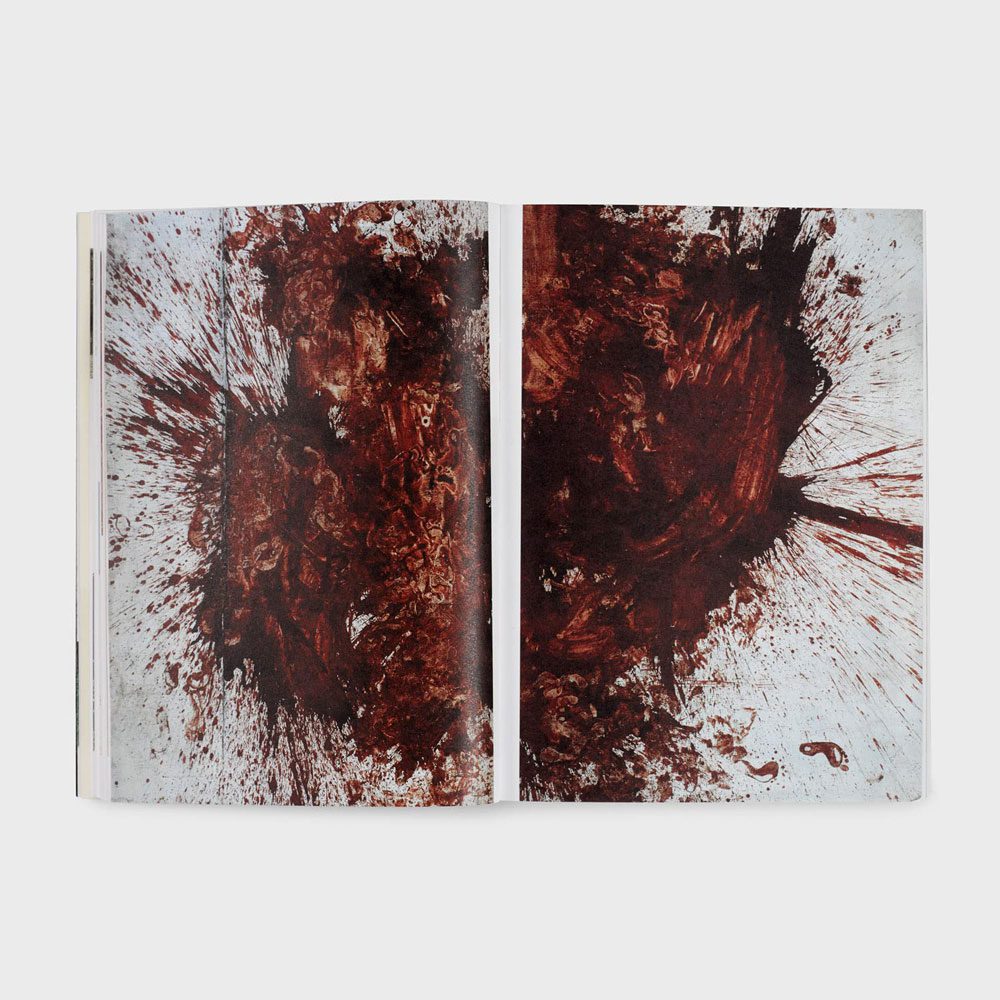
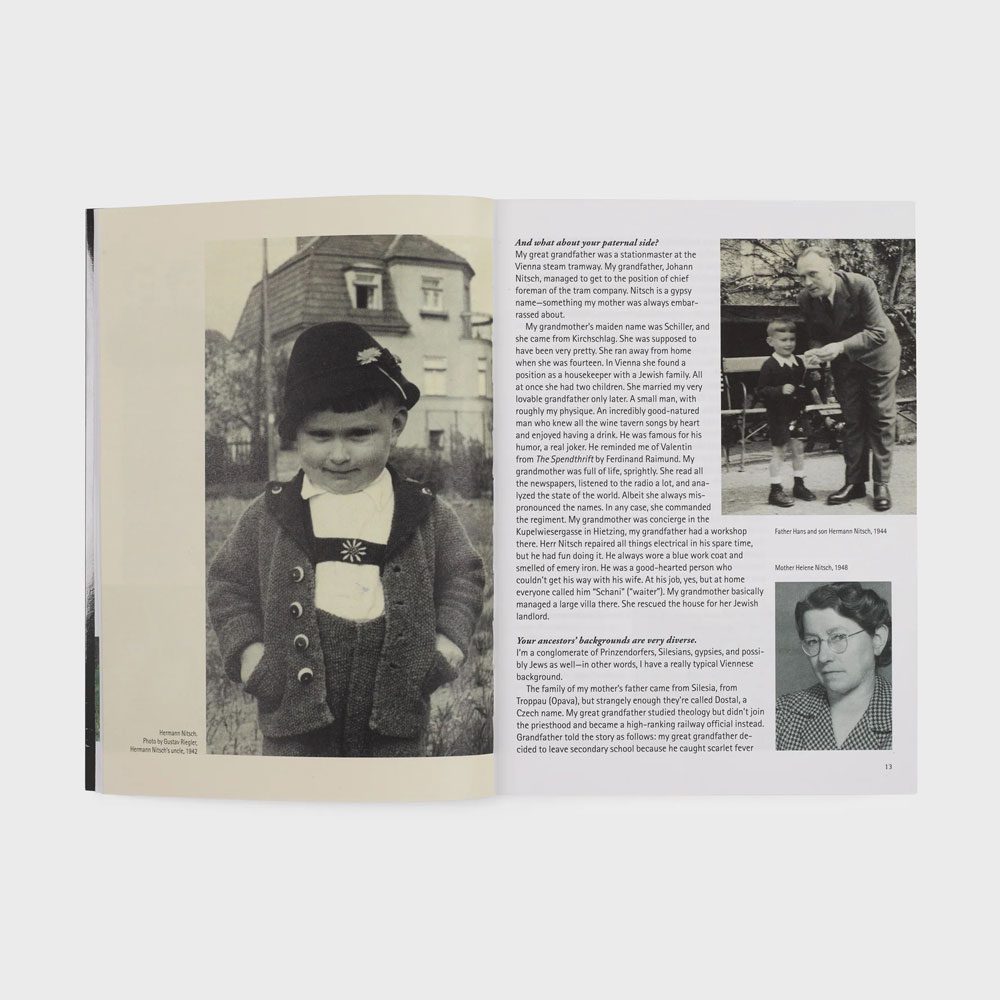
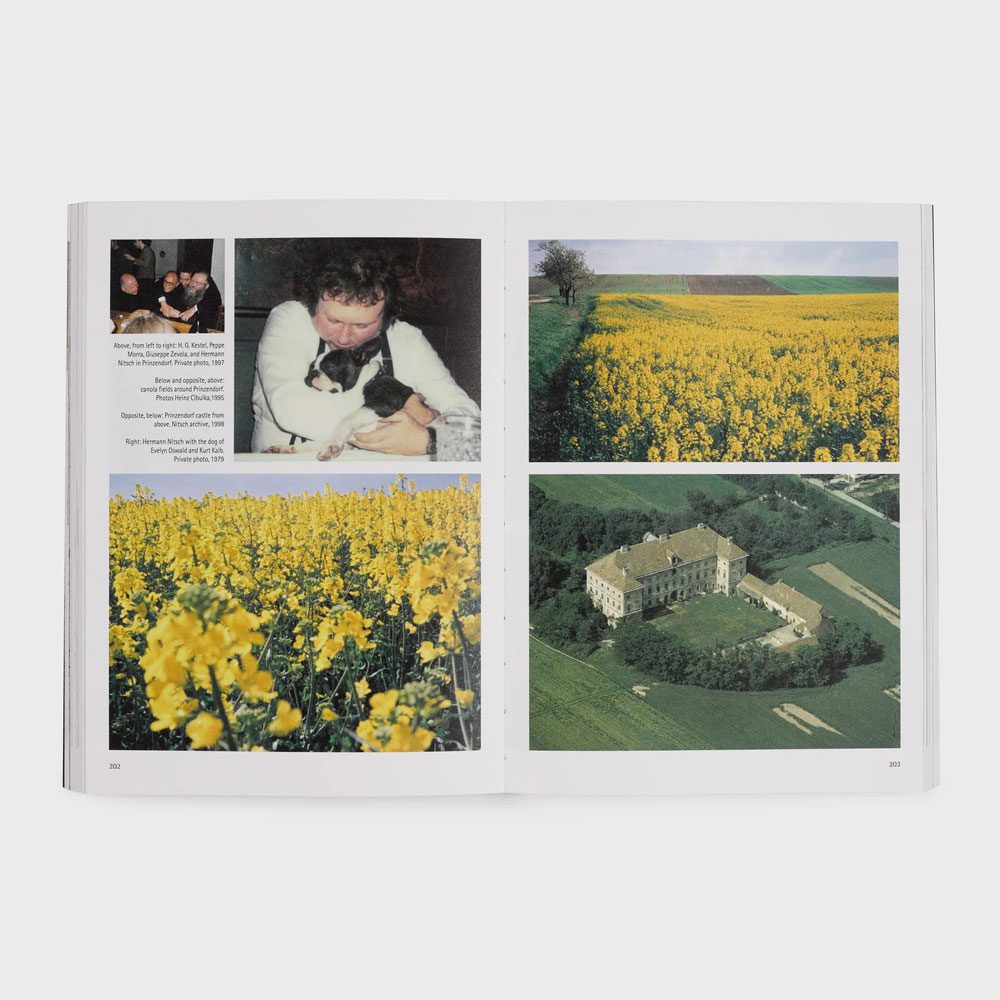
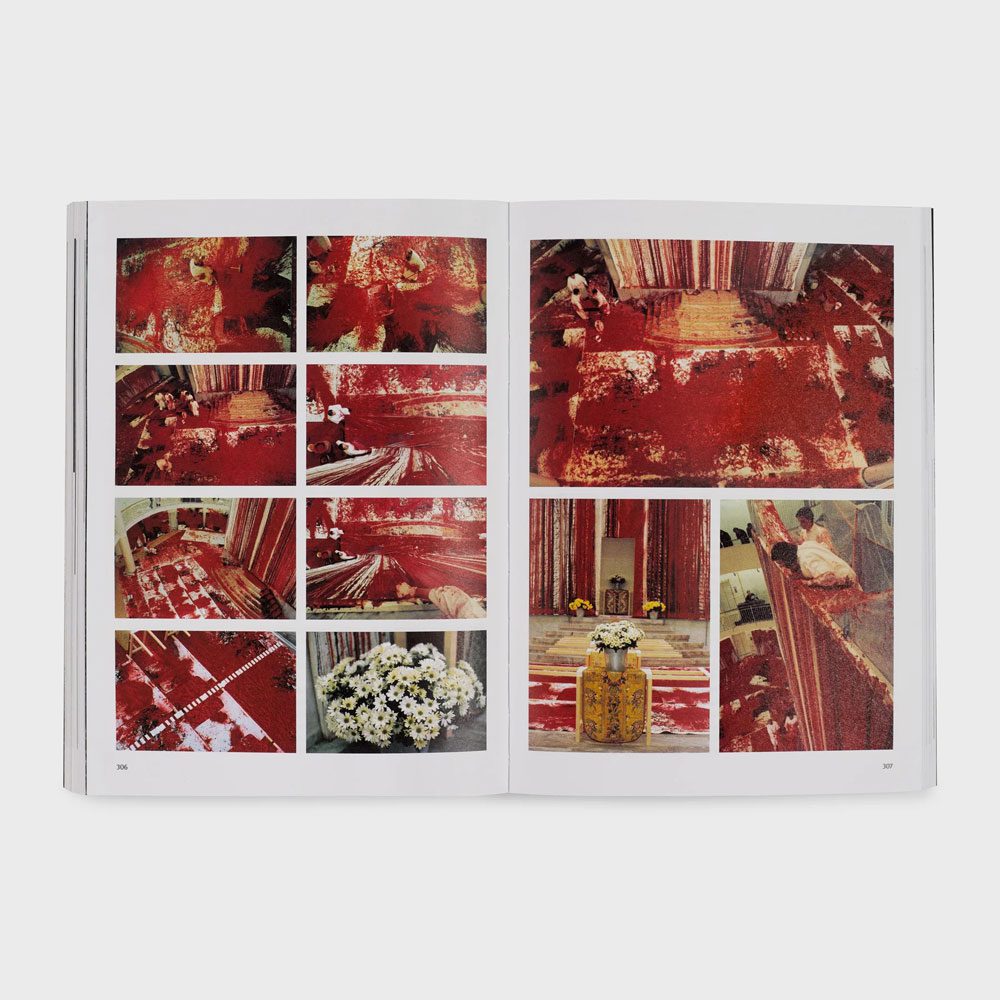
Pace’s publication “Hermann Nitsch: Life and Work” presents an expansive oral autobiography of one of the most polarizing and influential figures of the European postwar avant-garde. Constructed from extended conversations with Danielle Spera and complemented by the presence of Rita Nitsch, the book positions the artist’s own voice as its primary narrative force. What emerges is not simply a life story, but a sustained self-meditation on the origins, ambitions, and consequences of Nitsch’s radical project—the Orgies Mysteries Theatre. The autobiography situates Nitsch within the existential shadows of wartime Vienna, tracing how early encounters with religion, suffering, and mortality shaped a lifelong pursuit of catharsis through ritualized art. In these recollections, Nitsch does not separate biography from philosophy: the personal—romantic disappointments, precarious finances, and the hostility of public institutions—appears woven into the same fabric as his theoretical writings and his ritual performances. This insistence on continuity reflects his conception of the Gesamtkunstwerk, the “total artwork” in which painting, theater, music, and sacrifice converge into a single aesthetic and spiritual field. Visually, the book functions as an archive. Designed by Barbara Sternthal, it juxtaposes artworks, action relics, studio photographs, and ephemera with extracts from Nitsch’s manifestos. In doing so, it immerses the reader in the material density that characterized his practice, allowing the book itself to become a medium of sensorial saturation. The publication is therefore not merely a supplement to the oeuvre but an extension of its logic, collapsing text, image, and memory into a unified experience. Yet this strength also marks its principal limitation. By privileging Nitsch’s own narrative, the book leaves little room for critical mediation. The legal prosecutions, the accusations of sacrilege, and the broader debates around violence, theology, and ethics that defined the reception of Viennese Actionism appear only in passing, largely refracted through the artist’s justifications. Readers seeking a historically balanced account will need to supplement this volume with critical essays and art-historical analyses that situate Nitsch alongside contemporaries such as Günter Brus and Otto Muehl, or within longer traditions of sacrificial ritual and liturgical theater. Nevertheless, “Life and Work” performs a crucial scholarly task: it makes available in English, for the first time, the artist’s own reflections on his trajectory, accompanied by an archive of visual and textual material indispensable for future research. It will be of particular interest to those studying the intersections of performance, ritual, and aesthetics, offering primary documentation of an oeuvre that persistently challenged the limits of art, morality, and the body. Ultimately, the book is best understood not as a critical biography but as a self-authored testimony, a final extension of the artist’s lifelong commitment to Gesamtkunstwerk. In its excess and its refusal of distance, it mirrors the very logic of Nitsch’s practice: immersive, uncompromising, and profoundly unsettling.– Dimitris Lempesis