
ART CITIES: Amsterdam-Anthony Cudahy
Anthony Cudahy weaves imagery culled from photo archives, art history, film stills, hagiographic icons and personal photographs to explore themes of queer identity and tenderness. His evocative figurative paintings and drawings are informed by extensive historical research. They negotiate feelings of loneliness, isolation, desire, and safety through the lens of the artist’s own autobiographical narratives and crafted mythologies.
By Dimitris Lempesis
Photo: GRIMM Gallery Archive
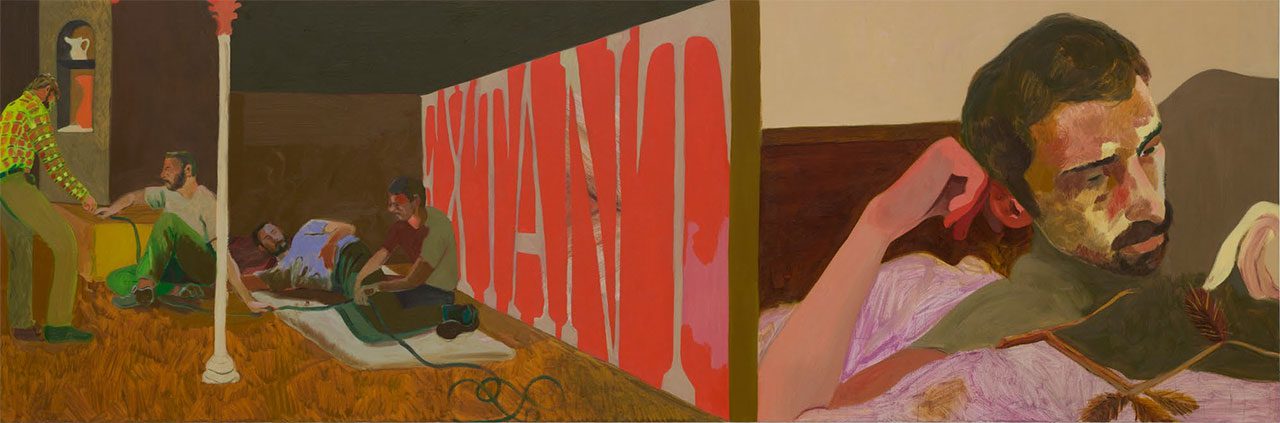
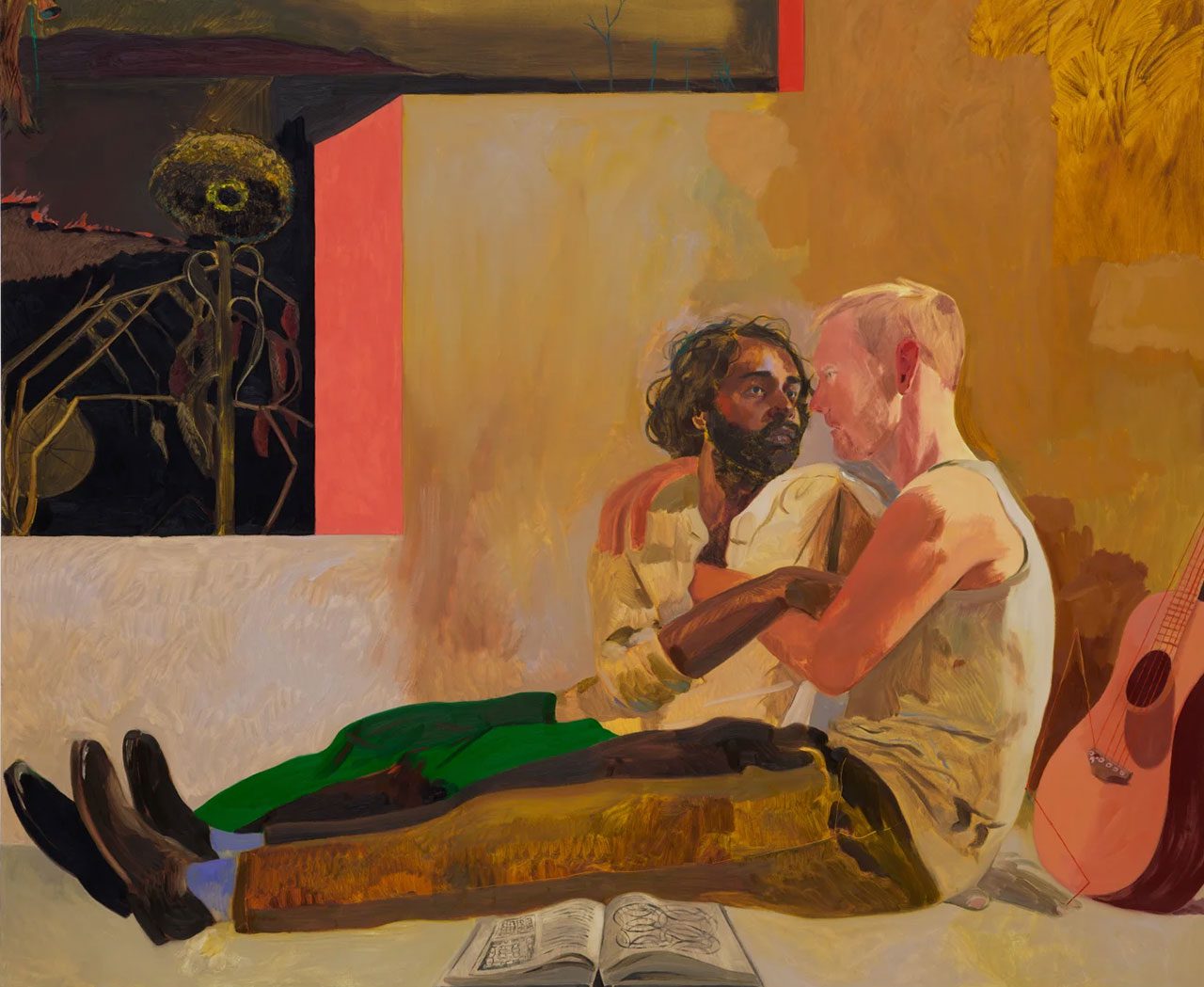
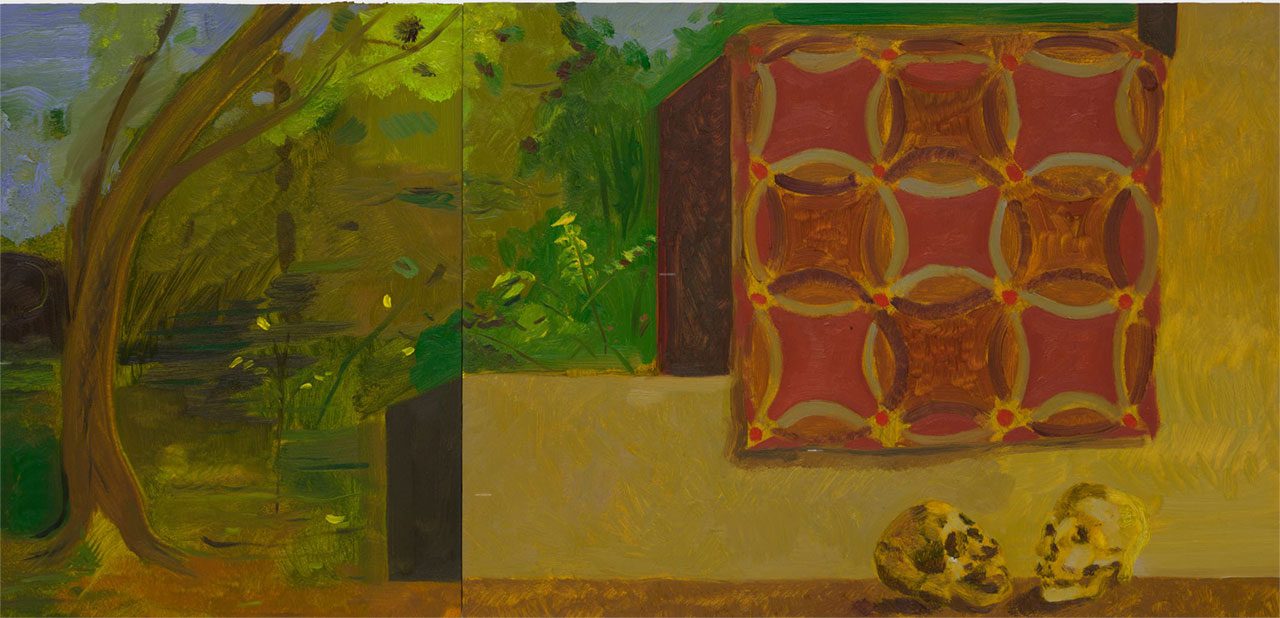
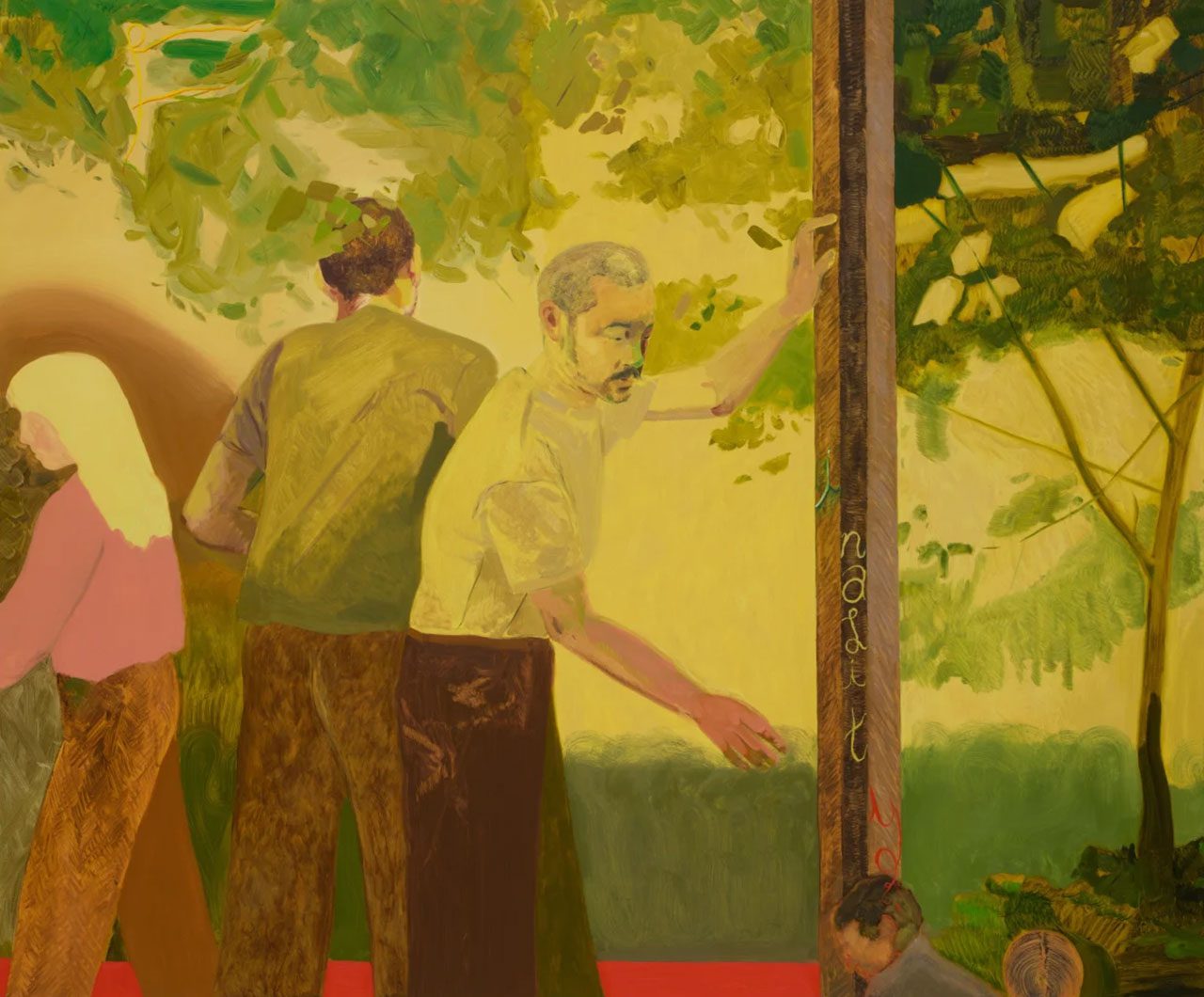
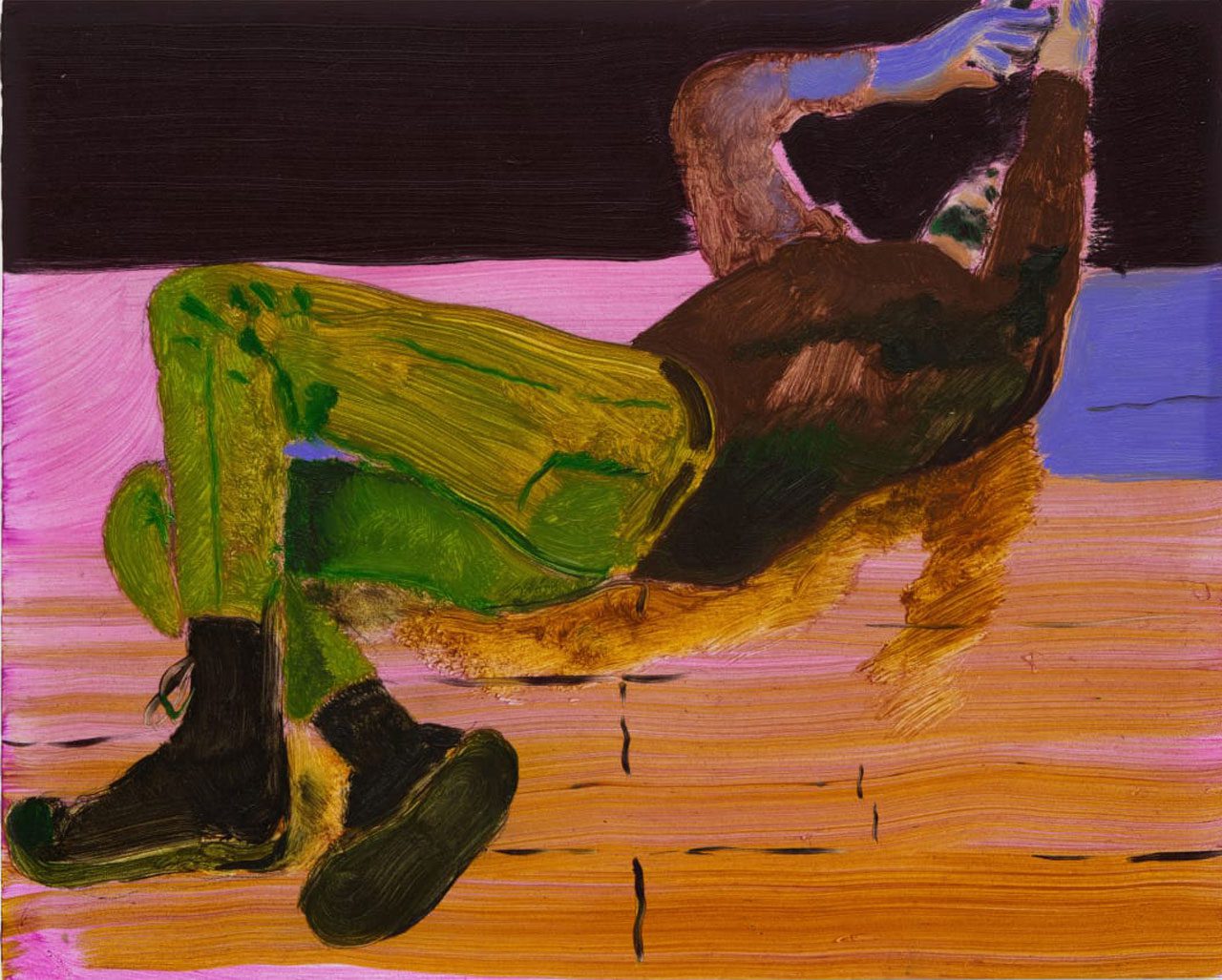
In “Critique of Everyday Life” (1961), Henri Lefebvre insisted that “everyday life does not exist as a generality.” The ordinary, he argued, is never a neutral, anonymous backdrop but always charged with specificity, tension, and potential. Anthony Cudahy’s paintings in his solo exhibition “ceaseless arranger” exemplify this condition. His works render figures caught in seemingly modest gestures—scrolling on a phone, clasping hands in passing, brushing shoulders in a crowd, reclining on wrinkled sheets, or gazing into an indeterminate elsewhere. Yet these moments are never mere snapshots of mundanity. They are imbued with erotic charge, melancholy, celebration, and vulnerability: fragments of the extraordinary nestled inside the fabric of the everyday. Cudahy often begins with collage or sketch, translating found images into a painterly language that resists straightforward documentation. His source material ranges from queer vernacular archives to his great uncle, Kenny Gardener’s, expansive photographic collection—carefully preserved and organized by Gardener’s partner, photographer Ian Lewandowski. Through these visual genealogies, Cudahy reframes intimate queer histories not as static records but as shifting sites of invention. Iteration is crucial: a fragment is redrawn, re-colored, layered, pared back. Color and mark-making are not simply formal choices but structural devices that guide his hand, allowing the medium itself to shape the emergence of the final work. Titles such as “Did I harm? Did I heal?” foreground the oscillation between ambiguity and affect. A hand reaches toward a rope or hose—its identity uncertain, its gesture neither wholly giving nor taking. Three crouching or reclining figures pass the object to a fourth who stands, though whether he accepts it or resists remains unresolved. Behind them, walls morph into holographic graffiti; the painting fractures into a diptych, its second half sketchily suggesting a body dissolving into lavender sheets. Meaning seems both offered and withheld. Cudahy’s paintings resist allegorical fixity; they inhabit the threshold of narrative while never succumbing to its closure. An arm arches like an architectural span, suggesting the affordance of a door handle, a switch, or a gesture toward connection—but perhaps also nothing more than its own contingent shape. In works like “The Solitary Arranger”, gestures extend beyond pictorial logic. The unseen hand may reach to wet or dry a brush, yet what it arranges are worlds that cannot exist: quilters’ patterns that bloom into apocalyptic florals, birds suspended in timeless migration, architectures that cast no shadows. “The Lovers (Triumph of Death)” stages intimacy against the backdrop of mortality: stepped planes darkening into gold, luminous sienna and rose recalling Sienese frescoes, guitars with impossibly angled strings, books of looping patterns that defy legibility. Within this opulent collapse, two lovers sit clothed yet undone. Their eyes meet, their wrists bend and interlace, their hands disappear not outside the canvas but into folds of fabric and flesh. The erotic here is not spectacle but the subtle persistence of touch, the refusal of boundaries between body and world, present and past. Cudahy’s practice ultimately resists the didactic clarity of narrative painting. Instead, it dwells in gestures: pointing, reaching, grasping, arranging. These movements signal possibilities without prescribing meaning, opening a space of suspension in which the everyday is revealed not as banal repetition but as a continual site of invention. His figures, half-turned and glancing elsewhere, suggest that life is always lived in excess of the frame. What emerges is not simply a depiction of queer life or domestic intimacy, but a recognition that the extraordinary—fleeting, fragile, and luminous—is always already embedded in the ordinary.
Photo: Anthony Cudahy, Did I harm? Did I heal?, 2025, Oil on linen, 60.9 x 182.8 | 24 x 72 in, © Anthony Cudahy, Courtesy the artist and GRIMM Gallery
Info: GRIMM Gallery, Keizersgracht 241, Amsterdam, Netherlands, Duration: 29/8-18/10/2025, Days & Hours: Tue-Sat 11:00-18:00, https://grimmgallery.com/
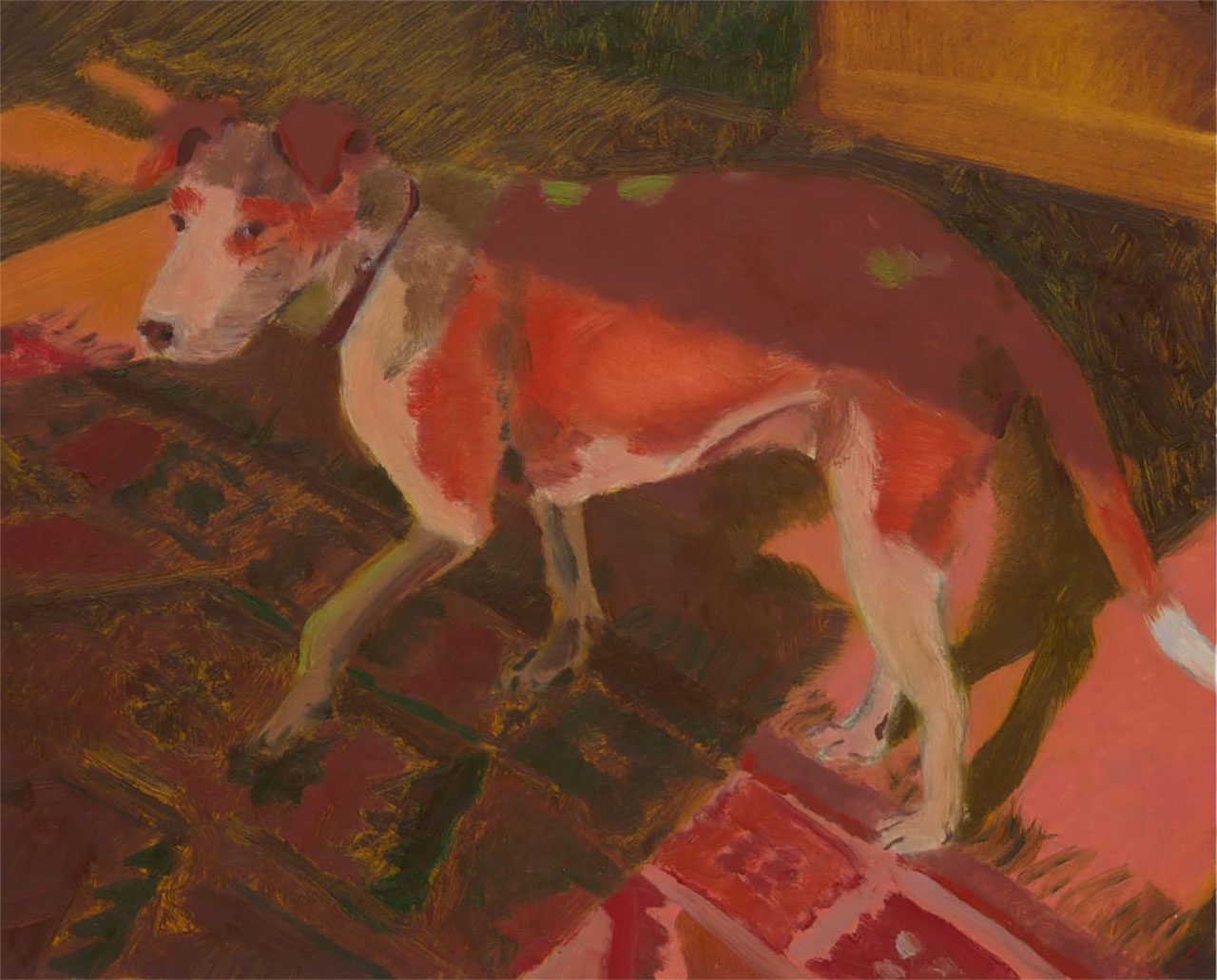
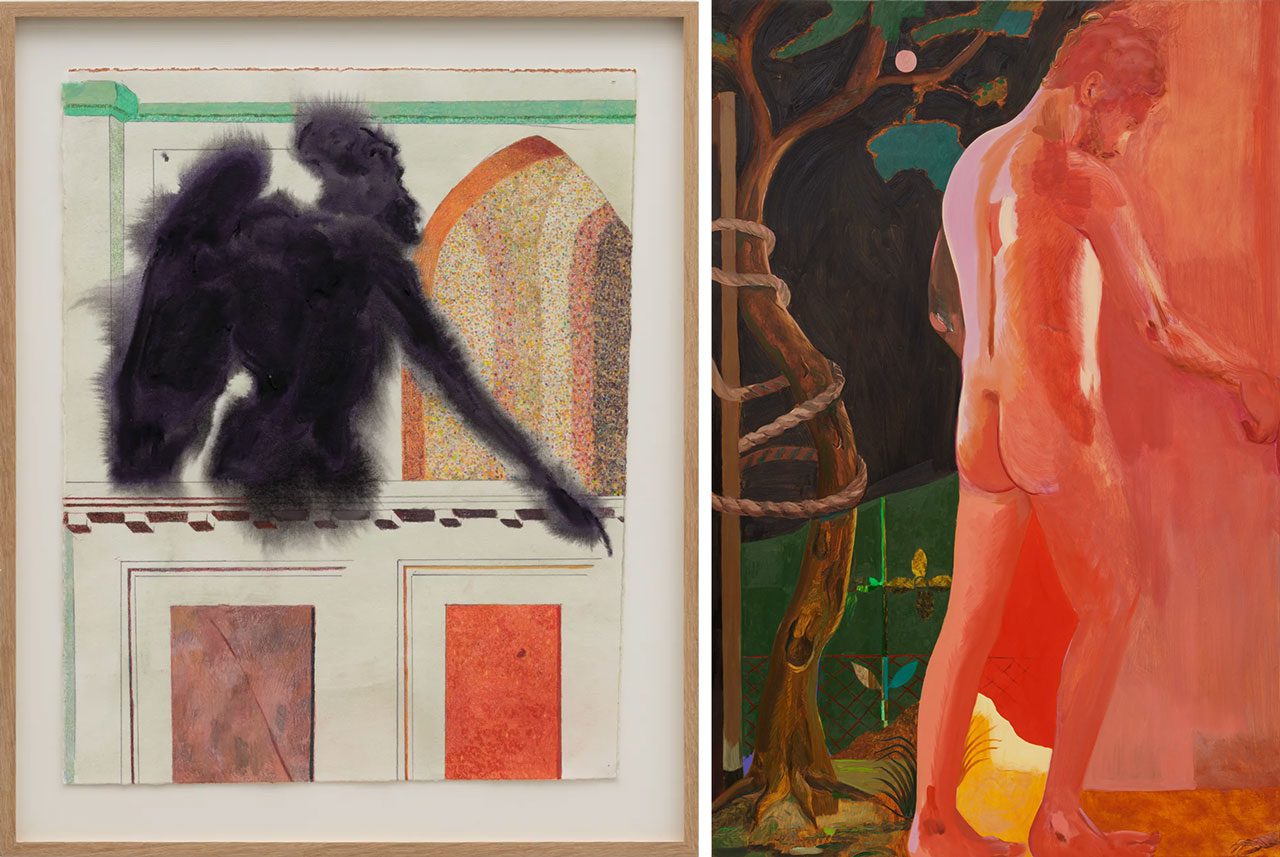
Right: Anthony Cudahy, The inability to know another (Paul and bound tree), 2025, Oil on linen, 182.8 x 121.9 cm | 72 x 48, © Anthony Cudahy, Courtesy the artist and GRIMM Gallery