ART CITIES: Basel-Carsten Höller
Carsten Höller has long occupied a unique space between science and art. Trained as an agricultural scientist and holding a doctorate in phytopathology—the study of plant diseases—he spent the early part of his career publishing scientific papers before fully turning to art in the 1990s. This unusual trajectory continues to shape his practice: his works frequently borrow the methods, aesthetics, and apparatus of scientific research, yet redirect them toward uncertainty, play, and the destabilization of perception.
By Dimitris Lempesis
Photo: Gagosian Archive
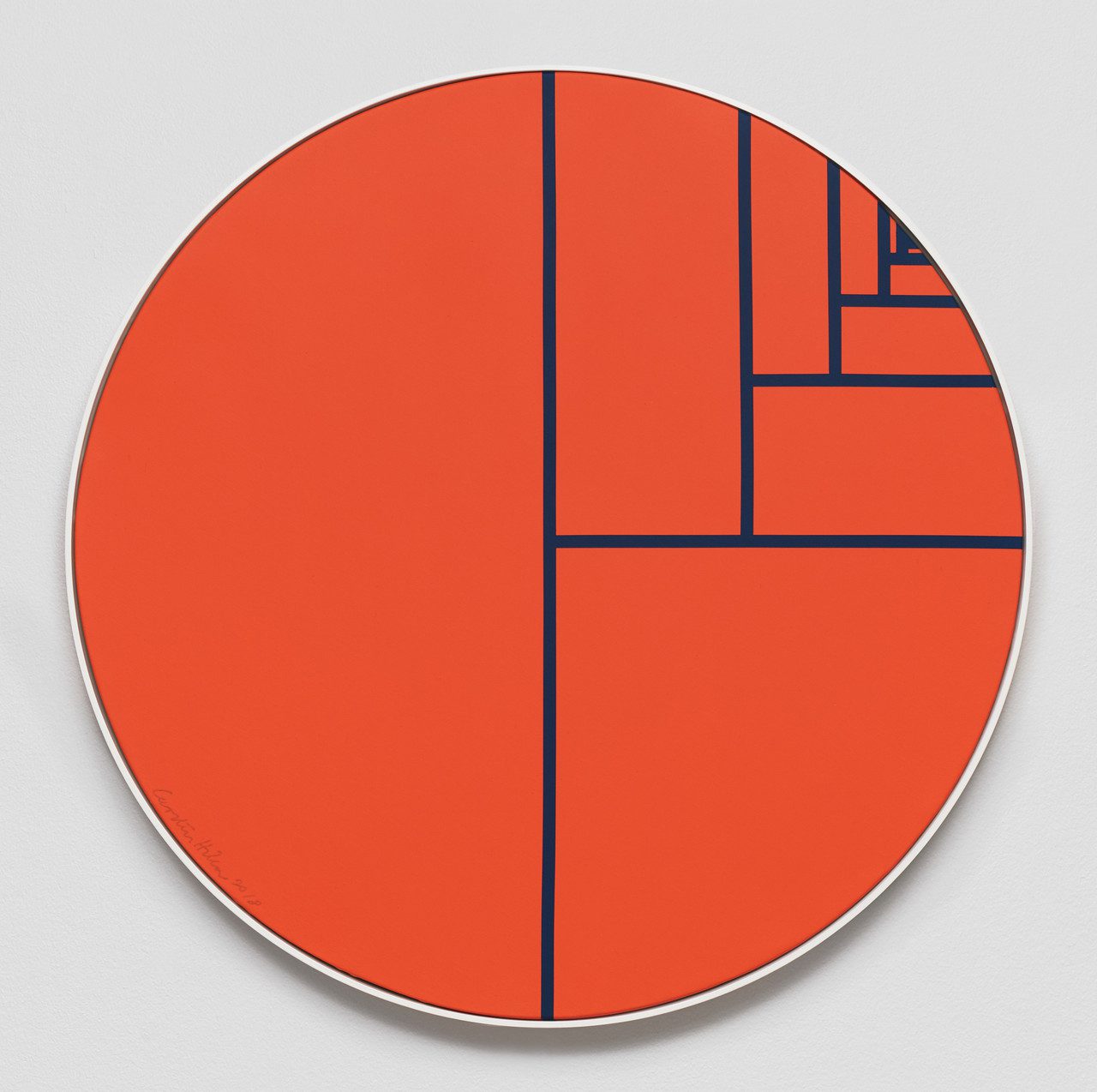
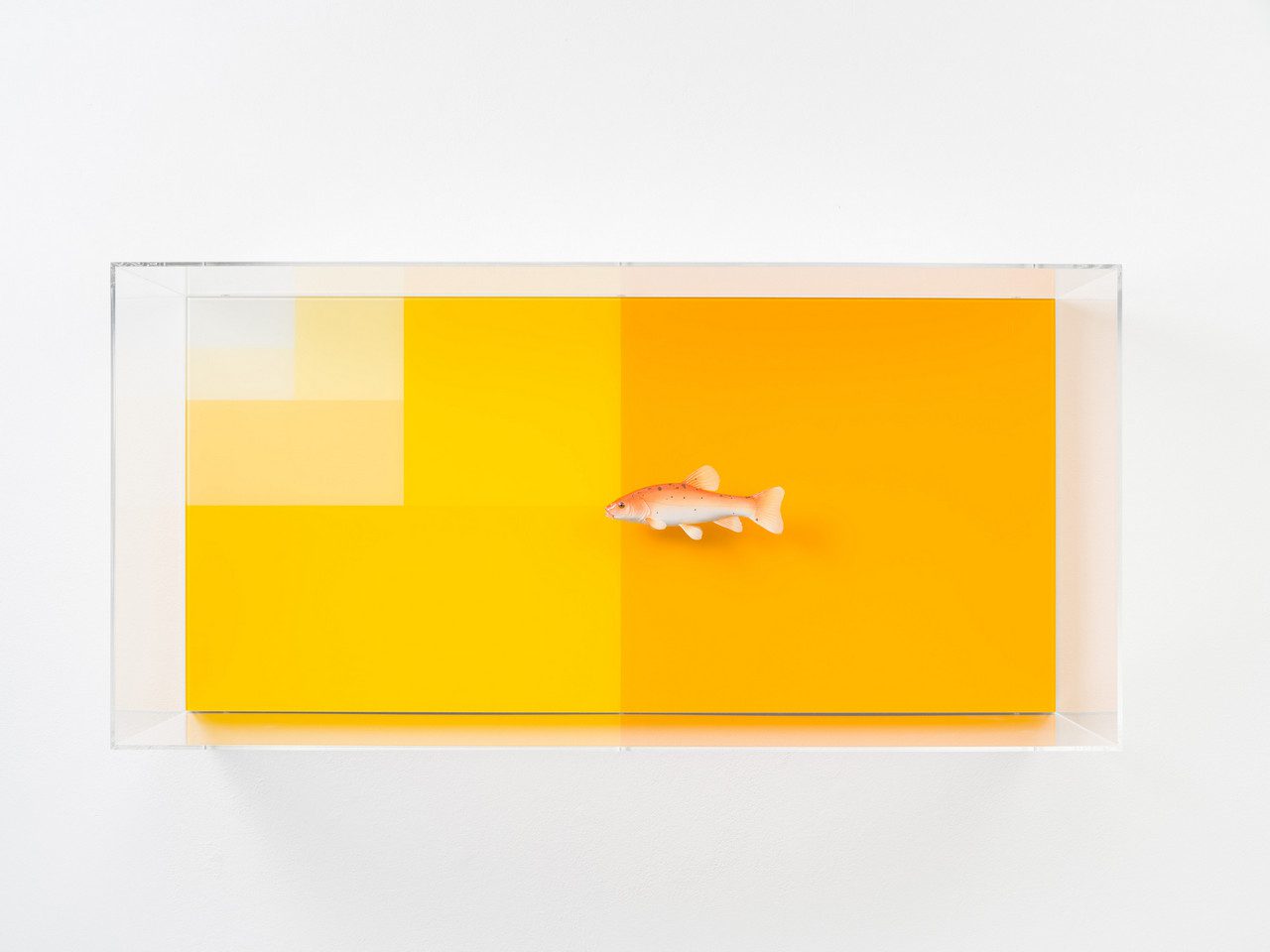
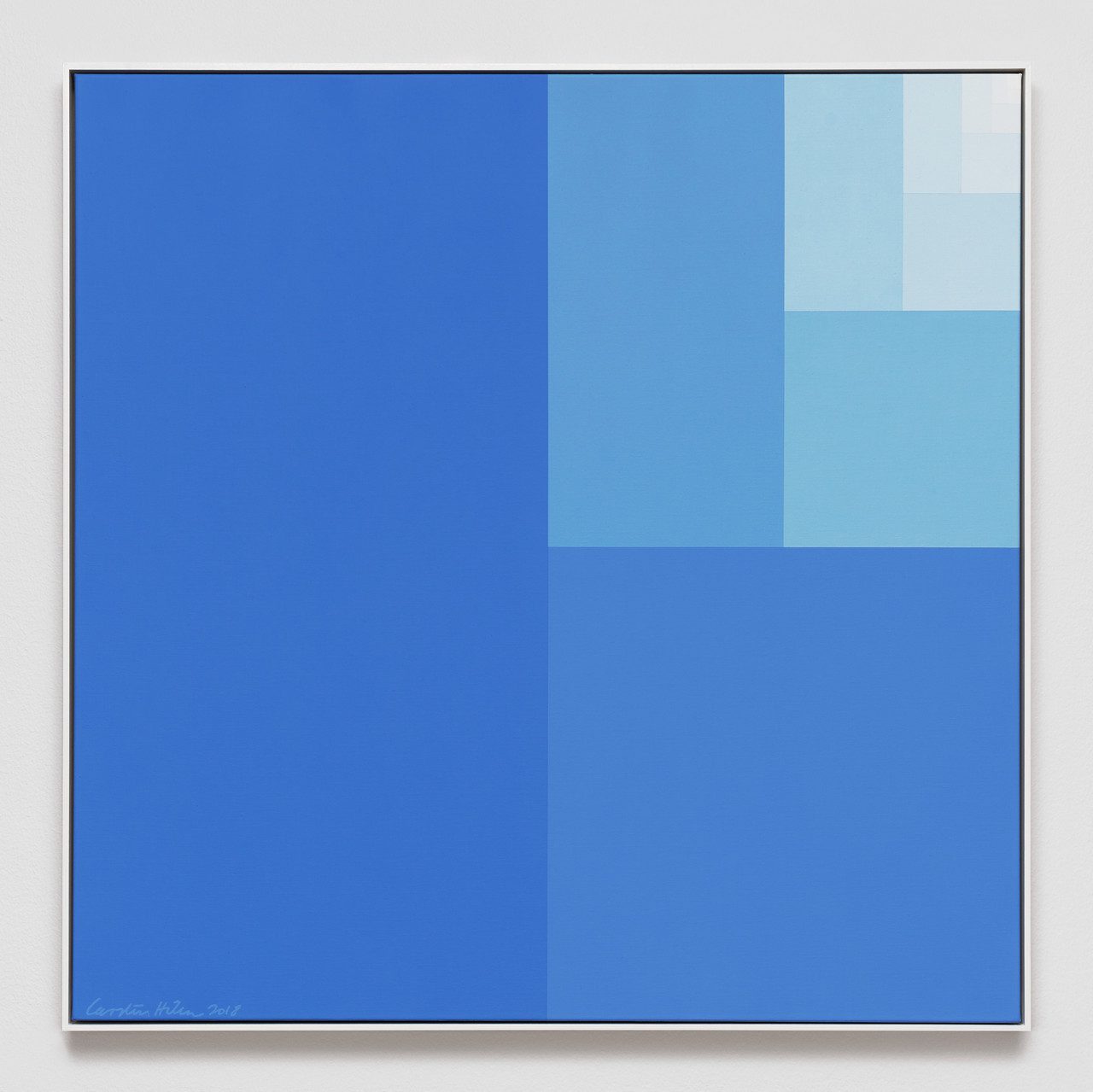
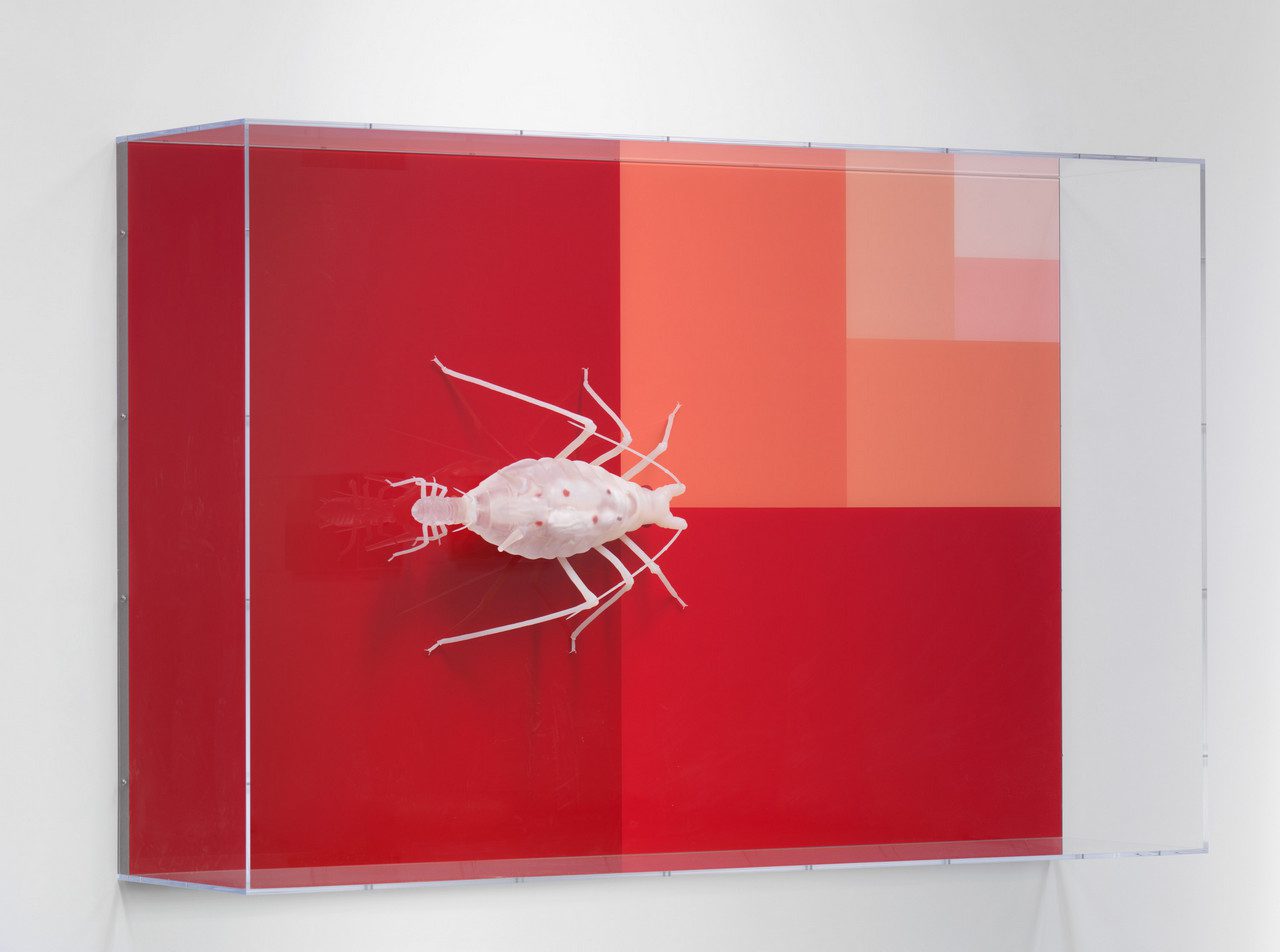
Carsten Höller himself often describes his oeuvre as a “Laboratory of Doubt,” a testing ground where curiosity and disorientation coexist. “Halves”, his current exhibition, draws from the ongoing “Divisions” series and demonstrates how Höller transforms the seemingly dry concept of division into a generative artistic principle. The Divisions paintings take shape through repeated acts of halving, in which canvases are segmented by precise lines or sequences of desaturated tones. Though grounded in methodical repetition, the works evoke a subtle optical play, oscillating between order and indeterminacy. The neon works expand this visual language into glowing geometries: circles cut in two become the centers for other circles of varying size, creating constellations of bisected forms that suggest both mathematical diagrams and radiant abstractions. In these pieces, division is not an end point but a seed for new structures. Other works introduce a tension between the organic and the systematic. Taxidermied specimens and biological models are juxtaposed with the “Divisions” canvases inside vitrines, highlighting the gulf between living complexity and mathematical reduction. “Double Mushroom Vitrine (Twice)” (2021) embodies this approach: two different mushroom species are halved and recombined at life-size scale, generating uncanny hybrids that underscore the dual nature of division as both rupture and synthesis. Höller’s interest in perception and measurement reaches a climax in “Half Clock” (2021), which he describes as “the most complicated clock on earth.” Constructed from three nested hemispheres of neon tubing, the work divides space into smaller and smaller segments to represent hours, minutes, and seconds. Paradoxically, only half of the passing time is displayed, leaving the remainder unmarked. The result is a timepiece that is both hyper-precise and deliberately incomplete—a meditation on the impossibility of fully capturing temporal experience. The exhibition also points toward Höller’s large-scale public installations, such as “Divisions Platform” (2025), commissioned for the Novartis campus in Basel. This interactive sculpture comprises six polished steel cylinders, each either half or double the dimensions of its neighbor. Incised with fine lines that echo the principle of division, the cylinders can be rotated independently by visitors, ensuring the work is never static but always in flux—an elegant metaphor for participation, change, and relationality. Höller’s career has consistently balanced such intimate perceptual experiments with ambitious public interventions. He is perhaps best known for his iconic “Test Site” (2006), a series of monumental slides installed in Tate Modern’s Turbine Hall, which transformed a museum into a playground of vertigo and exhilaration. Other celebrated works include “Upside Down Goggles”, devices that disorient vision, and the “Giant Psycho Tank”, a sensory deprivation pool. Across scales, Höller’s art repeatedly challenges viewers to question what they see, feel, and assume to be real. In “Halves”, the artist continues this trajectory, reframing division not as an act of reduction but as a fertile principle of creation. By halving, doubling, and recombining, Höller reveals the instability of systems we take for granted—geometry, biology, even time itself. The exhibition ultimately proposes division as a paradoxical force: one that fragments, multiplies, and, above all, generates new ways of perceiving the world.
Photo: Carsten Höller, Divisions (Rose-grain Aphid and Surface), 2017, Aphid: Epoxy resin, polyurethane resin, fiberglass, color pigment, steel assembly,Vitrine: Paint behind glass, stainless steel frame, felt, plexiglass, 64 x 99 3/8 x 24 inches (162.4 x 252.4 x 60.8 cm), unique edition, © Carsten Höller, Photo: Robert McKeever, Courtesy Gagosian
Info: Gagosian, Rheinsprung 1, Basel, Switzerland, Duration: 29/8-27/9/2025, Days & Hours: Special hours for Kunsttage Basel: 10:00-20:00 (29/8), Sat-Sun (30-31/8) 10:00-18:00, Other Dates Tue-Sat 10:00-18:00, https://gagosian.com/