
ART CITIES: Tokyo-Makikio Kudo
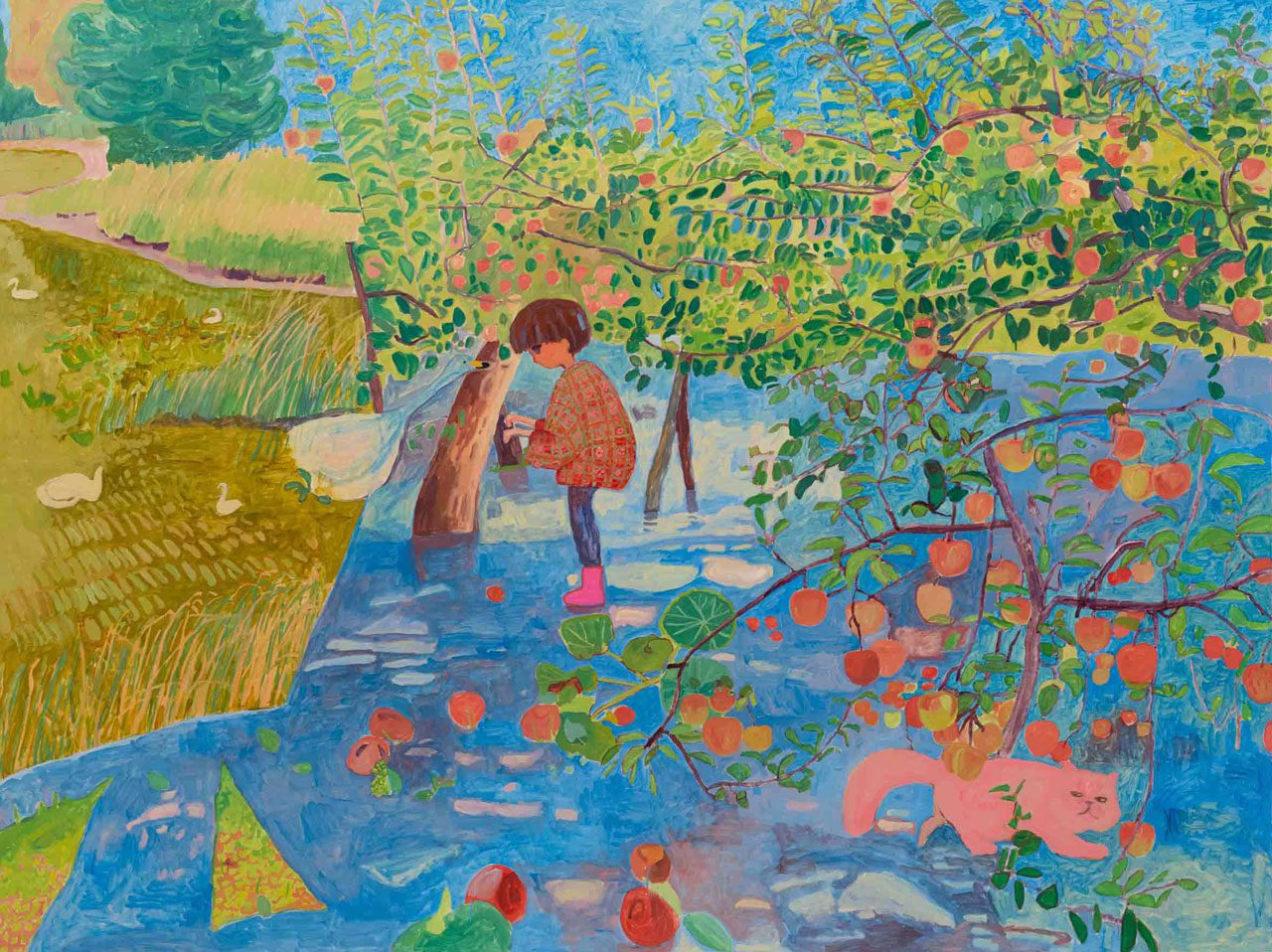
Makikio Kudo’s works are based on mixtures of familiar objects and everyday experiences with the contents of her dreams and imagination. Her paintings are characterized by her fervent and expressive brushwork, vivid colors, and distinctive motifs; she frequently paints girls and small animals—or girls with small animals on their heads, a residual fascination from Kudo’s own childhood—amid lushly grown scenes.
By Dimitris Lempesis
Photo: Tomio Koyama Gallery Archive
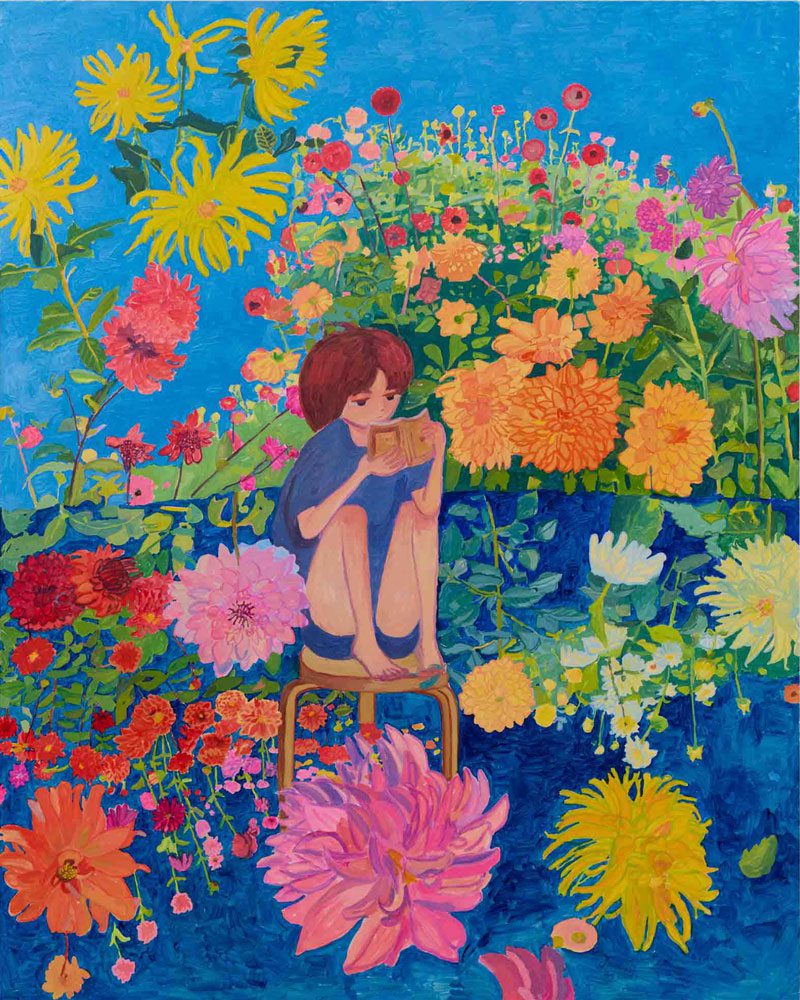
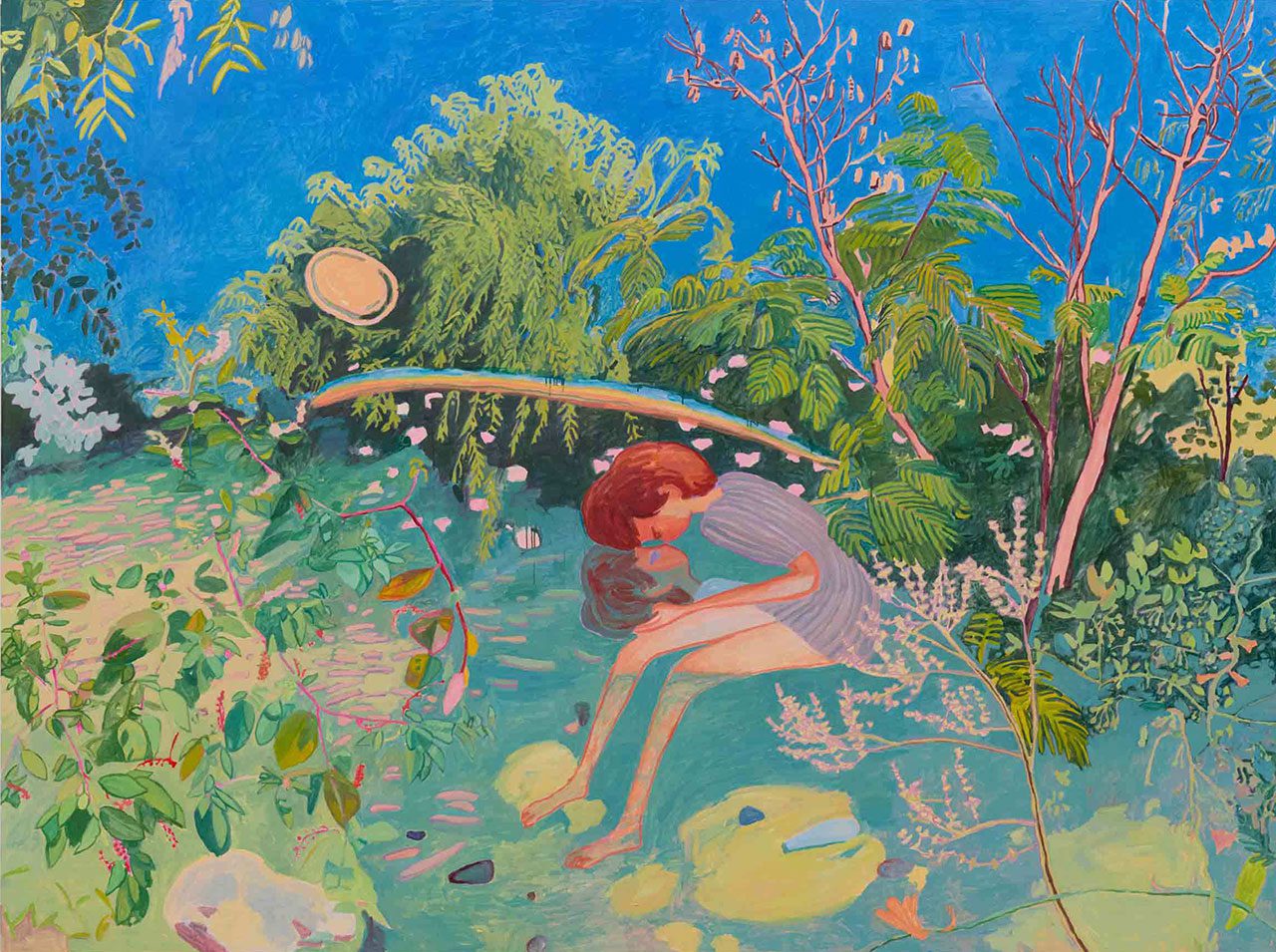
Makiko Kudo admits she is most often drawn to spring — a season of renewal, blossoming colors, and fleeting light — and her canvases, alive with vitality and subtle tensions, lean toward this season of beginnings. Unlike many painters who move between works, Kudo devotes herself entirely to a single large painting, usually completing it in seven to ten days. Her process is marked by a deliberate unevenness: some surfaces are touched lightly, washed in a single layer of paint, while others are worked over again and again, accumulating depth and density. This rhythm of contrast gives her paintings a breathing quality, animated by shifting intensities. In a 2022 conversation with Hans Ulrich Obrist, Kudo explained that she paints moments when “something I pass by suddenly appears to shine,” describing an instinctive process where impressions, moods, and memories collide to form images painted directly on canvas. Though she modestly calls her practice “depictions of what I see,” her works are better understood as reconstructions of mental landscapes, where fragments of her rural childhood intermingle with the environments she inhabits today. The layering of past and present, memory and reality, creates dreamlike terrains in which people are not separate from nature but woven into it, coexisting with water, plants, and sky in a fragile, equal balance. Her solo exhibition “Seeing With Myself” captures this vision in both paintings and drawings, each infused with a dialogue between perception and memory. The titular work depicts a figure staring into their reflection on the surface of water, a haunting double image that suggests the meeting of two selves — past and present, self and other. In “Day into Night, Night into Day”, Kudo translates the overwhelming vitality of the Machida Dahlia Gardens into a dual composition where day hovers above night, and a solitary figure reads quietly among exuberant blossoms. The work conjures shifting interpretations: coexistence of opposites, the blurring of time, and the desultory emotions of adolescence — sad yet joyful, luminous yet uncertain. Throughout, Kudo reveals how the same place, the same figure, can appear transformed by the passage of time or the angle of light. By weaving together landscapes and emotions, visible and invisible elements, and opposing states of being, her paintings bring the profound resonance of everyday life into sharp focus. They remind us that if we look closely, even ordinary moments can radiate with their own quiet brilliance.
Photo: Makiko Kudo, Dull Sunshine, 2025, oil on canvas, 194.0 x 259.0 cm, © Makiko Kudo, Courtesy the artist and Tomio Koyama Gallery
Info: Tomio Koyama Gallery Kyobashi. Toda Building 3F, 1-7-1, Kyobashi, Chuo-ku, Tokyo, Japan, Duration: 27/8-27/9/2025, Days & Hours: Tue-Sat 11:00-19:00, https://tomiokoyamagallery.com/
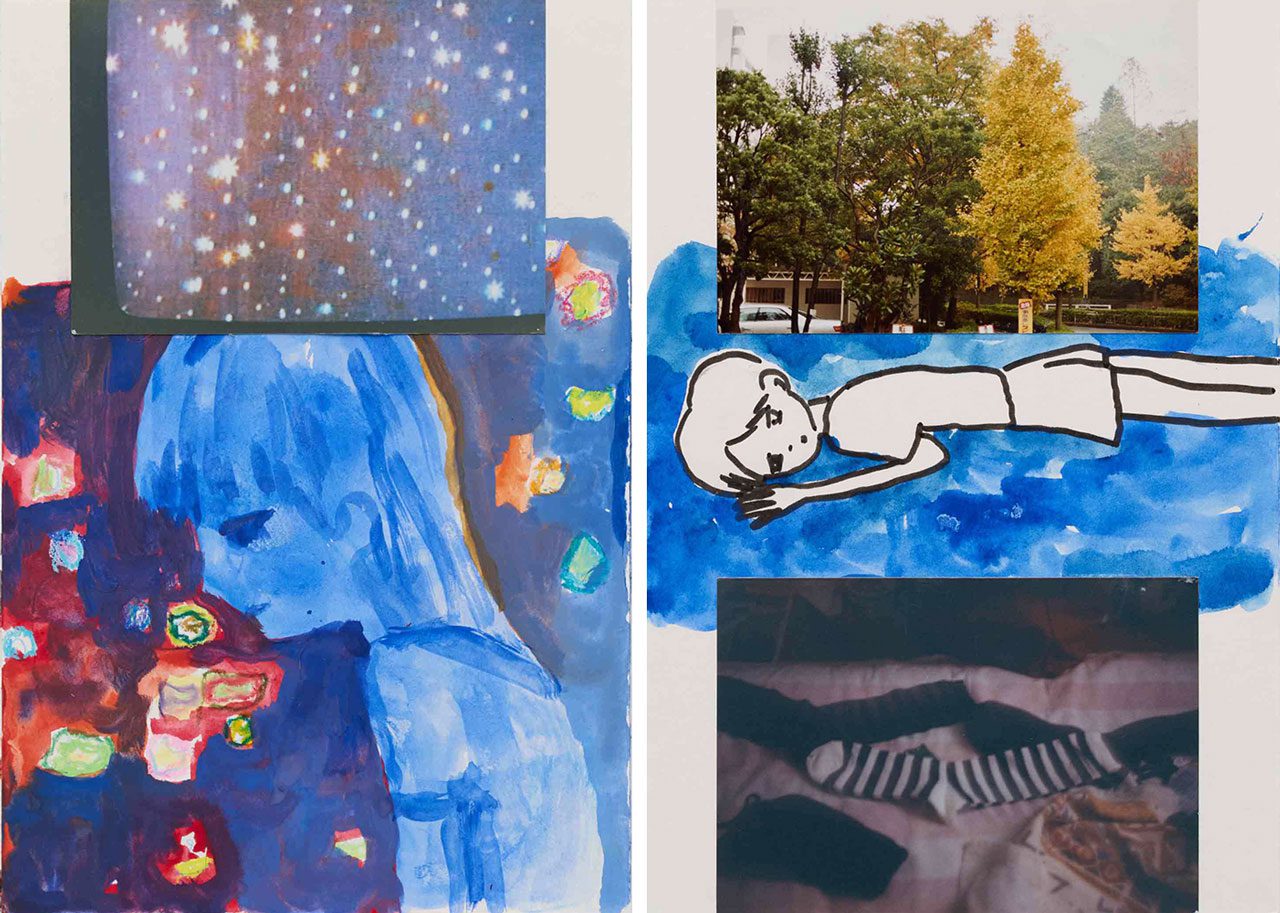
Right: Makiko Kudo, Ups and Downs, 2025, watercolor, marker pen, collage on paper, 24.2 x 16.6 cm , © Makiko Kudo, Courtesy the artist and Tomio Koyama Gallery
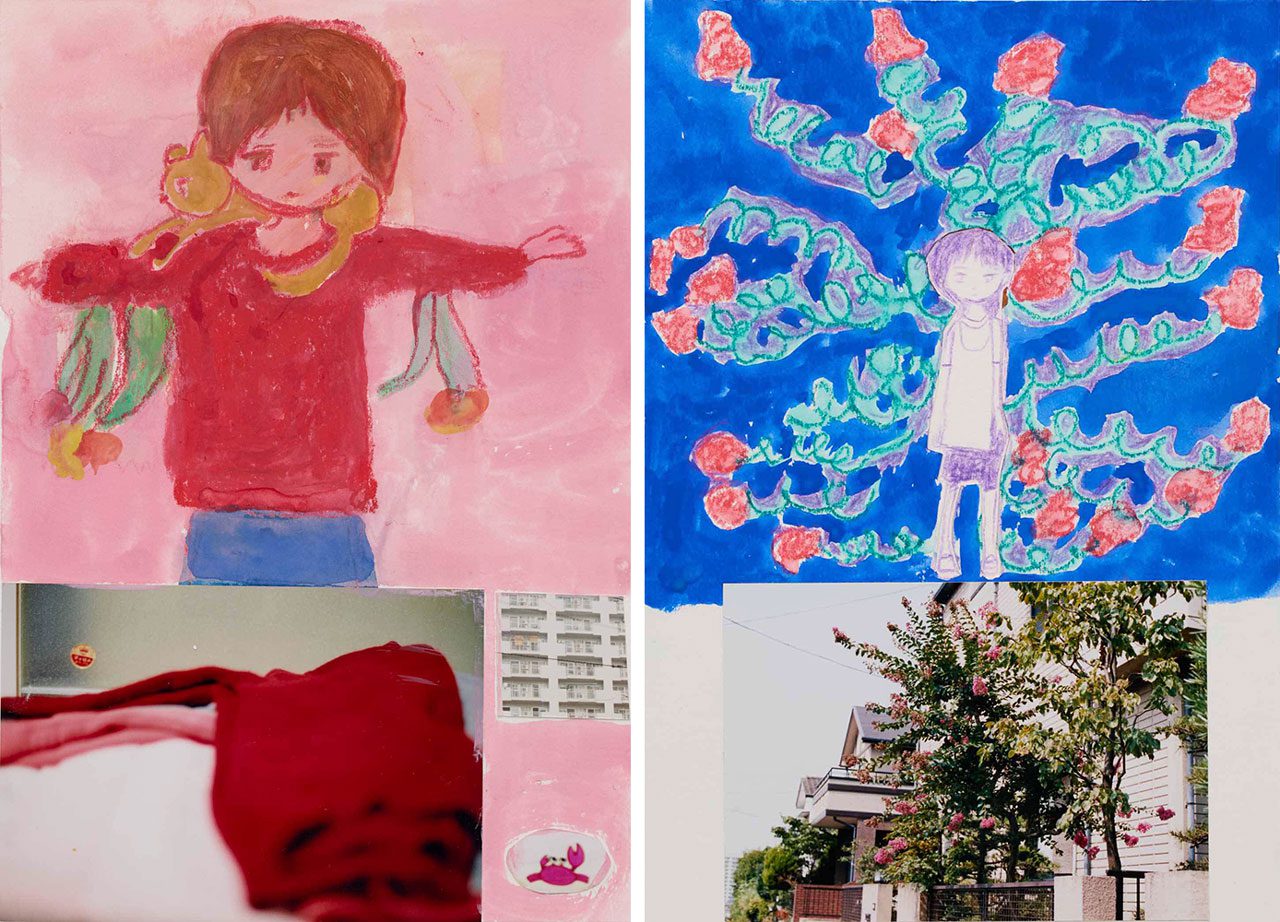
Right: Makiko Kudo, Buying a Red Sweater, 2025, watercolor, crayon, collage on paper, 24.2 x 16.7 cm, © Makiko Kudo, Courtesy the artist and Tomio Koyama Gallery