
PRESENTATION: Brian Calvin-Loitering
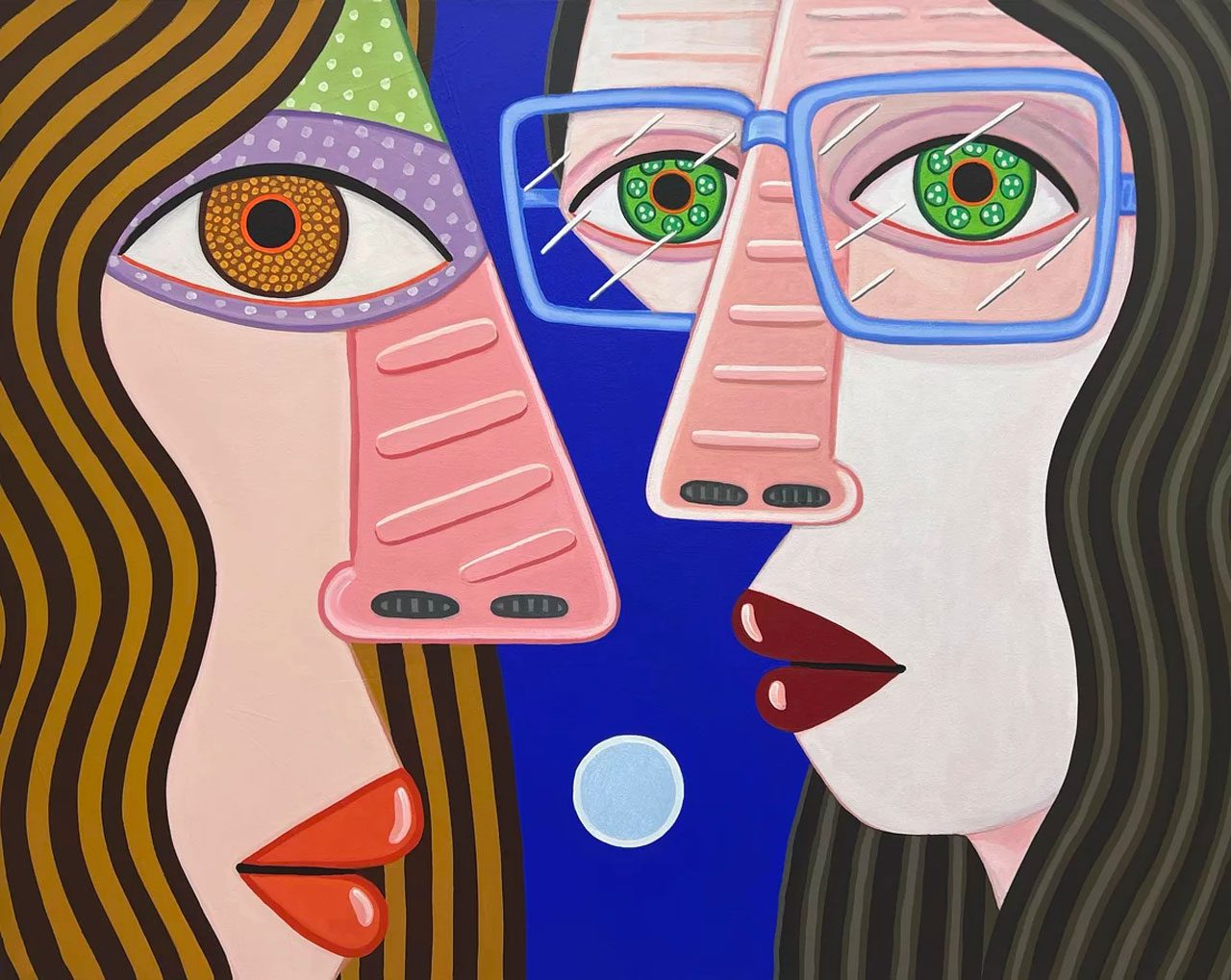
In the 1990s, Brian Calvin began developing a figurative, non-narrative, pictorial style. Landscapes and portraits steeped in his Californian roots dominated this work. Close-up treatment of subjects, highly composed structures, as well as luminous colors laid flat endow these large-scale paintings with a strange temporality. In observing his technique of pictorial economy, one gradually comes to see a type of abstraction in his representation of certain details.
By Dimitris Lempesis
Photo: Almine Rech Gallery Archive
Brian Calvin presents his solo exhibition “Loitering”. In the vast discourse on painting, few lines have endured with the clarity and bite of Maurice Denis’s 1890 pronouncement. Today, at the far end of modern art’s restless history, his words invite a gentle revision—not to dim their brilliance, but to attune them to our present moment. Even reframed, they remain uncannily apt for the work of Brian Calvin. At first glance, Calvin’s canvases appear to channel the imagery of our hyperconnected era: young socialites, influencers mid-promotion, generational mascots of digital saturation. But this reading is a mirage. Before they are portraits of anyone—or anything—they are flat planes animated by color, composed with an almost metronomic precision. His faces, whether cropped to the brink or floating in tranquil isolation, might recall the curated avatars of online life. Soda cans, T-shirts, oversized sunglasses could be mistaken for pop-cultural souvenirs, scavenged from the visual static of the everyday. Yet these details are misdirections, lures away from a deeper pursuit. Calvin is not trying to mirror the world so much as to lay bare the fact that images are made things. Every lipstick shade—so exact you could name its brand—every pair of glasses, every burst of pigment acts as a tiny disruption, loosening the grip of representation. Rather than tether the work to reality, these fragments crack it open, letting meaning slide and refract. “When you work with images today, that’s where people’s minds go first,” Calvin concedes. “It’s nearly impossible to see a cropped face and not think of social media overload. That reading isn’t wrong, but it’s not where I begin. In fact, it’s the part of my work that puzzles me the most.” His real affinities lie far from the brashness of American Pop Art, in the measured, luminous geometry of Piero della Francesca’s Renaissance paintings. If there is “calculation” in Calvin’s art, it resides in the internal logic of color and form—a method that, despite its precision, often feels as if it unfolds by chance. In this sense, he works like an abstractionist, building visual harmonies that feel both inevitable and surprising. His figures—archetypal yet imagined—hold their poise in a fragile equilibrium, their eyes tracking you almost imperceptibly. Landscapes, when they surface, are whispers: a rain-softened horizon that might be forest or glass, a constellation of dots that might be freckles, stars, or planets. Even the exhibition’s title, faintly echoing Baudelaire, plays with diversion. It could hint at his painted subjects as latter-day flâneurs—lingering together like boulevard idlers transposed into a gallery. But it also reflects Calvin’s own relationship to these figures. “I’ve spent half my life, or at least a good part of it, sitting in the studio, wandering in the company of a painting,” he says. This is a process of slow exhilaration, of discovery without hurry—a sustained conversation between painter and canvas, carried on in a time apart from the velocity of the outside world. The paintings presented in this exhibition thus all continue the work Calvin has done with his ‘portraits,’ the elongated, hieratic characters for which he has become well-known, with pictures of various sizes that often draw from historical Cubism, where for example reminiscences of Picasso. Beyond the obvious references it soon becomes clear however that what is at stake is an exploration of composition and color, with facial features acting as anchors or signifiers destined to draw the viewer in. Figurative elements serve in fact as devices to explore a more abstract and formal way to reflect on what constitutes a painting. Where the eye would be tricked at first into taking Close Quarters for a mirrored image, attentive observation reveals an even more complex sequence of figures where one color or one line does not exactly answer the other and where the actual number of depicted faces is not easy to determine. Symmetry is off, and this so decidedly that it produces a vibration that might even prove visually disturbing or upsetting to some. Sometimes a face will sport too many eyes or mouths or both eyes will be depicted on the same side of the face, while skin colors in scenes where several characters are present are likely used to provide compositional balance rather than anything else.
Photo: Brian Calvin, Blue Moonlight, 2025 , Acrylic on canvas, 101.6 x 127 cm, 40 x 50 in, © Brian Calvin, Courtesy the artist and Almine Rech Gallery
Info: Almine Rech Gallery, Chalet Wilibenz, Bahnhofstrasse 1, Gstaad, Switzerland, Duration: 12/7-30/8/2025, Days & Hours: Tue-Sat 13:00-18:30, www.alminerech.com/
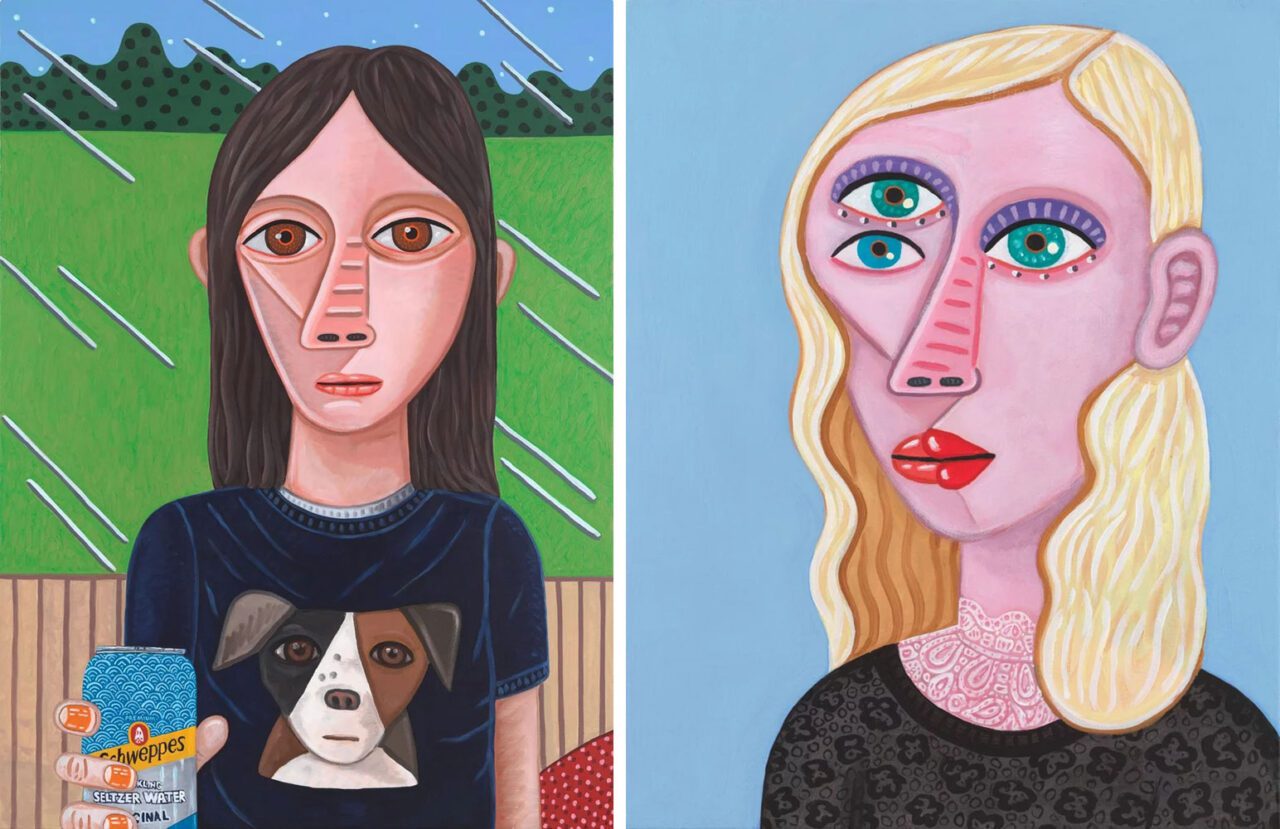
Right: Brian Calvin, Candy, 2025, Acrylic on linen, 61 x 48.3 cm, 24 x 19 in, © Brian Calvin, Courtesy the artist and Almine Rech Gallery
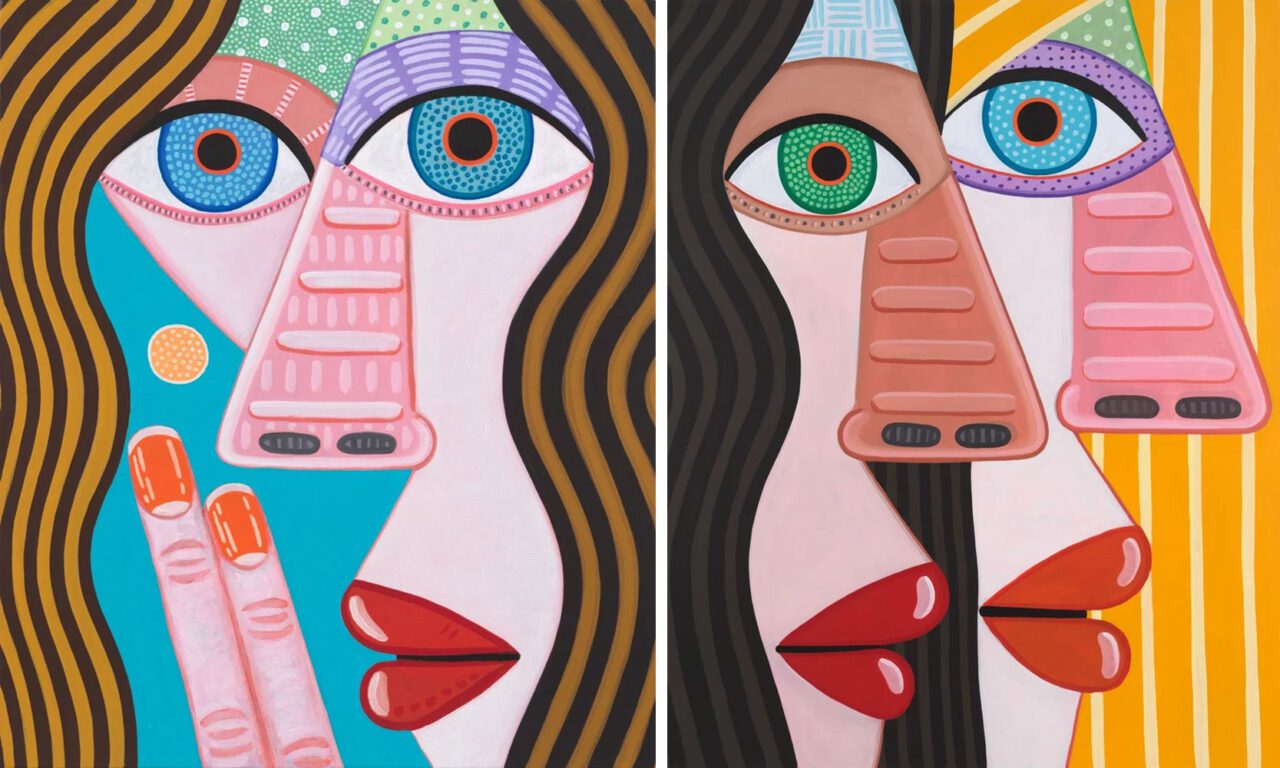
Right: Brian Calvin, The Lineup, 2025, Acrylic on canvas, 152.4 x 121.9 cm, 60 x 48 in, © Brian Calvin, Courtesy the artist and Almine Rech Gallery
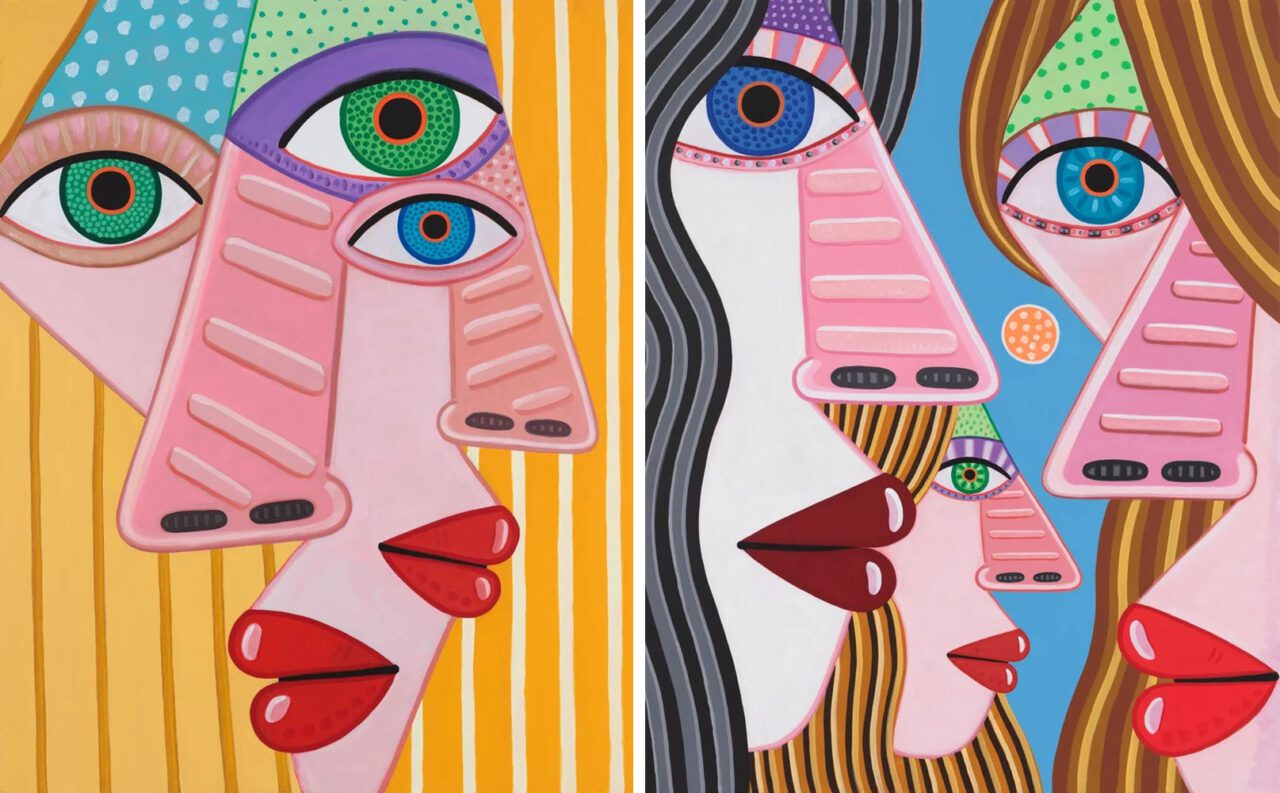
Right: Brian Calvin, Downtown Sun, 2025, Acrylic on canvas, 152.4 x 121.9 cm, 60 x 48 in, © Brian Calvin, Courtesy the artist and Almine Rech Gallery
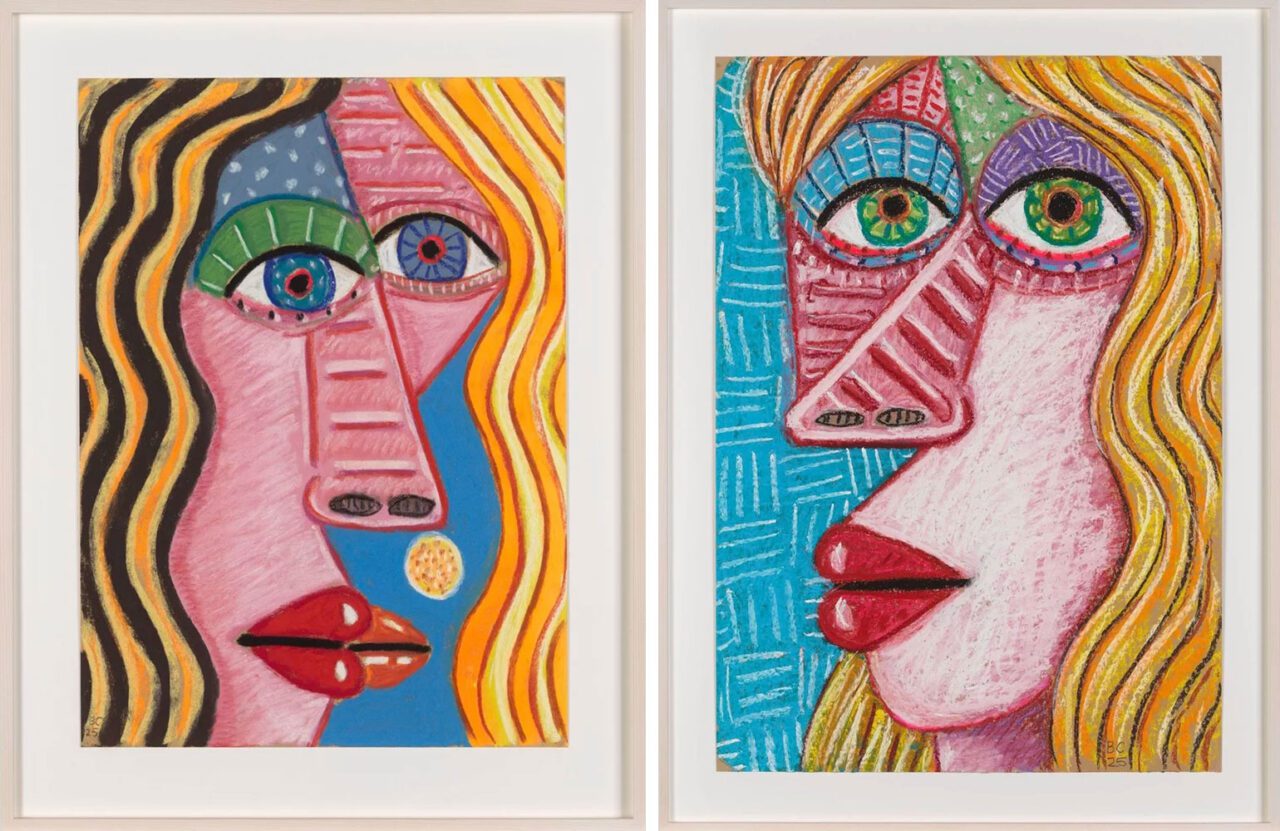
Right: Brian Calvin, Distant Cousin, 2025, Pastel on paper, 59.5 x 42 cm, 23 1/2 x 16 1/2 in (unframed), 69 x 51.5 cm, 27 x 20 in (framed), © Brian Calvin, Courtesy the artist and Almine Rech Gallery
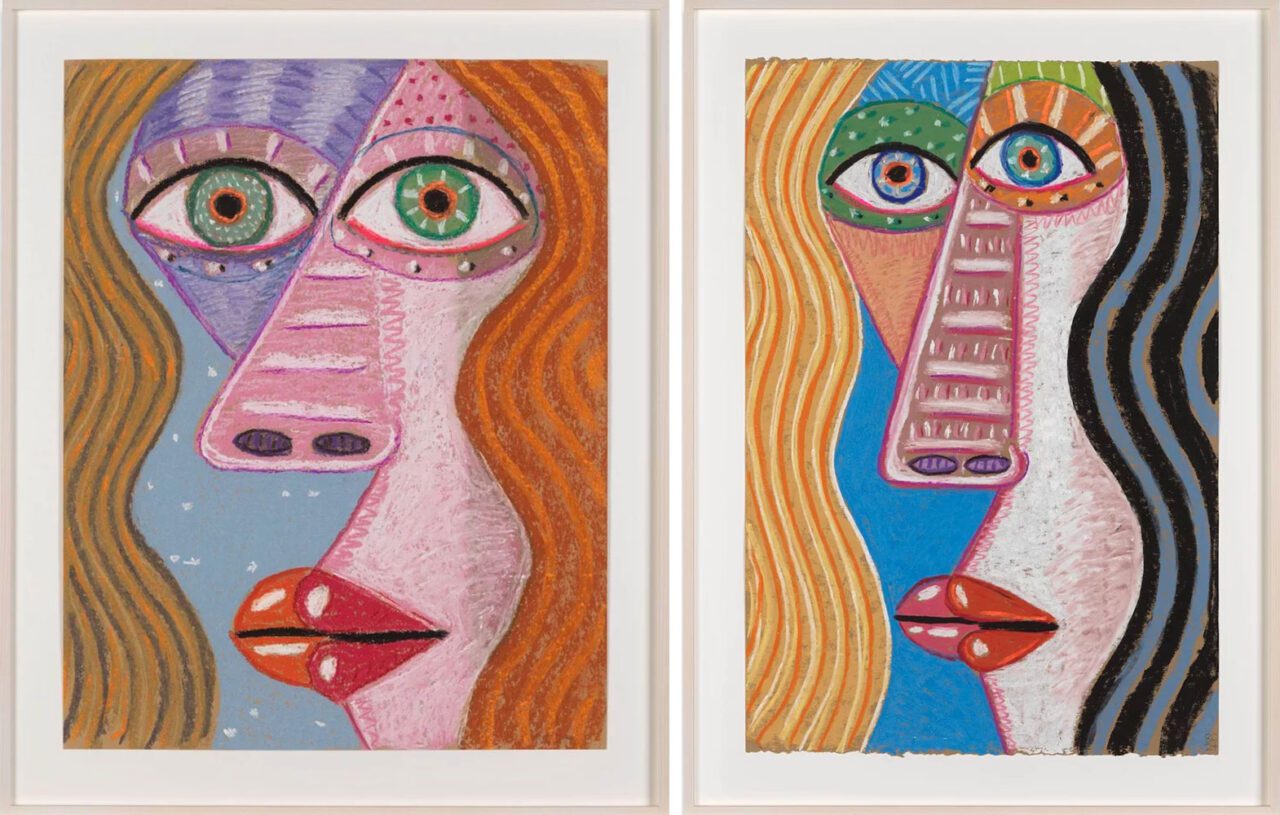
Right: Brian Calvin, Good Evening, 2024, Pastel on pastel card, 56 x 38 cm, 22 x 15 in (unframed), 66 x 48 cm, 26 x 18 1/2 in (framed), © Brian Calvin, Courtesy the artist and Almine Rech Gallery