PRESENTATION: Ming Fay-Edge of the Garden
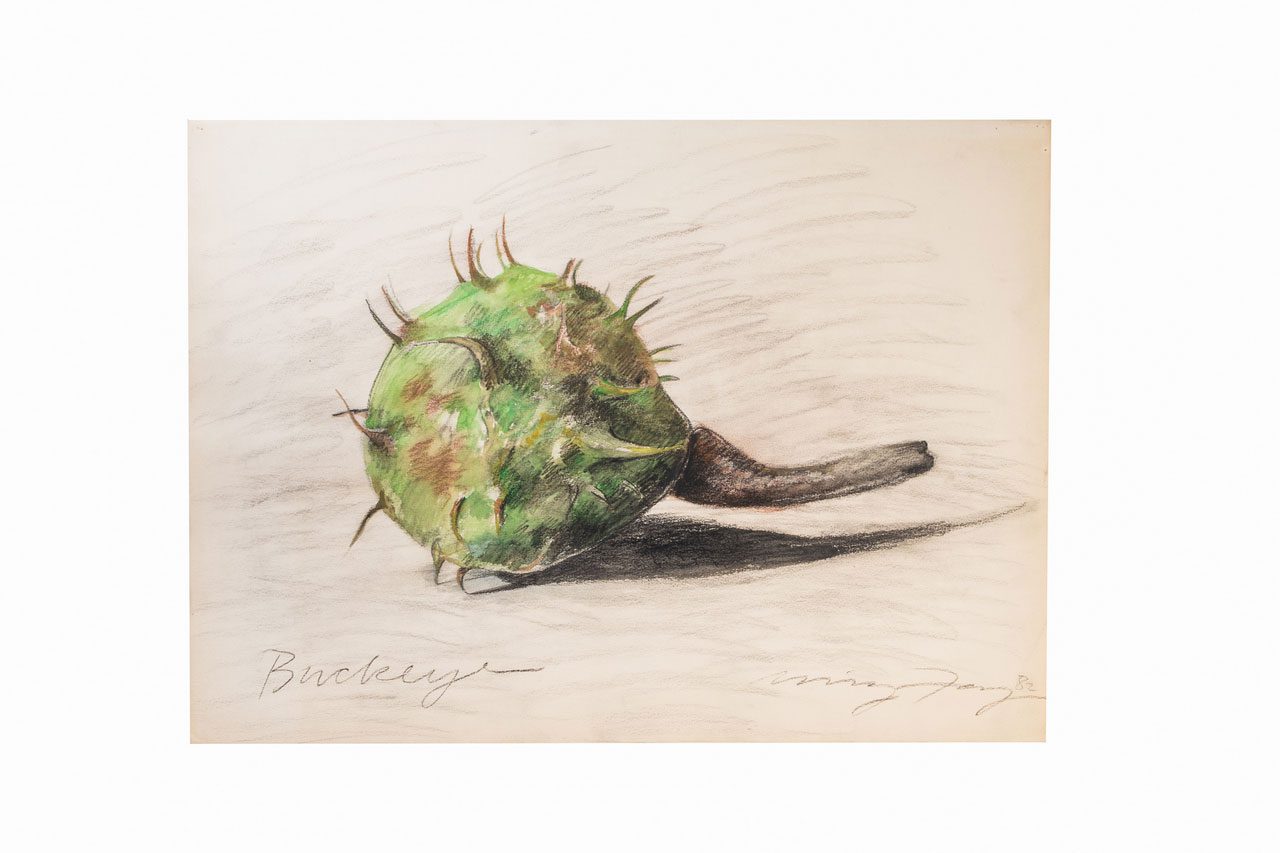
Born in 1943 to a family of artists in Shanghai, Ming Fay (2/21/943-23/22/025), was a New York-based sculptor, installation artist, and professor. His work focuses on the concept of the garden as a symbol of utopia and the relationship between people and nature. Today he is well known for his large fruit sculptures and mixed media installations. His whimsical yet culturally poignant sculptures are made out of bronze or papier-mâché and often presented in a highly sophisticated way.
By Efi Michalarou
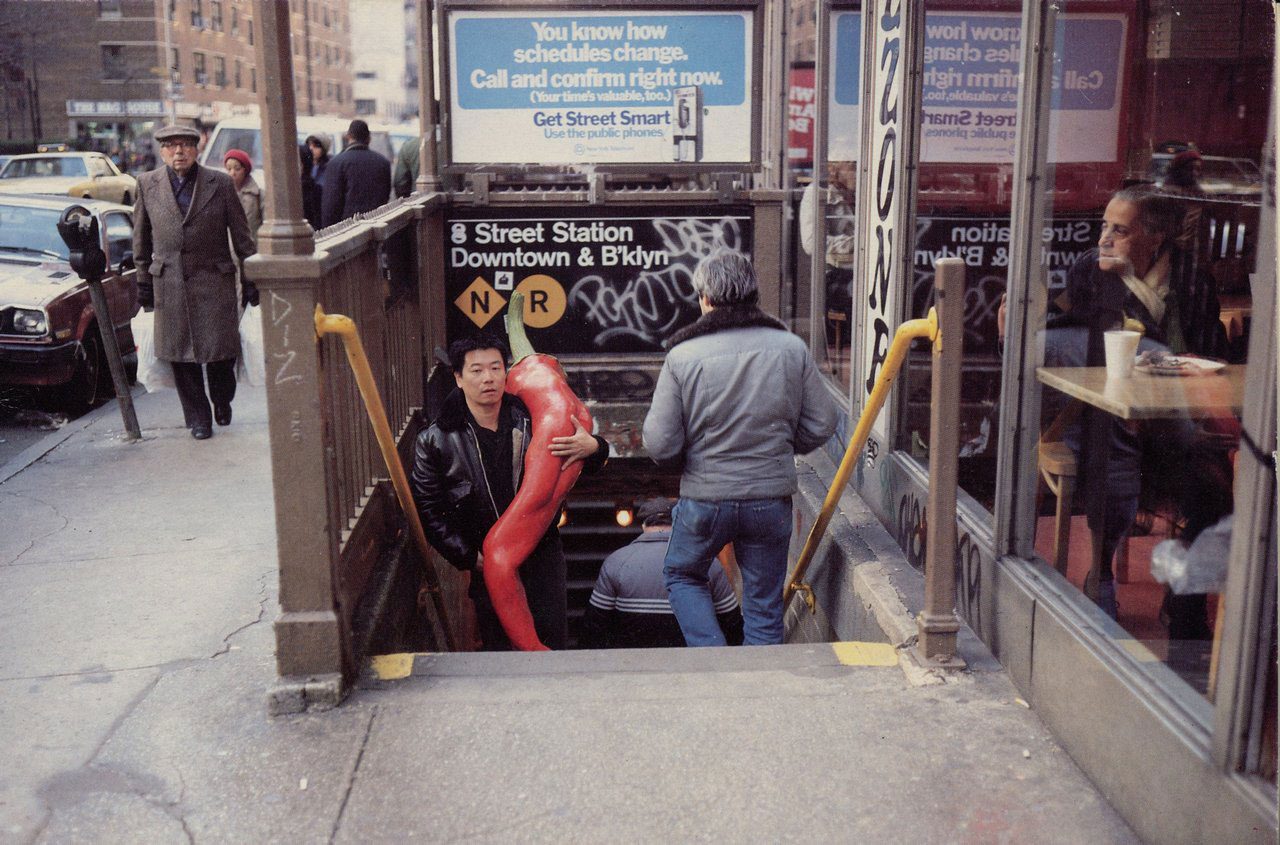
Photo: Isabella Stewart Gardner Museum Archive
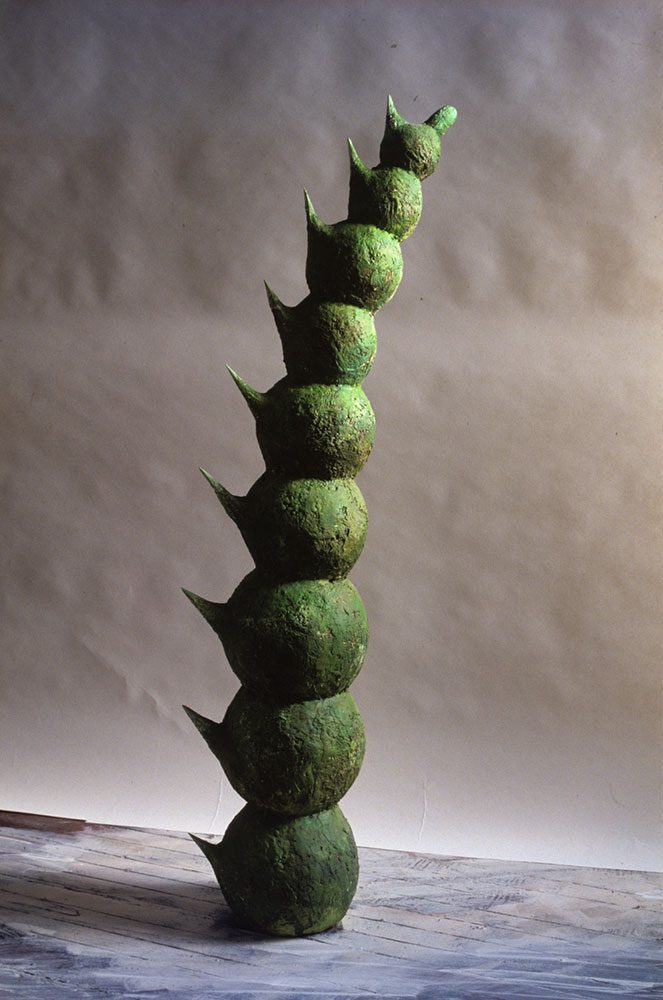
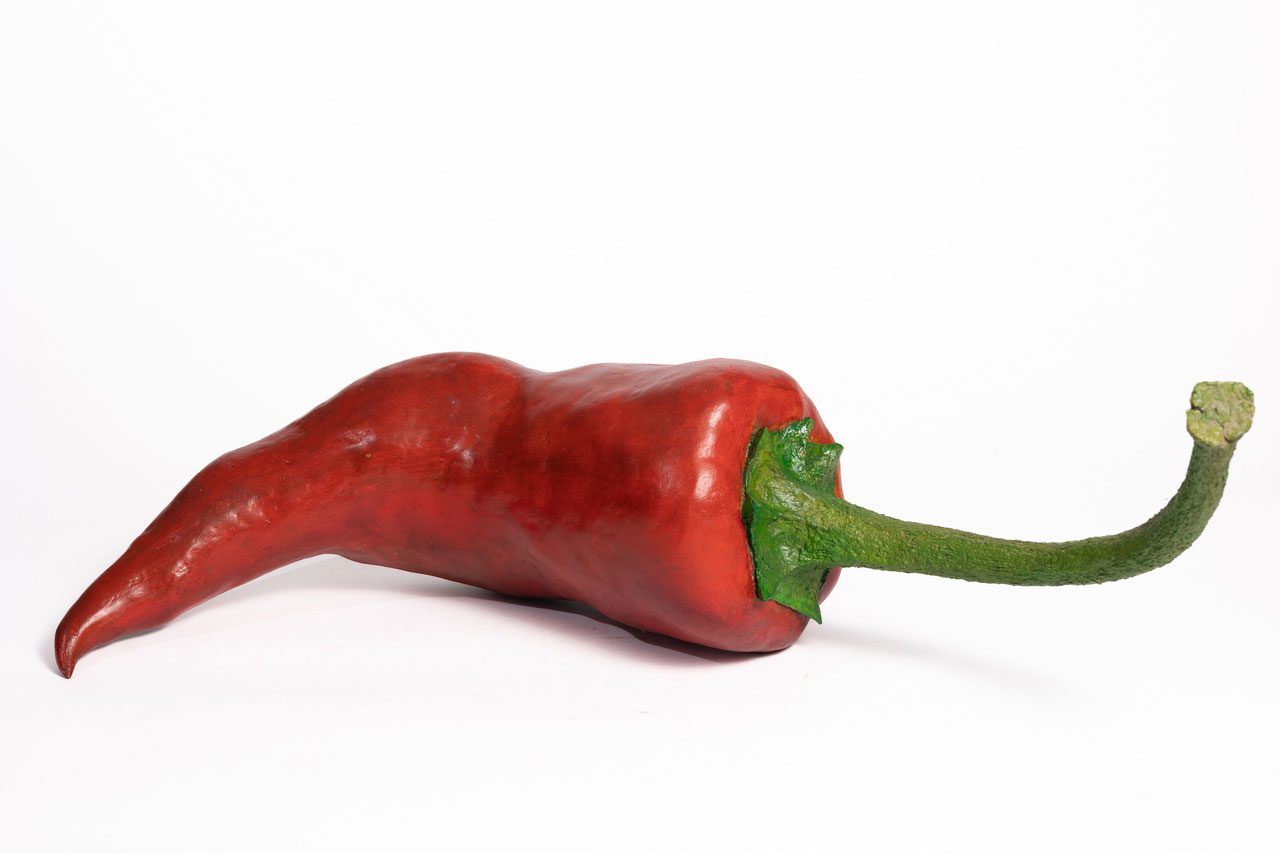
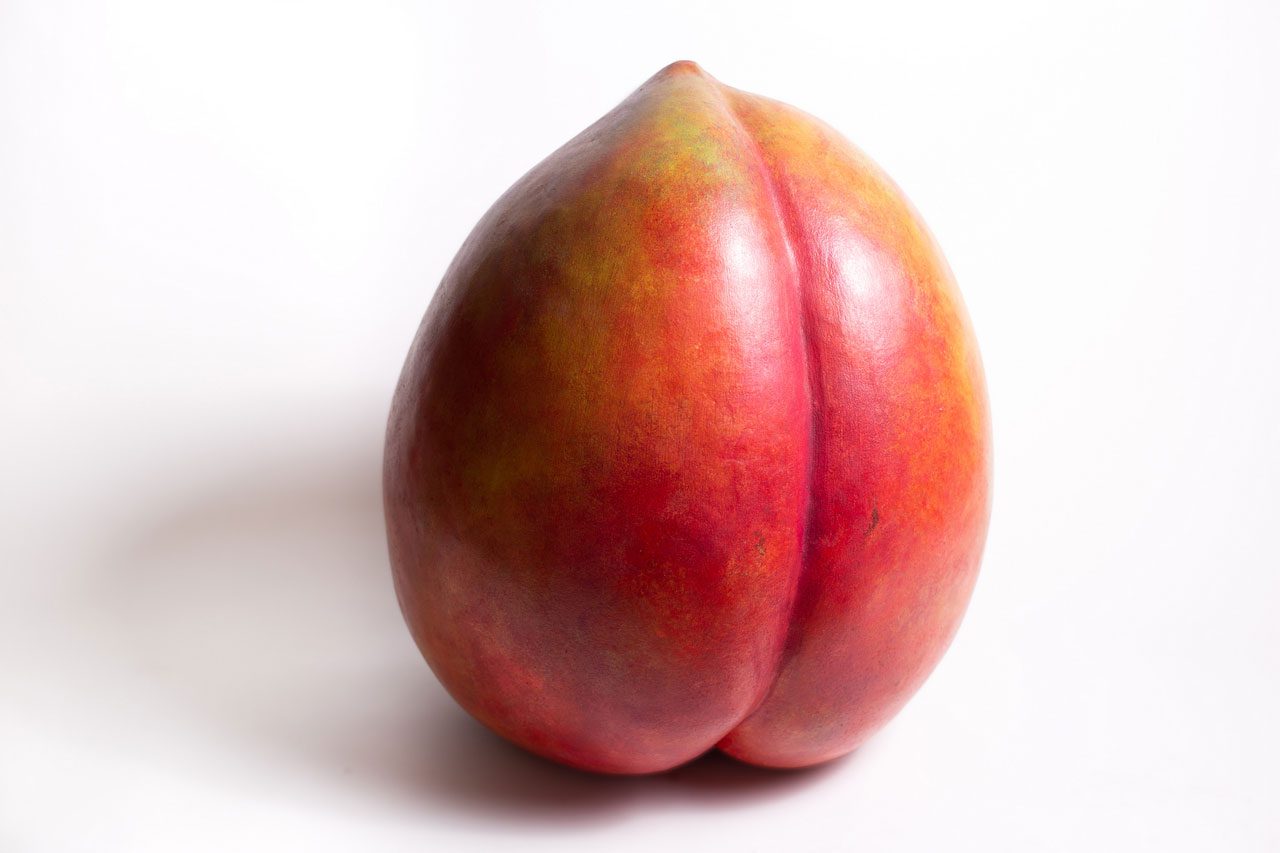
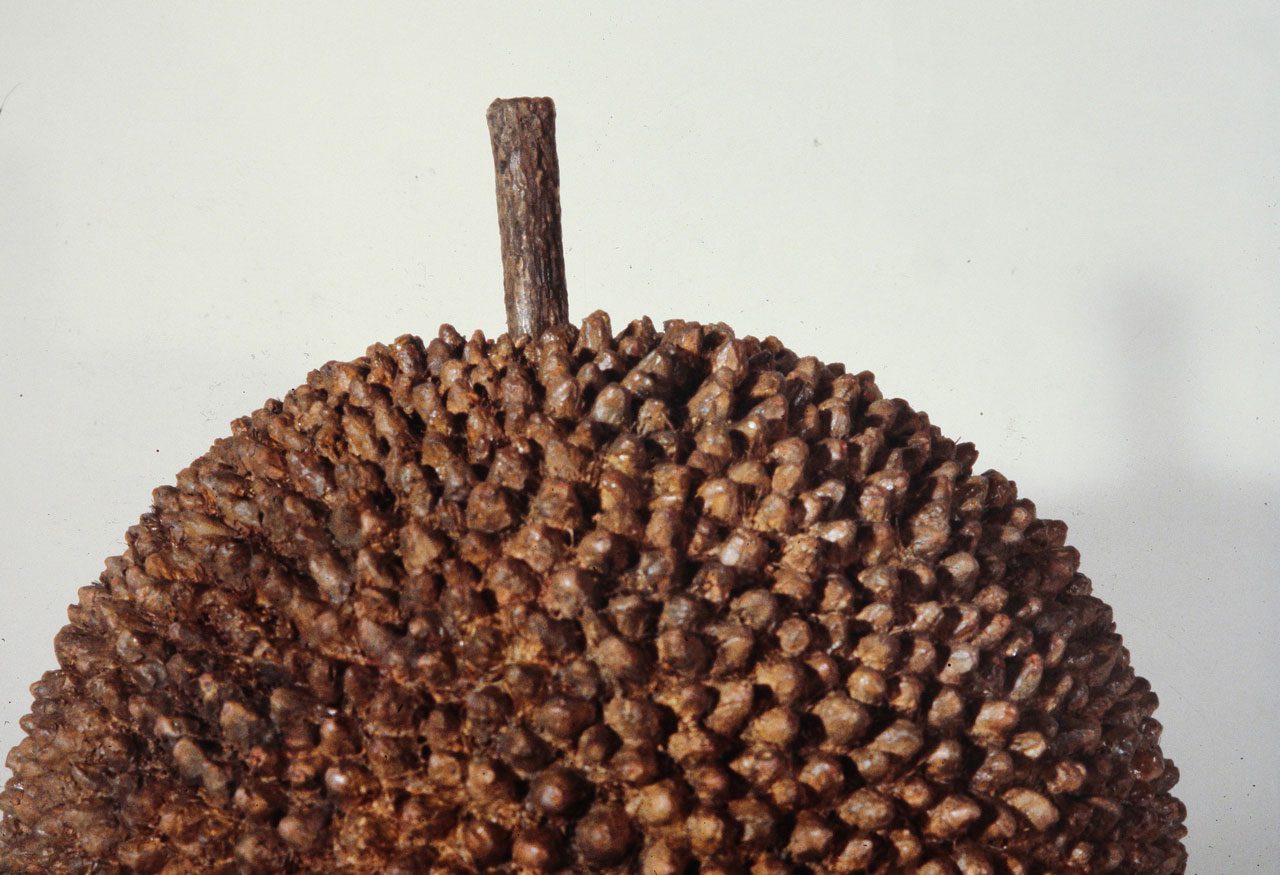
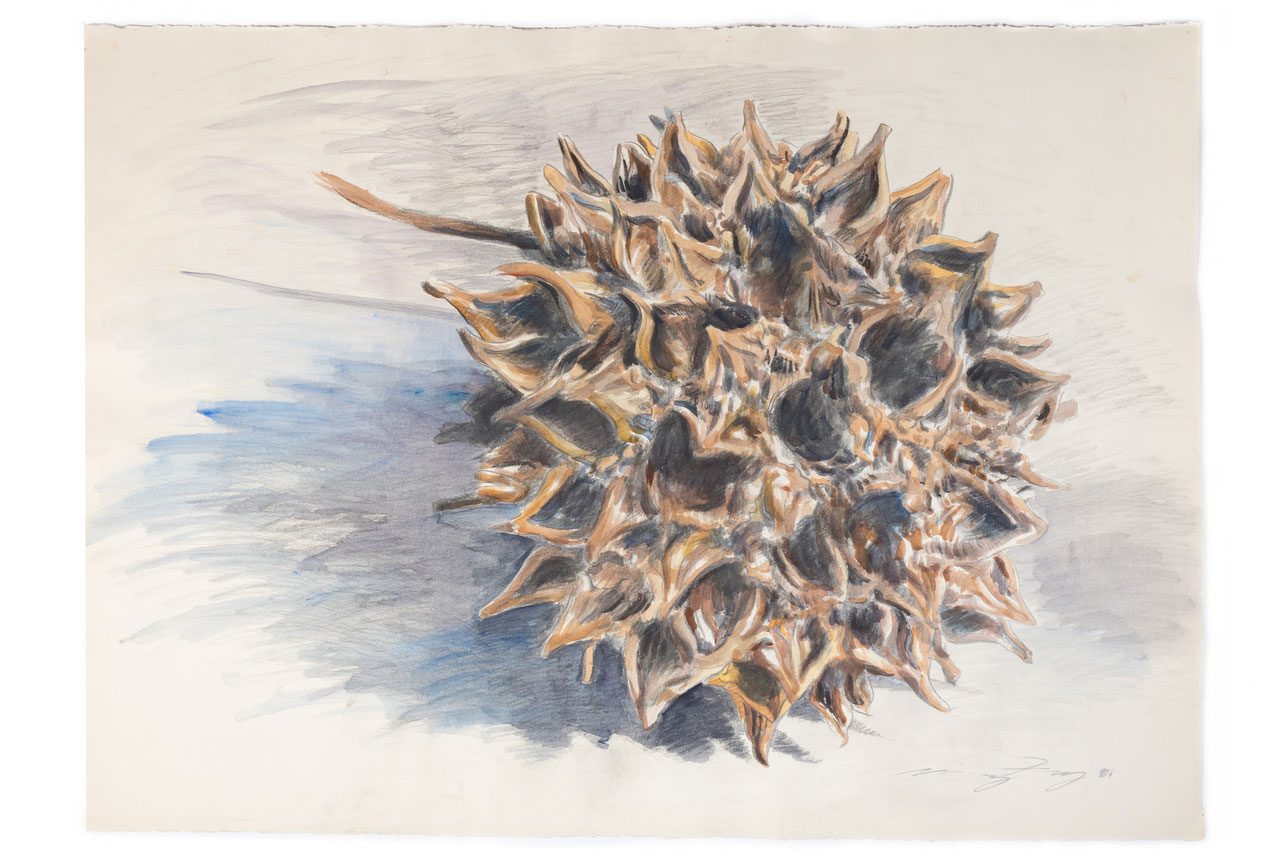
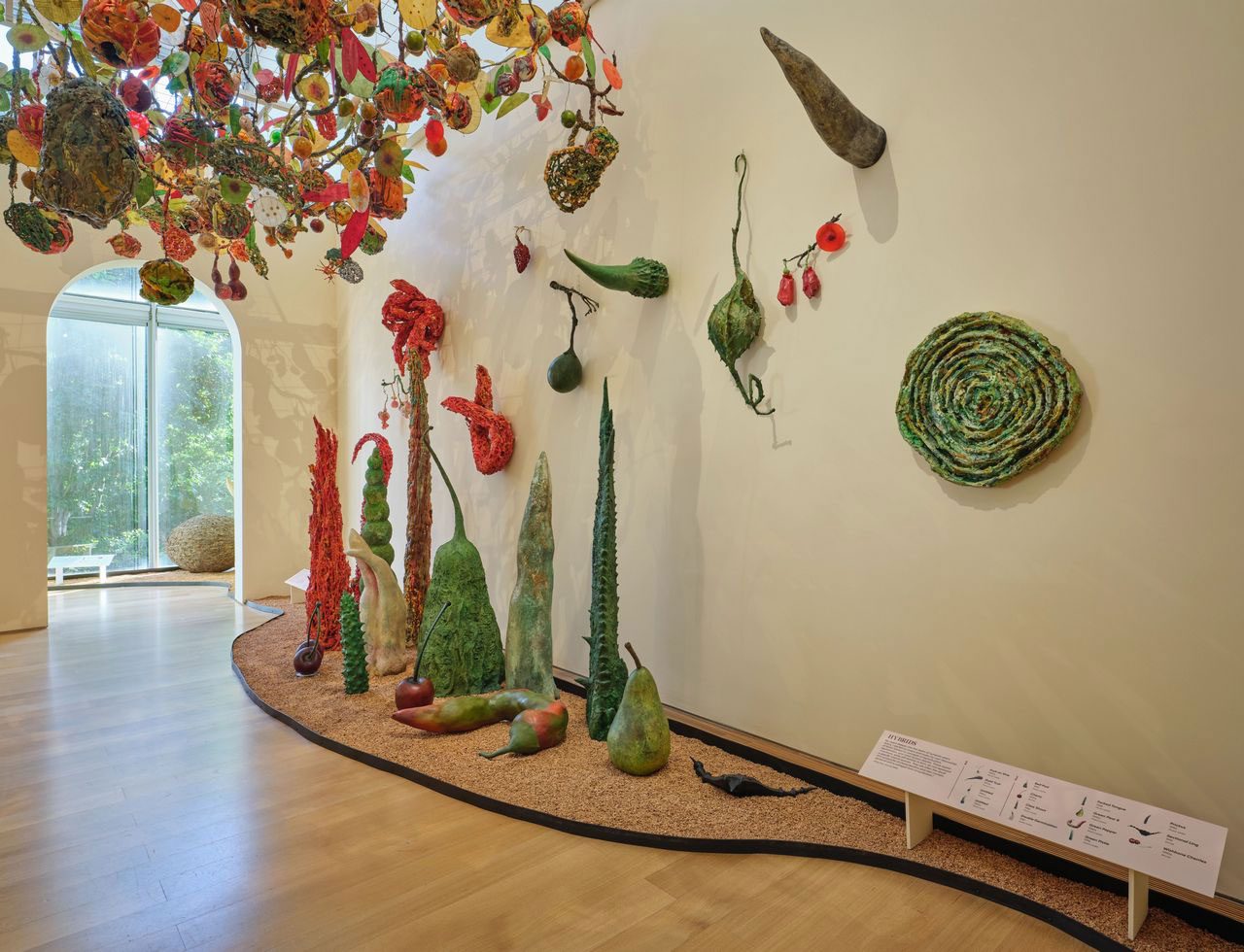
“Edge of the Garden” marks a historic moment—it is the first major exhibition of Ming Fay’s work ever presented in Boston and across New England, and the most comprehensive anywhere to date. Fay, a New York–based artist celebrated for his immersive sculptural worlds, invites visitors into gardens that are at once wondrous and surreal. Here, colossal fruits, seeds, shells, and fantastical hybrid plants blur the boundaries between the natural and the man-made, the familiar and the imagined. The exhibition brings together more than 100 works, including 80 of Fay’s signature, larger-than-life botanical sculptures. Drawing upon both Chinese and American cultural traditions, Fay envisioned his gardens as utopias—spaces where memory, connection, and unrestrained creativity flourish. The journey begins in the Hostetter Gallery, where visitors are welcomed into Fay’s fifty-year practice of studio art, public art, and teaching. This first room is a portrait of the artist at work—his inventiveness, curiosity, and deep reverence for nature on full display. Selected from his studio and archives are intimate sketches, delicate preparatory drawings and watercolors, and pages from the zines he self-published over the decades. Natural treasures—seeds, pods, shells—collected by Fay as sources of inspiration sit beside them, offering a tangible connection to the forms that would later grow into monumental sculptures. A video interview with Parker Fay, the artist’s son and Director of the Ming Fay Studio, filmed in the New York studio, offers personal insight into his father’s process. Nearby, two exquisite Ming dynasty bird-and-flower paintings from the Gardner Museum’s collection—”Pheasants” (mid-1400s) and “Hibiscus and Ducks” (c. 1500)—provide a historical echo. These works, recently conserved, embody symbolic aspirations for success and longevity, inviting visitors to look closely at the fine details that link past and present visions of the garden. In the main gallery, the experience shifts from intimate to immersive. Visitors wander through fantastical, dreamlike gardens filled with towering botanical forms. The gallery’s meandering pathways mirror the Gardner’s own Monk’s Garden, visible through the windows—a reminder that nature and art here are in conversation. Amid bursts of color, form, and texture, three intertwined themes emerge: gardens as places of connection, memory, and creativity. During his decades in New York (1970s–2010s), Fay found inspiration in the overlooked corners of city life—spiky sweetgum balls, curling locust pods, and fluttering maple seeds collected from sidewalks. Encounters with fresh produce vendors in Chinatown led to exuberant sculptures like the playful “Long Stem Cherry” (1990s), the fiery “Cayenne Pepper” (1990s), and the modest “Bartlett Pear” (1985). Many of these works are crafted in papier-mâché, where paper pulp is molded over steel frames and hand-painted, while others are rendered in bronze or ceramic. One standout is “Money Tree”, a site-specific installation where paper leaves cradle real seeds—symbols of growth and the promise of the future. Born in Shanghai and raised in Hong Kong, Fay came to the United States for college in 1961. His imagined gardens weave together personal history, collective memory, and the artistic heritage of China, reframed through his experiences as a member of the Chinese diaspora in America. Some works carry deeply personal narratives. His “Wishbones” series (1980s) was born from the tradition of breaking a chicken bone for luck—a wish for a child that was soon fulfilled with the birth of his son, Parker. Sculptures like “Anise” (1989) and “Ginseng 3” (c. 1988) pay tribute to culinary and medicinal plants central to Chinese culture, their forms embodying centuries of tradition and the passing down of knowledge. In a multisensory twist, a “scent station” invites visitors to open small doors and inhale the aromas of dried anise and ginseng, bridging the gap between sight, smell, and memory. Fay often described his mixed-media works with sprayed polyurethane foam as a journey “beyond the garden, into the jungle.” Here, his creativity is at its most untamed—unexpected colors, fantastical textures, and hybrid inventions like “Prickus” (1990) and “Jungle Doo Dad” (2000s) defy categorization. These works reaffirm Fay’s lifelong fascination with nature as both muse and mystery, an inexhaustible source of wonder.
Photo: The exhibition “Ming Fay: Edge of the Garden,” in the Hostetter Gallery, 26 June – 21 September 2025. Isabella Stewart Gardner Museum, Boston
Info: Curator: Gabrielle Niu, Isabella Stewart Gardner Museum, 25 Evans Way, Boston, MA, USA, Duration: 26/6-21/9/2025, Days & Hours: Mon & Wed 11;00-17:00, Thu 11:00-21:00, Sat-Sun 10:00-17:00, www.gardnermuseum.org/
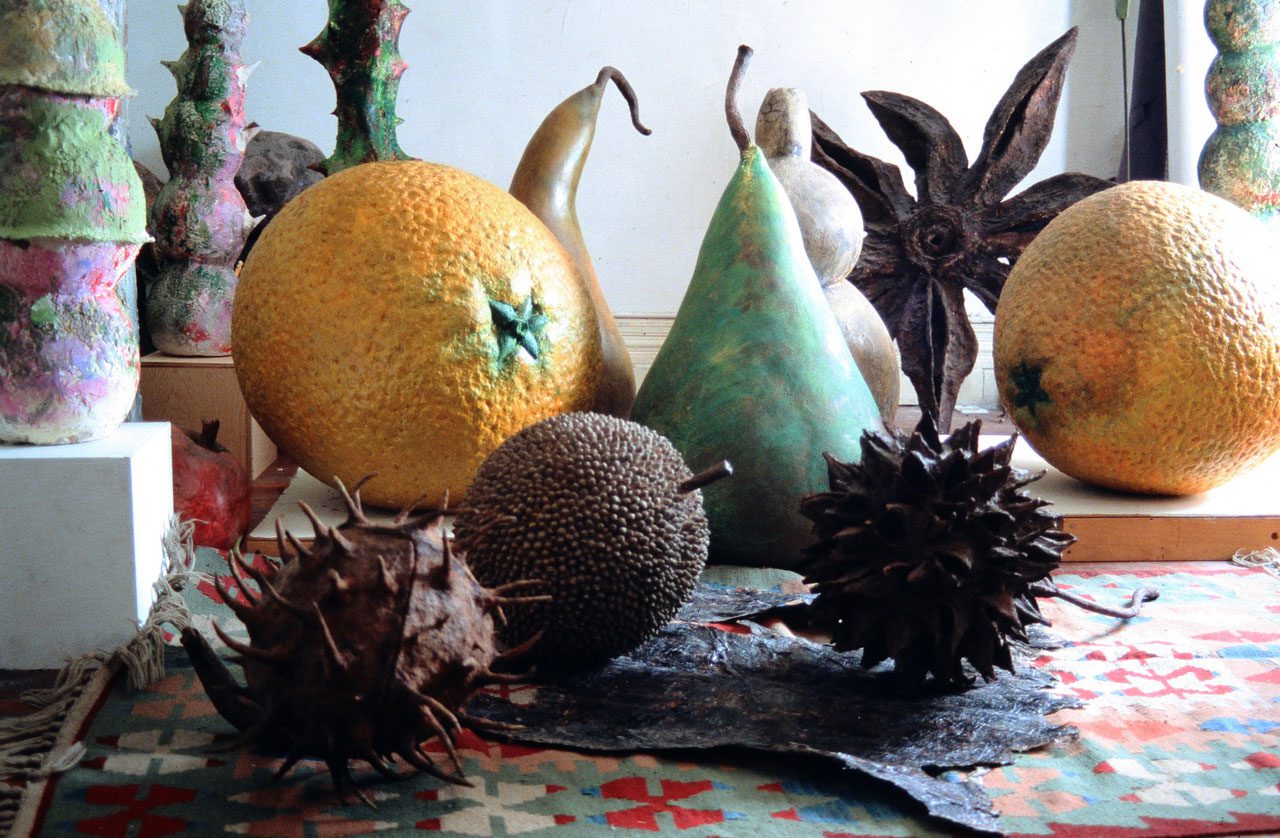

Ming Fay, Floating Reeds (detail), 2000s. Mixed Media. Private Collection
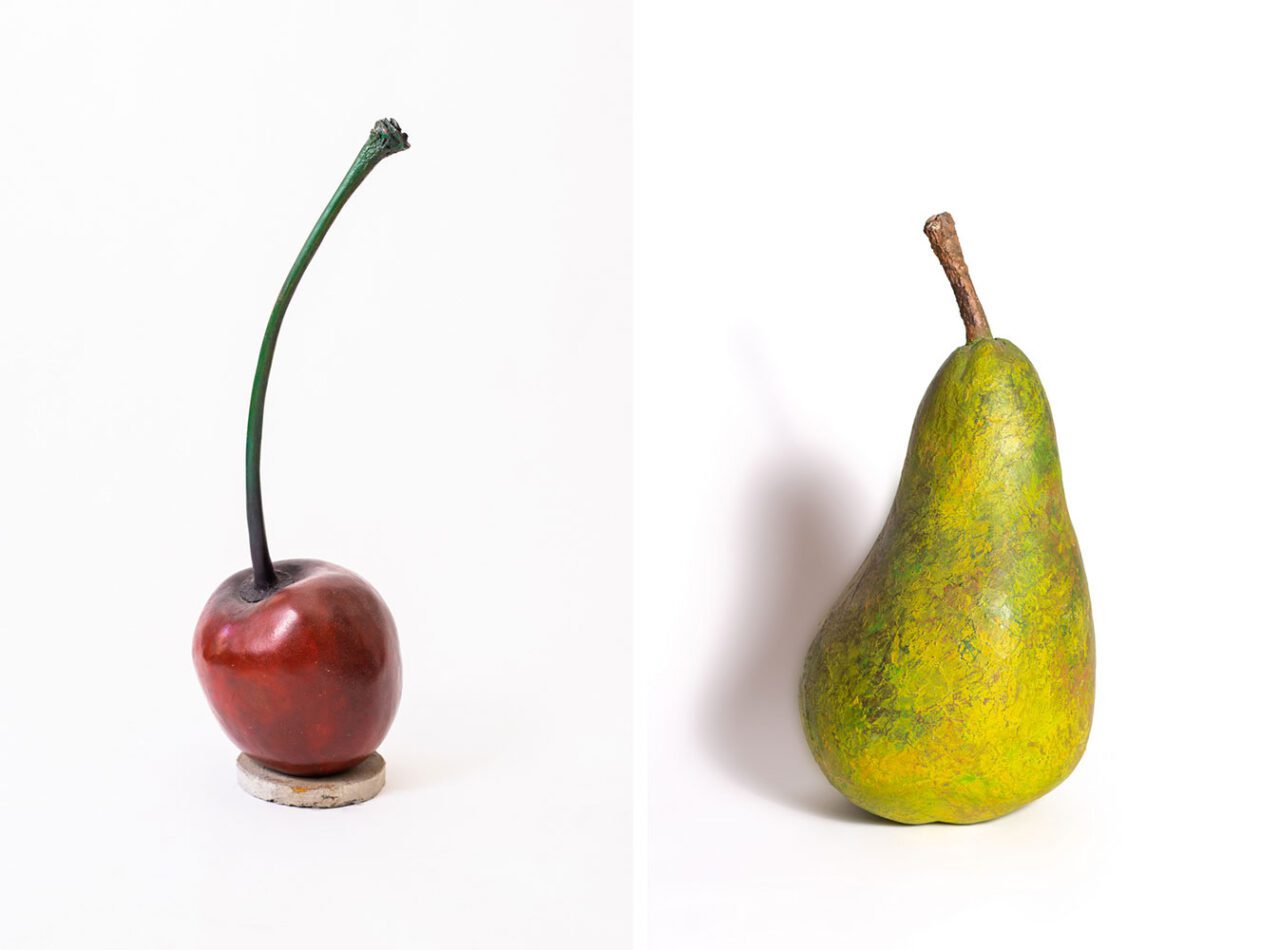
Right: Ming Fay, Green Pear 8, 1990s. Mixed Media. Private Collection