PRESENTATION: Alphonse Mucha-Art Nouveau & Utopia, Part II
 Alphonse Mucha was a Czech artist who defined the style of the ‘Art Nouveau’ era. Living in Paris, he became an overnight sensation with his poster of the world-famous actress Sarah Bernhardt in the play “Gismonda”. With his new style, characterised by elegantly curving lines, natural motifs and graceful women, his advertising posters and decorative panels took over the streets and living rooms of Paris. By 1900, he was one of the most famous artists in the world. In the latter part of his life, he put his artistic talents at the service of the newly established country of Czechoslovakia (Part I).
By Dimitris Lempesis
Photo: Mucha Museum Archive
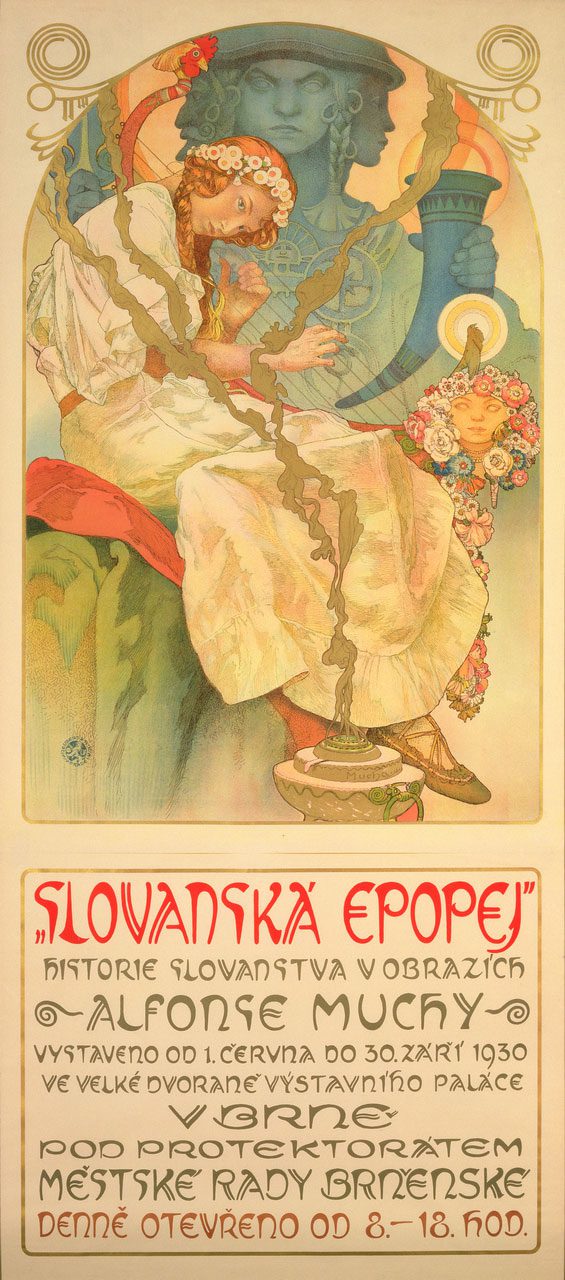
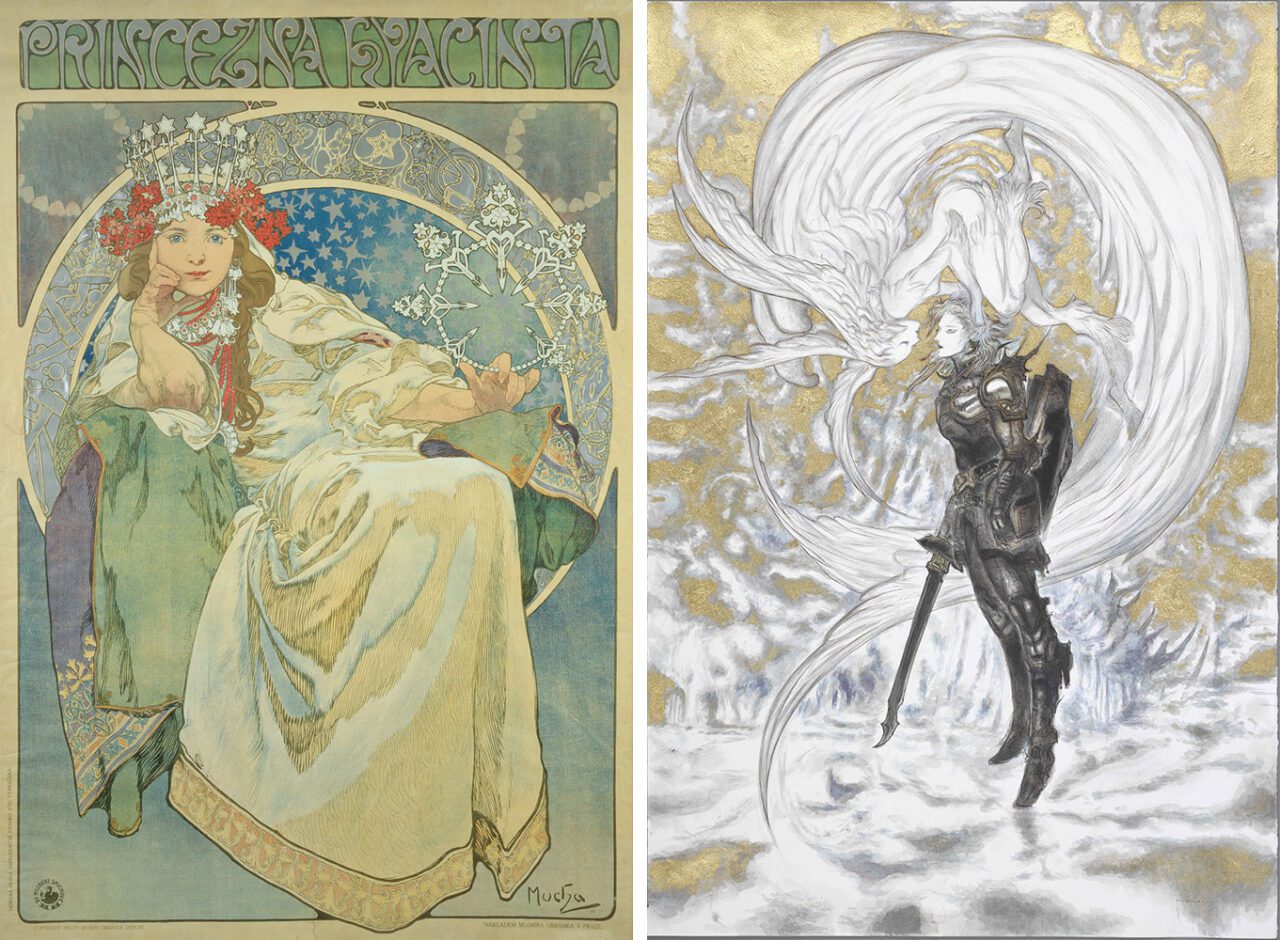
Even more than eight decades after his passing, Alphonse Mucha’s spellbinding artistry continues to ripple across the globe. His signature style—graceful lines, floral flourishes, radiant muses—still defines how we see beauty in everything from fashion to film, manga to music. As we approach July 24, 2025, we celebrate the 165th birthday of this extraordinary Czech artist (1860–1939), whose influence has only deepened with time. Hailed during his lifetime as “the greatest decorative artist in the world,” Mucha became a defining force in the Art Nouveau movement. But his legacy transcends any single genre. Today, traces of his visual poetry can be found everywhere: in rock concert posters, luxury couture, video games, animated films, graphic novels, and street murals. His impact on visual storytelling is vast and ongoing. From Parisian posters to modern pop culture, Mucha’s artistic DNA runs deep. Japanese manga aesthetics, with their intricate linework and ethereal heroines, owe much to his influence. Final Fantasy character designer Yoshitaka Amano has cited Mucha as a key inspiration for the series’ dreamlike visuals. In the Marvel universe, former Chief Creative Officer Joe Quesada brought Mucha’s elegant touch to superhero storytelling. Disney’s Frozen borrows elements of its snow queen’s celestial aura directly from Mucha’s archetypal heroines. Netflix’s Emmy-winning series Arcane evokes the mood, palette, and drama of Mucha’s monumental masterpiece, “The Slav Epic”. Music, too, has long danced to the rhythm of Mucha’s aesthetic. Psychedelic rock bands of the ’60s and ’70s embraced his ornate style to give visual form to their sound. The traveling U.S. exhibition “Timeless Mucha”, curated by The Phillips Collection in Washington, D.C., brings these intersections to life—showcasing original Mucha works that inspired album covers for Diana Ross & The Supremes, Jefferson Airplane, The Grateful Dead, and The Rolling Stones. Mucha’s art became a mirror for the music of rebellion and idealism—his fusion of femininity, fantasy, and mysticism offering a new language for visual freedom. That resonance hasn’t faded. If anything, it’s grown stronger. For those who want to experience the full breadth of his genius, the Mucha Museum at the historic Savarin Palace offers the most comprehensive collection of the artist’s works. The permanent exhibition, “Alphonse Mucha: Art Nouveau & Utopia”, is a rich journey through his artistic philosophy and development of “Le style Mucha.” Organized into four immersive sections—“Mucha & His Homeland,” “Le style Mucha & Art Nouveau,” “Mucha the Visionary,” and “The Slav Epic”—the exhibit includes original paintings, posters, illustrations, books, photographs, and digital projections. Together, they offer a profound window into Mucha’s spiritual and artistic evolution—from his Moravian roots to his rise in Paris and ultimately to his life’s most ambitious project: The Slav Epic.
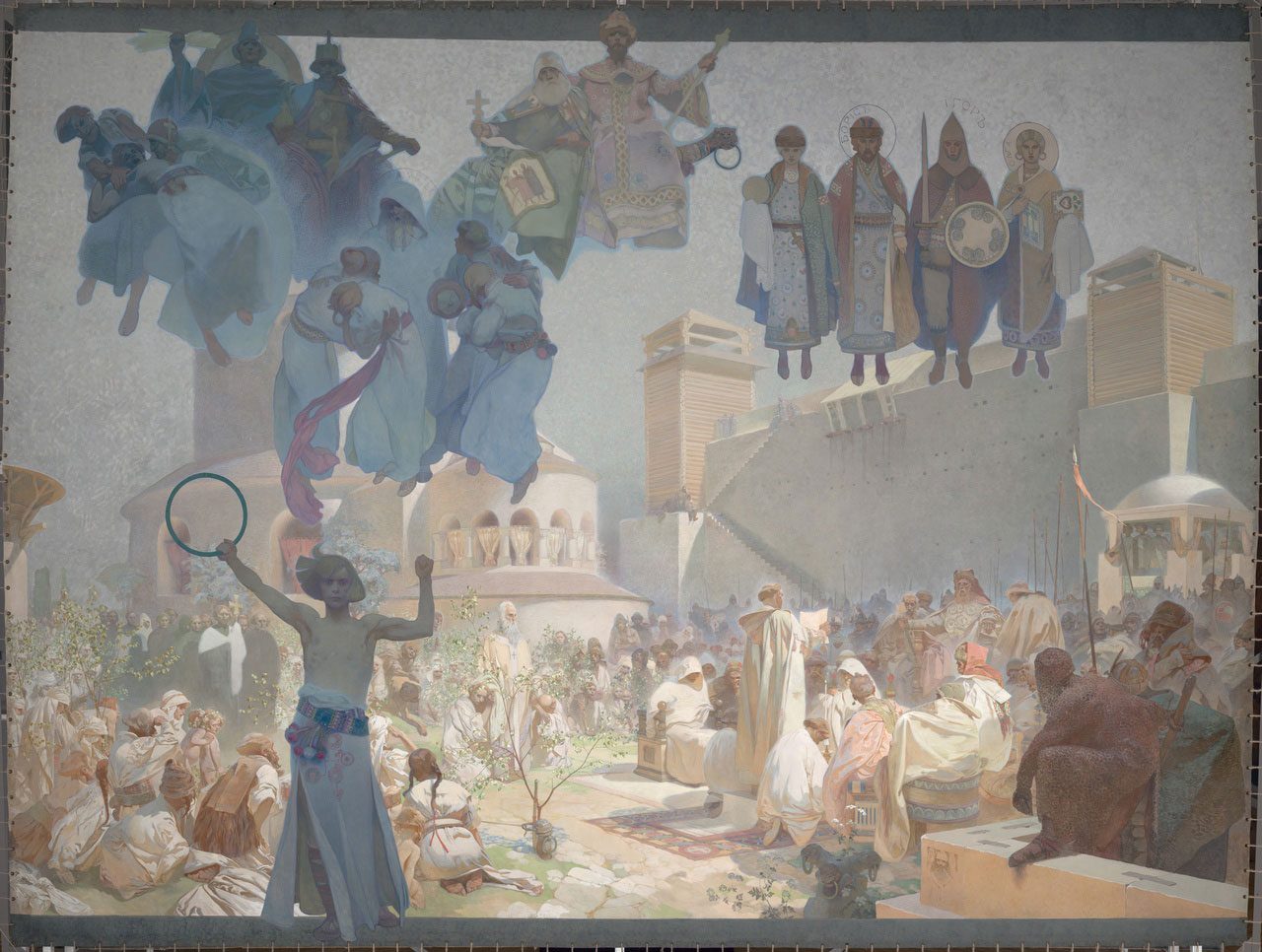
At the center of Mucha’s legacy lies “The Slav Epic”, a series of twenty breathtaking monumental canvases, the largest of which stretches over 6 by 8 meters. Conceived as a gift to all Slavic peoples, the series narrates key moments in Slavic history—from ancient origins to modern revolutions—each canvas steeped in symbolism, reverence, and hope. The seed for “The Slav Epic” was planted in 1899 while Mucha was designing the Pavilion of Bosnia-Herzegovina for the 1900 Paris Exhibition. His extensive travels through the Balkans stirred a deep desire to honor the shared struggles and triumphs of Slavic nations. But it wasn’t until Christmas Day in 1909 that the dream began to take shape, when American industrialist and philanthropist Charles Richard Crane agreed to fund the project. Crane, a passionate advocate of Eastern European independence, provided both the financial and emotional support Mucha needed to embark on this colossal work. In 1910, Mucha returned to his homeland and settled in Zbiroh Castle, where the expansive studio space allowed him to bring his vision to life. Between 1911 and 1926, Mucha poured his soul into the creation of “The Slav Epic”. Ten of the paintings depict milestones from Czech history, while the remaining ten honor the broader tapestry of Slavic cultures. The series begins with “The Slavs in Their Original Homeland” (1912) and concludes with the triumphant “The Apotheosis of the Slavs” (1926), celebrating the moment when Slavic nations gained independence in 1918. For Mucha, “The Slav Epic” was more than art. It was a spiritual mission—a call to unity, peace, and cultural pride. Through the grandeur of this cycle, he hoped to inspire future generations of Slavs to embrace their shared identity and contribute to the progress of humanity. In 1928, to mark the 10th anniversary of Czechoslovakia’s independence, Mucha and Crane gifted the completed series to the City of Prague. It remains one of the most moving artistic tributes to national and pan-Slavic identity ever created. Alphonse Mucha wasn’t just an artist of his time; he was a prophet of beauty, harmony, and idealism whose work continues to pulse through our modern world. His art crosses borders and generations, echoing in galleries, comic books, movie screens, and city walls. As we celebrate the 165th anniversary of his birth, Mucha’s legacy reminds us that true artistry transcends medium and moment. It lives on in the hearts of those it touches—inspired not just by what they see, but by what they feel.
Photo left: Alphonse Mucha, Princess Hyacinth, 1911, Colour lithograph, © Mucha Trust 2024. Photo right: Yoshitaka Amano, Final Fantasy XIV Adventurer and God of Storms, 2010, FINAL FANTASY XIV_ (C) SQUARE ENIX CO LTD, All Rights Reserved IMAGE ILLUSTRATION (C) YOSHITAKA AMANO
Info: Mucha Museum, Savarin Palace, Na Příkopě 852/10, Nové Město, Prague, Czech Republic, Days & Hours: Daily 10:00-18:00, https://mucha.eu/
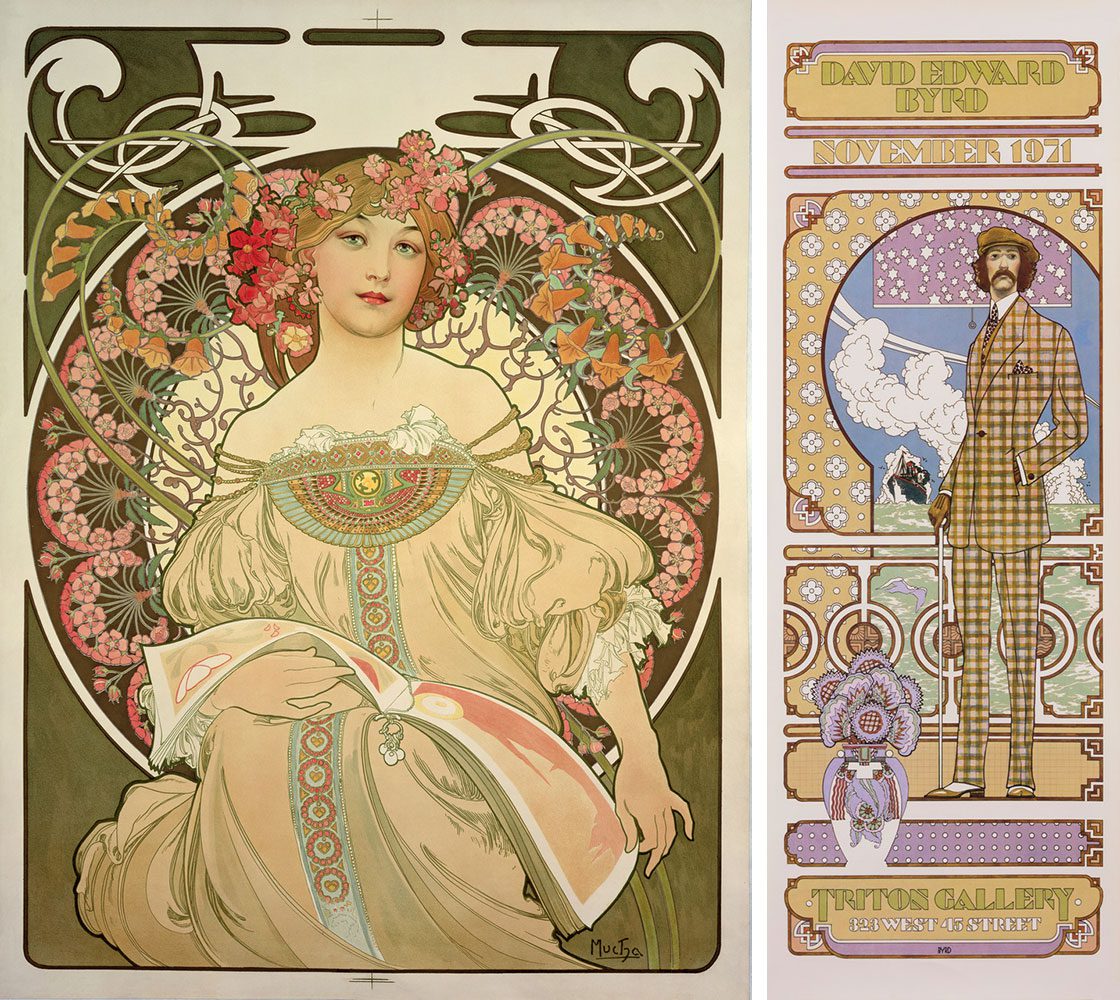
Right; David Byrd: David Edward Byrd at Triton Gallery, 1971. Offset lithograph, David Edward Byrd at Triton Gallery, Courtesy of David Edward Byrd
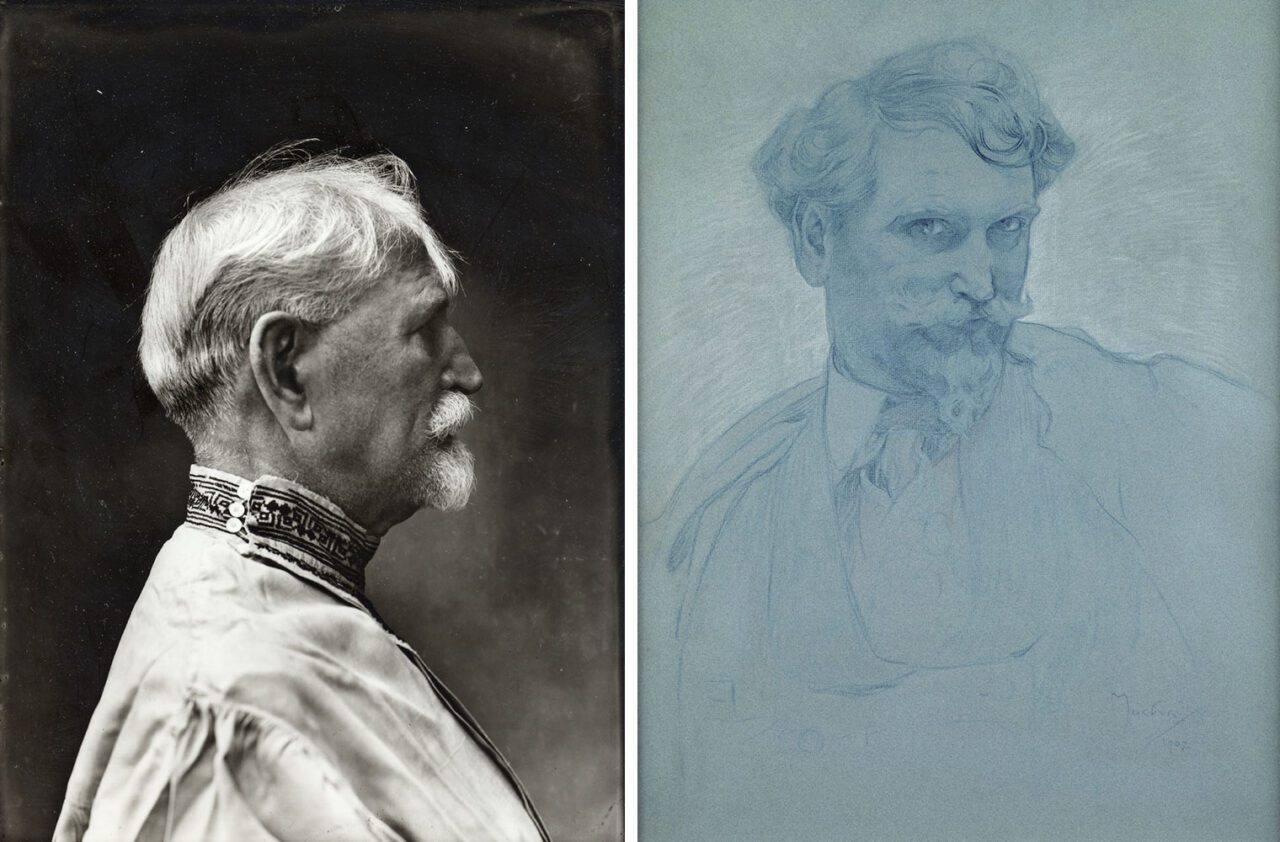
Right; Alphonse Mucha, Self-portrait, 1907, © Mucha Trust 2024
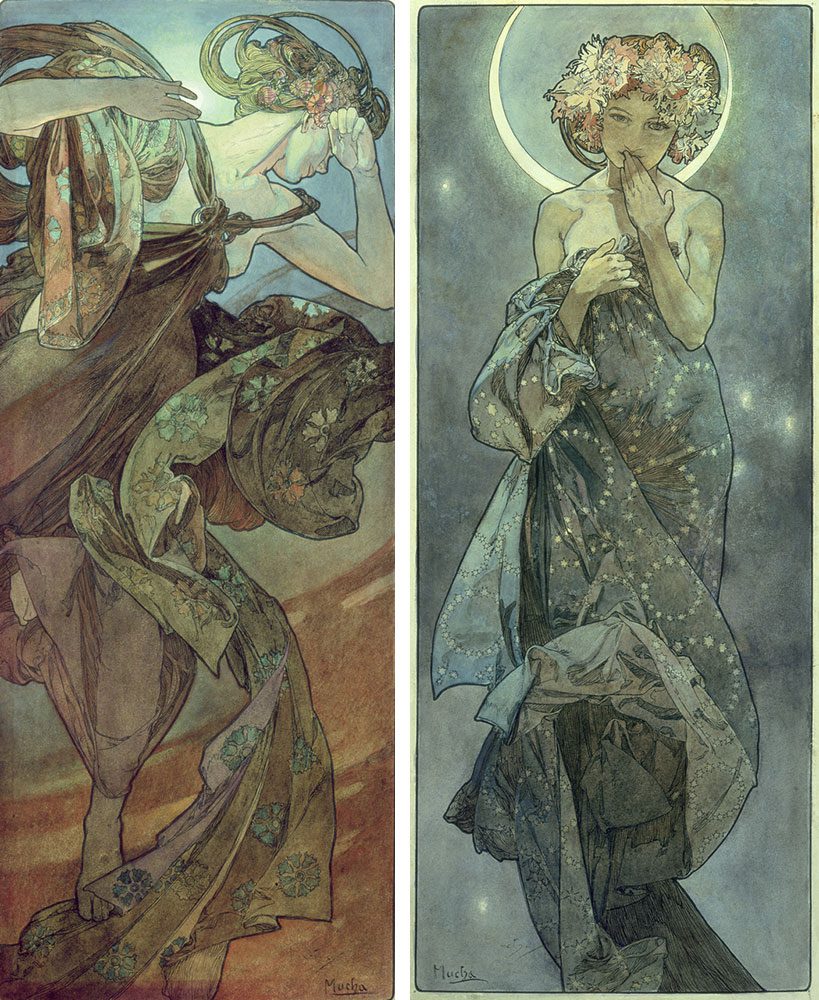
Right; Alphonse Mucha, The Moon and the Stars – Study for The Moon, 1902, Colour lithograph, © Mucha Trust 2024
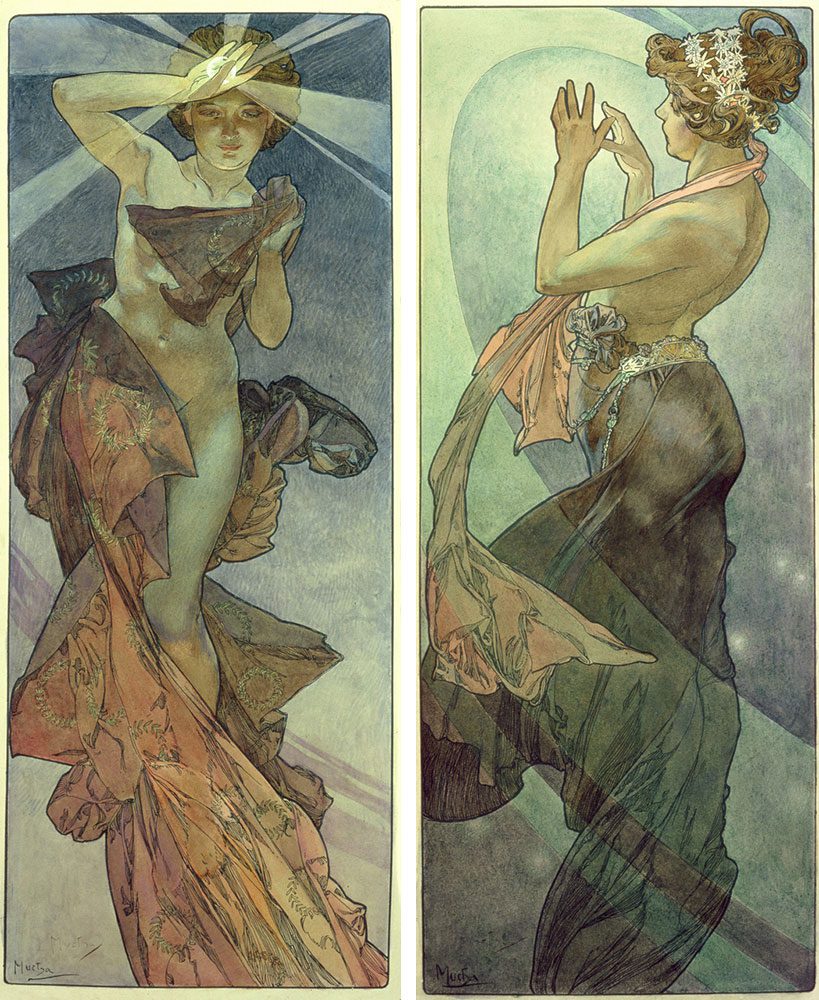
Right; Alphonse Mucha, The Moon and the Stars – study for The Pole Star, 1902, Colour lithograph, © Mucha Trust 2024
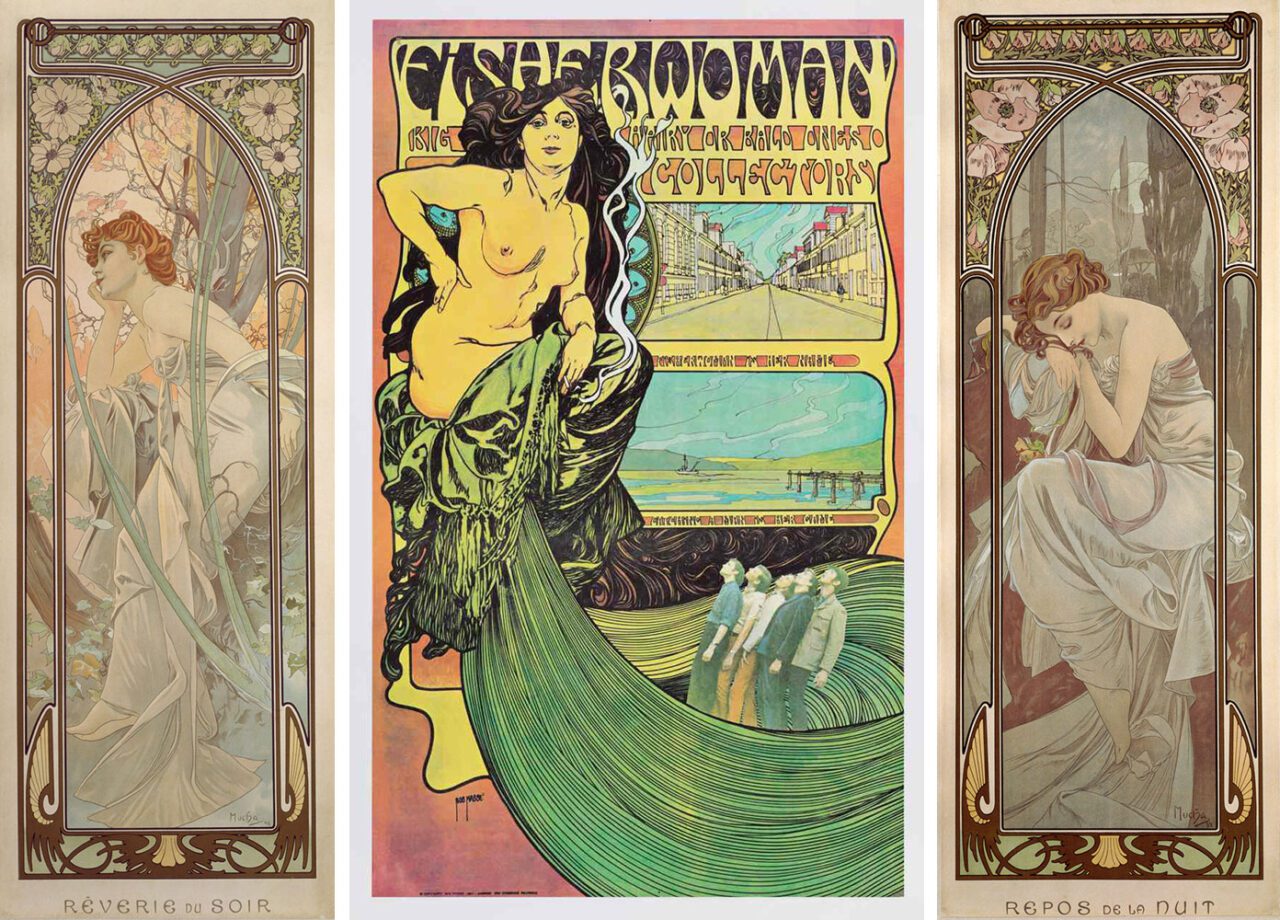
Center; Bob Masse: Fisherwoman – promotional poster for the Collectors, 1967 Offset lithograph, 60.5 x 37, Fisherwoman, courtesy of Bob Masse Studios
Right; Alphonse Mucha, The Times of the Day Night’s Rest, 1899, Colour lithograph, © Mucha Trust 2024