PRESENTATION: Sheila Hicks
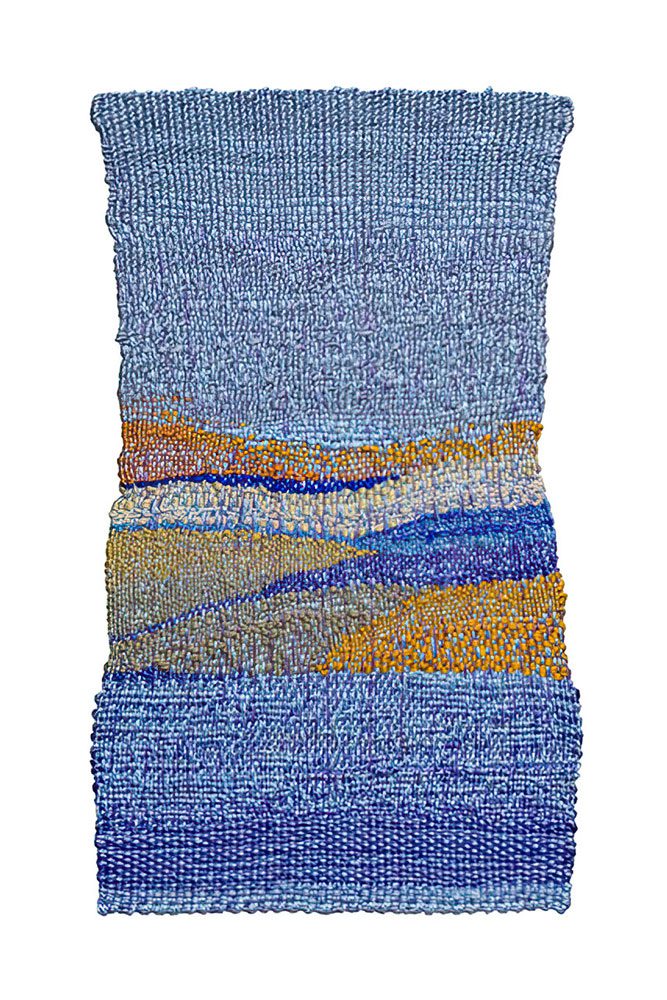
Born in Nebraska, Sheila Hicks, trained as a painter, but she sees fibers and textiles as more than merely working materials, regarding them as both archaic and contemporary media linking interdisciplinary fields around the globe. Exploring and working in different cultures since the 1950s, she has been one of the most significant figures in contemporary art, whose multifaceted creations are characterized by an amazing sense of color and by intense engagement with architecture and photography.
By Efi Michalarou
Photo: SFMOMA Archive
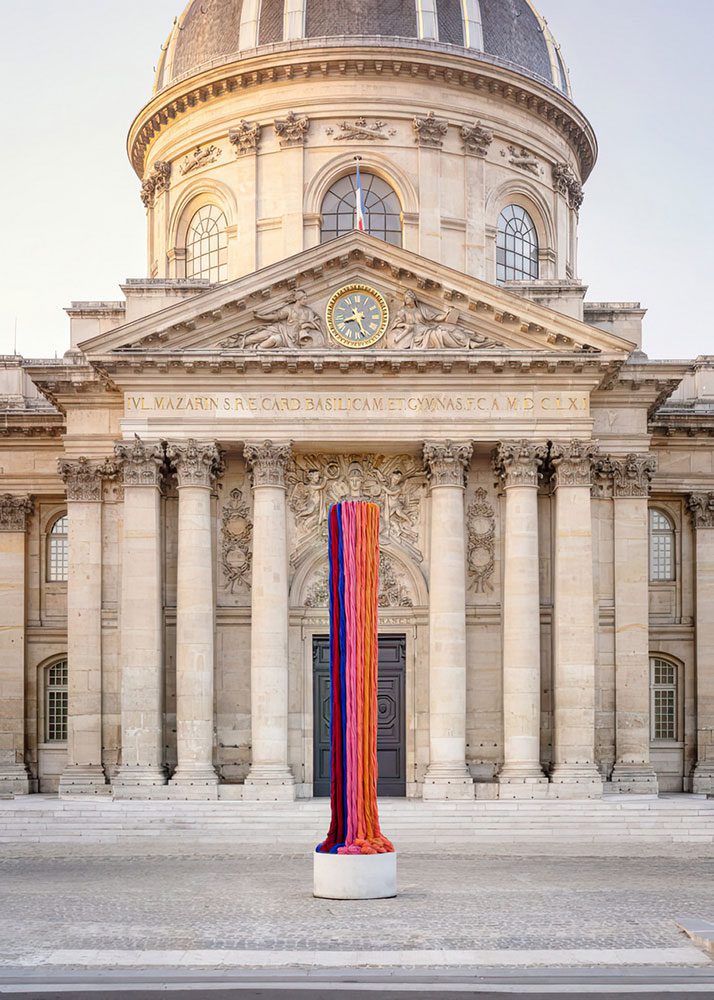
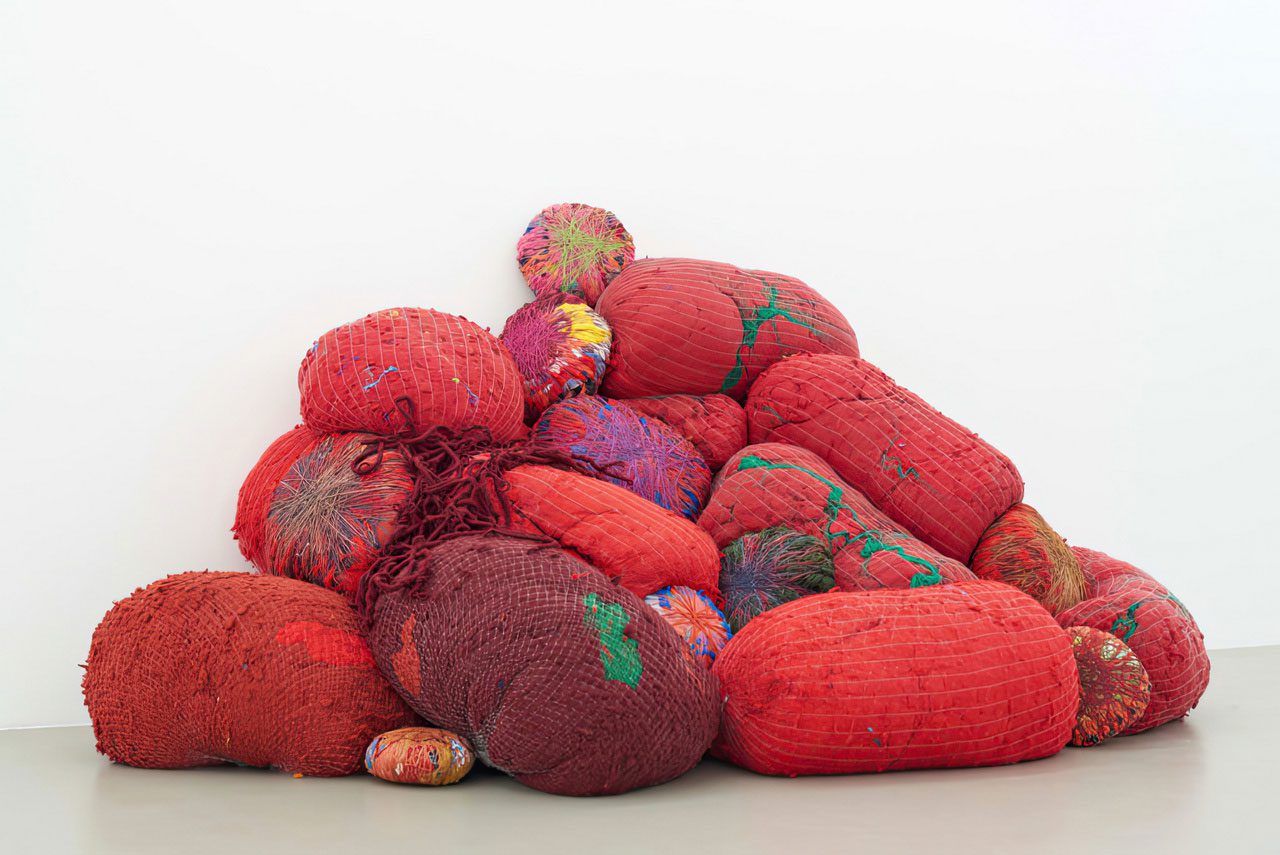
Since its inception in 1987, the New Work series at SFMOMA has served as a vital platform for contemporary artists to explore bold ideas and develop new bodies of work. Dedicated to spotlighting the pioneering visions of living artists, the series has significantly shaped the museum’s evolving collection and curatorial direction, fostering dialogue between innovation and tradition. Sheila Hicks, a globally influential figure in the field of fiber art, makes her solo debut at SFMOMA with a striking, site-specific installation in the New Work gallery. In this immersive presentation, coiled, bundled, and suspended threads extend dynamically into the surrounding space, engaging with light and architecture in ever-shifting ways. Based in her storied Paris studio since 1964, Hicks draws on a rich tapestry of inspirations, often rooted in deeply personal geographies—such as the weathered cobblestones of her own courtyard, or the windswept lighthouses and untamed seascapes of Ouessant (Ushant), a remote Breton island off the coast of France. For this exhibition, Hicks integrates both new creations and reimagined components from earlier works, assembling them into a visually arresting environment. At the heart of the gallery, a monumental cascade of cords evokes the towering presence of a phare—the French word for lighthouse—a recurring symbol in her work. Nearby, abstract “comets” streak across the space with vibrant, layered lines that hint at shifting topographies. Other works, such as hand-inserted linen panels, suggest drifting clouds in perpetual motion, while smaller pieces unveil ongoing investigations into form and material. The installation also features reconfigured displays of Hicks’s iconic wrapped “bâtons, often referred to as “talking sticks,” as well as vivid mounds of tufted fiber t”hat pulse with color and texture. These works exemplify the artist’s intuitive, ever-evolving approach—what she poetically describes as “walking the tightrope into the future.” Extending beyond the gallery, the exhibition continues in the Jean and James Douglas Sculpture Garden on Floor 5, where an expansive outdoor commission invites viewers into a space of continual transformation. There, the interplay of light, shadow, and weather creates moments of unexpected discovery, reinforcing Hicks’s lifelong exploration of environment, memory, and materiality.
Sheila Hicks was born in the small town of Hastings, Nebada, in 1934,. Though her family moved around a lot during the Depression, Sheila Hicks and her brother returned each summer to Hastings, where their great-aunts instructed them in music, art and reading, as well as pioneer skills like spinning, sewing and weaving. She majored in art at Syracuse University, then transferred to the Yale School of Art where she studied with Josef Albersand with George Kubler, the influential historian of Latin American art. A picture of Peruvian mummy bundles, shown in Dr. Kubler’s class, sparked her interest in textiles, which was further galvanized when Albers took her home to meet his wife, Anni, the celebrated Bauhaus weaver. Hicks went to Chile on a Fulbright grant and traveled around Latin America, absorbing the influence of weavers in Ecuador, Bolivia and Peru. She received an M.F.A. from Yale, then returned to Mexico, where she photographed architecture and exhibited her “minims”. Some of her weavings entered the collection of the Museum of Modern Art. She also married a Mexican-German beekeeper, moved to his ranch and gave birth to a daughter, Itaka. Having lived briefly in Paris in 1959, and finding that her life and marriage in rural Mexico conflicted with her artistic aspirations, she returned here with her daughter in 1964, supporting herself as a textile design consultant for Knoll Associates and through work for a German carpet manufacturer. Her second husband, a Chilean artist introduced her to surrealist and Latin American circles in Paris, and through a curator at the MoMA she received her first big public commission, for a wall hanging at the restaurant of Eero Saarinen’s new CBS building in New York. A defining moment in her career came with her invitation to exhibit at the Biennial of Tapestry in Lausanne in 1967. In postwar Paris tapestry was promoted as a glory of French culture, but by the late ’60s the French organizers of this event were looking to shake things up. The monumental public commissions that have occupied her, intermittently, since the mid-’60s have often required complex studio setups and a phalanx of assistants. At the same time her temporary, poetic installations of found fabrics, a cascading mountain of some five tons of clean Swiss hospital laundry, for example, which was her contribution to the Lausanne Biennial in 1977, or the floating curtains of baby bands (used to bind a newborn’s umbilical wound), which she showed in a gallery in Kyoto in 1978 — explore the pervasive presence of cloth in every facet of human existence, from birth until death.
Photo: Sheila Hicks, Rempart, 2016 (installation view, Meyer-Riegger, Berlin, 2023); private collection, courtesy the artist and galerie frank elbaz, Paris
Info: SFMOMA, 151 Third St., San Francisco, CA, USA, Duration: 9/8/2025-9/8/2026, Days & Hours: Mon-Tue & Fri-Sun 11:00-17:00, Thu 12:00-20:00, www.sfmoma.org/