PRESENTATION: Art & Alienation

What form might a work of art take that seeks to convey something of this sense of alienation in the present? “Art & Alienation’ brings together more or less recent works by 8 artists, most of whom live in Europe. Each artist presents extracts from what is often experimental and in-flux practice. These singular universes mask a shared idea: artistic practice is also always a critique of production. Artistic creation always already comes into being alienated in capital’s abstraction. The irresolvable contradictions on the social, creative and economic horizon of art only reach resolution in negation.
By Dimitris Lempesis
Photo: Kunsthalle Friart Fribourg Archive
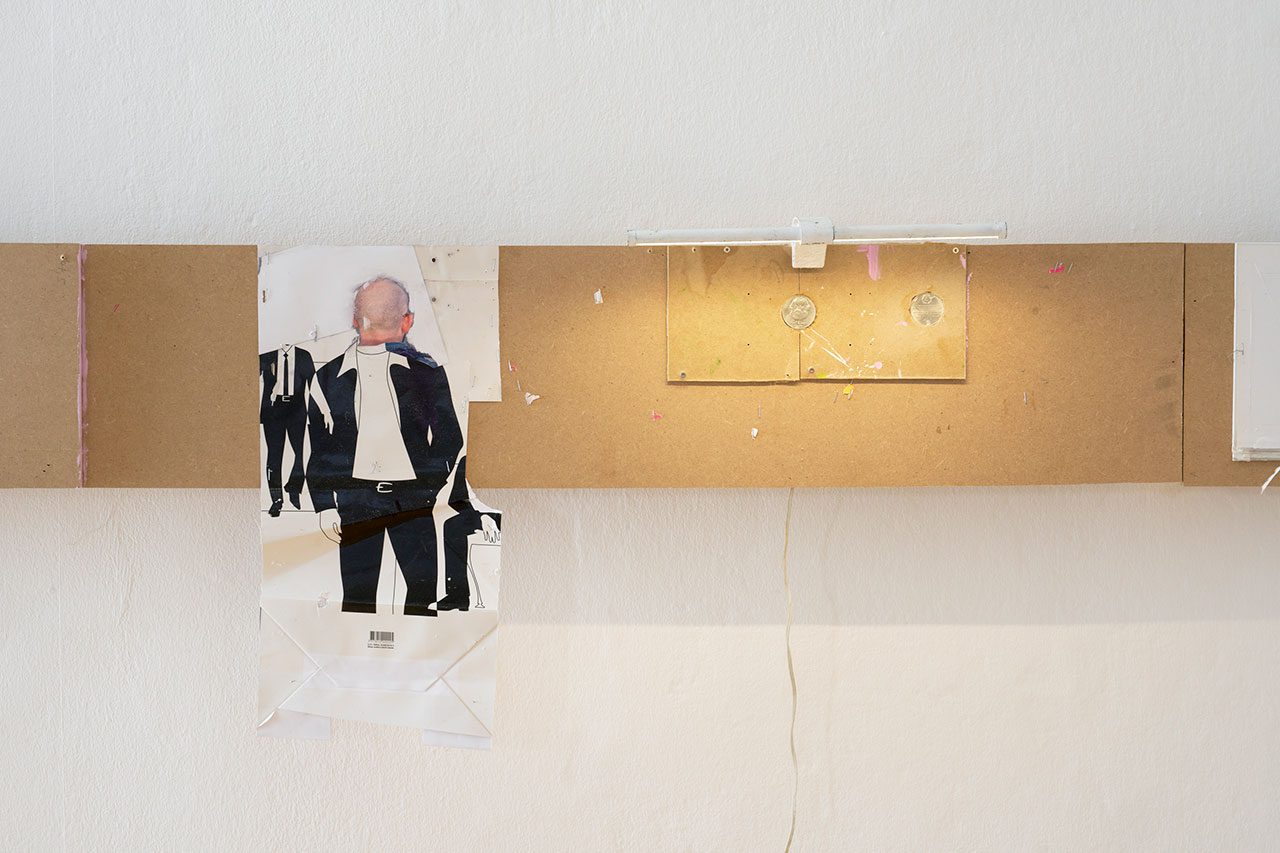
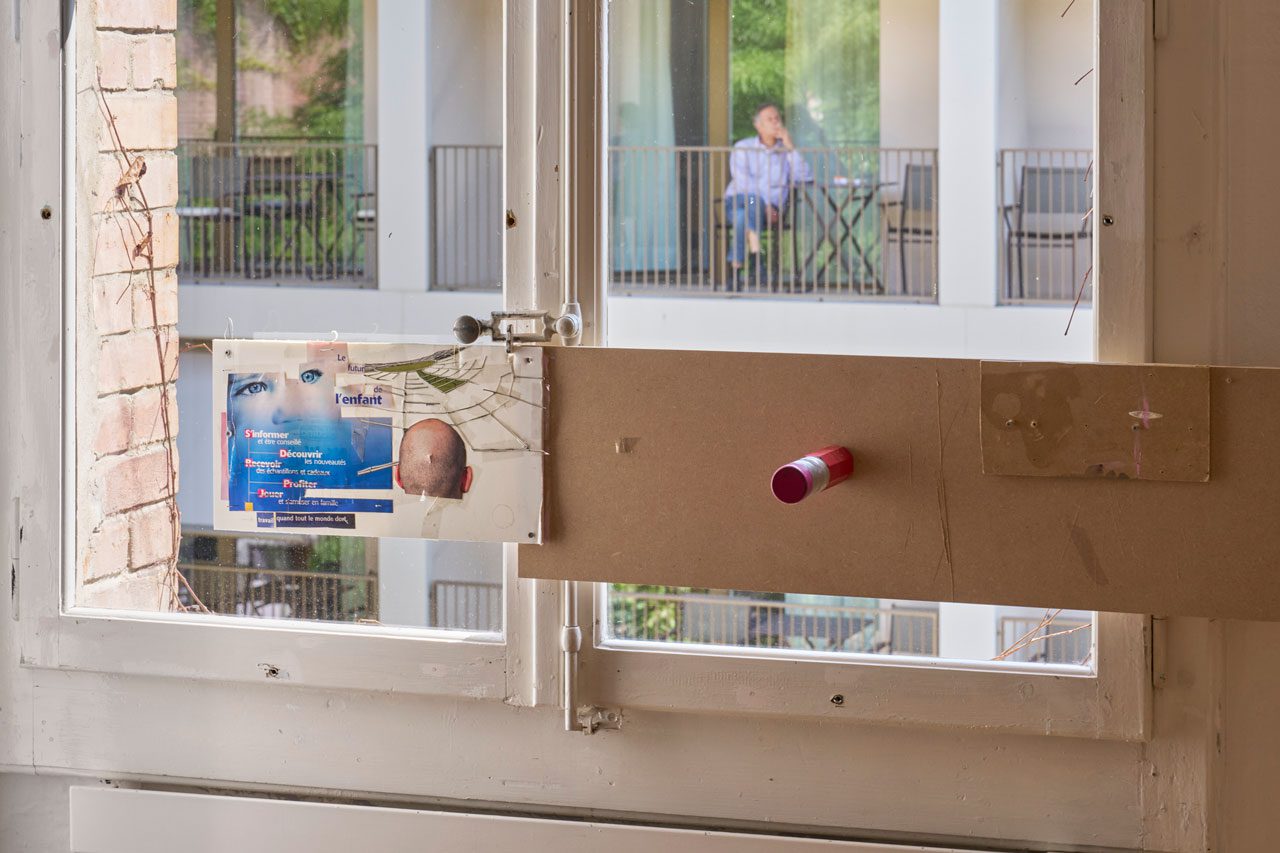
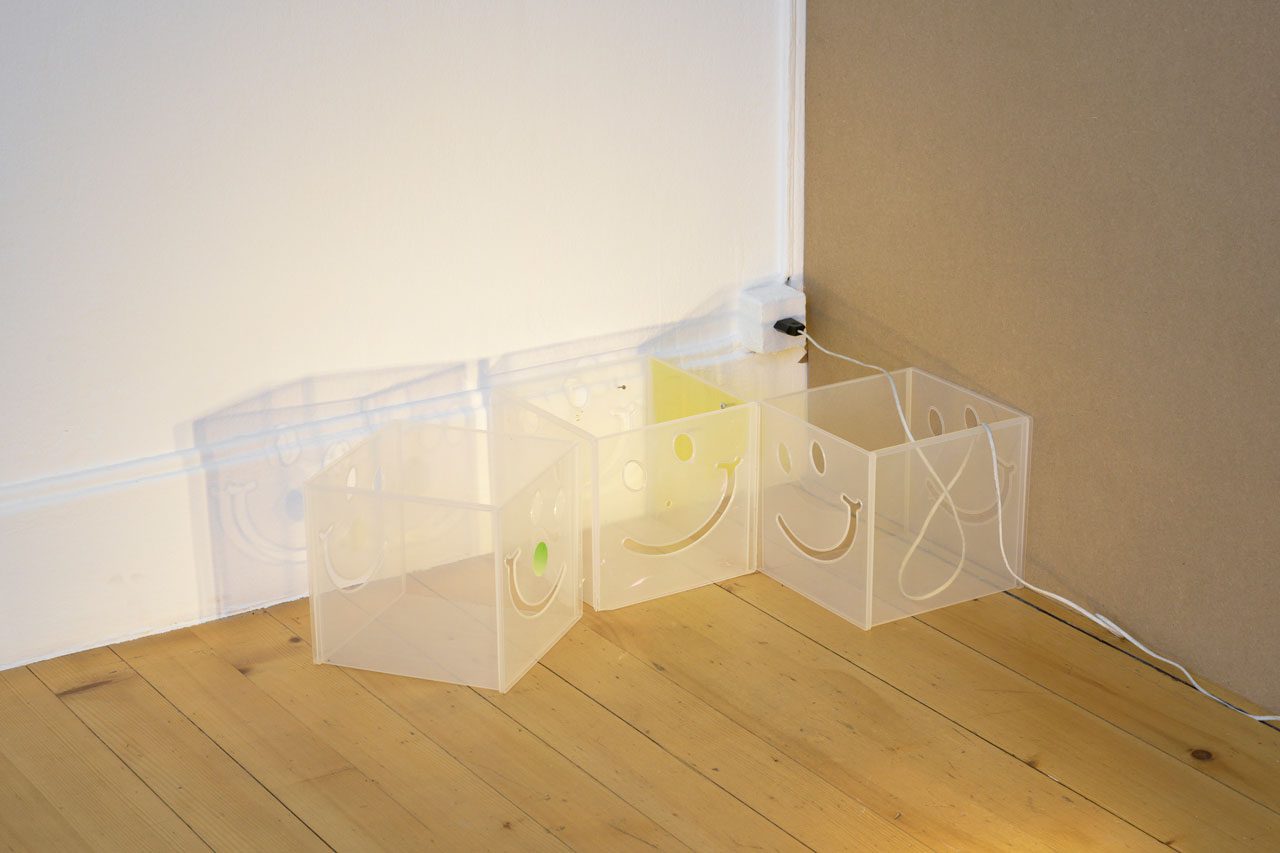
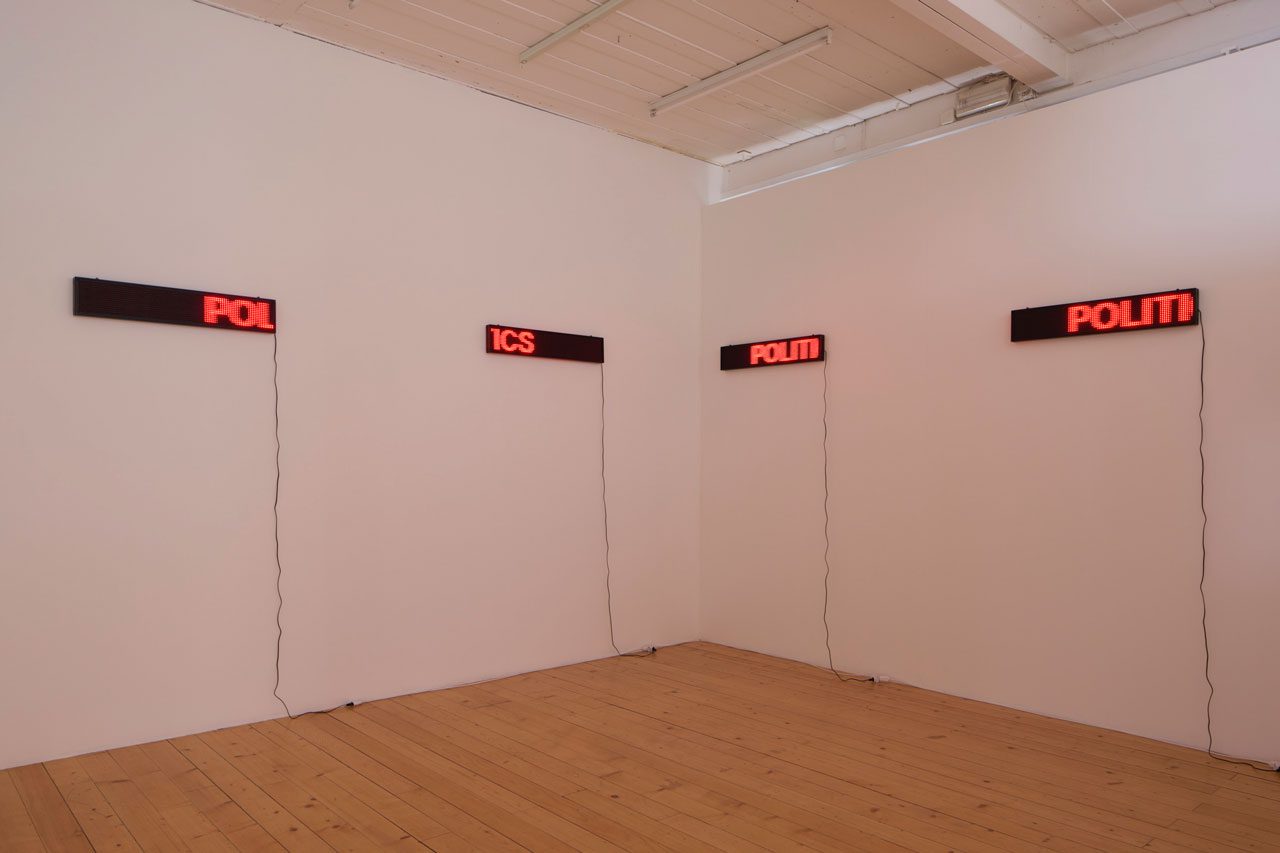
Delphine Mouly’s ongoing film project “Extended Play” resists completion and defies traditional cinematic consumption. It cannot be fully perceived or temporally contained. Instead, it evolves through successive exhibition versions, each shaped by new conditions. With a dashboard-mounted camera, Mouly transforms her car’s interior into a mobile frame for extended tracking shots, chronicling her movements through urban and infrastructural space. These recordings, contingent on the unpredictability of traffic and real-time decision-making, become a form of live editing. In “Extended Play (Tunnel Tunnel Edit)”, the layered sounds of digital radio, vocal fragments, and engine noise animate the hypnotic and infinite landscape of tunnels—arteries of commerce and communication—underscoring the way infrastructure shapes and conditions social exchange. Morag Keil’s “Client and Material III”, shown in the 2024 exhibition “Artificial Intelligence”, confronts the ideological scaffolding of contemporary labour. Sculptural components enact a wry critique: a mannequin, partially severed, stands in for professional “excellence,” while two precariously balanced sinks echo the scales of justice, reframing hygiene—both corporate and domestic—as symbolic currency in neoliberal economies. Keil’s defunct website, displayed near boarded-up windows, mocks the utopian promise of digital access. The installation is a tableau of decay and contradiction, in which economic parity is staged but denied. Twin 3D-printed forms hint at the entanglement of manual and algorithmic labour, pointing to a corporate apparatus that overlays successive veneers of “progress” to remake the world in its image. Mauro Cerqueira’s practice is deeply rooted in the contested terrain of Porto’s urban transformation. For over 15 years, his work has engaged the socio-political dynamics of gentrification in the city’s historic centre, where he operated from a self-managed art space (A Certain Lack of Coherence, 2008–2025). “Casas num Beco Malcheiroso” (“Houses in a Stinking Alley”) marks a culmination of this long inquiry. Combining salvaged electronics, low-cost jewellery, and other markers of inequality with real estate developer billboards, Cerqueira reclaims visual space for marginalized narratives. Paired with archival video footage documenting Porto’s housing crisis in 2012, the installation becomes a looped testament to cyclical displacement, closing and memorializing a key chapter in the artist’s critical cartography. Jimmie Durham’s rediscovered pencil drawings, unearthed in a crate at Friart, were originally created for his 1993 exhibition at the Kunsthalle. Styled as letters addressed to the residents of Fribourg, the drawings deconstruct notions of alterity with sharp wit. Through intentionally fractured grammar and phonetic play, Durham satirizes the idea of the “foreigner” and problematizes who defines whom as “other.” His playful merging of text and image recalls the mimetic roots of language, while also exposing the latent ideologies embedded in linguistic structures. These works extend his legacy of critical humor and philosophical provocation. Richard Sides has recently turned to monochrome painting, using it to obscure and recontextualize older collages. While the thick coats of colour mute the figurative references, they retain the original titles—echoes of lost cultural or political images. This gesture of erasure invokes the aesthetic language of modernism, critiquing its commodification by dominant design culture. The resulting objects evoke the numbing effect of ambient decor, while also reflecting on the tension between ideology and subconscious perception. Sides’ video “If you never take it seriously you never get hurt” (2025) pushes this further—blending quotidian realism with Situationist and pop culture cues to craft a hypnotic, layered experience. Its soundtrack, carefully synced to the visual rhythm, subtly implants itself in the viewer’s psyche, leaving an almost subliminal residue. Ethan Assouline’s new installation, created specifically for the exhibition, unfolds like an exploded book. Pages stretch across a frieze within a self-contained space, as though frozen mid-thought. Rough physical interventions scar industrial imagery and materials—marks of a hand resisting total automation. In certain frames, photographs of the artist’s own skull allude to an estranged gaze: a fractured attempt to observe oneself from behind, trapped within structures of control. This dérive through the emerging geographies of new Paris becomes an intimate yet clinical diagnosis of contemporary urbanism—a kind of architectural psychosis where subjectivity is modulated by design. Hannah Black’s “Politics” is part of a video series exploring the mechanics of the interview format, particularly with activists from recent American uprisings. While the testimonies are direct and potent, the use of LED text panels compresses their urgency into generalized slogans. This friction between form and content interrogates the capacity of language to bear political meaning: the more abstract and motivational the rhetoric, the more its material grounding recedes. Black’s work delineates a charged space where symbolic institutional politics confronts lived commitment—posing the question of where resistance truly resides. Milena Langer revisits the concerns of structural film through the lens of post-digital aesthetics. Her installation overlays a faint light projection onto deconstructed flat-screen surfaces. Stripped of their function, the dismantled screens are reassembled into fragile new frames, allowing their materiality to resurface. In “Liquidation”, footage captured covertly beneath a shop counter documents an invisible layer of audiovisual commerce. The projection folds the cycles of image production and distribution back onto themselves, creating a closed-loop system in which consumption is both subject and medium. Langer’s work offers a quiet yet incisive critique of image saturation and technological obsolescence.
Participating Artists: Ethan Assouline, Hannah Black, Mauro Cerqueira, Jimmie Durham, Morag Keil, Milena Langer, Delphine Mouly, Richard Sides
Photo: Hannah Black, Broken Windows, 2022. Photo: Guillaume Python. Courtesy of the artist and Arcadia Missa, London
Info: Curator: Nicolas Brulhart, Kunsthalle Friart Fribourg, Petites-Rames 22, Fribourg, Germany, Duration: 8/9-19/10/2025, Days & Hours: Wed-Fri 12:00-18:00, Sat-Sun 13:00-18:00, https://friart.ch/
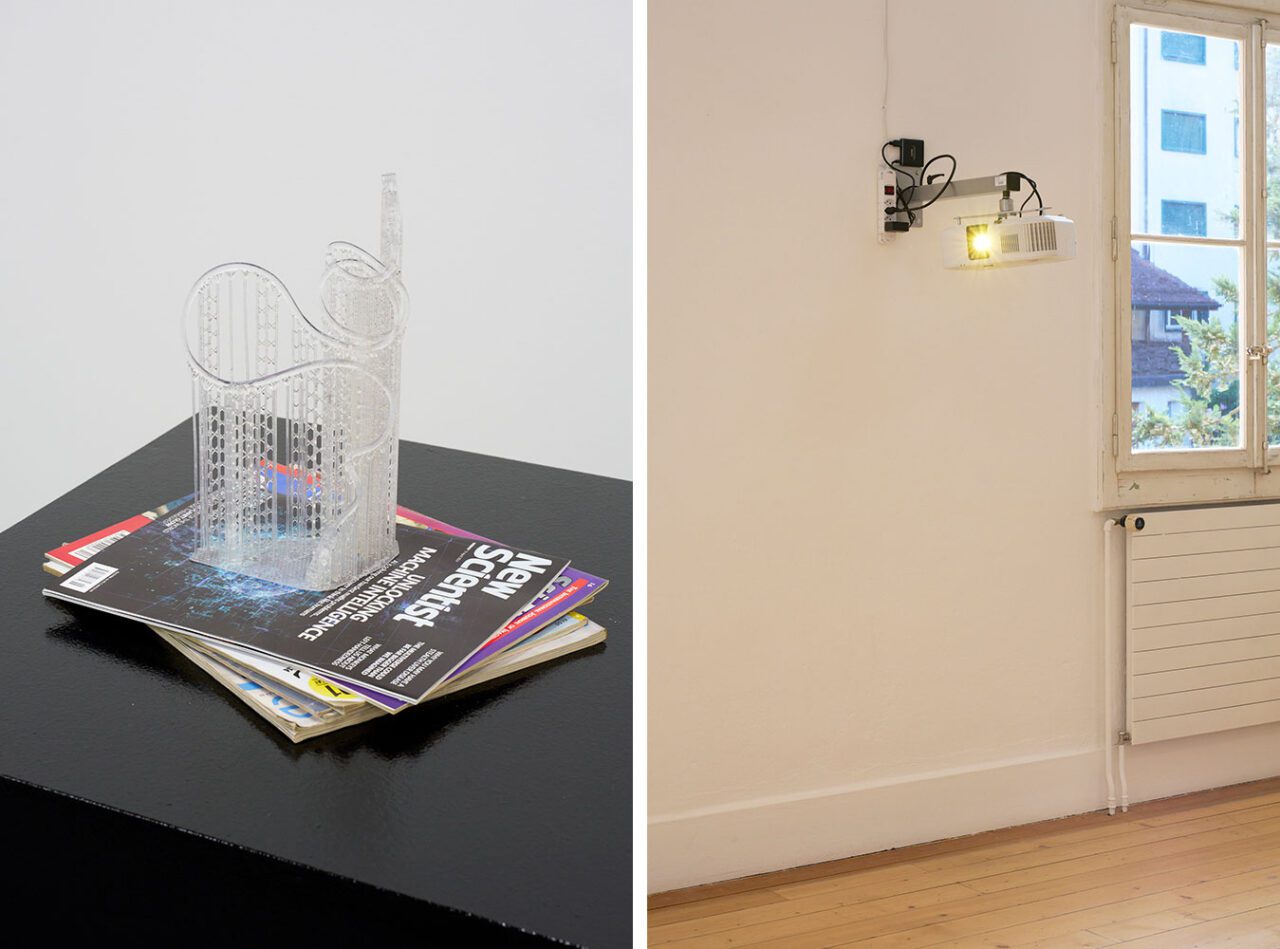
Right: Milena Langer, Liquidation (First Round), 2024. Photo: Guillaume Python. Courtesy of the artist and Kunsthalle Friart Fribourg