ART CITIES : Salzburg-The Soldier’s Tale
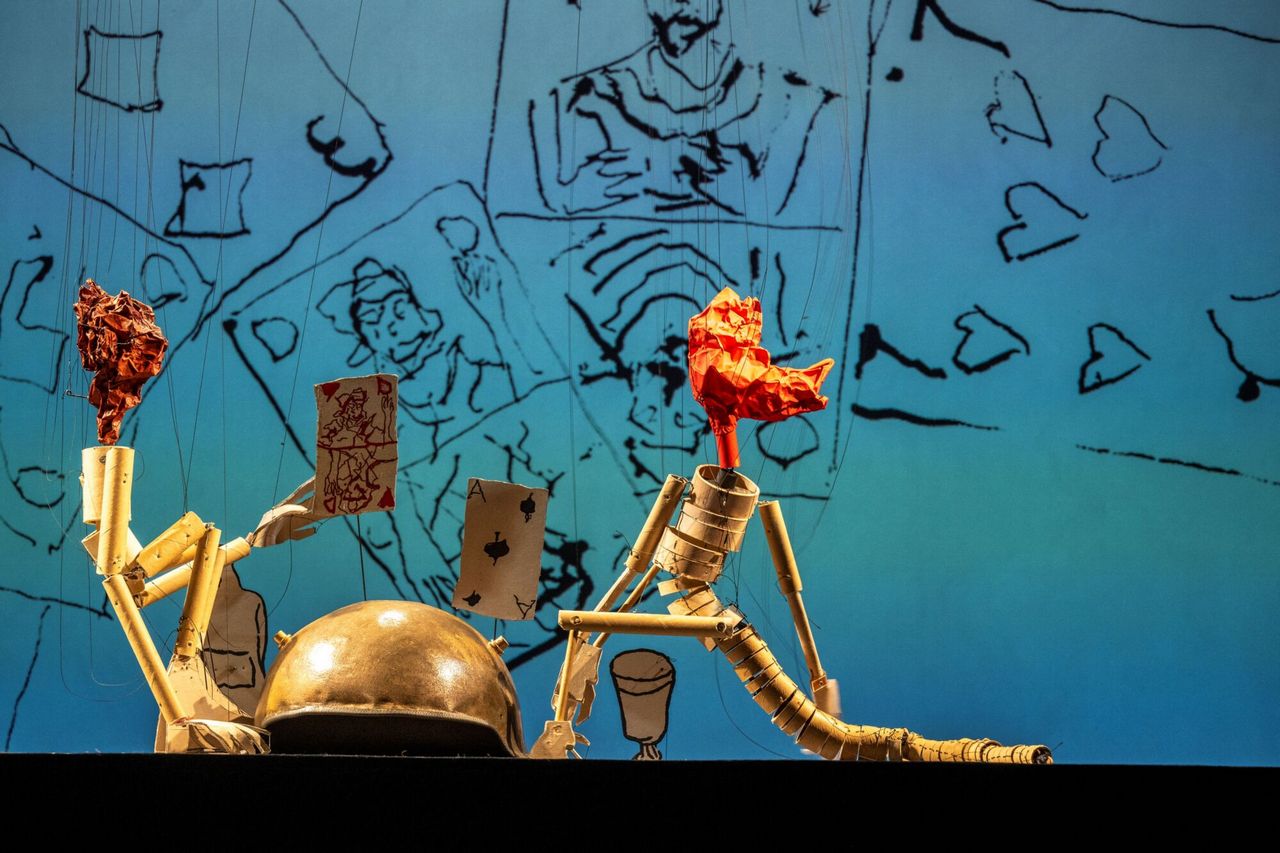
The story of a deserting soldier, the Devil, a violin and a princess comes from the world of Russian fairy tales. When the Devil is involved, the story rarely ends well — and this tale is no exception. The original scenic concept, inspired in both aesthetic and practical terms by travelling fairs and theatre troupes, brings to mind images of street balladeers.
By Efi Michalarou
Photo: Salzburg Marionette Theatre Archive
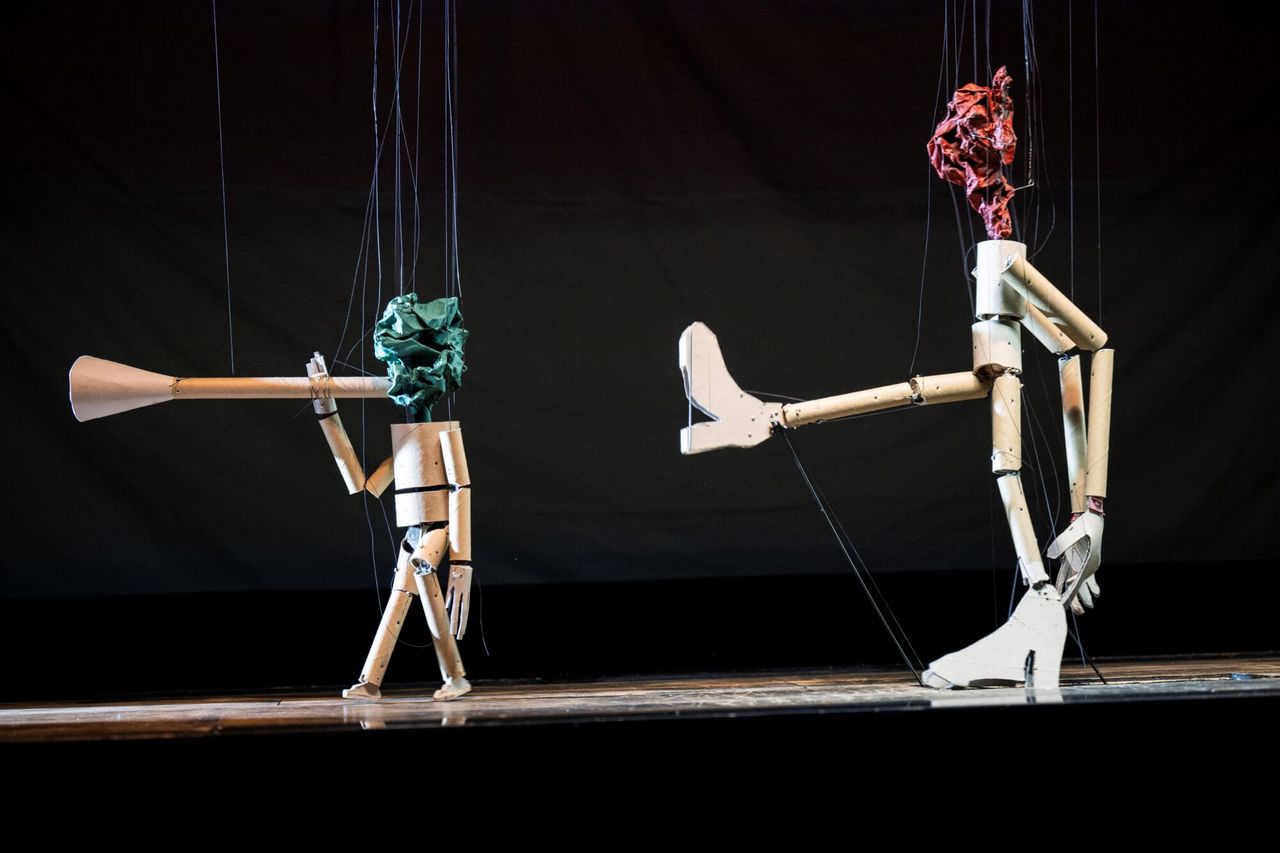
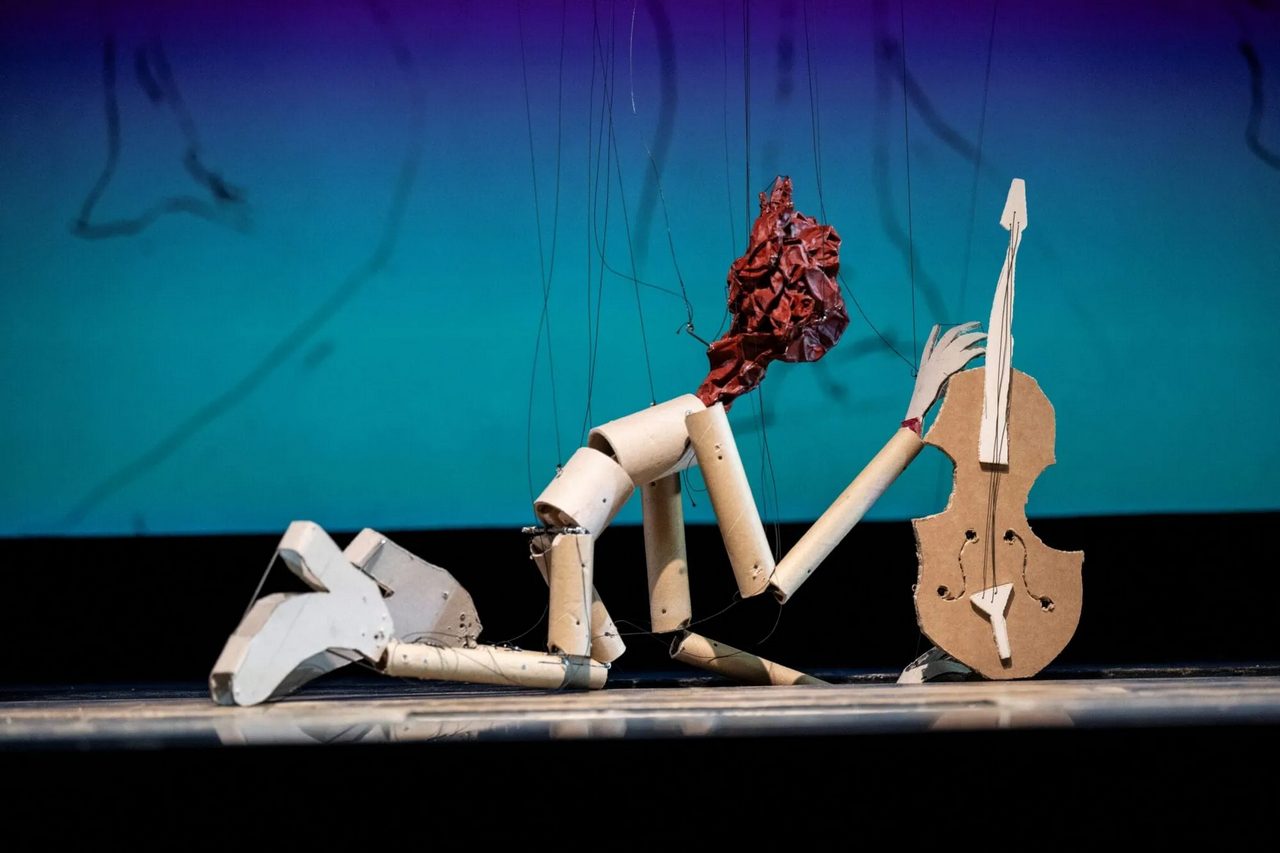
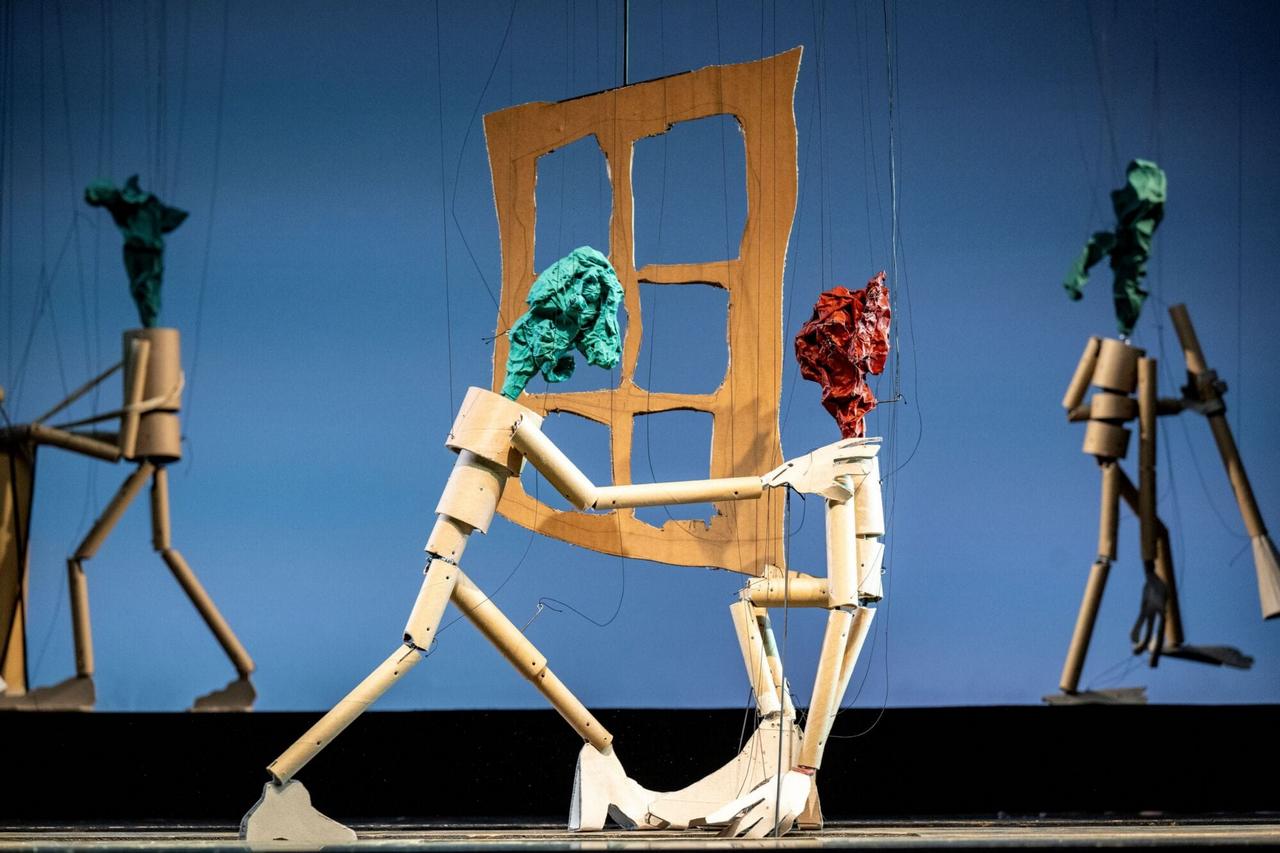
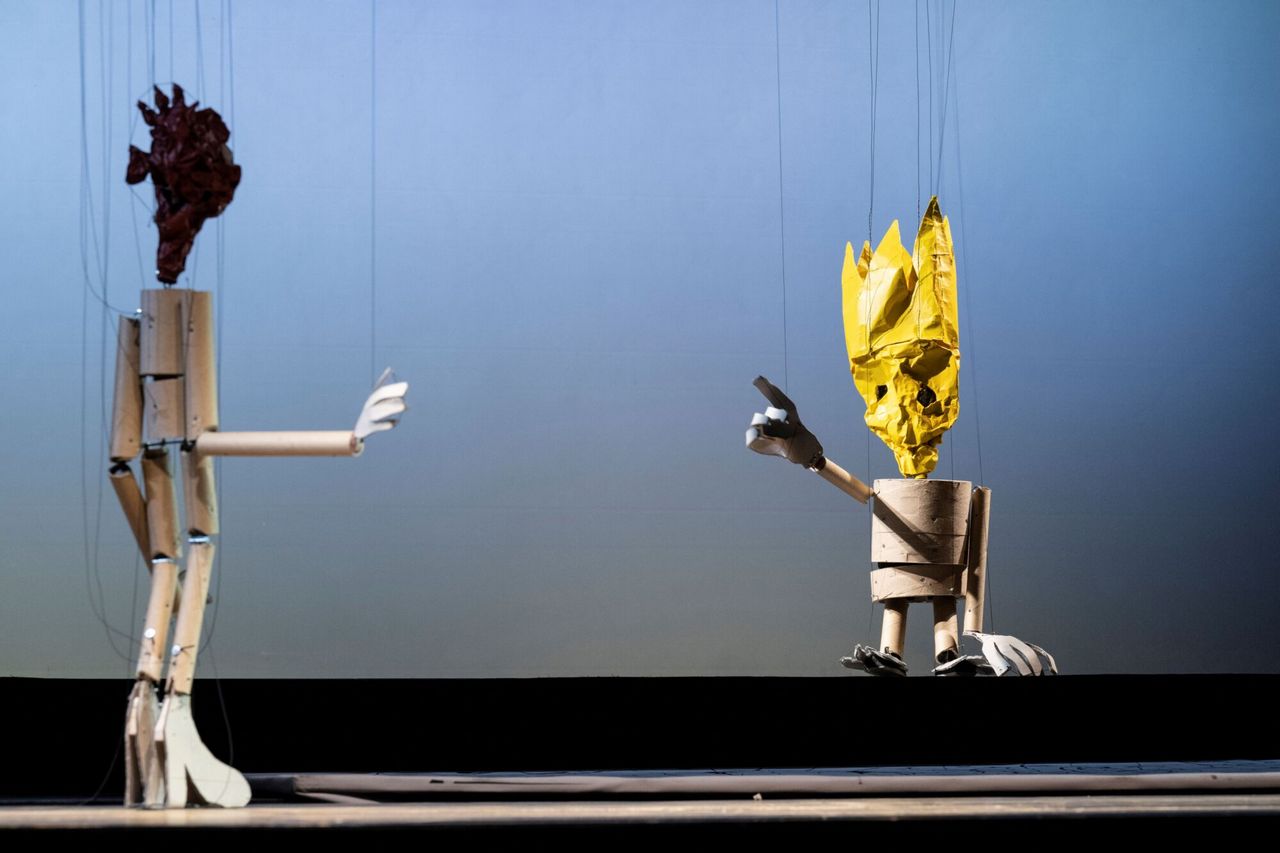
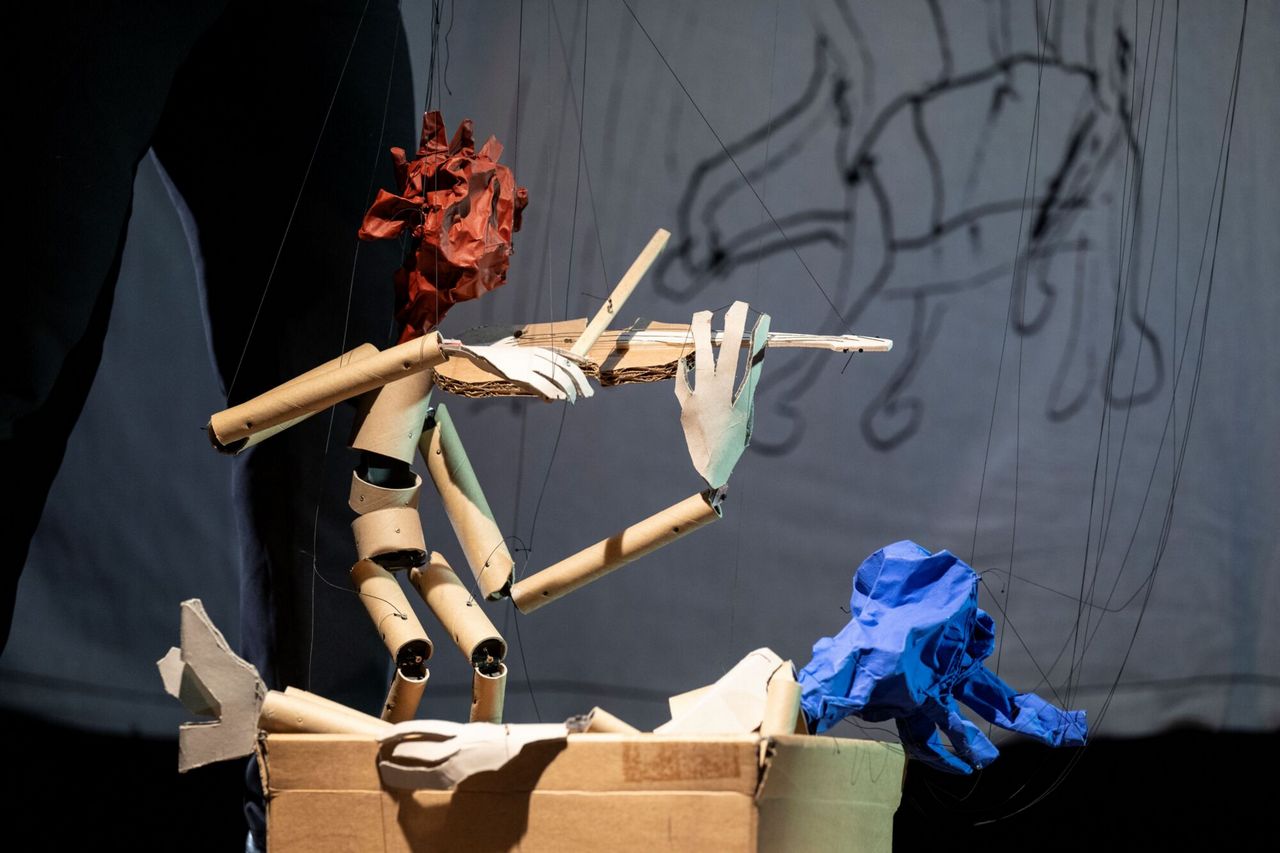
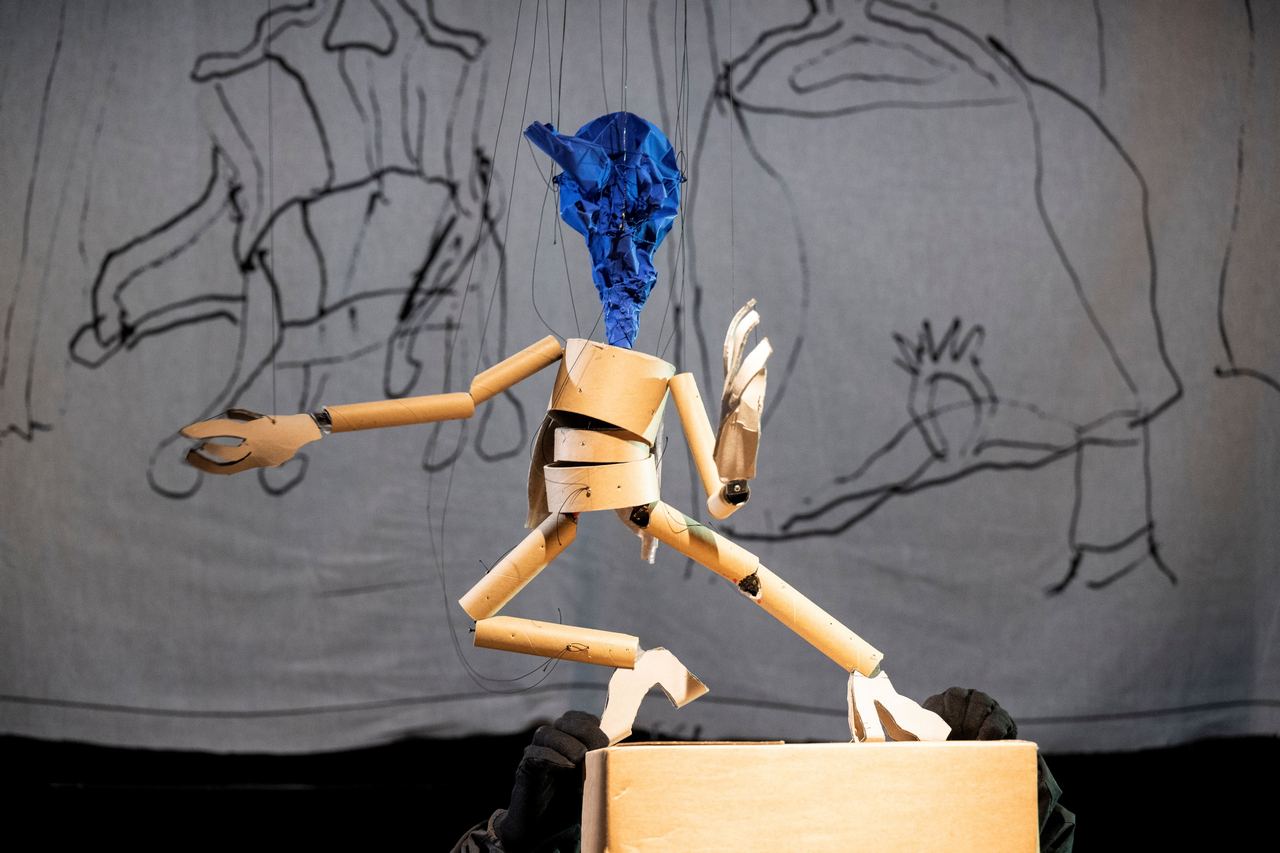
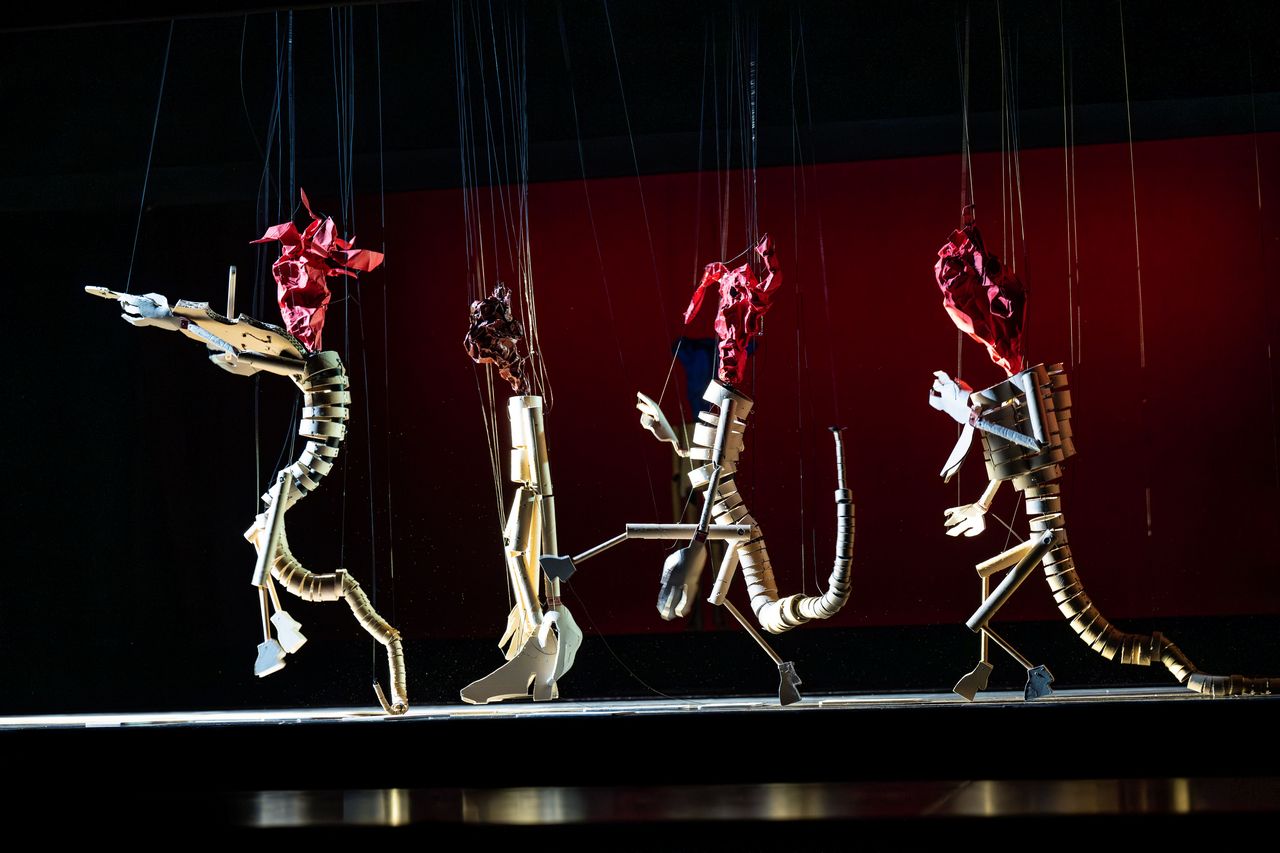
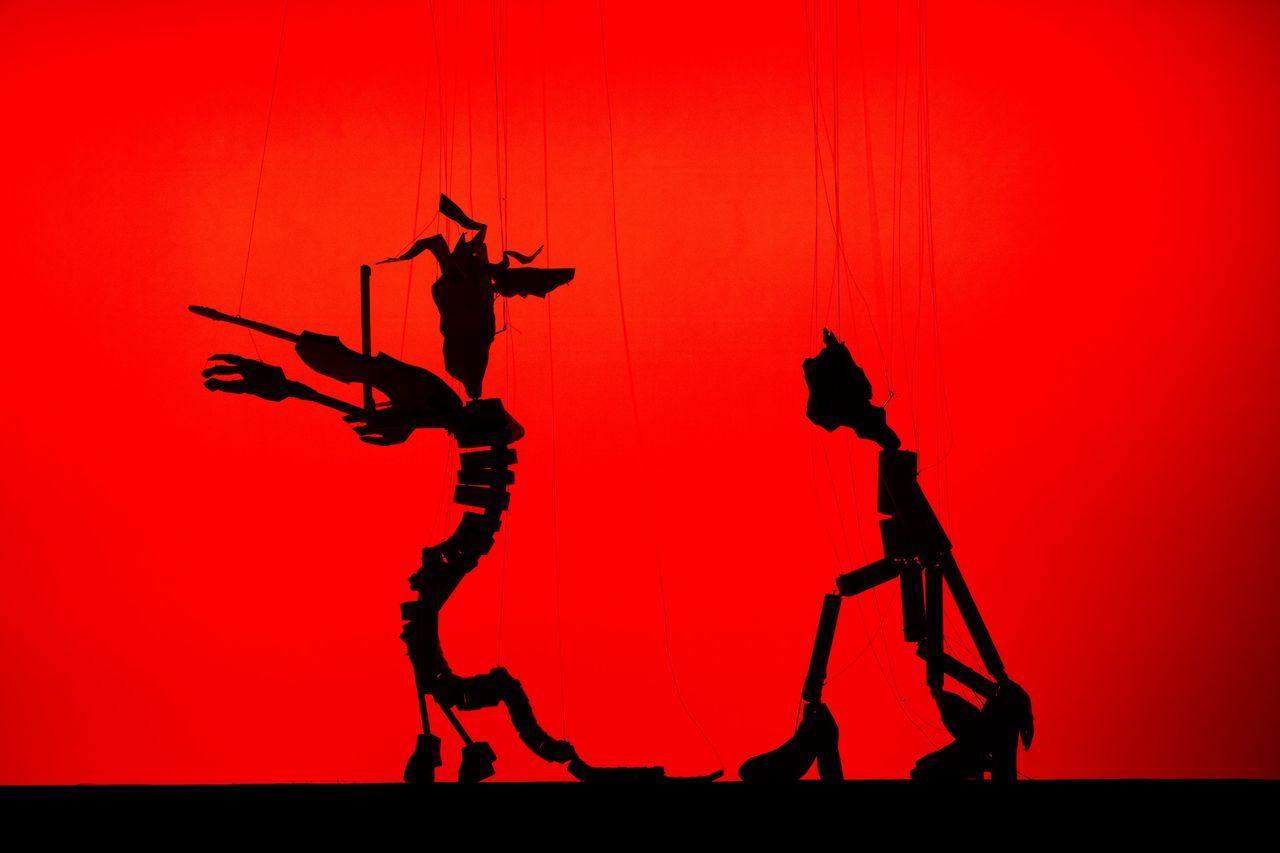
Georg Baselitz brings Stravinsky’s devilish tale to life in a bold new puppet theater vision. In a striking blend of modernist music and visual art, the painter and sculptor Georg Baselitz has turned his formidable talents to the world of puppet theater. For the Salzburg Festival’s co-production of “The Soldier’s Tale”—in collaboration with the Salzburg Marionette Theatre and directed by Matthias Bundschuh—Baselitz has designed both the marionettes and the stage sets, marking his first foray into this centuries-old theatrical form. True to his signature aesthetic, Baselitz’s approach is raw, expressive, and unflinchingly direct. He has crafted fifteen marionettes—each stripped down to their elemental form, yet charged with an eerie intensity. Their distorted, almost grotesque physiognomies offer a new kind of expressiveness, one that speaks as much through the absence of detail as through presence. Each principal character is marked by a uniquely colored head, allowing personality and symbolism to emerge from stark simplicity. To complement these arresting figures, Baselitz has designed monochrome stage backdrops—drawn in bold, urgent strokes of black on white. These minimalist settings do more than frame the action: they heighten the drama, immersing the viewer in a visual world that mirrors the psychological tension and moral ambiguity at the heart of the tale. First premiered in Lausanne in 1918, L’Histoire du Soldat was born from both creative brilliance and economic desperation. At the time, Igor Stravinsky found himself cut off from his income due to the Russian Revolution and the fallout of World War I. Resourceful and collaborative, he joined forces with Swiss writer C.F. Ramuz and conductor Ernest Ansermet to conceive a new kind of performance: a “little traveling theater,” portable enough for small towns and intimate venues. The story they chose—drawn from a cycle of folk legends—was Faustian at its core: a soldier trades his fiddle (and soul) to the Devil in exchange for promises of wealth and knowledge. With narrative roles for a soldier, a devil, and a narrator, plus the addition of a dancing princess, “The Soldier’s Tale” fused music, theater, and movement into a tight, chamber-sized spectacle. Stravinsky’s score was a marvel of constraint and invention. Gone were the lush orchestras of “The Firebird” and “The Rite of Spring” in their place stood a razor-sharp septet—violin, double bass, clarinet, bassoon, cornet, trombone, and percussion—each representing the “essence” of its instrumental family. The result: music that bristles with irony, rhythmic bite, and lean modernist precision. In a nod to both friendship and practicality, Stravinsky later transcribed the piece into a trio suite, tailored in part for Werner Reinhart, the clarinetist and benefactor who had generously financed the work’s debut. Even over a century later, the music remains exhilarating—its sardonic tone, off-kilter rhythms, and jagged dissonances sound as vital and contemporary as ever. Stravinsky strips Romanticism to the bone, replacing it with something more primal, more cynical, and, paradoxically, more human. In this bold new production, Baselitz channels that same spirit of artistic reinvention. His puppets, like Stravinsky’s score, are stripped of ornament—but not of meaning. They speak in gestures and silences, occupying a space where modern art, myth, and music collide. The result is a visceral reimagining of a modernist masterpiece—one that reminds us, once again, of the enduring power of reinvention in the face of crisis.
Photo: Puppet Theater “The Soldier’s Tale”, Photo © Bernhard Müller, Courtesy Salzburg Marionette Theatre
Info: Salzburg Marionette Theatre, Schwarzstraße 24, Salzburg, Austria, Duration: 29/7-3/8/2025, Days & Hours: here, https://marionetten.at/en/