
ART CITIES: Tokyo-Claes Oldenburg

Oldenburg’s journey with Pace began in 1964, when the artist presented works from “The Store”, a project born out of the Happenings of the late 1950s and early ’60s. These performances—hybrids of sculpture, installation, and performance—revolutionized the art scene in New York’s Lower East Side, and introduced Oldenburg’s radical commitment to the ephemeral and the absurd.
By Dimitris Lempesis
Photo: Pace Gallery Archive
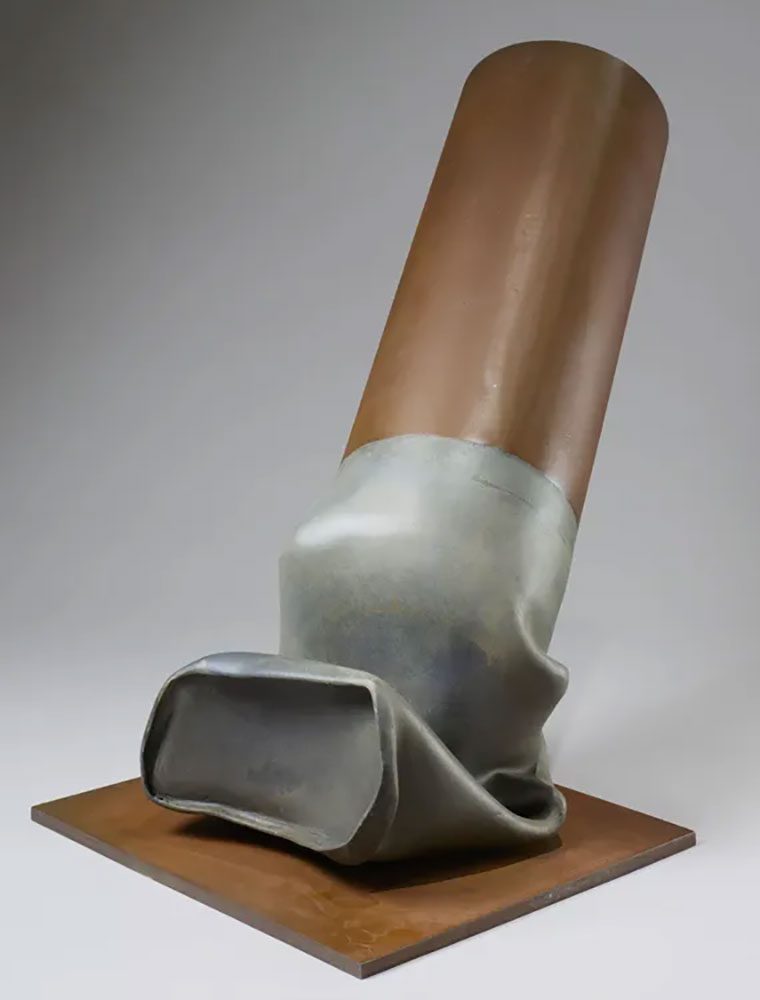
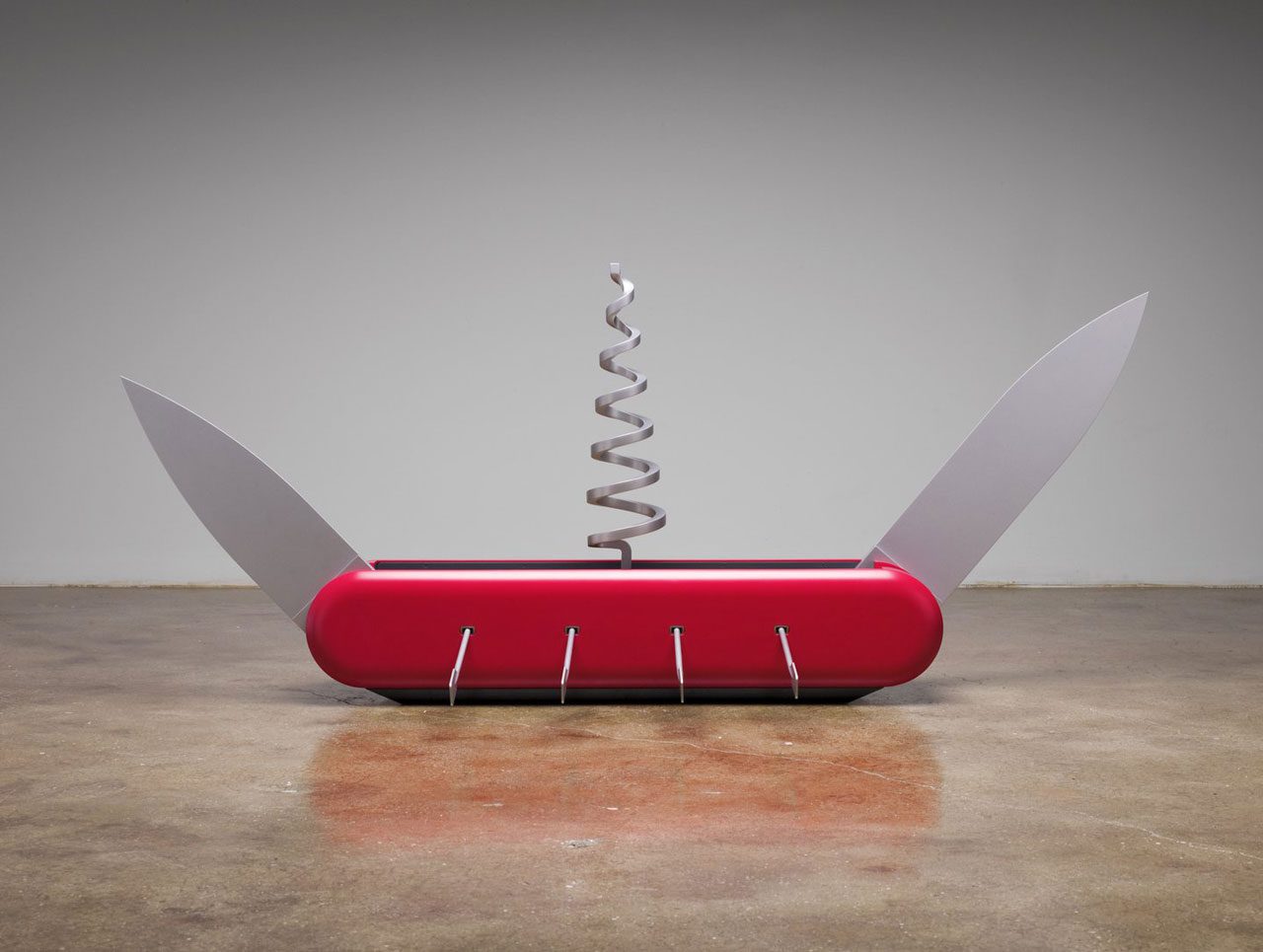
The exhibition “This & That” brings together a kaleidoscopic array of sculptures and prints spanning by Claes Oldenburg from the 1960s to the mid-2000s, offering a sweeping yet intimate view into Oldenburg’s delightfully eccentric universe. Through this immersive presentation, visitors are invited to explore the artist’s enduring fascination with multiplicity, transformation, and the everyday object—filtered here through a lens that often resonates with Japanese sensibilities. Appropriately, the exhibition’s Japanese title is “いろいろ” (Iroiro), a word that loosely translates to “variety” or “miscellany.” It captures not just the eclecticism of the objects on view, but the spirit of Oldenburg’s entire practice: playful, curious, and continually re-envisioning the familiar. Written as 色々, the term suggests not only colorful variety but also texture, form, and even sensuality—echoing Oldenburg’s uncanny ability to coax poetic vitality from the mundane. From pretzels and profiteroles to trumpets and typewriter erasers, Oldenburg imbued each item with an almost mythic presence, shifting their role from consumer objects to conceptual provocations. This Tokyo presentation is particularly significant. It is the first major exhibition of Oldenburg’s work in the city since 1996, and only the second solo show of his in the Japanese capital—the first being in 1973 at the now-legendary Minami Gallery. Oldenburg’s presence in Japan, however, stretches back further: his kinetic “Giant Ice Bag” (1970) was unveiled at Expo ’70 in Osaka, and his large-scale public sculpture “Saw, Sawing” (1995) has long been a familiar fixture outside the Tokyo International Exhibition Center. Two other monumental works, “Inverted Q” (1977–88) and “Tube Supported by Its Contents” (1983), reside in the collections of the Yokohama Museum of Art and Utsunomiya Museum of Art, respectively. The exhibition underscores the artist’s devotion to multiples and the art of reproduction—what Oldenburg once called “the sculptor’s solution to making a print.” His interest in repetition was never mechanical; it was conceptual and sensorial, an act of reinvention through scale, material, and humor. The gallery’s entrance features a vending-machine-style vitrine housing over 60 painted cardboard versions of “N.Y.C. Pretzel” (1994), playfully reimagining the snack as both object of desire and pop-cultural symbol. Other highlights include “Wedding Souvenir” (1966), a cast plaster relic that is as tongue-in-cheek as it is tender; “Profiterole” (1989–90), a gleaming painted aluminum and brass confection; and “Mouse Bags” (2007–17), sewn canvas works that merge kitsch, childhood memory, and commercial iconography. Larger-scale pieces further underscore Oldenburg’s theatrical instincts: “Tied Trumpet” (2004), rendered in aluminum, plastic tubing, canvas, felt, and foam, is a surrealist twist of both material and meaning. “Miniature Soft Drum Set” (1969), made from screen-printed canvas, is at once musical, sculptural, and endearingly absurd. A major centerpiece of the exhibition is “Knife Ship 1:12” (2008), a scale model of the original “Knife Ship” created by Oldenburg and van Bruggen for their legendary 1985 performance “Il Corso del Coltello” in Venice, produced with curator Germano Celant and architect Frank Gehry. This aluminum and mahogany miniature captures the surreal poetry of a Swiss Army knife gliding down Venetian canals—a vision of functionality turned fantastical. Other prints on view bring further evidence of Oldenburg’s visual wit: “Alphabet in the Form of a Good Humor Bar” (1970) merges language with dessert; “The Letter Q as Beach House, with Sailboat” (1972) reimagines typography as architecture; and the seasonal Apple Core prints (1990) turn a discarded fruit into a lyrical meditation on time’s passage.
Photo: Claes Oldenburg and Coosje van Bruggen, Geometric Mouse–Scale B, 1970-72, © 2019 Claes Oldenburg and Coosje van Bruggen, Courtesy Pace Gallery
Info: Curators: Marc Glimcher, Maartje Oldenburg and Coosje van Bruggen, Pace Gallery, 1F; Azabudai Hills Garden Plaza-A, 5-8-1 Toranomon, Minato-ku, Tokyo, Japan, Duration: 17/7-23/8/2025, Days & Hours: Tue-Sat 11:00-19:00, Sun 11:00-18:00, www.pacegallery.com/
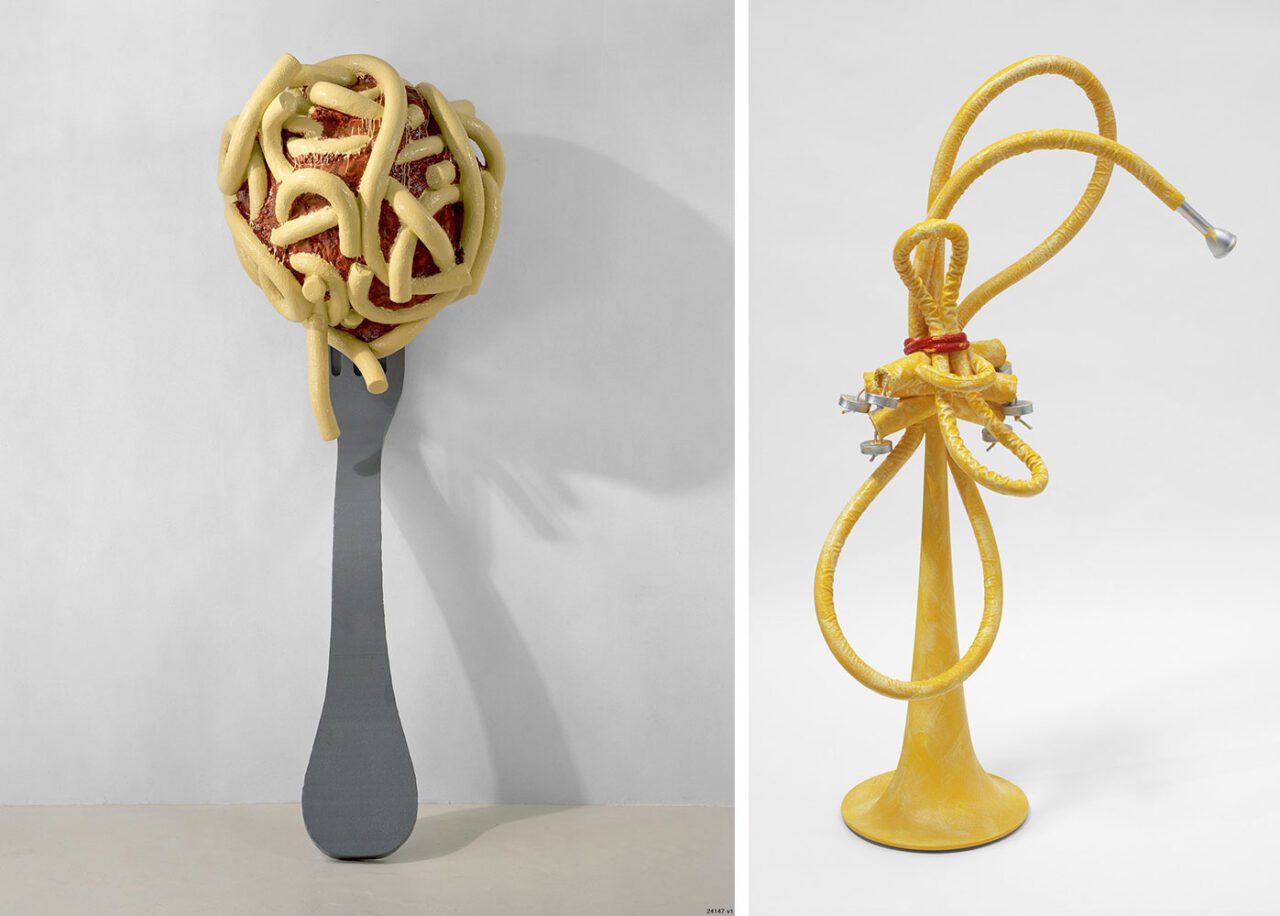
Right: Claes Oldenburg and Coosje van Bruggen, Tied Trumpet, 2004, aluminum, canvas, felt, polyurethane foam, rope, cord; coated with resin and painted with latex; plastic tubing, 50-1/2″ x 23-1/2″ x 15″ (128.3 cm x 59.7 cm x 38.1 cm), Edition of 3 + 1 AP © 2019 Claes Oldenburg and Coosje van Bruggen, Courtesy Pace Gallery