
PRESENTATION: Emily Kam Kngwarray
Over half a century ago, Aboriginal artists from Central Australia began experimenting with new ways of expressing their ongoing cultural traditions. For millennia they had drawn on the ground, etched designs into rock and wood, and painted on the body for ceremonies. They then started to create art using watercolor and acrylic paint, and techniques such as batik. Emily Kam Kngwarray was at the forefront of this artistic revolution. Her unique style and powerful creative vision gained international attention, redefining the scope of contemporary art across the world.
By Efi Michalarou
Photo: Tate Archive
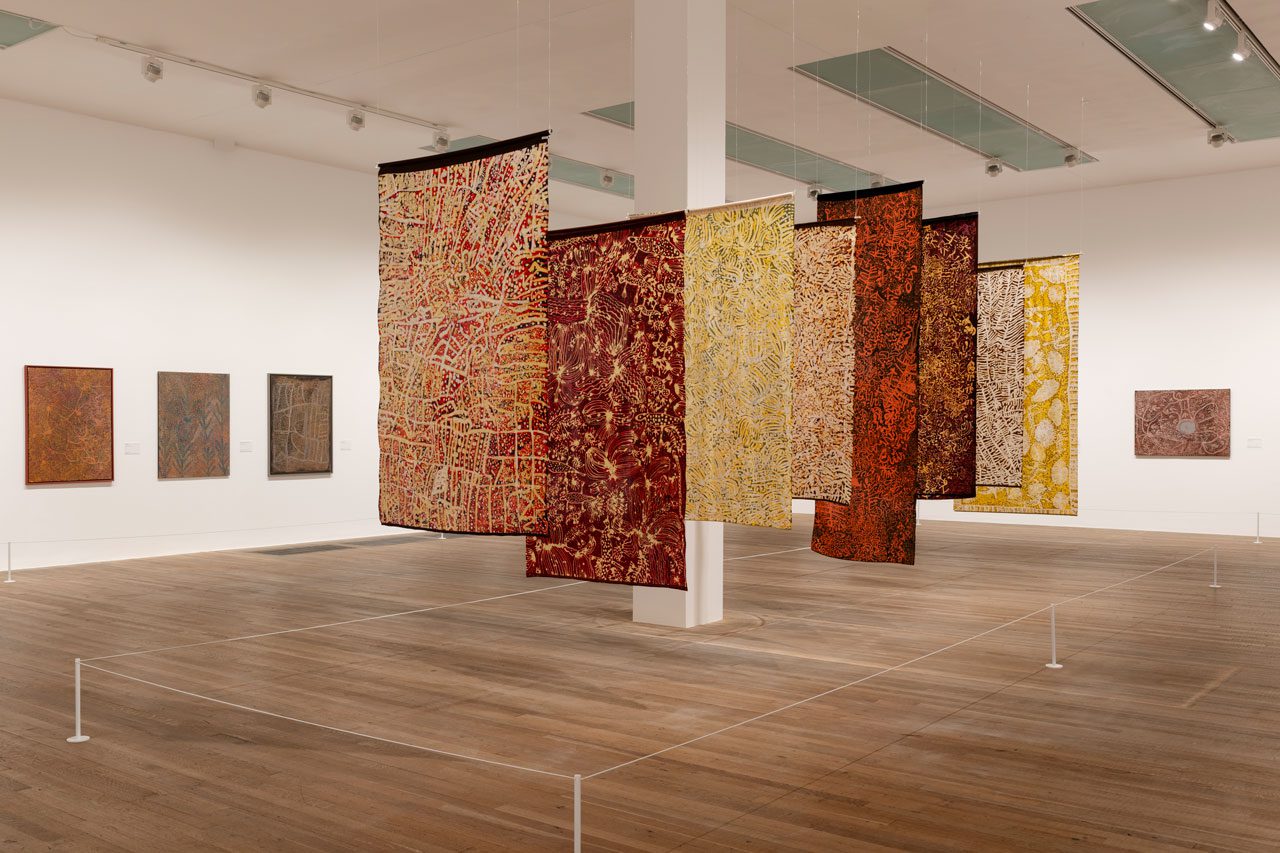
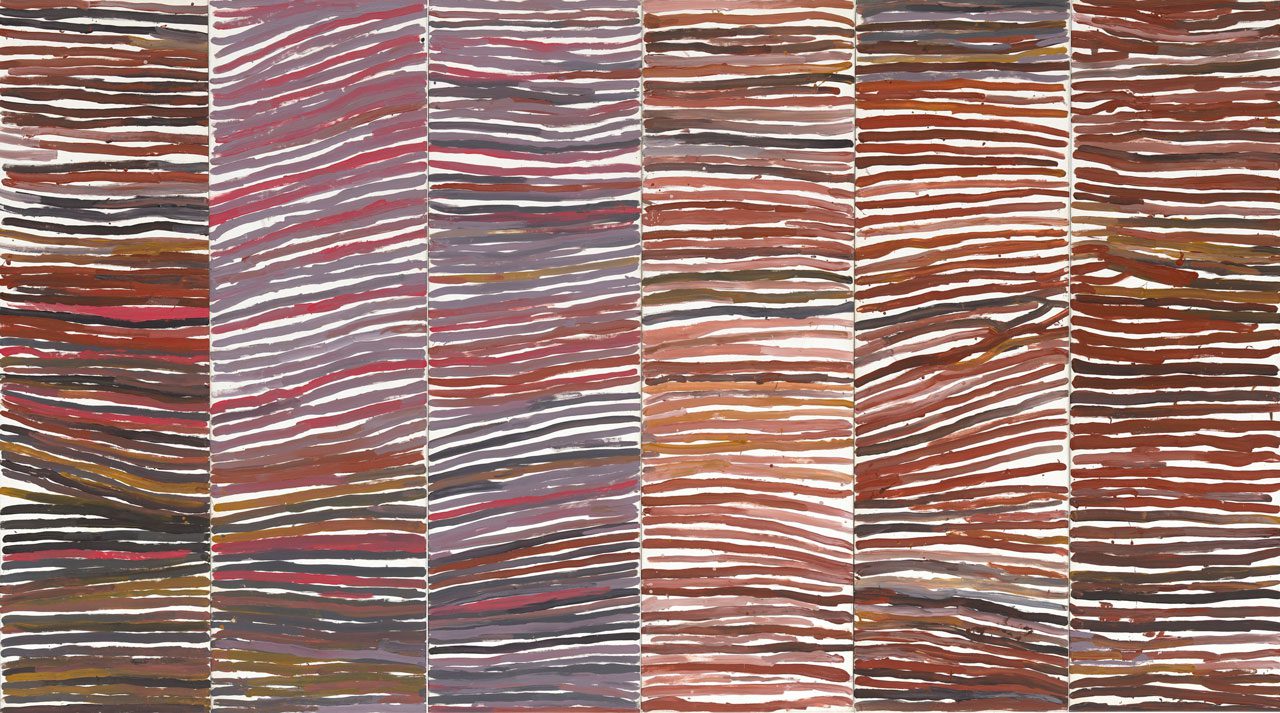
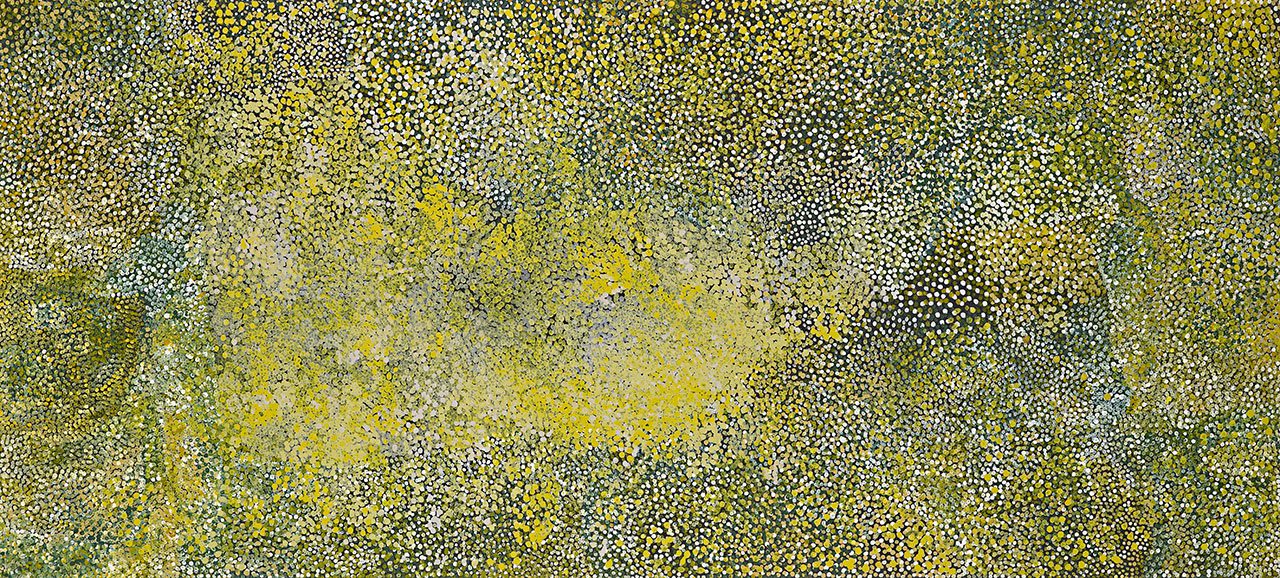
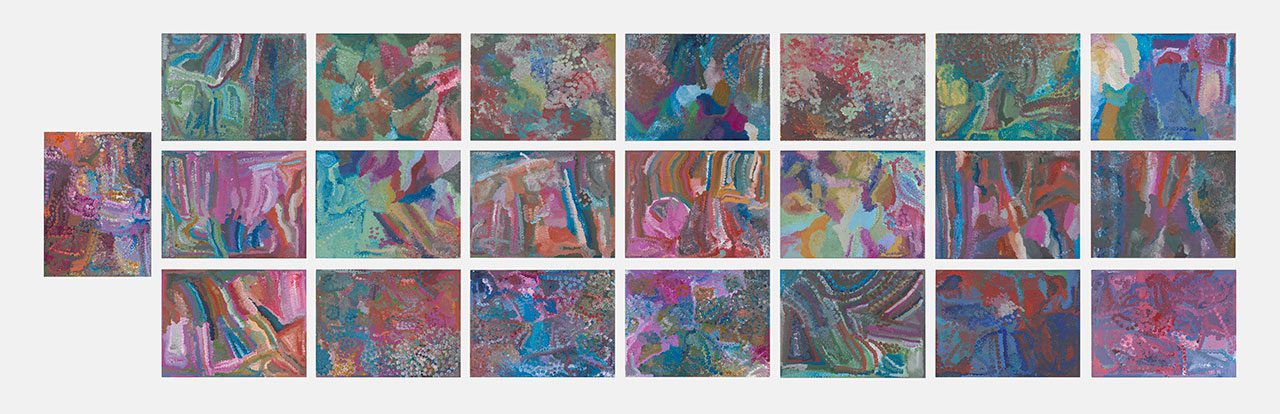
Emily Kam Kngwarray was born in Alhalker, a remote community in the Sandover region of the Northern Territory, Australia. Alhalker is not only her birthplace but also her Ancestral Country—a concept central to Aboriginal and Torres Strait Islander cultures. For these communities, “Country” is far more than physical terrain. It encompasses the lands, waters, skies, seasons, and all living things; it is a spiritual and cultural homeland that shapes identity and sustains life across generations. This profound connection to Country pulses through every layer of Kngwarray’s work, in which she translated the ecology, topography, and ancestral stories of her desert homeland into compelling visual language. Now, for the first time in Europe, Tate Modern presents a major retrospective of this remarkable artist, celebrating Emily Kam Kngwarray as a towering figure in global contemporary art. A senior Anmatyerr woman, Kngwarray came to painting later in life, beginning in her seventies and creating an astonishing body of work in just eight years before her death in 1996. With over 80 works on display—many never before shown outside Australia—this exhibition offers a rare opportunity to experience the full range of Kngwarray’s creative evolution. Kngwarray’s artistic journey began in the 1970s at Utopia Station, where she learned batik—a wax-resist dyeing technique—on silk and cotton. Her early batiks are rich in color and design, rooted in her cultural knowledge and ceremonial role. In the late 1980s, she made a pivotal shift to acrylic painting on canvas. This transition unleashed a torrent of innovation, as she began to explore scale, texture, and abstraction with unmatched vitality. Her art was deeply informed by awely, the women’s ceremonial traditions that include song, dance, storytelling, and body painting using natural ochres. Kngwarray would sit on the ground to paint, echoing the way she would sit to prepare food, gather bush yams, draw in the sand, or perform for ceremony. Her studio was the desert floor; her brushwork a direct expression of cultural memory and environmental intimacy. Working in relative isolation from Western art traditions, she developed a singular visual style that speaks in its own powerful vernacular. The exhibition opens with three paintings acquired by Tate in 2019: “Untitled (Alhalker)” (1989), “Ntang” (1990), and another “Untitled” (1990), all featuring dense fields of dotted forms symbolizing seeds, growth, and renewal. These are joined by “Awely” (1989), a work inspired by ceremonial body designs, and “Emu Woman” (1988), her first painting on canvas, which gained national acclaim and marked her rise as a significant artist. These early works trace her movement from textile to painting, while maintaining the storytelling and symbolism central to her practice. From this foundation, the exhibition expands into large-scale silk batiks and early acrylics that immerse visitors in her lived experience of Country. These pieces are often rooted in the Dreaming (Altyerr), the spiritual force that created the land and its laws. In “Ntang Dreaming” (1989), Kngwarray captures the woollybutt grass seeds, a vital food source, while “Ankerr (Emu)” (1989) maps the sacred pathways of emus across waterholes, encoded in trails of footprints. Kngwarray’s increasing command of color and composition is evident in monumental canvases like Kam (1991), a three-meter work that explodes with light and energy. Her palette shifted to include bold pastels—pinks and blues that echo the wildflowers blooming after desert rains—and rich earth tones that speak of rock, sand, and life-giving roots. At the heart of the exhibition is the extraordinary “Alhalker Suite” (1993), a masterwork consisting of 22 canvases, on loan from the National Gallery of Australia. Painted during the height of her career, this suite evokes a panoramic vision of her homeland. No fixed arrangement exists for these panels, allowing each installation to suggest a different configuration of place—symbolizing the fluid, living relationship between Country and its people. In her final years, Kngwarray underwent a striking shift in style. She began creating works defined by bold, parallel stripes in her signature reds, yellows, and whites, often painted directly onto white paper or canvas. One of these, “Untitled (Awely)” (1994), a six-panel piece first exhibited at the 1997 Venice Biennale, is presented here as a testament to her creative vitality and spiritual commitment. The texture of the paint recalls the touch and intimacy of body painting, linking her late abstraction to her ceremonial heritage. The exhibition concludes with “Yam Awely” (1995), a radiant composition of intertwining lines and colors that symbolize yams, grasses, roots, and animal tracks. It encapsulates the enduring symbiosis between the artist and her Country—one that resists categorization, lives outside of Western artistic lineage, and continues to reverberate in contemporary art and cultural consciousness. Through this landmark exhibition, Tate Modern honors Emily Kam Kngwarray not only as a painter of astonishing vision, but as a matriarch, storyteller, cultural custodian, and one of the most important voices in Australian and Indigenous art history.
Photo: Emily Kam Kngwarray, installation view at Tate Modern 2025. © Emily Kam Kngwarray, Copyright Agency. Licensed by DACS 2025. Photo © Tate (Kathleen Arundell)
Info: Curators: Kelli Cole, Kimberley Moulton, Charmaine Toh, Genevieve Barton and Hannah Gorlizki, Tate Modern, Bankside, London, United Kingdom, Duration: 10/7/2025-11/1/2026, Days & Hours: Daily 10:00-18:00, www.tate.org.uk/
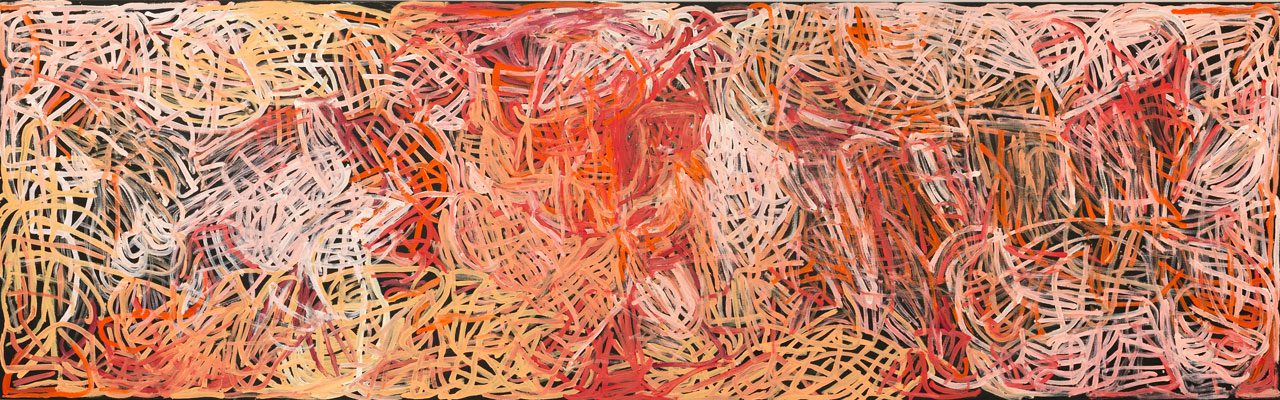
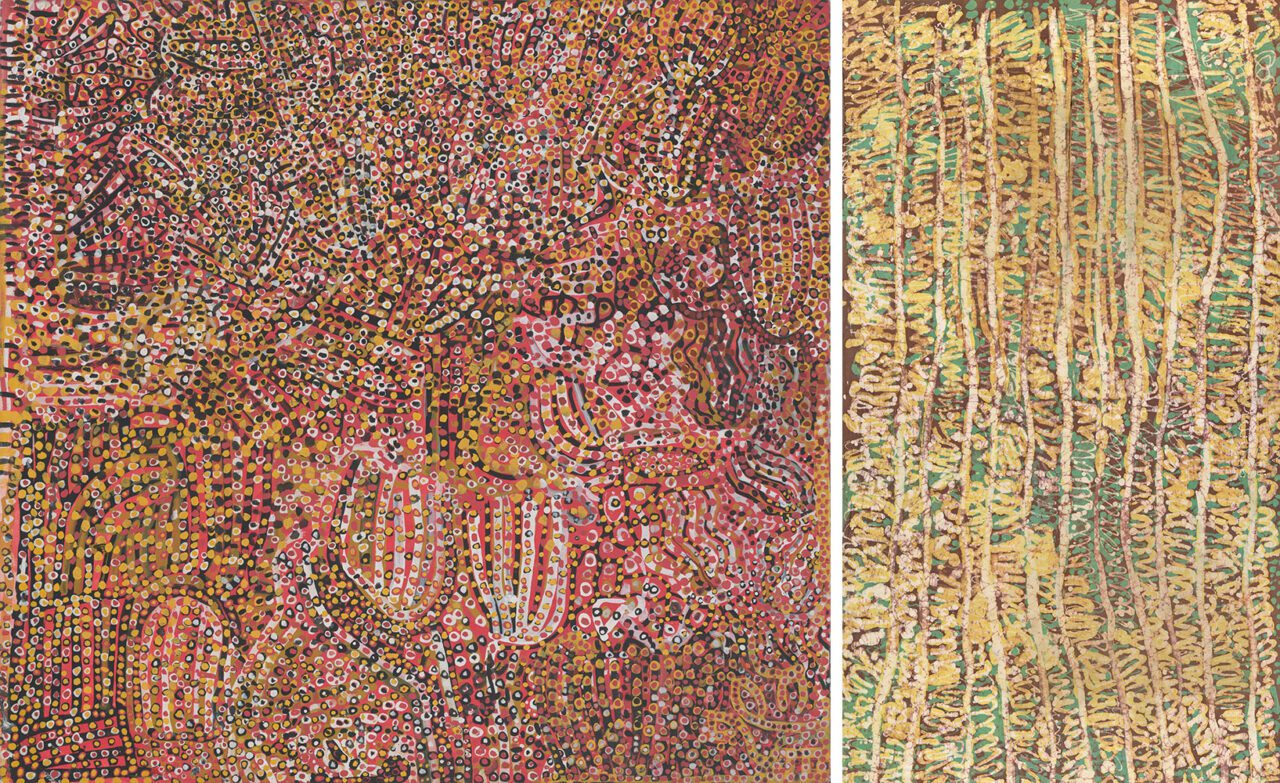
Right: Emily Kam Kngwarray, Untitled 1977. Juila Murray, Founder Utopia Women’s Batik Group, Utopia Women’s Batik Group. © Emily Kam Kngwarray/Copyright Agency. Licensed by DACS 2025
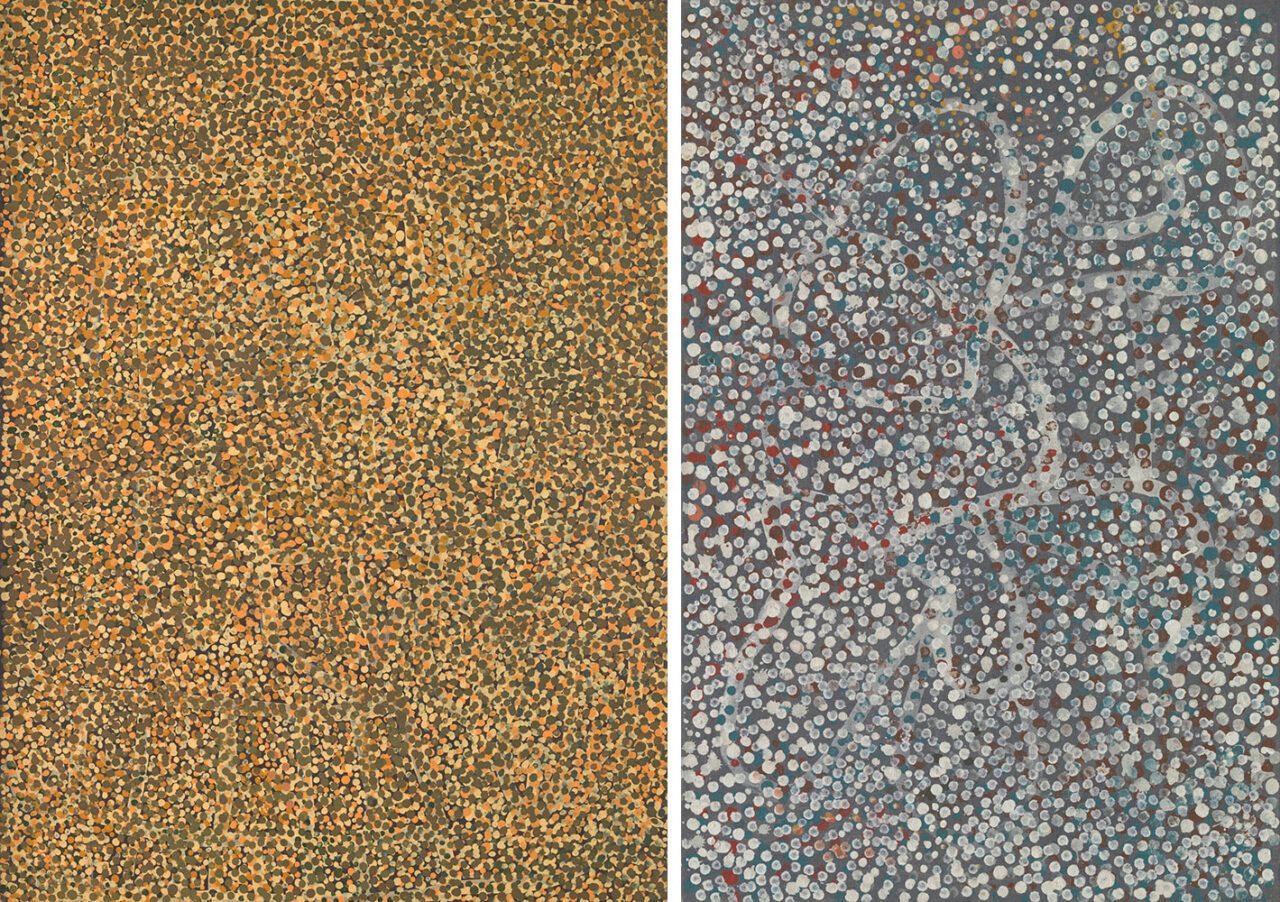
Right: Emily Kam Kngwarray, Unititled 1990. Tate © Emily Kam Kngwarray/Copyright Agency. Licensed by DACS 2025
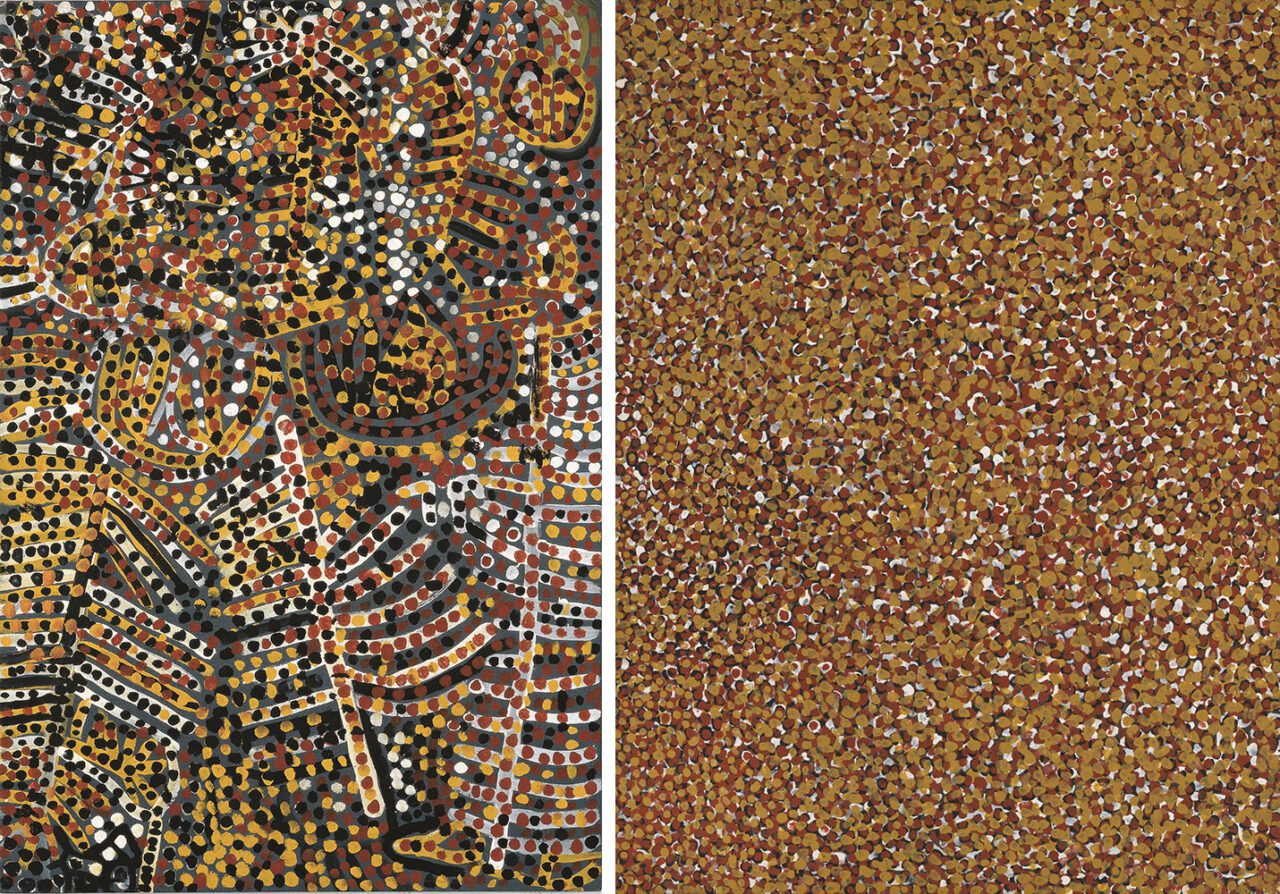
Right: Emily Kam Kngwarray, Ntang 1990. Tate © Emily Kam Kngwarray/Copyright Agency. Licensed by DACS 2025