
PHOTO: Jitka Hanzlová-Identities
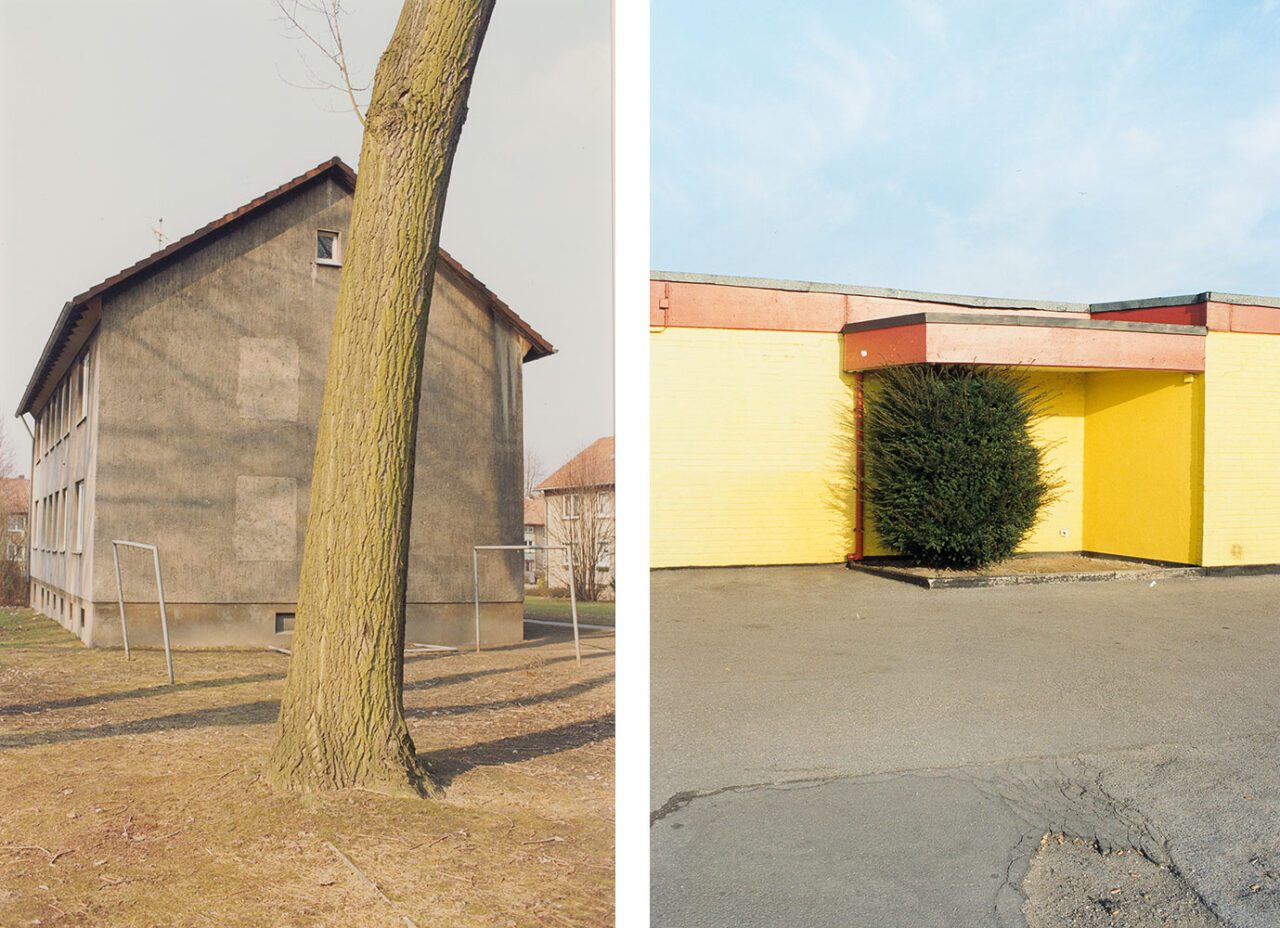
Jitka Hanzlová’s personal experience of exile forms the starting point for her artistic exploration of questions of identity. In many series, she deals with the tension between origin and new home, between the familiar and the foreign. By processing her experiences, identity politics becomes comprehensible not as an abstract concept, but as a deeply personal and at the same time social issue.
By Dimitris Lempesis
Photo: Albertina Museum Archive
“Jitka Hanzlová–Identities”, is the first museum exhibition of one of the most distinguished female photographers of the present day. The exhibition comprises ten series from 1990 to the present day—from portraits to photographs of landscapes and animals to photographs of natural phenomena. Hanzlová’s artistic language encourages an examination of social and ecological issues. The focus is on themes such as identity, belonging, exile and the relationship between the individual and their environment. Jitka Hanzlová is one of the most recognized photographers of our day. In 1982 she escaped from the Czechoslovak Socialist Republic to West Germany. During this time of reorientation, the artist discovered photography for herself. From 1987 to 1994 she studied visual communication with a focus on photography in the Ruhr city of Essen, where she still lives today. While still a student, the artist was unexpectedly able to return to her native village of Rokytník after the fall of the Iron Curtain toward the end of 1989. Over the next five years she shot her first series there, portraying the inhabitants caught between socialist past and democratic future. “Rokytník” provided the creative foundation for all her subsequent projects. From then on, the artist’s consistently produced series have examined the relationship between people and their environments in extremely nuanced ways. Based on the drastic experience of exile, Hanzlová poses universal questions about belonging. They are expressed in the need for social connectedness and in the ambivalent experience of human habitats. What is central here is how the environment shapes an individual’s identity. Such series as “Bewohner” [Residents] (1994–1996) or “Hier” [Here] (1998, 2003–2010) convey a sense of isolation that determines the lives of people in European metropolises. In her subsequent works, she also seeks their antipodes: in “Forest” (2000–2005), she explores organic silence in the forest of her childhood. In recent years, Hanzlová has increasingly devoted herself to vanishing natural phenomena as ecological consequences of human activity. Once again located in Rokytník, her most recent project “Bohdanka”, begun in 2004, goes back to the beginnings of her career and explores current problems of globalization. Her first major series, “Rokytník” (199, -94) was created in her Czech home village of the same name: it is a journey into the past, to the scene of her childhood. In 1982, the artist fled to West Germany; following the downfall of the communist regime, she was able to return to Rokytník in 1990. In this initially playful confrontation between the familiar and unfamiliar, between past and present, she has found her artistic language: through photographs of the inhabitants, the landscape, and everyday objects, the artist portrays the village without any claim to social criticism. All of Jitka Hanzlová’s photographs are in portrait format, which is an unusual practice for landscape shots. She also uses a restrained, unsaturated color scheme to capture the underlying socialist tone. The village seems to have fallen out of time and simultaneously shows a rural life shaped by socialism, which, however, was soon about to disappear. With her melancholy images, which are underpinned by subtle humor, Hanzlová addresses issues of belonging. “Rokytník” appears as a place that is close, and yet the artist maintains a respectful distance. Jitka Hanzlová photographed the series “Bewohner” [1994-96] in European and German cities such as Berlin and Essen, where the artist lives. It combines portraits, shots of desolate architecture, and lower-middle-class everyday objects, as well as photographs of animals. The images evoke a feeling of uprootedness and isolation; people seem alienated from their urban surroundings. “Bewohner” was created directly after Hanzlová’s first series “Rokytník” and intended as its counterpart: while the people in “Rokytník” are in harmony with nature, in “Bewohner” the open horizons have given way to confineng fences and geometric walls. “Female” (1997-2000) is the only series in Jitka Hanzlová’s oeuvre that was realized on the basis of a predefined concept. Female comprises portraits of women whom the artist met by accident and talked to in the streets during day-long walks through predominantly international cities like New York, Los Angeles, London, or Berlin. The photographs capture the concentrated encounter between the photographer and her models as a communicative act: Hanzlová highlights the individuality of the women, who, without exception, look directly into the camera, through their surroundings and clothing, but above all through their body language and behavior. The photographer herself is inscribed in the image through the reactions of those portrayed. They undoubtedly underline the fact that Jitka Hanzlová always also negotiates the theme of identity in her work in the context of her own biography.
The focus of Jitka Hanzlová’s work is on the examination of the relationship between nature and civilization, between landscape and the people. For the series Hier (1998, 2003-10), the artist revisited an earlier project on Essen, the city where she lives. More than any other of the artist’s photographs, “Hier” highlights the problems of human intervention in nature. Bombed during World War II, the landscape in the photographs has been deformed through utilization: wastelands that still bear the traces of coal mining, birch trunks blackened by air pollution, bodies of water that appear poisonous because of their yellowish color, or infrastructure displacing original nature reflect a living environment deprived of its natural treasures. Hanzlová is interested in contradictions. Subtle traces of vegetation in everydayness reveal how nature is about to reclaim the industrial area. In “Forest: (2000-05), the artist returns to the woodlands of her childhood. Aiming not at a photographic documentation but at the visual translation of a subjective experience of nature, Jitka Hanzlová explores the forest beyond any romantic clichés: through atmospheric shots of a vegetation that often appears impenetrable, of the velvety green forest floor, of tree trunks shrouded in silvery mist, or of filigree spiders against deep blue twilight, she conveys the concentrated stillness of this place and makes it possible to grasp a temporality that is both eternal and timeless, independent of human existence. As a journey into the past, as a scene of memory, and as a site of the unconscious, Forest is likewise rooted in subjectively relevant and universally valid history. In 2002, Jitka Hanzlová was invited by the London Photographer’s Gallery to realize a project in the district of Brixton—the center of Afro-Caribbean culture in the British metropolis. For “Brixton”, Hanzlová has portrayed women of three generations in their urban environment. As in the “Female” series, the photographs are the result of chance encounters in the streets and thrive on the intense dialogue between those depicted and the photographer. Devoid of any sentimentality or explanatory context, Jitka Hanzlová’s images refrain from open social criticism. Instead, the photographs testify to subtle intuition and quiet empathy against the backdrop of her own experience of migration.
The series “There Is Something I Don’t Know” (2000-13) comprises portraits inspired by Renaissance paintings. More than in any earlier age, these portraits claimed to convey the sitter’s personality through realistic physical features. For this series, the artist asked people resembling sitters from the fifteenth and early sixteenth centuries to pose in front of the camera. Postures, backdrops, and furnishings quote the historical paintings. The mise-en-scène, which reflects visual conventions of representation, testifies to the concentrated interaction between Jitka Hanzlová and her models. Her focus on inner processes allows the photographer to capture the sitters’ individuality. The artist realized the first works within this series in 2007, following an invitation to Vaprio d’Adda in the Italian province of Milan, the home of Leonardo da Vinci’s pupil and assistant Francesco Melzi. In the following years, she completed the work in the Ruhr District. Hanzlová has always been fascinated by the resemblance of certain faces to historical paintings. Animals have played an important role in Jitka Hanzlová’s work from the very outset. Here the artist has dedicated a series to horses as figures of identification. For Hanzlová, they mirror human action, thought, and communication. As with “Forest”, in the “Horse” (2007-14) series Jitka Hanzlová has successfully reinterpreted a motif traditionally featured by visual media, yet has done so far removed from any cliché. Drastically cropped images render the horses more abstract while highlighting details representative of the animal. Yet images of the entire beast likewise emphasize its powerful energy and dynamic corporeality. Jitka Hanzlová’s photographs of ice are part of her eight chapter investigation entitled “Water.” (2013-19) In the groups of works on display in this exhibition, she focuses on different aggregate states of the element water. The cloud images exhibited in the first room also belong to this work. While the relationship between man and nature has already been addressed in the artist’s earlier works, “Water” now marks an increased focus on ecological issues. In formal terms, too, the photographs, hung within a rigid block, deviate from her previous practice of composing series from individual pictures standing on their own. Jitka Hanzlová has worked out both concrete and abstract forms of frozen glacier surfaces in radiant, lucid colors through views of details. For the artist, the work is not meant to create a contrast to earlier series. Rather, she sees the images as part of a holistic examination of the nature underlying all aspects of the world and emerging from it. Like her first series “Rokytník”, Jitka Hanzlová’s most recent work “Bohdanka” (2004- ) was created in the artist’s native village in Czechia. The series is dedicated to the everyday rural life of title character Bohdanka and her big family. Nature is often the actual protagonist here. In mostly bright colors the artist captures the changing seasons and the harshness and beauty of the landscape, yet devoid of any romanticization. Originally coming from the city, the family leads a self-determined life in the countryside—the result of a well-considered decision made in response to the dominant consumer culture after the fall of the Iron Curtain. “Bohdanka” reflects Jitka Hanzlová’s interest in the ecological issues of our time: against the backdrop of globalization and the climate crisis, the series, in its liveliness, shows an alternative way of cohabiting with the natural environment. In this sense, Bohdanka is a thoroughly socio- political work. The project, which began in 2004 and is ongoing, is presented for the first time as a selection of works put together especially for this exhibition.
Photo left: Jitka Hanzlová: Untitled, 1996, from the series: Bewohner, 1994 – 1996, C-Print (The ALBERTINA Museum, Vienna © Jitka Hanzlová / Bildrecht, Vienna 2025). Photo right: Jitka Hanzlová: Untitled, 1998, from the series: Hier, 1998, 2003 – 2010, C-Print (Courtesy of the artist © Jitka Hanzlová / Bildrecht, Vienna 2025)
Info: Curator: Walter Moser, The Albertina Museum, Albertinapl. 1, Vienna, Austria, Duration: 10/7-26/10/2025, Days & Hours : Mon-Tue, Thu & Sat-Sun 10;00-18 :00, Wed & Fri 10:00-21:00, www.albertina.at/

Right: Jitka Hanzlová: Untitled, 1993from the series: Rokytník, 1990 – 1994, C-Print (Courtesy of the artist © Jitka Hanzlová / Bildrecht, Vienna 2025)

Right: Jitka Hanzlová: Untitled, 2005, from the series: Forest, 2000 – 2005, C-Print (The ALBERTINA Museum, Vienna © Jitka Hanzlová / Bildrecht, Vienna 2025)

Right: Jitka Hanzlová: Untitled, 2007, from the series: Hier, 1998, 2003 – 2010 C-Print (Courtesy of the artist © Jitka Hanzlová / Bildrecht, Vienna 2025)

Right: Jitka Hanzlová: Untitled, 1991, from the series: Rokytník, 1990 -1994, C-Print (Courtesy of the artist © Jitka Hanzlová / Bildrecht, Vienna 2025)

Right Jitka Hanzlová: Untitled, 2000, from the series: There is Something I Do Not Know, 2000 – 2013, Archival Pigment Colour Print (Courtesy of the artist © Jitka Hanzlová / Bildrecht, Vienna 2025)

Right: Jitka Hanzlová: Untitled, 2005, from the series: Here, 1998, 2003 – 2010, C-Print (Courtesy of the artist © Jitka Hanzlová / Bildrecht, Vienna 2025)