PRESENTATION: Robert Longo
Robert Longo is internationally acclaimed for his monumental, hyperrealistic black-and-white drawings that command attention with their sheer scale and emotional intensity. His subjects—often drawn from the chaotic flood of contemporary media imagery—are carefully selected, cropped, and reframed to create striking, cinematic compositions. These dramatic “snapshots” are transformed through Longo’s meticulous technique into powerful visual statements, capturing the turbulence, conflict, and beauty of modern life with an almost sculptural depth and precision.
By Dimitris Lempesis
Photo: Louisiana Museum Archive
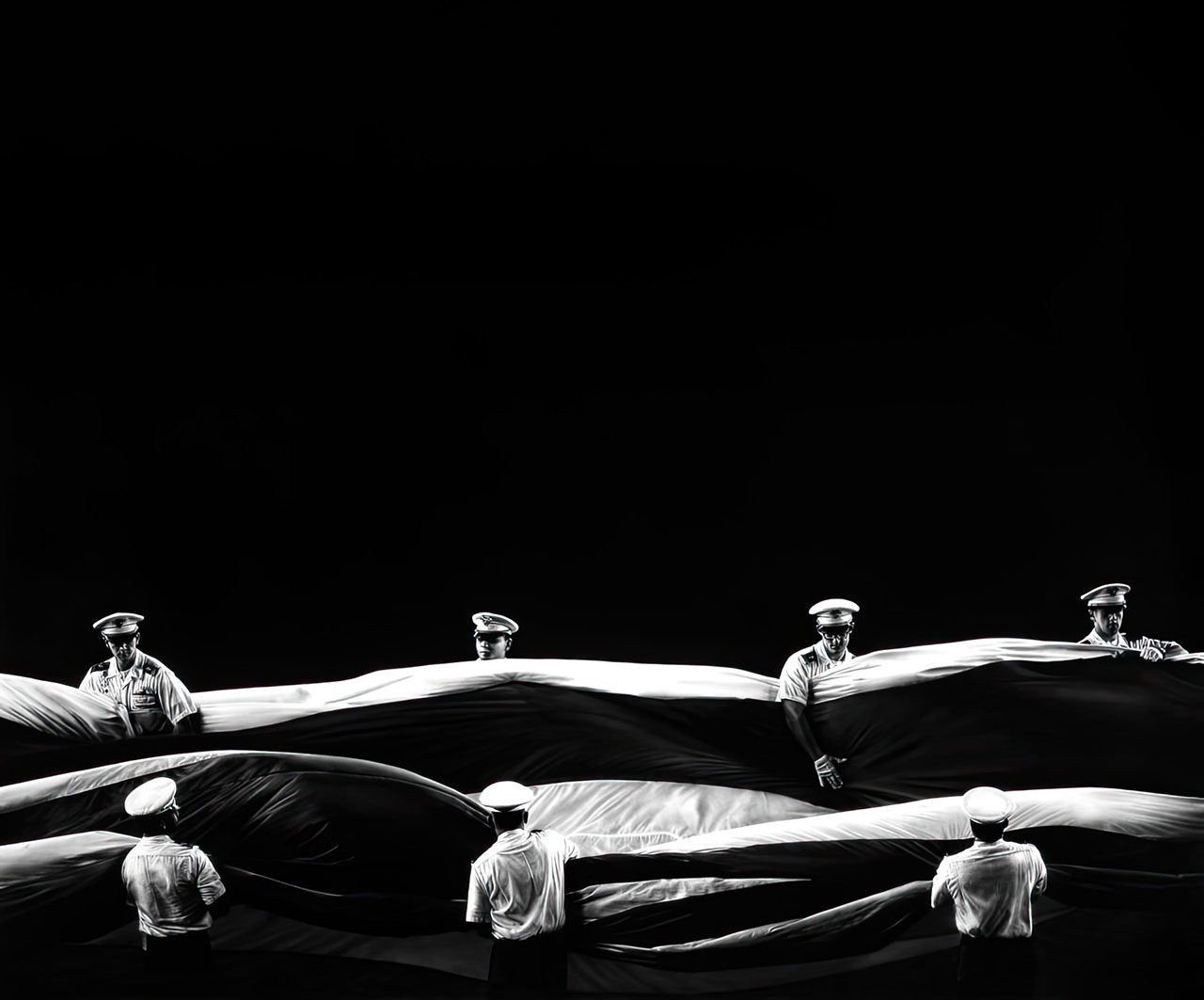
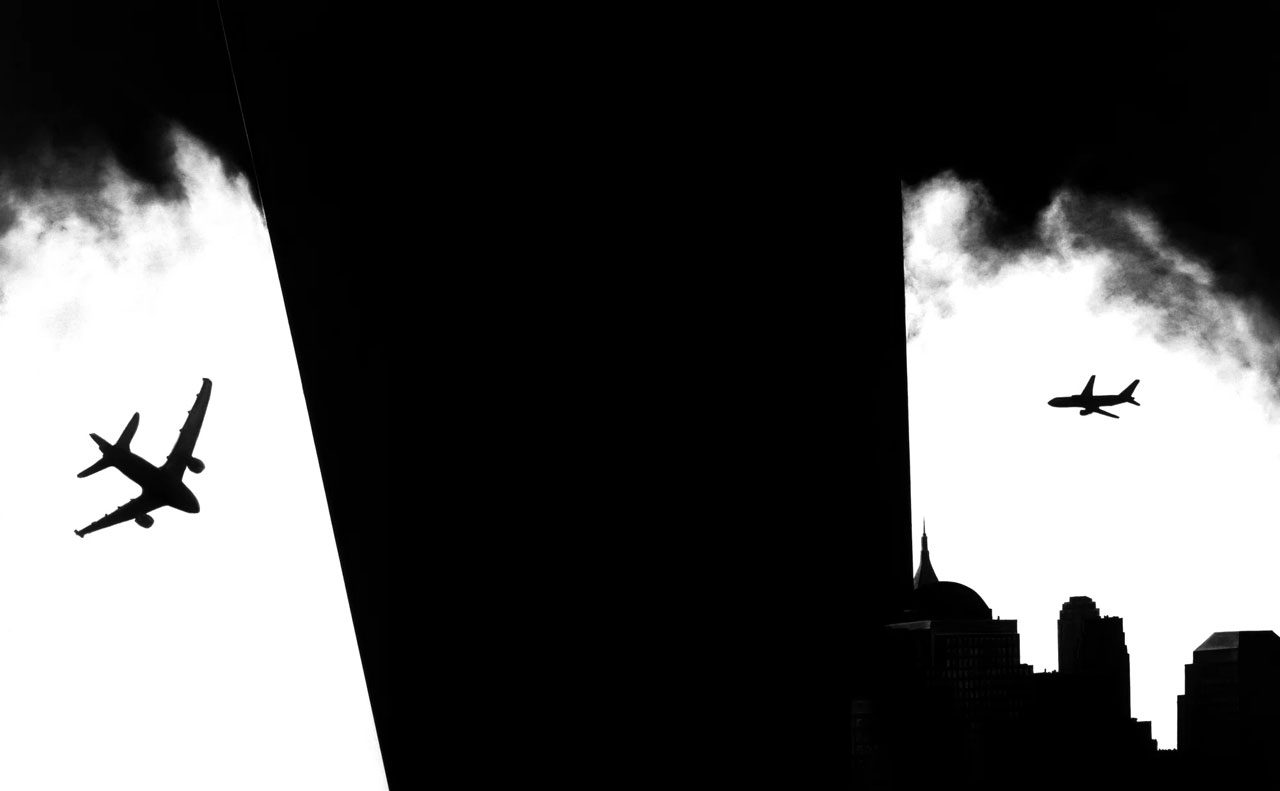
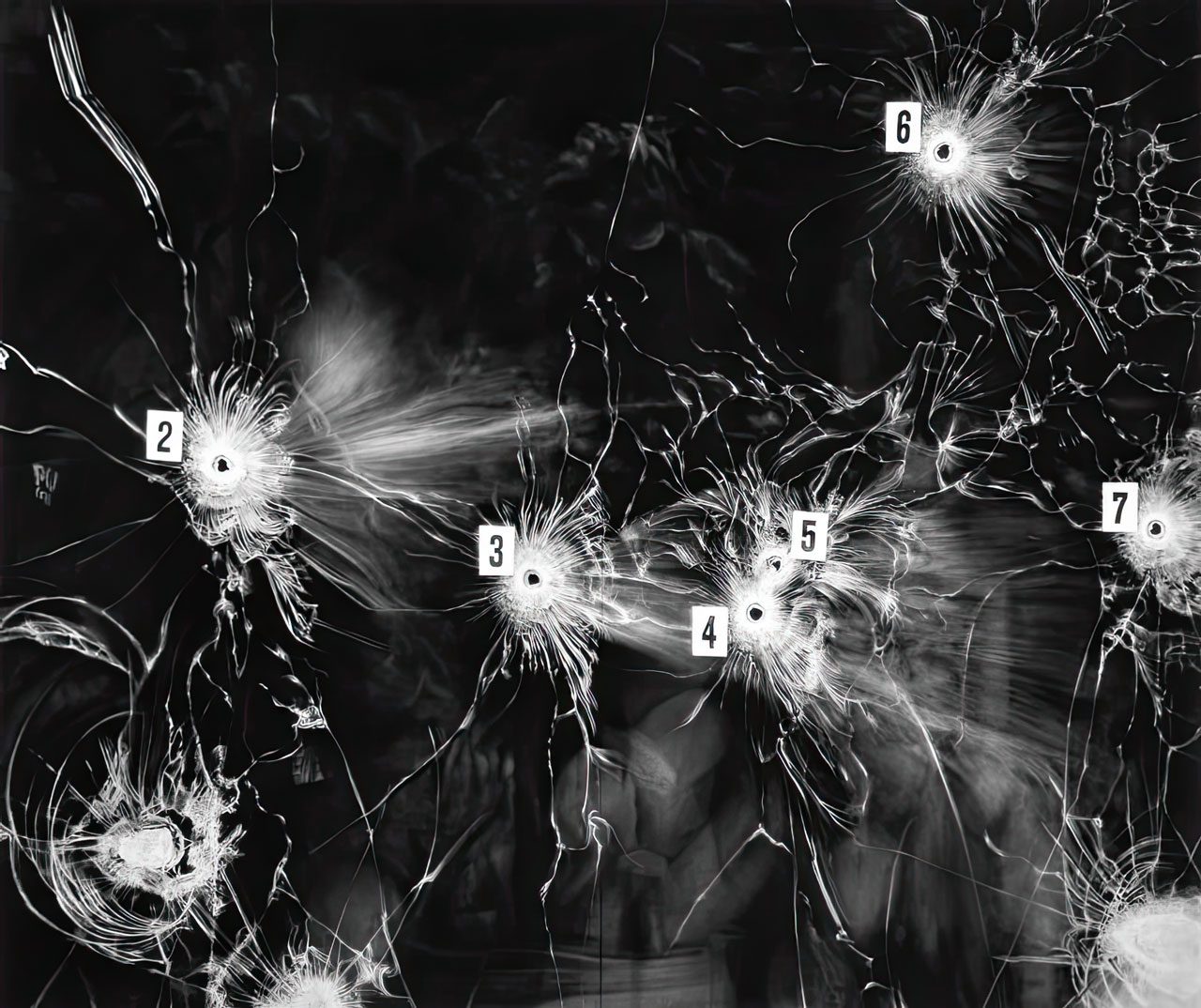
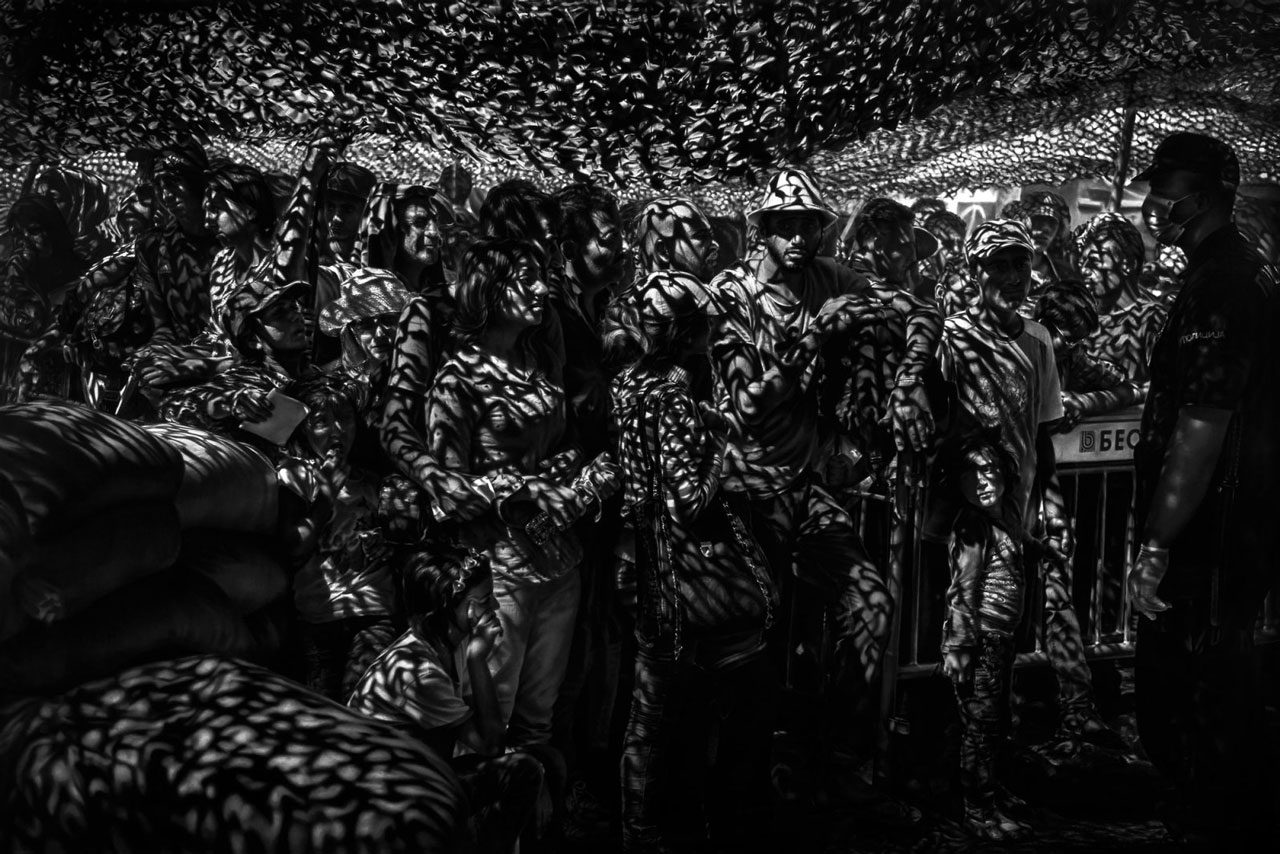
Robert Longo is known for his monumental hyperrealistic works: powerful, dynamic charcoal drawings whose virtuoso technique and the visual force of the motifs mesmerize the observer. For his models, Longo uses photographs that record dramatic situations at the moment of their greatest tension. The artist is concerned here with the depiction of power— in nature, politics, history. He utilizes visual material that has been reproduced thousands of times, and which has long been a part of pop culture, of our collective visual memory. Longo isolates and reduces the motifs so as to raise their visual impact to a higher power. By enlarging the subject and intensifying the lighting into a dramatic chiaroscuro, we find ourselves before gigantic, previously unseen theatrical images. Longo draws on existing images, references reality secondhand, and creates impressive “copies” of the original black- and-white photographs, which pale beside their transformation into colossal charcoal drawings. The dramatic lighting and shadow effects of the charcoal drawings emphasize the objects’ plasticity and the spatial depth. They make the motif appear as real as it is unreal. The deep black of the charcoal rubbed into the paper swallows up all of the light. Paradoxically, Longo is ultimately capable, like no one else, of evoking brightness and radiant light, transparency, and differentiated materiality with the blackness of charcoal. In the late 1970s Longo belonged to the so-called Pictures Generation, a loose grouping of New York artists that critically engaged with mass media and pop culture in their works. His iconic large-scale series of drawings “Men in the Cities” (1979–83) in their extreme, dynamic poses aptly expressed the fragile mood— fraught with tension—of the 1980s. New York in those days was dominated as much by financial wealth, a real estate boom, and yuppie culture as it was by rising criminality, drug problems, and social inequality, polarizing the city. The neoconservative politics of the Reagan era and the threat posed by the Cold War contributed to a climate of insecurity. Longo’s severely formal drawings echo this sentiment. The figures are dressed in “urban uniforms and Film Noir attire” against a white background, in an empty space, each one isolated, frozen in a moment of intense movement and physical contortion. The artist found a correspondence in the intensely stylized representation of black-and-white contrasts, originating in news media and black-and-white films.3 Longo prefers these abstract symbols to be installed as a group in order to create a rhythmic tension. He thereby also articulates their individually experienced inner turmoil in a collectively lived structure marked by tension and pressure. The dramatics and the composition of an image play a central role in Longo’s work. For the “God Machines” (2008–11), his portrayal of places of worship, he creates an atmosphere of reverence and sublimity through overwhelming size, through light and shadow, as well as through the perspective that expresses the power of religious institutions. A detailed elaboration of a bullet hole in close-up (pp. 15, 102/103), which allows the observer to recognize every crack and every splitter in the glass, literally draws us into the violence of the moment. By precisely rendering the mushroom cloud (p. 87) in central perspective, the artist transmits not only the enormous power, brutality, and destructive force of the catastrophic event of an atom bomb exploding, but also the feeling of fascination in the face of the terrifying beauty of this phenomenon. Longo’s visual universe is fueled by personal impressions, influences, and topics connected with U.S. society, politics, and pop culture, as well as significant global events. Police brutality and racism, war and terrorism, the exercise of power, repression, and violence all find expression in his works. Yet even if the motifs appear personal, the artist is not concerned alone with the expression of an individual emotion.
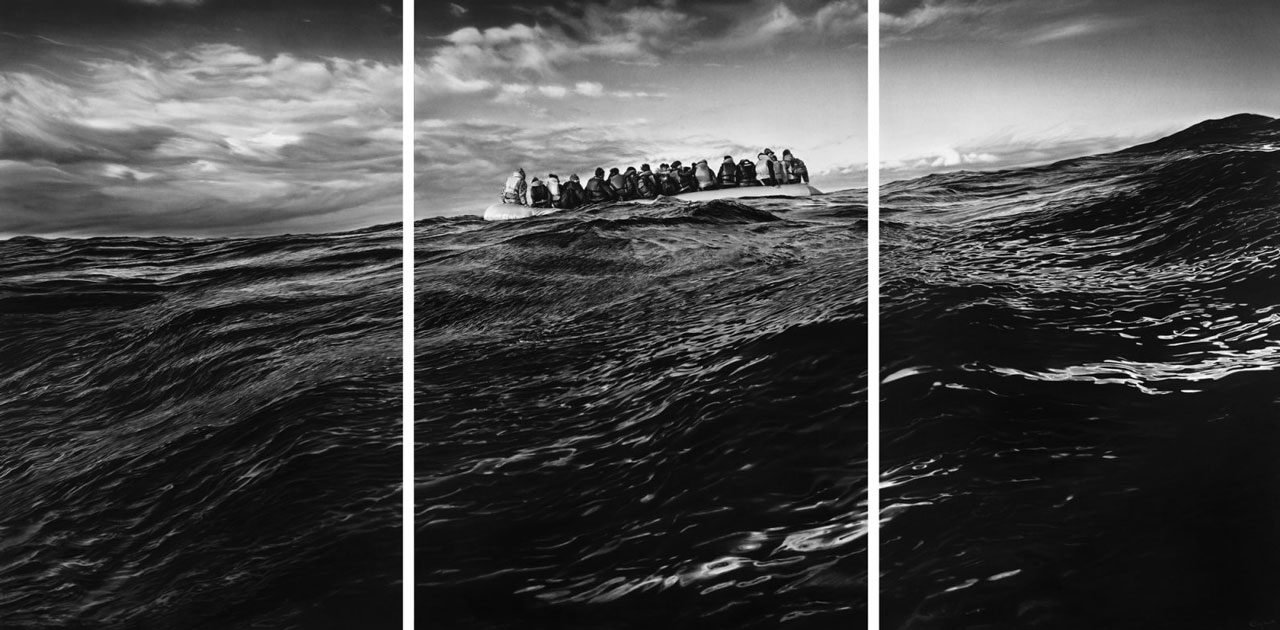
It is one of Robert Longo’s most impressive and at the same time most poignant works: “Untitled (Raft at Sea)” (2016–17) depicts a rubber dinghy on the high seas, overloaded with its cargo of refugees and dangerously low in the water. The people in it, mostly men, sit on the edge of the rubber ring, disturbingly close to the water’s surface. They wear caps, hats, and thick jackets under their life vests, indicating the inhospitable temperatures. The composition situates the boat on the horizon line in the upper third of the image, on the central panel of the monumental charcoal drawing. The entire area underneath is the dark sea with its turbulent waves, to which the dinghy and its passengers are exposed. An overcast sky stretches above, becoming less clouded over to the right—at least promising a little hope. We observe the scene not from a secure perspective from above, from a larger ship, or from the air, but on the same level as the rubber raft. We might, therefore, be in a similar dinghy or even in the water amid the waves. The artist has thus placed us in the same predicament as the people shown in his drawing, who are risking their lives to flee. For “Raft at Sea”, Longo draws on an image we have often seen in the media in recent years. Yet in the whirlwind of images that swirl around us every day, we no longer perceive the situation in all of its harrowing intensity, because we have, to a certain degree, become accustomed to it. Through the artist’s altered composition and the enormous size of the work, Longo forces us to look once more and to engage with what is presented.
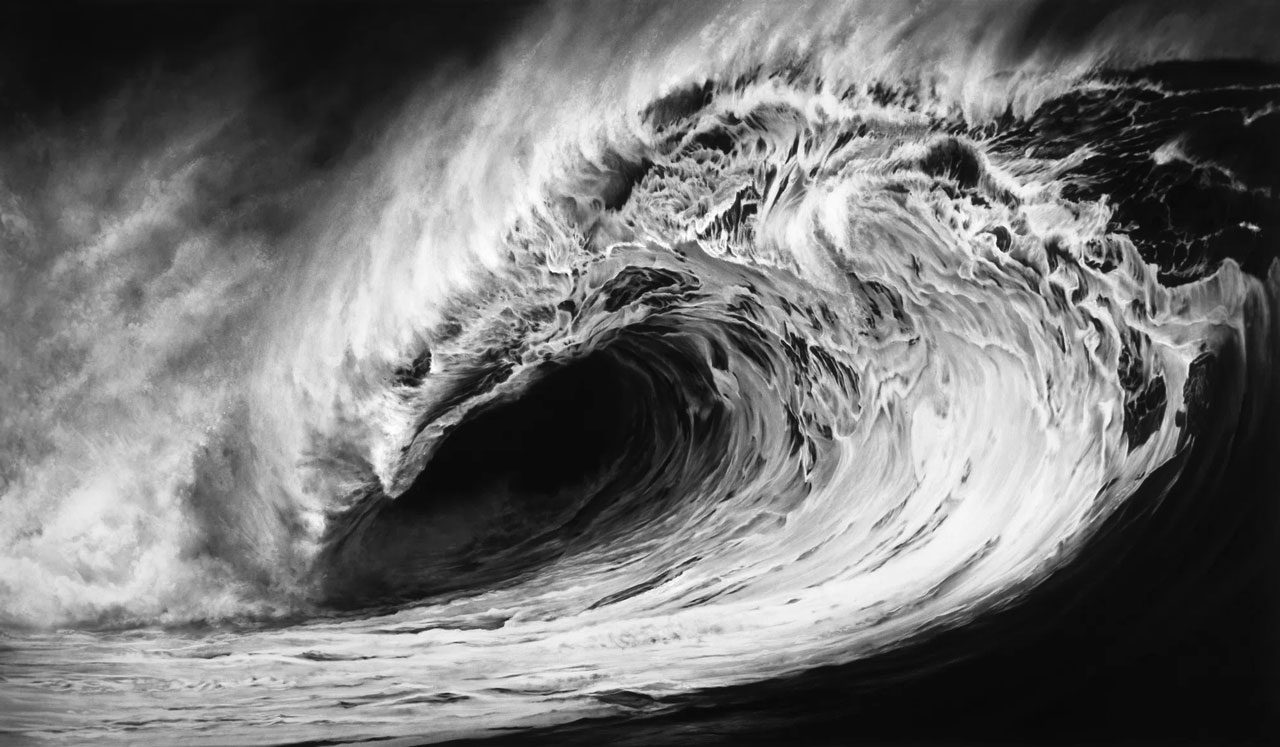
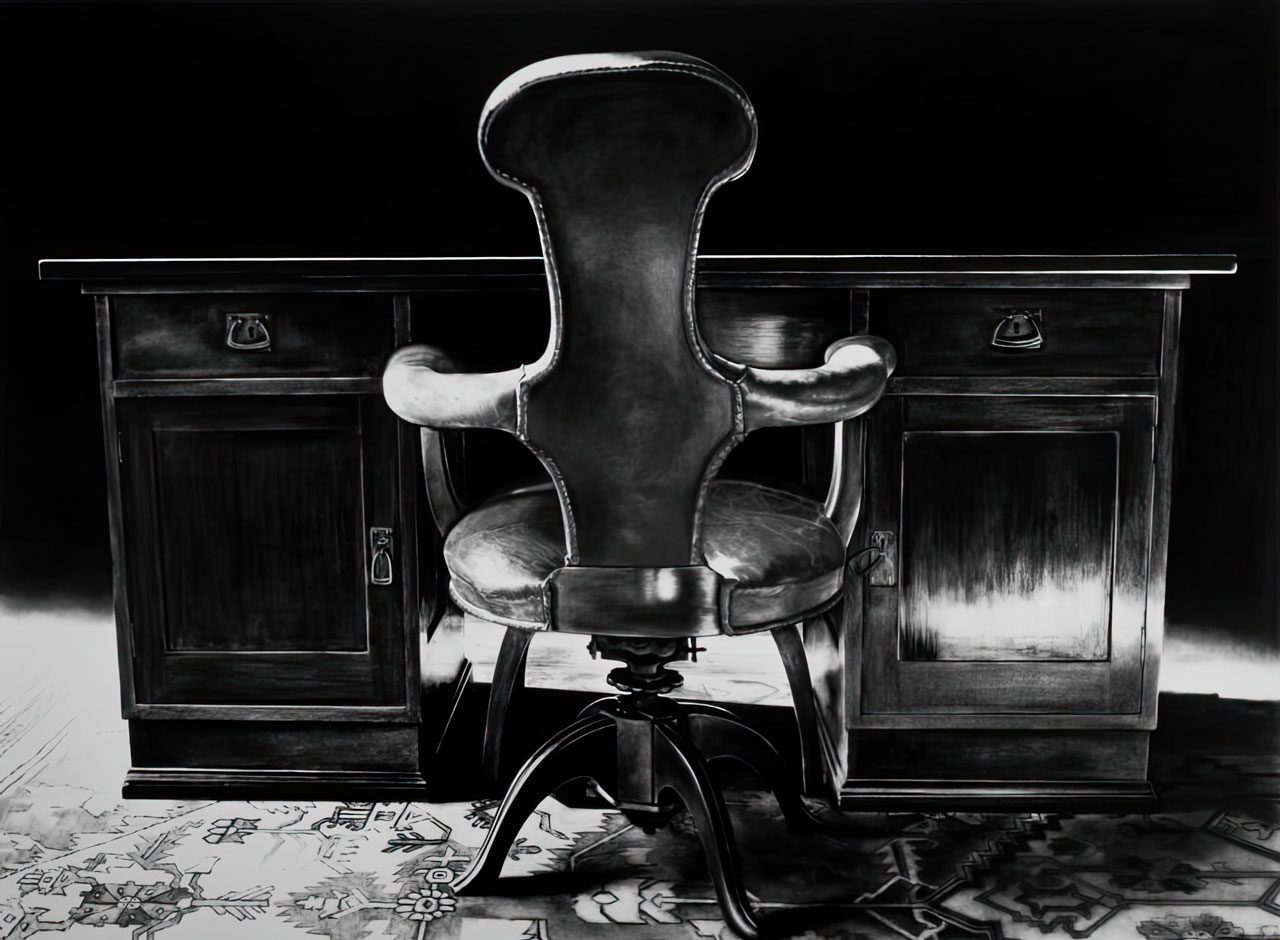
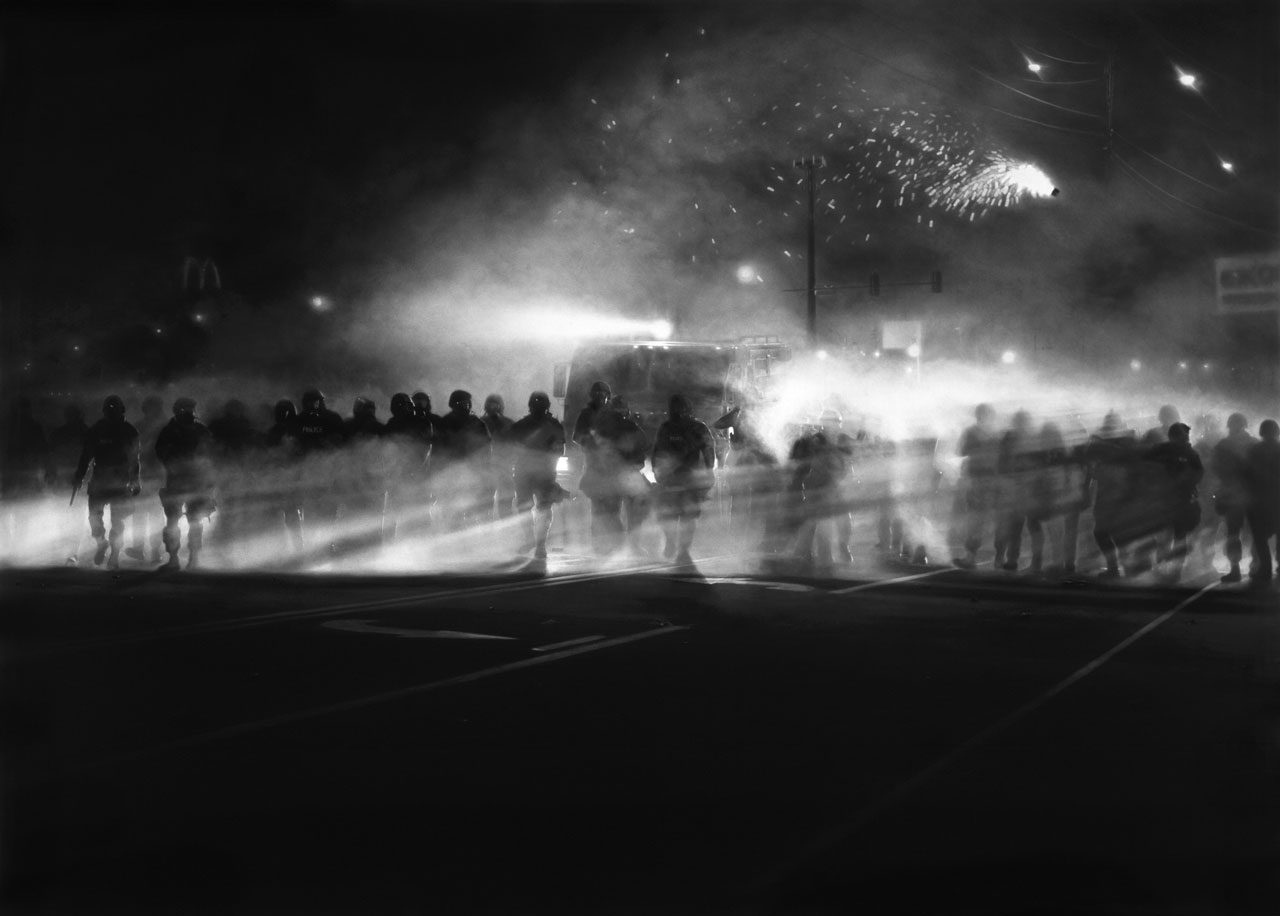
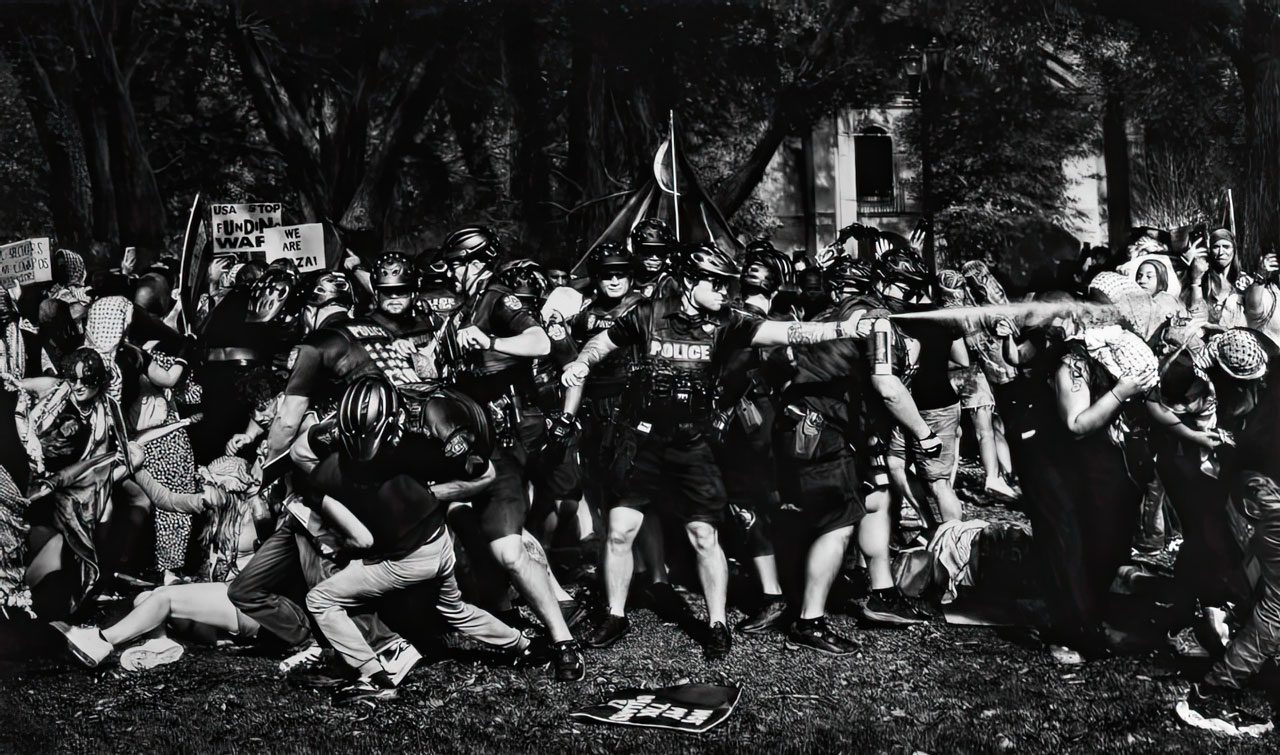
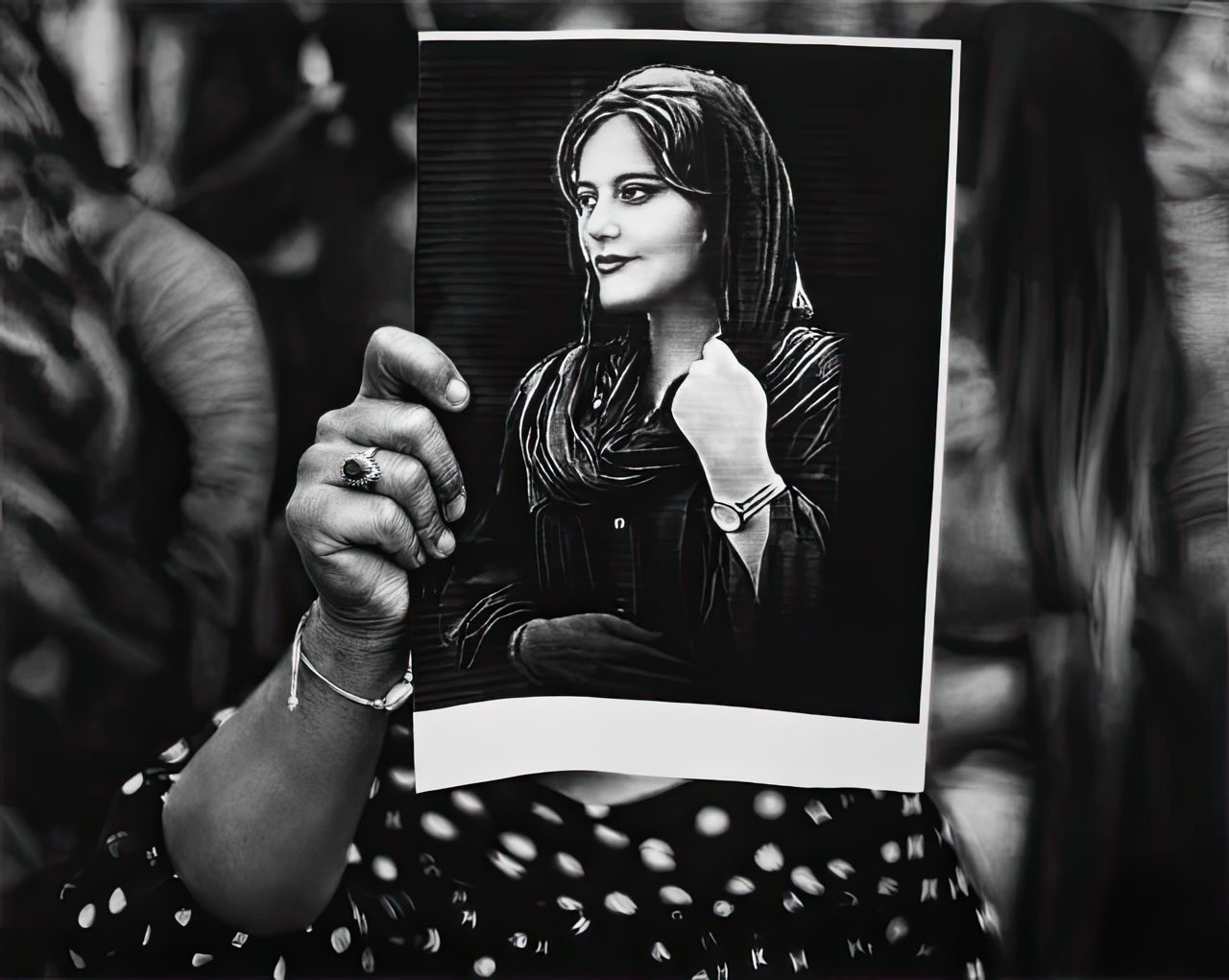
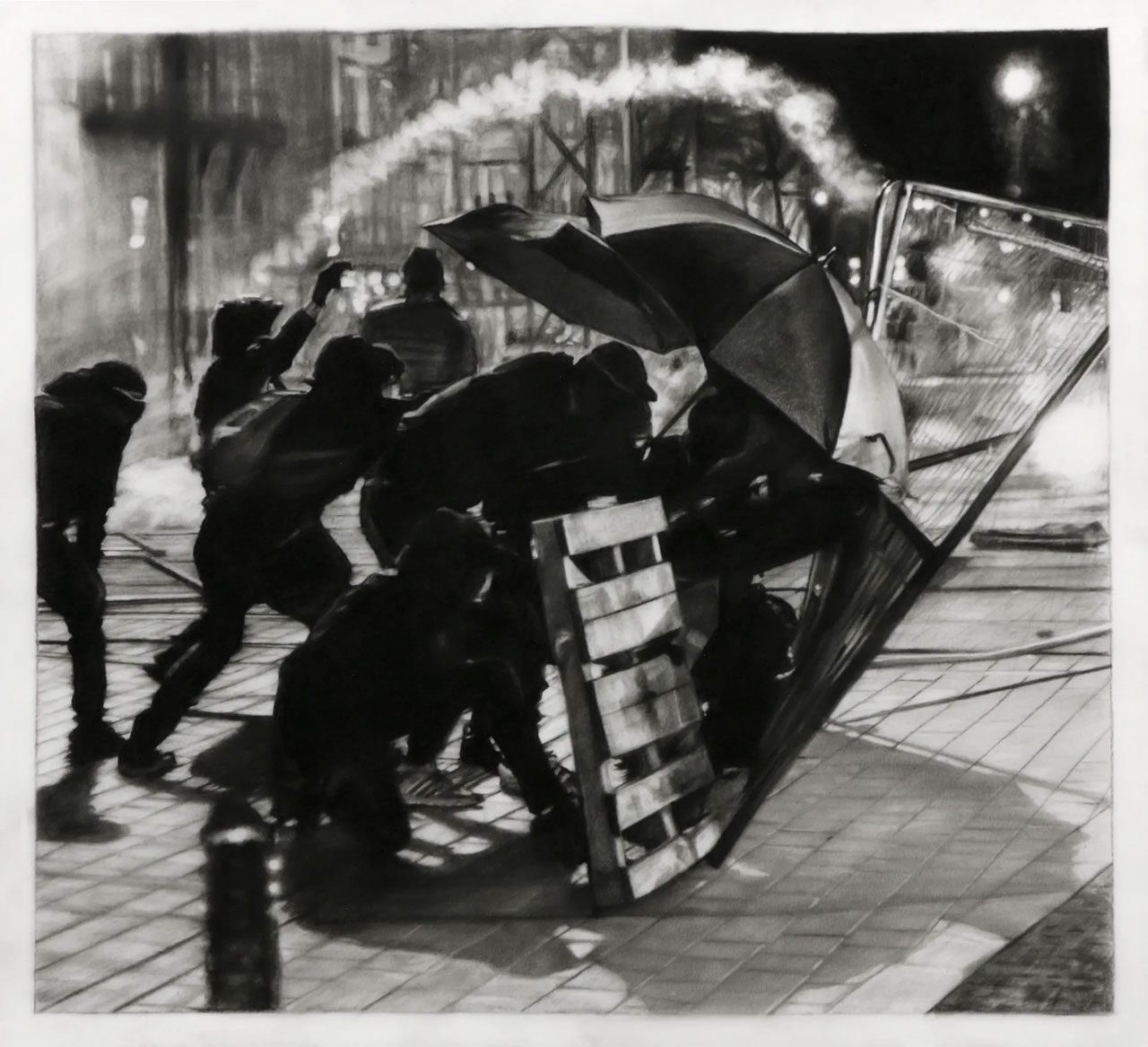
In his charcoal drawings, he appropriates the pathos, aesthetics, and narrative of film, the visual language of the cinema. Drawing on his experience as a film director and his work on music videos for bands such as New Order and R.E.M., Longo often brings a cinematic gaze to the creation of his works. His motifs recall film stills that capture a moment of tension, an emotional climax. This dramatic component is experienced anew every time we see a work, as if it is happening right now, thereby acquiring a timeless quality. Around the turn of the millennium, such events as 9/11 and the 2003 invasion of Iraq profoundly changed Longo’s worldview. With his “Monsters”, he created monumental drawings of waves—for the first time exclusively in charcoal. Shortly afterwards he conceived the “Freud Drawings”, based on photographs of Sigmund Freud’s apartment and practice in Vienna taken before the great psychiatrist and psychoanalyst was forced into exile. In 2008, Longo started dealing with sacred sites of the three prevalent monotheistic religions in his “God Machines”. In 2009 he completed “The Essentials”, several cycles representing his version of the creation myth, featuring bombs, sharks, roses, sleeping children, and planets. Between 2009 and 2014 he created “The Mysteries”, drawings depicting motifs like a forest in the early morning mist, the eyes of a woman in a niqab, or the reflection of clouds on the visor of a fighter pilot. In another series of works, Longo dealt with art history, interpreting iconic paintings by Abstract Expressionists such as Jackson Pollock. After the Black Lives Matter protests in Ferguson, Missouri in 2014, he began “The Destroyer Cycle”, through which his work became even more political. In this series, Longo looks at world events primarily through the lens of the American media. He devotes himself to scenes of power and violence—police assaults, global terrorist attacks, the migration of refugees, or the treatment of political prisoners, but also reflects upon the long-term impact of humans on nature, thus painting a haunting portrait of our time.
Photo: Robert Longo, Untitled (The Haunting). 2005. Siegfried and Jutta Weishaupt Collection | © Robert Longo
Info: Louisiana Museum of Modern Art, Gl Strandvej 13, Humlebæk, Denmark, Duration: 11/4-31/8/2025, Days & Hours: Tue-Fri 11:00-22:00, Sat-Sun 11:00-18:00, https://louisiana.dk/
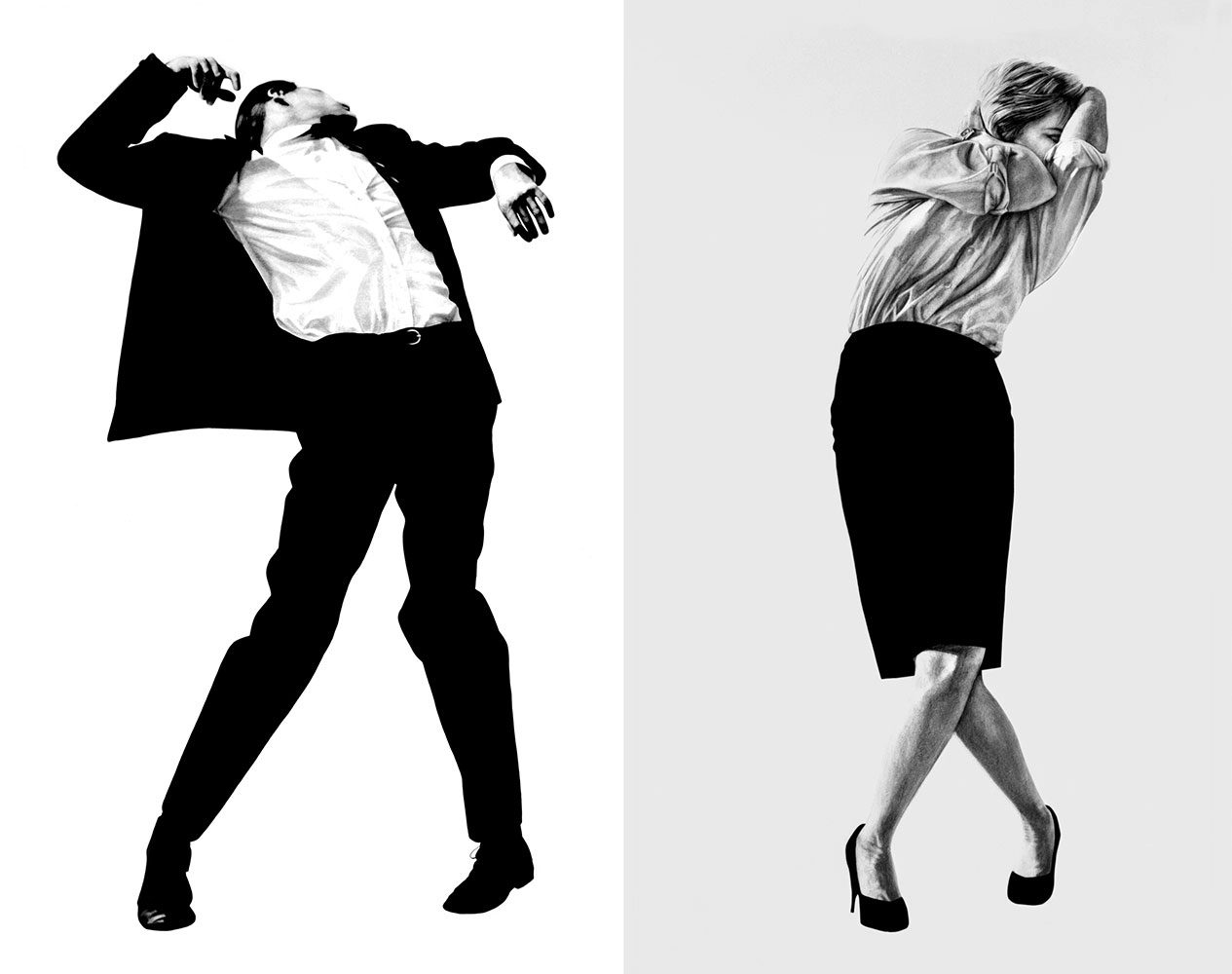
Right: Robert Longo, Untitled (Cindy), 1981, Photo: Courtesy of Robert Longo Studio. © Robert Longo