ARCHITECTURE: Sou Fujimoto-Primordial Future Forest
With offices in Tokyo, Paris, and Shenzhen, Sou Fujimoto is engaged in projects all over the world, ranging from private homes to universities, retail premises, hotels, and multi-purpose complexes. Since his high-profile debut with “The Aomori Museum of Art Design Competition Proposal “in 2000, he has completed a series of celebrated projects. One of Japan’s leading architects at the center of public attention, he was appointed as the Site Design Producer for Expo 2025 Osaka, Kansai, Japan.
By Efi Michalarou
Photo: Mori Museum Archive
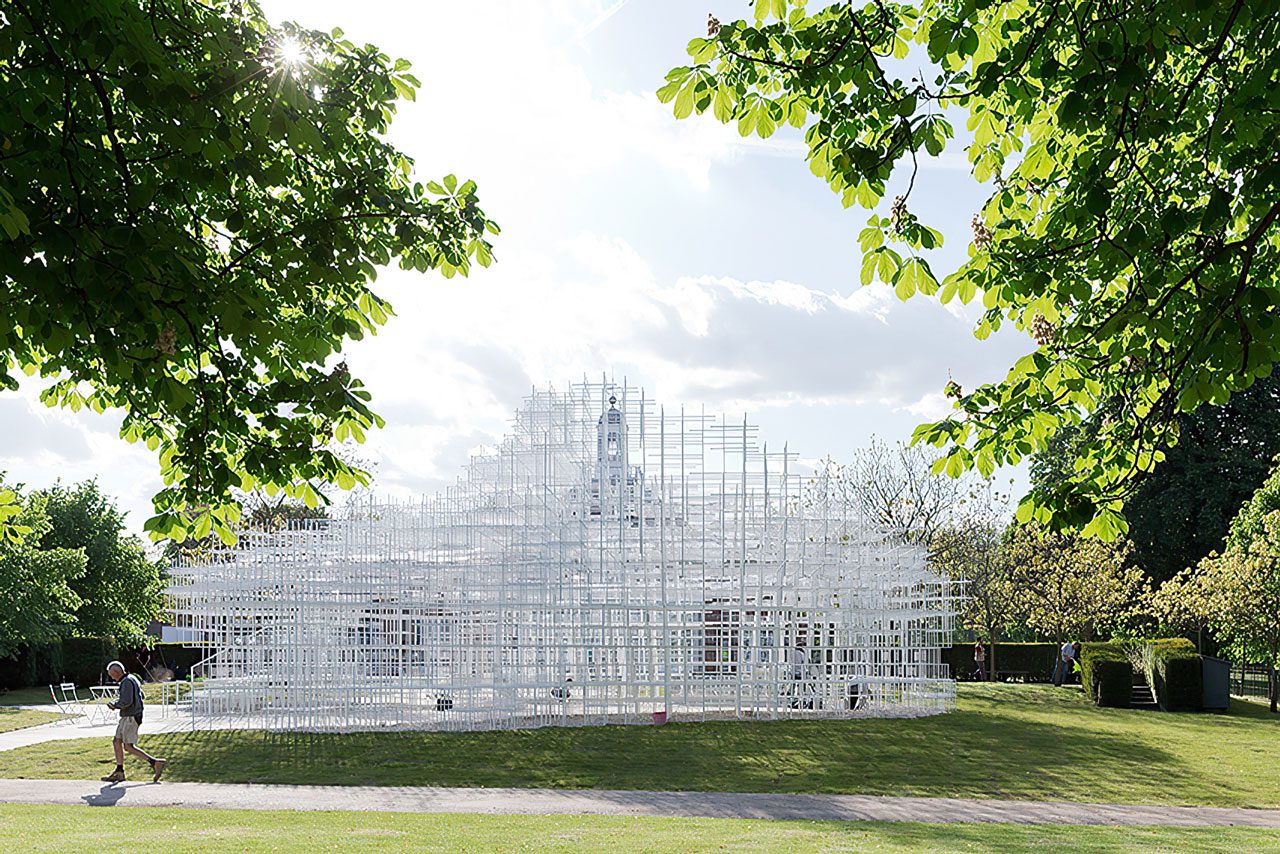
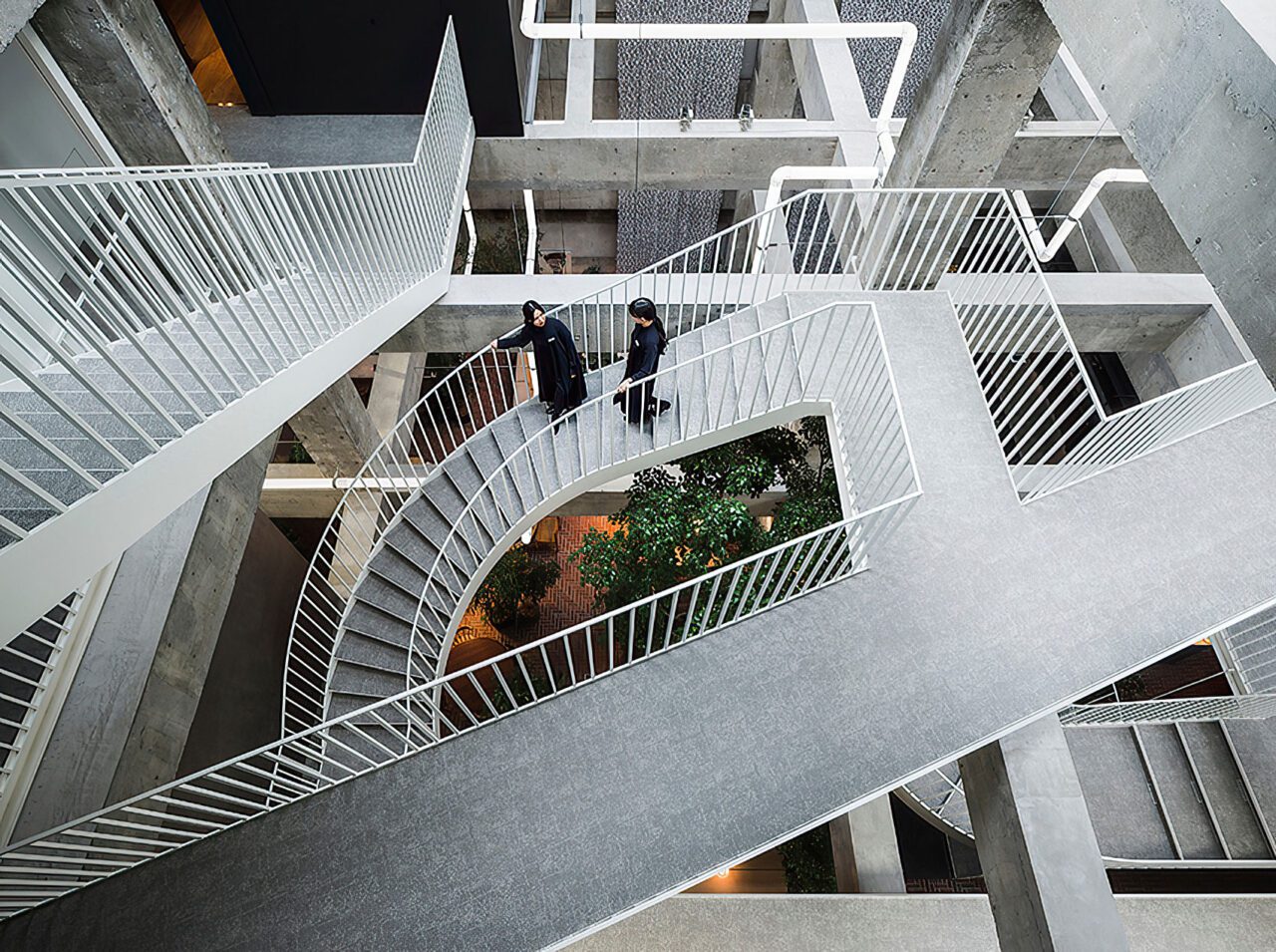
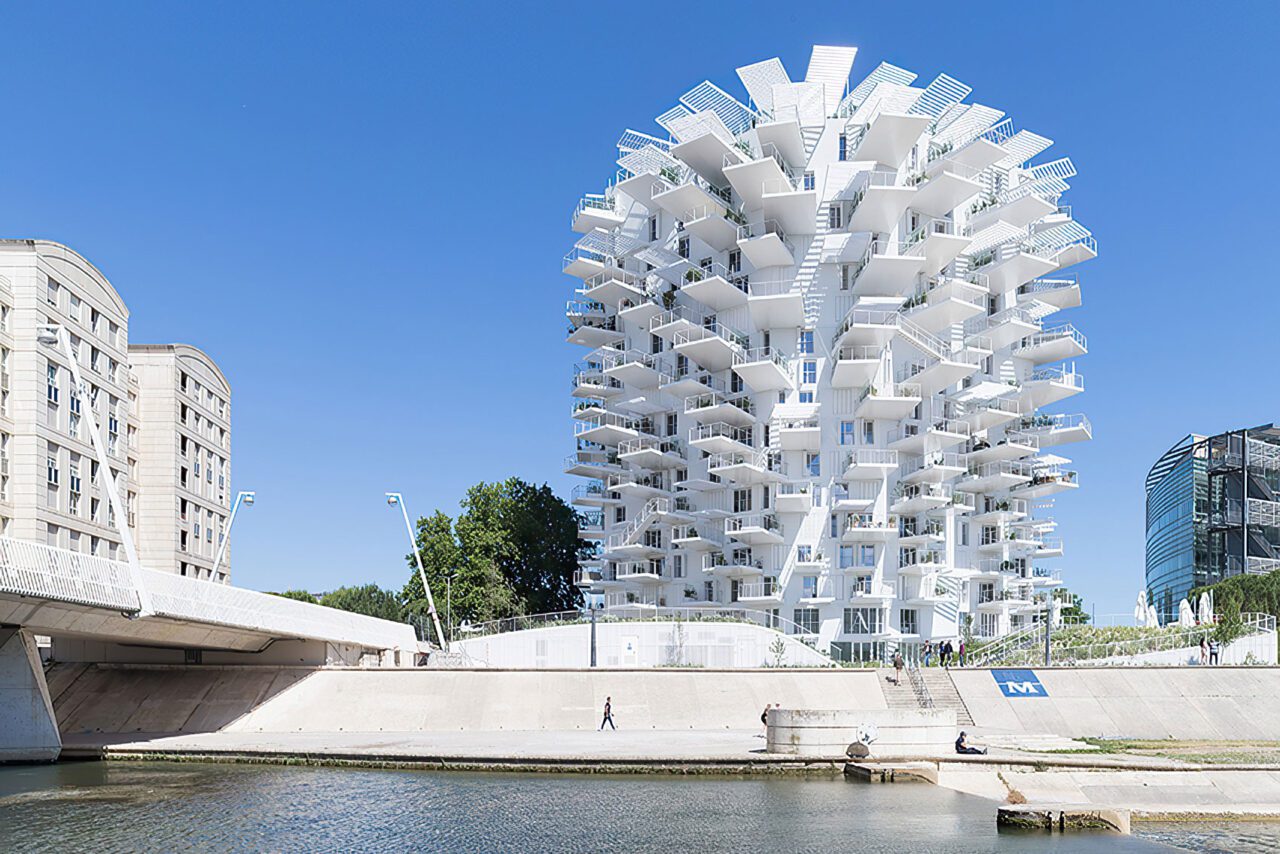
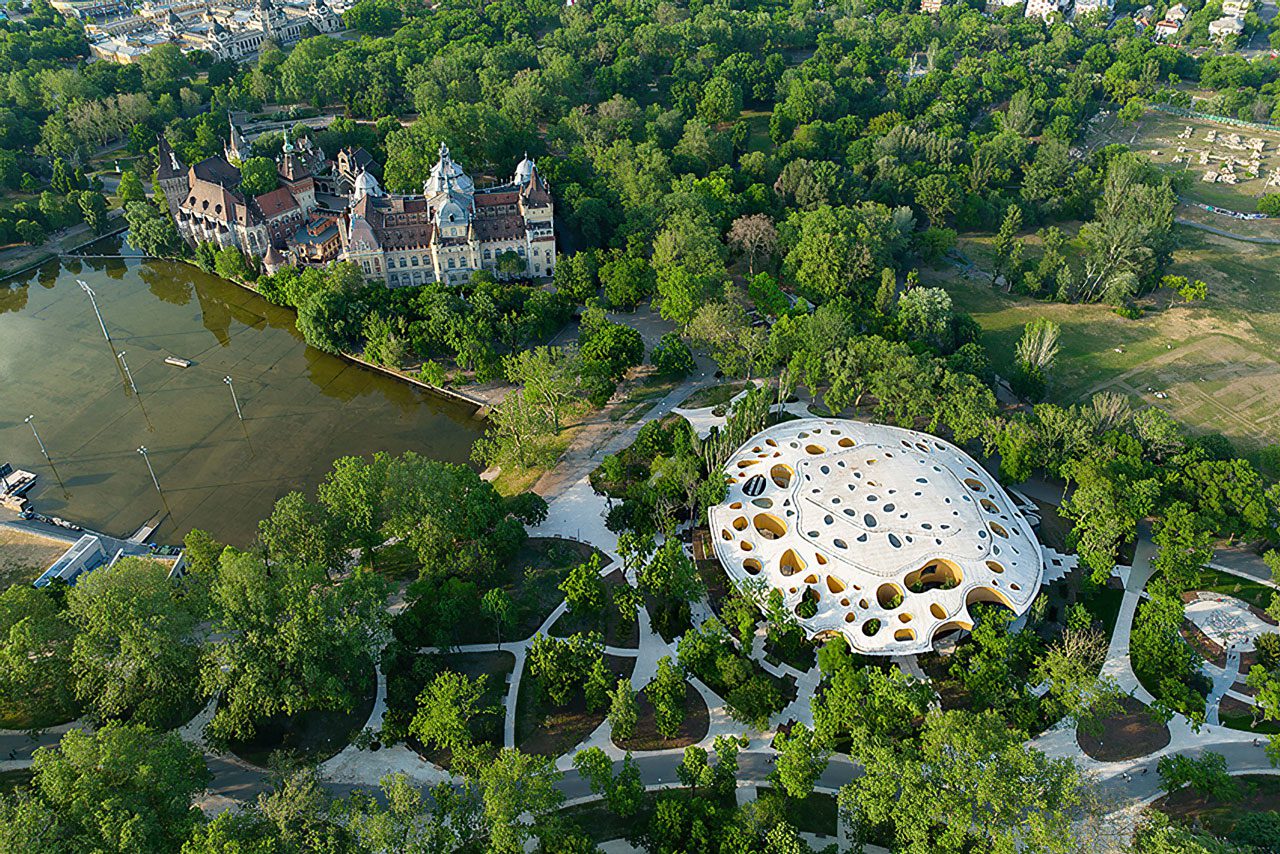
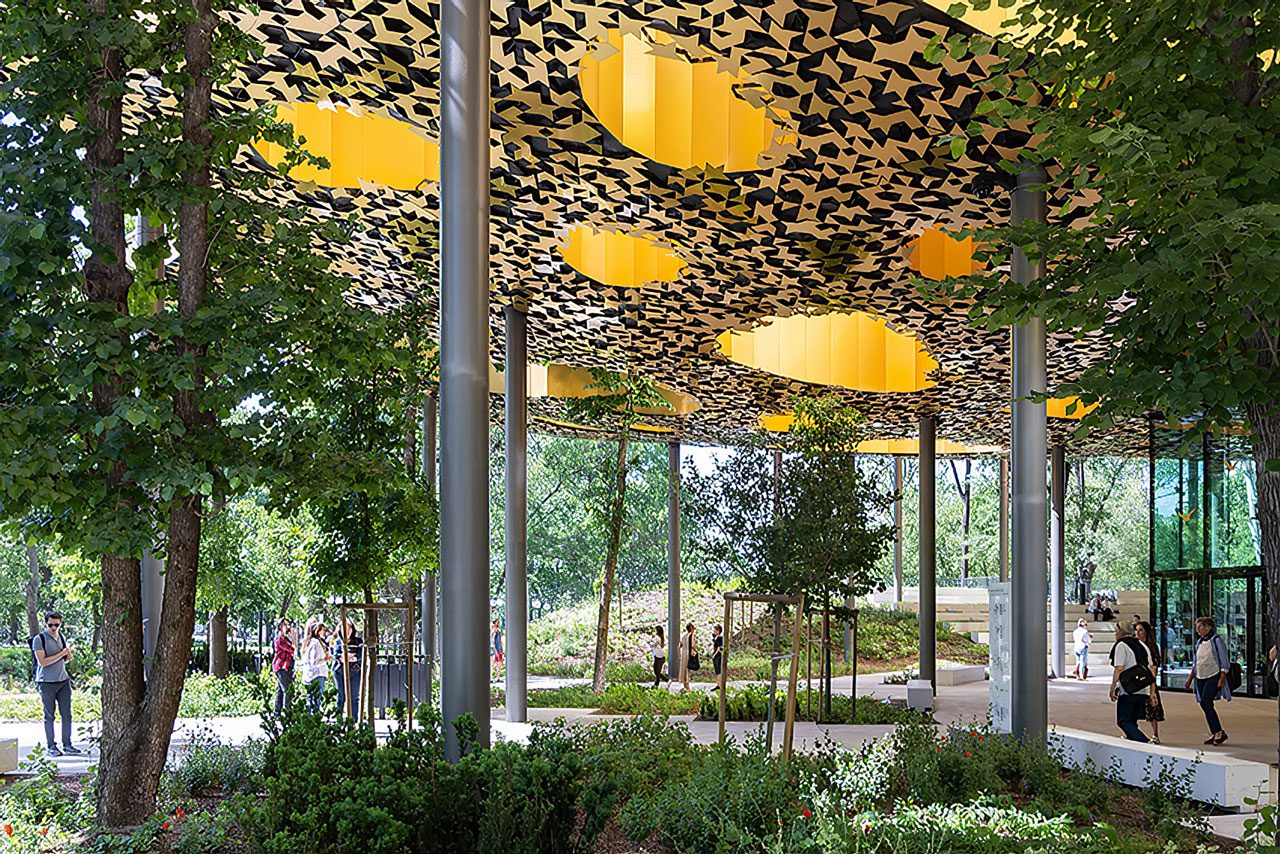
The exhibition “Primordial Future Forest” is the first major survey of Fujimoto’s work. It provides a comprehensive overview in eight sections, covering everything from work in his early years to projects currently underway, and following his architectural journey over the past around thirty years, the features of his architecture, and the philosophy behind it. It takes advantage of the venue’s expertise as a contemporary art museum, allowing anyone, not just people working involved in architecture, to physically experience the essence of Fujimoto’s oeuvre by including exhibits such as installations and large-scale models that provide a spatial experience, as well as a mock-up. These complement conventional exhibits like scale models, plans, and photos of completed projects. The thickly wooded landscape of Hokkaido is archetypal scenery for Fujimoto, who grew up in Higashikagura, a town lush with nature adjacent to Asahikawa in Hokkaido Prefecture. Seeing “a similar loose order amid the confusion” of the complex network of roads in a huge metropolis like Tokyo and situations in which a wide variety of things coexist, he finds elements of the forest there as well. Both the forest, which consists of small branches and leaves, and the city, with small things like flowerpots, bicycles, and billboards that exist along alleyways, are on a human scale. Forests and cities both have multiple layers, and they are both places where life comes into being and goes through the cycle of life and death. But forests are primordial, existing since long before the birth of humankind. The concept of the forest is one of the key factors central to Fujimoto’s creative practice, and is embodied in his work in many forms throughout his career. Fujimoto sees this concept as a model for future architecture and for the future of society. Inspired by that sentiment, the exhibition title includes both primordial and future in its theme: “Primordial Future Forest.” With The Aomori Museum of Art Design Competition Proposal submitted in 2000, the then-unknown Fujimoto won high praise from the likes of architect Toyo Ito. He was awarded second place, suddenly thrusting him onto the architectural scene. He went on to design a series of prominent projects, including the Musashino Art University Museum & Library, featuring bookshelves aligned in a spiral pattern based on the concept of a forest of books, the Serpentine Gallery Pavilion 2013, consisting of white steel poles assembled into a three-dimensional, latticed structure, the L’Arbre Blanc (The White Tree), a housing complex featuring large balconies resembling leaves spreading out from a tree, and House of Music, Hungary, a music-focused cultural complex that blends in with the greenery of a park, blurring the lines between nature and architecture. He is currently working on a number of projects, including the International Center Station Northern Area Complex in Sendai, Japan (scheduled for completion in 2031), and providing designs for mixed-use urban developments in Europe. This survey show offers an overview of his architectural journey over the past around thirty years in eight sections, covering everything from work in his early years to projects currently underway. The show presents The Grand Ring project that has become the symbol of Expo 2025 Osaka, Kansai, Japan. Fujimoto is serving as Site Design Producer for the Expo. This exhibition zeros in on the Ring concept from a variety of perspectives throughout the galleries, including the 1:5 model of part of the Ring, photographic records of its exterior, project materials ranging from the Ring’s original conception to its completion, and a model of the Ring included in the large the Forest of Thoughts (2025) installation.
Structure of the Exhibition. Forest of Thoughts: This installation showcases over 100 of Fujimoto’s projects, from work in his early years to projects currently being planned. In a large space of over 300 square meters, myriad models, materials, objects that are fragments of ideas, and other items that together represent Fujimoto’s entire oeuvre are arrayed chronologically to create a forest that reflects three genealogies at the core of his architecture: “open boundaries” that should be closed, but are open to the outside; “amorphous” ̶the way spaces are invariably ambiguous and equivocal in their nature and purpose; and “many many many”̶ the myriad parts that go into any single building. Forest of Tracks – Chronology: Created under the supervision of Kurakata Shunsuke, this exhibit provides a chronological overview of Fujimoto’s career. It covers 96 projects undertaken by him since graduating from the University of Tokyo in 1994, including those still in the planning stage. To aid comprehension of the historical context of Fujimoto’s architecture, this chronology includes major buildings in Japan and by Japanese architects completed during the same period, along with architectural and societal milestones in Japan and worldwide. This section also includes Fujimoto quotes and sayings that convey what he was focused on at various times in his career, a slideshow of his architectural photographs, and video footage of an interview with him. Book Lounge of Awai (In-Between): Based on the concept of Awai (In-Between), this book lounge is set in a gallery space with windows offering a view of the city outside. It features forty books selected by Haba Yoshitaka for the way they resonate with Fujimoto’s architecture and categorized into the five themes of “Forest Nature and the City ,” “Chaos and Order,” “Memories of the Earth,” “Overlapping Voices,” and “Uncompleted Landscapes.” Each book is placed on its own seat, which displays fragments from the book to hint at what it is about. Visitors, perhaps caught between reading and not reading, can immerse themselves in the written word or pause to rest and gaze out on the urban landscape that Fujimoto has often likened to a forest. The Animated Forest: In this exhibit, animation representing the movements of building users and residents is projected onto models of buildings. Intended to focus on the movements of people rather than architecture itself, this section introduces five projects, with accompanying architectural drawings, including BEM Bâtiment d’Enseignements Mutualisés—New Learning Center for Polytechnic University (2023, Saclay, France) designed to bring students together to interact and get to know each other, T house (2005, Gunma, Japan) designed to connect family members together while allowing them to be separate, and UNIQLO PARK (2020, Kanagawa, Japan), a paradise for children who scramble with glee over its slopes and other features. Open Circle: Featuring an over-four-meter-high 1:5 scale model of part of The Grand Ring for Expo 2025 Osaka, Kansai (2025), the centerpiece of the Expo and the world’s largest wooden structure, this exhibit explores the Ring from various perspectives, including conception stage sketches, documentation photographs, a mock-up showcasing the traditional Japanese nuki column-beam joinery used in the Ring, and video footage of an interview with Fujimoto. Focusing on the concept of an open circle that, with its contrasting centripetal and divergent qualities, serves in Fujimoto’s worldview as a metaphor for bonds that transcend division, the exhibit also displays models of the House of Music Hungary and eleven other projects reflecting the same concept. Stuffed Architecture Talks: Nine architectural works by Fujimoto, including L’Arbre Blanc (The White Tree), and the Temporary Hall for the Dazaifu Tenmangu (2023, Fukuoka, Japan), are represented in this installation as stuffed toys engaged in conversation. The toys each have different personalities—such as cheerful and outgoing or quiet and serious—and they share humorous perspectives on each other’s architecture. Their conversations reveal characteristics of each project and the contexts in which the projects emerged. This section also displays many sketches drawn by Fujimoto. A Forest / Many Forests: Fujimoto’s design for the International Center Station Northern Area Complex (Sendai) , a multi-purpose complex that will house concert halls and serve also as an earthquake memorial, was selected by competition in 2024. This exhibit displays a large 1:15 scale suspended model of the winning design that gives viewers an appreciation of its structure, together with study models and other materials that reveal how the concept of “many/one echo(es)” was given concrete form in the design process. To help provide a comprehensive understanding of Fujimoto’s architecture, the exhibit is further embellished with project models reflecting his concept of “diverse and unified”, together with relevant video footage of an interview with Fujimoto and concept drawings of his seventy major projects. Forest of Future, Forest of Primordial – Resonant City 2025: This proposal of futuristic city was conceived by Fujimoto and Miyata Hiroaki. The city of the future, represented through models and moving images, is a complex combination of spherical structures of various sizes, all within an overall height of about 500 m. It will be equipped with the necessities of urban life including housing, schools and offices. Like a forest, the city has no absolute center, with the spheres opening in multiple directions to connect with each other in three dimensions, thereby creating a new community paradigm in which people are interlinked in multiple layers.
Photo: Sou Fujimoto, L’Arbre Blanc (The White Tree), 2019, Montpellier, France, Photo: Iwan Baan
Info: Curators: Kondo Kenichi & Tsubaki Reiko, Mori Art Museum, 53F, Roppongi Hills Mori Tower, 6 Chome-10-1 Roppongi, Minato City, Tokyo, Japan, Duration: 2/7-11/9/2025, Days & Hours: Tue 10:00-17:00, Wed-Sun 10:00-22:00, www.mori.art.museum/

Right: Sou Fujimoto, Shenzhen Museum (Shenzhen Reform and Opening-Up Exhibition Hall) Scheduled for completion in 2027, Shenzhen, China, © Sou Fujimoto Architects & Donghua Chen Studio