
TRIBUTE: Terraphilia
In what ways can love reshape how we live with the Earth? The group exhibition “Terraphilia” invites us to reimagine our place on the planet—not as sovereigns or distant observers, but as companions in a shared world. Through art, philosophy, and ancestral knowledge, this exhibition explores how love of/for the Earth is a way of being and participating that can inspire justice, community, and care across species and time.
By Dimitris Lempesis
Photo: TBA21 Archive
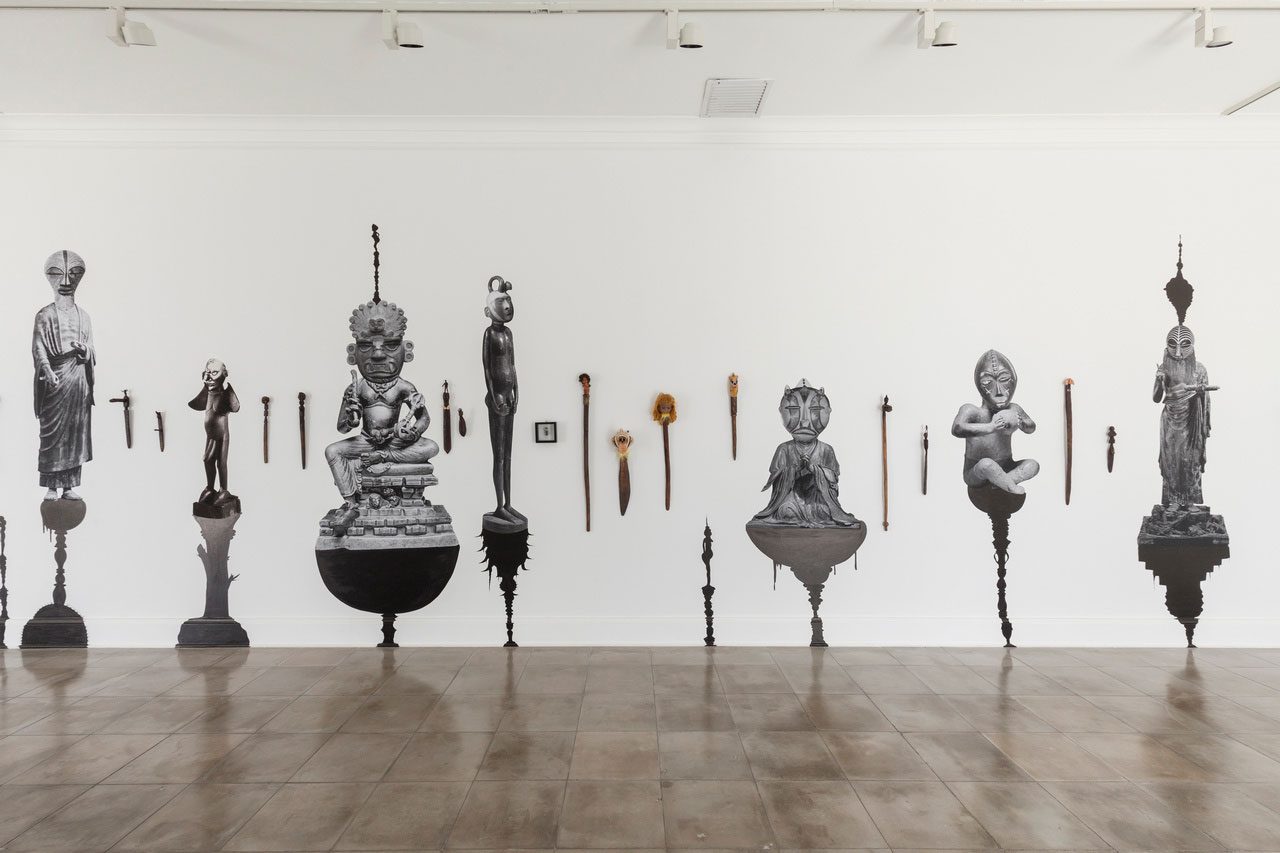
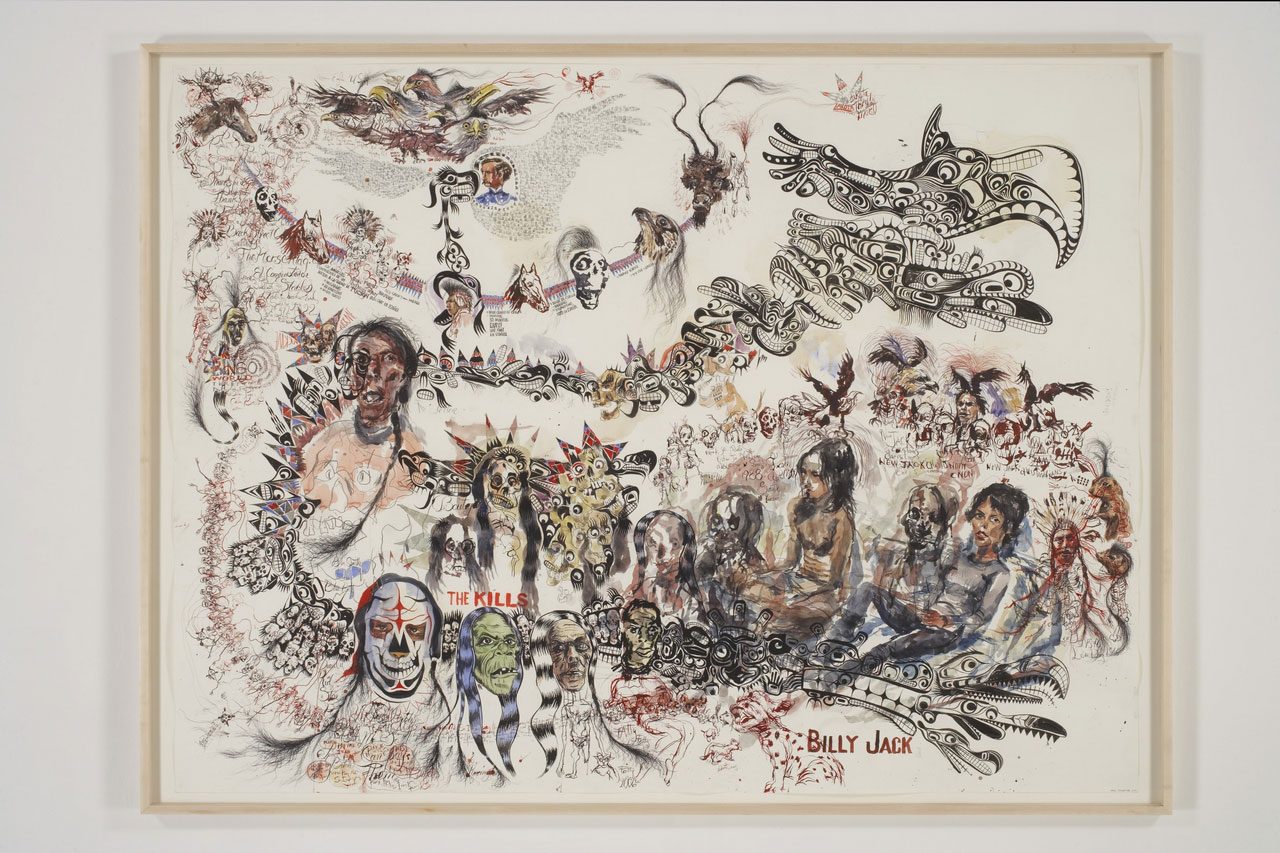
The term “Terraphilia” stems from the Greek philia (love) and Latin terra (Earth)—describes more than an affection for nature. It articulates an intimate, ethical, and transformative relationship with the planet: a love rooted not in romanticism or personal sentiment, but in care, commitment, and responsibility toward all forms of life—human and more-than-human alike. This concept resonates with deep philosophical lineages. The medieval mystic Ramon Llull envisioned love as a divine, cosmic force binding all things—from roots to branches, from animals to stars. Philosopher Hannah Arendt later offered amor mundi, “love of the world,” as a civic imperative: the foundation for community, plurality, and meaning. Yet in both views, Earth remained largely a passive backdrop rather than a participant in love. In response, contemporary thinkers like Malcom Ferdinand propose a powerful alternative: the “World-Ship”—a shared vessel holding not just humans, but animals, plants, ecosystems, and historically excluded cultural worldviews. This metaphor reclaims the ship not as a symbol of conquest and empire, but as a space of cohabitation, memory, and possibility. “Terraphilia”, then, is not simply an idea. It is a poetic vision, a political practice, and a pedagogical tool. Through art, myth, ritual, and resistance, communities reclaim their place within the planetary commons, reshaping how we relate to Earth and each other. The exhibition is divided in chapters. Cosmograms: Across cultures, the idea of the cosmos emerged to express a primordial unity—an ordered totality in which every being has its place. Ancient cosmologies translated this into myths, rituals, symbols, and diagrams mapping the interdependence of all life. At the threshold of the exhibition, Dr. Lakra’s “Monomyth” welcomes visitors into this expanded cosmos: a riotous parade of totemic figures—part animal, part human, part spirit. These hybrid beings disrupt categories and unsettle hierarchies through playful recombination and material mischief. Transformation is the rule here, inviting us to think otherwise. The Animated World: This chapter invites you to shift your perspective—from seeing Earth as static backdrop to recognizing it as alive, sentient, and teeming with relations. Drawing from science, Indigenous cosmologies, and storytelling traditions, it explores how life emerges through interconnection and mutual becoming. From fungi to foxes, bacteria to trickster spirits, the living world is animated by intelligence, intention, and reciprocity. What if we approached the Earth not as resource, but as kin?
The Art Of Dreams: Dreams have always served as portals to other realms, allowing humans to communicate with ancestors, spirits, and cosmic forces. This chapter invites you into that liminal space—where logic dissolves and meaning flows from shadow, transformation, and revelation. From visionary encounters to mystical epiphanies, dreaming is explored here as a radical act of knowing and resistance—one that reconfigures how we understand time, self, and the cosmos. The Objective World: Modern science sought to fix nature in place—to observe, name, classify, and control it. But within this rational order lies a history of exclusion: of what was deemed unknowable, unmeasurable, or unworthy of attention. This chapter interrogates the desire to dominate the world through detached observation. What gets lost when we freeze life into categories? And what other ways of knowing remain just outside the margins, waiting to be remembered? Terra Infirma: Here, the ground itself becomes a site of memory—a living archive of displacement, resistance, and renewal. This chapter challenges inherited notions of land as property, revealing how the Earth bears the marks of colonization and extractive violence. Through totems, soil samples, creation stories, and protest rituals, the artworks reclaim land as relation, not possession—calling for a new ethic of reciprocity and care. The Return Of The Time Of The Myth: Myths are not relics of the past. They are active forces shaping identity, cosmology, and survival. This chapter explores myth as a tool for world-making—a way to hold memory, transmit wisdom, and navigate transformation. Here, ancestral figures, spirits, and shapeshifters guide us through thresholds of crisis and change, inviting us to dwell in the space between the known and the unknown. Oceanic Cosmogonies: All life begins in water. Oceanic creation stories—from Pacific islander narratives to contemporary marine science—speak of motion, connection, and fluid origins. This chapter invites you to enter the world through the perspective of the sea: to feel with the currents, breathe with the algae, and carry ancestral memory in every salt droplet. Water becomes the storyteller, the carrier of life, and the mirror of interbeing. whereareWEarewhere (by Sissel Tolaas): Commissioned by TBA21, Sissel Tolaas transforms the exhibition into a multisensory landscape through scent. Six elemental olfactory compositions—Ocean, Animal, Human, Stratosphere, Earth, and Nature—are housed in hand-blown glass vessels dispersed throughout the space. These “smellscapes” animate memory, emotion, and atmosphere, forging sensory connections that bypass language and logic. They blend invisibly with the visual elements, altering how the exhibition is felt, navigated, and remembered—reminding us that knowing the world also means breathing it in. “Terraphilia” is both invitation and intervention. It offers tools to imagine otherwise, to relate deeply, and to return—again and again—to the living Earth as teacher, partner, and beloved.
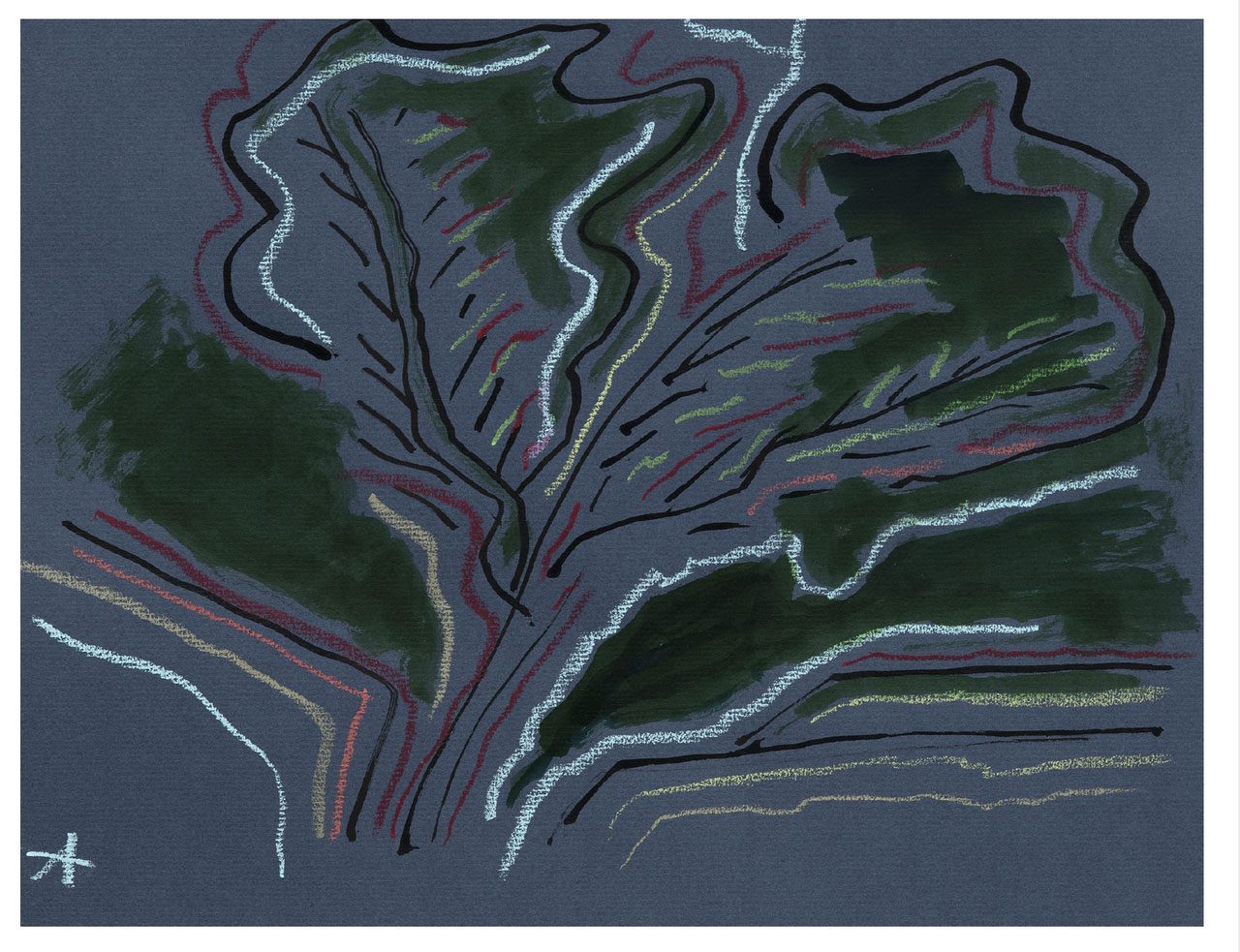
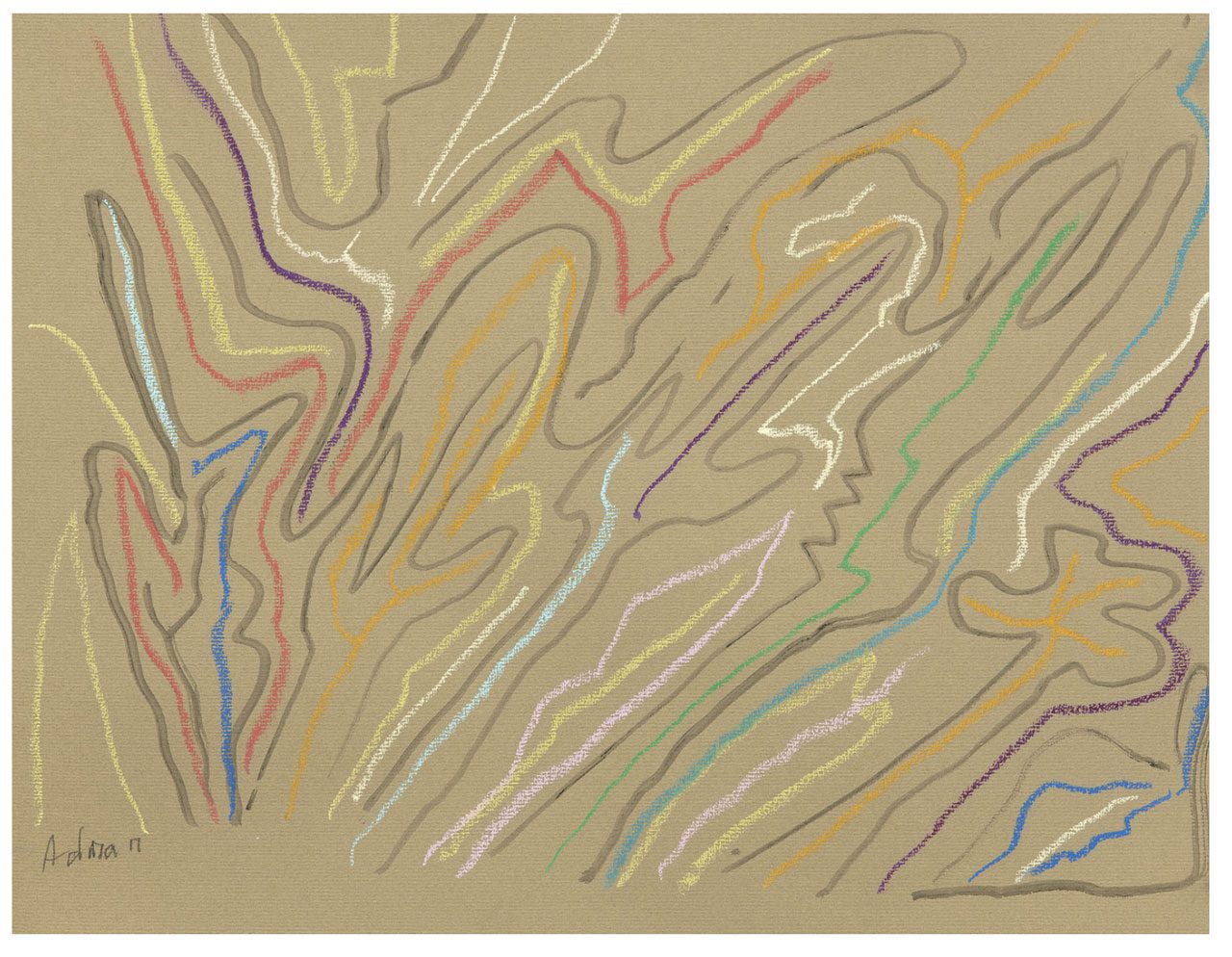
Works by: Etel Adnan, Hans Baldung Grien, Albert Bierstadt, Willem Jansz. Blaeu (workshop), John Bock, Dineo Seshee Bopape, Arthur Boyd, Georges Braque, Jan Brueghel the Elder, Charles Ephraim Burchfield, David Burliuk, Frederic Edwin Church, Tiago Carneiro Da Cunha, Thomas Cole, Salvador Dalí, Edgar Degas, Diego Delas, Mark Dion, Olafur Eliasson, Elyla, Tracey Emin, Max Ernst, Domenico Fetti, Caspar David Friedrich, Natalia Goncharova, Francisco de Goya, Petrit Halilaj, Johnson Martin Heade, Ayrson Heráclito, Jan Jansz. van der Heyden, Carsten Höller, Melchior de Hondecoeter, Rashid Johnson, Brad Kahlhamer, Wassily Kandinsky, Franz Marc, Dr. Lakra, Sarah Lucas, Roberto Matta, Ana Mendieta, Regina de Miguel, Asunción Molinos Gordo, Gustave Moreau, Eduardo Navarro, Emil Nolde, Josèfa Ntjam, Georgia O’Keeffe, Daniel Otero Torres, Joachim Patinir, Diana Policarpo, Frans Jansz. Post, Naufus Ramírez-Figueroa, Auguste Rodin, Rachel Rose, Thomas Ruff, Roelandt Savery, Daniel Steegmann Mangrané, Akeem Smith with Jessi Reaves, Vivian Suter, Yves Tanguy, Sissel Tolaas, Charwei Tsai, Janaina Tschäpe, Mark Tobey, Rubem Valentim, Jan Wellens de Cock, Susanne Winterling, Hervé Yamguen, Inês Zenha
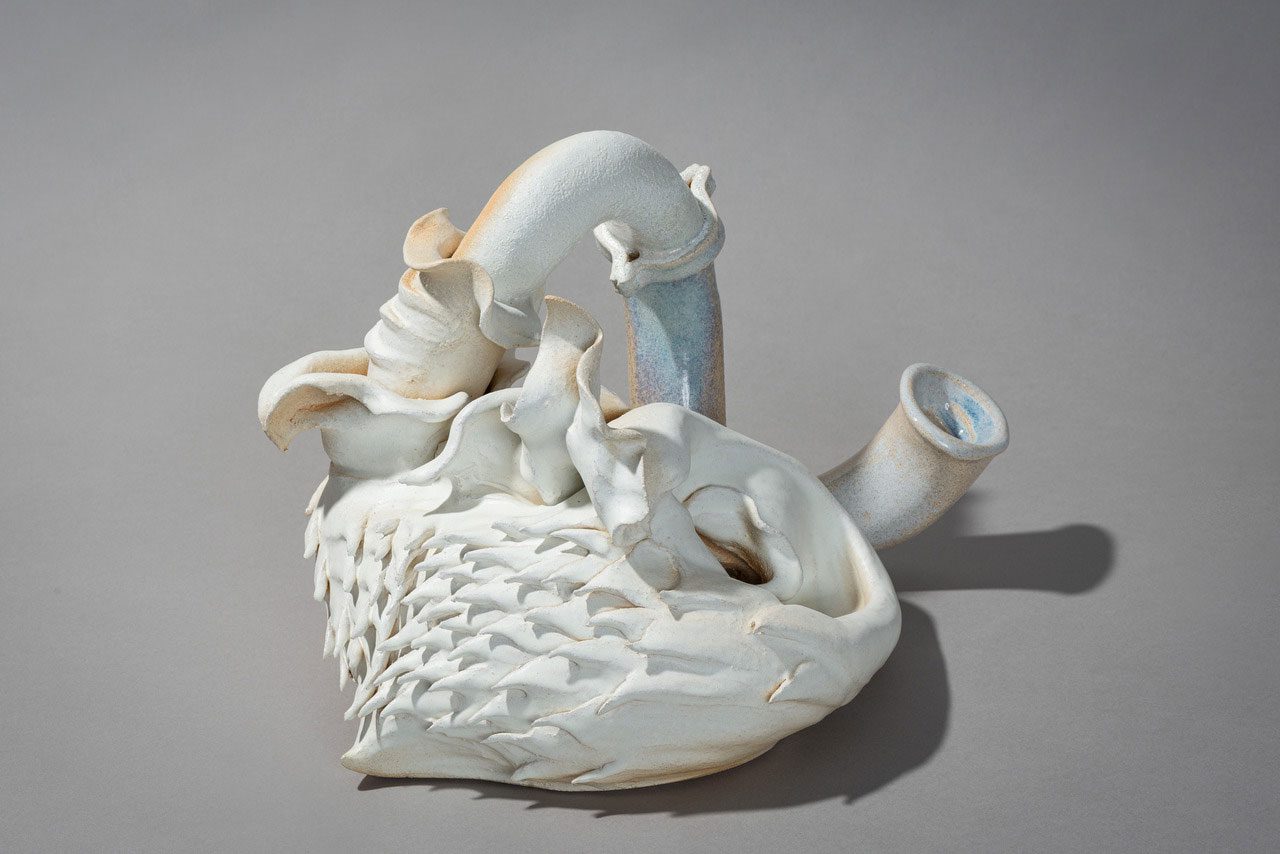
Photo: Inês Zenha, Swans only sing closely, 2024, David Bonet_MED, TBA21 Thyssen-Bornemisza Art Contemporary Collection
Info: Curator: Daniela Zyman, Curatorial Assistants: Álex Martín Rod & Elena Savater, Thyssen-Bornemisza National Museum, P.º del Prado 8, Madrid, -Spain, Duration: 1/7-24/9/2025, Days & Hours: Tue-Fri & Sun 10:00-19:00, Sat 10:00-23:00, https://tba21.org/
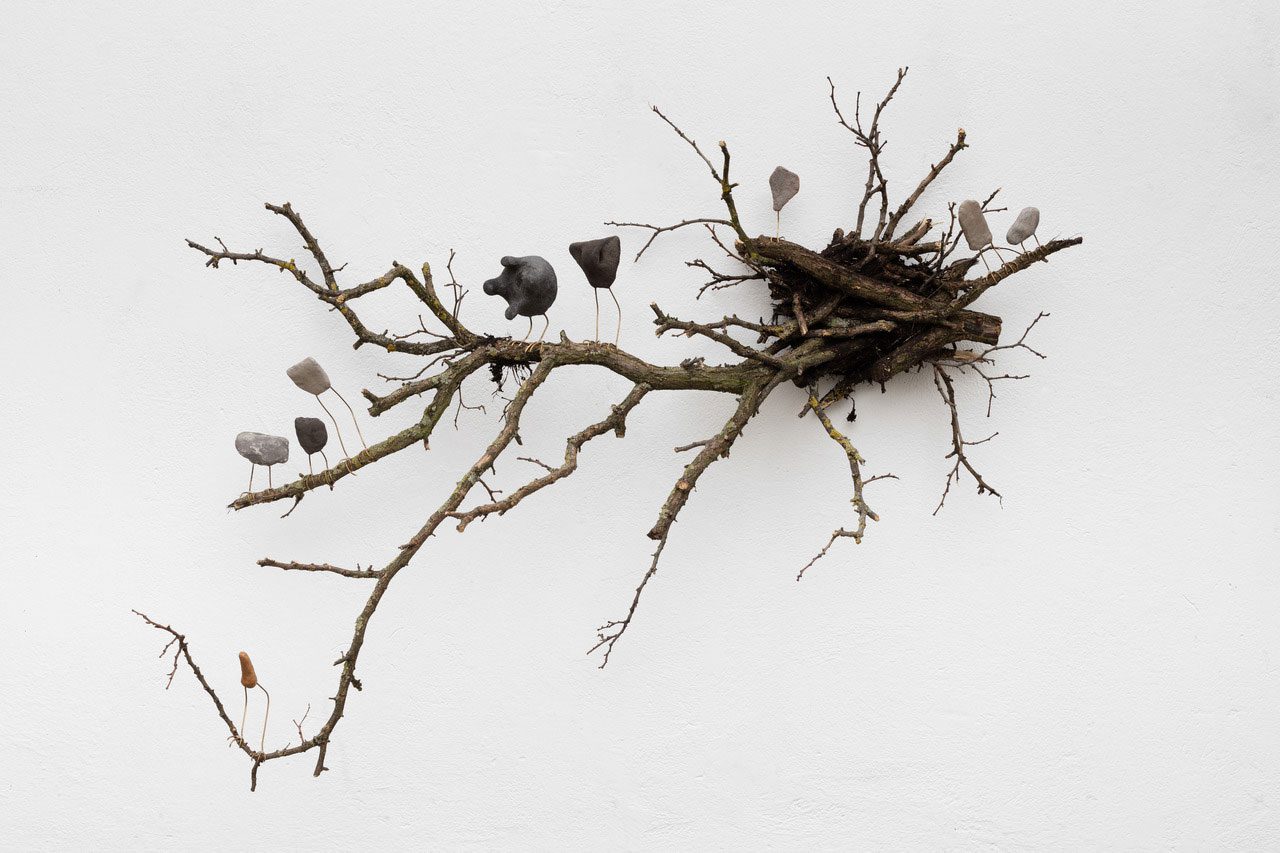
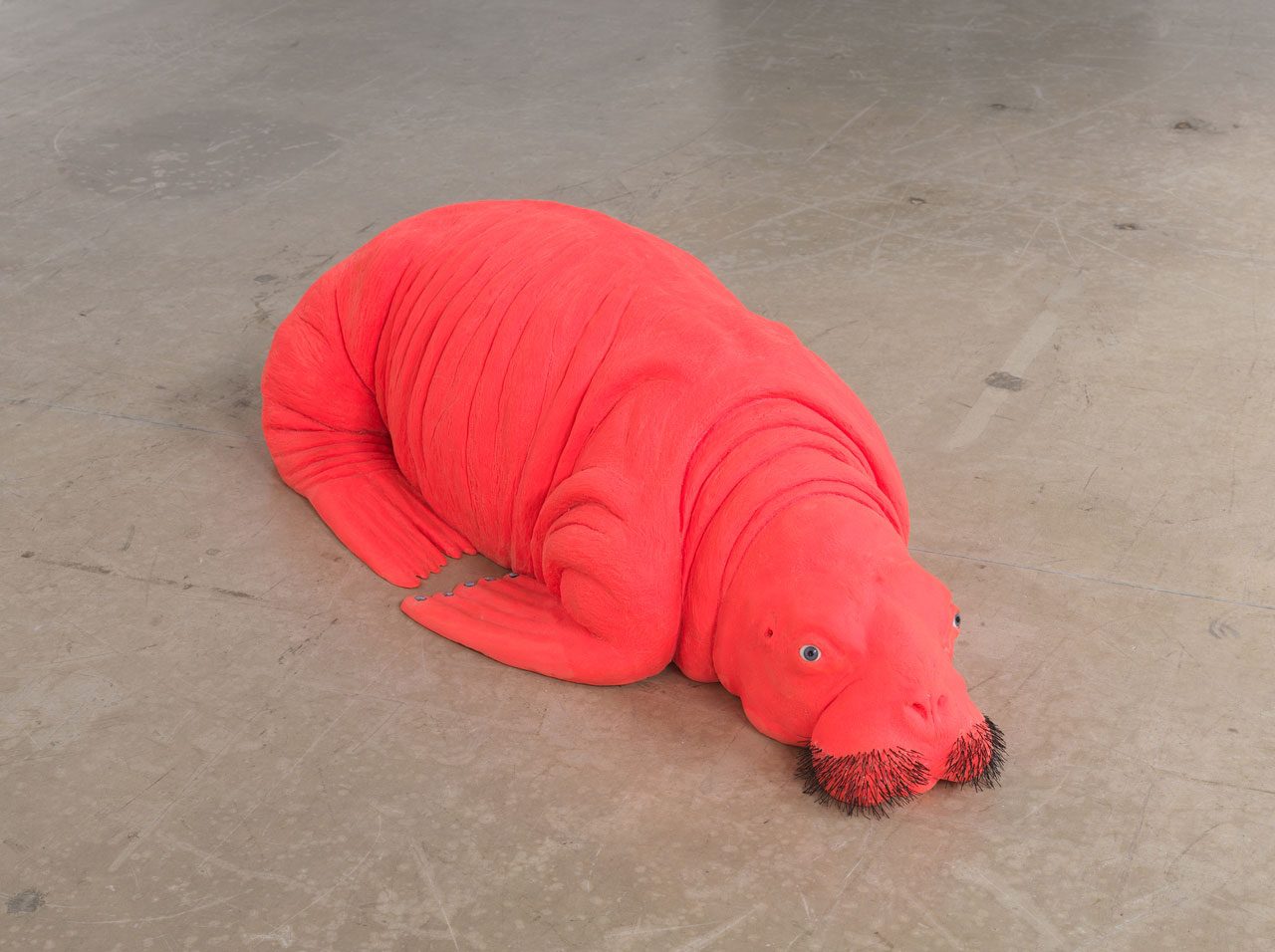
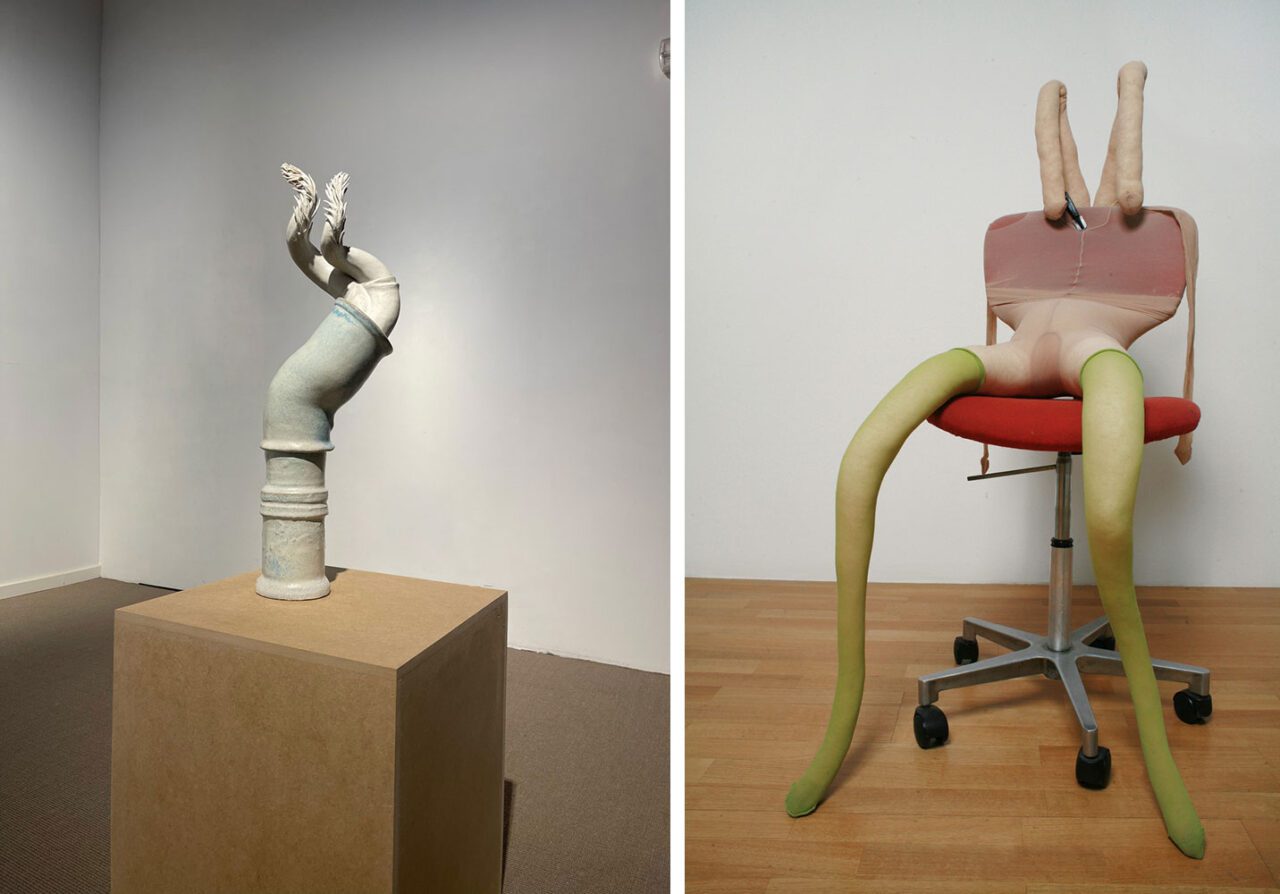
Right: Sarah Lucas, Bunny Gets Snookered #3, 1997, Tan tights, green stockings, red office chair, clamp, kapok, wire, 120 x 58 x 60 cm, TBA21 Thyssen-Bornemisza Art Contemporary Collection. Installation view: THIS IS NOT FOR YOU. Sculptural Discourses, Thyssen-Bornemisza Art Contemporary, Vienna, Austria, 2006-2007, Photo: Michael Strasser | © Bildrecht, Vienna, (2025)
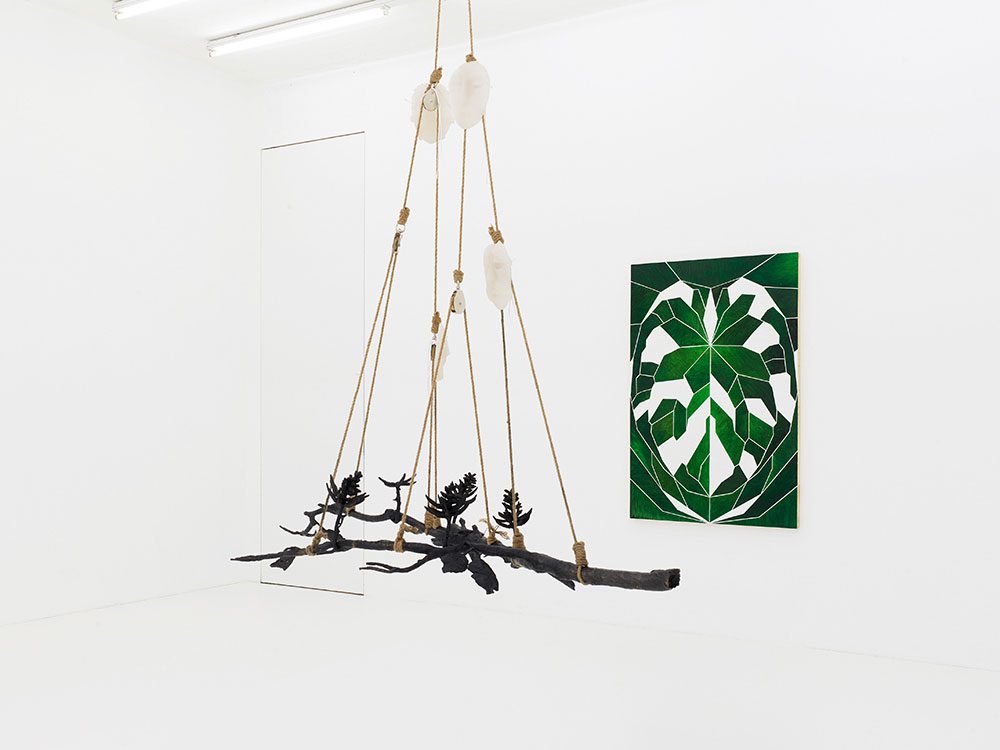
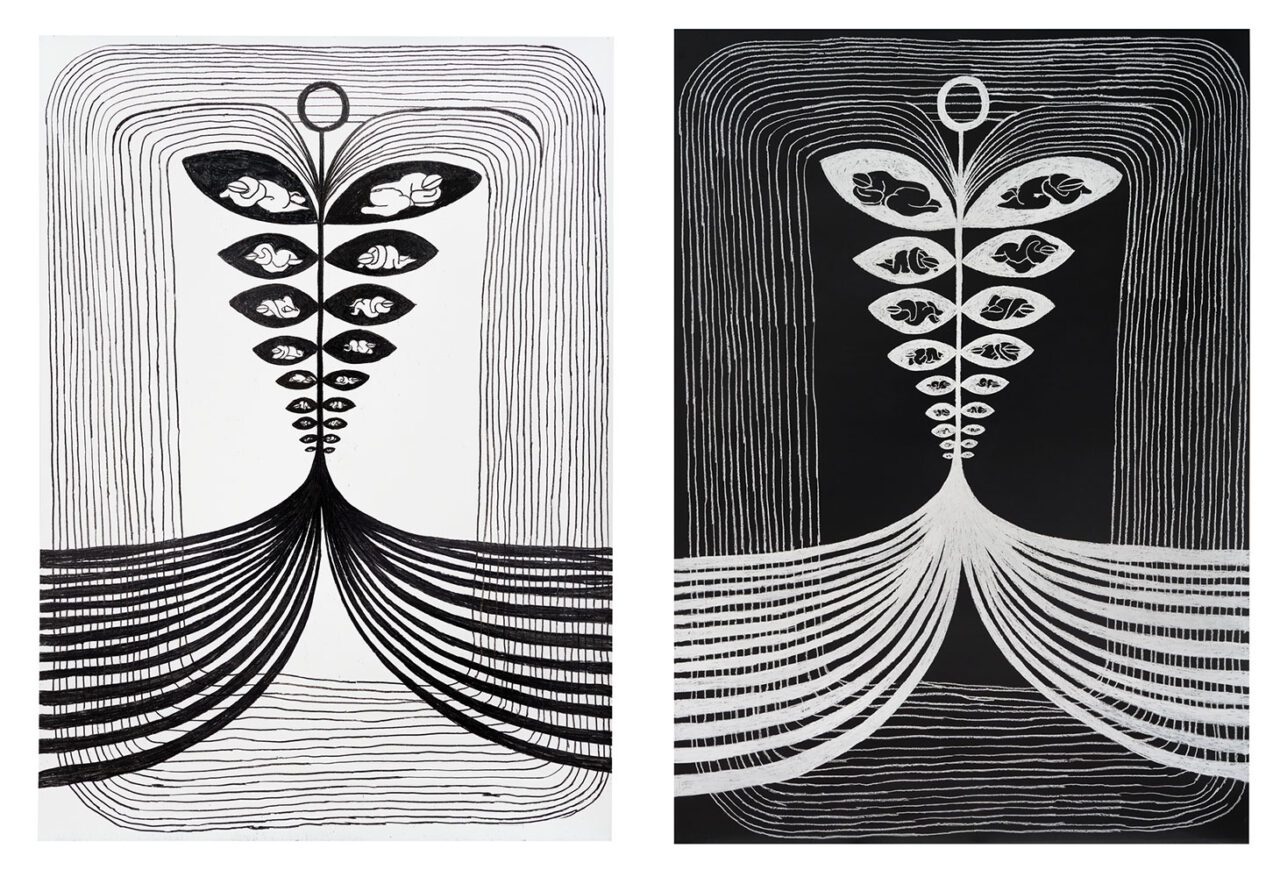
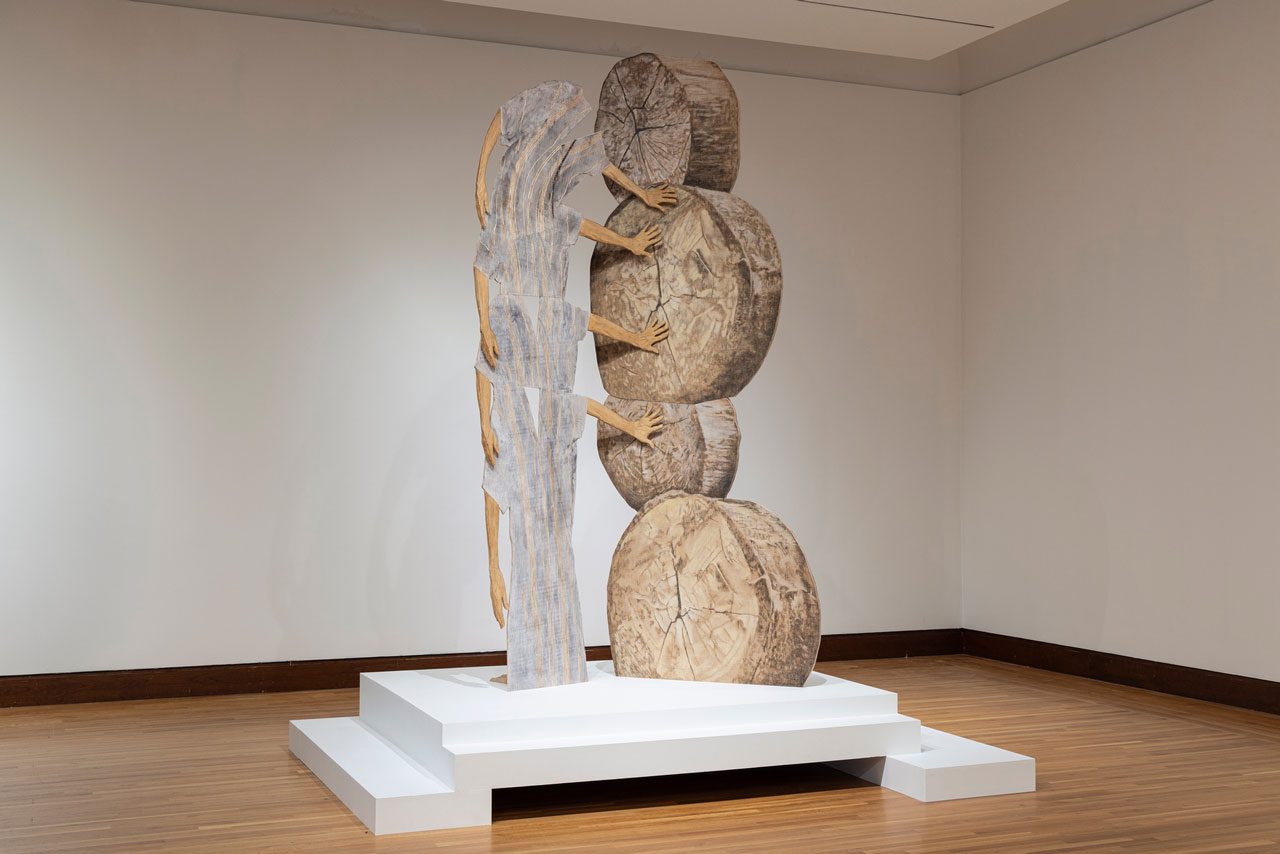
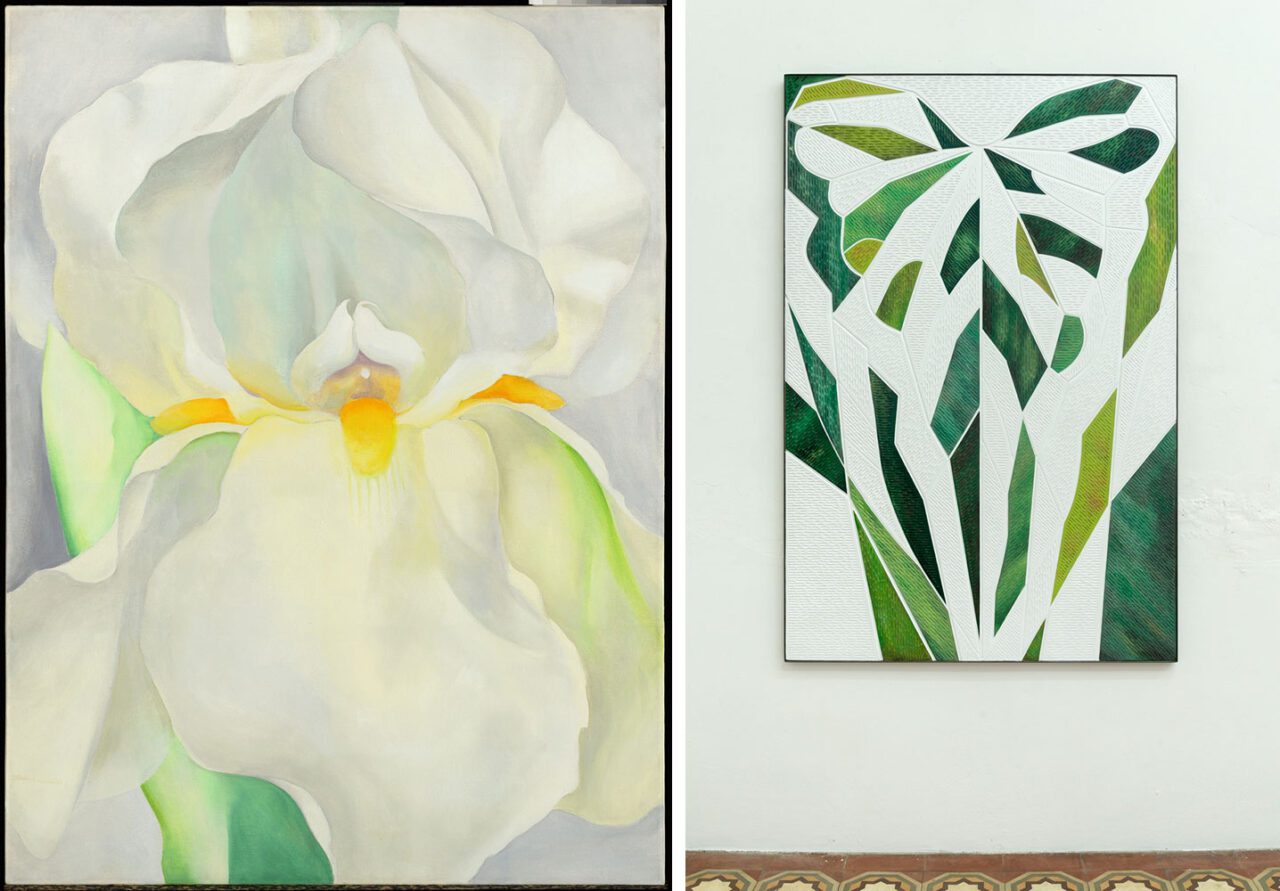
Right: Naufus Ramírez-Figueroa, Variación sobre hoja de Anturio # 7, 2023, Acrylic on carved wood panel with metal frame , 150 x 100 cm, TBA21 Thyssen-Bornemisza Art Contemporary Collection , Photo: Margo Porres | Courtesy the Artist and Proyectos Ultravioleta
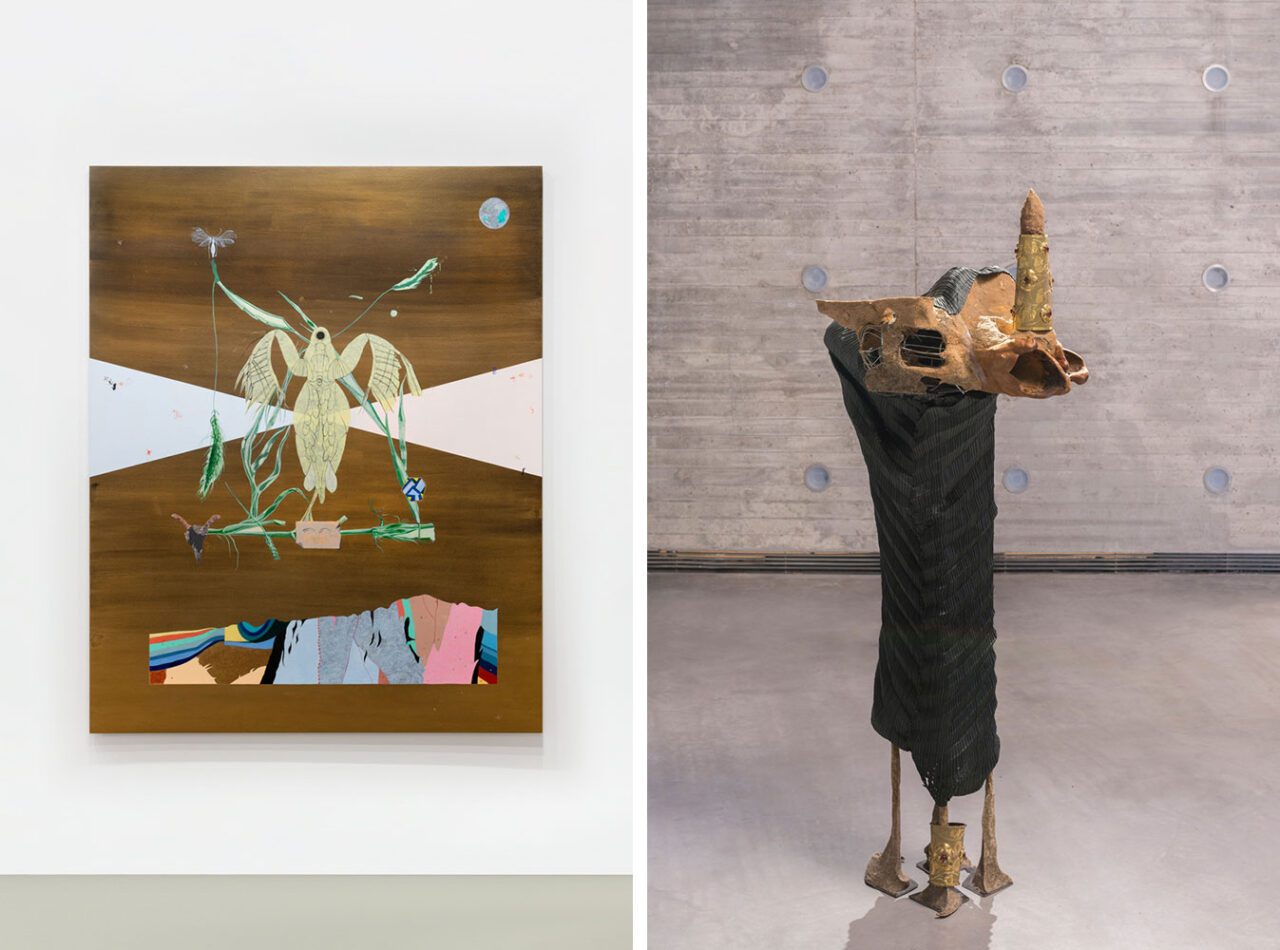
Right: Akeem Smith and Jessi Reaves, Mannequin (with dress) no. 2, Sandra Lee, 2005, 2020, Metal, sawdust, wood glue, wood, hardware, original garments, custom jewelry, 160 x 50.8 x 68.5 cm, TBA21 Thyssen-Bornemisza Art Contemporary, Installation view: Remedios: Por los caminos ancestrales, C3A Centro de Creación Contemporánea de Andalucía, Córdoba, Spain. Photo: Photo: Imagen Subliminal (Rocío Romero + Miguel de Guzman)
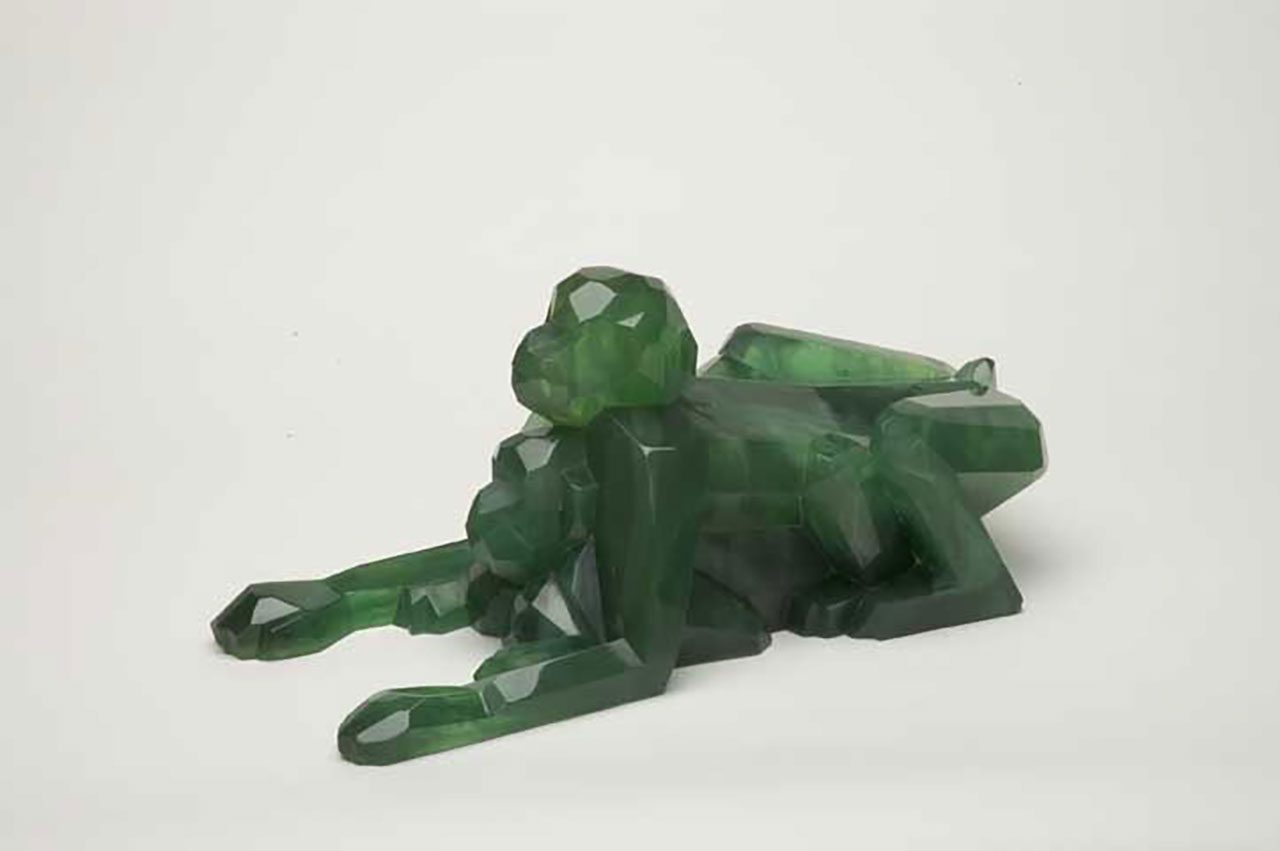
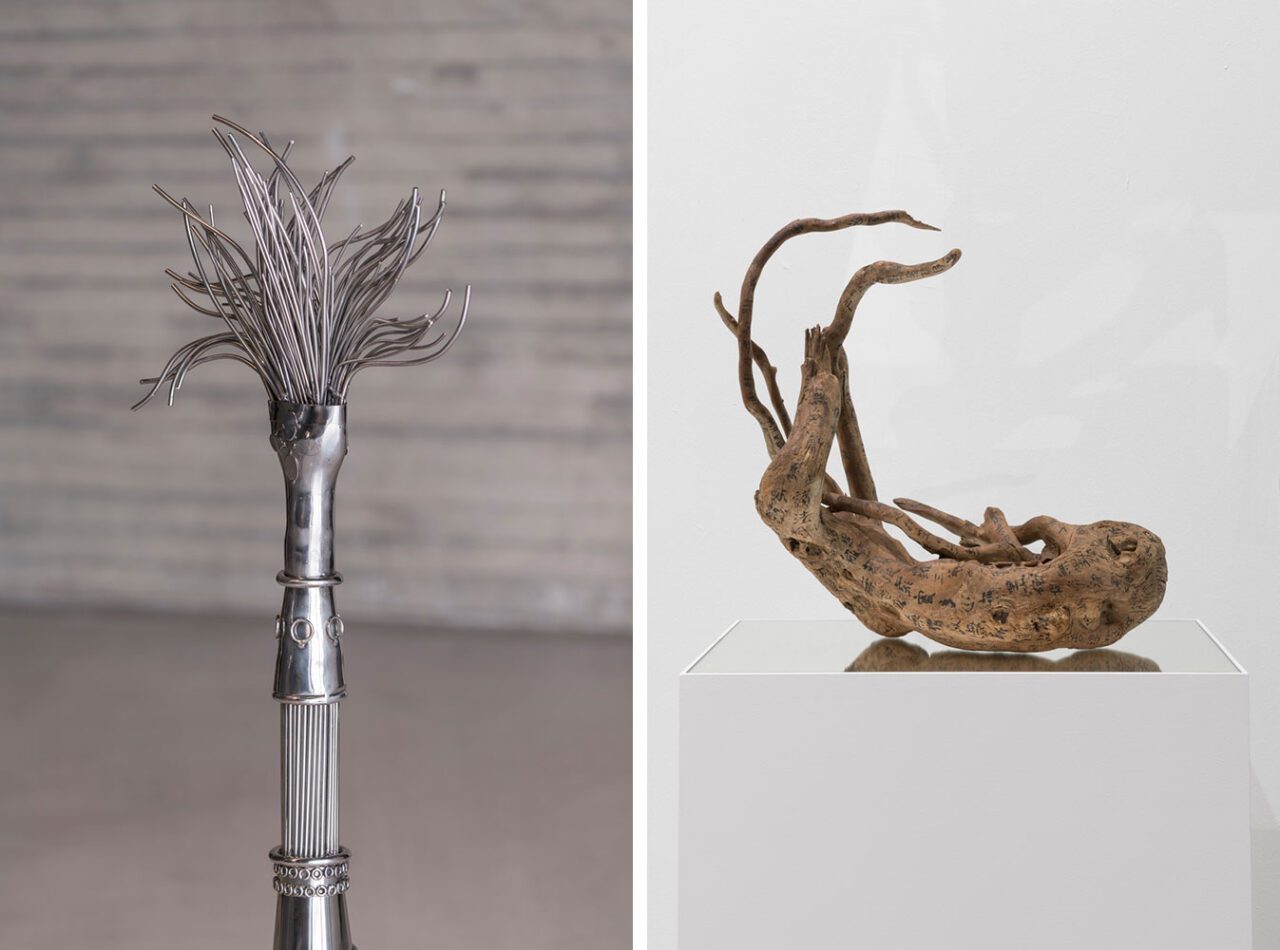
Right: Charwei Tsai, Driftwood Mantra, 2020, Ink on driftwood, on a mirror, 39 x 60 x 30 cm (sculpture), 55 x 35 x 80 cm (plinth with mirror plate), TBA21 Thyssen-Bornemisza Art Contemporary Collection, Photo: Roberto Ruiz | courtesy the artist and mor charpentier, Paris