PRESENTATION: Something in the Water
With a new, previously unseen production, the exhibition “Something in the Water” marks a new chapter in Oscar Tuazon’s “Water School” project, which explores the power dynamics that regulate access to the planet’s raw materials. Tuazon’s architectural projects are spaces for collaboration and learning, as well as places for working with other artists or with the audience. At MAXXI, Tuazon’s works interact with those of fourteen other artists.
By Dimitris Lempesis
Photo: MAXXI Archive
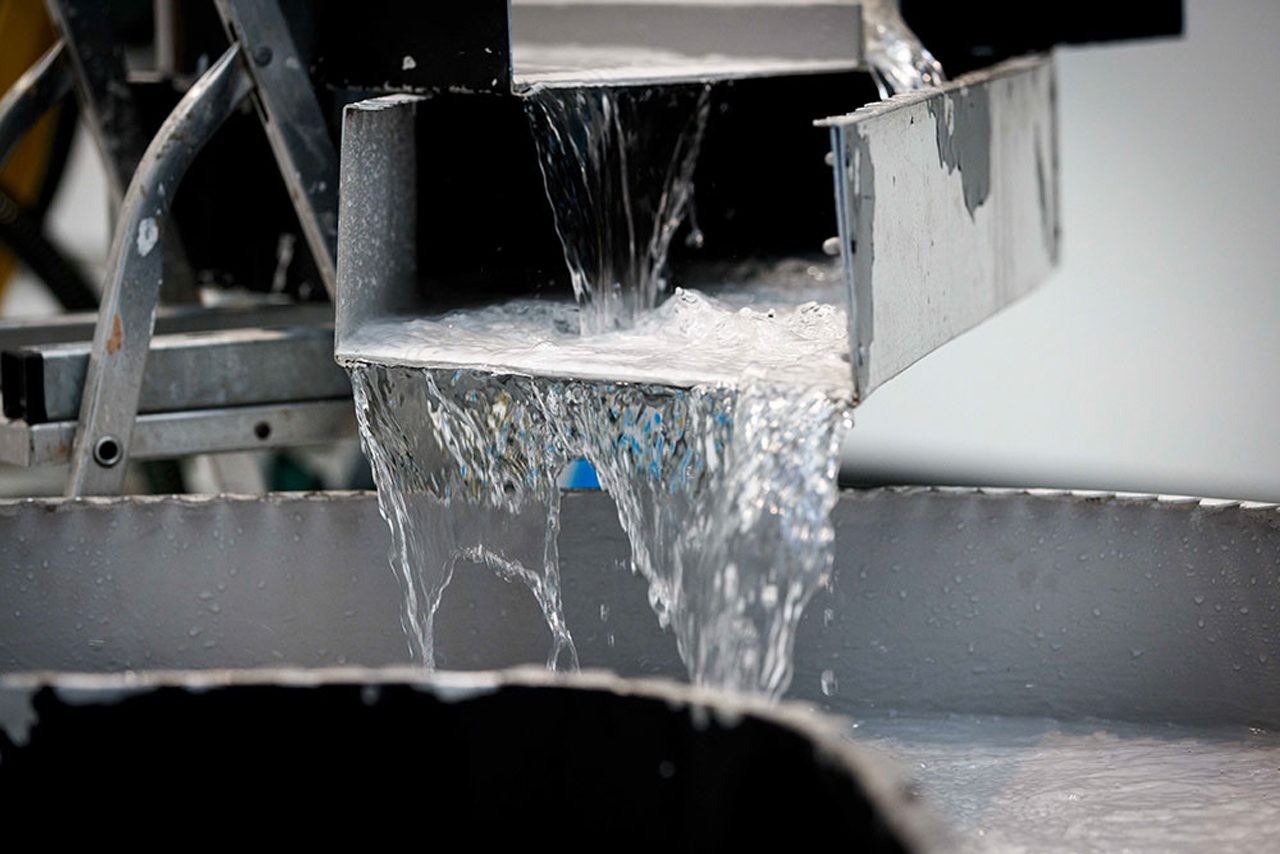
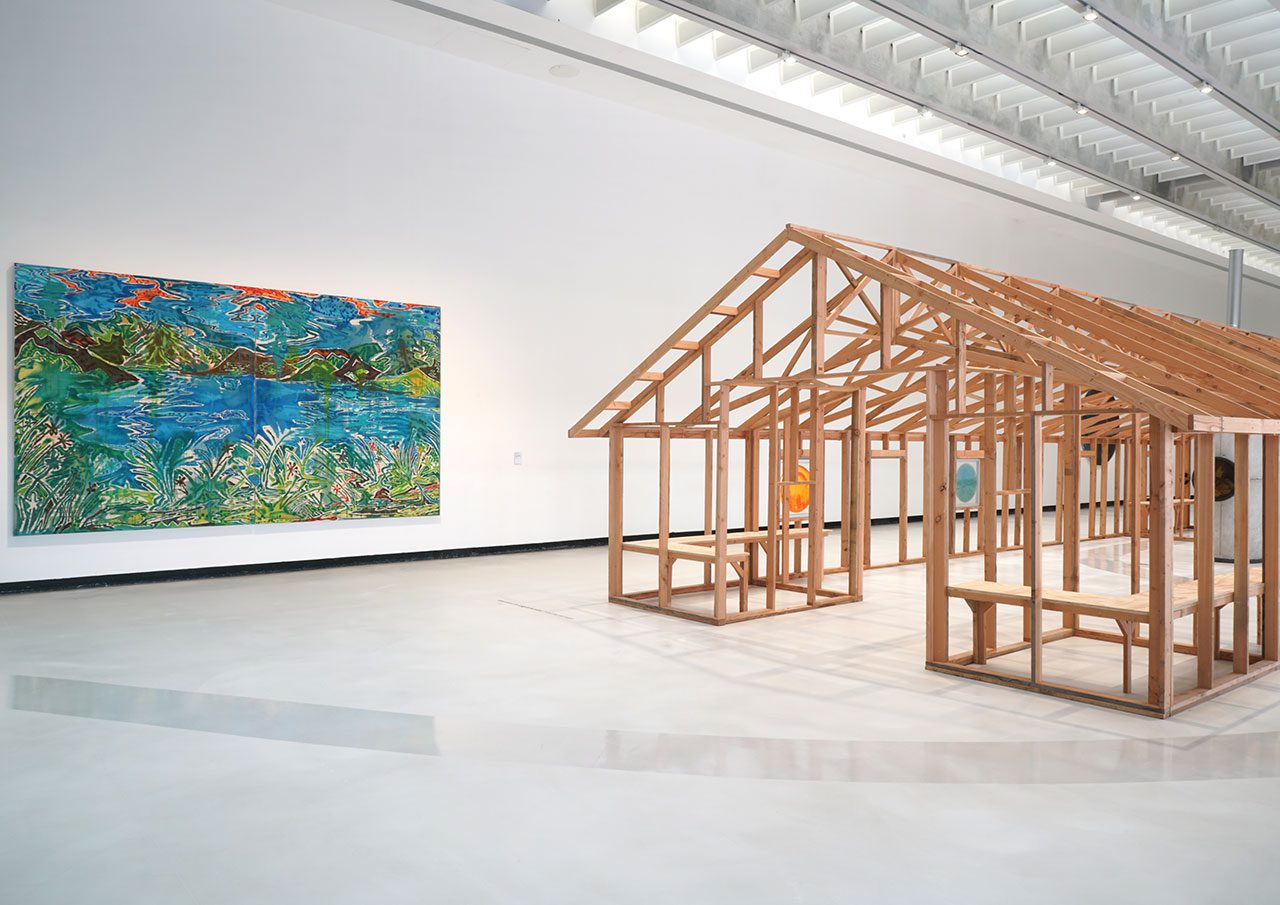
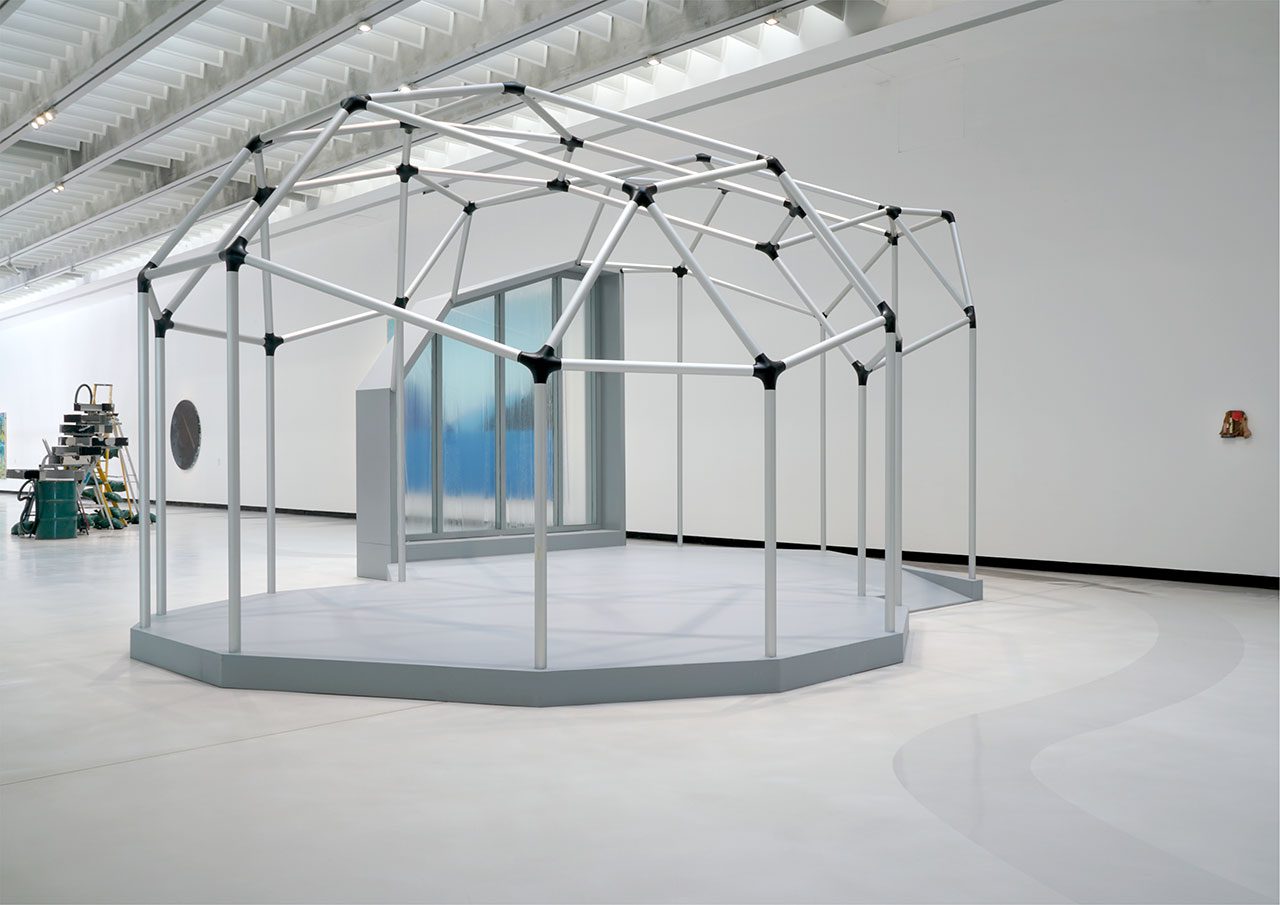
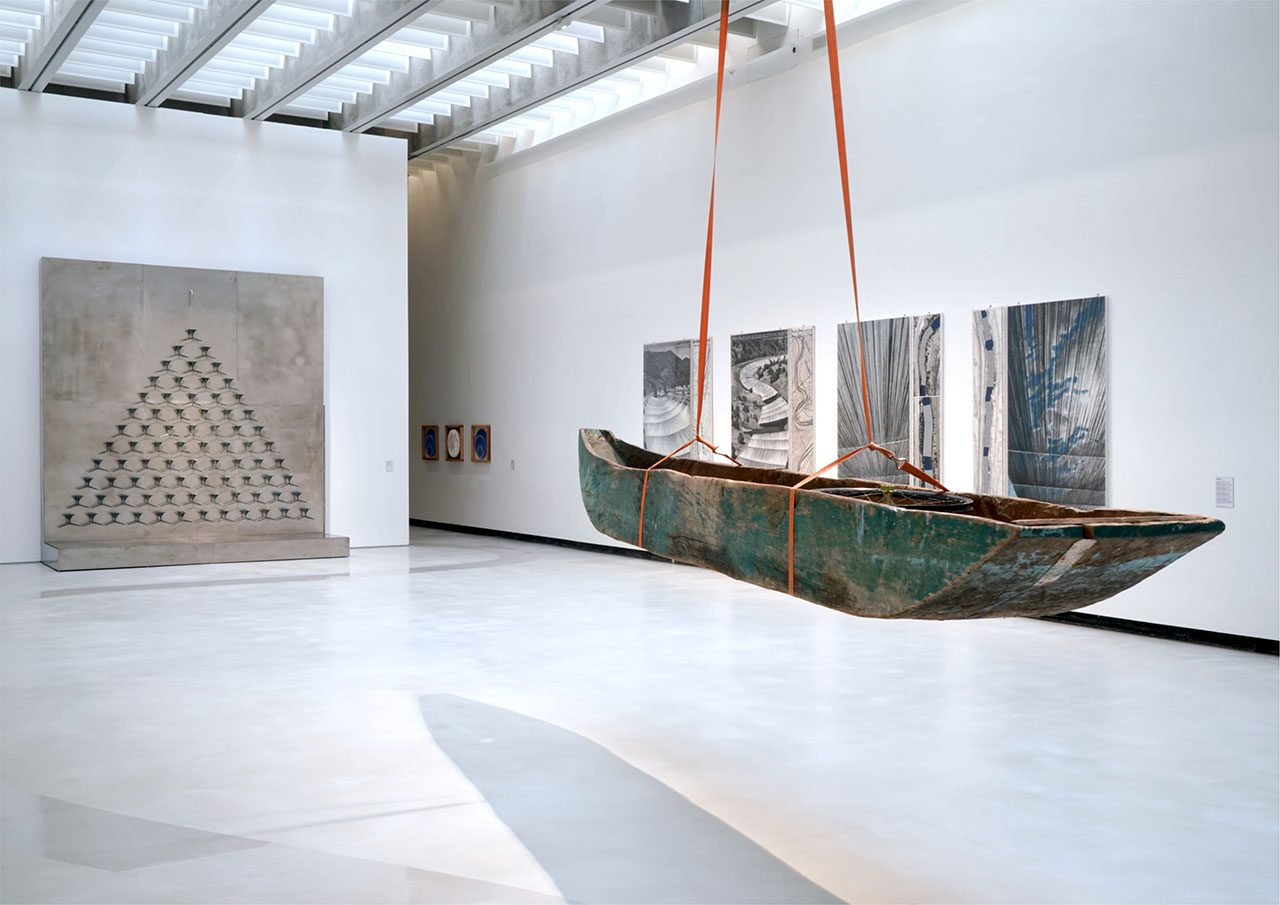
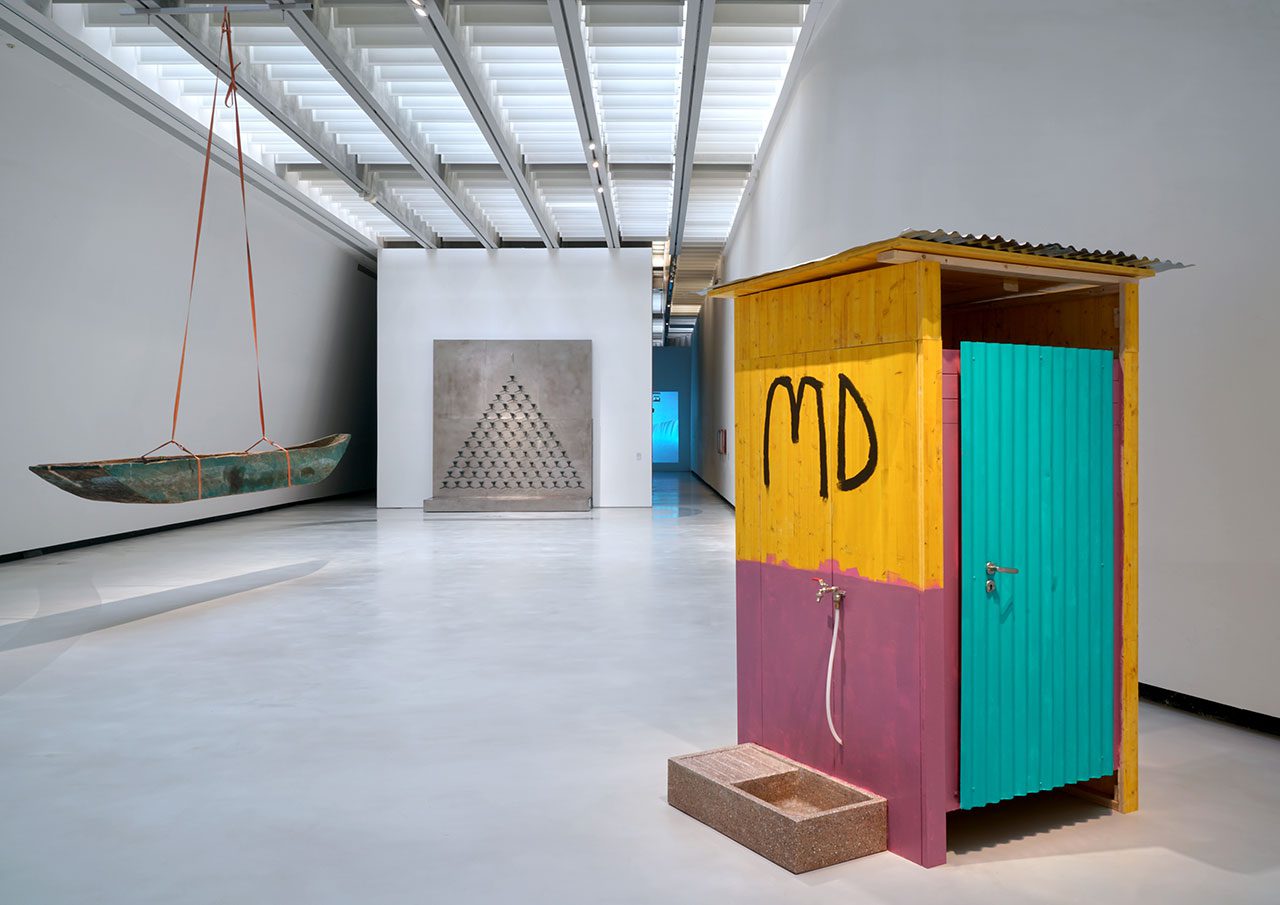
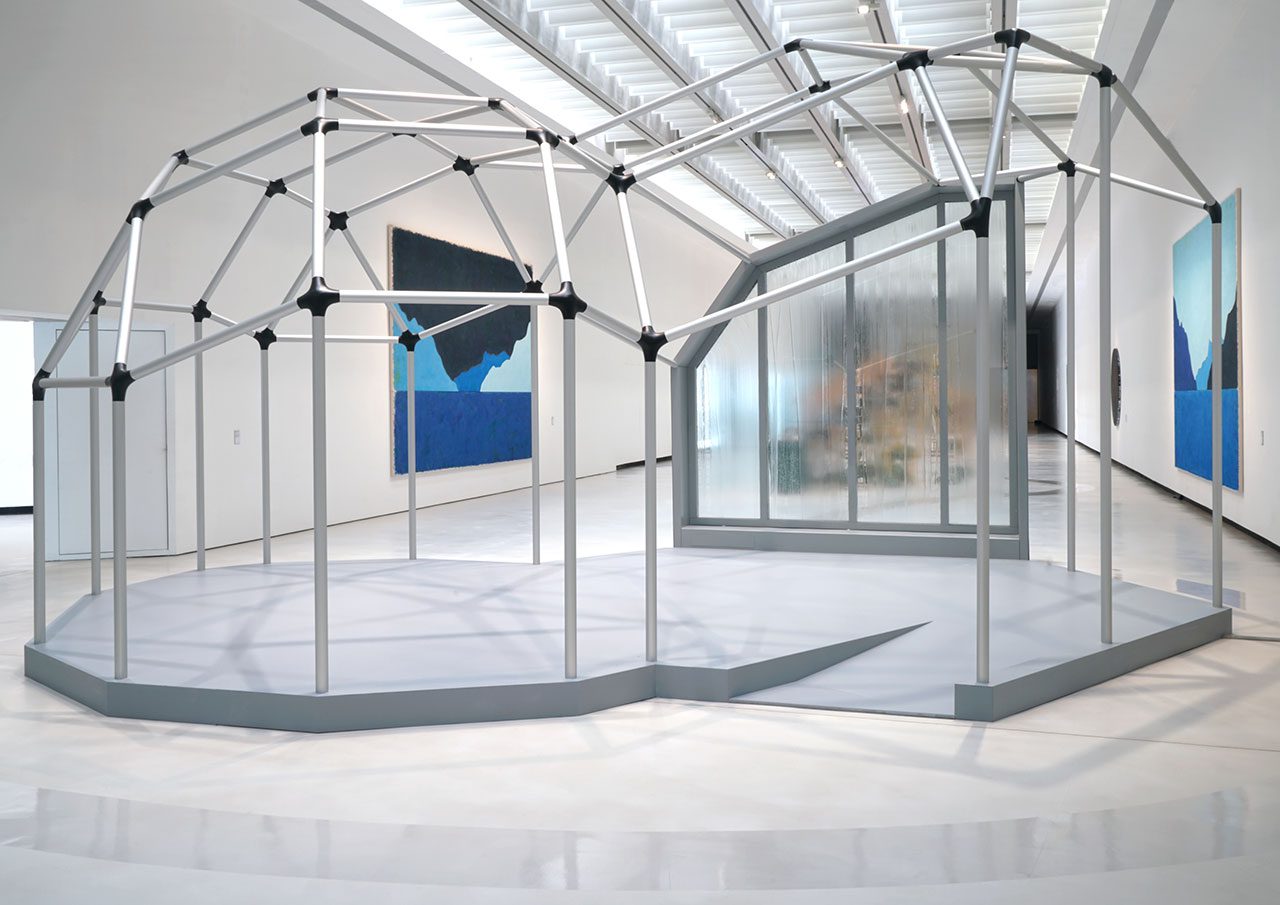
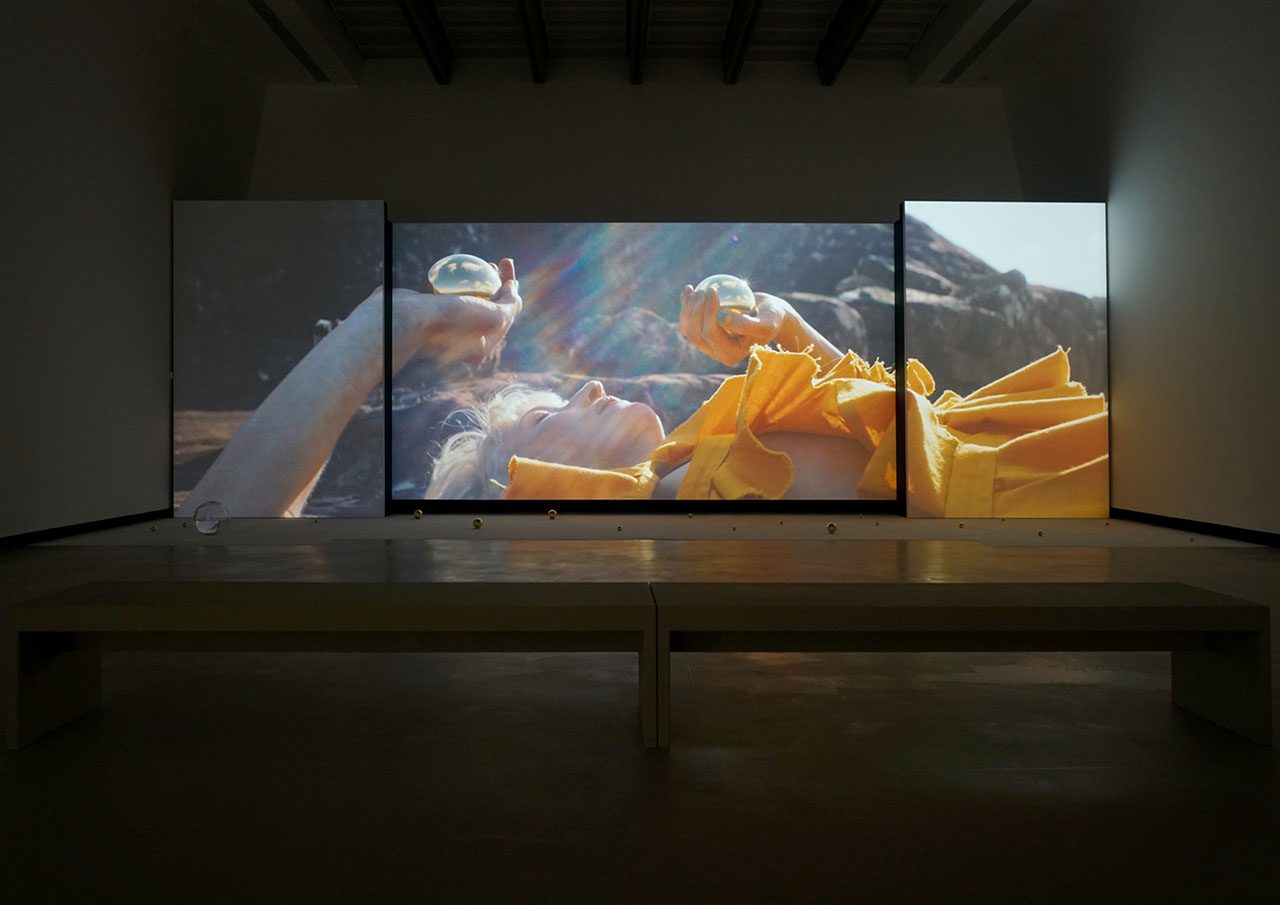
Oscar Tuazon’s new production, entitled “Ocean Pavilion”, is a physical device, an activator of consciousness where water acts as a filter through which to see the world. Starting from the visual allure of the course of the Tiber River, the works in the gallery inhabit the river’s imaginary bends, and the theme of water enters the exhibition to trace the role it plays in our economic, political and social life. The exhibition path of “Something in the Water” develops within the gallery space as a fluid experience, in which water becomes a connecting thread between artists of different generations and origins. The works on display invite the visitor to perceive the subtle connections that bind them together, in a layout that evokes the sinuous course of the Tiber’s meanders. Lita Albuquerque welcomes visitors with her immersive three-channel video installation “Liquid Light” (2022), a meditative voyage through time that seeks to reimagine the deep interconnection between humanity and the natural world. Opposite this, “Great Lakes Water School” (2023), an experimental architectural piece by Oscar Tuazon in collaboration with Peter Sandbichler, stands as a living classroom—constructed entirely from salvaged materials and inviting viewers into a dialogue between sustainability, education, and elemental forces. The journey continues in Gallery 2, where “Water Casts 8” (2015) by Matthew Barney—a gleaming copper sculpture—demonstrates a unique sculptural process in which water itself becomes a co-creator. By harnessing the pressure and flow of water to shape metal, Barney transforms casting into a performance of nature’s power, blurring the lines between human intention and elemental action. Nearby, “Under the Willow Tree” (2022) by Saif Azzuz pulses with vibrant hues that recall the ancient waters of Collect Pond. The work channels the site’s untouched, pre-industrial essence—before urban expansion drained its life to build the modern city of Manhattan. Its abstract forms ripple with memory and reclamation. At the center of the space, Tuazon’s “Building” (2023) transcends architecture to become a communal and interactive zone, where art, audience, and the narrative of the Cedar Spring Water School converge. It is less a structure and more a living space—a shared environment for contemplation and engagement. Just beyond Tuazon’s installation, Anna Sew Hoy’s “Psychic Grotto Birdbath (Blue)” (2018) emerges like a playful yet mystical totem. Conceived as an architectural form for birds, the work suggests an anthropomorphic fountain—one that engages in quiet, almost spiritual dialogue with the sculptural gravitas of Torkwase Dyson’s “Bird and Lava” #03 (2021), a piece that questions the fragility and future of freedom through the language of dark matter and molten form. At the symbolic heart of the exhibition stands “Untitled (Cascade)” (2020) by Virginia Overton. Here, salvaged aluminium road signs are reimagined into a sculptural waterfall, over which real water flows—transforming the installation into a kinetic, ever-changing presence. Water is not merely a subject but a vital force animating the work itself. Mounted on the surrounding walls, Ugo Rondinone’s “siebtermaizweitausendundvierundzwanzig” (2024) unfolds in two vast, mirrored canvases that reduce Lucerne’s landscapes to raw gestures and elemental hues. These pieces strip away narrative to offer a universal, accessible encounter with light, space, and emotional resonance. Marjetica Potrč’s “Kuku Town Core Unit” (2023) represents a different kind of structure—a modular urban intervention designed originally for Cape Town. Positioned between architecture and activism, it calls attention to the dignity of informal settlements and the political power of collective design. Further along, Christo and Jeanne-Claude’s cartographic panels from the “Over the River” project (1994–2007) invite viewers into the dreamlike blueprint of a work that was never realized: a sweeping fabric installation over the Arkansas River. These drawings and plans become a testament to artistic persistence and the poetry of the unbuilt. Tuazon returns with several new pieces: “Floating Flower”, “Still Flowing Water” (2024), and “Ocean Pavilion” (2025)—the latter a site-specific installation at MAXXI, featuring a glass fountain as both a physical and metaphysical device. These works use water as a lens—literally and conceptually—through which viewers are invited to reimagine perception and ecological awareness. Abraham Cruzvillegas contributes a powerful gesture of cultural remembrance with “Icharhuta atonal en cientotreyntaidosavos de tono (para Luis González y González)” (2017), a canoe handcrafted by the communities of Lake Pátzcuaro. The work serves as a tribute to the people and waters of the region, embodying his concept of “autoconstrucción”—a practice rooted in improvisation, reuse, and communal identity. Close by, another work by Azzuz—”Scraping By” (2022)—reclaims river-salvaged wood, assembling it into an expressive structure that restores dignity to discarded material while echoing the resilience of both nature and community. “Fountain of Exhaustion. Acqua Alta” (2022) by Pavlo Makov reflects a shifting form that has evolved since its conception in the 1990s. Presented at the 59th International Art Exhibition just days after the Russian invasion of Ukraine, the piece—comprising a multi-level cascade of bronze funnels—serves as a powerful metaphor for resource depletion and human vulnerability under crisis. Leslie Hewitt’s “Untitled” (2022) translates the subtle rhythms of tides and shifting ocean floors into abstract bronze forms. These sculptural compositions evoke the geology of memory and the fluidity of time, offering a quiet meditation on transformation. The exhibition concludes with a cinematic crescendo: Nancy Holt’s “Niagara” (1975) and “Hydra’s Head” (1974). These moving-image works capture the untamed power and primal beauty of Niagara Falls, celebrating water not only as a subject of awe, but as a symbol of eternal motion and elemental purity.
Participating Artists: Lita Albuquerque, Saif Azzuz, Matthew Barney, Christo, Abraham Cruzvillegas, Torkwase Dyson, Leslie Hewitt, Nancy Holt, Pavlo Makov, Virginia Overton, Marjetica Potrč, Ugo Rondinone, Peter Sandbichler, Anna Sew Hoy, Oscar Tuazon
Photo: Something in the Wate, Ιnstallation view, Photo © LuisDo Rosario, Courtesy Fondazione MAXXI
Info: Curator: Oscar Tuazon, Assistant Curator: Elena Motisi, MAXXI | Museo nazionale delle arti del XXI secolo, Via Guido Reni, 4a, Rome, Italy, Duration: 18/4-17/8/2025, Days & Hours: Tue-Sun 11:00-19:00, www.maxxi.art/