ART CITIES: Los Angeles-Marcel Dzama

Since rising to prominence in the late 1990s, Marcel Dzama has developed an immediately recognizable visual language that investigates human action and motivation, as well as the blurred relationship between the real and the subconscious. Drawing equally from folk vernacular as from art-historical and contemporary influences, Dzama’s work visualizes a universe of childhood fantasies and otherworldly fairy tales.
By Efi Michalarou
Photo: David Zwirner Gallery
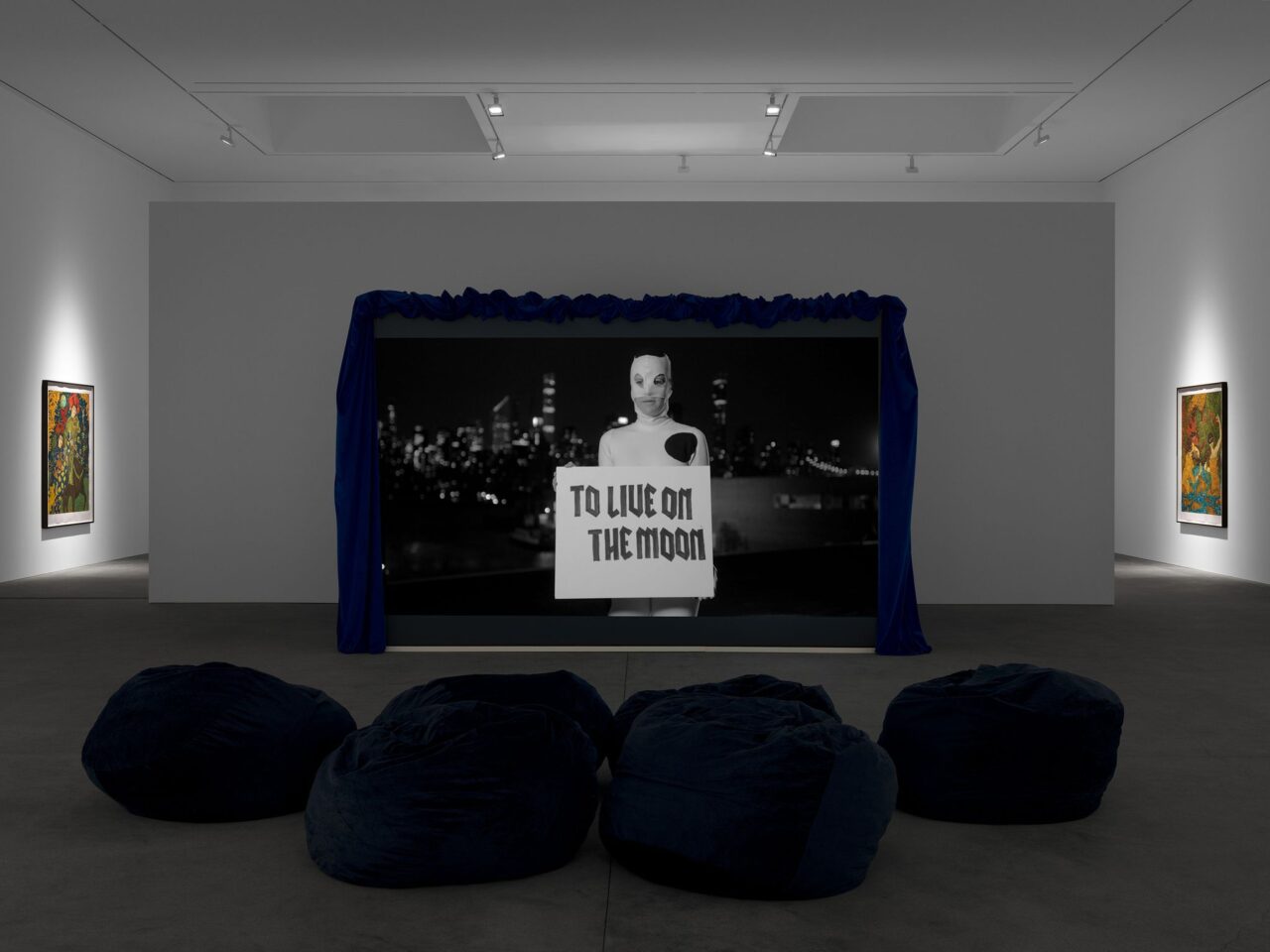
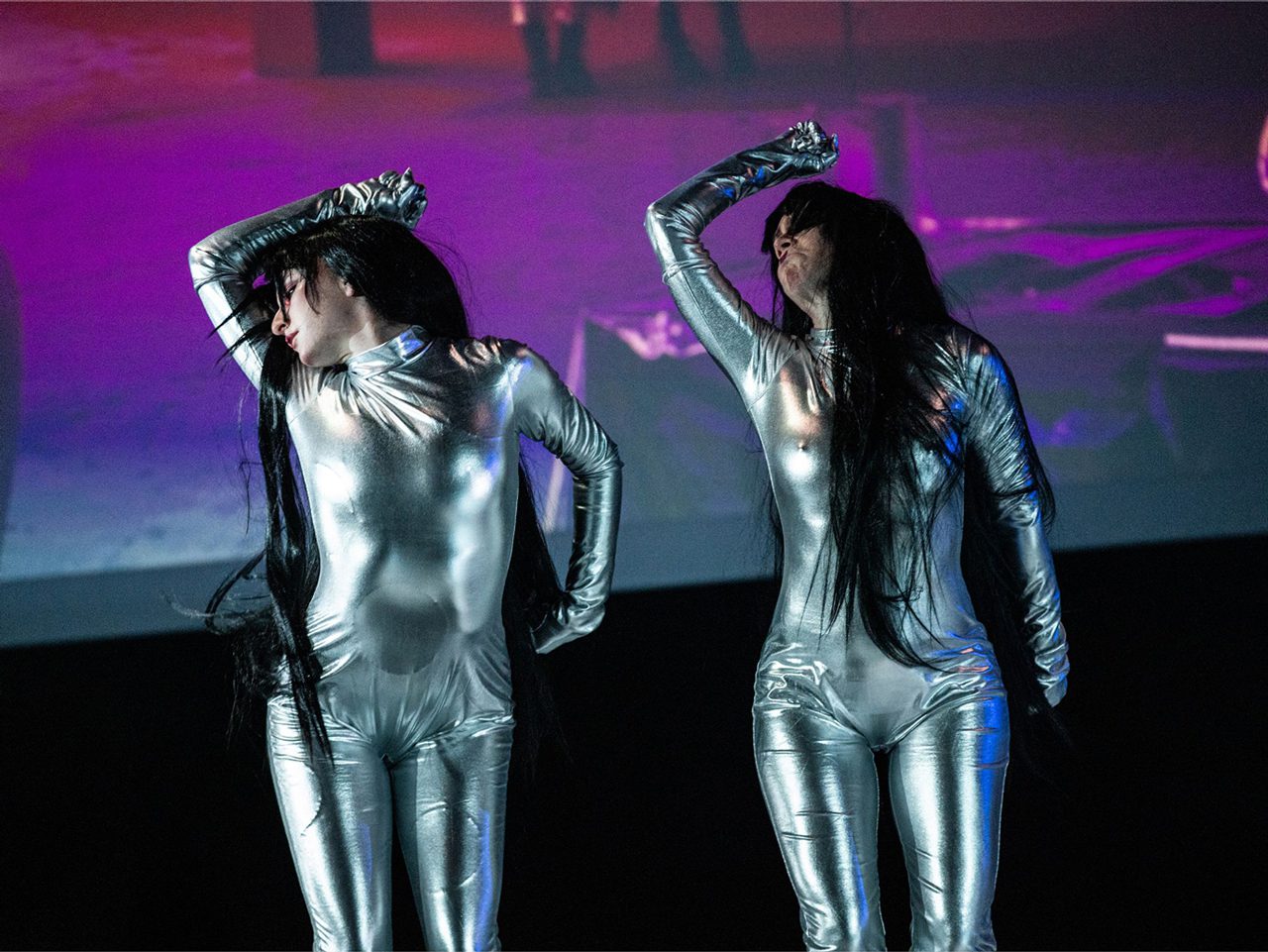
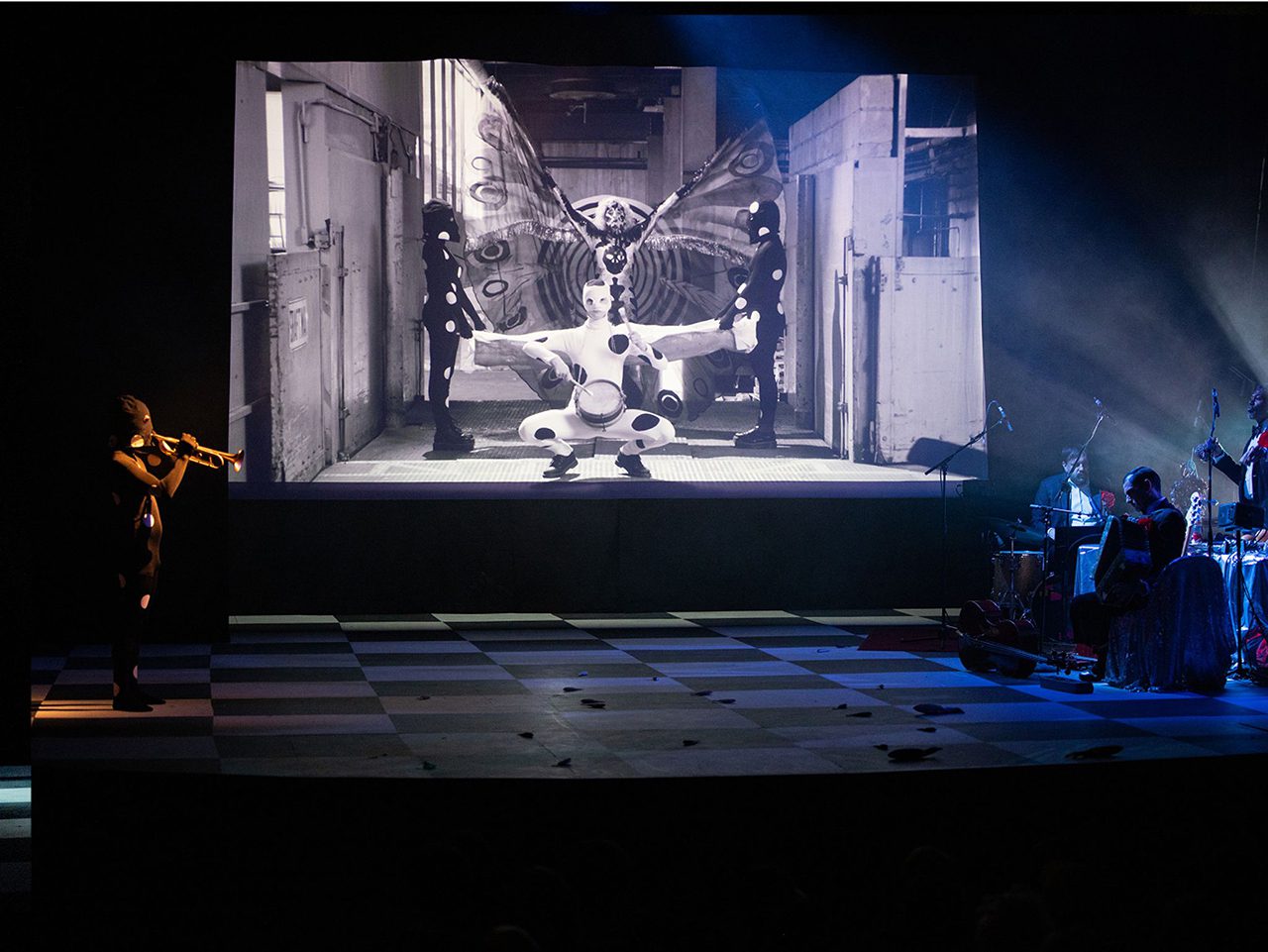
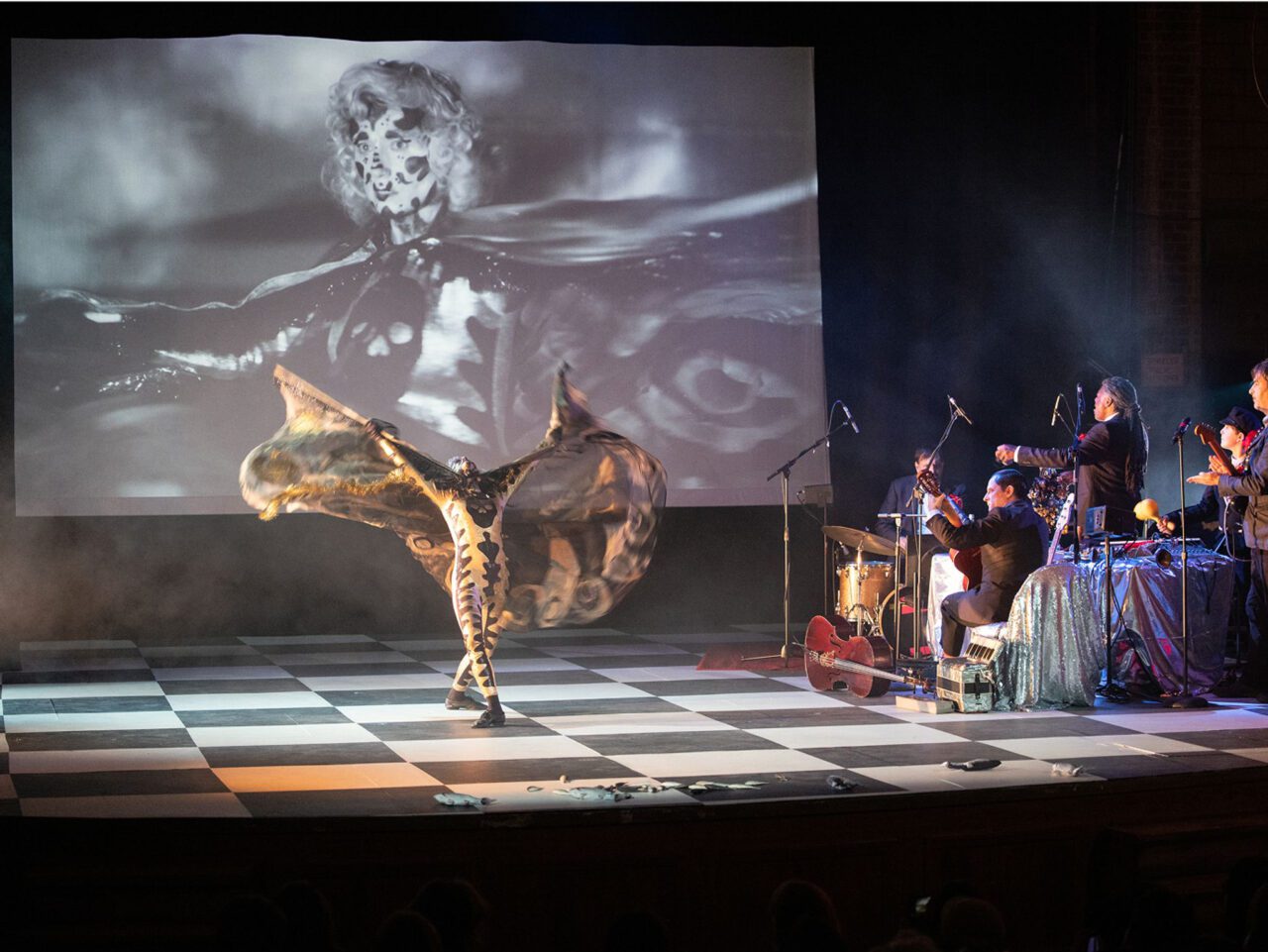
In his solo exhibition “Empress of Night”, Marcel Dzama conjures a dreamlike realm teeming with fantastical visions—a world at once lush and precariously flooded, where anthropomorphized creatures and ethereal, dancing figures move through tangled junglescapes and beneath vast, atmospheric skies. These intricate compositions are rich with references to Spanish painter Francisco Goya and the surrealist poet Federico García Lorca, one of the most celebrated literary voices of 20th-century Spain. Through these historical echoes, Dzama draws a resonant line between the violent, uncertain periods those artists endured and the tumultuous sociopolitical and ecological crises of our present era. Some of Dzama’s works confront the rise of authoritarianism head-on, while others deploy allegory to critique the escalating threats to democracy and civil liberties around the globe. Crafted during the late hours of the night—true to the artist’s nocturnal habits—many of these pieces unfold beneath starlit skies and celestial bodies. These luminous nightscapes, despite their darkness, radiate a sense of enchantment and resilience, offering glimpses of hope amid chaos. A highlight of the exhibition is Dzama’s 2023 film “To Live on the Moon (For Lorca)”, commissioned by Performa for its most recent performance biennial in New York. The film opens with a stylized reenactment of Lorca’s assassination by Nationalist forces during the Spanish Civil War in 1936—an event that silenced one of Spain’s most vital creative voices. The work draws inspiration from Lorca’s own surrealist screenplay “Trip to the Moon”, written in 1929 but never produced. Comprising 73 fragmented vignettes laced with love, violence, and mysticism, Lorca’s screenplay is considered a landmark of surrealist literature. Dzama’s film pays homage by blending fantastical imagery and dreamlike figures with references to early cinema—particularly Georges Méliès’s iconic “A Trip to the Moon” (1902)—to explore themes of mortality, memory, and transcendence. In the gallery, the film is projected on a grand scale within a specially designed viewing environment. Midnight blue drapery and cushioned seating create a soft, immersive atmosphere, inviting viewers to settle in and absorb the film’s poetic rhythms. Around the projection space, a series of drawings—carefully spotlighted—extend the film’s tone into the physical space, amplifying its lyrical and hypnotic qualities. Among the exhibition’s new works are several ambitious large-format drawings teeming with life and layered symbolism. These images, overflowing with animals, plants, and mythic elements, act as meditations on the planet’s fragility and the interwoven fate of all living beings. One such piece, “The Sleep of Reason Produces Monsters” (2025), directly references Goya’s 1799 etching of the same title, reflecting on the dangers of ignoring rationality in favor of fear and chaos. “Blue Water Blues” (2024), a mesmerizing, nearly monochrome triptych, plunges viewers into an underwater world densely populated with marine creatures—an elegy for oceans under siege. Another standout is “I Never Came From Your Rib You Came From My Vagina” (2025), a vivid and jubilant celebration of womanhood that challenges the rise of toxic masculinity with bold iconography and unapologetic energy. This monumental triptych reads as both a personal and political declaration, reaffirming the generative power of the feminine in the face of reactionary cultural currents. With this exhibition Dzama has constructed a richly symbolic, visually opulent universe that is as urgent as it is enchanting—a space where myth and memory collide, and where the darkness of night becomes a canvas for both resistance and rebirth.
Photo: Marcel Dzama, Blue water blues, 2024, Pearlescent acrylic ink, watercolor, and graphite on paper, Triptych, Overall: 70 1/2 x 156 inches (179.1 x 396.3 cm), Overall, framed: 76 x 172 1/2 inches (193 x 438 cm), Signed recto; signed, titled, dated, and inscribed verso, © Marcel Dzama, Courtesy the artist and David Zwirner Gallery
Info: David Zwirner Gallery, 606 N Western Avenue location, Los Angeles, CA, USA, Duration: 28/6-8/8/2025, Days & Hours: Tue-Sat 10:00-18:00, www.davidzwirner.com/


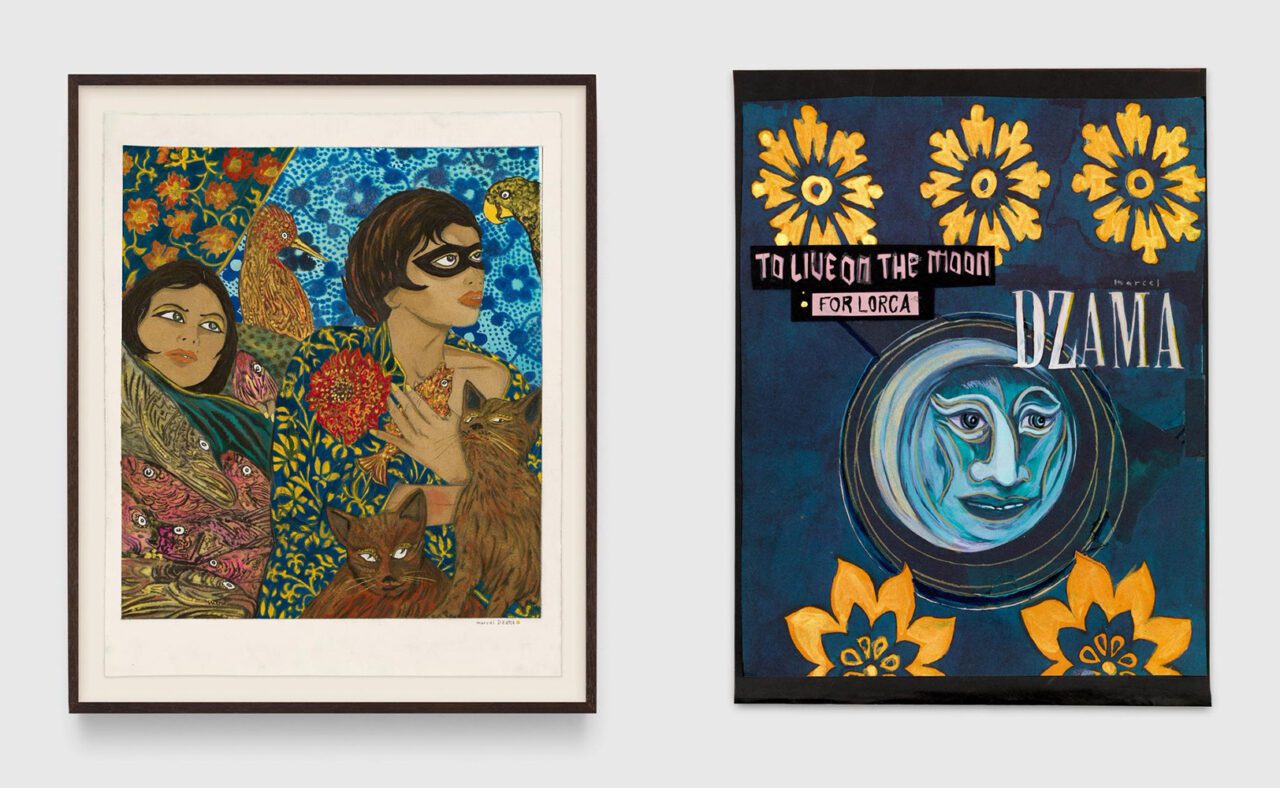
Right: Marcel Dzama, To live on the moon, 2023/2025, Pearlescent acrylic ink, watercolor, graphite, Polaroids, and collage on paper in twenty-three (23) parts, Each: 11 1/2 x 8 1/2 inches (29.2 x 21.6 cm), Signed, titled, and dated, © Marcel Dzama, Courtesy the artist and David Zwirner Gallery