ART CITIES: Tokyo-Surface and Signal
The group exhibition “Surface and Signal” brings together four artists whose practices engage with formal clarity, material honesty, and sensitivity to the boundaries between intention and chance. The exhibition foregrounds how each artist operates within the inherent structure of their chosen medium—painting and ceramics, respectively—while maintaining a looseness that allows for vulnerability, gesture, and quiet radicalism.
By Dimitris Lempesis
Photo: Blum Gallery Archive
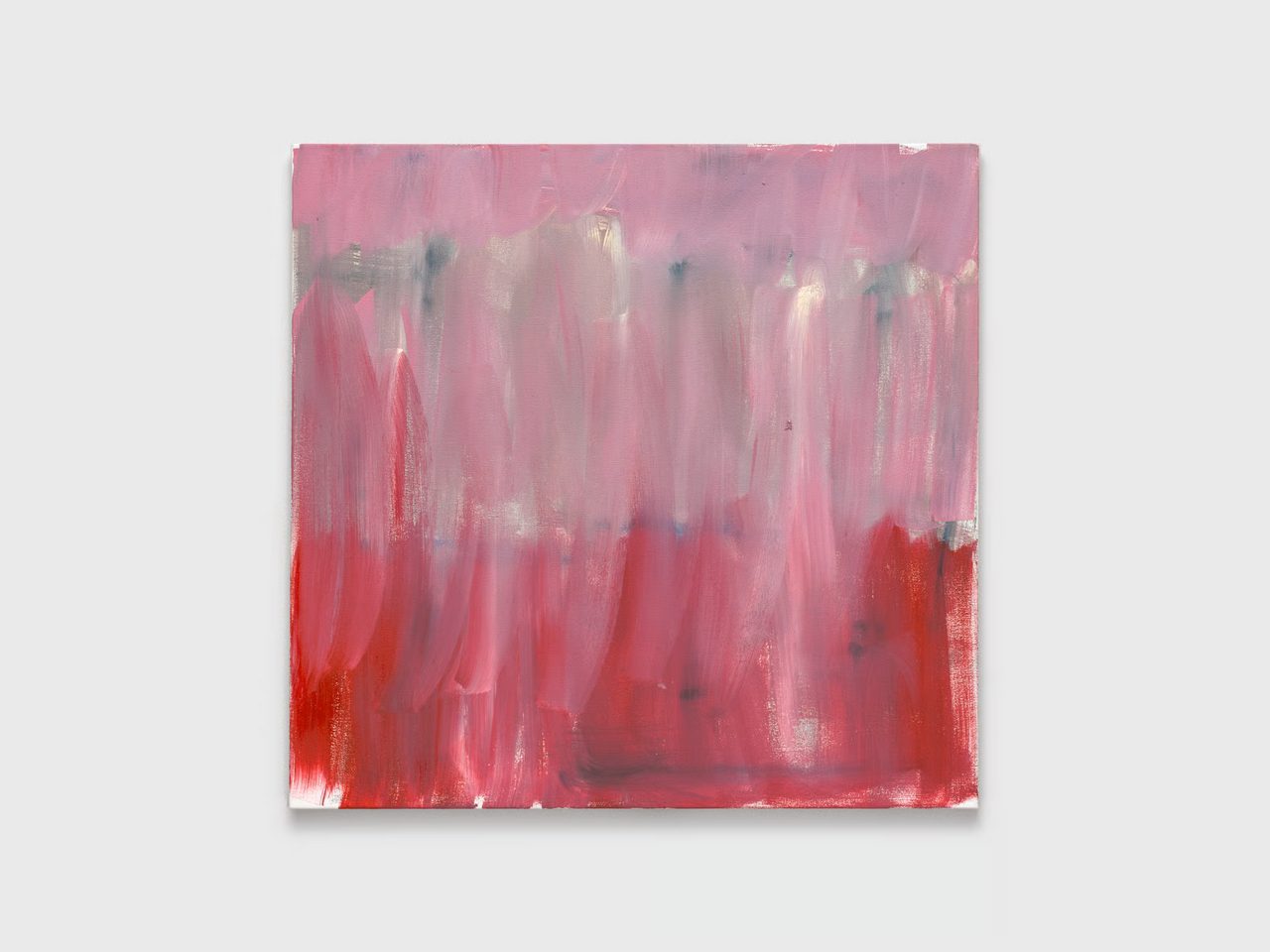
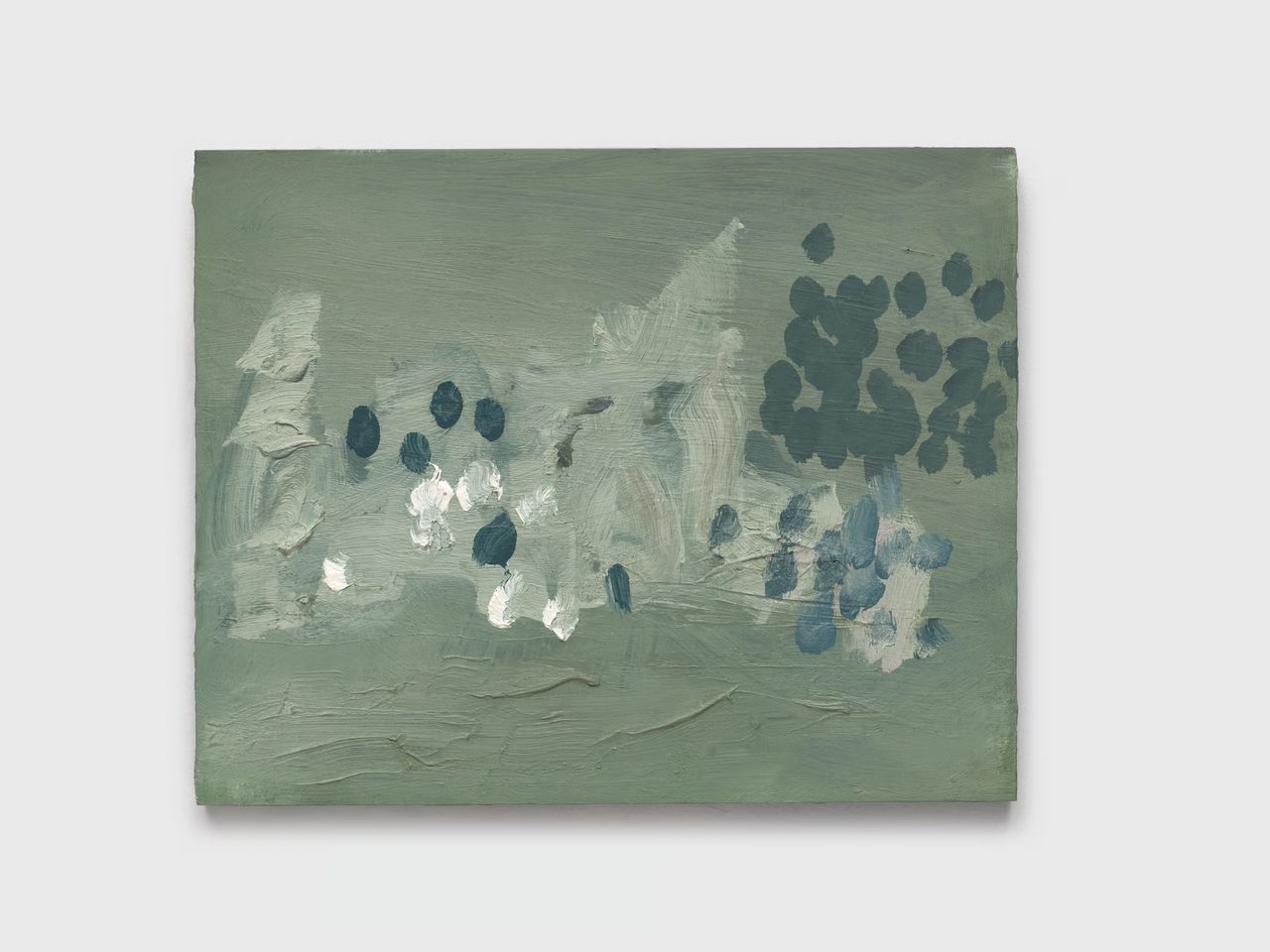
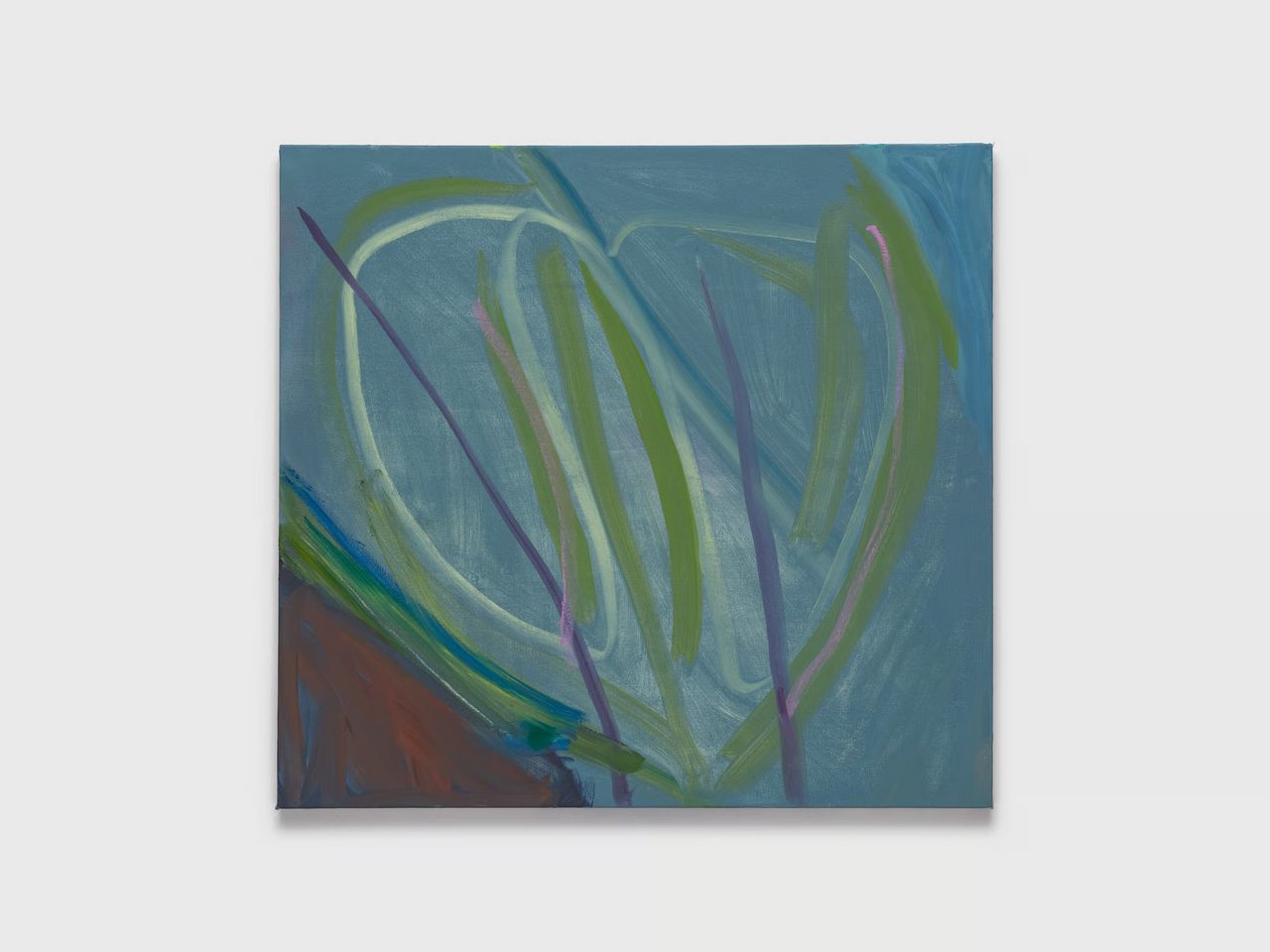
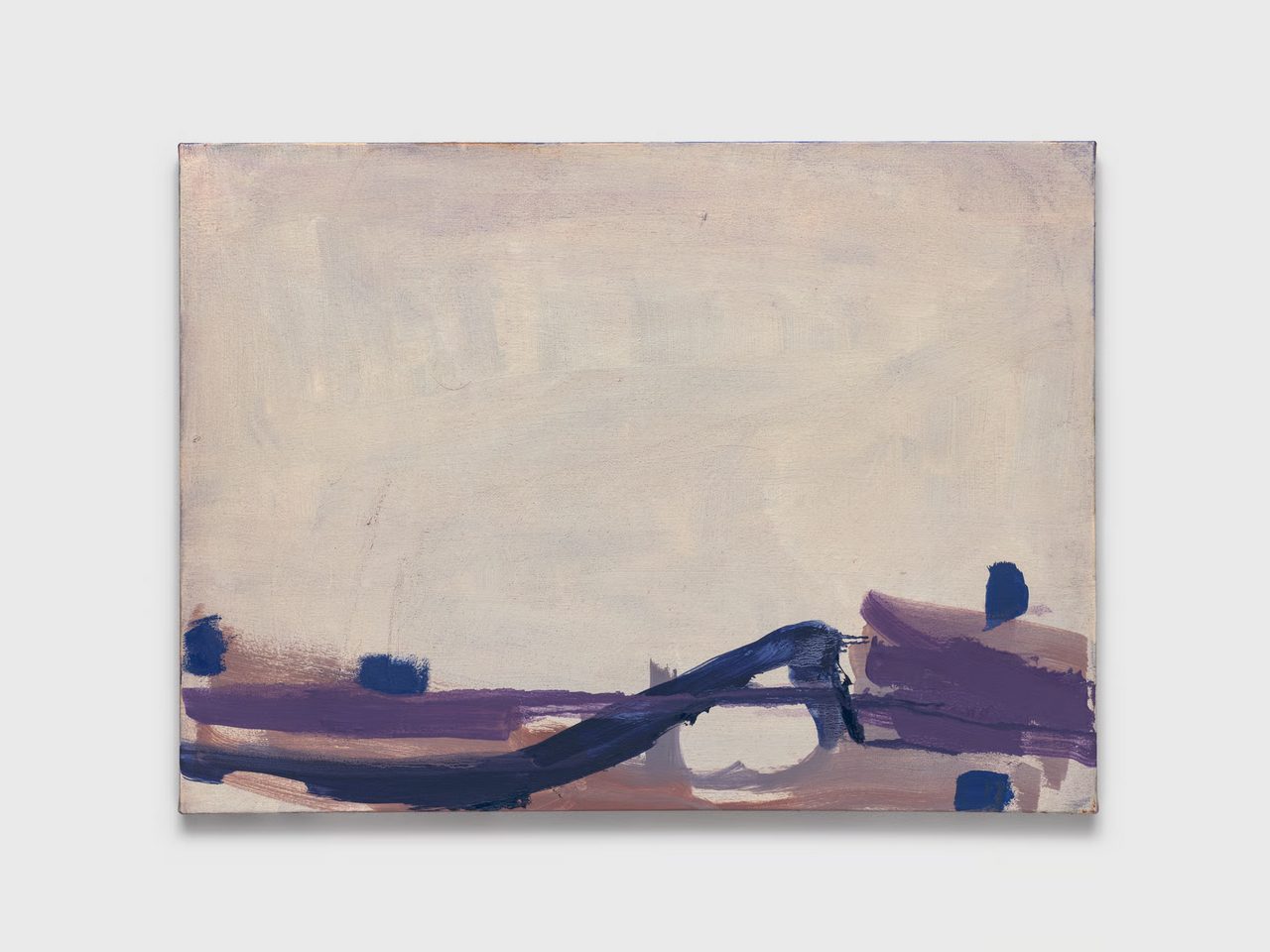
Utilizing the art of suggestion, Peter Shear loosely renders recognizable forms in distinctive palettes to create paintings that trigger open-ended recognition in their viewers. Drawing inspiration from a range of topics as disparate as the internet is vast, Shear intakes a large quantity of visual information—a single painting may, for instance, be influenced by the oeuvre of Dutch Golden Age painter Judith Leyster, an image of several neatly arranged green Adidas Sambas, a drawing by contemporary British artist David Shrigley, and a news headline that reads “Where’s Princess Kate?” The resulting works broadly deploy intuitively familiar aesthetics to underscore our universally shared connection to the collective unconscious. With compositions that alternate between pure abstraction and representational elements, Shear avoids stylistic categorization, instead preferring to respond to and channel the whims of his materials Taking this prompt for individualized interpretation one step further, Shear states that his paintings are meant to encourage viewers to “finish the sentence.” In other words, the intention of each work has been left open-ended in a generous gesture that allows space for personal associations and experiences. In this way, the connection formed between individual and painting is the work’s purpose—each canvas or panel is otherwise left open and free of determination until the next psyche sets out to explore it..” Reiterating the poetic tendencies of his practice, Peter Shear’s paintings in the exhibition are pithy bursts of evocative gestures rooted in wide-reaching, visual reference to moments in culture and art history. With brushstrokes that both emphasize the artist’s hand and physical qualities of his paint, the expressive gestures in Shear’s works, such as “Current” (2025), call out to the materiality and intricate glazing of ceramics by Kazunori Hamana, Akane Saijo, and Yuji Ueda.
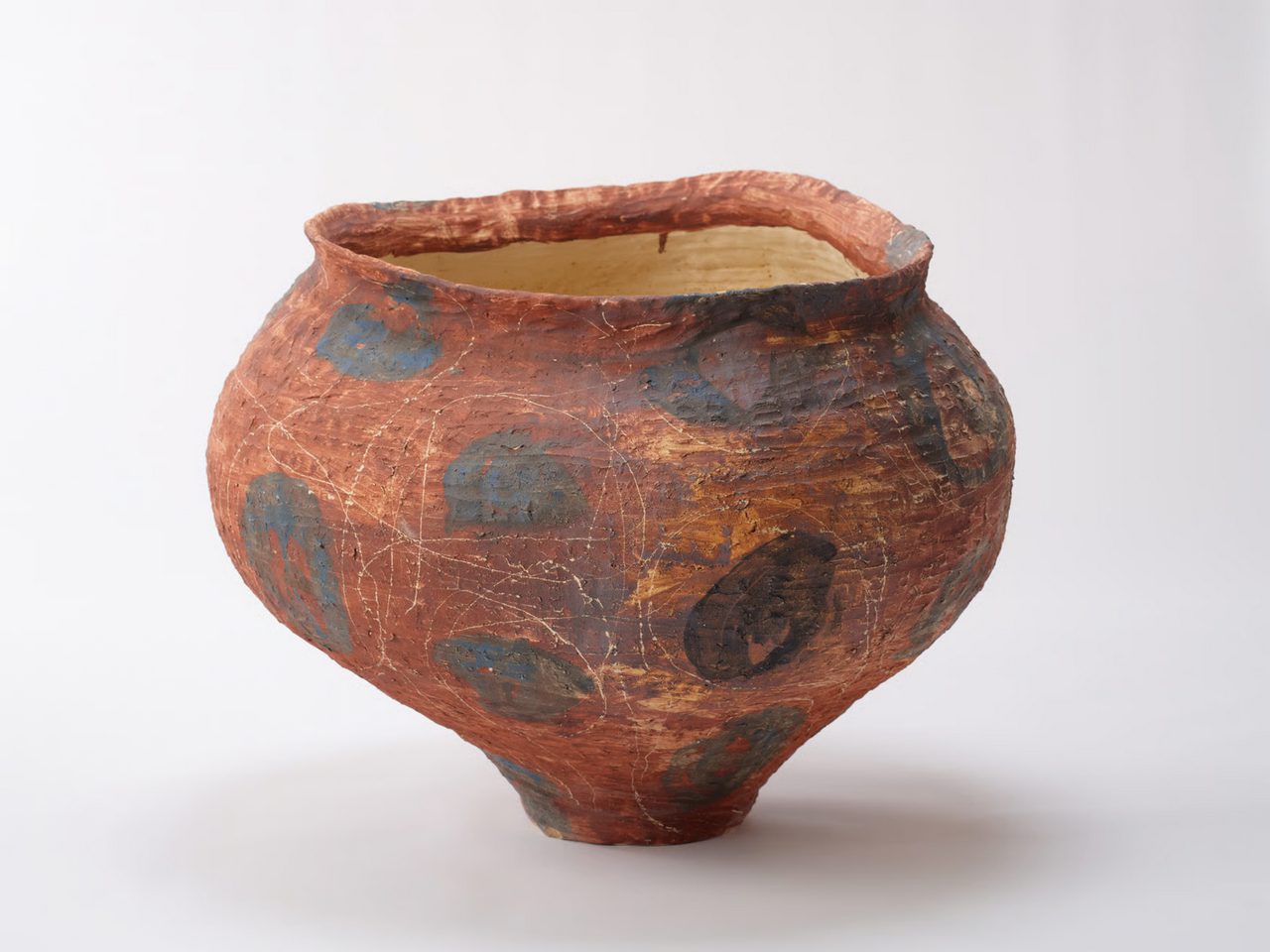
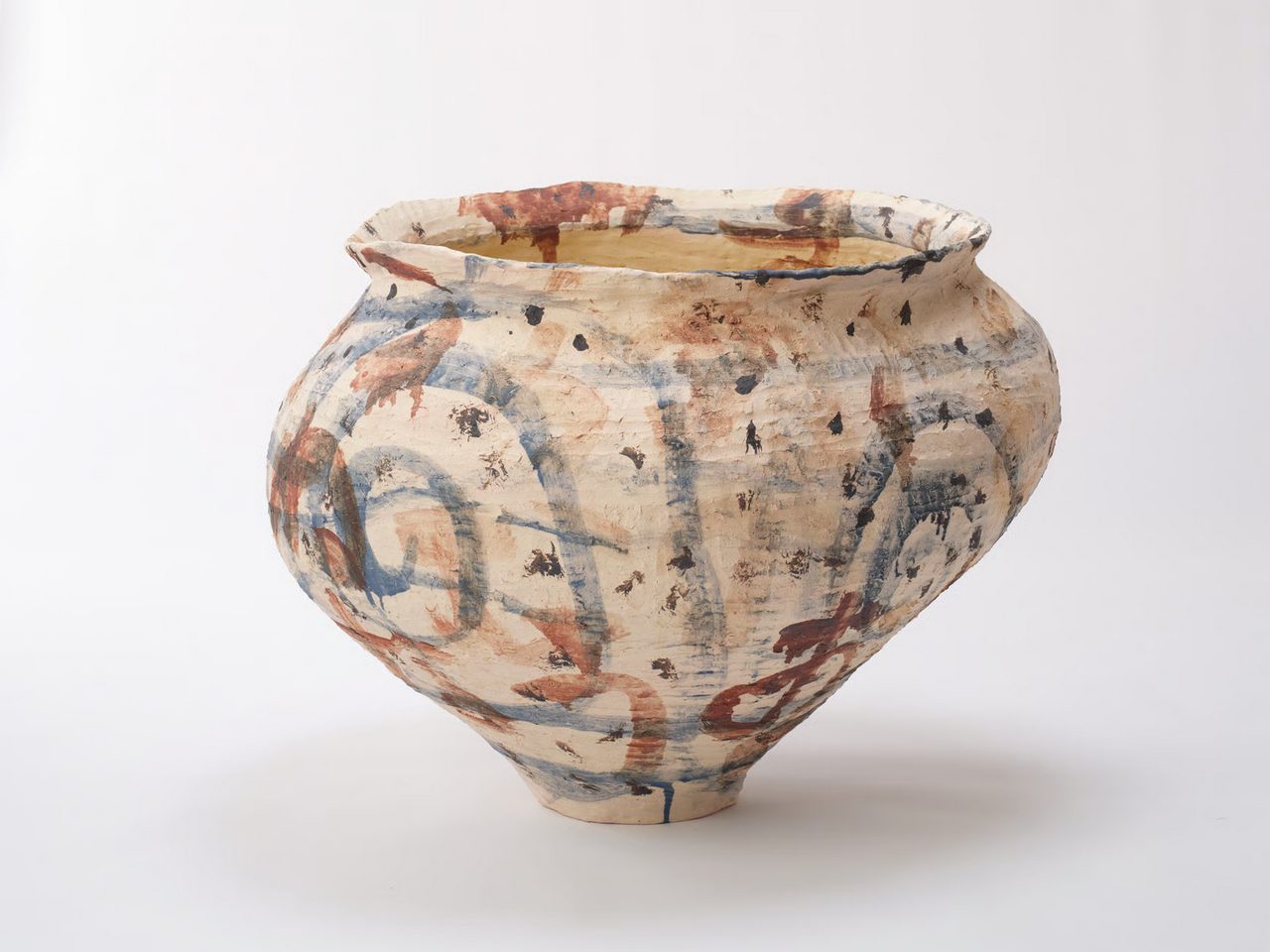
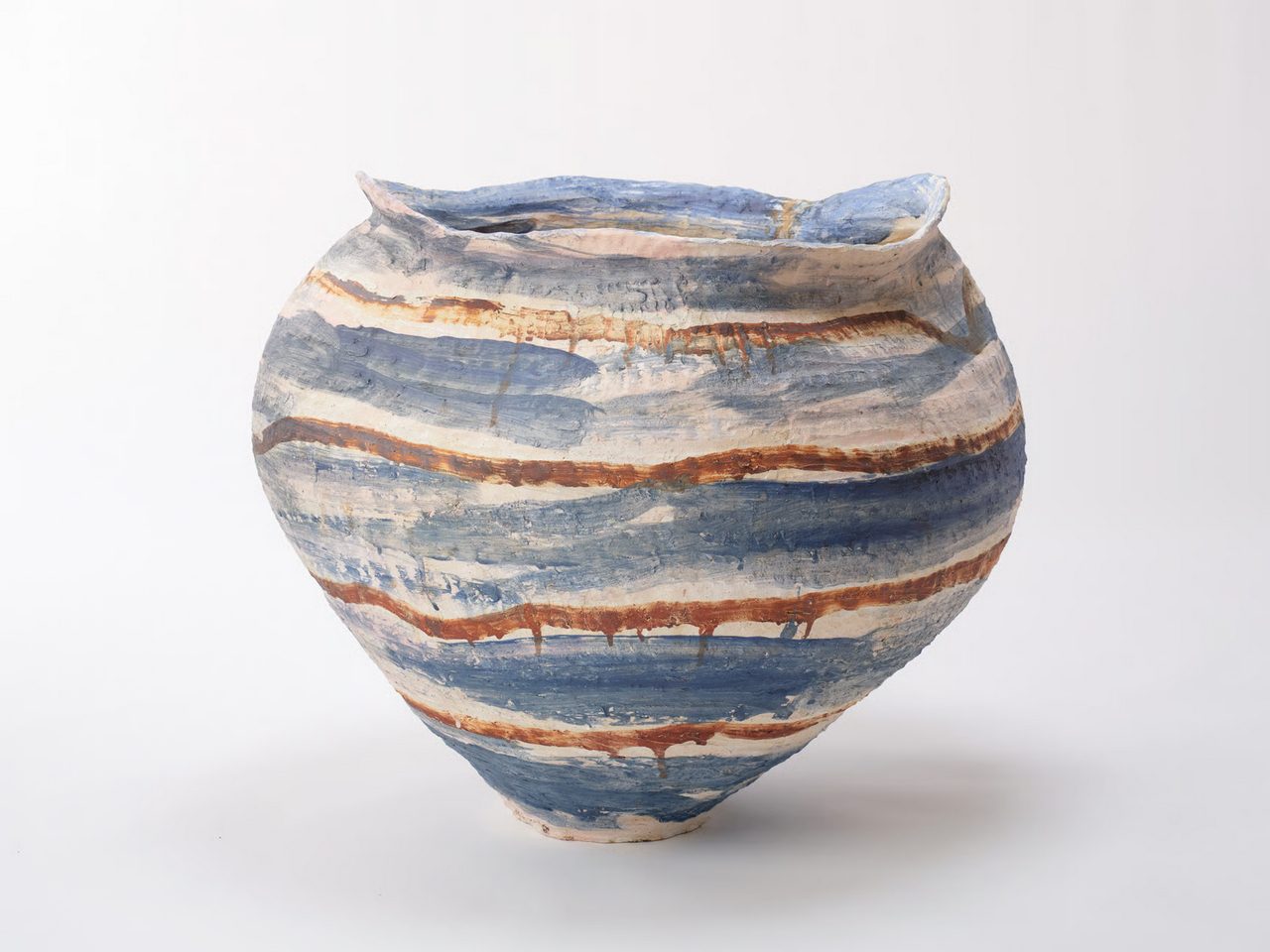
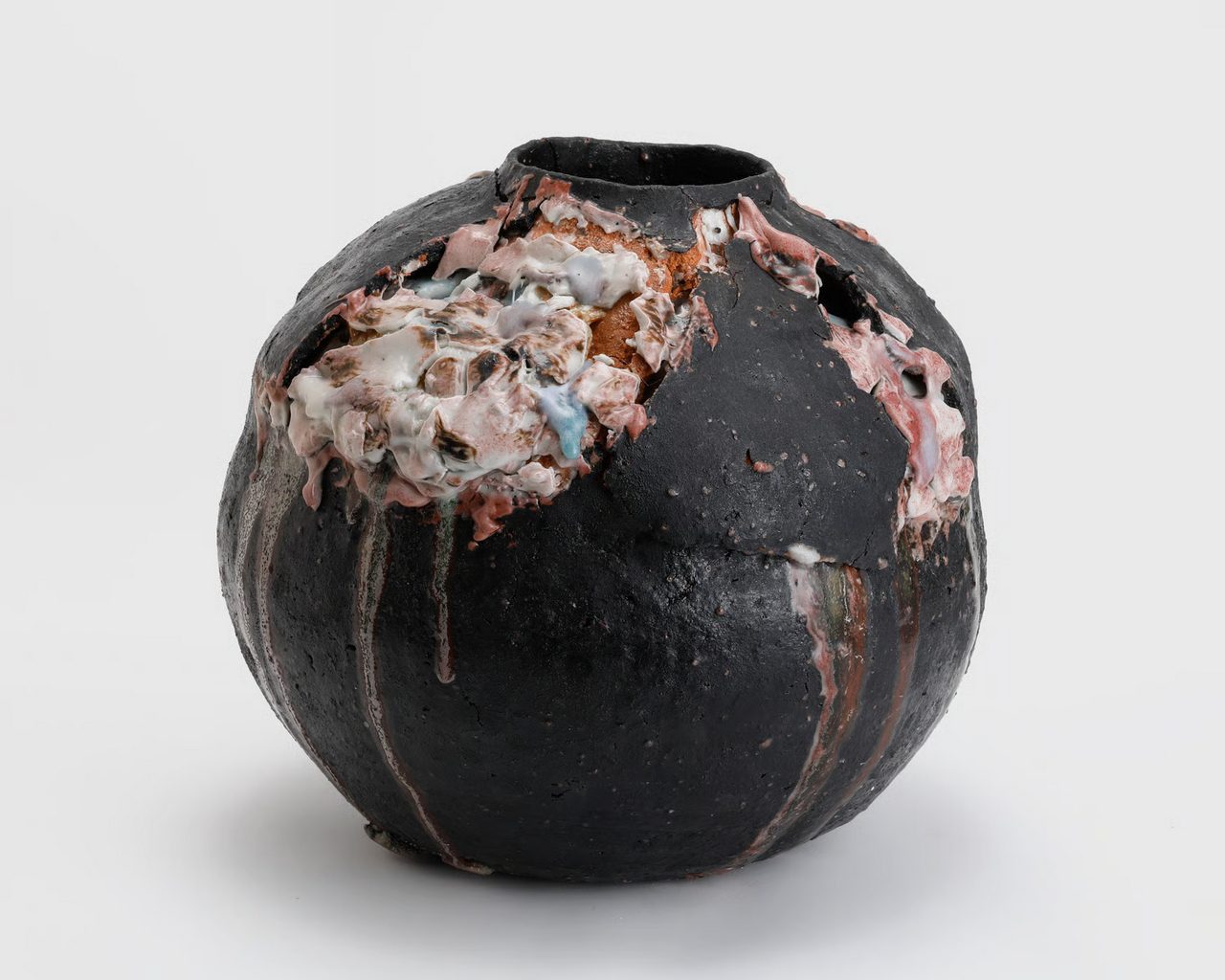
Kazunori Hamana was born in Osaka, Japan, in 1969 and grew up in Amagasaki, Hyogo Prefecture. Since his childhood, he has been driven to pursue a deep philosophical interest in the nature of how the universe functions on micro and macro levels. This awareness of impermanence and the transience of earthly things has guided his work and lifestyle. In this vein, Hamana left his home at the age of fifteen to stay with farmers in rural Hyogo Prefecture, working the land and caring for the livestock at a nearby agricultural school. After a period of studying in Humboldt County and San Diego, CA as a college student embedded in a hippie milieu, the artist found himself drawn back to his home country and his Japanese identity. He later settled in a rural fishing village in Japan’s Chiba Prefecture, where he currently divides his time between working as an organic rice farmer, a fisherman, and an artist. Hamana draws upon the ancient traditions of Japanese ceramics while cultivating new, inventive techniques in shaping, glazing, coloring, and firing. He makes large and delicate vessels out of natural clay sourced from Shiga Prefecture in Japan. Inspired by traditional Japanese tsubo, functional clay jars dating back to prehistoric times, he creates each sculpture by hand, making use of improvisation and experimentation. A self-taught ceramicist, Hamana incorporates a slow and gradual process, echoing the rhythm of his daily life in his rural surroundings. He considers these daily chores as paramount to his sustainable practice and his pursuit of truth. After the pots are fired, he places them outside of his studio, where they are left to accumulate impressions from the seasons changing. As these irregularly shaped objects continue their development on sun-drenched balconies washed over by the sea waves, in shady bamboo groves, or in his garden facing the mountain and his rice fields, the natural environment directs their transformation. Hamana’s earthenware provides a contemporary look at Japan’s rich, long history of pottery, from ancient terra-cotta burial figures to everyday domestic objects. With surfaces sometimes fissured and peeling like parched earth, Hamana’s sculptures appear in various colors ranging from bone-white to smoky blue-grays; some featuring geometric and organic forms, stripes, symbols, and language. Channeling tradition through a contemporary lens, Hamana references human history and art history, including the practices of Cy Twombly, Alberto Giacometti, Isamu Noguchi, and Jackson Pollock—the result is a body of work imbued with the beauty of imperfection and the ephemeral. Kazunori Hamana’s vessels, hand-built by coiling extruded strands of ash gray clay, carry the imprint of the artist’s palms and fingers throughout their physicality and brushed glazing. Robust and sizable, these rotund basins team with the minute details imparted upon them by human entropy and the circumstances of their making. Similarly examining the sublime implications of cultivated chance, Ueda aligns himself with the Shigaraki ceramic tradition of beautiful imperfections. Using a layer of plaster atop clay, the shells of Ueda’s vessels are built to crack and peel away revealing oozing, vivid glaze and cast forms that have been used in Japan since the Edo period.
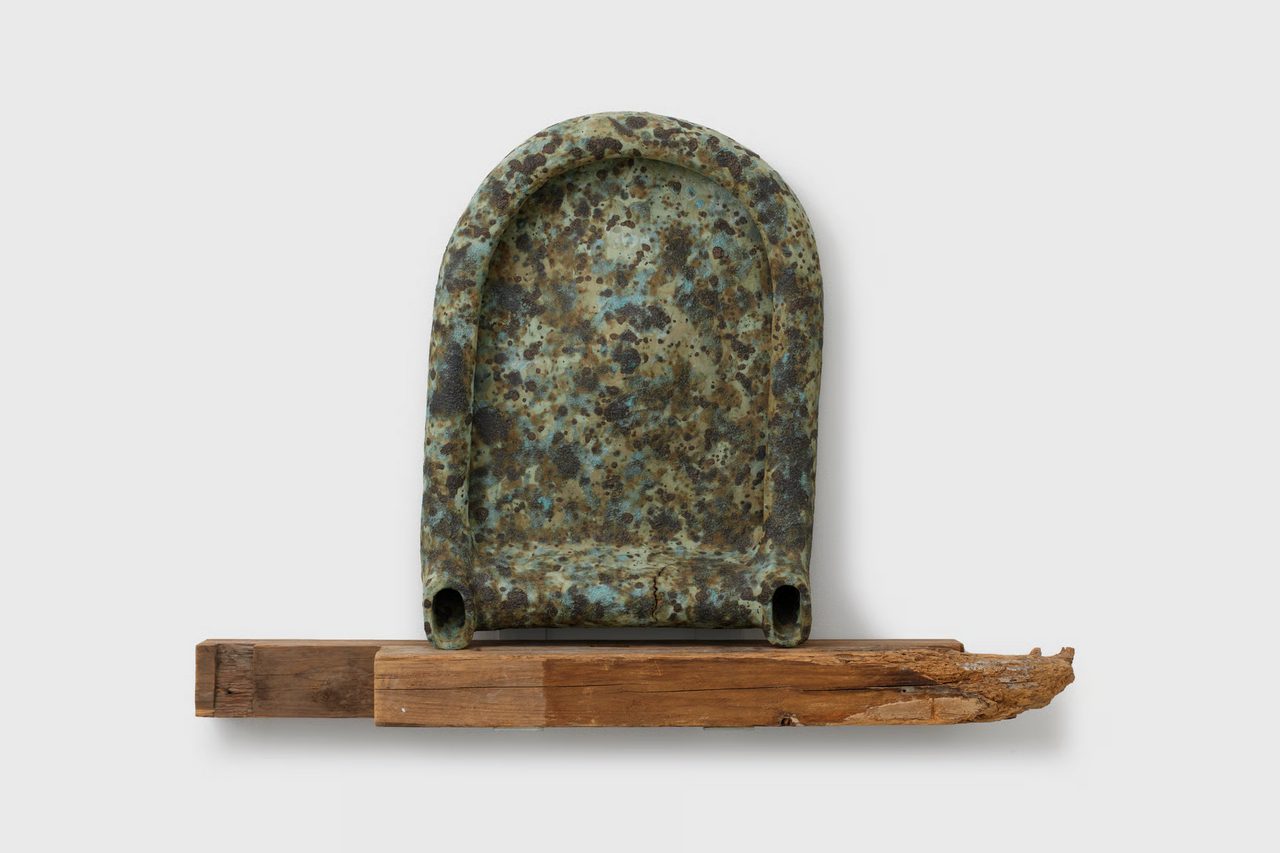
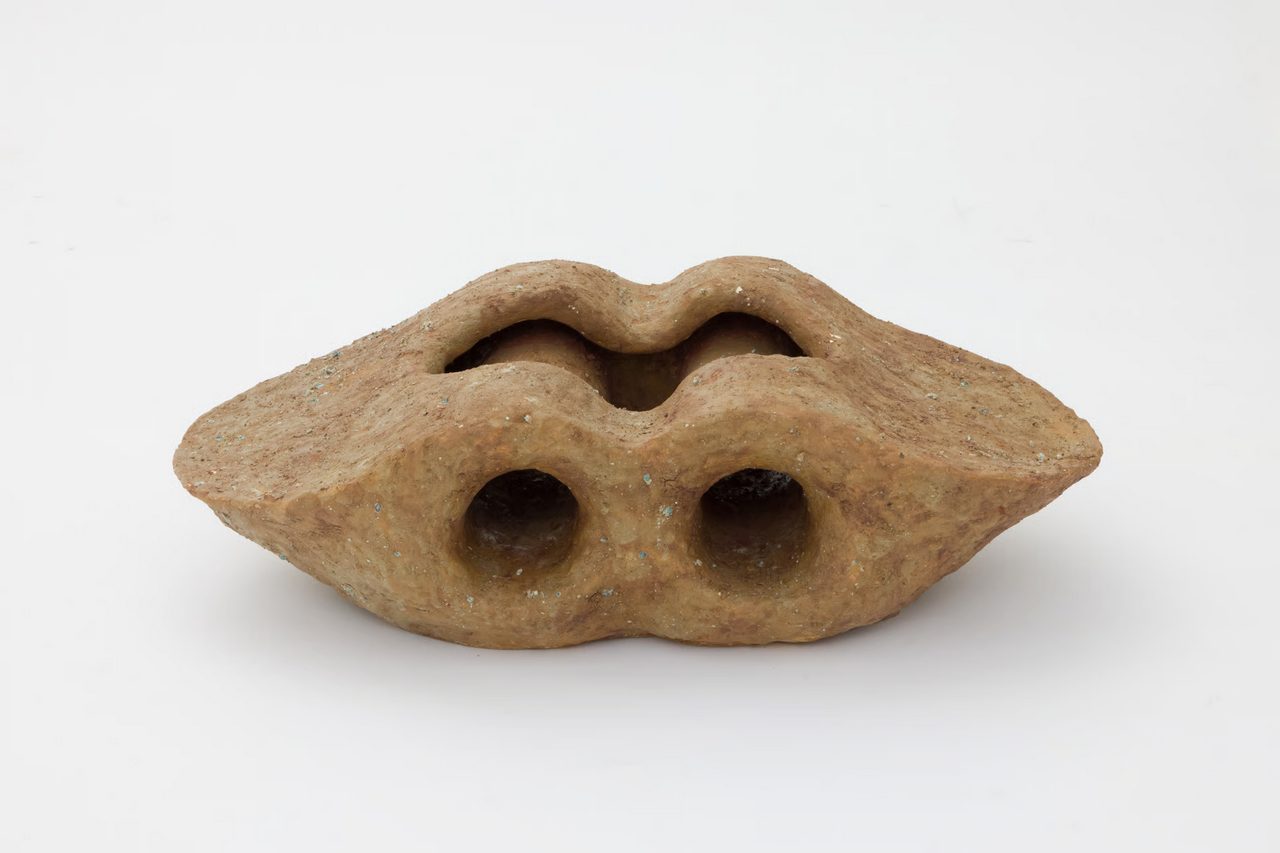
Kyoto, where Akane Saijo currently works and studies, has been a thriving pottery production center for generations, from the seventeenth century up through the more recent Sodeisha group, which was at the forefront of Japanese ceramics for fifty years after World War II. Saijo both acknowledges and innovates upon this history with forms in small-scaled ceramic sculptures that nod to the artist’s predecessors and build out from their legacy. Saijo creates ceramics of various sizes with intricate glazes that evoke the gradation of different tree species in a far-off forest or the earth’s naturally occurring clay deposits. She often collaborates with performers to activate the cavities and holes in her ceramic works, turning them into sound-producing devices. Through the activation of Saijo’s work, the boundary between body and object becomes blurred. The resulting awareness of the distance between self and exterior provokes a reconsideration of one’s relationship to society and nature.
The artist cites Marcel Duchamp’s concept of inframince—the infinitely small space between or differentiating both people and things—as an important influence for her intricate ceramic work. Saijo delves into and hyperbolizes this phenomenon. Though Duchamp refrained from overtly defining inframince, in notes archived at the Centre Pompidou he describes: “The exchange between what one puts on view… and the glacial regard of the public… Very often this exchange has the value of an infra thin separation meaning that the more a thing is admired and looked at the less there is an infra thin separation.” The negative spaces in Saijo’s sculptures complement the positive space of the human body, and the artist often collaborates with performers to engage with these orifices in her ceramic works. The artist’s forged forms engulf the performers—their mouths or entire bodies—as they breathe into the work’s holes to create sound. With these activations, the space of inframince, the minuscule separation between the work and the viewing body, is pushed to its utmost limit and nearly eliminated. The body—as commingled with ceramic—is also an integral portion of the construction of these works, as it has been since the inception of this medium. Working the clay with her hands, Saijo combines various traditional techniques to construct her clay bodies—unfettered by the question of art versus craft that is often applied to handmade ceramics created in the contemporary period. With her intensive research practice and educational background in ceramics, Saijo seamlessly merges art’s conceptual concerns with technically skilled craftsmanship. Akane Saijo creates ceramic forms that correspond to and create space for the human body. Often staging activations wherein performers breathe into or interface with her work, she calls attention to the unknowable and disjointed space of communication and perception that divides us all. Skillfully glazing her impeccably built forms, Saijo, like the other artists in Surface and Signal, plays with the evocative tension of achieving modes of perfection in our inherently disordered human experience.
Frozen in the very midst of their own formation, Yuji Ueda’s ceramic vessels capture a vibrant kinetic energy—finished in electrifying colors and posed as though they might rupture. Sandy layers of ceramic flake and curl to reveal entirely different clay bodies emanating from their crevices, as if these works were the physical embodiment of the process of ceramic-making itself. Large peeling vessels, molting orbs, and dripping ceramic-bronzes come together to create a futuristic object landscape. The artist’s glazes flow off the vessels, cascading out toward the viewer or wilting toward the ground. To achieve this explosive effect, Ueda prepares layer upon layer of clay and different glazes, as though building the tiers of a cake. Ueda’s clay for these forms is sourced from his native Shigaraki or its neighbor Iga. The soil from these areas, one of the oldest pottery-producing regions in Japan, typically contains feldspar: an abundant rock-forming mineral that melts and swells during the firing process. Ueda will also add feldspar to natural clay or glazing to create his desired effect. Ueda’s round and off-kilter ceramic vessels are made through a casting process that utilizes a plaster mold. This method, which produces these recurrent warped-orb shapes, innovates on the slightly askew configurations of traditional Shigaraki wares, which were celebrated for their beautiful imperfections. Since the late 1300s, Shigaraki pottery has been popular for use during tea ceremonies among tea masters and cultural tastemakers. These globular vessels are comprised of three different kinds of clay, causing them to molt and crack, ultimately hyperbolizing the visual language of poetic flaws found in the history of Shigaraki ceramics. Ueda’s forms are seemingly expressive, but retain technical and historical significance. The unique abstractions that the artist constructs from clay build upon the rich history of Shigaraki vessels and take this tradition to its natural conclusion with their experimental forms and explosive and dynamic glazes. These works give off the illusion of bubbling outwards or collapsing inwards, emphasizing the beauty in that which is flawed.
Participating Artists: Kazunori Hamana, Akane Saijo, Peter Shear, and Yuji Ueda
Photo: Akane Saijo, Soil and Flesh, 2024, ceramic, 10 1/8 x 31 1/4 x 15 7/8 inches, Photo: SAIKI, © Akane Saijo, Courtesy the artist and Blum Gallery
Info: Blum Gallery, Harajuku Jingu-no-mori 5F 1-14-34 Jingumae, Shibuya, Tokyo, Japan, Duration: 28/6-2/8/2025, Days & Hours: Tue-Sat 12:00-18:00, https://blum-gallery.com/