
PRESENTATION: Takako Yamaguchi
Moving between the United States, Japan and France in the early years of her practice, Takako Yamaguchi developed a uniquely syncretic approach to art making well before the term “globalism” became commonplace. She has long been sensitive to the tension between an ostensibly race-neutral kind of International Modernism on the one hand, and the aesthetics of local, national and ethnic identity, on the other.
By Dimitris Lempesis
Photo: MOCA Archive
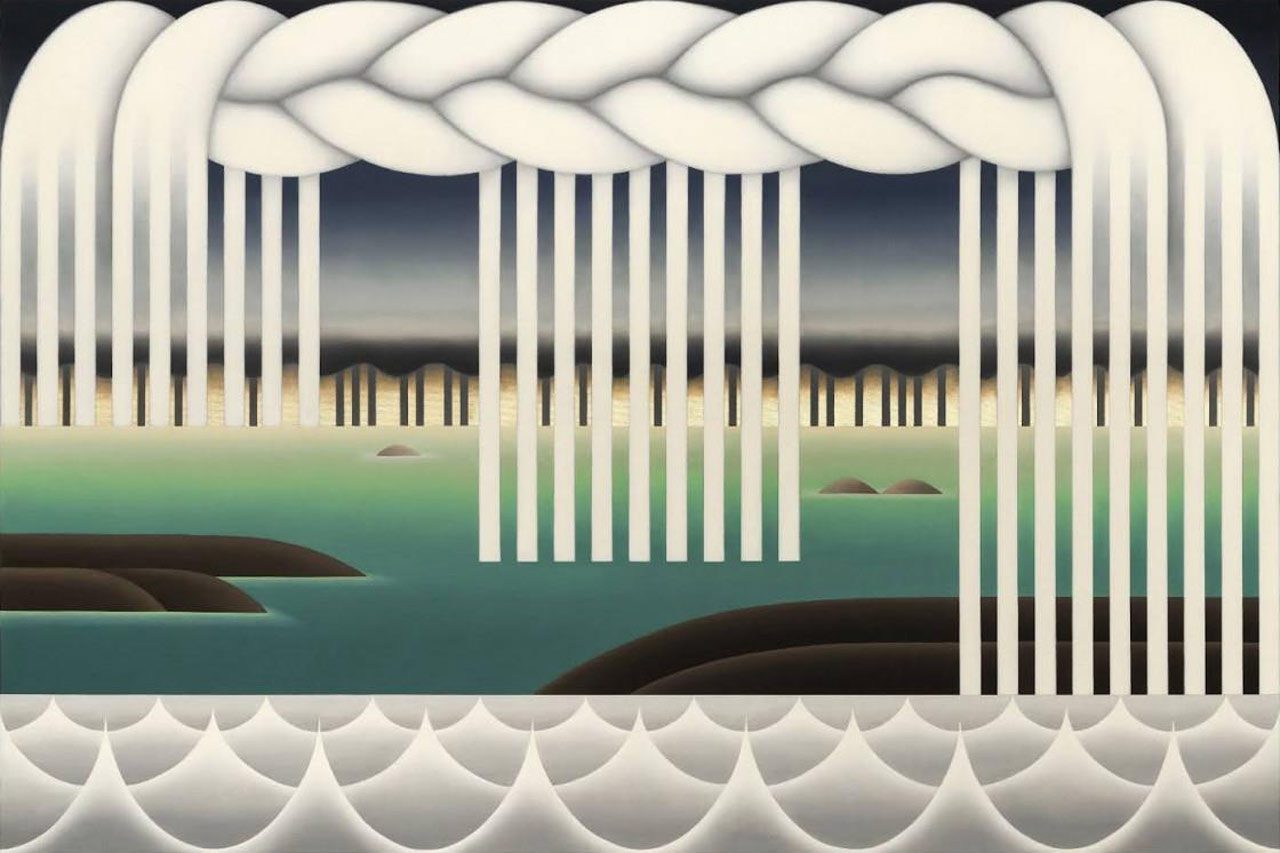
Rejecting the formal reductivism of European abstraction and the austere minimalism often associated with American Protestantism—both of which she viewed as overly simplistic reductions of cultural difference—Takako Yamaguchi chose instead to delve into what she once evocatively called “the trash-heap of discarded ideals.” It is within this marginalized terrain that she has cultivated a deep engagement with subjects historically dismissed by the modernist canon: decoration, fashion, beauty, sentimentality, empathy, and pleasure. These elements—so easily cast aside in the march toward modernity—are embraced by Yamaguchi as potent and resilient vessels of meaning, cherished all the more precisely because of their historical exclusion. The exhibition “Takako Yamaguchi” marks the third installment of the newly revitalized Focus series at MOCA, a program dedicated to presenting the first solo museum exhibitions of Los Angeles–based artists. Born in Okayama, Japan, in 1952, Yamaguchi relocated to the United States in the early 1970s and quickly began to weave a rich visual language drawing on diverse sources: from the monumental narratives of Mexican muralism to the refined techniques of Japanese Nihonga, the sensual curves of Art Nouveau, and the spiritual resonance of Renaissance painting. In these ornate and densely referential works, she challenges rigid definitions of ethnic identity and cultural ownership, reimagining them through an aesthetic that revels in hybridity and excess. Now seventy-two and based in Los Angeles, Yamaguchi is presenting a new body of work that synthesizes the visual and thematic motifs she has explored over the past four decades. These recent oil-and-bronze-leaf seascapes are characterized by their stylized, almost theatrical precision—arch compositions that fuse decorative abstraction with natural form. Employing a lexicon of zigzags, spirals, and braids drawn from both “Eastern” and “Western” traditions, Yamaguchi transforms traditional motifs of waves, rain, and mountains into intricate patterns that are at once lushly tactile and conceptually rigorous. Describing these works as “abstractions in reverse,” Yamaguchi subverts the conventional trajectory of abstract art: rather than distilling nature into abstraction, she constructs nature out of abstract forms. These seascapes do not emerge from direct observation but from a deliberate synthesis of motifs developed by early 20th-century European artists seeking to represent the natural world through abstraction in art, architecture, and design. At the same time, the work draws on the legacy of North American painters like Georgia O’Keeffe and Marsden Hartley, whose figurative tendencies were often viewed as defiant vestiges of the past in an era increasingly dominated by abstraction. Yamaguchi’s paintings also serve as acts of cultural self-appropriation. Her ongoing references to Japanese visual traditions are not mere heritage markers, but deliberate interventions—playful, ironic, and politically charged commentaries on how identity, style, and meaning are constructed, commodified, and reclaimed. In this sense, her art becomes a kind of aesthetic archaeology: excavating the abandoned, the unfashionable, and the ornamental, and elevating them into a richly layered, defiantly beautiful practice of resistance and reclamation.
Photo: Takako Yamaguchi, Procession, 2024, oil and metal leaf on canvas, 40 × 60 in. (101.6 × 152.4 cm). Courtesy of the artist; Ortuzar, New York; and as-is.la, Los Angeles. Photo: Gene Ogami
Info: Curator: Anna Katz, Assistant Curator: Emilia Nicholson-Fajardo, MOCA (The Museum of Contemporary Art), MOCA Grand, 250 South Grand Ave, Los Angeles, CA, USA, Duration: 29/6/2025-4/1/2026, Days & Hours: Tue-Wed, Fri 11:00-17:00, Thu 11:00-20:00, Sat=Sun 11:00-18:00, www.moca.org/
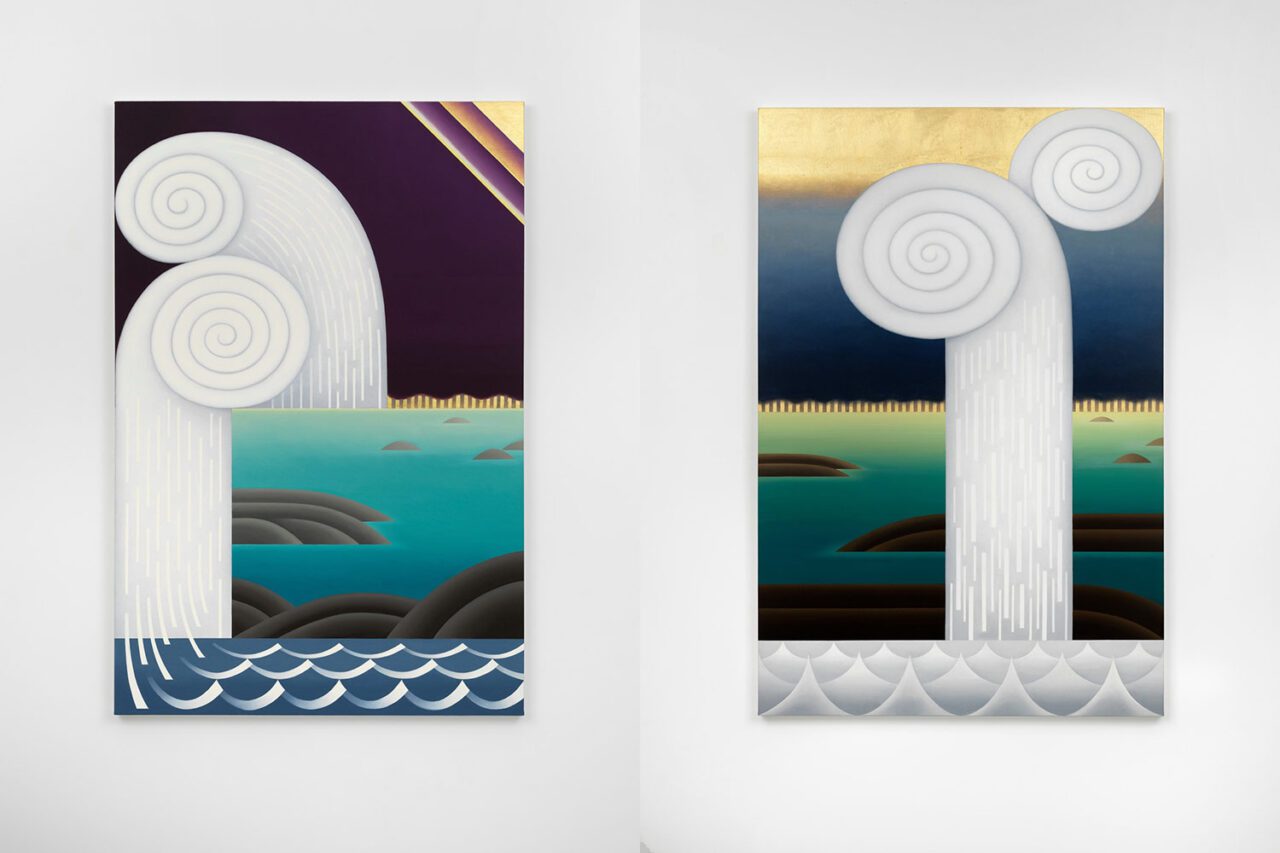
Right: Takako Yamaguchi, Echo, 2022, Oil and metal leaf on canvas, 60 x 40 inches (152.4 x 101.6 cm). Courtesy of the artist; Ortuzar, New York; and as-is.la, Los Angeles
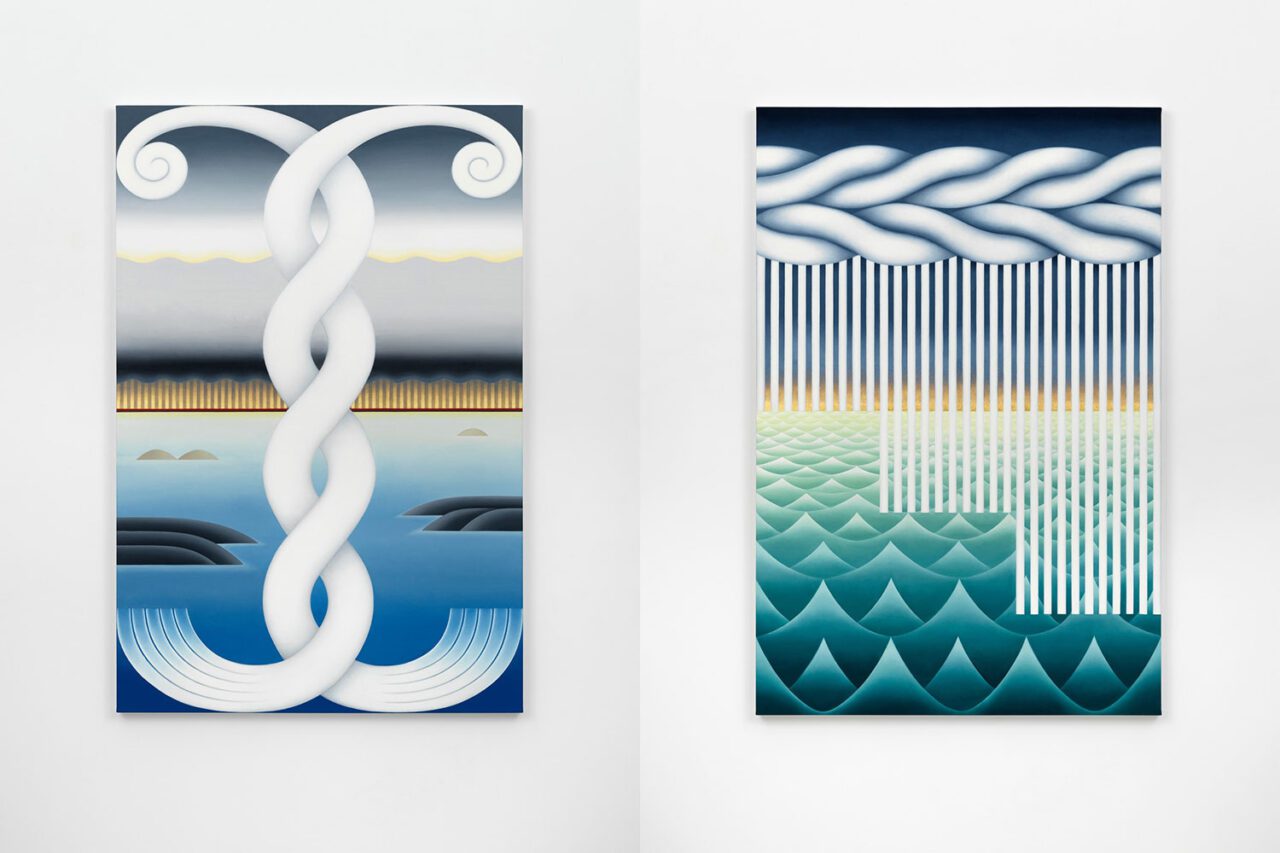
Right: Takako Yamaguchi, Transit, 2022, Oil and metal leaf on canvas, 60 x 40 inches (152.4 x 101.6 cm). Courtesy of the artist; Ortuzar, New York; and as-is.la, Los Angeles
as-is.la, Los Angeles
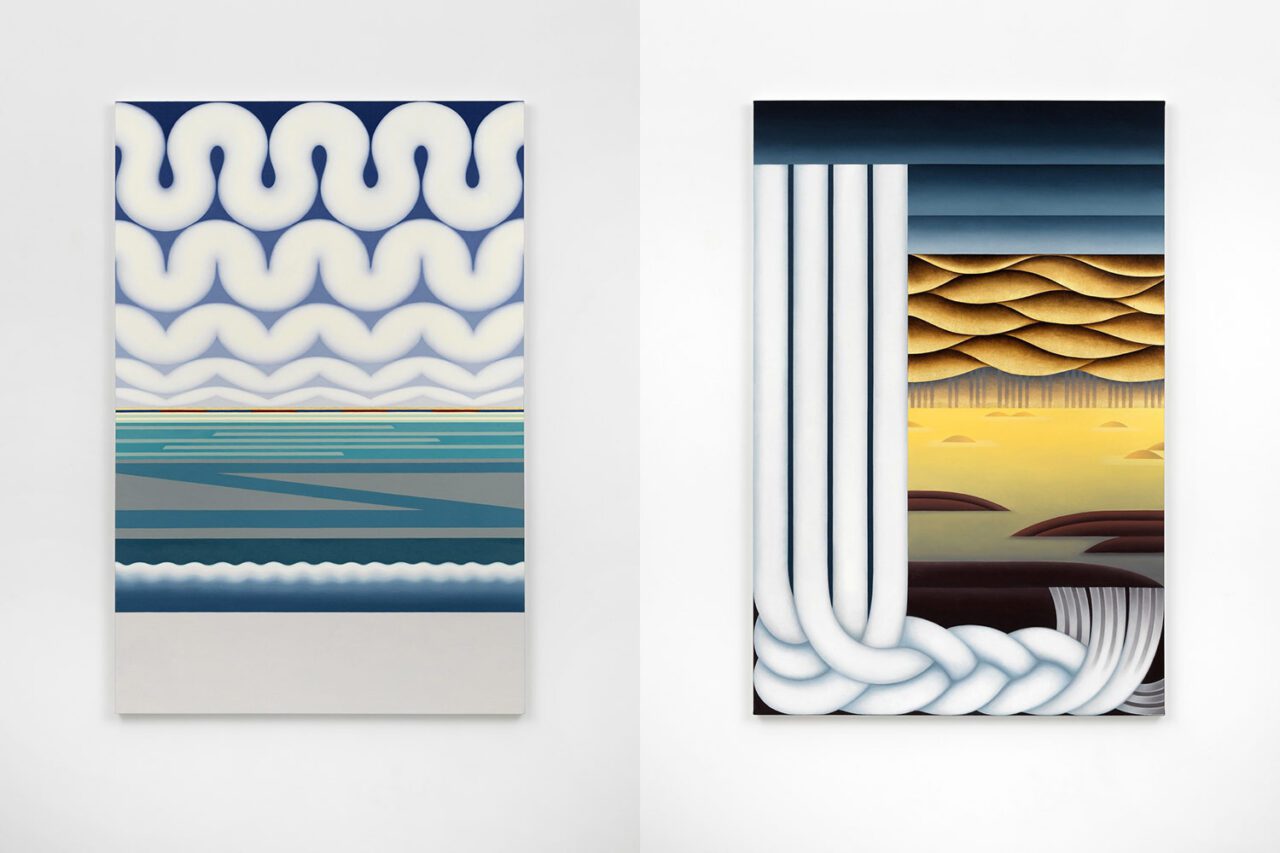
Right: Takako Yamaguchi, Transit, 2022, Oil and metal leaf on canvas, 60 x 40 inches (152.4 x 101.6 cm). Courtesy of the artist; Ortuzar, New York; and as-is.la, Los Angeles
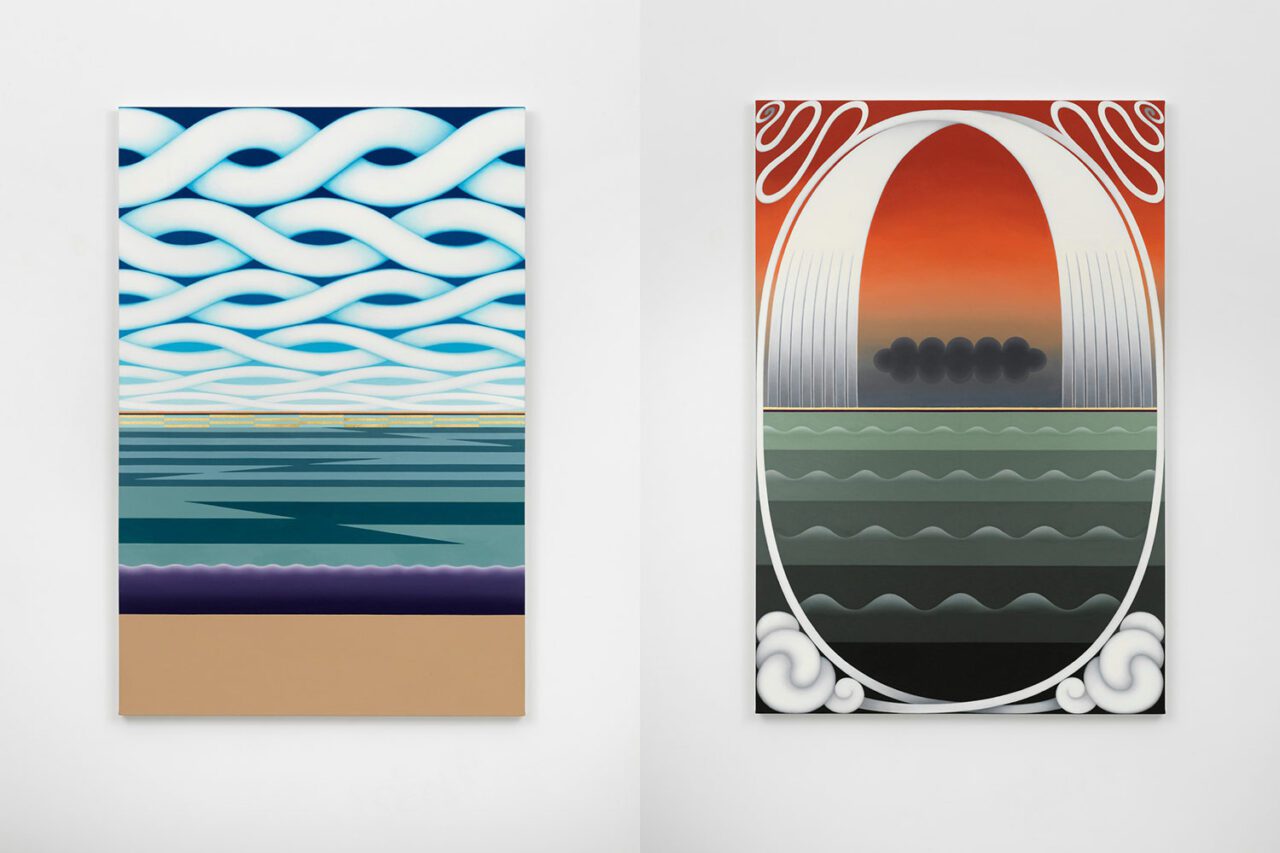
Right: Takako Yamaguchi, Loom, 2023, Oil and metal leaf on canvas, 60 x 40 inches (152.4 x 101.6 cm). Courtesy of the artist; Ortuzar, New York; and as-is.la, Los Angeles
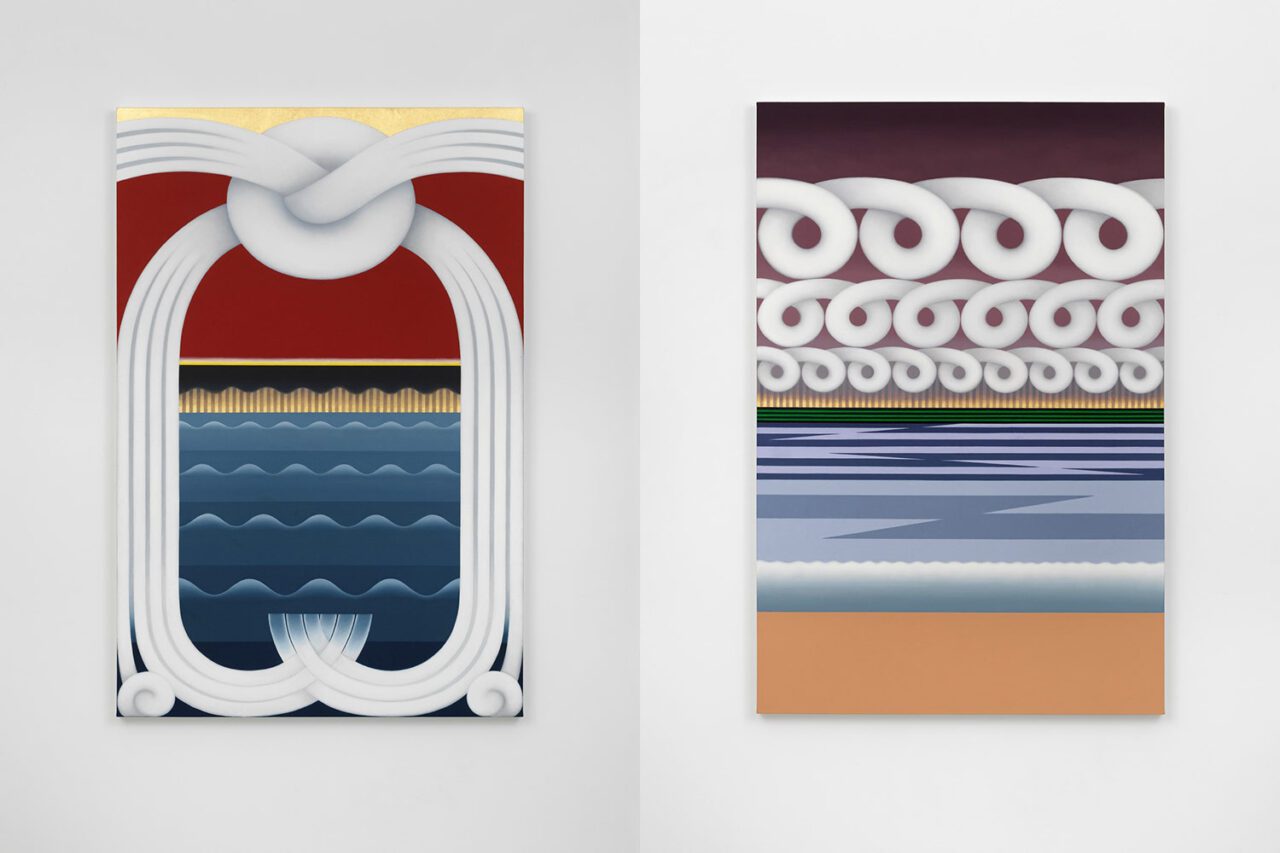
Right: Takako Yamaguchi, Index, 2022, Oil and metal leaf on canvas, 60 x 40 inches (152.4 x 101.6 cm). Courtesy of the artist; Ortuzar, New York; and as-is.la, Los Angeles