ART CITIES: Berlin-Judith Raum
Judith Raum’s artistic practice is marked by a strong research-based and interdisciplinary approach. Raum works in installation and lecture performance with a focus on abstract and figurative painting and drawing to be included into her space and time-based work. She builds detailed narratives that reference economic and social history, postcolonial critique, medium specificity, and conditions of artistic production. After extensive artistic research into German economic colonialism in the Ottoman Empire as well as projects connected with notions of textility, she lately concentrated on the textile workshop at the Bauhaus.
By Dimitris Lempesis
Photo: Zilberman Gallery Archive
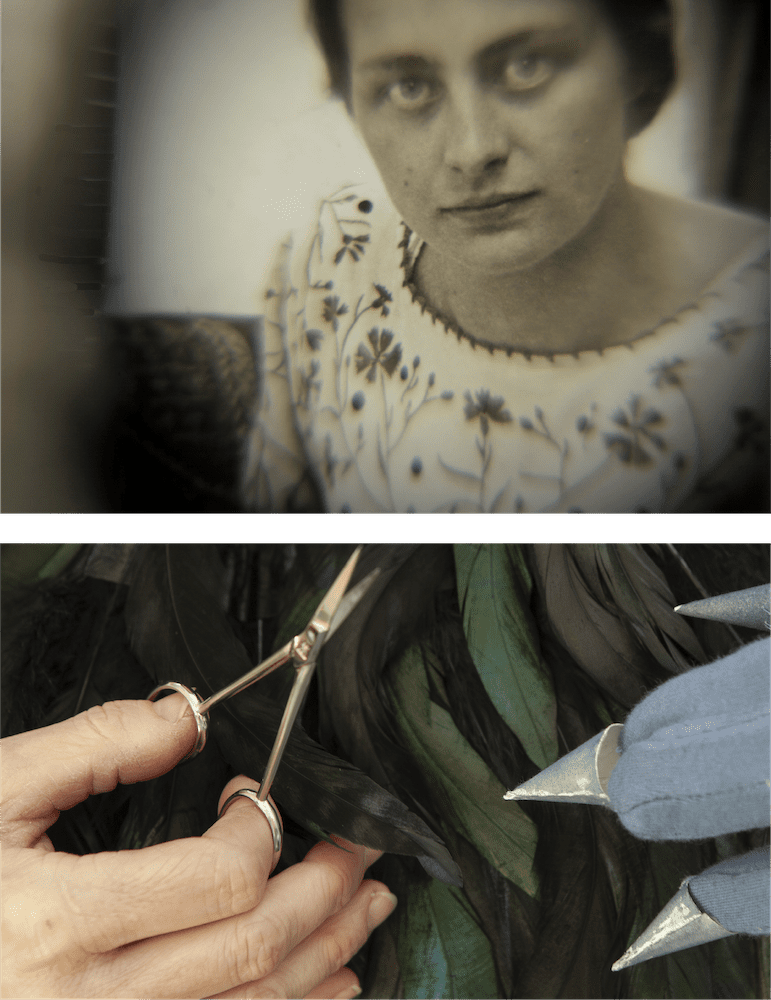
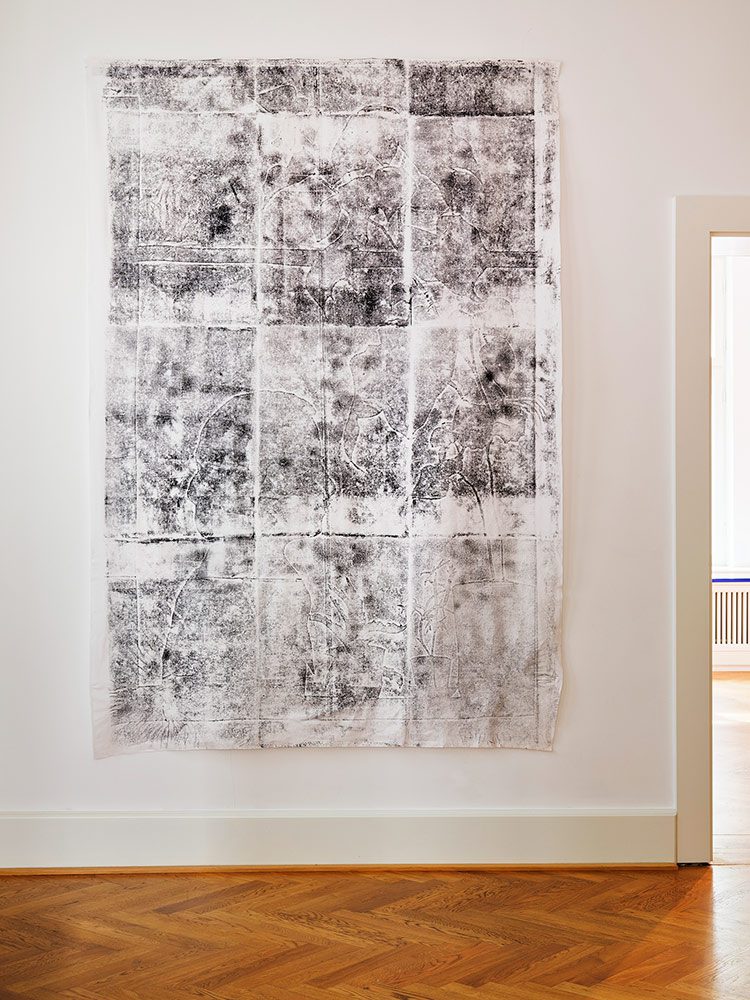
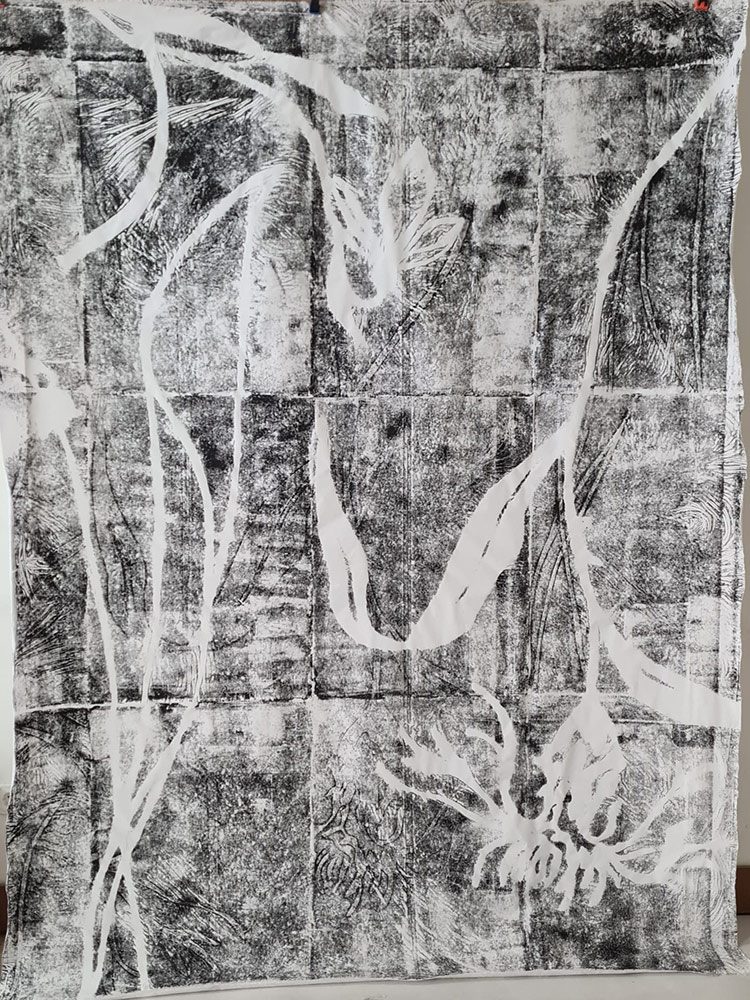
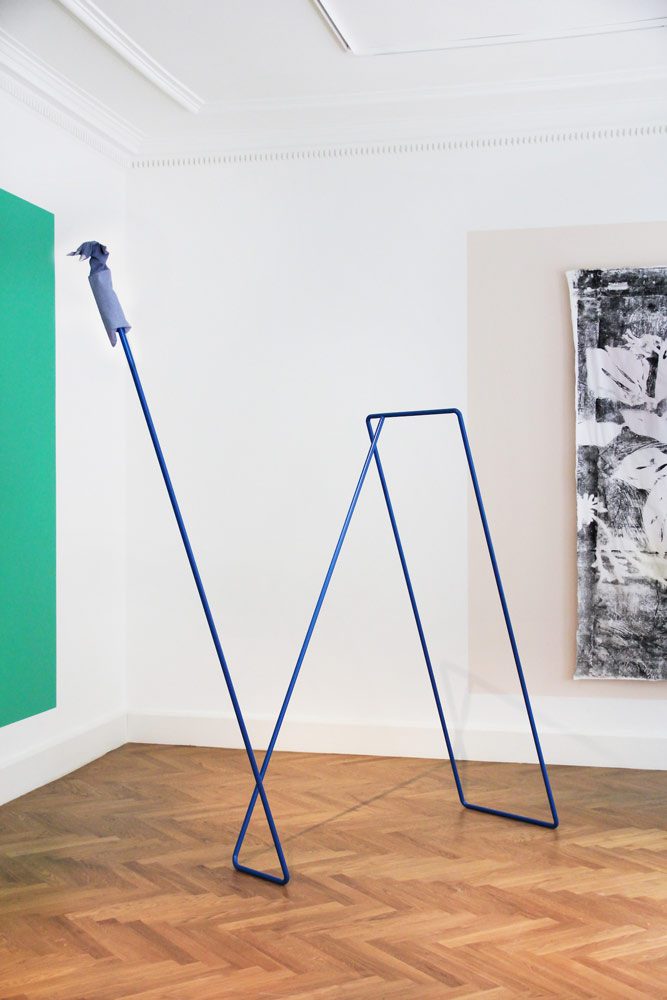
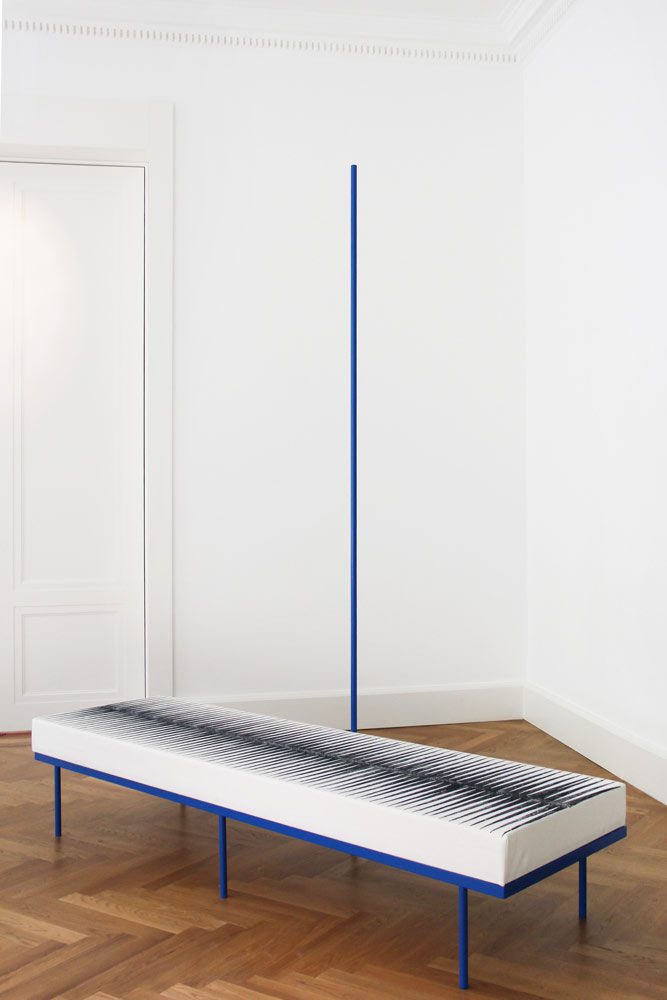
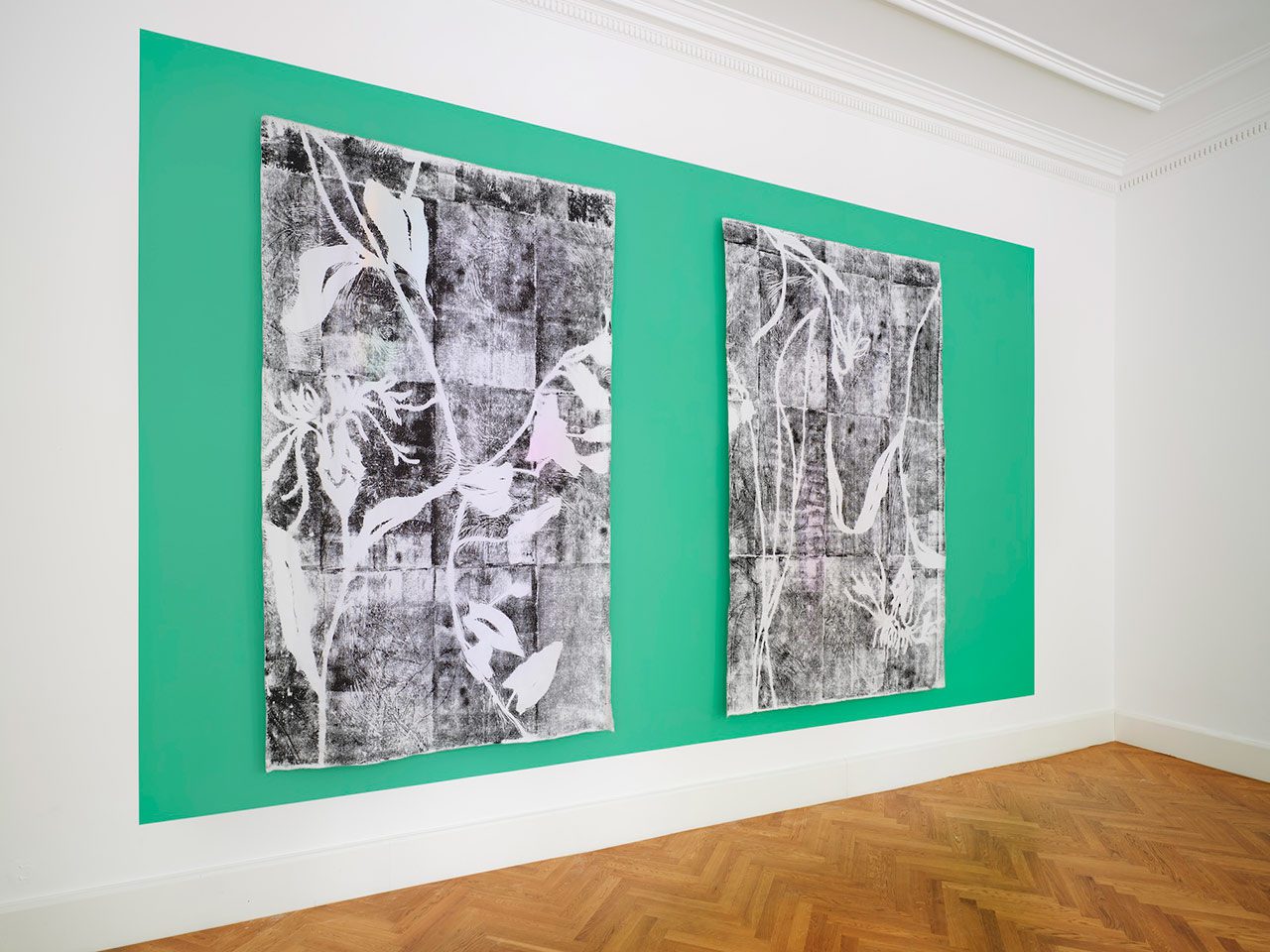
In her deeply evocative solo exhibition “Hedwig Roth” Judith Raum weaves personal history into broader discourses of artistic lineage, memory, and marginalization. The exhibition, currently on view in Berlin, excavates the little-known creative legacy of Raum’s grandmother, Hedwig Roth (1906–1989)—a pastor’s wife, mother of twelve, and self-taught artist whose life and work embody a tension between devotion to family and a quietly defiant creative autonomy. While Roth’s daily existence was shaped by the strictures of Protestant domesticity and the obligations of motherhood in early 20th-century Germany, beginning in the 1920s she cultivated an independent artistic practice. Her work—comprised mainly of intricate paper silhouettes and linoleum prints—depicts delicate but vivid portrayals of flora and fauna, as well as tender portraits of family and friends. Among her most poignant images is a child framed by a windowpane—simultaneously a symbol of confinement and a portal to the world beyond. The child’s gaze, filled with longing and quiet determination, encapsulates the emotional ambivalence that permeates Roth’s visual language: a yearning for transcendence from the domestic and ideological boundaries that shaped her life. Raum takes this inherited ambiguity and transforms it into a multi-sensory, multi-generational dialogue. Her large-format wall hangings feature hands grasping tools—scissors, glasses—objects symbolic of both creation and critique. These motifs gesture toward the act of seeing and cutting as processes of selection, transformation, and resistance. In doing so, Raum doesn’t merely pay homage to her grandmother’s artistry; she embodies and extends it, generating a tactile resonance across time. Raum’s research-based practice has long sought to recover overlooked women in art history. Her acclaimed investigations into Bauhaus textile artist Otti Berger (1898–1944)—shown recently at Berlin’s Bauhaus-Archiv and the V&A in London—highlighted Berger’s formative influence on modernist design. In the exhibition, Raum applies a similarly rigorous yet intimate methodology. For the first time, Roth’s work is shown beyond the family archive, contextualized within a professional artistic discourse and reframed through Raum’s contemporary lens. The resulting exhibition offers not only a rediscovery but also a reframing—a re-siting of a private body of work within public historical narratives. This act of historical recuperation is also spatially enacted. Roth’s original cut-outs and prints are displayed on deep blue plexiglass tables, arranged in groupings that echo familial resemblances and thematic kinships. The fragile tactility of her paper works, with their precise incisions, contrasts sharply with the industrial supports—curved steel legs that recur in two sculptural works, forming a visual and conceptual bridge between archival memory, physical presence, and embodied gesture. One sculpture resembles a freestanding mirror—an object loaded with symbolic weight in Roth’s own photographic archive. In portraits taken by her husband, mirrors function as devices of both self-reflection and theatricality, hinting at questions of feminine identity and the unspoken undercurrents of sexuality in the conservative household of a pastor. Nearby, a blue glove—its fingers sewn together to resemble birdlike webbed feet—sits perched on a metal rod, a witty and uncanny form that reintroduces Roth’s recurring motifs of ravens and bats, creatures of liminality and twilight. These animals, in Raum’s reimagining, become totemic messengers—guides between personal and political histories, light and darkness. A second sculpture evokes a bed—its frame wrapped in fabric bearing a design by British textile artist Dorothy Larcher (1884–1952). Raum here draws a subtle yet potent comparison between Roth and Larcher, whose plant-inspired patterns reflect a modernist abstraction rooted in nature. While Larcher, aligned with the Vorticist movement, emphasized angular, stylized flora, Roth’s wildflower compositions reflect more organic, coexisting systems—a botanical democracy of form, where no single element dominates. By placing these women in visual and conceptual dialogue, Raum enacts a feminist revision of modernism that foregrounds the domestic, the handmade, and the intergenerational. Throughout the exhibition, Raum reinterprets Roth’s motifs—such as the girl at the window and plant forms—via large-scale textile prints and rubbings. These semi-transparent fabrics, layered over color fields, acquire a near-sculptural dimensionality. As light shifts and the viewer’s perspective changes, silhouettes of plants, animals, and human figures slip between visibility and obscurity, reinforcing Raum’s thematic exploration of layering: memory upon memory, gesture upon gesture, past upon present. The exhibition culminates in a quietly moving installation of dual slide projectors. Onto gauzy textiles are cast intimate photographs of Hedwig Roth as a young woman, mother, and figure within a natural domestic tableau. Using a magnifying glass, Raum extracts tiny visual fragments from these images—children’s expressions, subtle body postures, gestures of care and play. These everyday moments are charged with emotional intensity, unfolding within a historical backdrop already darkened by the rise of National Socialism. The juxtaposition of innocence and ideological encroachment is unsettling, yet Raum resists pathos; instead, she introduces scissors and ravens—symbols of narrative agency and critical thought—as recurring agents of transformation. The exhibition is far more than an archival tribute or familial homage. It is a richly layered exploration of how personal history intersects with broader historical forces, how female creativity survives at the margins, and how artistic legacies can be reclaimed not just through preservation but through reactivation. Raum’s work stands as a model of how contemporary art can engage with the past—analytically, affectively, and materially—to forge new paths through histories too often neglected or erased.
Photo: Judith Raum, Hedwig Roth, Installation View, Zilberman Gallery-Berlin, 2025, Photo: Katrin Hammer, Courtesy the artist and Zilberman Gallery
Info: Zilberman Gallery, Schlüterstraße 45, Berlin, Germany, Duration: 20/5-12/7/2025, Days & Hours: Tue-Sat 11:00-18:00, www.zilbermangallery.com/