PRESENTATION: Joseph Kosuth-Non autem memoria

Joseph Kosuth is a key figure in the redefinition of the art object that took place during the 1960s and 70s with the formulation of Conceptual art, which questions art’s traditional forms and practices, as well as the assumptions surrounding them. To do this, Kosuth was among the first to employ appropriation strategies, texts, photography, installations and the use of public media, as well as to write the earliest theoretical texts supporting it.
By Efi Michalarou
Photo: Kunstmuseum Stuttgart Archive
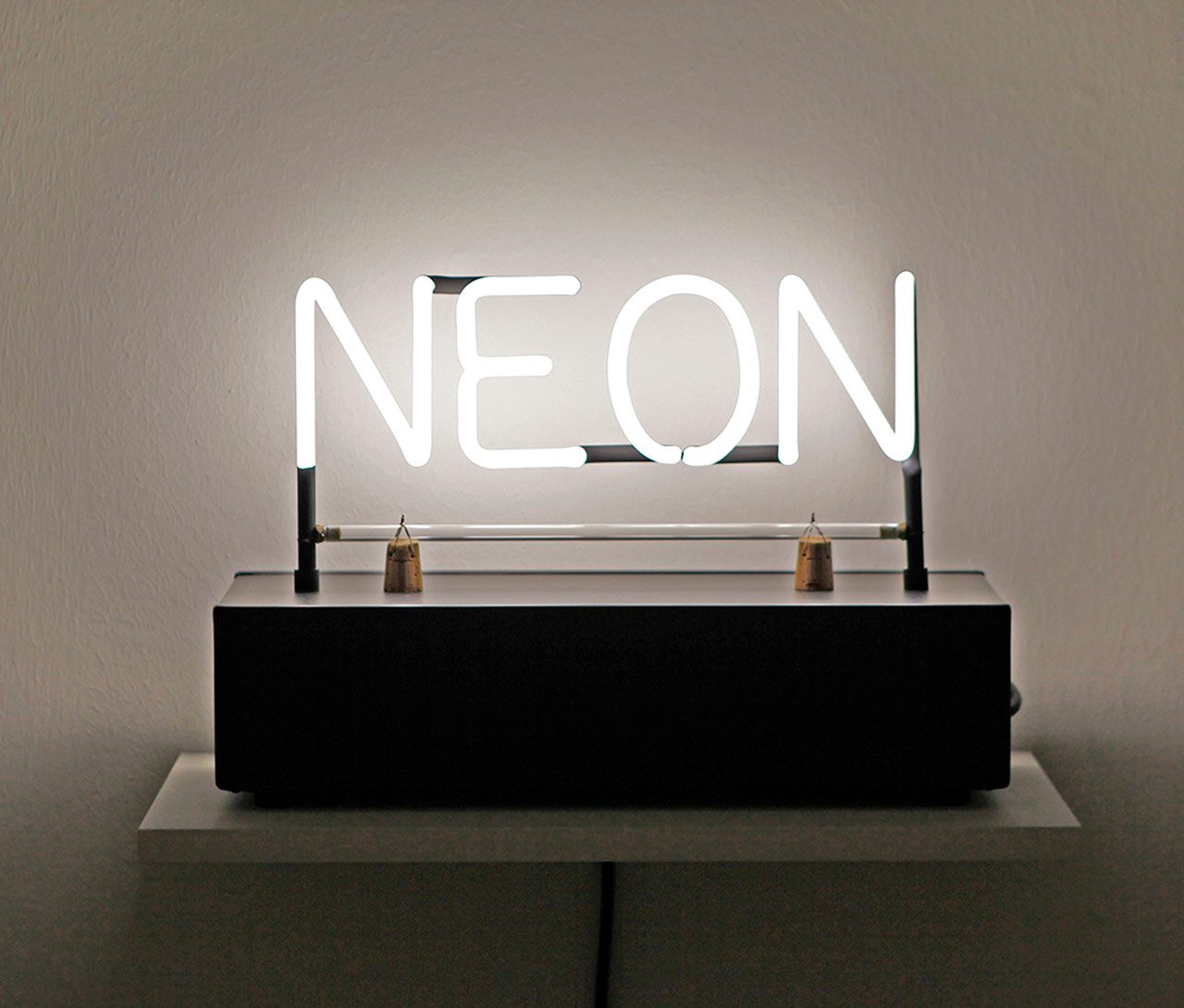
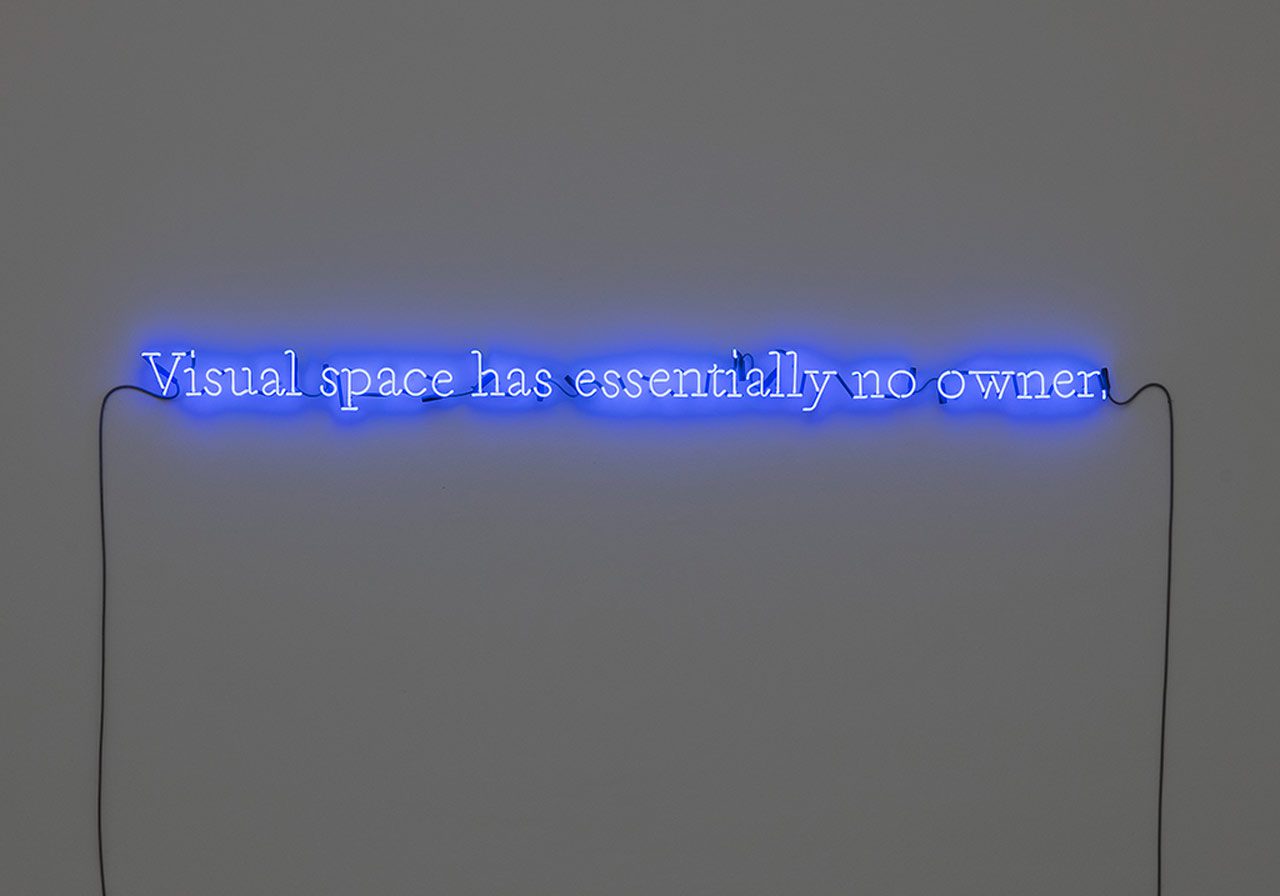
In his seminal 1969 essay “Art After Philosophy”, artist and theorist Joseph Kosuth declared the traditional discourse of art history to be obsolete. In its place, he proposed a radical shift: a conceptual investigation into the processes through which art acquires both cultural meaning and its designation as “art.” As Kosuth famously stated, “Being an artist now means to question the nature of art. If one is questioning the nature of painting, one cannot be questioning the nature of art… That’s because the word ‘art’ is general and the word ‘painting’ is specific. Painting is a kind of art. If you make paintings you are already accepting (not questioning) the nature of art.” This emphasis on critical inquiry over aesthetic production formed the bedrock of Kosuth’s conceptual practice. One of his most iconic works, “One and Three Chairs” (1965)—produced when he was only 20 years old—epitomizes the conceptual framework that would define his career. The piece presents a chair, a life-sized photograph of that chair, and a dictionary definition of the word “chair.” Through this triadic structure, Kosuth dismantles conventional notions of authorship and representation, challenging viewers to consider whether the essence of the object resides in its physical form, its linguistic designation, or its visual reproduction. This formula, which he later applied to various other objects, interrogates the mechanisms by which identity and meaning are constructed and communicated across distinct semiotic registers. In honor of Kosuth’s eightieth birthday, the Kunstmuseum Stuttgart has mounted “Non autem memoria”, a richly layered retrospective that spans more than five decades of the artist’s practice. Featuring all eighteen works by Kosuth held in the museum’s collection, the exhibition offers a compelling chronicle of his sustained exploration into the nature of meaning, language, and perception. The title—Latin for “but memory does not” and adapted from the phrase “tempus fugit, non autem memoria” (“time flies, but memory does not”)—resonates with Kosuth’s enduring concern with temporality, interpretation, and the role of memory in the construction of knowledge. The phrase “Art as Idea as Idea”, which Kosuth used as the title for an early and pivotal body of work, captures the radical conceptual turn he initiated in the 1960s. This formulation encapsulates a guiding principle: that the idea behind the artwork holds primacy over its material manifestation. Kosuth’s influence extends far beyond his objects; his writings—often theoretical, dense, and precise—helped lay the intellectual foundation for the conceptual art movement. He is widely regarded as one of the first artists to systematically deploy appropriation, textual strategies, photography, installations, and mass media as artistic tools. “My work is about meaning,” he has said, “not about shapes, colors, or materials.” For Kosuth, language is not merely a medium—it is the content itself. A defining feature of Kosuth’s practice is his innovative use of neon. Adopted early in his career, neon signage—traditionally associated with commercial advertising—provided a “readymade” medium with few precedents in fine art. Kosuth subverted its conventional function by transforming it into a carrier of philosophical thought, thereby divorcing it from its usual commercial associations. His neon works often feature aphorisms or extended quotes from thinkers such as Ludwig Wittgenstein, Friedrich Nietzsche, Sigmund Freud, and Samuel Beckett, whose investigations into language, time, and human perception align closely with Kosuth’s own. In these pieces, text assumes visual and semantic dominance, collapsing the boundary between image and meaning. Color, when used in these neon works, is never ornamental. Most of Kosuth’s oeuvre is starkly achromatic; the limited palette of neon hues serves only to differentiate elements, not to embellish them. One of his earliest neon works, “One and Eight – A Description” (1965), presents eight pink neon words forming a self-referential phrase—a direct embodiment of Wittgenstein’s assertion that “what can be said at all can be said clearly.” This emphasis on clarity, structure, and linguistic logic runs throughout Kosuth’s oeuvre, culminating in more recent pieces like “Texts for Nothing (Waiting for–) #3” (2011), in which he employs fragments from Beckett’s prose. In both artists’ practices, there is a mutual preoccupation with the instability of meaning and the limits of language. Kosuth’s engagement with readymade commercial media extends into his “Text/Context” series of the late 1970s, in which he appropriates the visual idiom of public billboards to display his own philosophical texts. These interventions blur the line between art and advertisement, highlighting how the context of presentation—be it a gallery, a city street, or a billboard—shapes and constrains the meaning of the message. Many of these installations are site-specific, and increasingly complex, often integrating neon, vinyl lettering, and other industrial materials to challenge the viewer’s assumptions about authorship, intention, and audience. Through “Non autem memoria”, the Kunstmuseum Stuttgart offers not just a retrospective of a singular artist, but a comprehensive reflection on one of conceptual art’s foundational figures. From his early gestures of defiance against traditional aesthetics to his mature interrogations of language, Joseph Kosuth has consistently challenged what it means to make—and to experience—art. His legacy, forged through both word and image, continues to shape contemporary art’s ongoing inquiry into the relationship between idea, medium, and meaning.
Photo: Joseph Kosuth, Five Words And Five Colors-A Description, 1965, © Joseph Kosuth, Courtesy the artist and Kunstmuseum Stuttgart
Info: Curators: Joseph Kosuth & Ulrike Groos, Kunstmuseum Stuttgart, Kleiner Schlossplatz 1, Stuttgart, Germany, Duration: 12/6/2025-12/4/2026, Days & Hours: Tue-Thu & Sat-Sun 10:00-18:00, Fri 10:00-21:00, www.kunstmuseum-stuttgart.de/
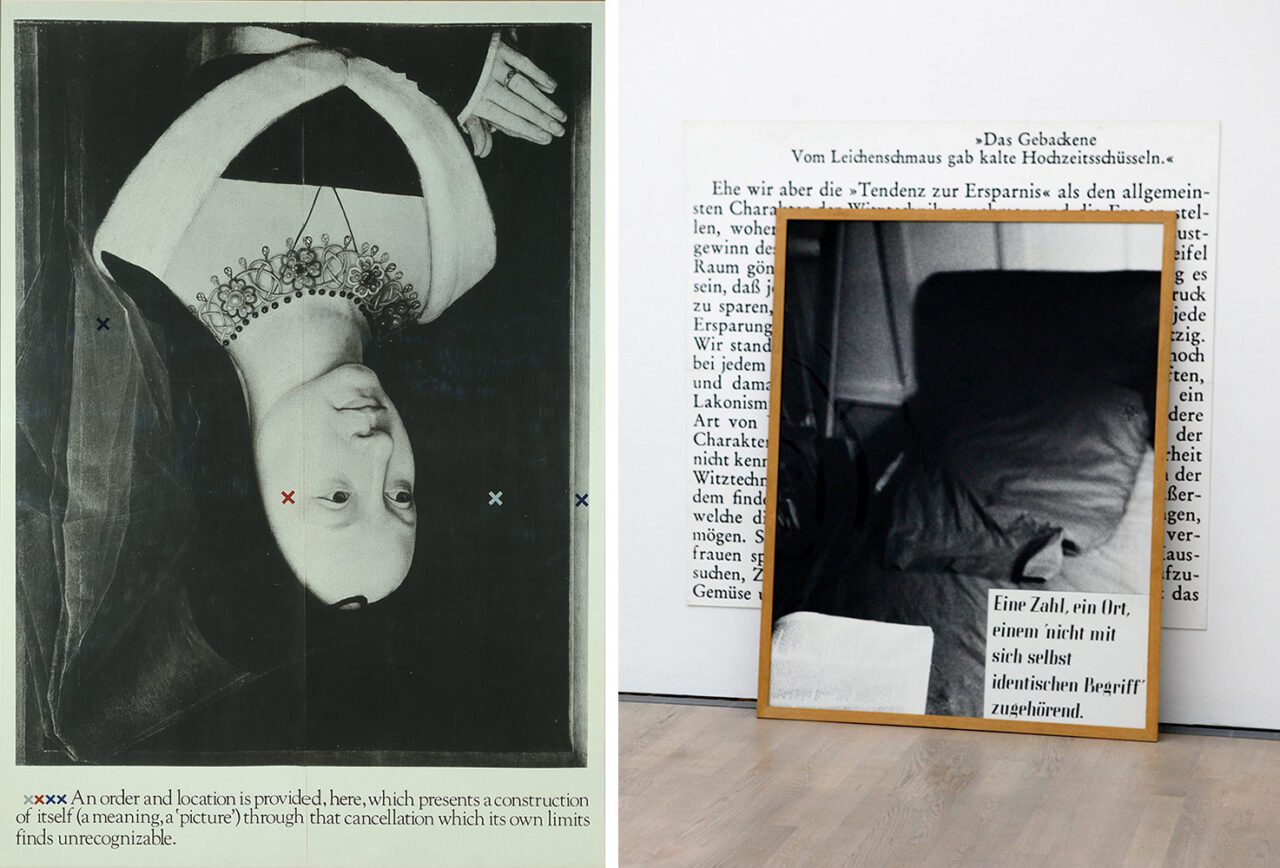
Right: Joseph Kosuth, O.&A./F.!D.! (To I.K. and G.F.), 1987, © Joseph Kosuth, Courtesy the artist and Kunstmuseum Stuttgart
![Joseph Kosuth, One and Three File Cabinets [English - German], 1965, © Joseph Kosuth, Courtesy the artist and Kunstmuseum Stuttgart](http://www.dreamideamachine.com/web/wp-content/uploads/2025/06/02-9.jpg)