
ART CITIES: Paris-Benjamin Sabatier
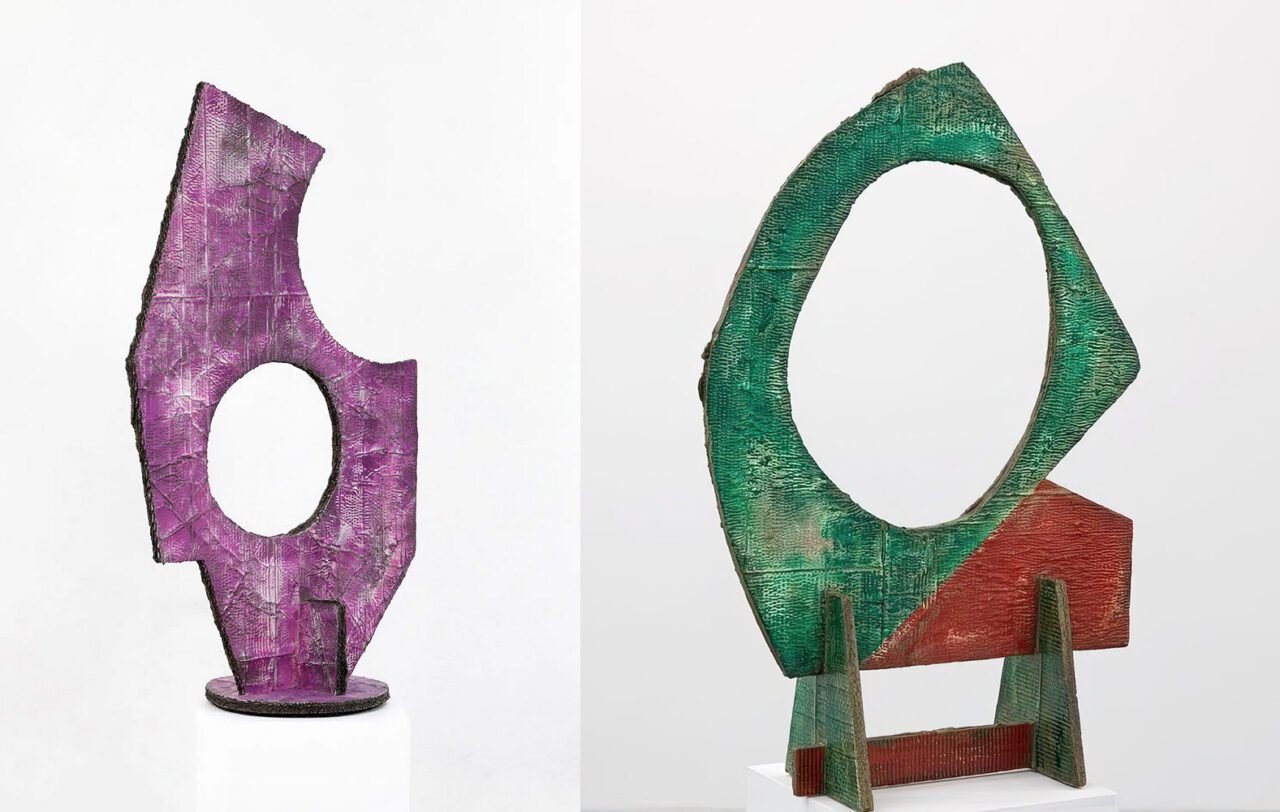
Benjamin Sabatier is a sculptor whose work explores and transforms the forms of modern art and their history in a simple vocabulary. His use of concrete, a constant in both his volume-based compositions and his reflections on abstract painting, draws on the history of this basic material of modern architecture as well as its current use in the history of sculpture since the 1970s. The use of cardboard or plastic panels creates an unexpected surface texture that is sometimes reinforced by the addition of paint, at the risk of disturbing the appearance of the materials.
By Efi Michalarou
Photo: Xippas Gallery Archive
The exhibition “Concrete & Colors” unveils a striking new body of work by Benjamin Sabatier, filling the entire space of Xippas Gallery with an immersive and thought-provoking sculptural landscape. Known for his performative approach to sculpture, Sabatier explores the intricate interplay between art and labor, action and objecthood. His use of raw, often fragile materials—concrete, cardboard, brick—becomes a medium of critique, a way to question the capitalist imperative of constant production. Through an abstract visual language that nods to Modernist traditions, he foregrounds process as both subject and method, allowing the transformation of matter to take center stage. The title “Concrete & Colors” cleverly alludes to both construction sites and the legacy of modern painting, such as Matisse’s cut-outs, suggesting a meeting point between the industrial and the artistic, the utilitarian and the aesthetic. At the heart of the exhibition is “Home Work”, a series of large, painted sculptures made of reinforced concrete. These flat, colorful forms are juxtaposed with a cluster of smaller sculptures arranged on a shared pedestal, evoking the organic density of a forest. Sabatier’s work engages in a quiet dialogue with 20th-century sculptural giants—echoing the voids of Barbara Hepworth, the monumental presence of Nancy Holt, and the material investigations of Joseph Beuys. Yet, even as his pieces flirt with formalist aesthetics, they remain deeply rooted in process and experience. Construction becomes metaphor; making becomes meaning. Central to Sabatier’s approach is the idea of “self-construction”—a modular, almost DIY ethos where each work is shaped by assembly, cutting, and molding, often using repurposed cardboard as a base. Paint is not a mere surface decoration but a final gesture that reveals the piece’s fragility. The rough edges expose the rawness of creation, lending each sculpture a palpable material tension. A compelling tension runs through the works—between interior and exterior, solidity and emptiness. This is most evident in the recurring voids that punctuate the concrete masses. These openings, carved or subtracted, do more than lighten the form; they act as visual instruments, offering both literal and metaphorical perspectives. The disc removed from a sculpture may become its base, while the hole left behind invites contemplation. What draws the gaze—the form or its absence? Matter or space? This dialectic leads to deeper questions: Who is observing whom in the encounter with art? What are we really seeing—the labor, the object, or the void that defines it? The void becomes not just a sculptural element, but a philosophical proposition. As Nelson Goodman notes, a hole’s creation can function as art when it captures our attention as a meaningful gesture. For Sartre, the void symbolizes the fundamental lack that drives human connection. In this sense, Sabatier positions his exhibition as a relational field—a phenomenological encounter where the viewer’s gaze is not passive but constitutive, part of a larger system or “situation.” Ecology and economy intersect in Sabatier’s practice. His use of salvaged materials—scraps, offcuts, industrial waste—reflects a commitment to sustainability and a critique of the environmental toll of industrialization. This act of upcycling gives these discarded materials a new life through the artist’s hand, embedding the sculptures within a broader socio-economic discourse. The exhibition doesn’t just present works of art—it reveals the conditions of their making. Aesthetically, the installation borrows from the visual language of construction zones and department store displays. The long pedestal on which many sculptures rest resembles the utilitarian fixtures of commercial spaces. In French, the word socle (base) stems from socollo—the “shoe” that lifts a statue. Here, the pedestal becomes more than support; it becomes symbolic architecture, lifting not only objects but ideas: of social space, of labor, of community. Ultimately, “Concrete & Colors” is an exploration of transformation—of materials, of gestures, of meaning itself. It celebrates the performative and the precarious, suggesting that even the most overlooked elements of our built environment hold within them the potential for poetic and political resonance. Through his layered, resonant sculptures, Benjamin Sabatier invites us to see not only what is constructed, but what is revealed—and what is missing.
Photo left: Benjamin Sabatier, HW (Purple), 2025, Reinforced concrete, acrylic paint and varnish, 148 x 92,5 x 44,5 cm, © Benjamin Sabatier, Courtesy the artist and Xippas Gallery. Photo right : Benjamin Sabatier, Home Work (green & red), 2021, Reinforced concrete, acrylic paint and varnish, 125 x 88 x 35 cm, © Benjamin Sabatier, Courtesy the artist and Xippas Gallery
Info: Xippas Gallery, 108 rue Vieille-du-Temple, Paris, France, Duration: 14/6-26/7/2025, Days & Hours: Tue-Sat 11:00-19:00, www.xippas.com/
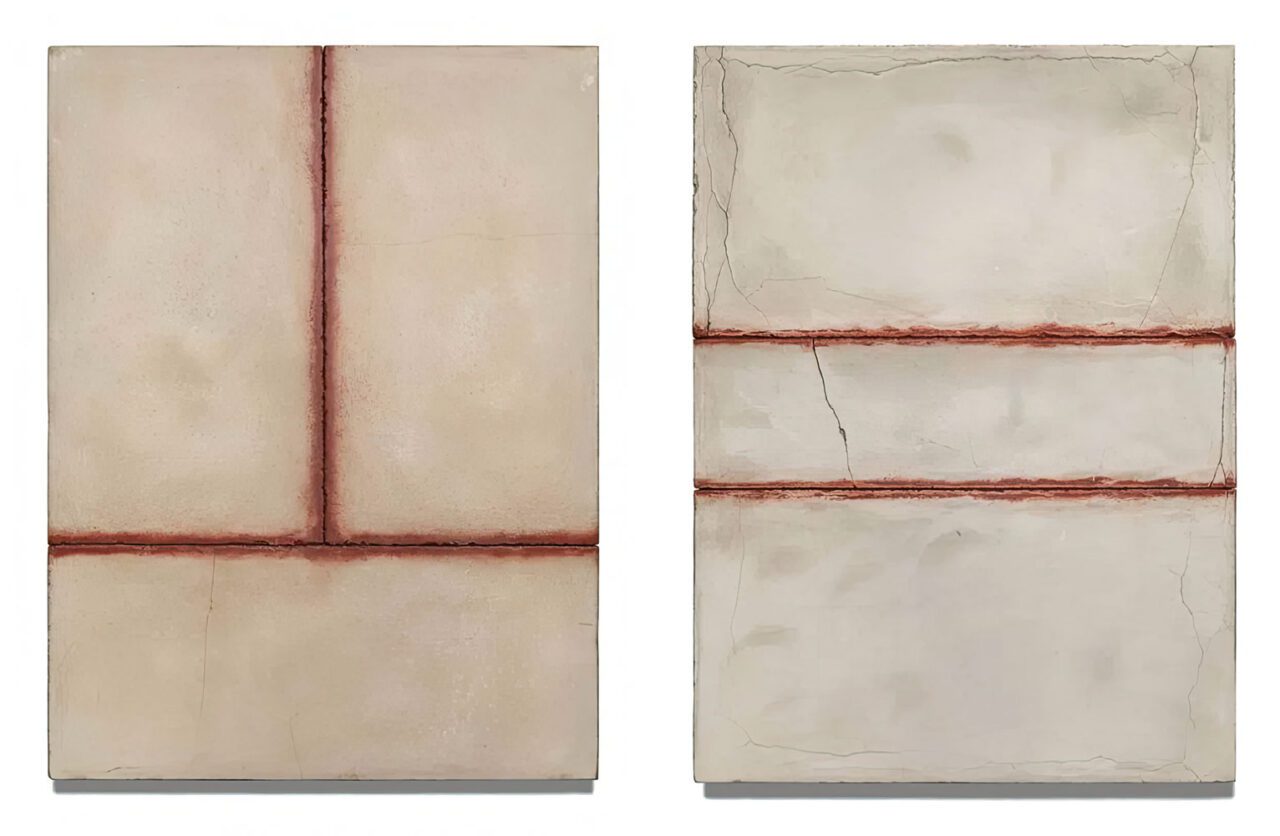
Right: Benjamin Sabatier, Sans titre (Fault line VI), 2020, Reinforced concrete, pigment and varnish, 104 x 76 x 4,5 cm, © Benjamin Sabatier, Courtesy the artist and Xippas Gallery
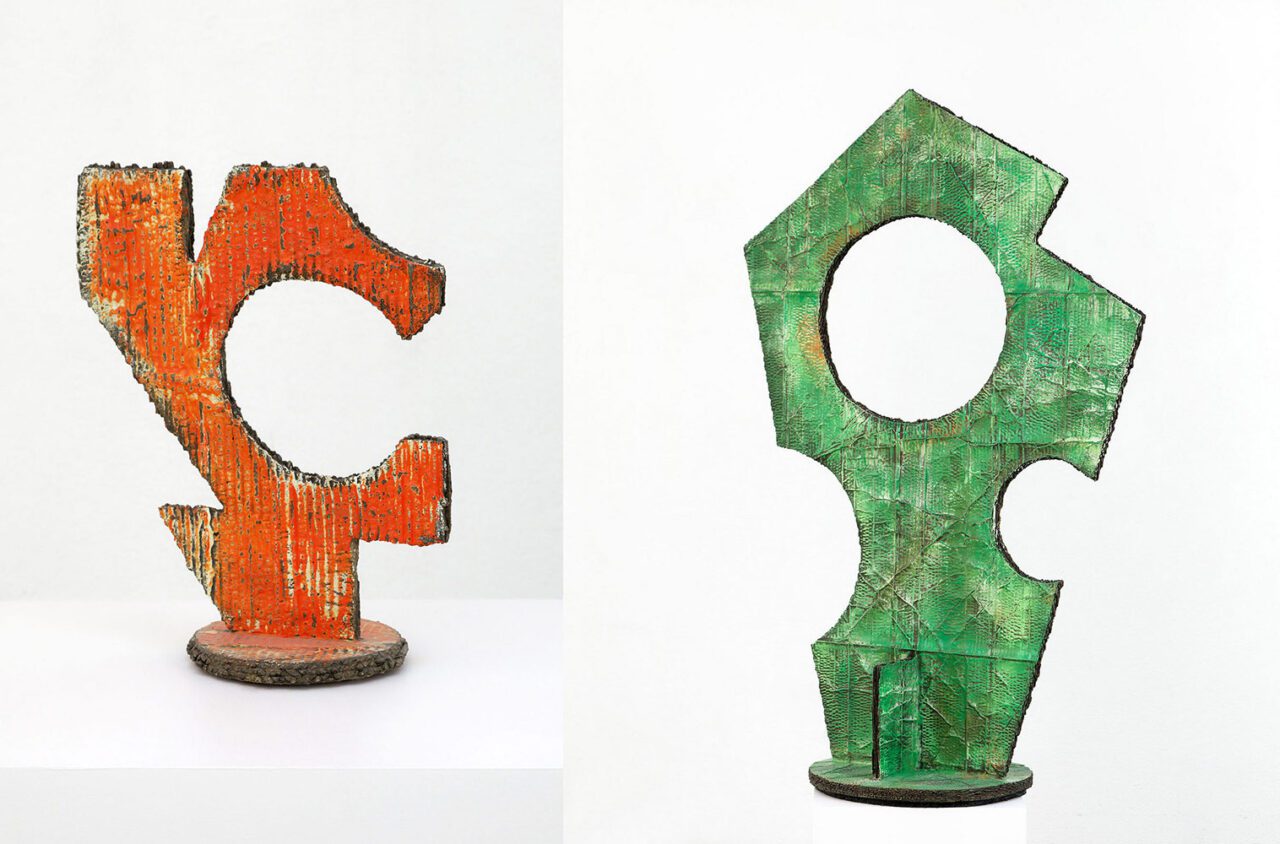
Right: Benjamin Sabatier, HW (Green), 2024, Reinforced concrete, acrylic paint and varnish, 39.5 x 31 x 18.5 cm, © Benjamin Sabatier, Courtesy the artist and Xippas Gallery